
Module 14 Immune Checkpoint Inhibitors in Lung Cancer
Module 14: Immune Checkpoint Inhibitors in Lung Cancer Kelly EH Goodwin, MSN, RN, ANP-BC Matthew Gubens, MD, MS
Disclosures for Ms Goodwin No relevant conflicts of interest to disclose.
Disclosures for Dr Gubens Consulting Agreements Astra. Zeneca Pharmaceuticals LP, Boehringer Ingelheim Pharmaceuticals Inc, Bristol-Myers Squibb Company, Genentech, Heron Therapeutics Inc, Roche Laboratories Inc, Takeda Oncology Contracted Research Celgene Corporation, Merck, Novartis, Onco. Med Pharmaceuticals Inc, Roche Laboratories Inc
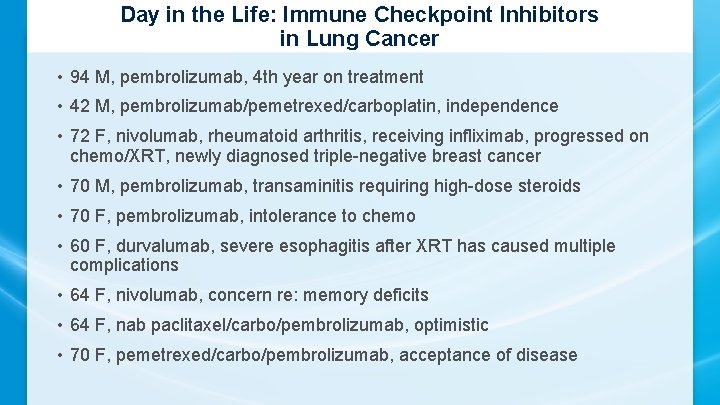
Day in the Life: Immune Checkpoint Inhibitors in Lung Cancer • 94 M, pembrolizumab, 4 th year on treatment • 42 M, pembrolizumab/pemetrexed/carboplatin, independence • 72 F, nivolumab, rheumatoid arthritis, receiving infliximab, progressed on chemo/XRT, newly diagnosed triple-negative breast cancer • 70 M, pembrolizumab, transaminitis requiring high-dose steroids • 70 F, pembrolizumab, intolerance to chemo • 60 F, durvalumab, severe esophagitis after XRT has caused multiple complications • 64 F, nivolumab, concern re: memory deficits • 64 F, nab paclitaxel/carbo/pembrolizumab, optimistic • 70 F, pemetrexed/carbo/pembrolizumab, acceptance of disease
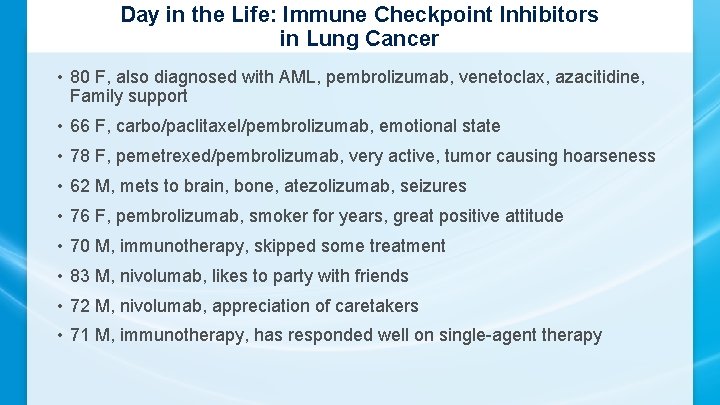
Day in the Life: Immune Checkpoint Inhibitors in Lung Cancer • 80 F, also diagnosed with AML, pembrolizumab, venetoclax, azacitidine, Family support • 66 F, carbo/paclitaxel/pembrolizumab, emotional state • 78 F, pemetrexed/pembrolizumab, very active, tumor causing hoarseness • 62 M, mets to brain, bone, atezolizumab, seizures • 76 F, pembrolizumab, smoker for years, great positive attitude • 70 M, immunotherapy, skipped some treatment • 83 M, nivolumab, likes to party with friends • 72 M, nivolumab, appreciation of caretakers • 71 M, immunotherapy, has responded well on single-agent therapy
6 Immune Checkpoint Inhibitors in Lung Cancer First Annual Research To Practice Oncology Nursing Retreat November 10, 2019 Matthew Gubens, MD, MS Associate Professor of Medicine UCSF Helen Diller Family Comprehensive Cancer Center
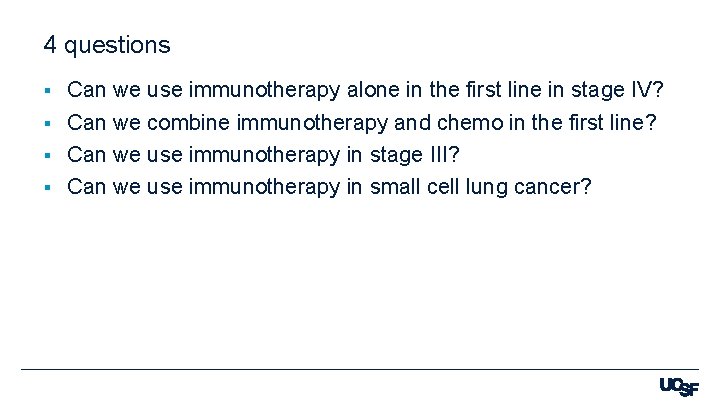
4 questions Can we use immunotherapy alone in the first line in stage IV? § Can we combine immunotherapy and chemo in the first line? § Can we use immunotherapy in stage III? § Can we use immunotherapy in small cell lung cancer? §
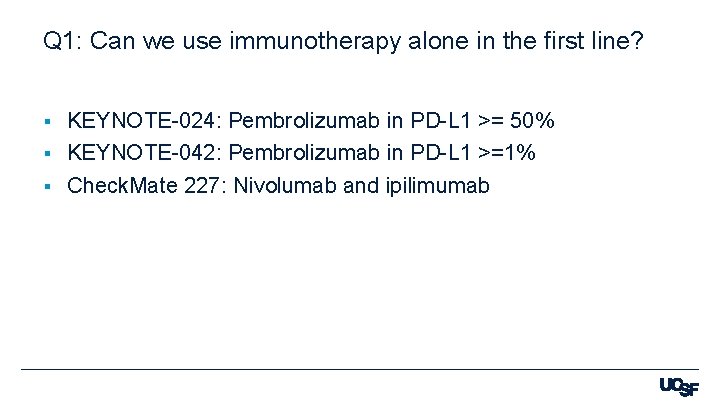
Q 1: Can we use immunotherapy alone in the first line? KEYNOTE-024: Pembrolizumab in PD-L 1 >= 50% § KEYNOTE-042: Pembrolizumab in PD-L 1 >=1% § Check. Mate 227: Nivolumab and ipilimumab §
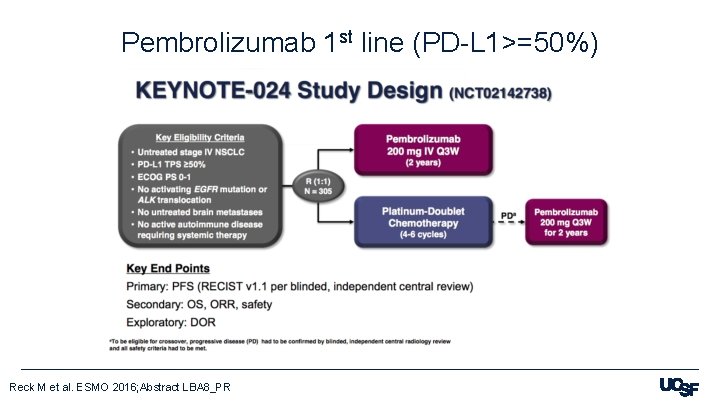
Pembrolizumab 1 st line (PD-L 1>=50%) Reck M et al. ESMO 2016; Abstract LBA 8_PR
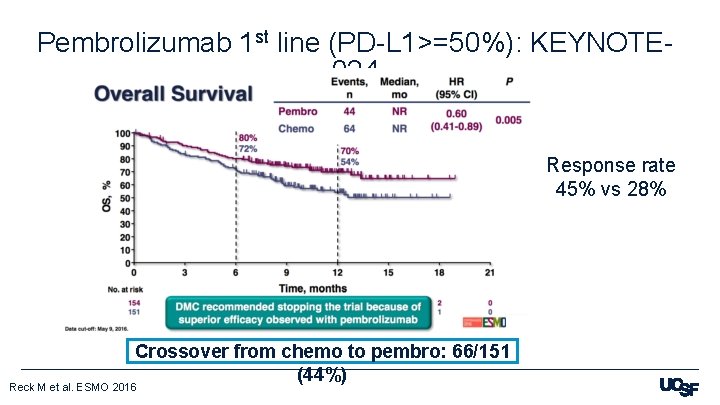
Pembrolizumab 1 st line (PD-L 1>=50%): KEYNOTE 024 Response rate 45% vs 28% Crossover from chemo to pembro: 66/151 (44%) Reck M et al. ESMO 2016
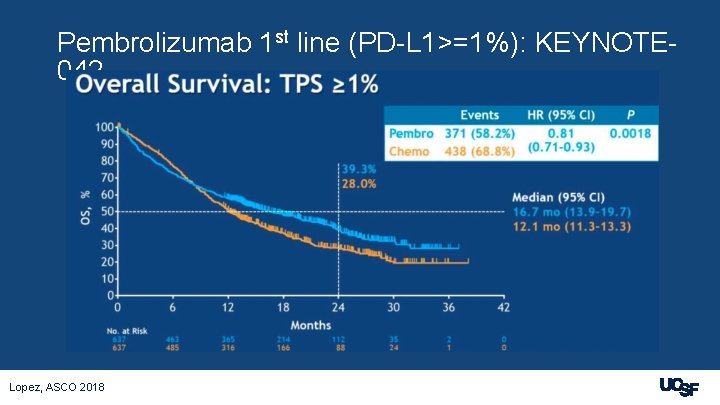
Pembrolizumab 1 st line (PD-L 1>=1%): KEYNOTE 042 Lopez, ASCO 2018
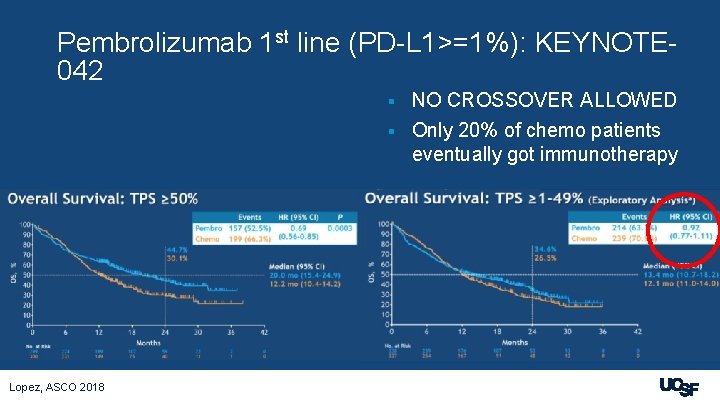
Pembrolizumab 1 st line (PD-L 1>=1%): KEYNOTE 042 NO CROSSOVER ALLOWED § Only 20% of chemo patients eventually got immunotherapy § Lopez, ASCO 2018
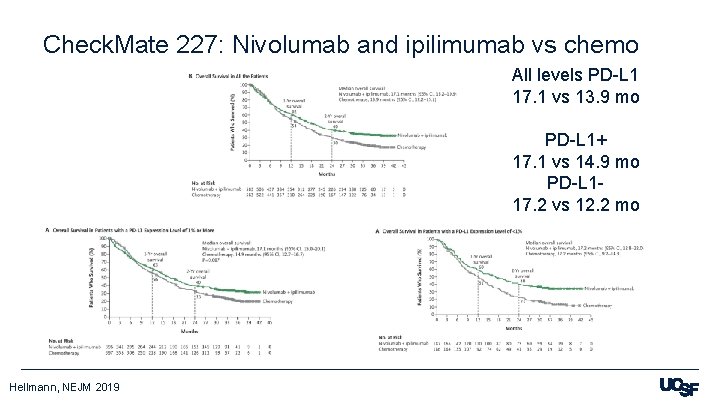
Check. Mate 227: Nivolumab and ipilimumab vs chemo All levels PD-L 1 17. 1 vs 13. 9 mo PD-L 1+ 17. 1 vs 14. 9 mo PD-L 117. 2 vs 12. 2 mo Hellmann, NEJM 2019
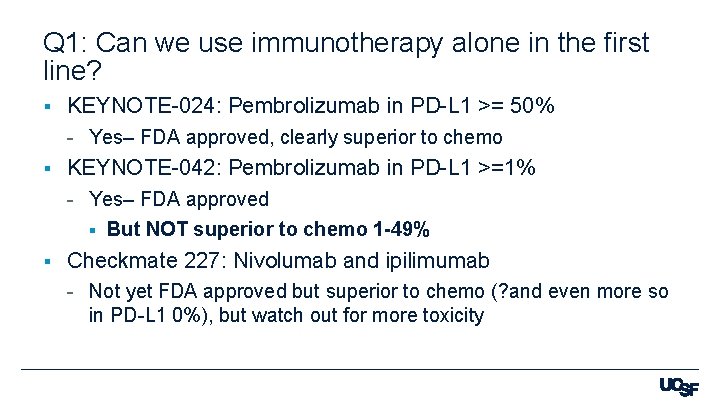
Q 1: Can we use immunotherapy alone in the first line? § KEYNOTE-024: Pembrolizumab in PD-L 1 >= 50% - Yes– FDA approved, clearly superior to chemo § KEYNOTE-042: Pembrolizumab in PD-L 1 >=1% - Yes– FDA approved § But NOT superior to chemo 1 -49% § Checkmate 227: Nivolumab and ipilimumab - Not yet FDA approved but superior to chemo (? and even more so in PD-L 1 0%), but watch out for more toxicity
Q 2: Can we combine immunotherapy and chemo? KEYNOTE-189: Non-squamous– Platinum and pemetrexed with or without pembrolizumab § KEYNOTE-407: Squamous– Carboplatin and taxane with or without pembrolizumab § IMpower 150: Non-squamous– Carboplatin and paclitaxel with bevacizumab +/- atezolizumab §
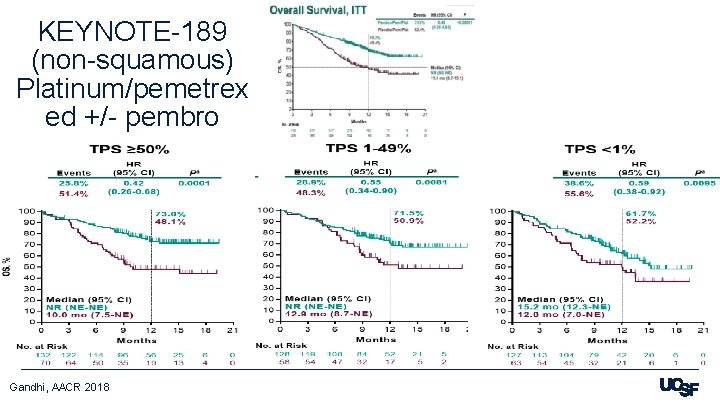
KEYNOTE-189 (non-squamous) Platinum/pemetrex ed +/- pembro Gandhi, AACR 2018
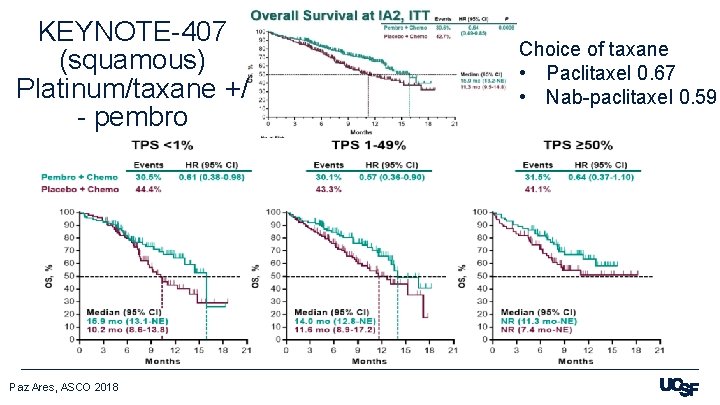
KEYNOTE-407 (squamous) Platinum/taxane +/ - pembro Paz Ares, ASCO 2018 Choice of taxane • Paclitaxel 0. 67 • Nab-paclitaxel 0. 59

What if non-squam patients aren’t eligible for pemetrexed? § IMpower 150 - Carbo/paclitaxel + bevacizumab +/- atezolizumab § 19. 2 vs 14. 7 mo, HR 0. 78, p=0. 0164 § Subgroups for PD-L 1 high, low and negative trended toward benefit (HR 0. 70, 0. 82) Socinski, AACR 2018
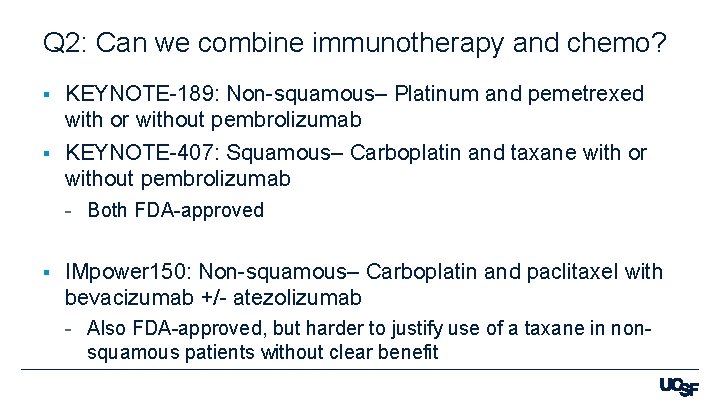
Q 2: Can we combine immunotherapy and chemo? KEYNOTE-189: Non-squamous– Platinum and pemetrexed with or without pembrolizumab § KEYNOTE-407: Squamous– Carboplatin and taxane with or without pembrolizumab § - Both FDA-approved § IMpower 150: Non-squamous– Carboplatin and paclitaxel with bevacizumab +/- atezolizumab - Also FDA-approved, but harder to justify use of a taxane in nonsquamous patients without clear benefit
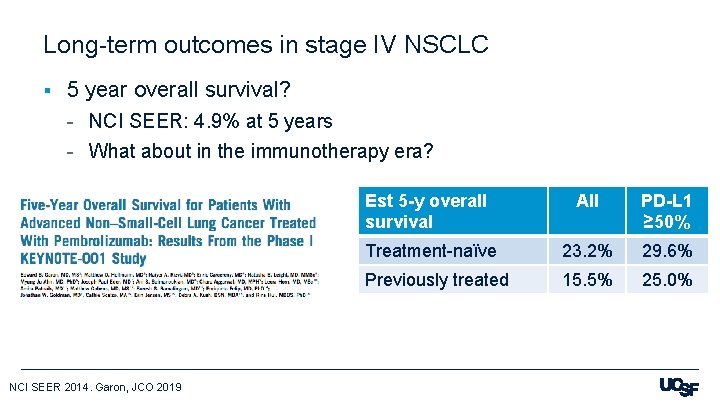
Long-term outcomes in stage IV NSCLC § 5 year overall survival? - NCI SEER: 4. 9% at 5 years - What about in the immunotherapy era? NCI SEER 2014. Garon, JCO 2019 Est 5 -y overall survival All PD-L 1 ≥ 50% Treatment-naïve 23. 2% 29. 6% Previously treated 15. 5% 25. 0%
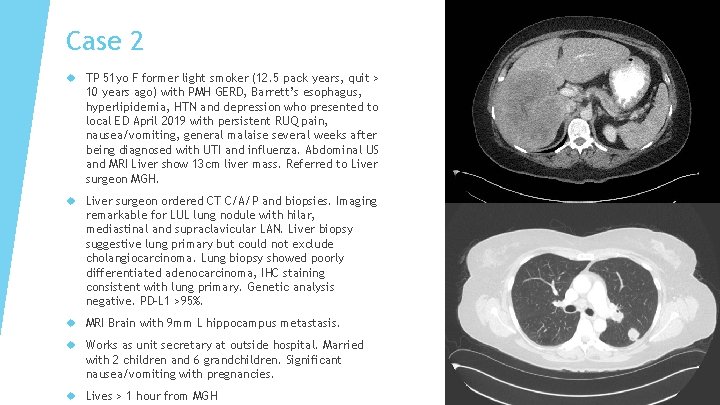
Case 2 TP 51 yo F former light smoker (12. 5 pack years, quit > 10 years ago) with PMH GERD, Barrett’s esophagus, hyperlipidemia, HTN and depression who presented to local ED April 2019 with persistent RUQ pain, nausea/vomiting, general malaise several weeks after being diagnosed with UTI and influenza. Abdominal US and MRI Liver show 13 cm liver mass. Referred to Liver surgeon MGH. Liver surgeon ordered CT C/A/P and biopsies. Imaging remarkable for LUL lung nodule with hilar, mediastinal and supraclavicular LAN. Liver biopsy suggestive lung primary but could not exclude cholangiocarcinoma. Lung biopsy showed poorly differentiated adenocarcinoma, IHC staining consistent with lung primary. Genetic analysis negative. PD-L 1 >95%. MRI Brain with 9 mm L hippocampus metastasis. Works as unit secretary at outside hospital. Married with 2 children and 6 grandchildren. Significant nausea/vomiting with pregnancies. Lives > 1 hour from MGH
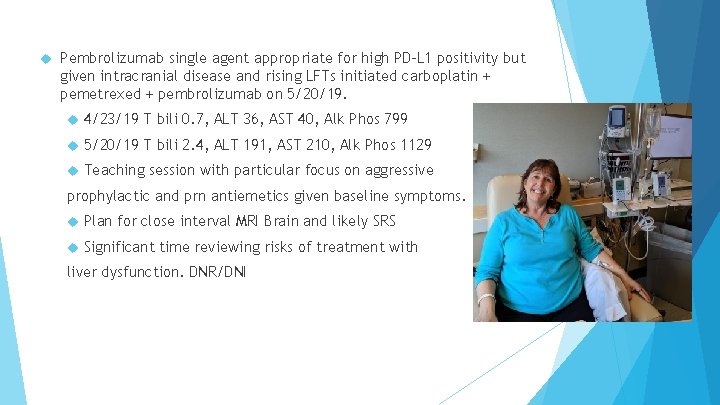
Pembrolizumab single agent appropriate for high PD-L 1 positivity but given intracranial disease and rising LFTs initiated carboplatin + pemetrexed + pembrolizumab on 5/20/19. 4/23/19 T bili 0. 7, ALT 36, AST 40, Alk Phos 799 5/20/19 T bili 2. 4, ALT 191, AST 210, Alk Phos 1129 Teaching session with particular focus on aggressive prophylactic and prn antiemetics given baseline symptoms. Plan for close interval MRI Brain and likely SRS Significant time reviewing risks of treatment with liver dysfunction. DNR/DNI
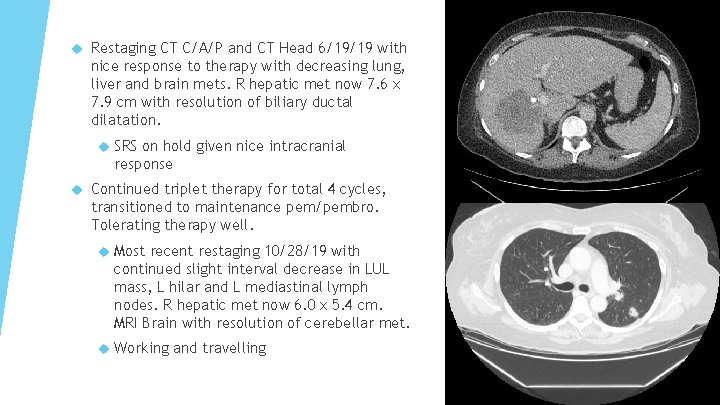
Restaging CT C/A/P and CT Head 6/19/19 with nice response to therapy with decreasing lung, liver and brain mets. R hepatic met now 7. 6 x 7. 9 cm with resolution of biliary ductal dilatation. SRS on hold given nice intracranial response Continued triplet therapy for total 4 cycles, transitioned to maintenance pem/pembro. Tolerating therapy well. Most recent restaging 10/28/19 with continued slight interval decrease in LUL mass, L hilar and L mediastinal lymph nodes. R hepatic met now 6. 0 x 5. 4 cm. MRI Brain with resolution of cerebellar met. Working and travelling

26 Immune Checkpoint Inhibitors in Lung Cancer First Annual Research To Practice Oncology Nursing Retreat November 10, 2019 Matthew Gubens, MD, MS Associate Professor of Medicine UCSF Helen Diller Family Comprehensive Cancer Center
Q 3: Can we use immunotherapy in stage III unresectable NSCLC? § PACIFIC: Durvalumab after chemoradiation
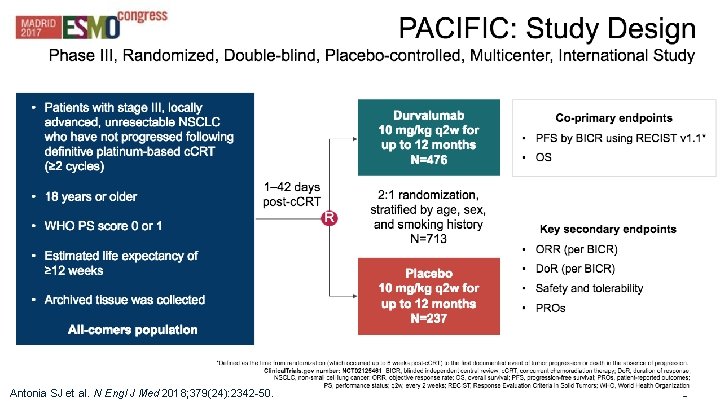
28 Antonia SJ et al. N Engl J Med 2018; 379(24): 2342 -50.
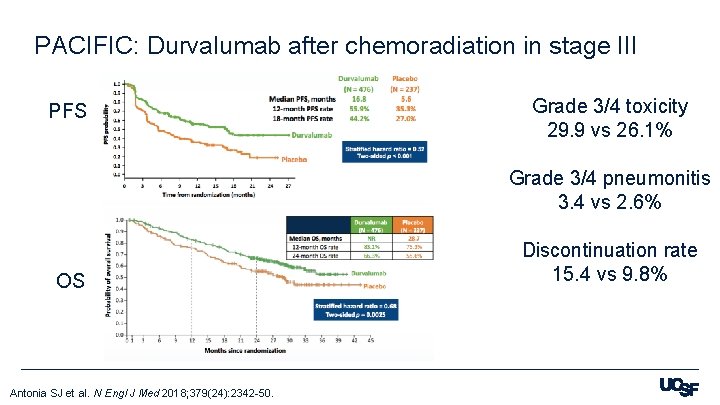
PACIFIC: Durvalumab after chemoradiation in stage III PFS Grade 3/4 toxicity 29. 9 vs 26. 1% Grade 3/4 pneumonitis 3. 4 vs 2. 6% OS Antonia SJ et al. N Engl J Med 2018; 379(24): 2342 -50. Discontinuation rate 15. 4 vs 9. 8%
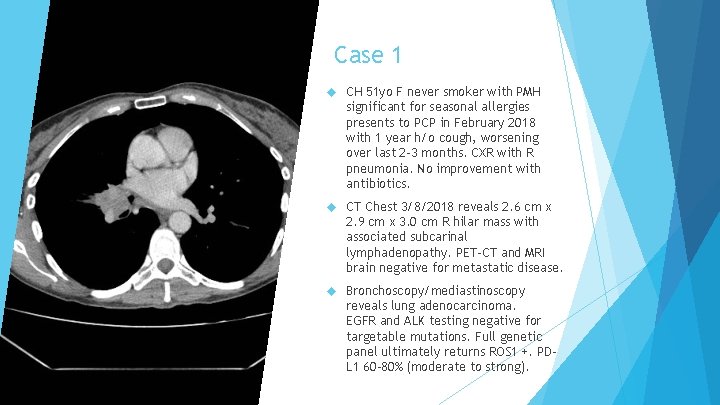
Case 1 CH 51 yo F never smoker with PMH significant for seasonal allergies presents to PCP in February 2018 with 1 year h/o cough, worsening over last 2 -3 months. CXR with R pneumonia. No improvement with antibiotics. CT Chest 3/8/2018 reveals 2. 6 cm x 2. 9 cm x 3. 0 cm R hilar mass with associated subcarinal lymphadenopathy. PET-CT and MRI brain negative for metastatic disease. Bronchoscopy/mediastinoscopy reveals lung adenocarcinoma. EGFR and ALK testing negative for targetable mutations. Full genetic panel ultimately returns ROS 1 +. PDL 1 60 -80% (moderate to strong).
Married, mother of 2, managing partner in a law firm 16 yo daughter, 19 yo son Husband 1 year s/p surgery for prostate CA – did not share diagnosis/treatment with children until his 1 year anniversary with normal PSA Met with PACT team to discuss disclosing her diagnosis to children Chemotherapy teaching session week prior to initiation of cisplatin + pemetrexed + radiation. Plan 3 cycles chemotherapy, RT 66 Gy in 33 fractions. Definitive chemotherapy + radiation 5/29/18 -7/13/18 Teaching geared to patient’s goals, level of understanding Potential side effects of definitive chemo. RT– fatigue, appetite changes, bone marrow changes, renal dysfunction, liver dysfunction, electrolyte abnormalities, GI toxicities, hearing deficits/tinnitus, peripheral neuropathy, hair loss/hair thinning, allergic reaction, teratogenicity, peripheral edema, excessive tears, rhinorrhea, esophagitis Prophylactic and prn antiemetics, bowel regimen, mouth care, B 12/folate, diet/hydration Review how/when to contact office with toxicities Weekly followup
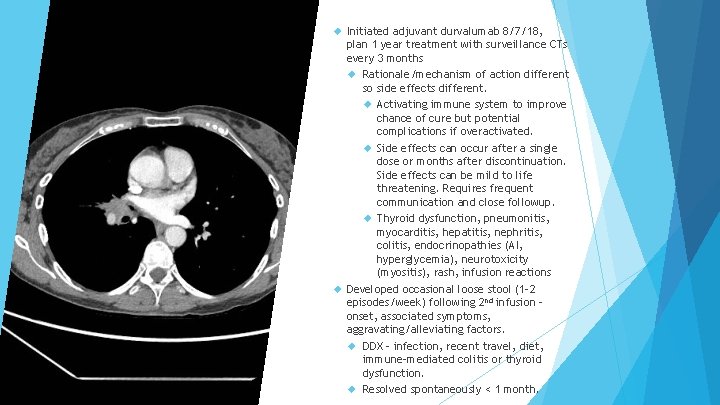
Initiated adjuvant durvalumab 8/7/18, plan 1 year treatment with surveillance CTs every 3 months Rationale/mechanism of action different so side effects different. Activating immune system to improve chance of cure but potential complications if overactivated. Side effects can occur after a single dose or months after discontinuation. Side effects can be mild to life threatening. Requires frequent communication and close followup. Thyroid dysfunction, pneumonitis, myocarditis, hepatitis, nephritis, colitis, endocrinopathies (AI, hyperglycemia), neurotoxicity (myositis), rash, infusion reactions Developed occasional loose stool (1 -2 episodes/week) following 2 nd infusion – onset, associated symptoms, aggravating/alleviating factors. DDX – infection, recent travel, diet, immune-mediated colitis or thyroid dysfunction. Resolved spontaneously < 1 month.
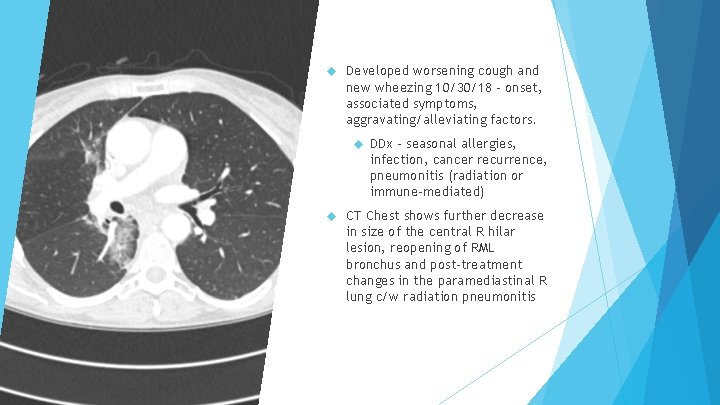
Developed worsening cough and new wheezing 10/30/18 – onset, associated symptoms, aggravating/alleviating factors. DDx – seasonal allergies, infection, cancer recurrence, pneumonitis (radiation or immune-mediated) CT Chest shows further decrease in size of the central R hilar lesion, reopening of RML bronchus and post-treatment changes in the paramediastinal R lung c/w radiation pneumonitis
Treated with short course of steroids + antibiotics with significant clinical improvement Durvalumab held 10/30/18, resumed 11/13/18 after completion of steroids Trials allowed low dose steroids with IO Duration of steroids depends on severity of symptoms IO typically well tolerated but complications can be severe so must always do comprehensive review of systems, history and physical Start within 8 weeks of completing chemo. RT, concerns about overlapping toxicities Immune mediated toxicities always high on differential Multidisciplinary team
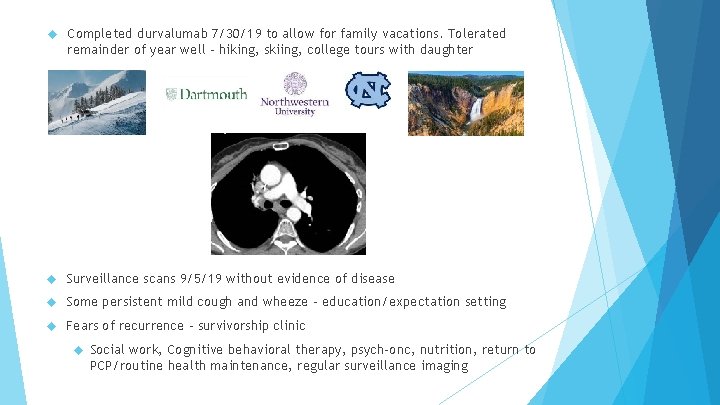
Completed durvalumab 7/30/19 to allow for family vacations. Tolerated remainder of year well – hiking, skiing, college tours with daughter Surveillance scans 9/5/19 without evidence of disease Some persistent mild cough and wheeze – education/expectation setting Fears of recurrence – survivorship clinic Social work, Cognitive behavioral therapy, psych-onc, nutrition, return to PCP/routine health maintenance, regular surveillance imaging
36 Immune Checkpoint Inhibitors in Lung Cancer First Annual Research To Practice Oncology Nursing Retreat November 10, 2019 Matthew Gubens, MD, MS Associate Professor of Medicine UCSF Helen Diller Family Comprehensive Cancer Center
Q 4: Can we use immunotherapy in small cell lung cancer? § 3 rd line - Check. Mate 032 Nivolumab ORR 12% - KEYNOTE-158 and 028 Pembrolizumab ORR 19% § 1 st line - IMpower 133: Carboplatin and etoposide +/- atezolizumab

IMpower 133: Overall Survival Liu, WCLC 2018
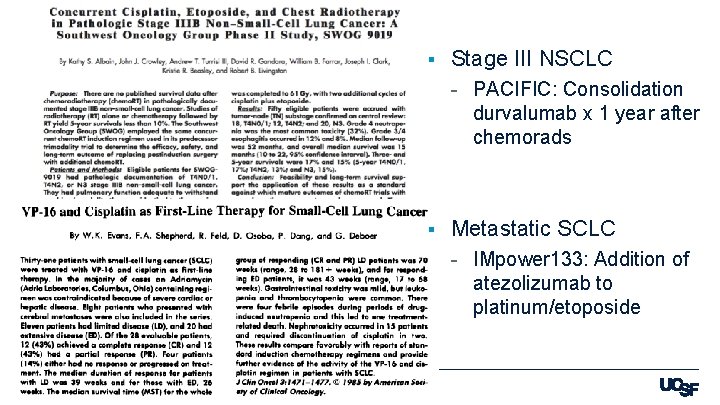
§ Stage III NSCLC - PACIFIC: Consolidation durvalumab x 1 year after chemorads § Metastatic SCLC - IMpower 133: Addition of atezolizumab to platinum/etoposide
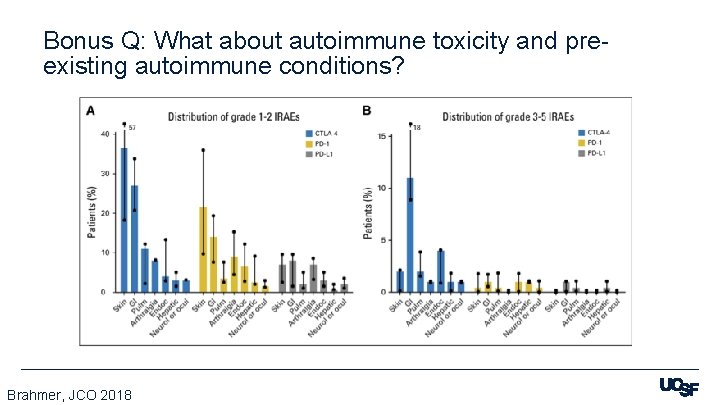
Bonus Q: What about autoimmune toxicity and preexisting autoimmune conditions? Brahmer, JCO 2018
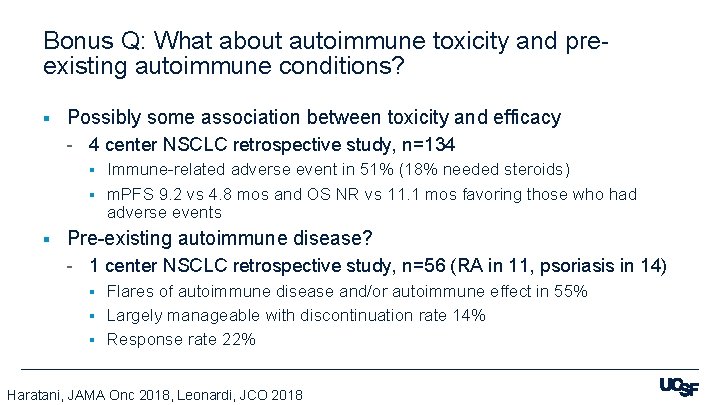
Bonus Q: What about autoimmune toxicity and preexisting autoimmune conditions? § Possibly some association between toxicity and efficacy - 4 center NSCLC retrospective study, n=134 Immune-related adverse event in 51% (18% needed steroids) § m. PFS 9. 2 vs 4. 8 mos and OS NR vs 11. 1 mos favoring those who had adverse events § § Pre-existing autoimmune disease? - 1 center NSCLC retrospective study, n=56 (RA in 11, psoriasis in 14) Flares of autoimmune disease and/or autoimmune effect in 55% § Largely manageable with discontinuation rate 14% § Response rate 22% § Haratani, JAMA Onc 2018, Leonardi, JCO 2018
Special Issues in Oncology Care Patients with minor children or grandchildren
- Slides: 42