
Module 13 Understanding the Key Instability Drivers to

Module # 13 Understanding the Key Instability Drivers to Inform Design/Decision Matrix Iowa’s River Restoration Toolbox Level 1 / Base Training
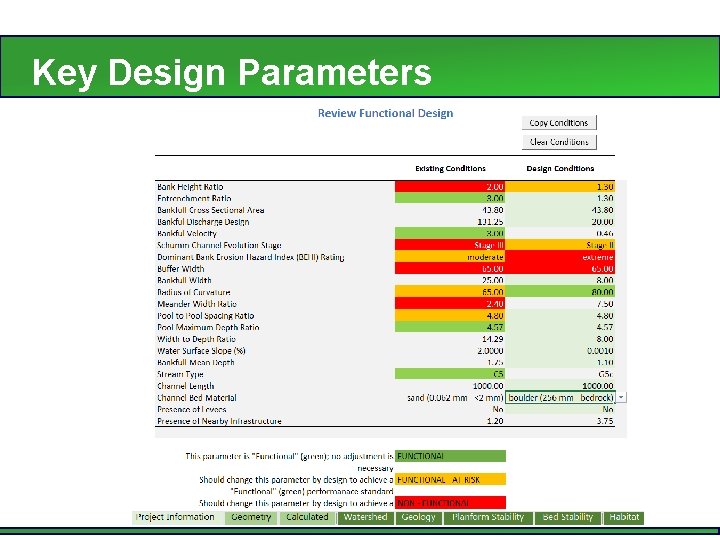
Key Design Parameters
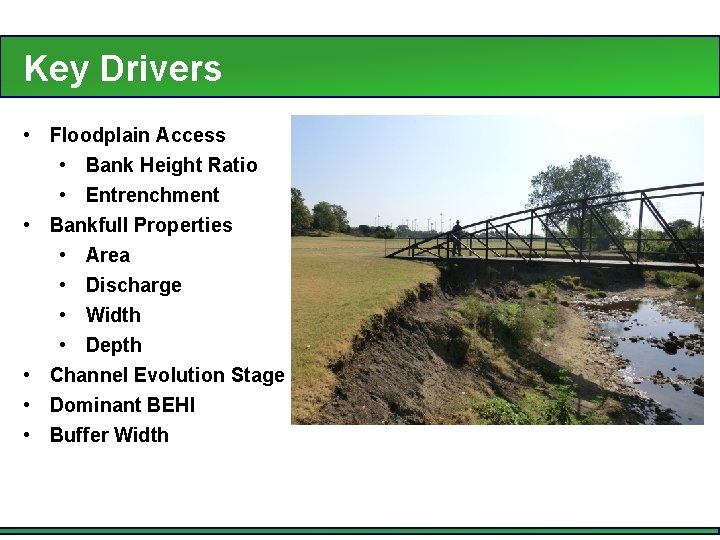
Key Drivers • Floodplain Access • Bank Height Ratio • Entrenchment • Bankfull Properties • Area • Discharge • Width • Depth • Channel Evolution Stage • Dominant BEHI • Buffer Width
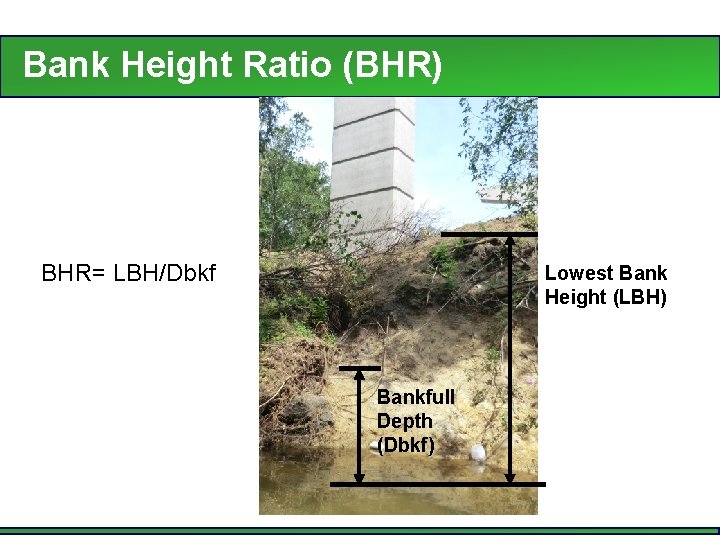
Bank Height Ratio (BHR) BHR= LBH/Dbkf Lowest Bank Height (LBH) Bankfull Depth (Dbkf)
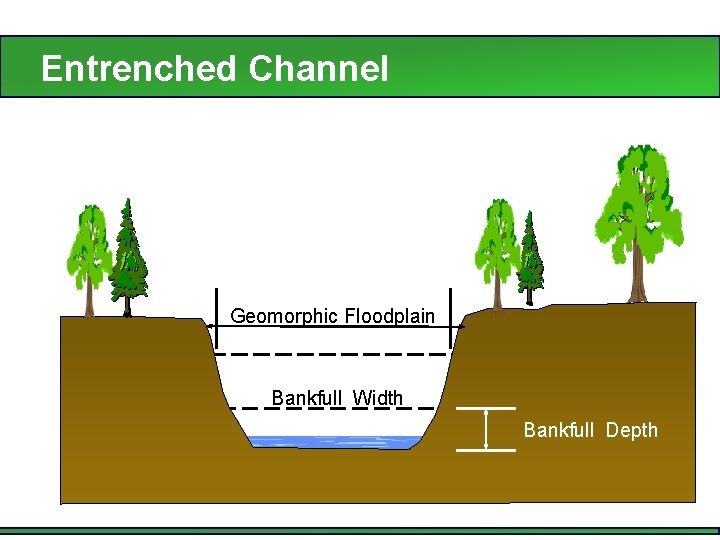
Entrenched Channel Geomorphic Floodplain Bankfull Width Bankfull Depth

Bankfull Geometry
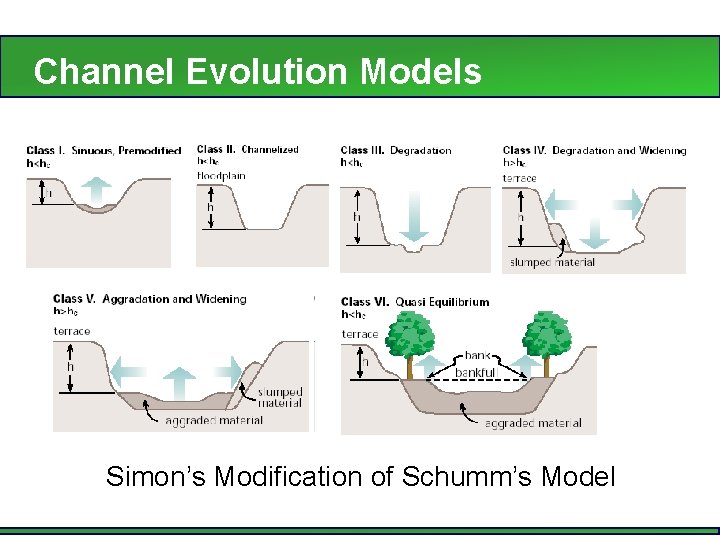
Channel Evolution Models Simon’s Modification of Schumm’s Model
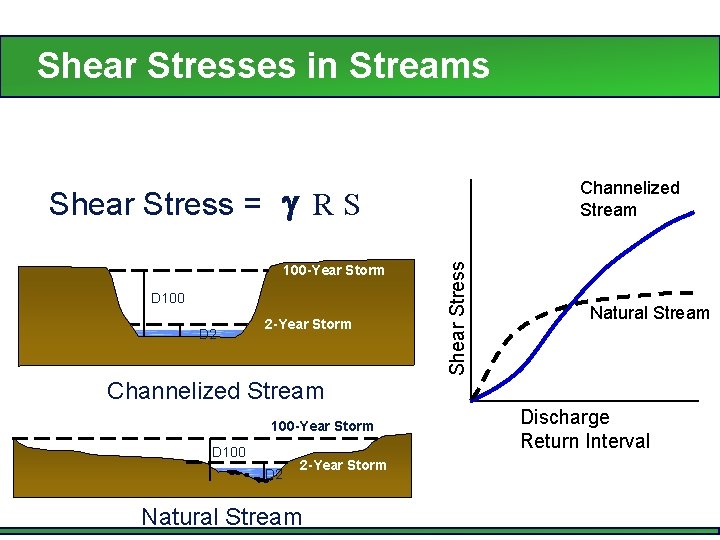
Shear Stresses in Streams Shear Stress = R S D 100 D 2 2 -Year Storm Shear Stress 100 -Year Storm Channelized Stream Natural Stream Channelized Stream 100 -Year Storm D 100 D 2 2 -Year Storm Natural Stream Discharge Return Interval
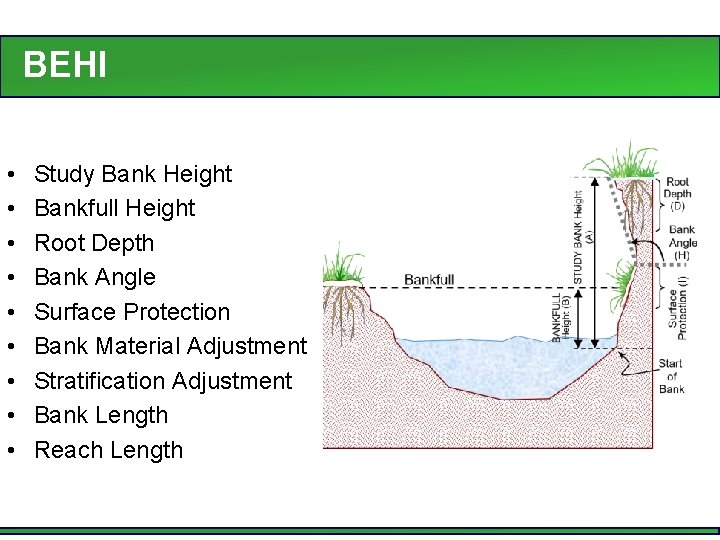
BEHI • • • Study Bank Height Bankfull Height Root Depth Bank Angle Surface Protection Bank Material Adjustment Stratification Adjustment Bank Length Reach Length
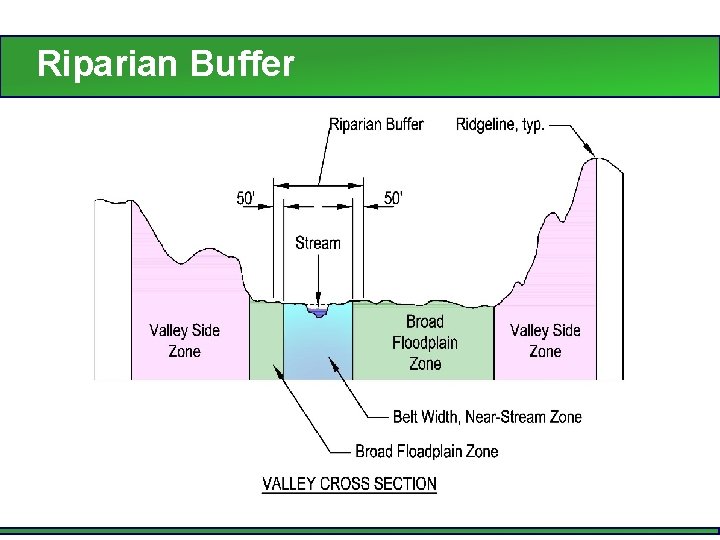
Heading for Text Riparian Buffer Over a Photo
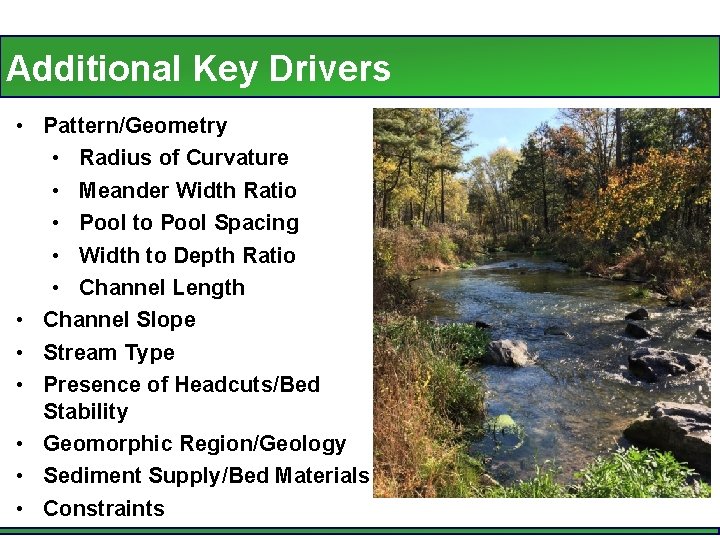
Additional Key Drivers • Pattern/Geometry • Radius of Curvature • Meander Width Ratio • Pool to Pool Spacing • Width to Depth Ratio • Channel Length • Channel Slope • Stream Type • Presence of Headcuts/Bed Stability • Geomorphic Region/Geology • Sediment Supply/Bed Materials • Constraints
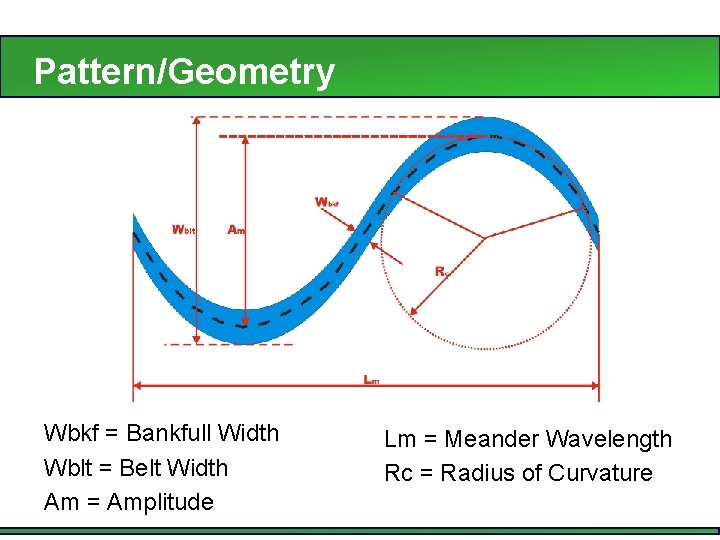
Pattern/Geometry Wbkf = Bankfull Width Wblt = Belt Width Am = Amplitude Lm = Meander Wavelength Rc = Radius of Curvature
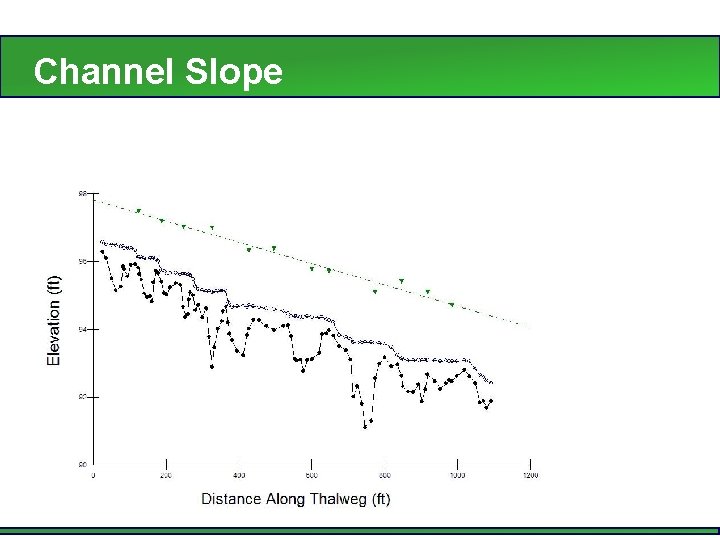
Channel Slope
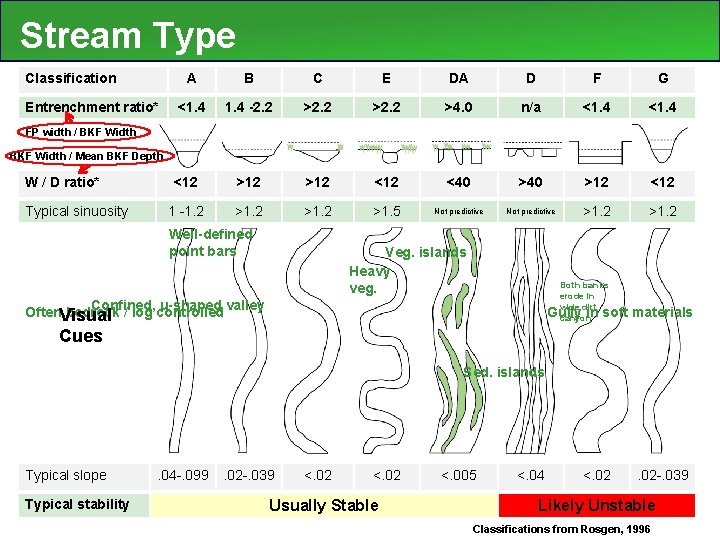
Stream Type Classification Entrenchment ratio* A B C E DA D F G <1. 4 -2. 2 >2. 2 >4. 0 n/a <1. 4 <12 >12 <40 >12 <12 1 -1. 2 >1. 5 Not predictive >1. 2 FP width / BKF Width / Mean BKF Depth W / D ratio* Typical sinuosity Well-defined point bars Veg. islands Heavy veg. Both banks erode in wide dirt Gully in soft canyon Confined, u-shaped valley Often. Visual bedrock / log controlled materials Cues Sed. islands Typical slope Typical stability . 04 -. 099 . 02 -. 039 <. 02 Usually Stable <. 005 <. 04 <. 02 -. 039 Likely Unstable Classifications from Rosgen, 1996
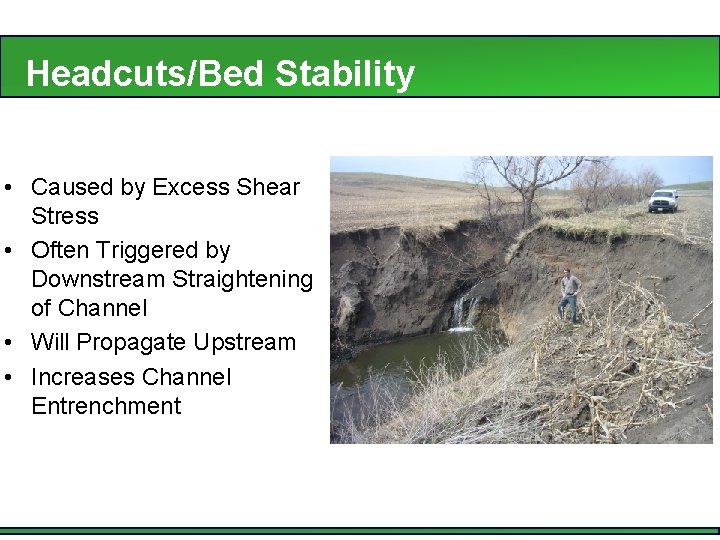
Headcuts/Bed Stability • Caused by Excess Shear Stress • Often Triggered by Downstream Straightening of Channel • Will Propagate Upstream • Increases Channel Entrenchment
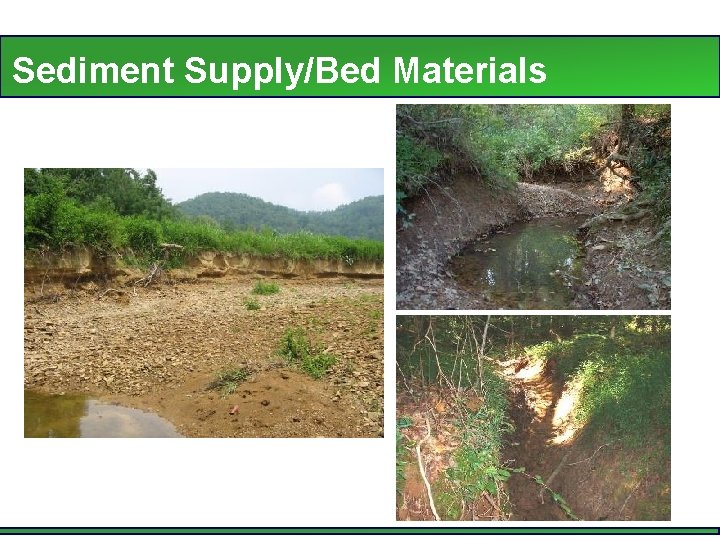
Sediment Supply/Bed Materials
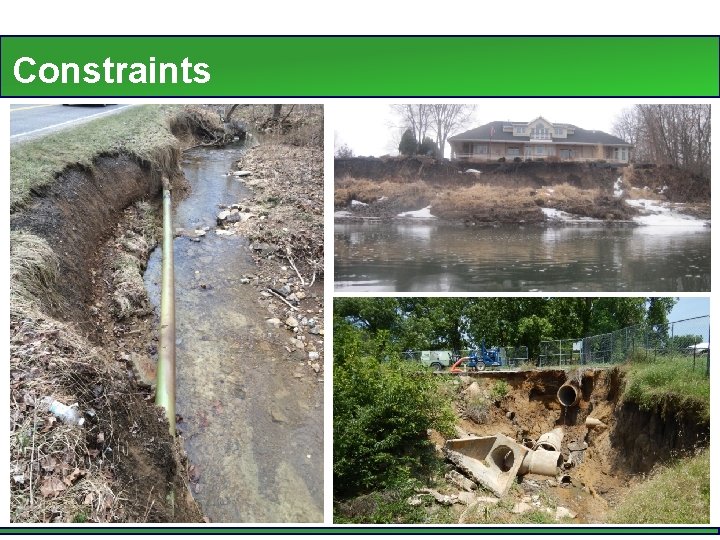
Constraints
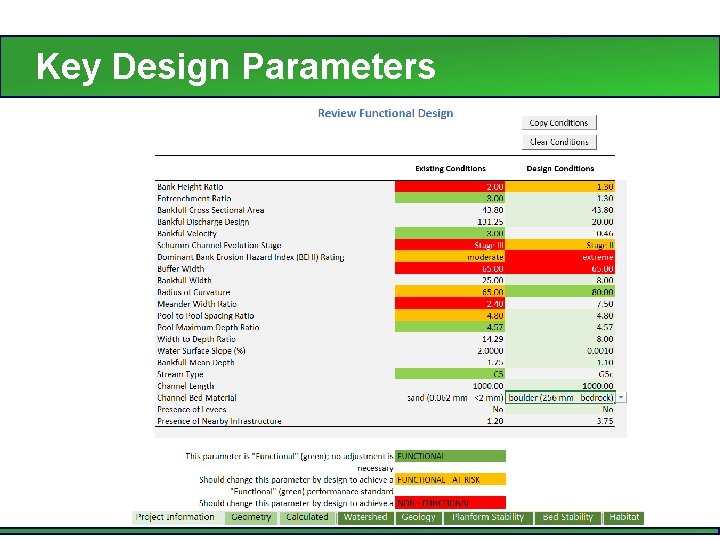
Key Design Parameters
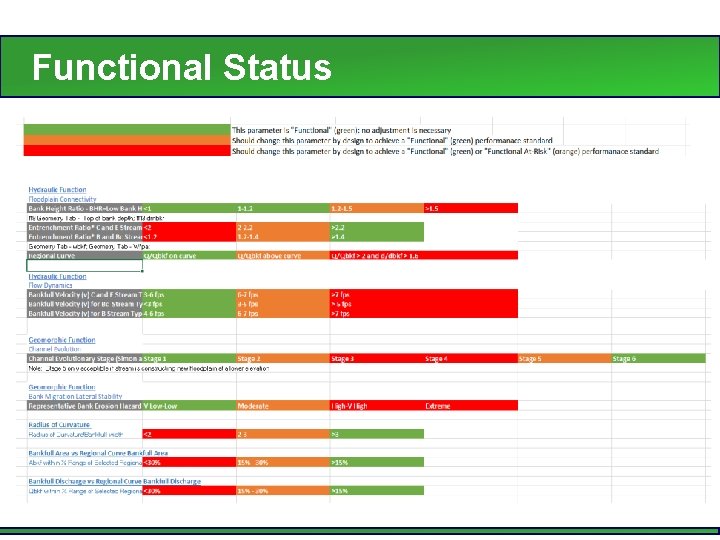
Functional Status

The Assessment Process 1. Assess project site conditions 2. Fill out data collection Excel workbook 3. Receive initial assessment based on site conditions 4. Make initial decisions that will affect the project design 5. Update Key Drivers for design based on step 4 6. Receive adjusted recommendations based on design intent 7. Perform analysis of appropriate practices/techniques 8. Submit final analysis for review

Purpose of Decision Matrix • Documentation of intuitive knowledge used in stream restoration design • Establish logic used to determine appropriate practices & techniques • Note that there are multiple “right answers”
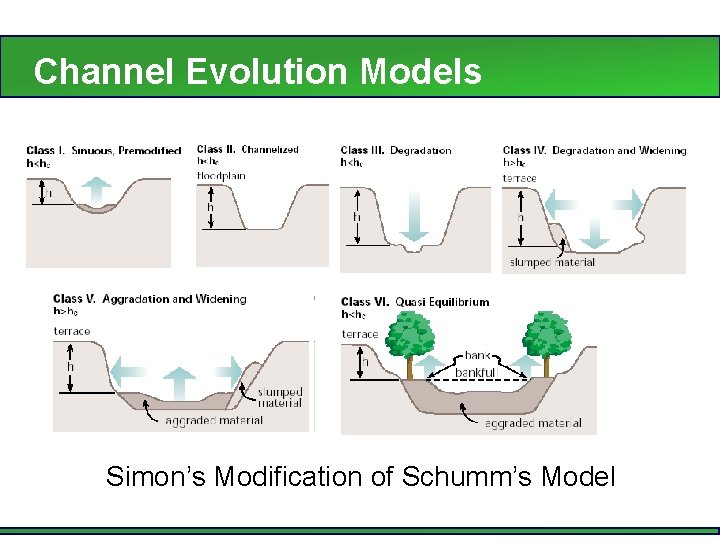
Channel Evolution Models Simon’s Modification of Schumm’s Model

Decision Matrix – Channel Evolution
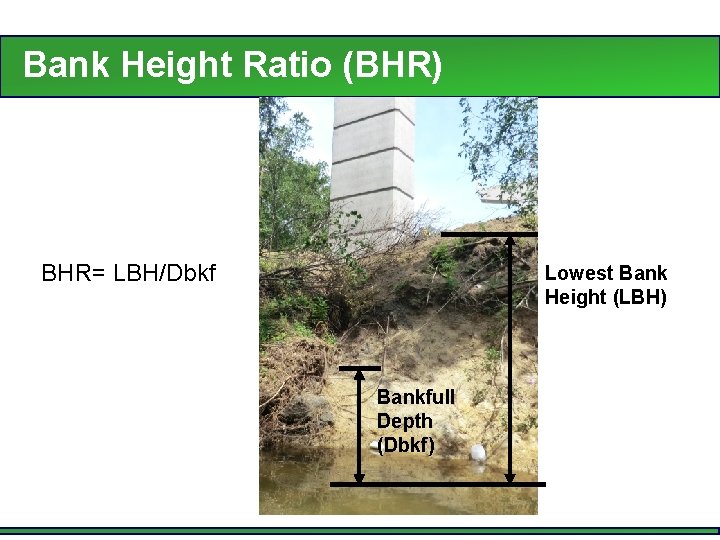
Bank Height Ratio (BHR) BHR= LBH/Dbkf Lowest Bank Height (LBH) Bankfull Depth (Dbkf)

Decision Matrix – Bank Height Ratio
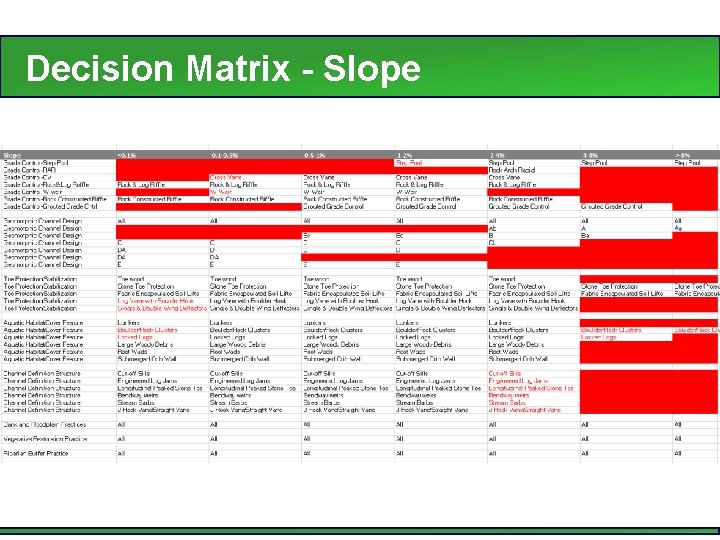
Decision Matrix - Slope

Decision Matrix – Bankfull Width

Design Assessment Tab
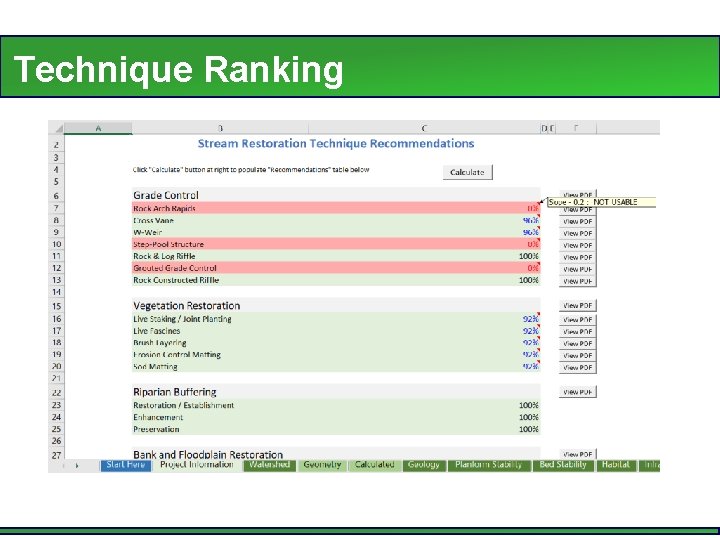
Technique Ranking

Module # 13 Understanding the Key Instability Drivers to Inform Design/Decision Matrix Iowa’s River Restoration Toolbox Level 1 / Base Training
- Slides: 30