
Module 12 Adolescence Module 12 Adolescence What is





- Slides: 50
Module 12 Adolescence
Module 12: Adolescence What is Adolescence?
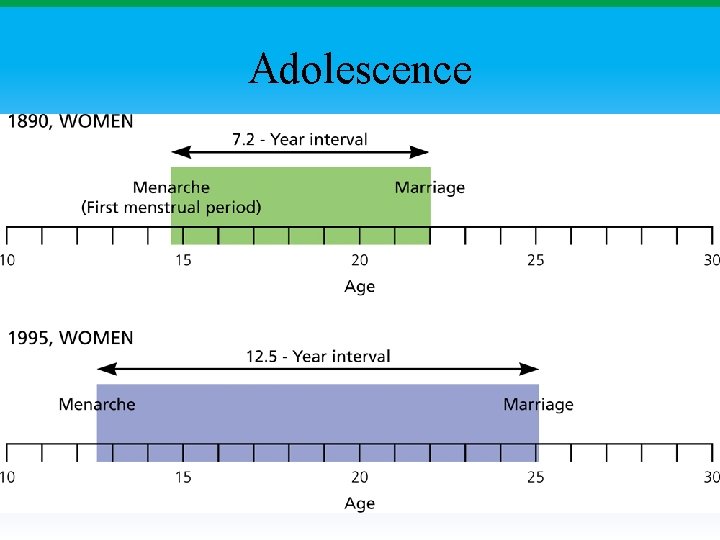
Adolescence • The transition period from ____ to ____ • extended from puberty to independence. • Starts with sexual maturation • Has changed over the past century
Adolescence
Module 12: Adolescence Physical Development in Adolescence
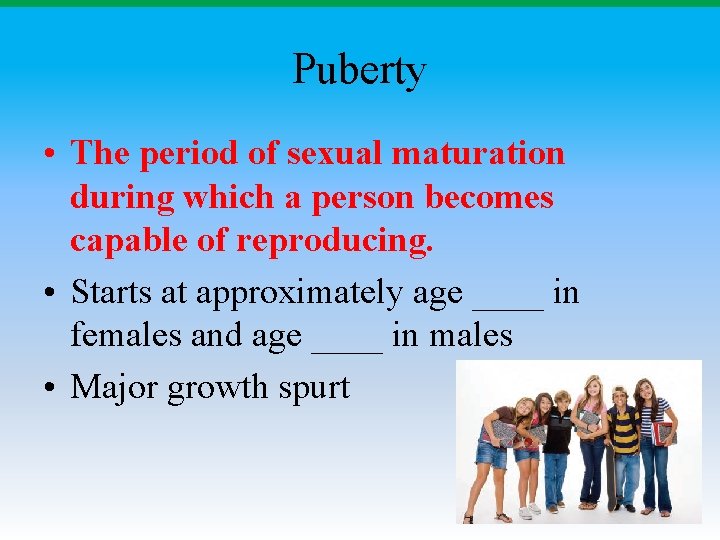
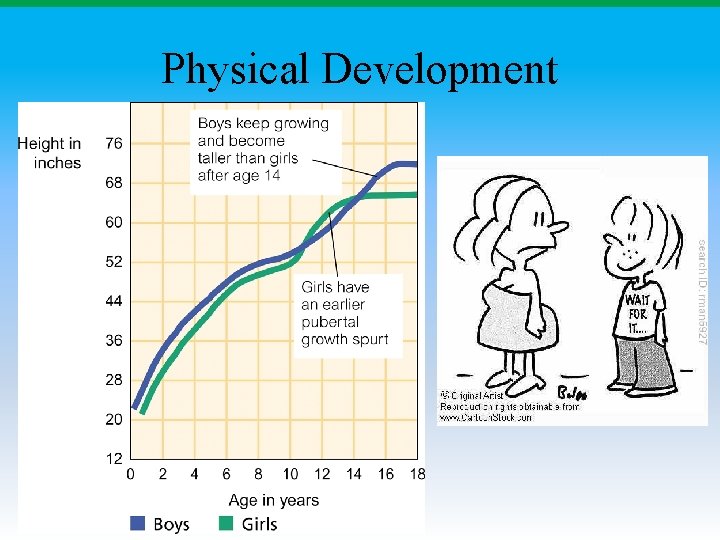
Puberty • The period of sexual maturation during which a person becomes capable of reproducing. • Starts at approximately age ____ in females and age ____ in males • Major growth spurt
Physical Development
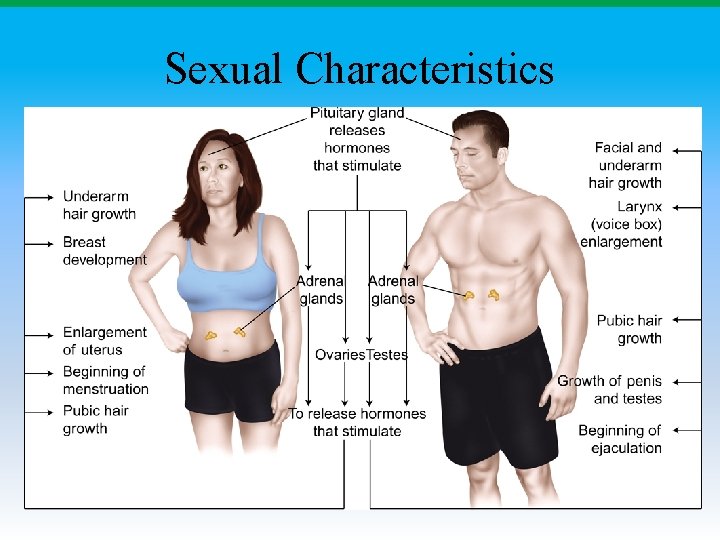
Primary Sex Characteristics • The reproductive organs – ovaries in females – testes in males – external genitalia. • Menarche – beginning of menstruation
Secondary Sex Characteristics • Nonreproductive sexual characteristics, such as • breasts and hip development in females • voice quality and facial hair in males.
Sexual Characteristics
Sexual Orientation • • Enduring sexual attraction toward people of the other gender (heterosexuality), or one’s own gender (homosexuality). One’s attraction toward people of a particular gender • Usually heterosexual or homosexual; small minority bisexual
Heterosexual • A sexual orientation in which a person is attracted to members of the opposite sex • “straight”
Homosexual • A sexual orientation in which a person is attracted to members of the same sex • Approximately 3 -4% of the male population and 1 -2% of the female population
Module 12: Adolescence Cognitive Development in Adolescence
Module 12: Adolescence Cognitive Development in Adolescence: Reasoning
Jean Piaget (pee-ah-ZHAY) • Pioneer in the study of developmental psychology who introduced a stage theory of cognitive development that led to a better understanding of children’s thought processes. • Proposed a cognitive theory consisting of four stages
Formal Operational Stage • Piaget’s fourth and final stage of cognitive development • The person can think logically, hypothetically, and in the abstract • Qualitative change over the thinking of a child
Module 12: Adolescence Cognitive Development in Adolescence: Morality
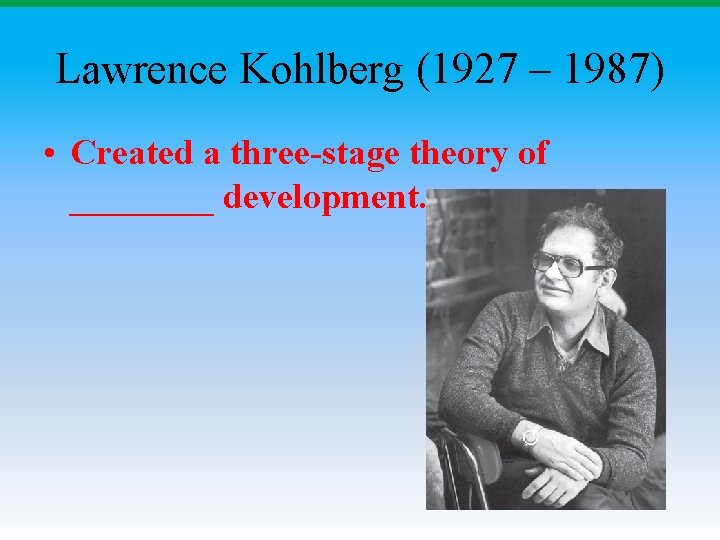
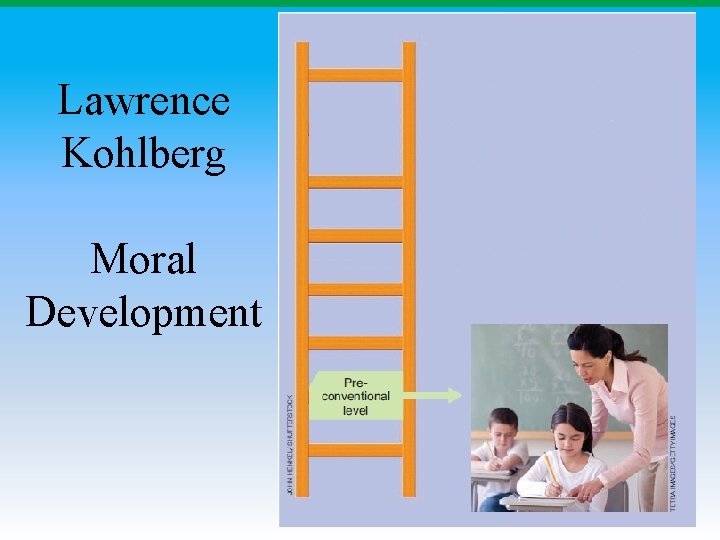
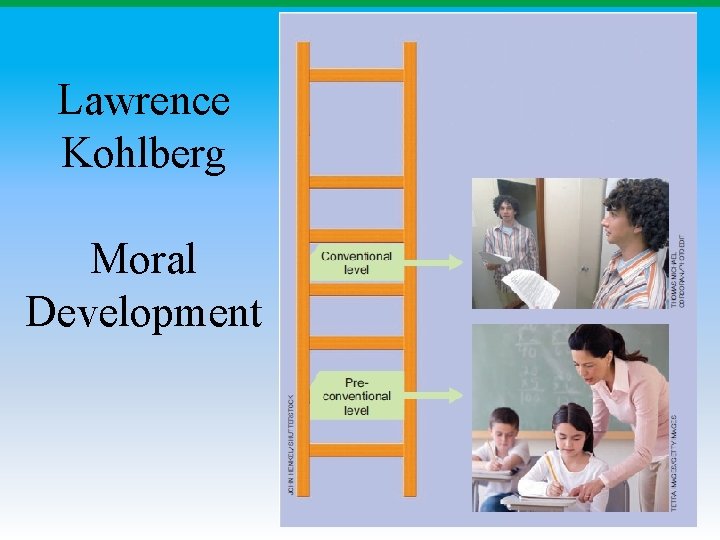
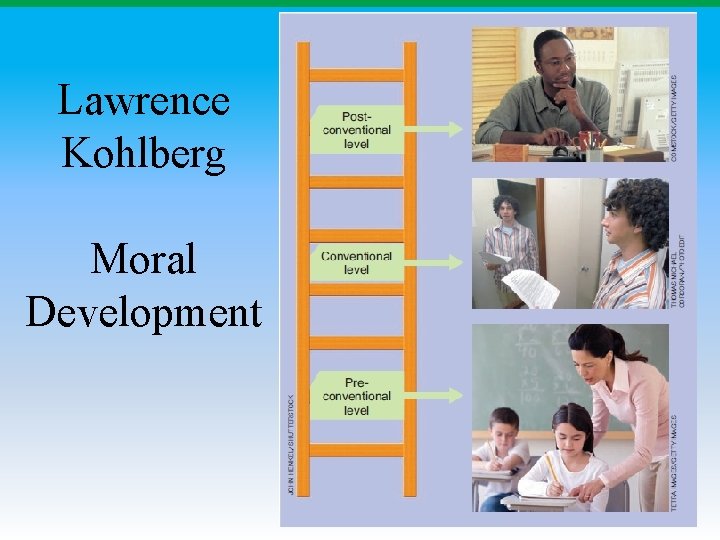
Lawrence Kohlberg (1927 – 1987) • Created a three-stage theory of ____ development.
Heinz Dilemma In Europe, a woman was near death from a very bad disease, a special kind of cancer. There was one drug that the doctors thought might save her. It was a form of radium that a druggist in the same town had recently discovered. The drug was expensive to make, but the druggist was charging 10 times what the drug cost him to make. He paid $200 for the radium and charged $2000 for a small dose of the drug. The sick woman’s husband, Heinz, went to everyone he knew to borrow the money, but he could get together only about $1000, which was half of what it cost. He told the druggist that his wife was dying and asked him to sell it cheaper or let him pay later. But the druggist said, “No, I discovered the drug and I’m going to make money from it. ” Heinz got desperate and broke into the man’s store to steal the drug for his wife.
______ Moral Reasoning • Characterized by the desire to avoid punishment or gain reward • Typically children under the age of 9 • “Heinz was wrong to steal the drug because he might be put in jail. ” • “Heinz was right to steal the drug because he would then have the companionship of his wife longer. ”
Lawrence Kohlberg Moral Development
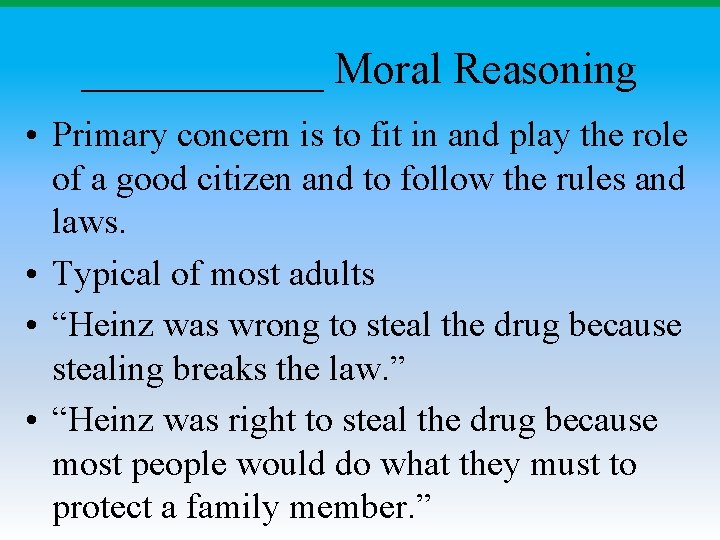
______ Moral Reasoning • Primary concern is to fit in and play the role of a good citizen and to follow the rules and laws. • Typical of most adults • “Heinz was wrong to steal the drug because stealing breaks the law. ” • “Heinz was right to steal the drug because most people would do what they must to protect a family member. ”
Lawrence Kohlberg Moral Development
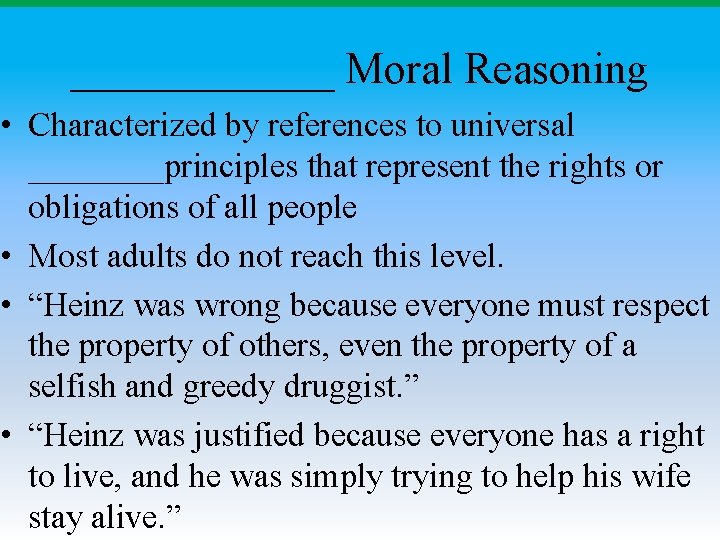
______ Moral Reasoning • Characterized by references to universal ____principles that represent the rights or obligations of all people • Most adults do not reach this level. • “Heinz was wrong because everyone must respect the property of others, even the property of a selfish and greedy druggist. ” • “Heinz was justified because everyone has a right to live, and he was simply trying to help his wife stay alive. ”
Lawrence Kohlberg Moral Development
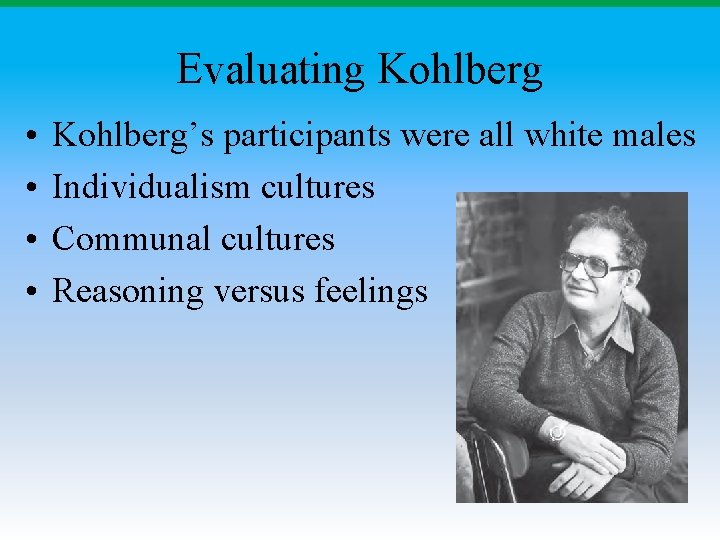
Evaluating Kohlberg • • Kohlberg’s participants were all white males Individualism cultures Communal cultures Reasoning versus feelings
Module 12: Adolescence Social Development in Adolescence
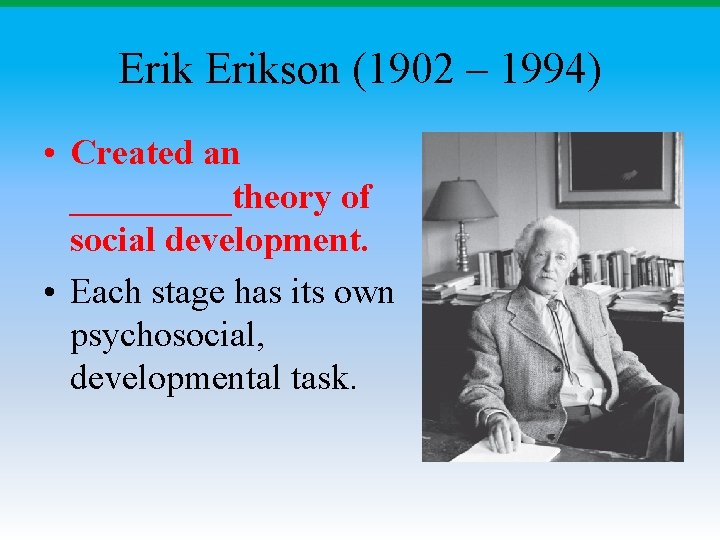
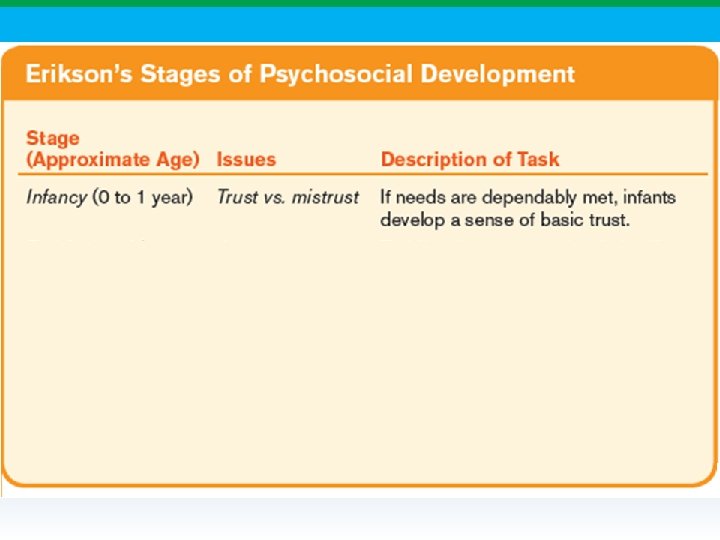
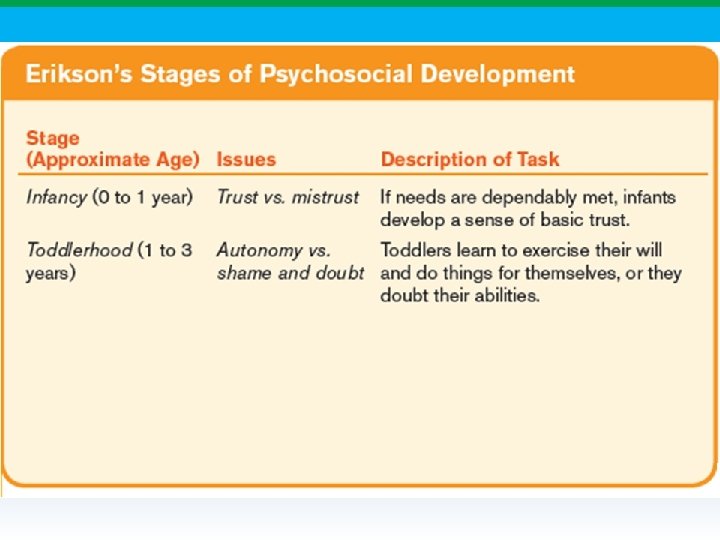
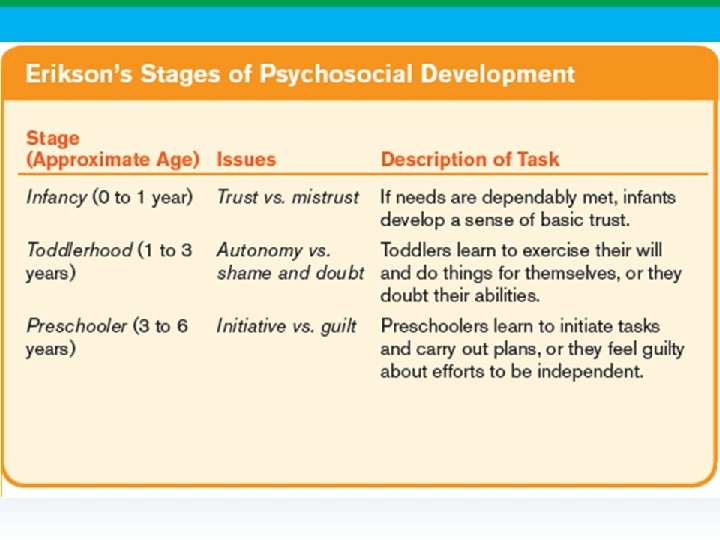
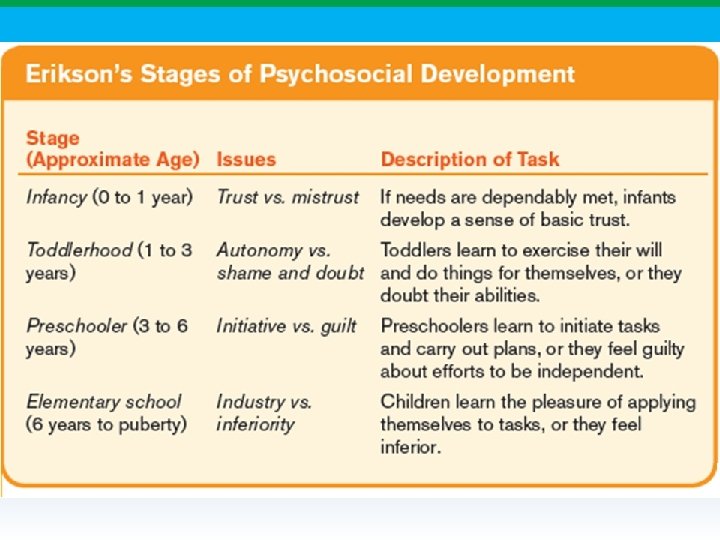
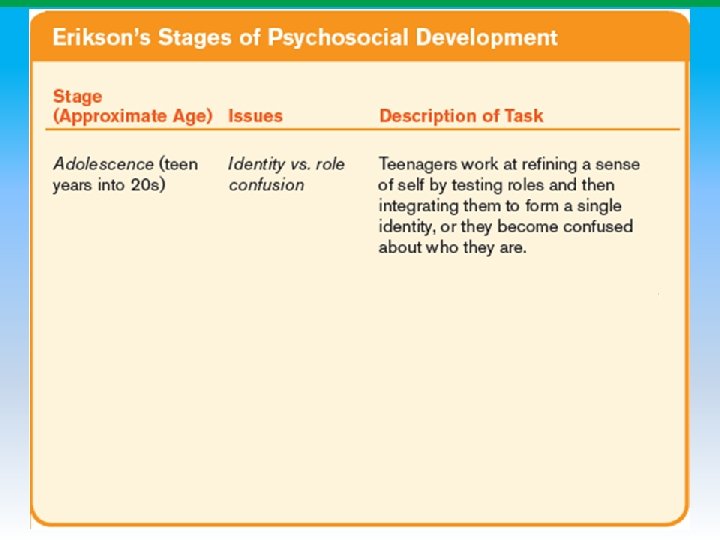
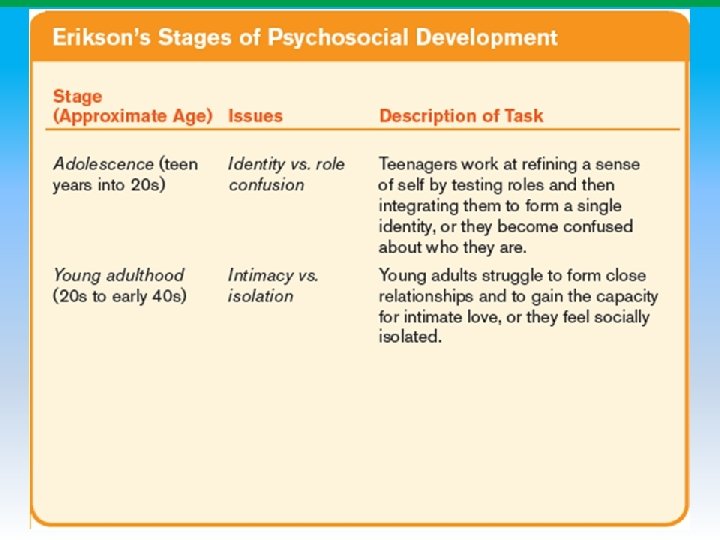
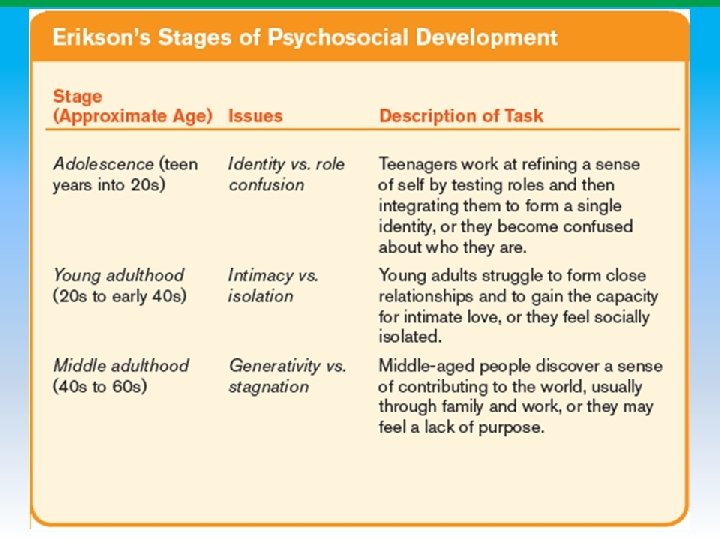
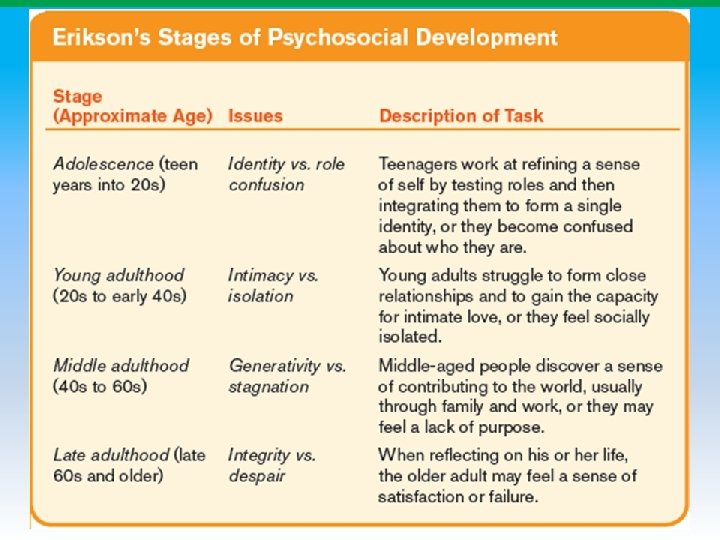
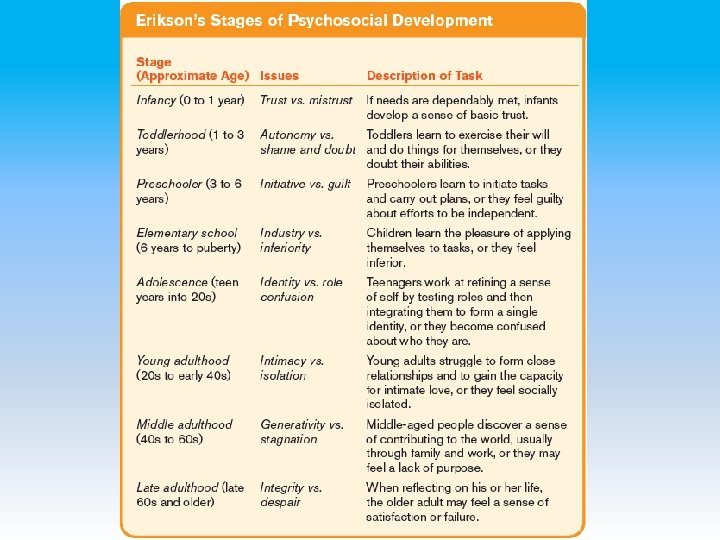
Erikson (1902 – 1994) • Created an _____theory of social development. • Each stage has its own psychosocial, developmental task.
Module 12: Adolescence Social Development in Adolescence: Developing Identity
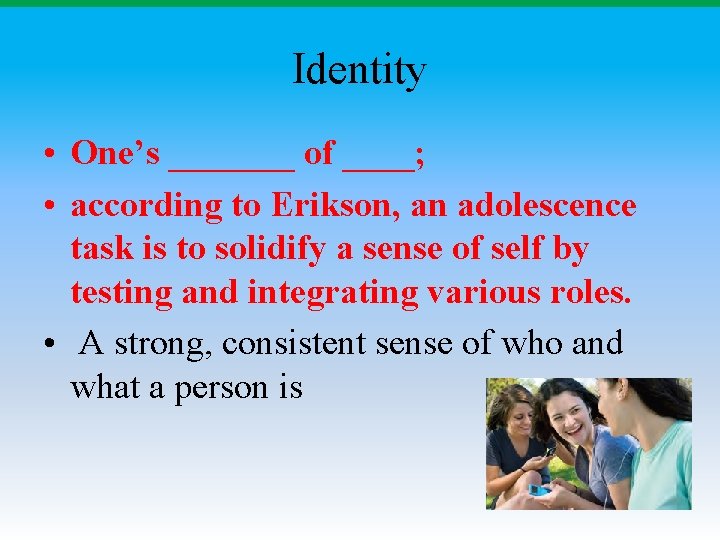
Identity • One’s _______ of ____; • according to Erikson, an adolescence task is to solidify a sense of self by testing and integrating various roles. • A strong, consistent sense of who and what a person is
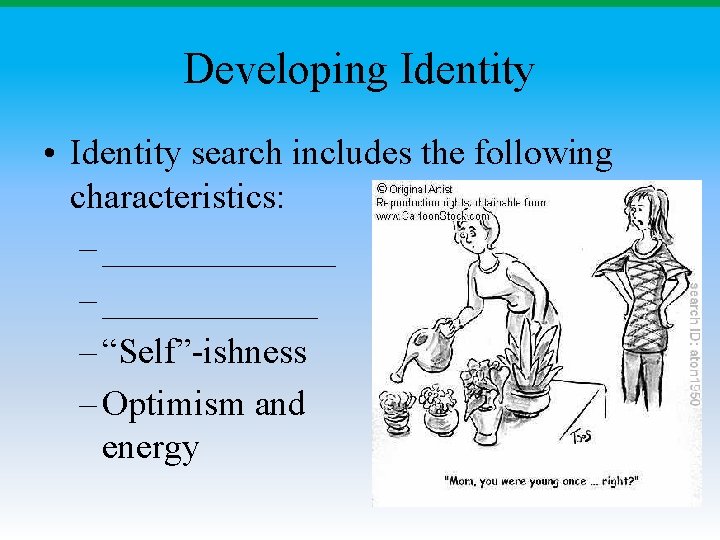
Developing Identity • Identity search includes the following characteristics: – _______ – “Self”-ishness – Optimism and energy
Module 12: Adolescence Social Development in Adolescence: Developing Intimacy
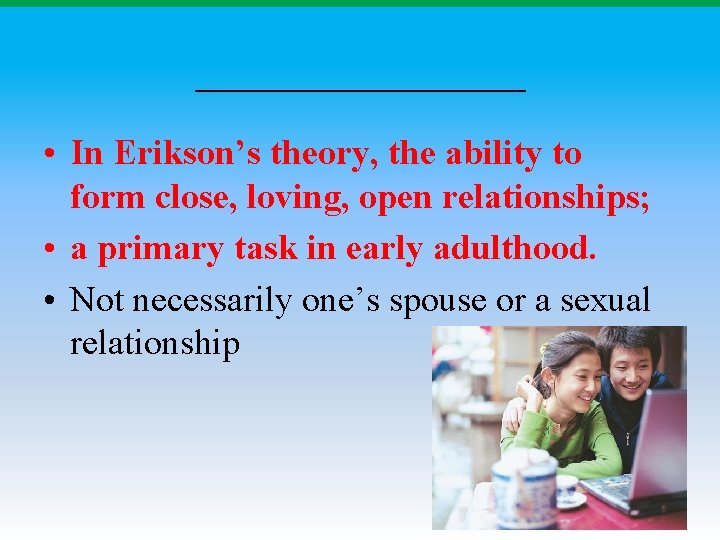
________ • In Erikson’s theory, the ability to form close, loving, open relationships; • a primary task in early adulthood. • Not necessarily one’s spouse or a sexual relationship
Module 12: Adolescence Social Development in Adolescence: Independence From Family
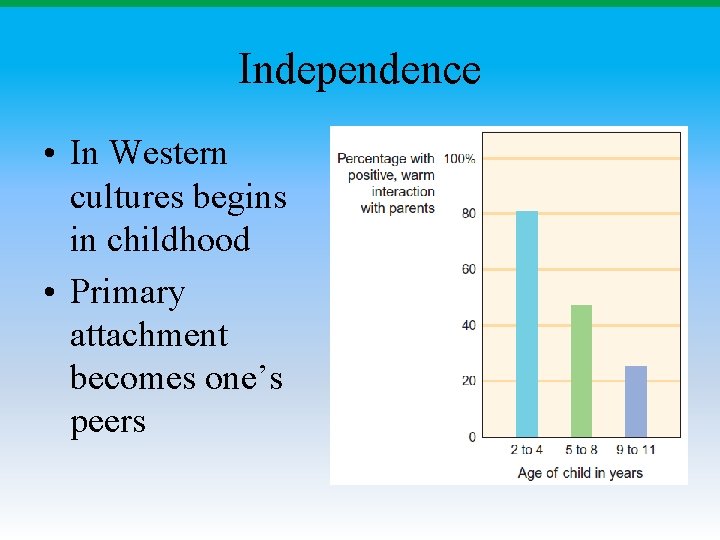
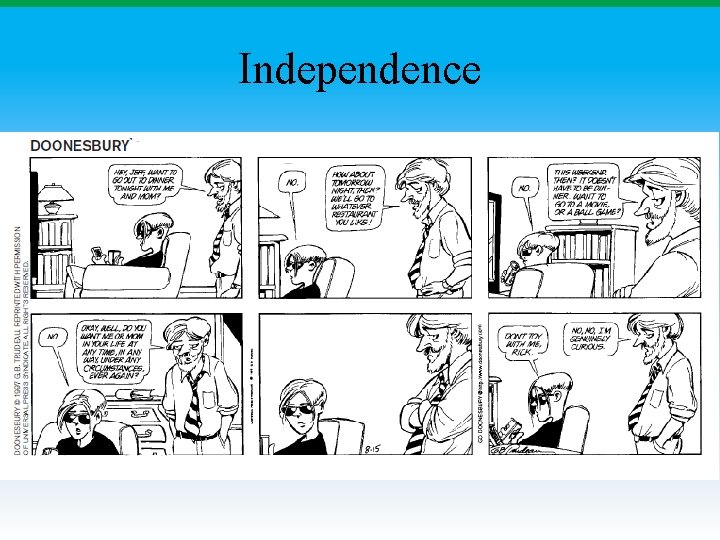
Independence • In Western cultures begins in childhood • Primary attachment becomes one’s peers
Independence
Module 12: Adolescence Three Key Developmental Issues
Continuity and Stages • How much of behavior is continuous and how much follows a more stage like development?
Stability and Change • Which developmental traits remain stable over time, and which change?
Nature and Nurture • How much of our behavior is due to nature and how much is due to nurture? • How do nature and nurture interact in development?