
Module 10 Hypnosis and Other States of Consciousness
- Slides: 29
Module 10 Hypnosis and Other States of Consciousness
Module Overview • States of Consciousness • Hypnosis • Relaxation and Meditation Click on the any of the above hyperlinks to go to that section in the presentation.
Module 10: Hypnosis and Other States of Consciousness
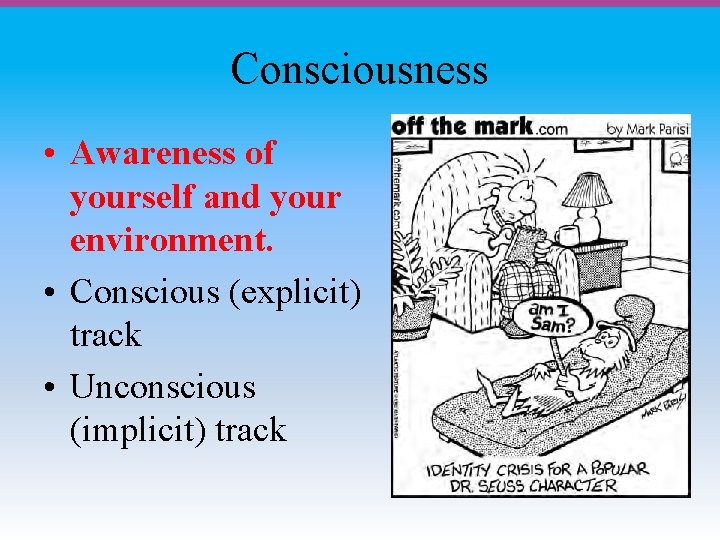
Consciousness • Awareness of yourself and your environment. • Conscious (explicit) track • Unconscious (implicit) track
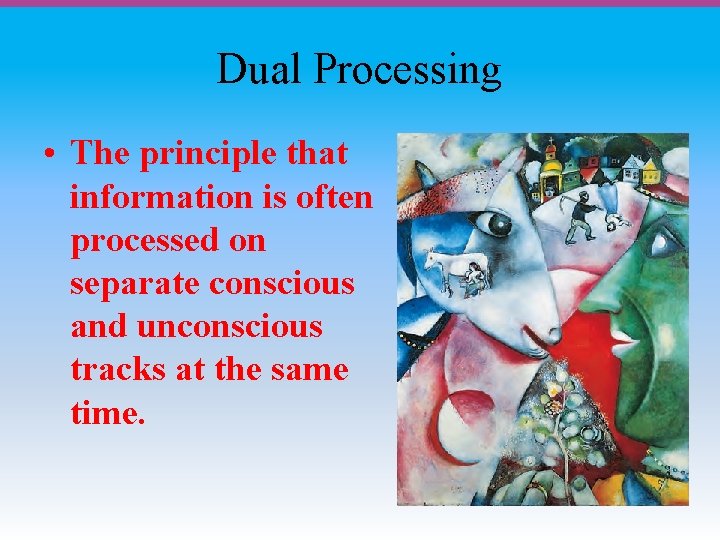
Dual Processing • The principle that information is often processed on separate conscious and unconscious tracks at the same time.
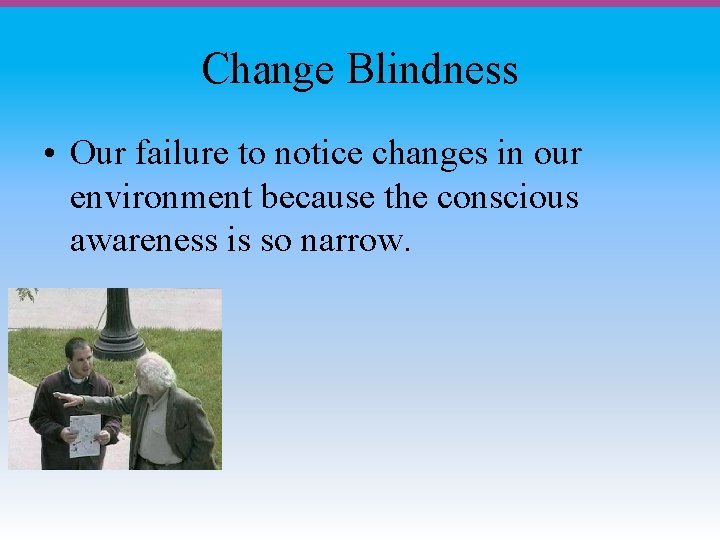
Change Blindness • Our failure to notice changes in our environment because the conscious awareness is so narrow.
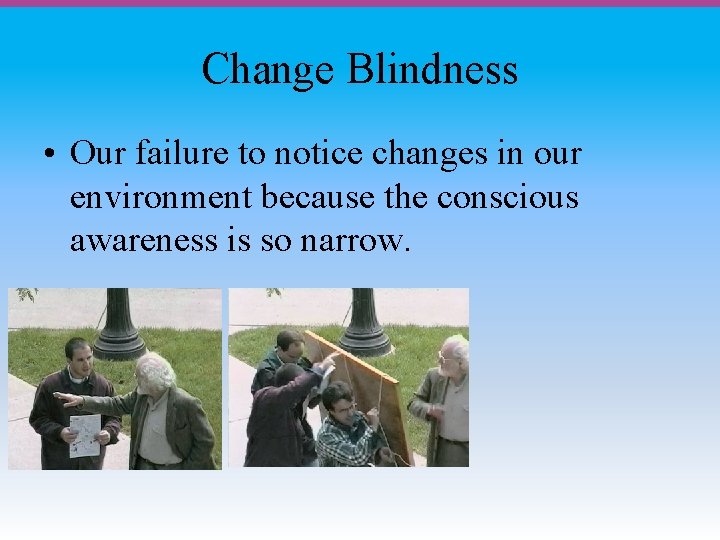
Change Blindness • Our failure to notice changes in our environment because the conscious awareness is so narrow.
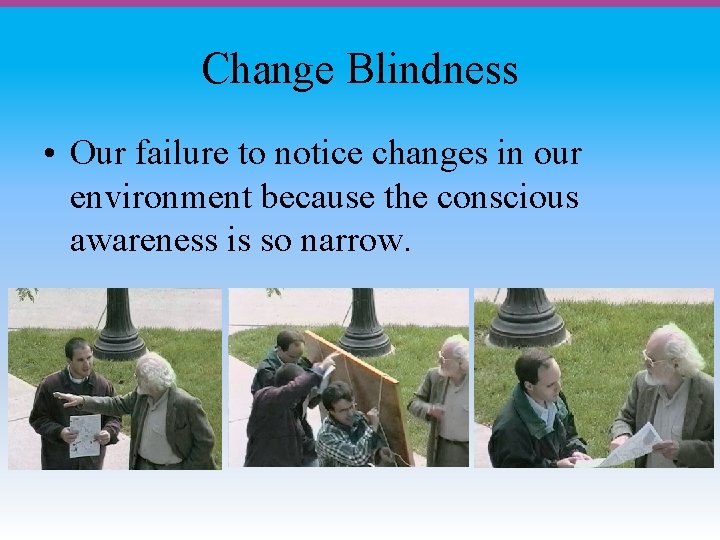
Change Blindness • Our failure to notice changes in our environment because the conscious awareness is so narrow.
Module 10: Hypnosis and Other States of Consciousness Hypnosis: What is Hypnosis?
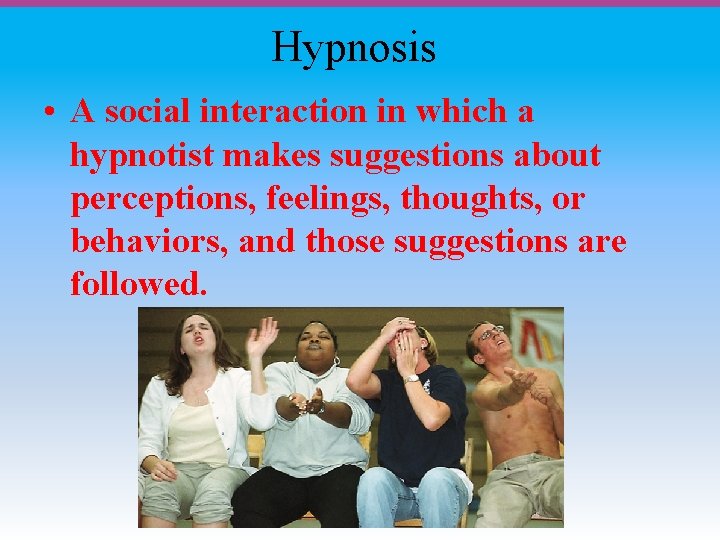
Hypnosis • A social interaction in which a hypnotist makes suggestions about perceptions, feelings, thoughts, or behaviors, and those suggestions are followed.
Social Influence Theory • Theory that powerful social influences produce a state of hypnosis. • This theory notes that a person’s physiological state does not change under hypnosis. • Social factors influence people to believe hypnosis will work.
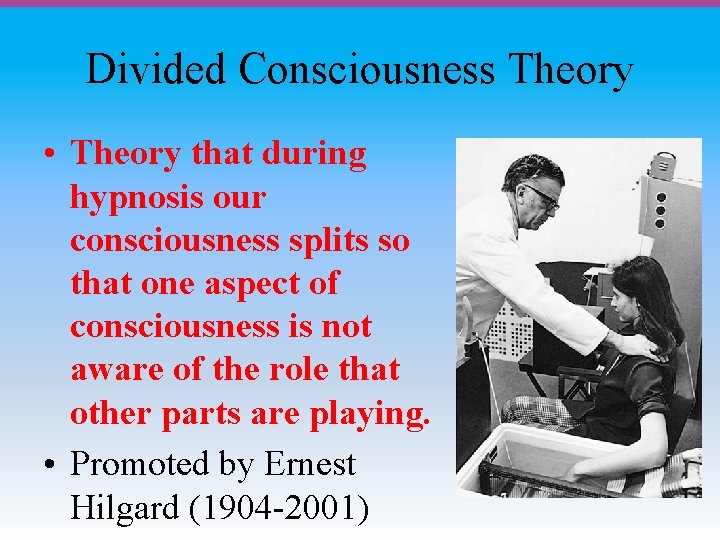
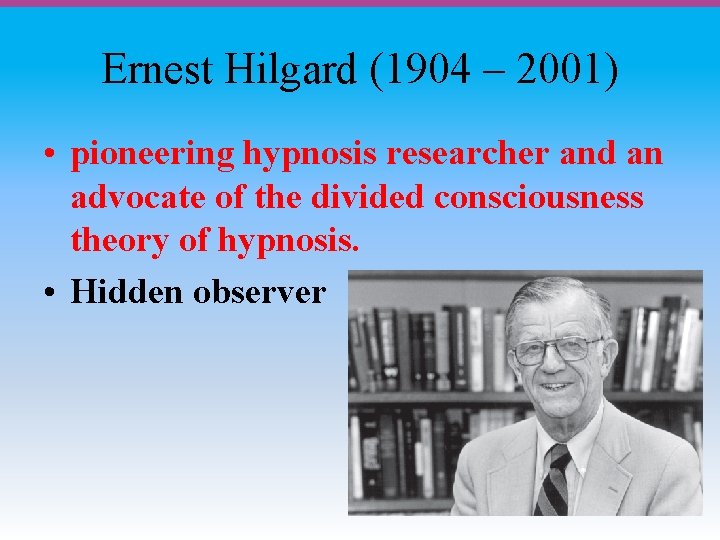
Divided Consciousness Theory • Theory that during hypnosis our consciousness splits so that one aspect of consciousness is not aware of the role that other parts are playing. • Promoted by Ernest Hilgard (1904 -2001)
Ernest Hilgard (1904 – 2001) • pioneering hypnosis researcher and an advocate of the divided consciousness theory of hypnosis. • Hidden observer
Module 10: Hypnosis and Other States of Consciousness Hypnosis: Hypnosis Techniques
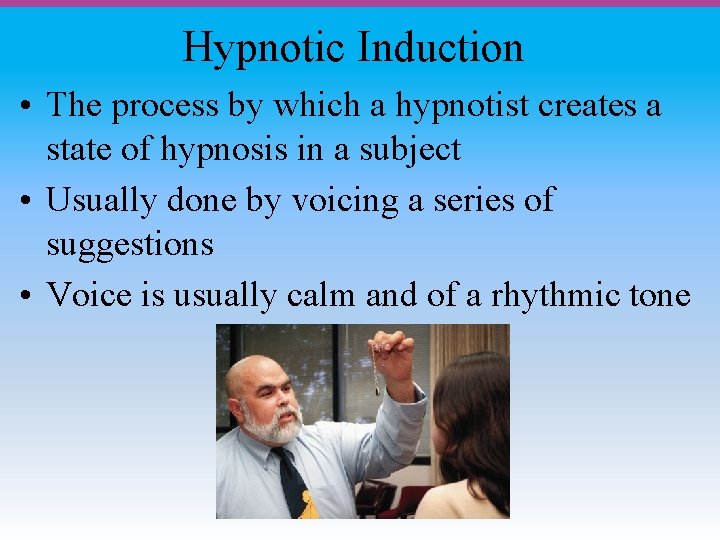
Hypnotic Induction • The process by which a hypnotist creates a state of hypnosis in a subject • Usually done by voicing a series of suggestions • Voice is usually calm and of a rhythmic tone
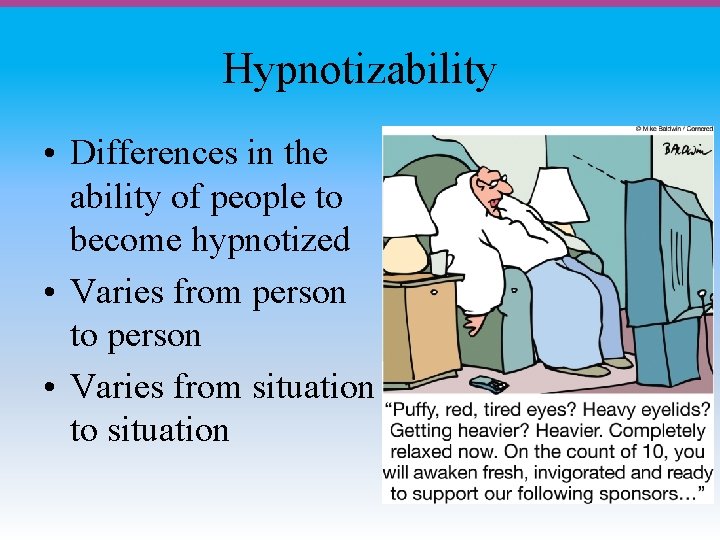
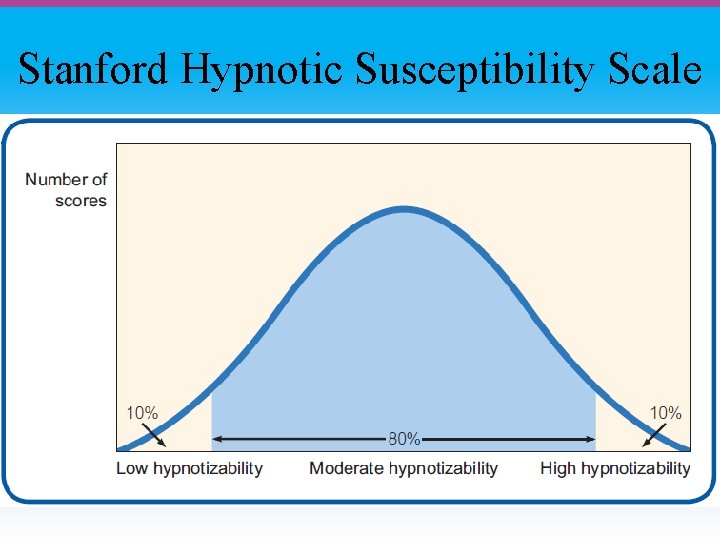
Hypnotizability • Differences in the ability of people to become hypnotized • Varies from person to person • Varies from situation to situation
Stanford Hypnotic Susceptibility Scale
Limits to Hypnotic Suggestions • Suggestions usually involve sensations, thoughts, emotions, and a wide variety of behaviors. • Hypnosis does not cause behaviors. • Hypnosis can lead people to certain behaviors but so can ordinary suggestions.
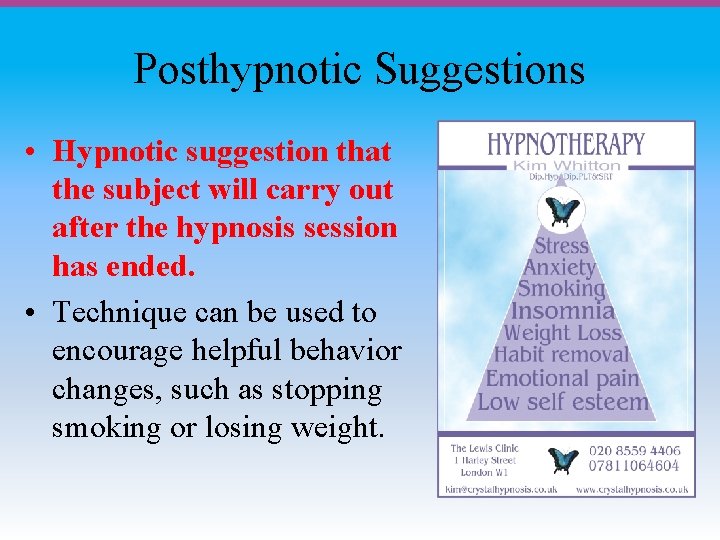
Posthypnotic Suggestions • Hypnotic suggestion that the subject will carry out after the hypnosis session has ended. • Technique can be used to encourage helpful behavior changes, such as stopping smoking or losing weight.
Hypnotic Amnesia • Inability to remember what happened during hypnosis because the hypnotist suggests that the subject will have no memory of that period of time
Module 10: Hypnosis and Other States of Consciousness Hypnosis: Application of Hypnosis
Hypnosis and Memory • There are isolated cases of hypnosis helping recall. • Cannot be sure if the memory came back due to hypnosis • Cannot be sure if the memory is accurate or one that is created to please the hypnotist
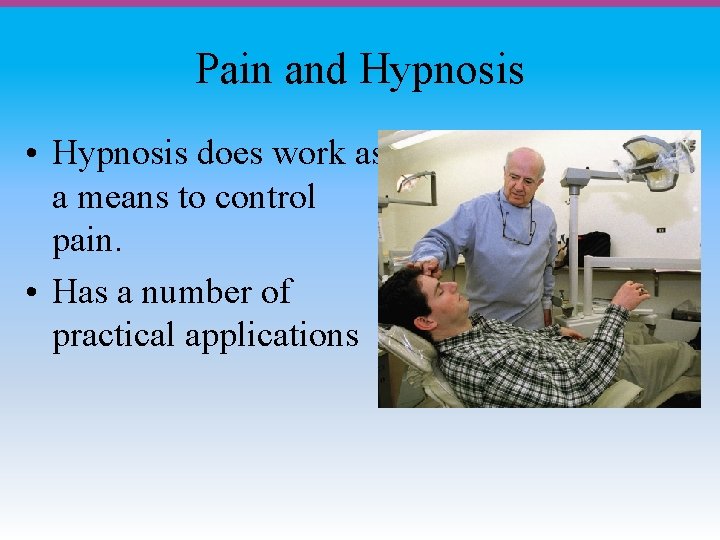
Pain and Hypnosis • Hypnosis does work as a means to control pain. • Has a number of practical applications
Other Hypnosis Claims • Placebo – an inactive substance or condition used to control for confounding variables. • Placebo effect
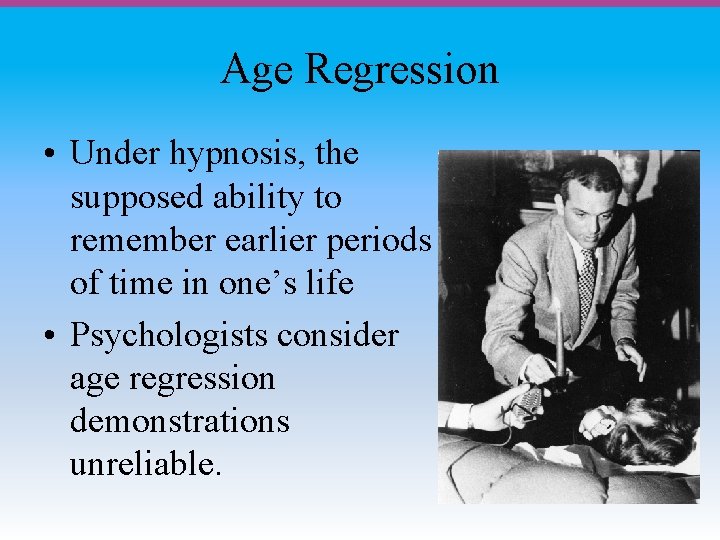
Age Regression • Under hypnosis, the supposed ability to remember earlier periods of time in one’s life • Psychologists consider age regression demonstrations unreliable.
Module 10: Hypnosis and Other States of Consciousness Relaxation and Meditation
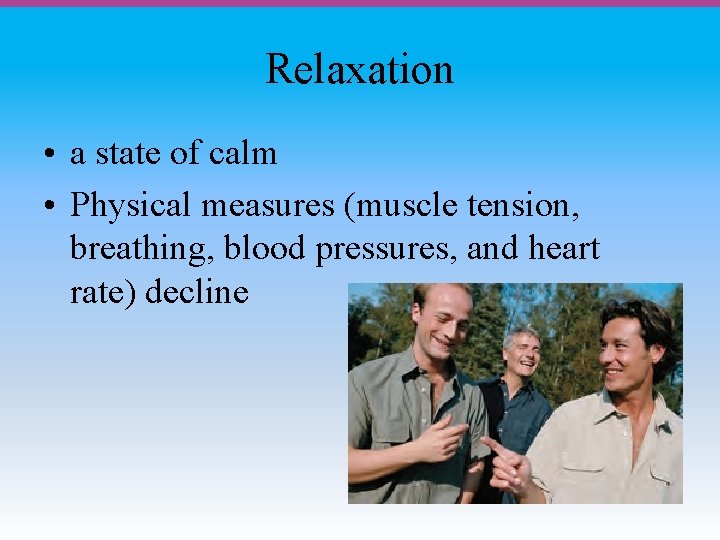
Relaxation • a state of calm • Physical measures (muscle tension, breathing, blood pressures, and heart rate) decline
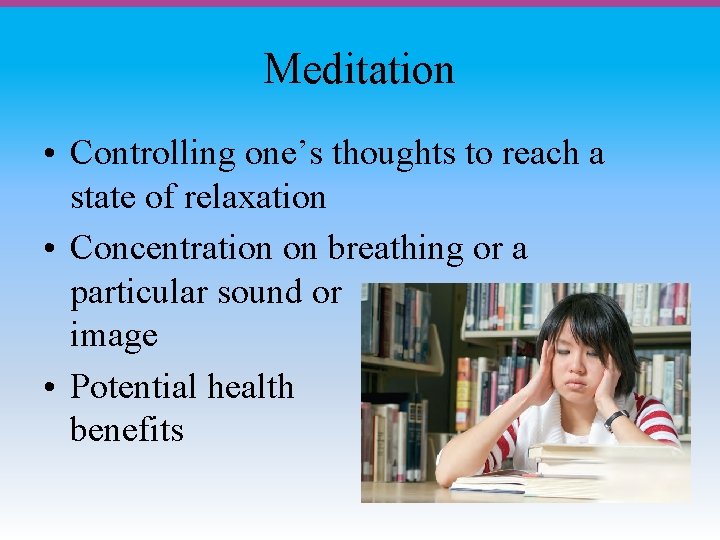
Meditation • Controlling one’s thoughts to reach a state of relaxation • Concentration on breathing or a particular sound or image • Potential health benefits
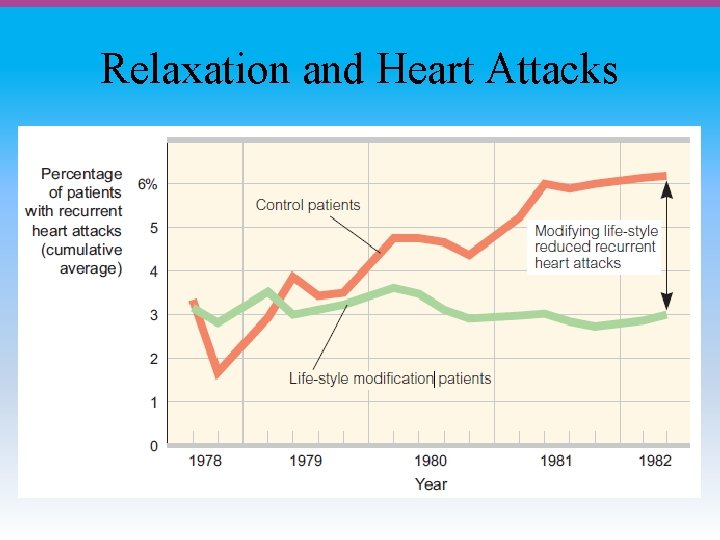
Relaxation and Heart Attacks