
Module 1 Start Up Week Chalmers University Gothenburg
Module 1 Start Up Week Chalmers University, Gothenburg, August 2018

Intellectual Property Notice These slides are provided as a resource for UNITECH Programme participants and are to be used only for personal development. Use of these slides in a professional endeavour is not authorised. The intellectual property contained within these slides remains with the UNITECH International Society and the members of the Coaching Team who have contributed them
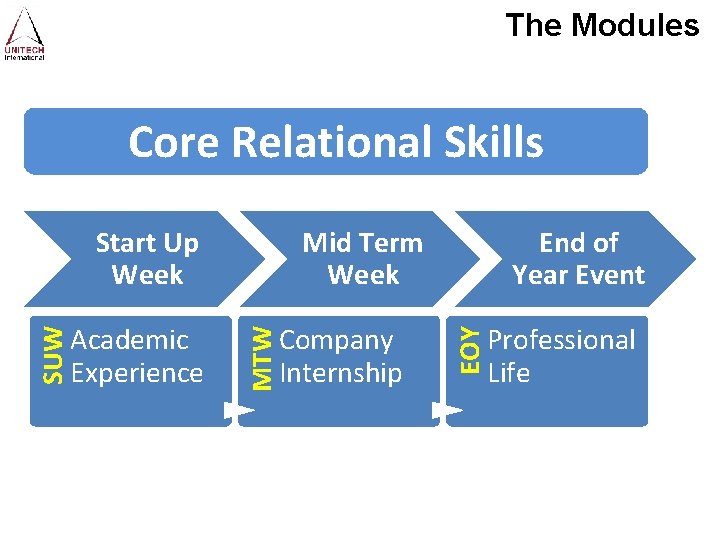
The Modules Core Relational Skills Company Internship End of Year Event EOY Academic Experience Mid Term Week MTW SUW Start Up Week Professional Life
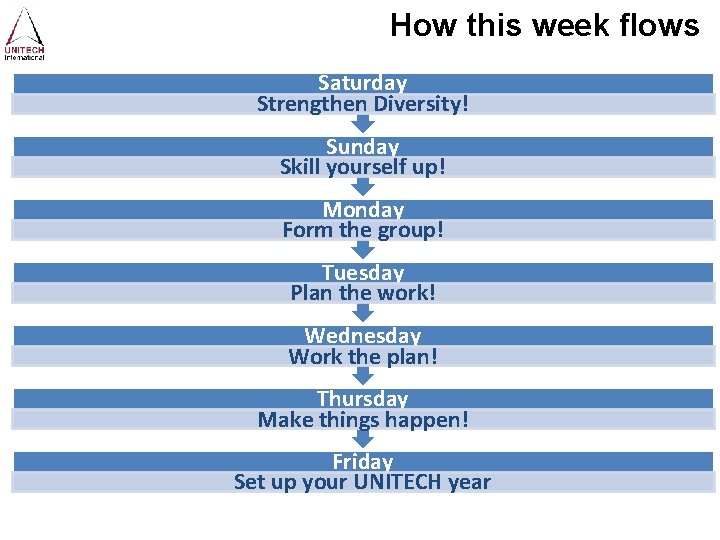
How this week flows Saturday Strengthen Diversity! Sunday Skill yourself up! Monday Form the group! Tuesday Plan the work! Wednesday Work the plan! Thursday Make things happen! Friday Set up your UNITECH year
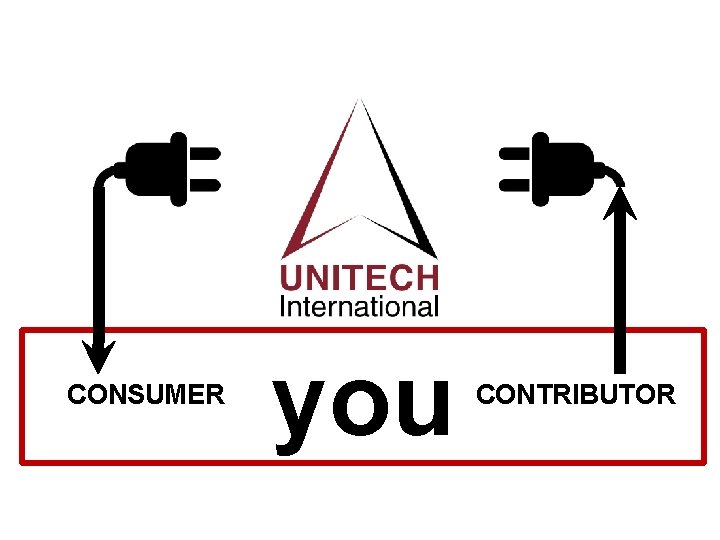
CONSUMER you CONTRIBUTOR
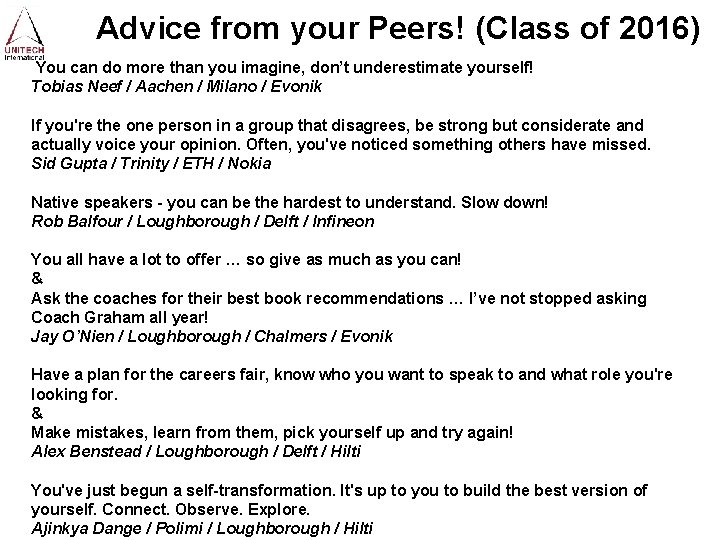
Advice from your Peers! (Class of 2016) You can do more than you imagine, don’t underestimate yourself! Tobias Neef / Aachen / Milano / Evonik If you're the one person in a group that disagrees, be strong but considerate and actually voice your opinion. Often, you've noticed something others have missed. Sid Gupta / Trinity / ETH / Nokia Native speakers - you can be the hardest to understand. Slow down! Rob Balfour / Loughborough / Delft / Infineon You all have a lot to offer … so give as much as you can! & Ask the coaches for their best book recommendations … I’ve not stopped asking Coach Graham all year! Jay O’Nien / Loughborough / Chalmers / Evonik Have a plan for the careers fair, know who you want to speak to and what role you're looking for. & Make mistakes, learn from them, pick yourself up and try again! Alex Benstead / Loughborough / Delft / Hilti You've just begun a self-transformation. It's up to you to build the best version of yourself. Connect. Observe. Explore. Ajinkya Dange / Polimi / Loughborough / Hilti
OBJECTIVE SETTING
Why use SMART ? The two greatest enemies of objective setting and assessment. . . . ? Memory. . . . and Imagination
ick qu A Guide to using SMART to write and drive powerful Performance or Development Objectives
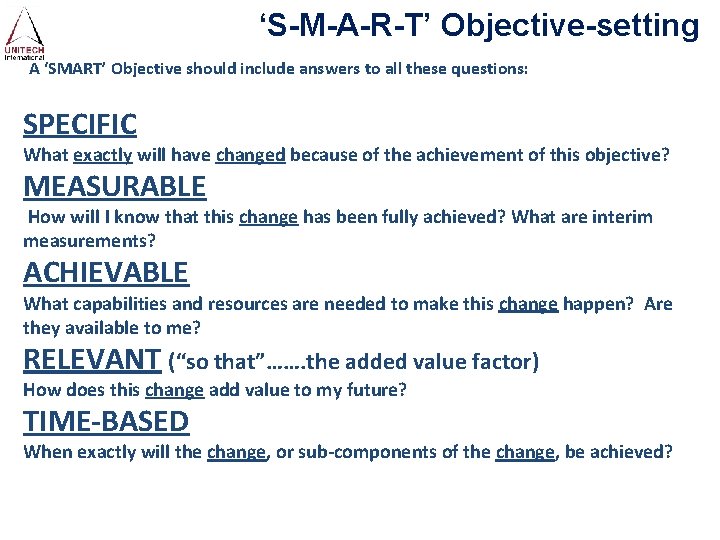
‘S-M-A-R-T’ Objective-setting A ‘SMART’ Objective should include answers to all these questions: SPECIFIC What exactly will have changed because of the achievement of this objective? MEASURABLE How will I know that this change has been fully achieved? What are interim measurements? ACHIEVABLE What capabilities and resources are needed to make this change happen? Are they available to me? RELEVANT (“so that”……. the added value factor) How does this change add value to my future? TIME-BASED When exactly will the change, or sub-components of the change, be achieved?
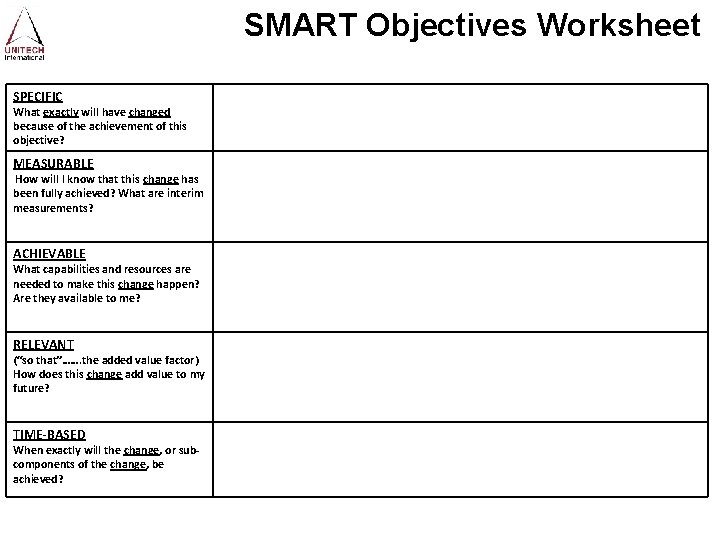
SMART Objectives Worksheet SPECIFIC What exactly will have changed because of the achievement of this objective? MEASURABLE How will I know that this change has been fully achieved? What are interim measurements? ACHIEVABLE What capabilities and resources are needed to make this change happen? Are they available to me? RELEVANT (“so that”……. the added value factor) How does this change add value to my future? TIME-BASED When exactly will the change, or subcomponents of the change, be achieved?
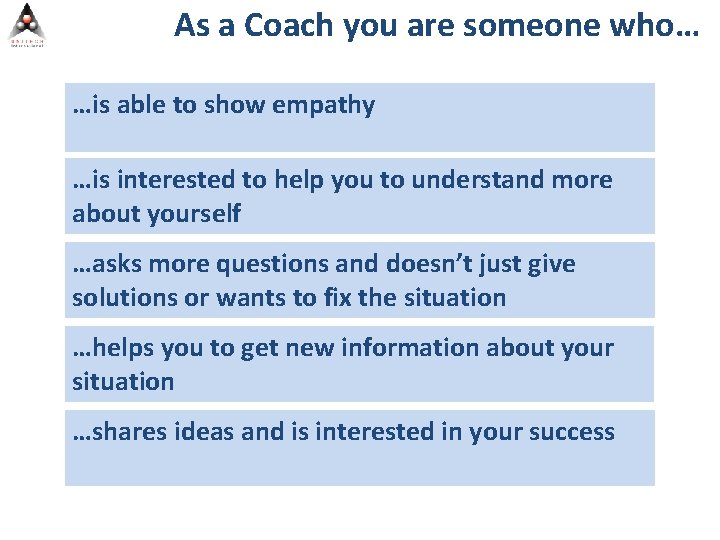
As a Coach you are someone who… …is able to show empathy …is interested to help you to understand more about yourself …asks more questions and doesn’t just give solutions or wants to fix the situation …helps you to get new information about your situation …shares ideas and is interested in your success
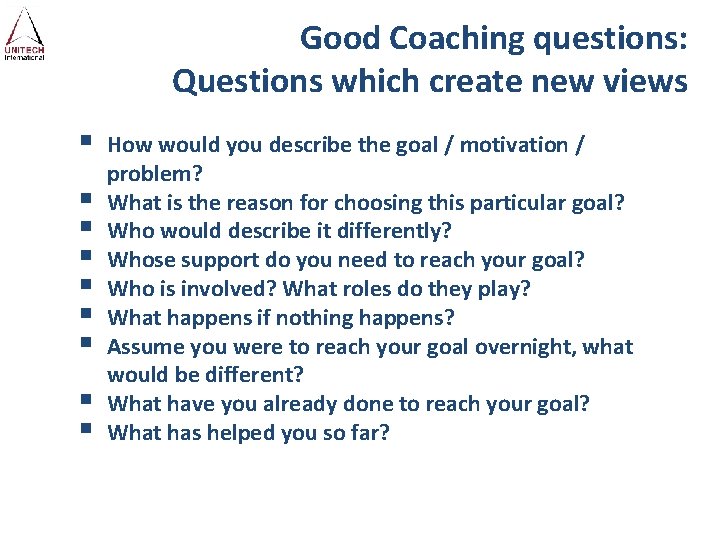
Good Coaching questions: Questions which create new views § § § § § How would you describe the goal / motivation / problem? What is the reason for choosing this particular goal? Who would describe it differently? Whose support do you need to reach your goal? Who is involved? What roles do they play? What happens if nothing happens? Assume you were to reach your goal overnight, what would be different? What have you already done to reach your goal? What has helped you so far?

Core Relational Skills Learn your workstyle preferences
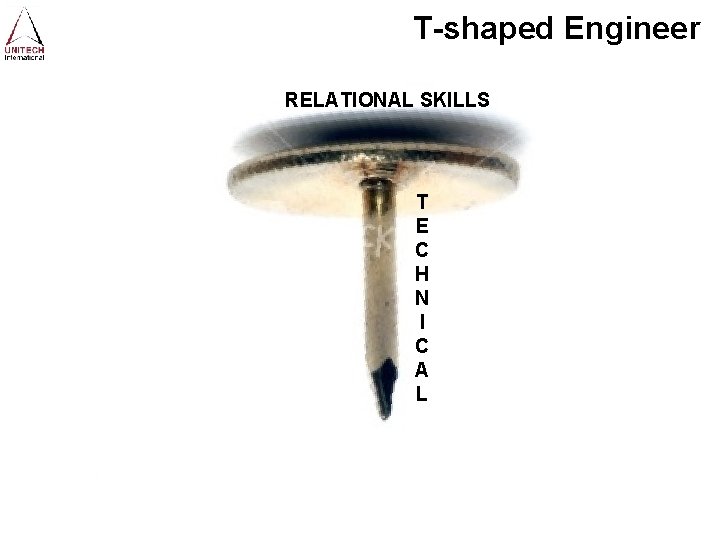
T-shaped Engineer RELATIONAL SKILLS T E C H N I C A L
“Standing out while fitting in” A fundamental rule for success
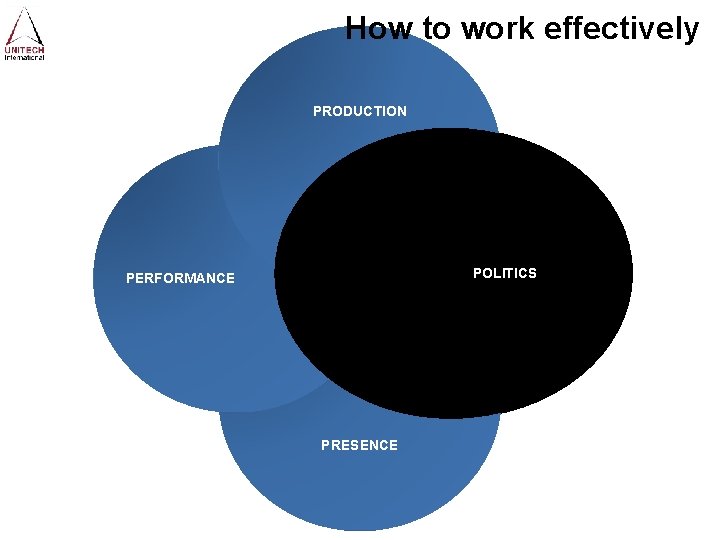
How to work effectively PRODUCTION POLITICS PERFORMANCE PRESENCE

INSIGHT INVENTORY Learn your workstyle preferences

Inventory®. . . identifying your unique personality strengths 24
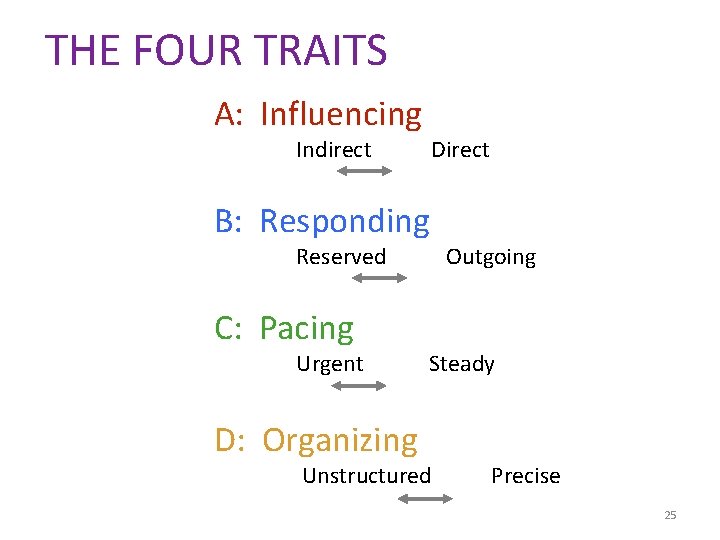
THE FOUR TRAITS A: Influencing Indirect Direct B: Responding Reserved C: Pacing Urgent D: Organizing Outgoing Steady Unstructured Precise 25
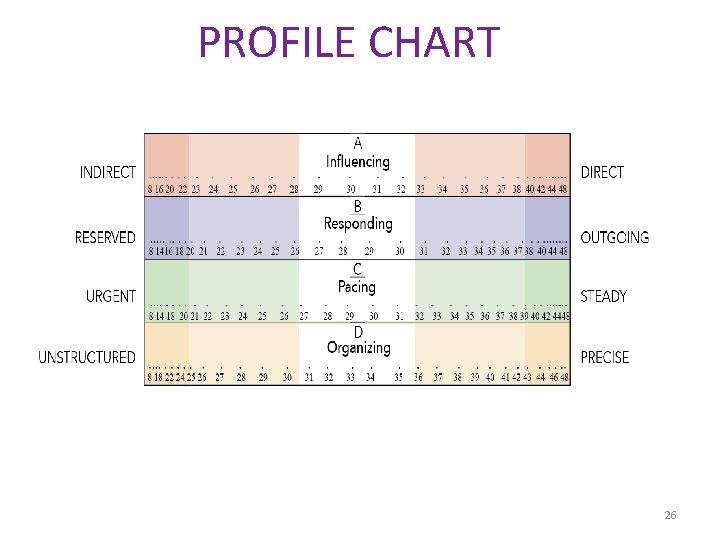
PROFILE CHART 26
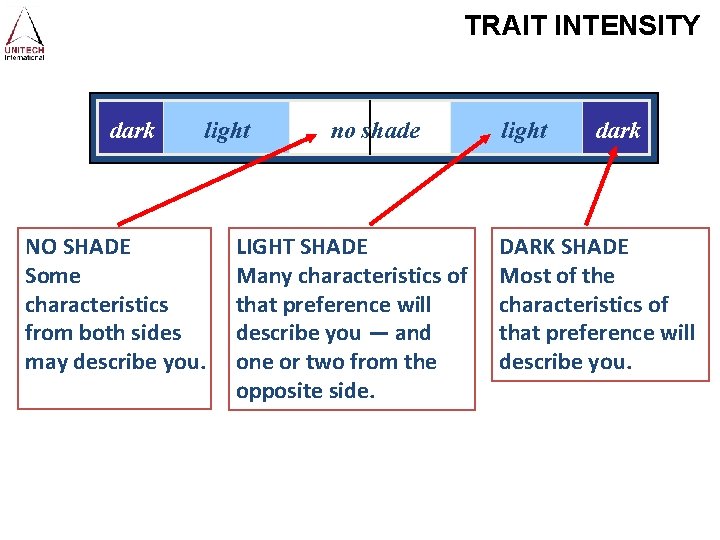
TRAIT INTENSITY dark light NO SHADE Some characteristics from both sides may describe you. no shade LIGHT SHADE Many characteristics of that preference will describe you — and one or two from the opposite side. light dark DARK SHADE Most of the characteristics of that preference will describe you.
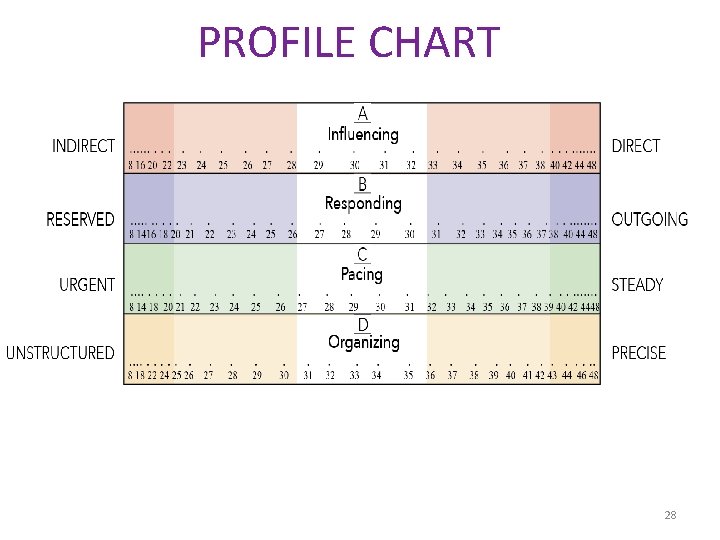
PROFILE CHART 28
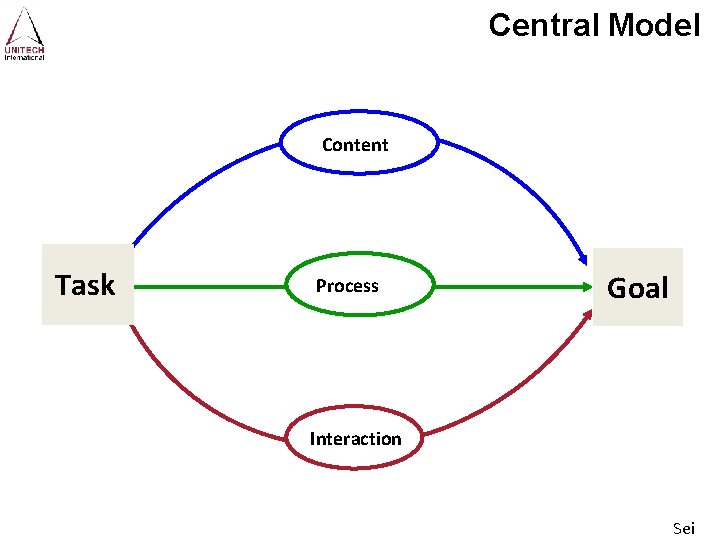
Central Model Content Task Process Goal Interaction Sei
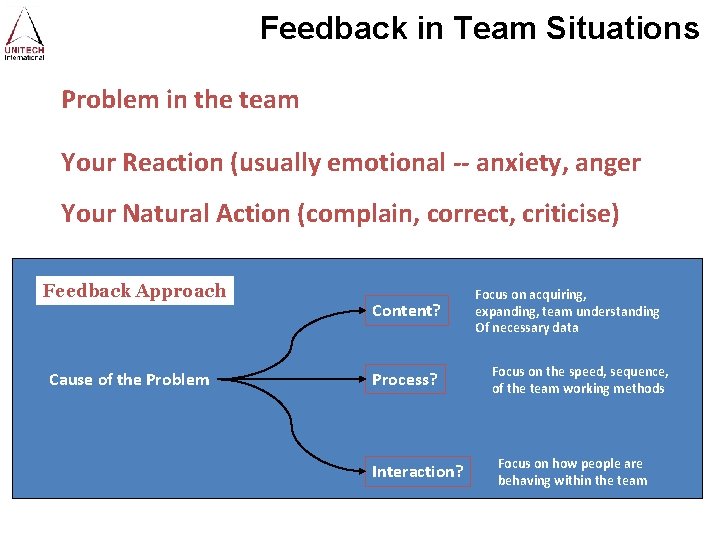
Feedback in Team Situations Problem in the team Your Reaction (usually emotional -- anxiety, anger Your Natural Action (complain, correct, criticise) Feedback Approach Cause of the Problem Content? Process? Interaction? Focus on acquiring, expanding, team understanding Of necessary data Focus on the speed, sequence, of the team working methods Focus on how people are behaving within the team
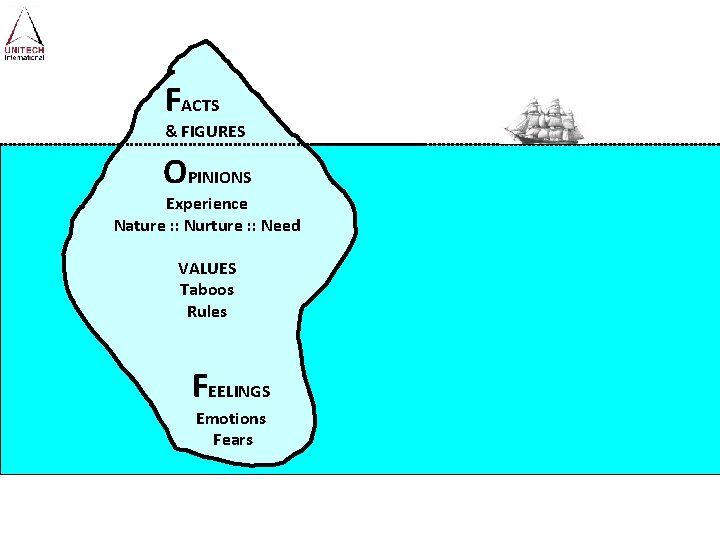
FACTS & FIGURES OPINIONS Experience Nature : : Nurture : : Need VALUES Taboos Rules FEELINGS Emotions Fears
Managing interaction
Ground rules for project work Consider the following: In which groups do you feel comfortable? Ø Ø How do you communicate? How do you solve conflicts? How do you share ideas? How do you make sure that everyone is involved?
Ground Rules UNITECH Coaching Team WE…the UNITECH Coaches…. . . take care of each other. . . are perceived as one team, "one face to the customer". . . have the courage to speak up. . . express our needs. . . check with others if they are OK. . . share positive experiences. . . (ask) feedback; assume positive intend. . . have fun. . . recognise when other do things right / good / excellent. . . trust our gut feeling. . . are clear in the separation of our roles. . . know that it is always David´s fault!
Project Management
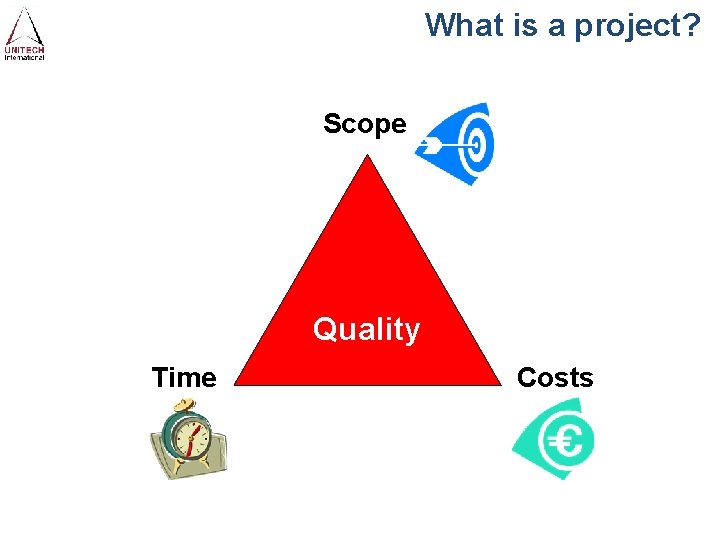
What is a project? Scope Quality Time Costs
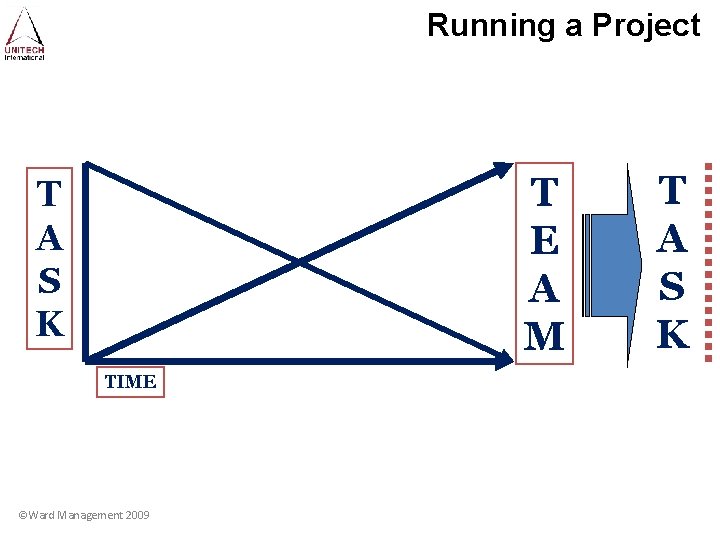
Running a Project T E A M T A S K TIME ©Ward Management 2009 T A S K
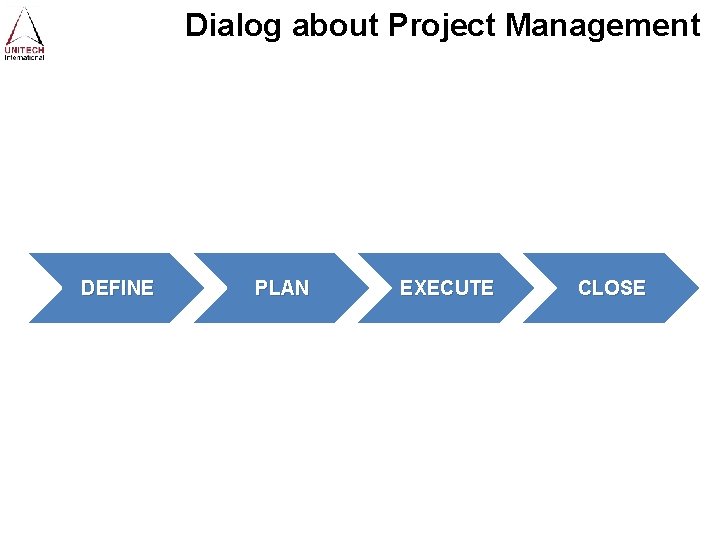
Dialog about Project Management DEFINE PLAN EXECUTE CLOSE
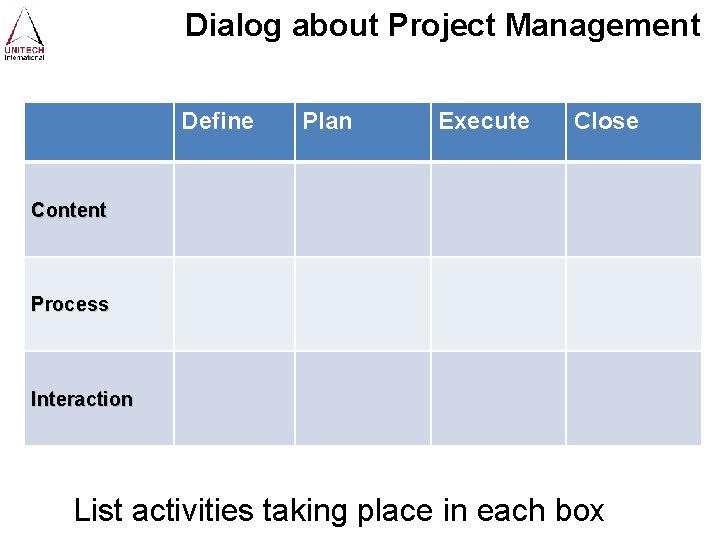
Dialog about Project Management Define Plan Execute Close Content Process Interaction List activities taking place in each box


The three “eyes” University Students Leading Companies Technical Universities
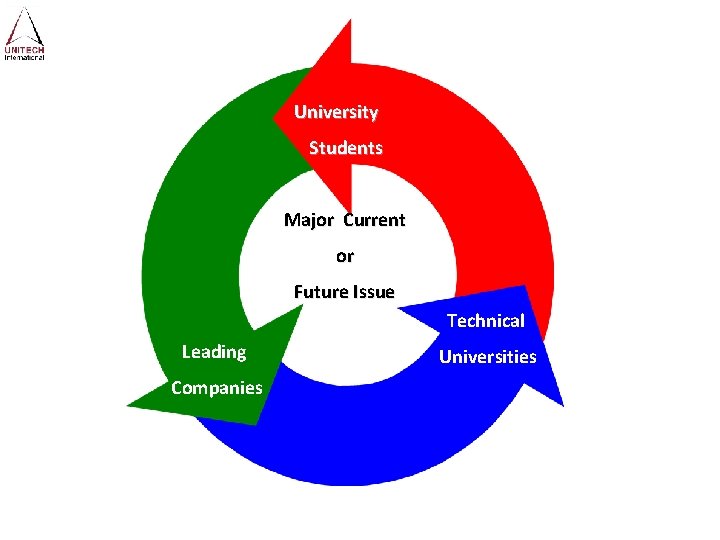
University Students Major Current or Future Issue Technical Leading Companies Universities
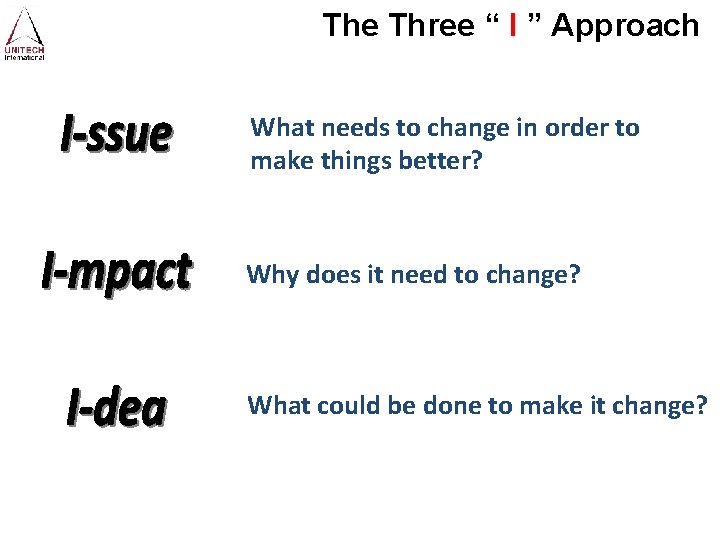
The Three “ I ” Approach What needs to change in order to make things better? Why does it need to change? What could be done to make it change?
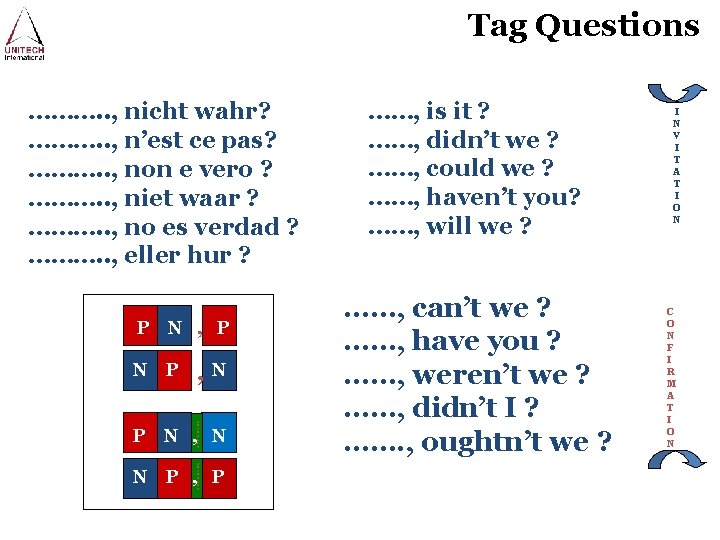
Tag Questions ………. . , nicht wahr? ………. . , n’est ce pas? ………. . , non e vero ? ………. . , niet waar ? ………. . , no es verdad ? ………. . , eller hur ? P N , P N N PP , , N A C T U A L L Y N , N PP N A C T U A L L Y N N P P , P P ……, is it ? ……, didn’t we ? ……, could we ? ……, haven’t you? ……, will we ? ……, can’t we ? ……, have you ? ……, weren’t we ? ……, didn’t I ? ……. , oughtn’t we ? I N V I T A T I O N C O N F I R M A T I O N
- Slides: 40