
Module 1 Principles of Viral Load Monitoring Learning

- Slides: 40
Module 1: Principles of Viral Load Monitoring
Learning Objectives • Understand the dynamics of viral load during the course of HIV infection • Understand how viral load affects risk for transmission and progression of HIV • Explain how viral load responds to antiretroviral therapy (ART) • Identify treatment failure using viral load • Describe schedule of viral load monitoring
Outline • Understanding Viral Load • Viral Load and HIV Infection – Disease Progression – Disease Transmission • Viral Load Measurement and Reporting • Viral Load Response to ART • Treatment Failure – Criteria – Routine and Targeted Viral Load Monitoring • Schedule of Viral Load Monitoring
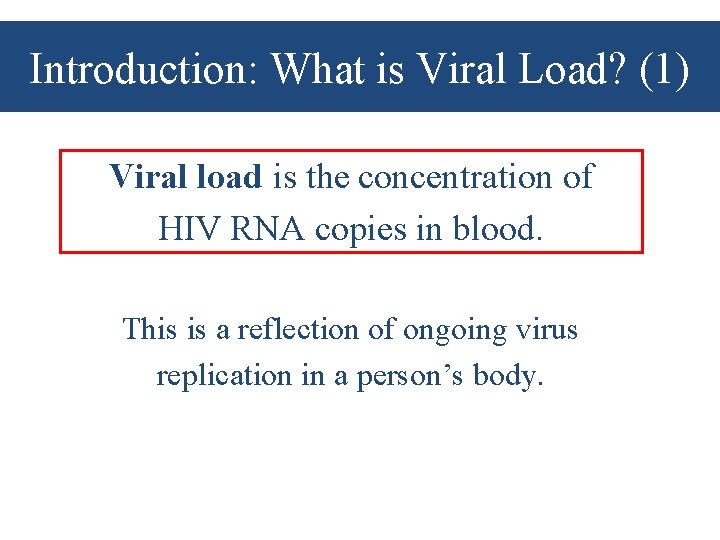
Introduction: What is Viral Load? (1) Viral load is the concentration of HIV RNA copies in blood. This is a reflection of ongoing virus replication in a person’s body.
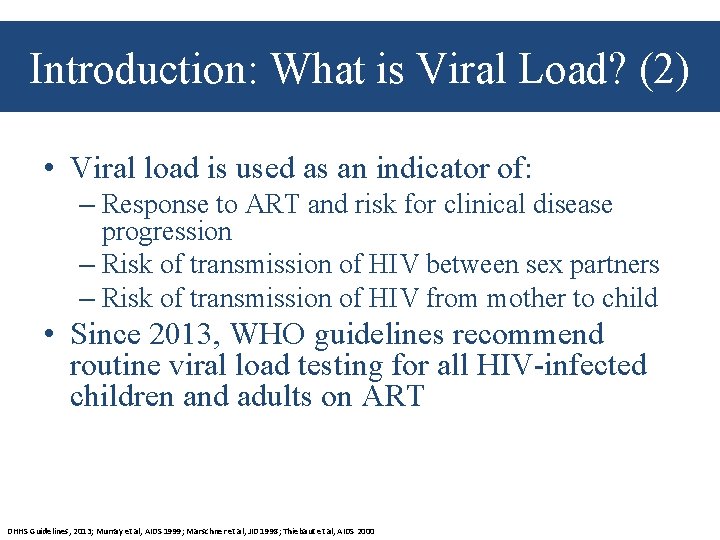
Introduction: What is Viral Load? (2) • Viral load is used as an indicator of: – Response to ART and risk for clinical disease progression – Risk of transmission of HIV between sex partners – Risk of transmission of HIV from mother to child • Since 2013, WHO guidelines recommend routine viral load testing for all HIV-infected children and adults on ART DHHS Guidelines, 2013; Murray et al, AIDS 1999; Marschner et al, JID 1998; Thiebaut et al, AIDS 2000
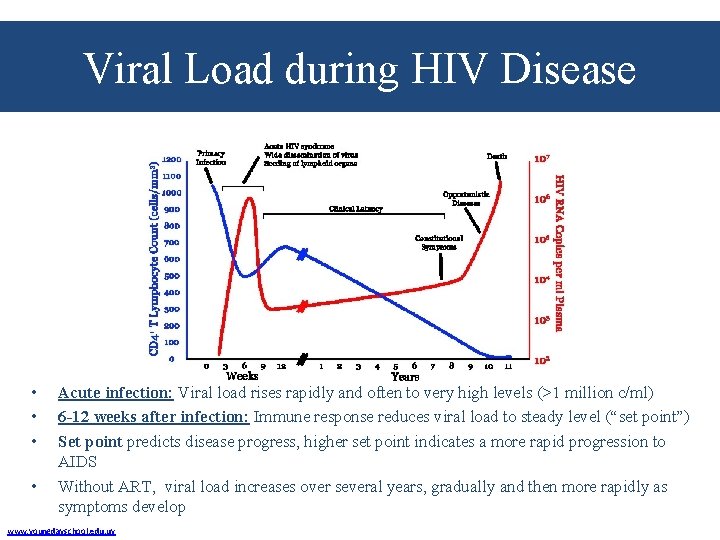
Viral Load during HIV Disease • • Acute infection: Viral load rises rapidly and often to very high levels (>1 million c/ml) 6 -12 weeks after infection: Immune response reduces viral load to steady level (“set point”) Set point predicts disease progress, higher set point indicates a more rapid progression to AIDS Without ART, viral load increases over several years, gradually and then more rapidly as symptoms develop www. youngdayschool. edu. uy
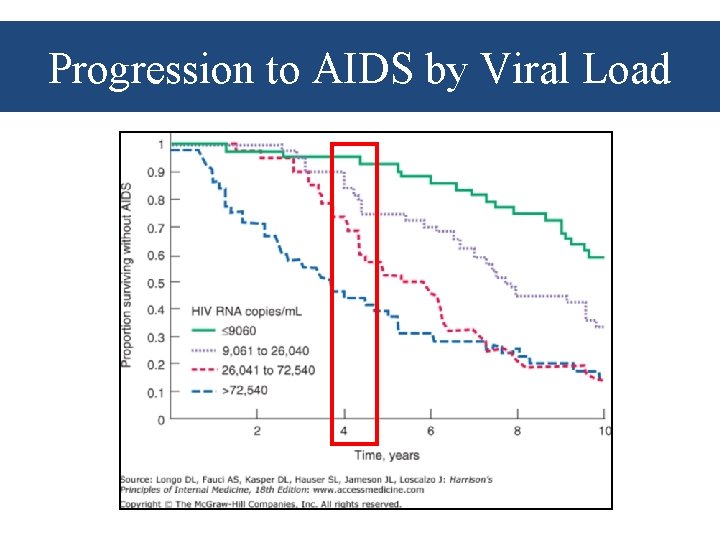
Progression to AIDS by Viral Load
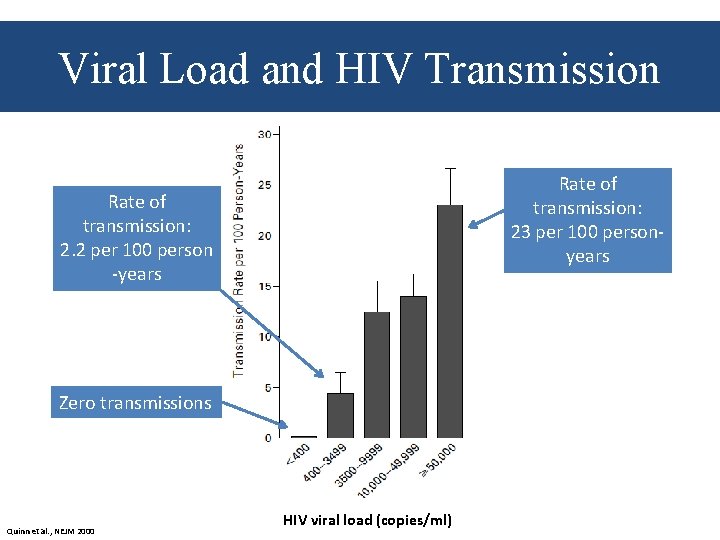
Viral Load and HIV Transmission Rate of transmission: 23 per 100 personyears Rate of transmission: 2. 2 per 100 person -years Zero transmissions Quinn et al. , NEJM 2000 HIV viral load (copies/ml)
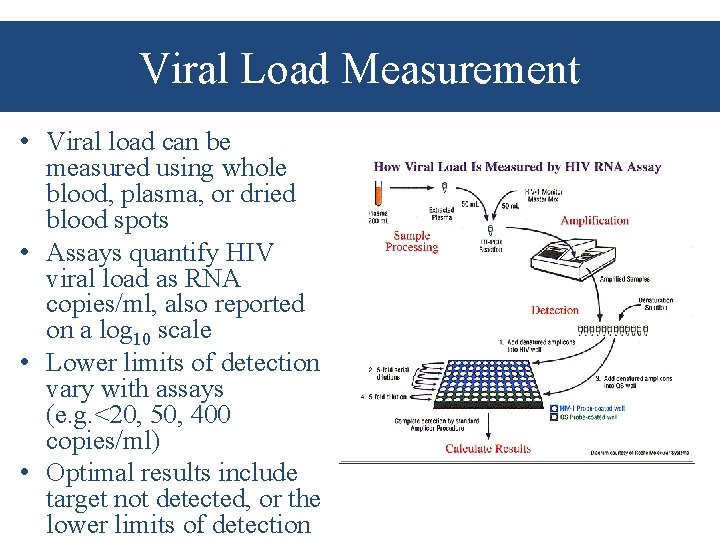
Viral Load Measurement • Viral load can be measured using whole blood, plasma, or dried blood spots • Assays quantify HIV viral load as RNA copies/ml, also reported on a log 10 scale • Lower limits of detection vary with assays (e. g. <20, 50, 400 copies/ml) • Optimal results include target not detected, or the lower limits of detection
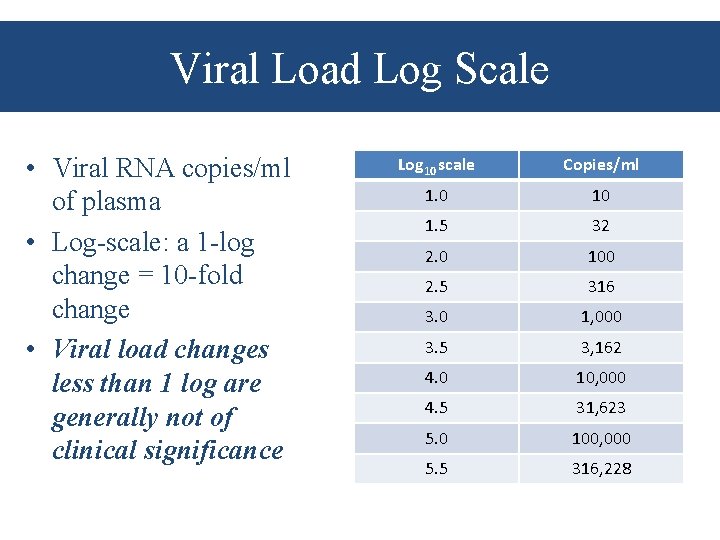
Viral Load Log Scale • Viral RNA copies/ml of plasma • Log-scale: a 1 -log change = 10 -fold change • Viral load changes less than 1 log are generally not of clinical significance Log 10 scale Copies/ml 1. 0 10 1. 5 32 2. 0 100 2. 5 316 3. 0 1, 000 3. 5 3, 162 4. 0 10, 000 4. 5 31, 623 5. 0 100, 000 5. 5 316, 228
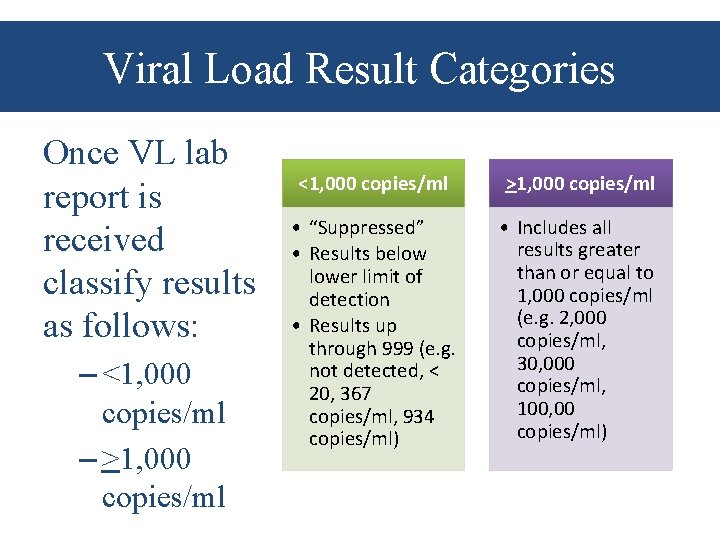
Viral Load Result Categories Once VL lab report is received classify results as follows: – <1, 000 copies/ml – >1, 000 copies/ml <1, 000 copies/ml >1, 000 copies/ml • “Suppressed” • Results below lower limit of detection • Results up through 999 (e. g. not detected, < 20, 367 copies/ml, 934 copies/ml) • Includes all results greater than or equal to 1, 000 copies/ml (e. g. 2, 000 copies/ml, 30, 000 copies/ml, 100, 00 copies/ml)
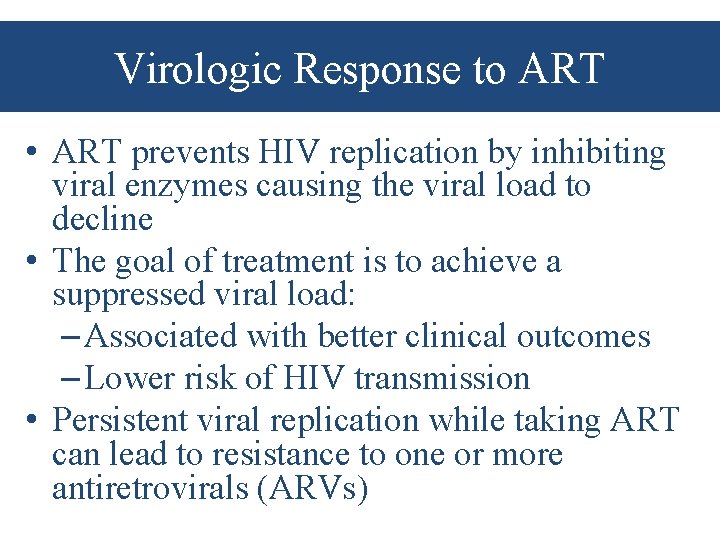
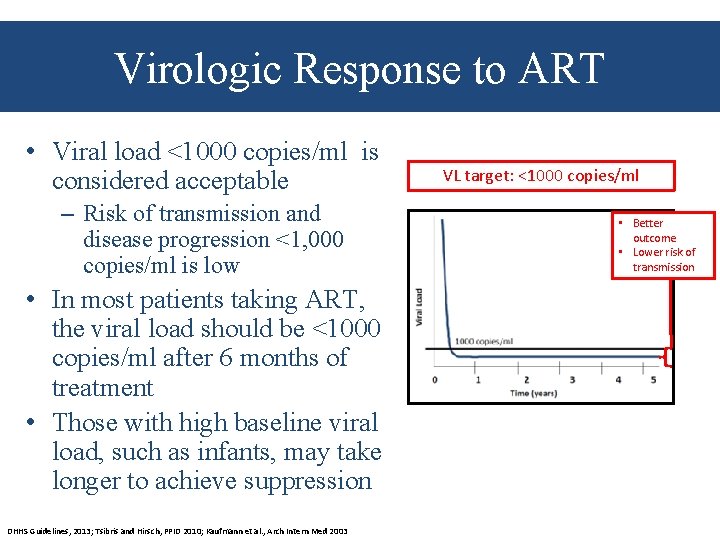
Virologic Response to ART • ART prevents HIV replication by inhibiting viral enzymes causing the viral load to decline • The goal of treatment is to achieve a suppressed viral load: – Associated with better clinical outcomes – Lower risk of HIV transmission • Persistent viral replication while taking ART can lead to resistance to one or more antiretrovirals (ARVs)
Virologic Response to ART • Viral load <1000 copies/ml is considered acceptable – Risk of transmission and disease progression <1, 000 copies/ml is low • In most patients taking ART, the viral load should be <1000 copies/ml after 6 months of treatment • Those with high baseline viral load, such as infants, may take longer to achieve suppression DHHS Guidelines, 2013; Tsibris and Hirsch, PPID 2010; Kaufmann et al. , Arch Intern Med 2003 VL target: <1000 copies/ml • Better outcome • Lower risk of transmission
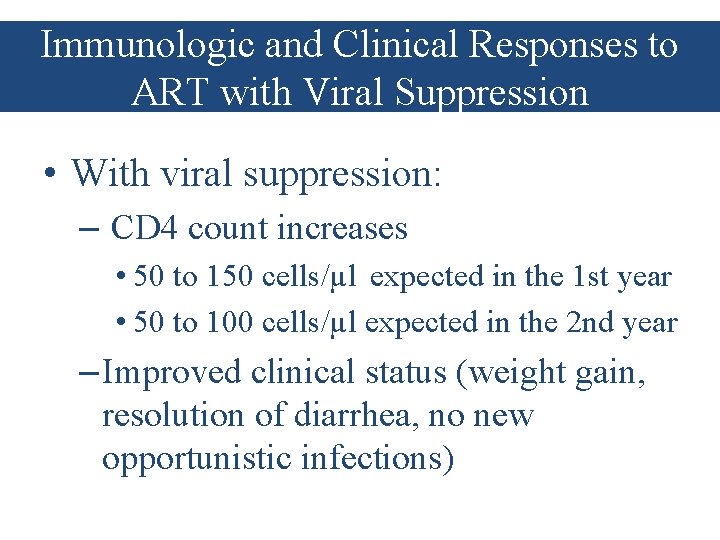
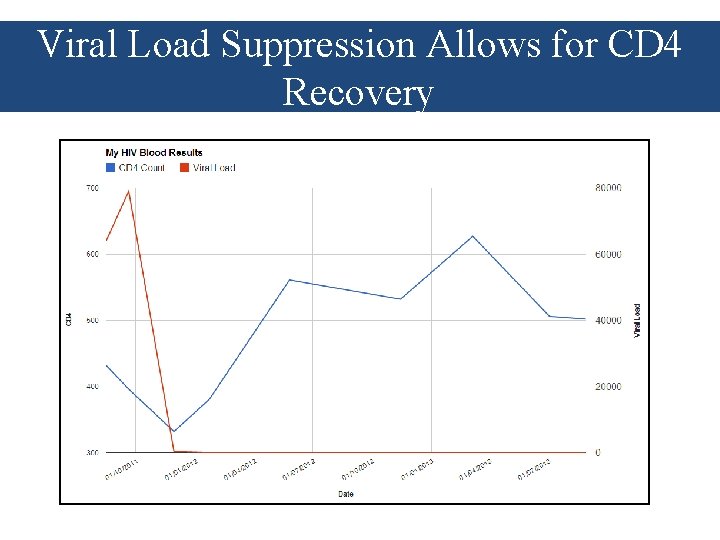
Immunologic and Clinical Responses to ART with Viral Suppression • With viral suppression: – CD 4 count increases • 50 to 150 cells/µl expected in the 1 st year • 50 to 100 cells/µl expected in the 2 nd year – Improved clinical status (weight gain, resolution of diarrhea, no new opportunistic infections)
Viral Load Suppression Allows for CD 4 Recovery
Monitoring for Treatment Failure • Treatment failure can be defined using the following criteria: Clinical Immunologic Virologic • Resource-limited settings have relied on suboptimal clinical and immunologic methods – May not detect early failure – Some with clinical or immunologic failure may not actually have virologic failure
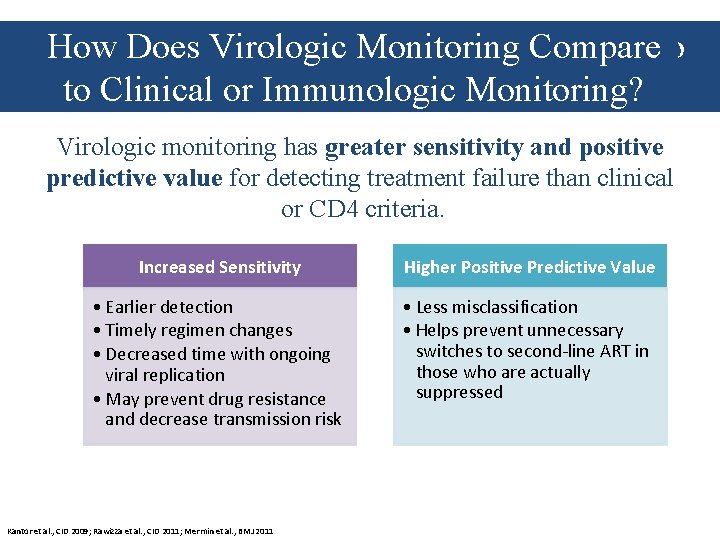
How Does Virologic Monitoring Compare to Clinical or Immunologic Monitoring? Virologic monitoring has greater sensitivity and positive predictive value for detecting treatment failure than clinical or CD 4 criteria. Increased Sensitivity Higher Positive Predictive Value • Earlier detection • Timely regimen changes • Decreased time with ongoing viral replication • May prevent drug resistance and decrease transmission risk • Less misclassification • Helps prevent unnecessary switches to second-line ART in those who are actually suppressed Kantor et al. , CID 2009; Rawizza et al. , CID 2011; Mermin et al. , BMJ 2011
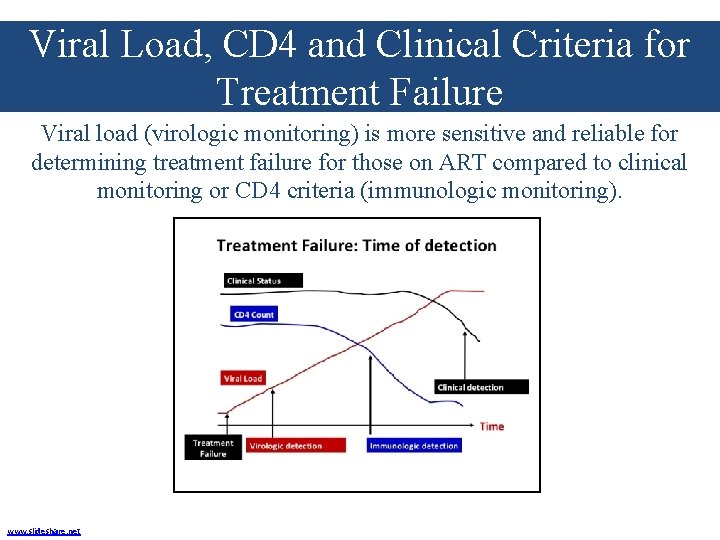
Viral Load, CD 4 and Clinical Criteria for Treatment Failure Viral load (virologic monitoring) is more sensitive and reliable for determining treatment failure for those on ART compared to clinical monitoring or CD 4 criteria (immunologic monitoring). www. slideshare. net
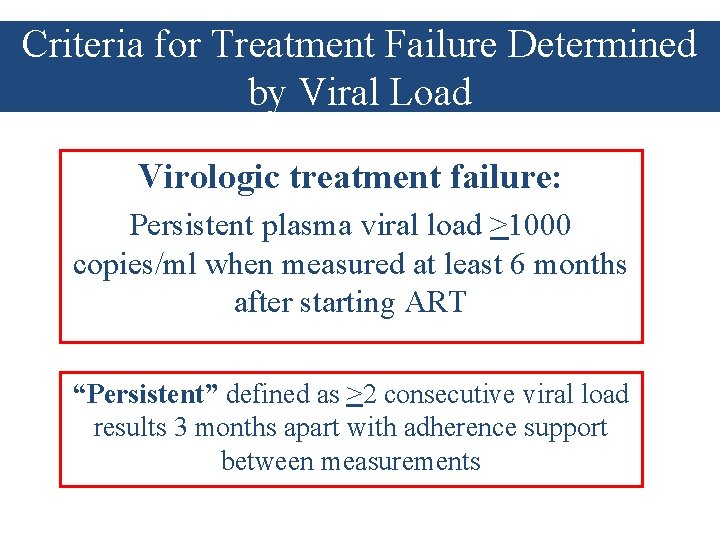
Criteria for Treatment Failure Determined by Viral Load Virologic treatment failure: Persistent plasma viral load >1000 copies/ml when measured at least 6 months after starting ART “Persistent” defined as >2 consecutive viral load results 3 months apart with adherence support between measurements
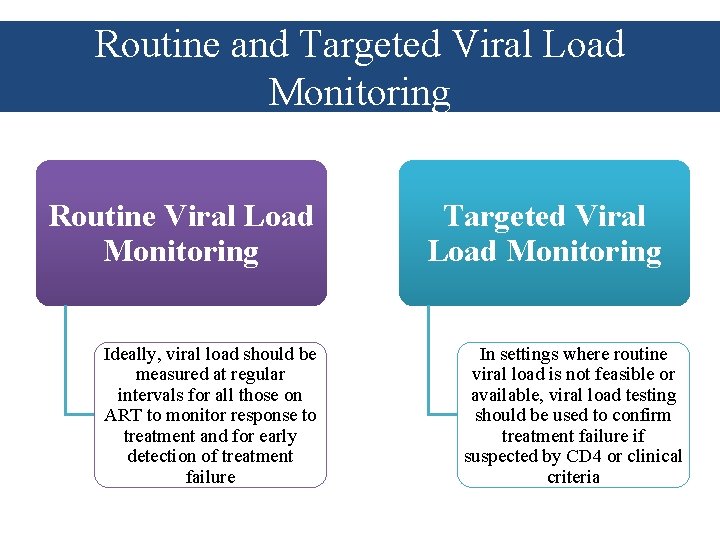
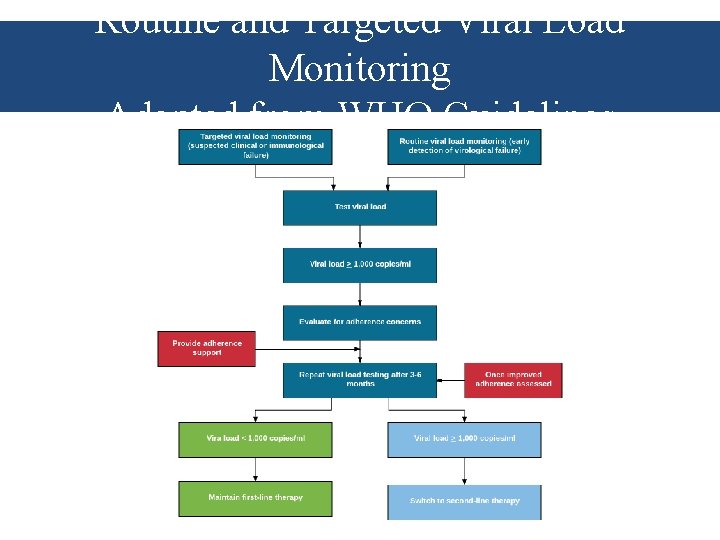
Routine and Targeted Viral Load Monitoring Routine Viral Load Monitoring Ideally, viral load should be measured at regular intervals for all those on ART to monitor response to treatment and for early detection of treatment failure Targeted Viral Load Monitoring In settings where routine viral load is not feasible or available, viral load testing should be used to confirm treatment failure if suspected by CD 4 or clinical criteria
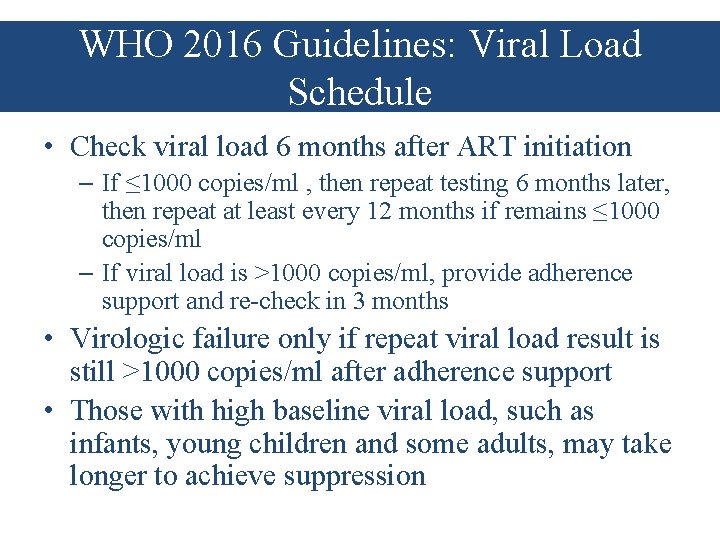
WHO 2016 Guidelines: Viral Load Schedule • Check viral load 6 months after ART initiation – If ≤ 1000 copies/ml , then repeat testing 6 months later, then repeat at least every 12 months if remains ≤ 1000 copies/ml – If viral load is >1000 copies/ml, provide adherence support and re-check in 3 months • Virologic failure only if repeat viral load result is still >1000 copies/ml after adherence support • Those with high baseline viral load, such as infants, young children and some adults, may take longer to achieve suppression
Routine and Targeted Viral Load Monitoring Adapted from WHO Guidelines
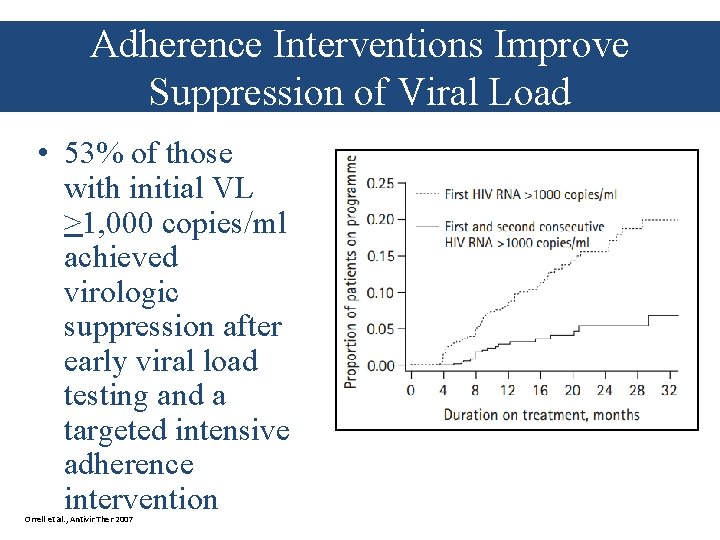
Adherence Interventions Improve Suppression of Viral Load • 53% of those with initial VL >1, 000 copies/ml achieved virologic suppression after early viral load testing and a targeted intensive adherence intervention Orrell et al. , Antivir Ther 2007
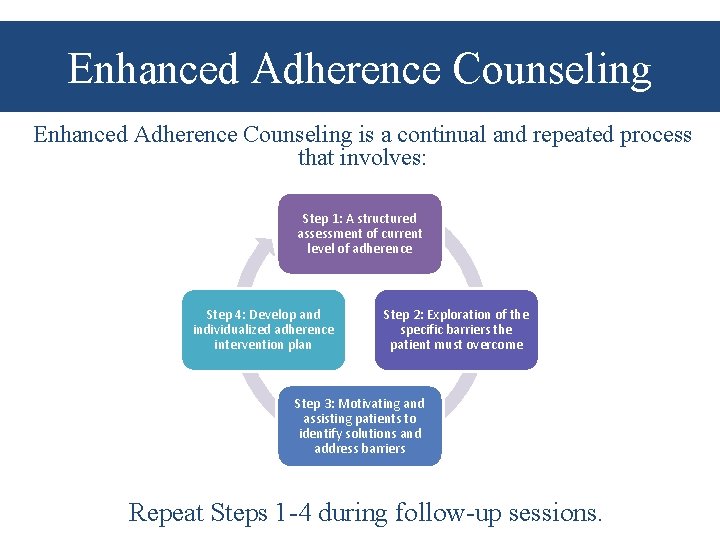
Enhanced Adherence Counseling is a continual and repeated process that involves: Step 1: A structured assessment of current level of adherence Step 4: Develop and individualized adherence intervention plan Step 2: Exploration of the specific barriers the patient must overcome Step 3: Motivating and assisting patients to identify solutions and address barriers Repeat Steps 1 -4 during follow-up sessions.
Achieving Good Adherence • Adherence sessions should be repeated until good adherence is achieved • Once good adherence is achieved, set a date for repeat viral load measurement after 3 months of good adherence and provide to patient
Viral Load Monitoring: Not Too Much, Not Too Little • More evidence is needed to determine the optimal schedule for viral load monitoring. • Monitoring too often: – Resource intensive, costly and may not contribute to improved patient outcomes – If improperly implemented may lead to premature regimen change (e. g. viral load testing prior to expected time of suppression, or repeat viral load testing without improvement in adherence) • Infrequent monitoring may lead to late detection of treatment failure and progression of disease – In partially adherent patients delayed viral load testing may allow for emergence of drug resistance
Schedule for Routine Viral Load Monitoring Adults (Non-Pregnant or Breastfeeding ) • Fill in schedule according to national guidelines
Schedule for Routine Viral Load Monitoring Children and Adolescents on ART • Fill in schedule according to national guidelines
Schedule for Routine Viral Load Monitoring Pregnant or Breastfeeding Women on ART • Fill in schedule according to national guidelines
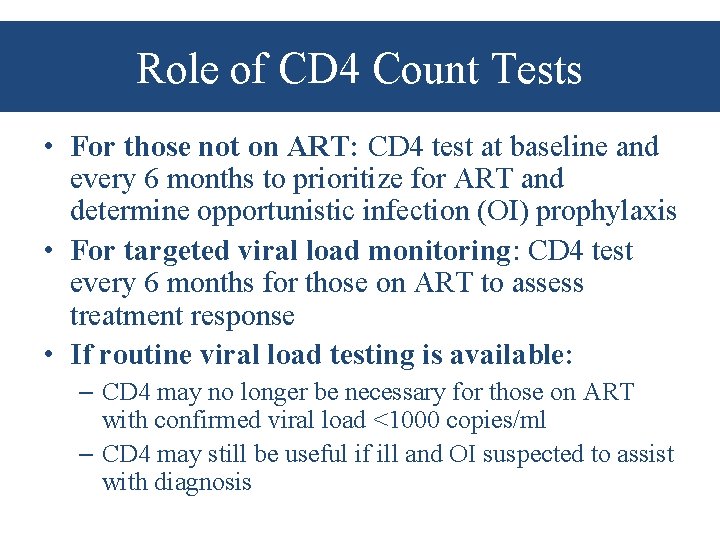
Role of CD 4 Count Tests • For those not on ART: CD 4 test at baseline and every 6 months to prioritize for ART and determine opportunistic infection (OI) prophylaxis • For targeted viral load monitoring: CD 4 test every 6 months for those on ART to assess treatment response • If routine viral load testing is available: – CD 4 may no longer be necessary for those on ART with confirmed viral load <1000 copies/ml – CD 4 may still be useful if ill and OI suspected to assist with diagnosis
CD 4 Count Testing • Fill in national guidelines on CD 4 count testing
Knowledge Check
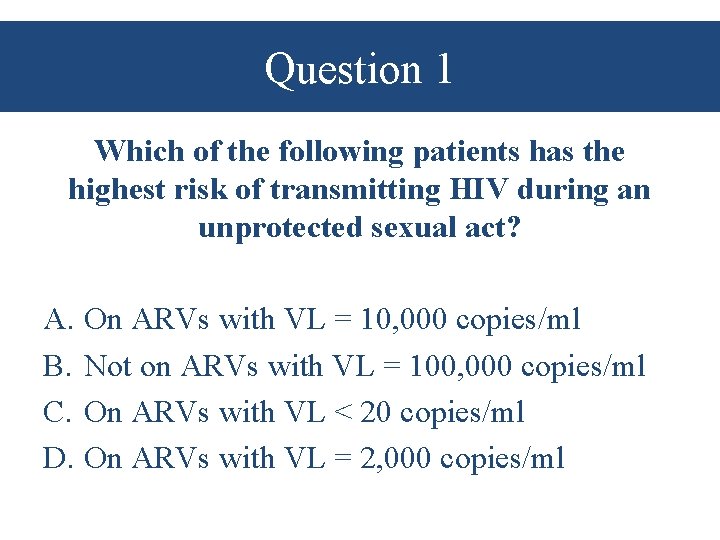
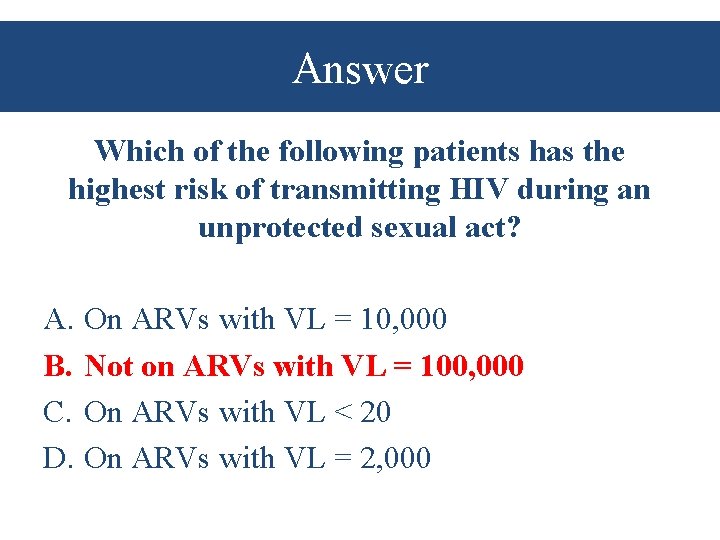
Question 1 Which of the following patients has the highest risk of transmitting HIV during an unprotected sexual act? A. On ARVs with VL = 10, 000 copies/ml B. Not on ARVs with VL = 100, 000 copies/ml C. On ARVs with VL < 20 copies/ml D. On ARVs with VL = 2, 000 copies/ml
Answer Which of the following patients has the highest risk of transmitting HIV during an unprotected sexual act? A. On ARVs with VL = 10, 000 B. Not on ARVs with VL = 100, 000 C. On ARVs with VL < 20 D. On ARVs with VL = 2, 000
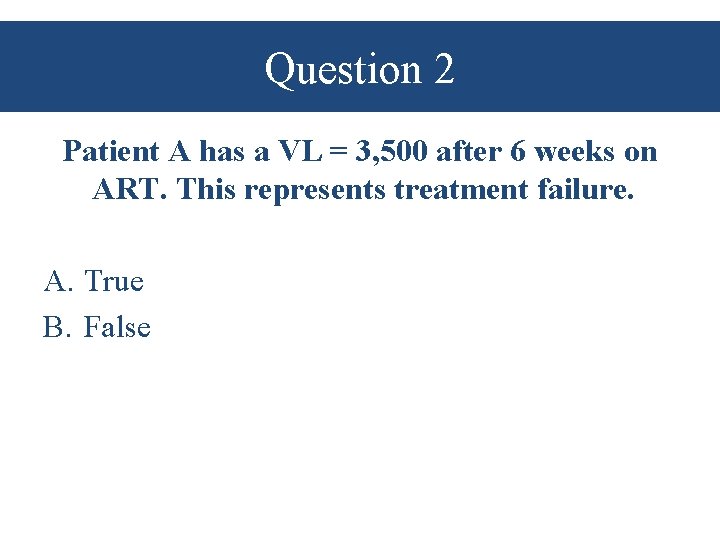
Question 2 Patient A has a VL = 3, 500 after 6 weeks on ART. This represents treatment failure. A. True B. False
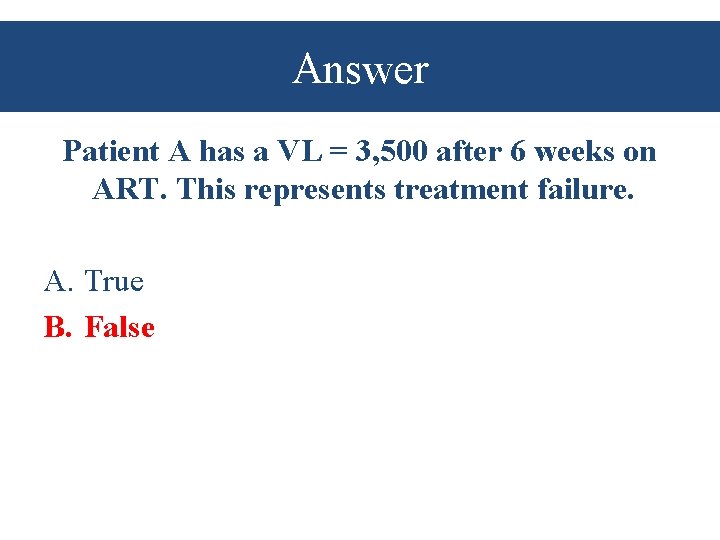
Answer Patient A has a VL = 3, 500 after 6 weeks on ART. This represents treatment failure. A. True B. False
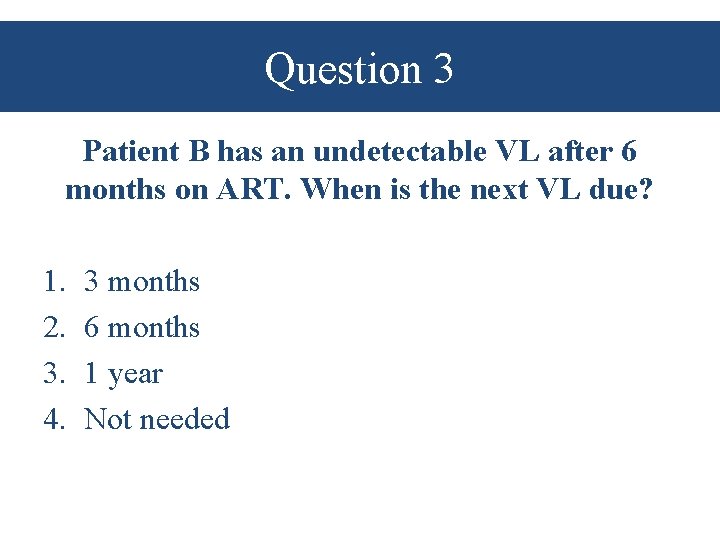
Question 3 Patient B has an undetectable VL after 6 months on ART. When is the next VL due? 1. 2. 3. 4. 3 months 6 months 1 year Not needed
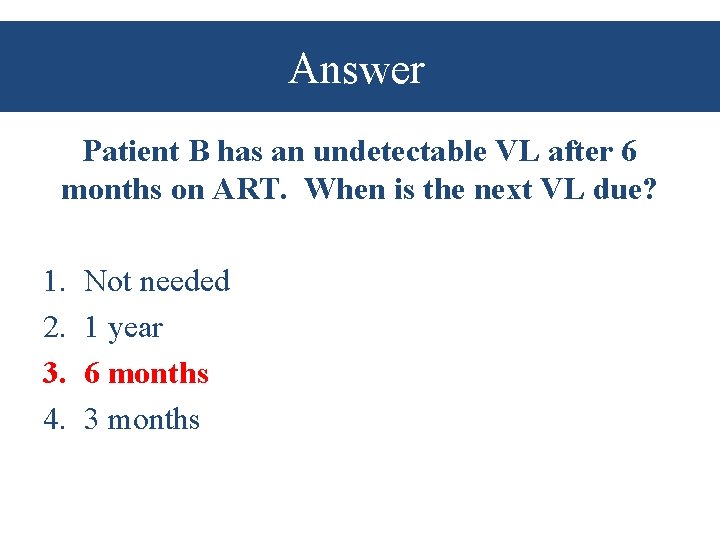
Answer Patient B has an undetectable VL after 6 months on ART. When is the next VL due? 1. 2. 3. 4. Not needed 1 year 6 months 3 months
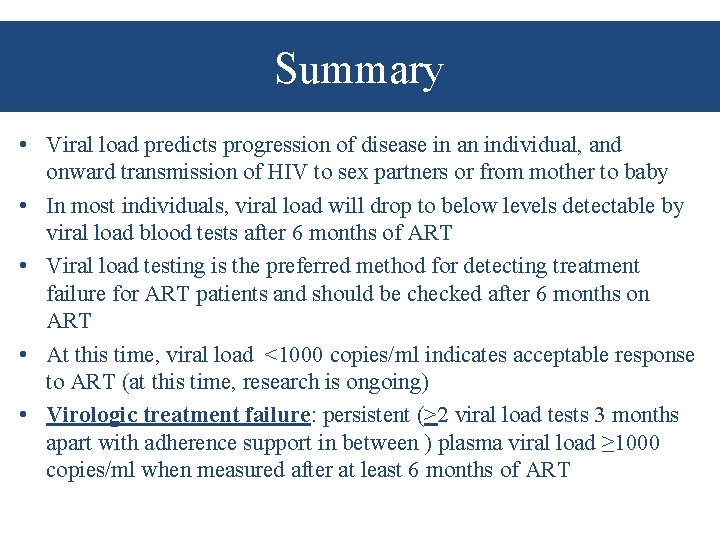
Summary • Viral load predicts progression of disease in an individual, and onward transmission of HIV to sex partners or from mother to baby • In most individuals, viral load will drop to below levels detectable by viral load blood tests after 6 months of ART • Viral load testing is the preferred method for detecting treatment failure for ART patients and should be checked after 6 months on ART • At this time, viral load <1000 copies/ml indicates acceptable response to ART (at this time, research is ongoing) • Virologic treatment failure: persistent (>2 viral load tests 3 months apart with adherence support in between ) plasma viral load ≥ 1000 copies/ml when measured after at least 6 months of ART
Questions?