
Module 1 Introduction to Waves Lesson 1 Wave

- Slides: 34
Module 1: Introduction to Waves Lesson 1: Wave Properties
What is a wave? What do a clap of thunder and the ocean crashing on the shore have in common? They are both types of waves. You cannot make thunder or create an ocean wave, but you have created waves before. If you have ever clapped your hands or tossed a pebble into water, you have made a wave. Let’s investigate to find out the characteristics of a wave.
Waves A wave is a disturbance that transfers energy from one place to another without transferring matter. All waves have an energy source. The contact of raindrops on water is the source of energy for water waves. Waves transfer energy away from the source of the energy. The source of energy is also known as a vibration. A vibration is a back-and-forth or an up-and-down movement of an object. Vibrating objects, such as a drum or a guitar string, are the sources of energy that produce sound waves.
Mechanical Waves made with coiled spring toys, sound waves, and ocean waves are all mechanical waves. A mechanical wave is a wave that travels only through matter. Mechanical waves can travel through solids, liquids, and gases. Mechanical waves cannot travel through a vacuum. A material in which a wave travels is called a medium. Mechanical waves can be either transverse waves or longitudinal waves.
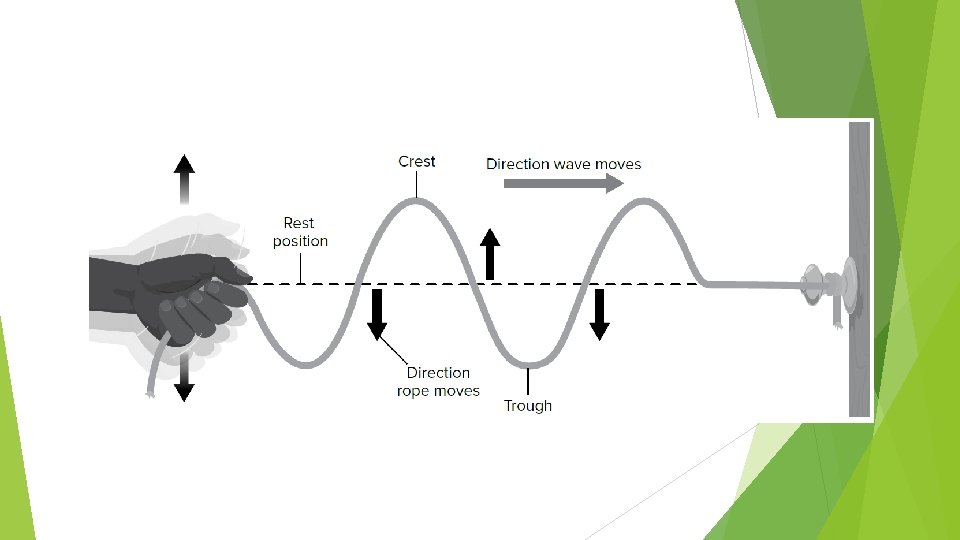
Transverse Waves You can make a wave on a rope by shaking one end of the rope up and down, as shown in the figure below. A wave traveling through a rope is a transverse wave. A transverse wave is a wave in which the disturbance is perpendicular to the direction the wave travels. In the figure below, the dotted line shows where the rope was before it was shaken. This is the rest position. When you shake the rope, the particles in the rope move up and down, and the wave moves forward or away from the source of energy.
The rope moves in a direction that is perpendicular, or at right angles, to the direction the wave moves. All transverse waves move like this. The highest points on a transverse wave are crests. The lowest points on a transverse wave are troughs. As a transverse wave moves through a rope, it makes crests and troughs in the rope. Now, suppose you move the end of a coil spring up and down. The up-anddown movement of your hand is one vibration. Imagine that you move the end of the coil spring up and down several times. The motion of your hand transfers energy to the coil spring. It produces several crests and troughs. As long as your hand keeps moving up and down, energy transfers to the coil spring and produces waves. When your hand stops, waves no longer are produced. However, the waves produced by the earlier movements of your hand continue to travel along the spring. This is true for any vibrating object. Waves can keep moving even after the object stops vibrating.
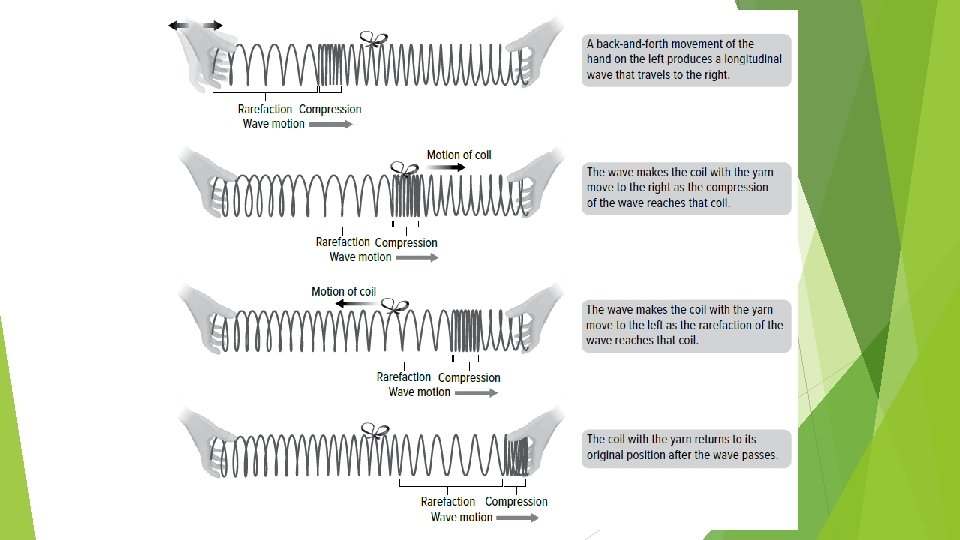
Longitudinal Waves Another type of mechanical wave is a longitudinal wave. A longitudinal wave causes the particles in a medium to move parallel to the direction that the wave travels. The figure below shows a longitudinal wave moving along a spring. As the wave passes, the coils of the spring move closer together, then move farther apart, and back again. This is parallel to the direction that the wave itself moves.
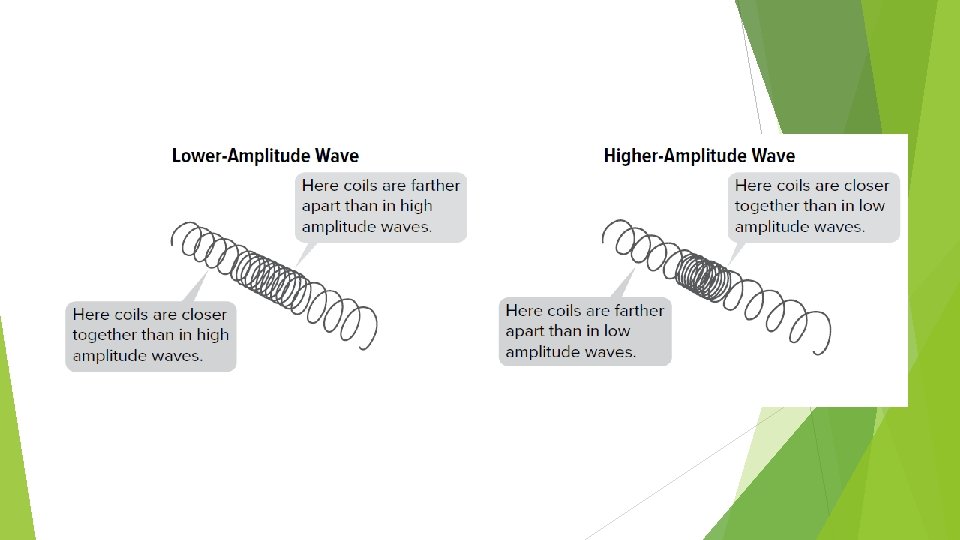
Before a wave moves through the spring, the coils of the spring are all the same distance apart. This is the rest position of the spring. This changes when a wave moves through the spring. The wave produces regions in the spring where the coils are closer together than they are in the rest position and regions where they are farther apart. The regions of a longitudinal wave where the particles in the medium are closest together are compressions. The regions of a longitudinal wave where the particles of the medium are farthest apart are rarefactions.
Sound Waves Have you ever walked down a busy city street and noticed all the sounds? They all have one thing in common. The sounds travel from one place to another as sound waves. A sound wave is a longitudinal wave that can travel only through matter. Sound waves can travel through solids, liquids, and gases. The sounds you hear now are traveling through air—a mixture of solids and gases. You might have dived under water and heard someone call you. Those sound waves traveled through a liquid. Sound waves travel through a solid when you knock on a door. Your knock makes the door vibrate. Vibrating objects produce sound waves.
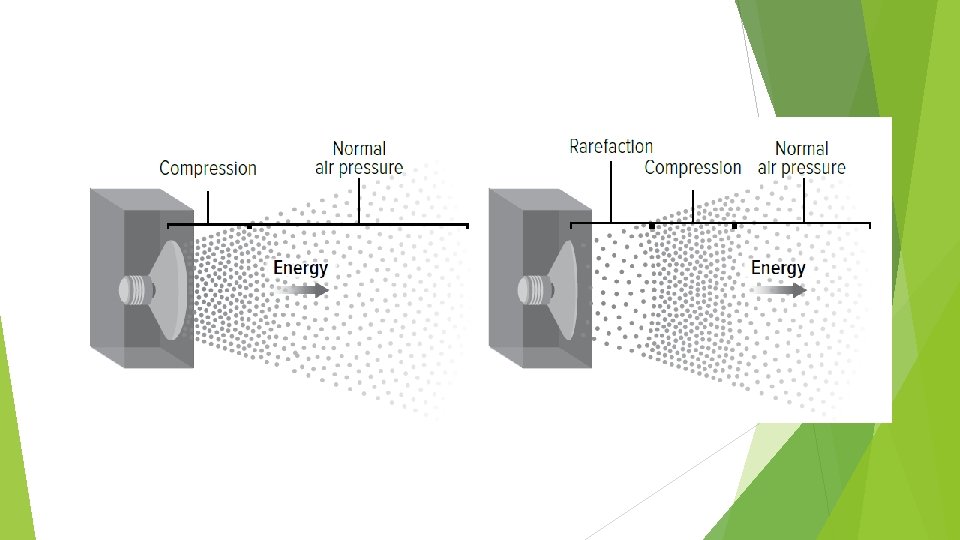
Sound Wave Models Sound waves move away from a sound source, such as the speaker in the diagram below, as compressions and rarefactions. If you touch a speaker, you can feel it vibrate as it produces sound waves. Air particles fill a room. Each time the speaker cone moves forward, it pushes air particles ahead of it in the room. This push forces the particles closer together, increasing air pressure in that area. The image on the left in the figure below illustrates this high-pressure region, called a compression. With each vibration, the speaker cone moves forward and then back. When the speaker cone moves back, it leaves behind a low-pressure region with fewer air particles. The image on the right in the figure illustrates this low-pressure region, called a rarefaction.
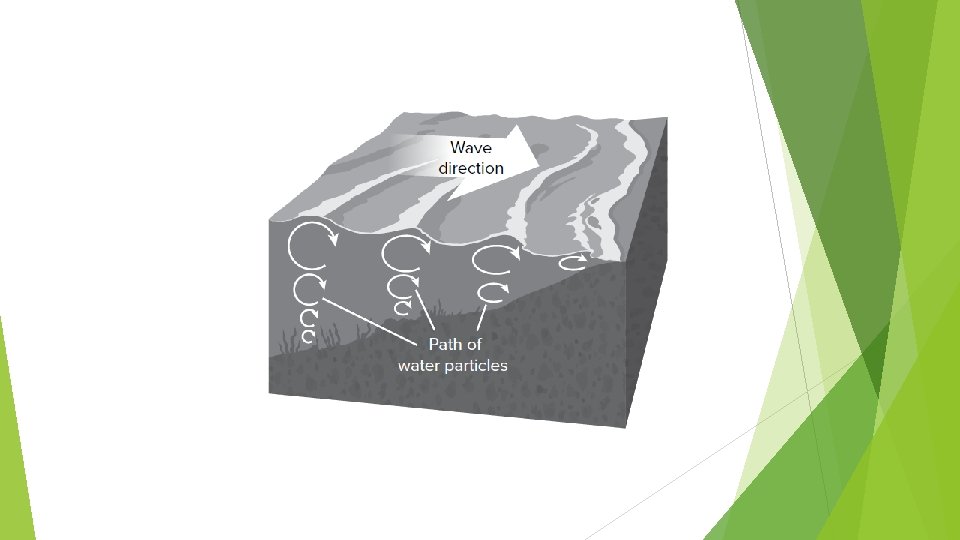
Water Waves Friction between the wind at sea and the water forms water waves. Energy from the wind transfers to the water as the water moves toward land. Like all waves, water waves only transport energy. They move only through matter, so water waves are mechanical waves. Although water waves look like transverse waves, water particles move in circles. Water waves are a combination of transverse and longitudinal waves. Water particles move forward and backward. They also move up and down. The result is a circular path that gets smaller as the wave approaches land, as shown in the diagram below.
Seismic Waves An earthquake occurs when the rocks that make up Earth’s crust suddenly shift. The movement of rock rapidly releases energy along the fault. Waves travel to Earth’s surface. An earthquake wave is called a seismic wave. There are different types of seismic waves. Seismic waves are mechanical waves because they move through matter.
Amplitude and Energy How does energy affect a wave? Sometimes, thunder is a low, soft rumble. Other times it is a strong, loud boom that rattles the windows. What causes the thunder to be different? Any energy that moves through a medium moves the particles of the medium. The particles of the medium bump into each other. When they do, they might move a little or they might move a lot. Imagine that you are floating on a raft in a pool. The water is in the rest position. Someone splashes the water and creates waves. You can barely feel them as they pass. These waves have a small amplitude. The amplitude of a wave is the maximum distance that the wave moves from its rest position. In this case, the water moves back and forth a small distance from its rest position.
Now imagine that someone dives into the pool. This makes waves that bounce your raft up and down. The waves have higher crests and deeper troughs. The water moves a greater distance from its rest position to make waves with a greater amplitude. For any wave, the larger the amplitude, the more energy the wave carries. The wave produced by the diver hitting the water caused a greater change than the wave produced by the gentle splash. The wave produced by the diver had more energy.
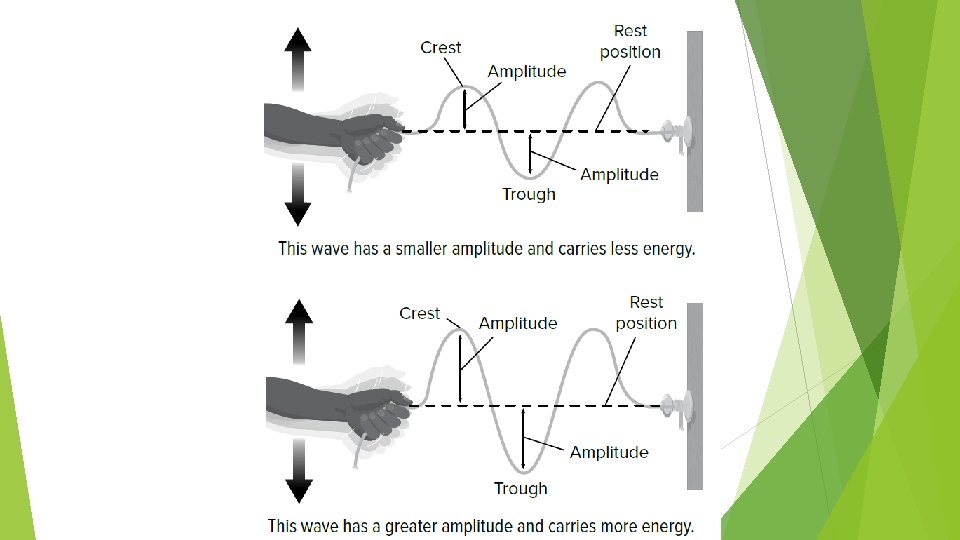
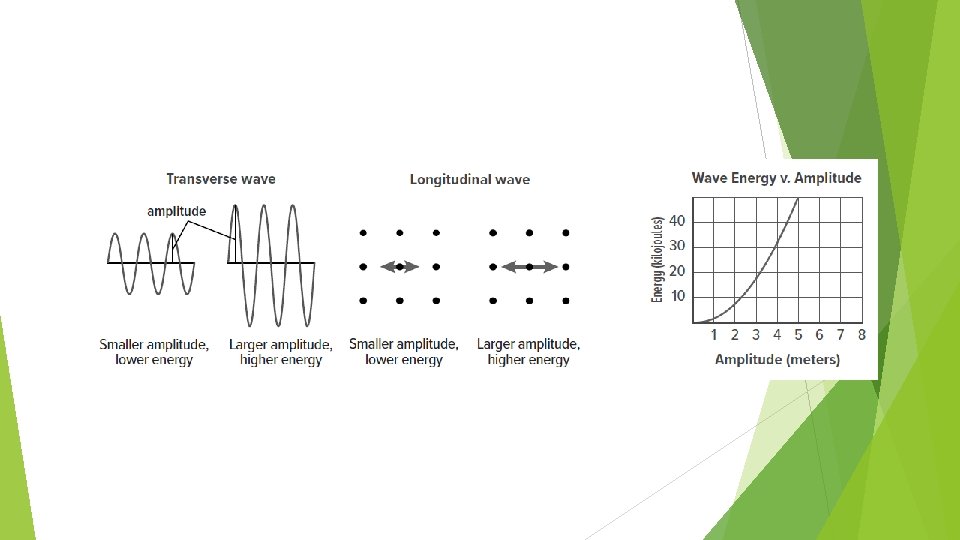
Proportional Relationships When you move a rope up and down, you produce a transverse wave with a specific amplitude. For a transverse wave, the greatest distance a particle moves from the rest position is to the top of a crest or to the bottom of a trough. This distance is the amplitude of a transverse wave. In the figure below, you can see the difference between a wave with a small amplitude and one with a large amplitude. Amplitude in a transverse wave is measured by the distance from the rest position of the medium to one of the crests or one of the troughs. The energy carried by a transverse wave increases as the amplitude of the wave increases. Waves that have larger amplitudes have more energy. Waves that have smaller amplitudes have less energy.
The amplitude of a longitudinal wave depends on the distance between the particles of the medium. The figure below shows large and small amplitudes in longitudinal waves. In a longitudinal wave that has a large amplitude, the particles in the compressions are close together and the particles in the rarefactions are far apart. The larger the amplitude of the wave, the more energy the wave has.
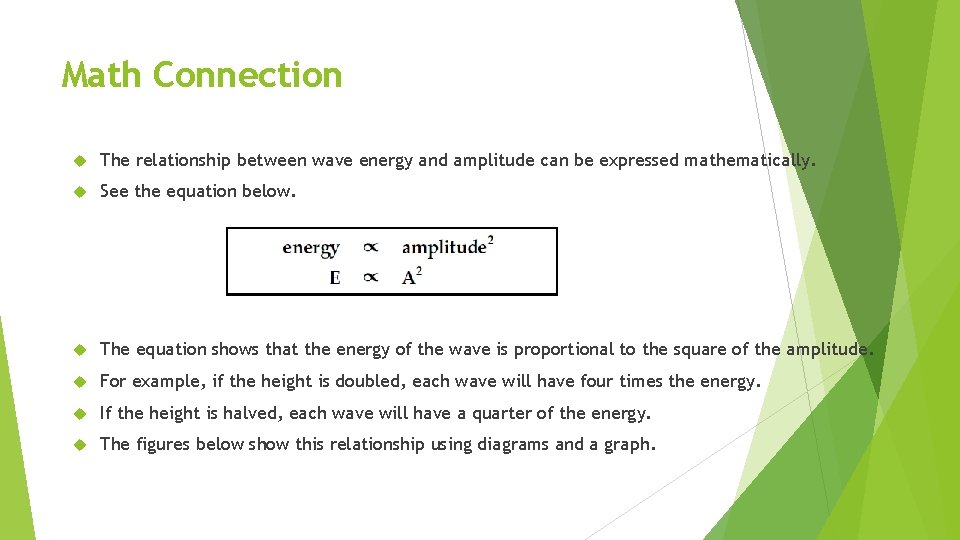
Math Connection The relationship between wave energy and amplitude can be expressed mathematically. See the equation below. The equation shows that the energy of the wave is proportional to the square of the amplitude. For example, if the height is doubled, each wave will have four times the energy. If the height is halved, each wave will have a quarter of the energy. The figures below show this relationship using diagrams and a graph.
Amplitude, Intensity, and Loudness The more energy a sound has, the larger the amplitude, and the louder the sound will seem. Loudness is how you perceive the energy of a sound wave. Does the alarm of a cell phone sound the same to you as it does to your friend in the next room? A cell phone alarm sounds quieter to someone farther from the phone. When the alarm sounds, the particles of air in front of the phone vibrate back and forth. They collide with, and transfer energy to surrounding particles of air. As the energy spreads out among more and more air particles, the intensity of the wave decreases. Intensity is the amount of sound energy that passes through a square meter of space in one second. As a sound wave travels farther from the phone, the area of air particles sharing the energy that left the phone is larger. Therefore, as distance from the phone increases, the energy passing through one square meter decreases. The wave is less intense. As intensity decreases, amplitude decreases, and loudness decreases.
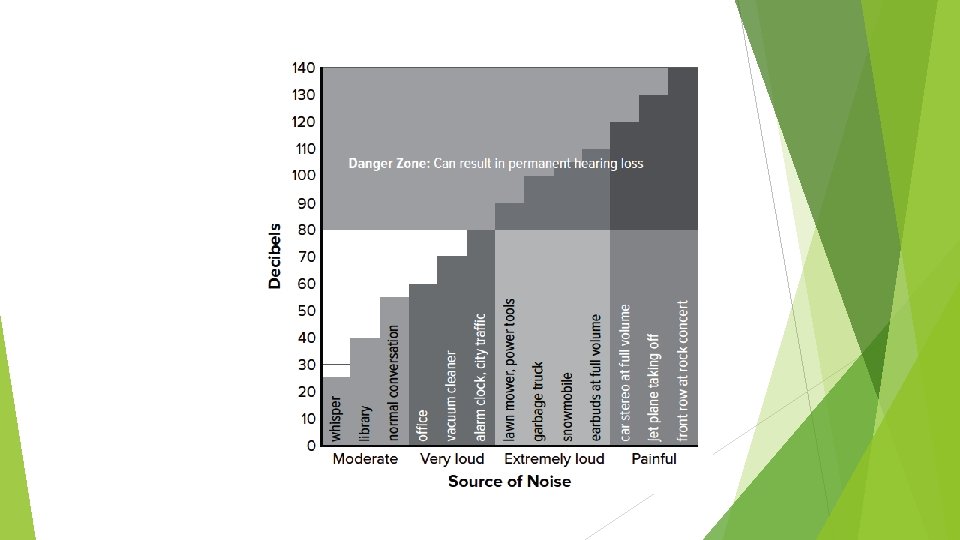
The decibel (d. B) is the unit of measure that describes the intensity or loudness of sound. Decibel levels of common sounds are shown in the figure below. Each increase of 10 d. B indicates that the sound is about twice as loud and has about 10 times more energy. For example, the decibel level of city traffic is about 85 d. B. The level of a rock concert is about 105 d. B. This means a concert, which is 20 d. B higher, has about 10 x 10, or 100 times, more energy than traffic. As sounds get louder, the amount of time you can listen without hearing loss gets shorter.
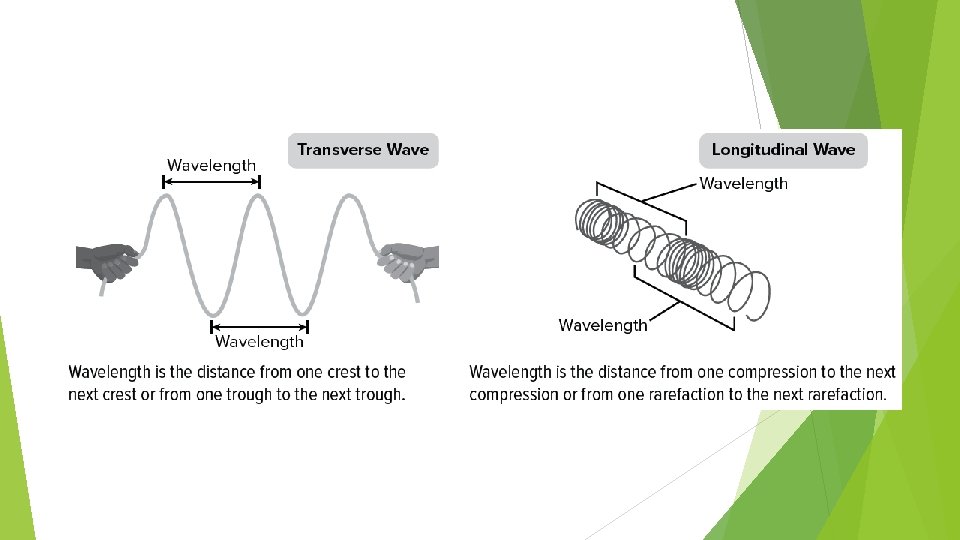
Wavelength The more energy a wave has, the larger its amplitude. As amplitude increases, loudness and intensity increase. What are some other properties of waves, and what does a wave model look like when these properties change? The wavelength of a wave is the distance from one point on a wave to the same point on the next wave. The figure below shows how wavelength is measured for transverse waves and for longitudinal waves. To measure the wavelength of a transverse wave, you can measure the distance from one crest to the next crest. Or, you can measure from one trough to the next trough. In the same wave, both of these distances will be the same. To measure the wavelength of a longitudinal wave, measure the distance from one compression to the next compression. Or, measure from one rarefaction to the next rarefaction. In the same wave, both of these distances will be the same. Wavelength is measured in units of distance, such as meters.
Frequency Waves have another property called frequency. The frequency of a wave is the number of times the pattern repeats in a given time. Frequency is determined by measuring how quickly the object or material producing the wave vibrates. Each vibration of the object produces one wavelength. When the object vibrates faster, the waves will have a higher frequency. The frequency of a wave will be equal to the number of vibrations the vibrating object makes each second. The SI unit for frequency is hertz (Hz). A wave with a frequency of 2 Hz means that two wavelengths pass the same point each second. The unit Hz is the same unit as 1/s. The amount of energy transferred by waves in a given time is proportional to the wave’s frequency. If the frequency of the waves doubles, the energy of the wave also doubles. If the frequency decreases by half, the energy will also decrease by half.
Wavelength and Frequency The wavelength and the frequency of a wave are always related. When the frequency of a wave changes, the wavelength also changes. The figure below shows how frequency and wavelength are related. Notice that the wavelength of the wave on the left is longer than that of the wave on the right. Waves with a longer wavelength have a lower frequency. Waves with a shorter wavelength have a higher frequency. As the frequency of a wave increases, its wavelength decreases. For the wave on the left, one wavelength passes in 4 s. For the wave on the right, two wavelengths pass in 4 s. To calculate the frequency of waves, divide the number of wavelengths by the time it takes for those wavelengths to pass. For the wave on the left, the frequency is 1 wavelength divided by 4 s, which is 0. 25 Hz. The wave on the right has a frequency of 2 wavelengths divided by 4 s, which is 0. 5 Hz.
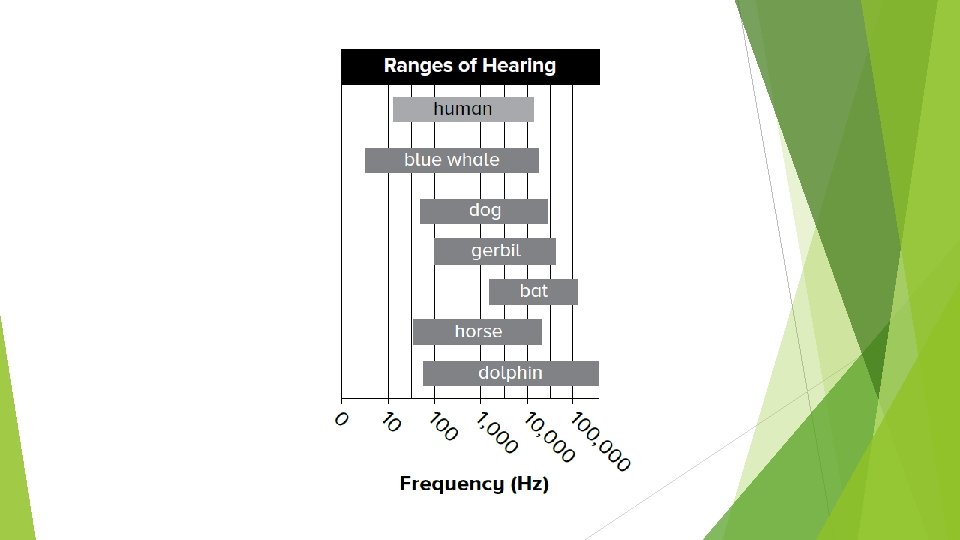
Sound Frequency As wavelength becomes longer, frequency becomes lower. How does the frequency of the wave affect what is heard? Pitch If you pluck a guitar string, you hear a note. A thick guitar string makes a low note. A thin guitar string makes a higher note. The sound a thick string makes has a lower pitch than the sound a thin string makes. The perception of how high or low a sound seems is pitch. The type of string changed the pitch and the frequency. Recall that frequency is the number of times the pattern repeats in a given amount of time. Frequency is often referred to as beats per second. A higher frequency produces a higher pitch. For example, an adult male voice might range from 85 Hz to 155 Hz. An adult female voice might range from about 165 Hz to 255 Hz. Humans can hear thunder frequencies between 20 Hz and 120 Hz. The human ear can detect sounds with frequencies between about 20 Hz and 20, 000 Hz. Frequencies above this range are called ultrasound. The range of sounds heard by different animals is shown below.