
Module 1 Introduction to Wastewater Treatment Plant Operator
- Slides: 58
Module 1: Introduction to Wastewater Treatment Plant Operator Certification Training
Unit 1 – Roles of the Treatment Plant Operator Learning Objectives • List the roles of the Treatment Plant Operator • Describe the operator responsibilities 2
Roles of the Treatment Plant Operator · Planning, design and construction of new facilities · Administration · Public Relations · Operation and Maintenance · Safety · Continuing Education 3
Planning, design and construction • Offer input about the design and how the plant should be operated efficiently. • Offer important information regarding the limitations of the current facility. • Offer input on issues such as maintainability, security, operability, and safety. • During construction, the Treatment Plant Operator should become familiar with the plant 4
Administration Workbook Page 1 -2 • Supervision – Scheduling and supervision activities of other operators, mechanics, and laborers. • Record Keeping – Maintaining accurate records. • Financial Administration – Identify and manage plant needs, including equipment and personnel. – Create and manage an operating budget. 5
Operation and Maintenance • Process Control Decisions – Any action to maintain or change quality/quantity of water being treated • Laboratory Procedures – Process control depends on reliable laboratory data. • Mechanical Principles – Should have a general knowledge of pumps, hydraulics, electric motors, and circuitry. 6
Public Relations • Plant Tours – Appearance is important. – Annual “open house” • Downstream User Interests – Treatment plants protect water for downstream users, so establish role as protector, not polluter. 7
Safety • What types of safety issues might there be at a sewage treatment plant? – Open water tanks – Disease (proper hygiene) – Icing of walkways – Chemical use – Electrical contact 8
Safety • Safety Program Planning – Treatment plants should be a safe place to work and visit. – Ensure safety by planning programs and training the operators. 9
Continuing Education • Keep up with new technology • Maintain sufficient con. ed. to maintain license • Learn advanced concepts like troubleshooting 10
Key Points • Key Points on 1 -5 11
Unit 1 Exercise 1. True 2. Quality or Quantity 3. “c” Upgrading the electrical service panel 12
Unit 2–Characteristics of Wastewater Learning Objectives • Describe the typical composition of raw wastewater. • Explain the effects of wastewater discharges on the receiving stream. • Identify how treatment plant discharge impacts natural cycles. 13
Untreated Wastewater Contaminants in untreated wastewater • Organic contaminants; • Inorganic contaminants; • Pathogens; and • Other contaminants. • Table 2 -1 and 2 -2 in workbook 14
Organic Contaminants • Derived from animals and plants, or may be manufactured chemical compounds. • All organics contain carbon. • Measured as BOD • Untreated influent BOD is 200 to 250 mg/L 15
Contaminants Cont’d Inorganic Contaminants • Not biodegradable • Include nutrients like phosphorous and nitrogen • Include heavy metals Pathogens Thermal waste 16
Question • A stream used for trout stocking is one example of a thermal sensitive stream where the stream temperature needs to be regulated. Can anyone think of any other reasons to regulate the temperature of discharges to the receiving stream? 17
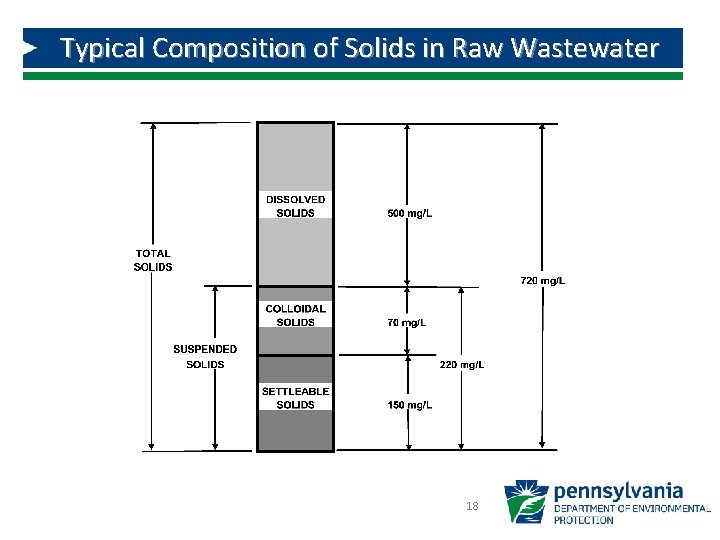
Typical Composition of Solids in Raw Wastewater 18
Effects of Wastewater Discharges Workbook Page 2 -10 • Oxygen depletion and odor in stream • Negative human health effects • Sludge and scum accumulations 19
Dissolved Oxygen for Aquatic Life DO depends on temperature and flow • • Cold water can retain MORE dissolved oxygen Warm water can retain LESS Turbulent flow adds more oxygen For aquatic life, DO should be at least 5 mg/L 20
Effects of Organic Waste Discharge • Oxygen utilization by aerobic bacteria • Odor production by anaerobic bacteria 21
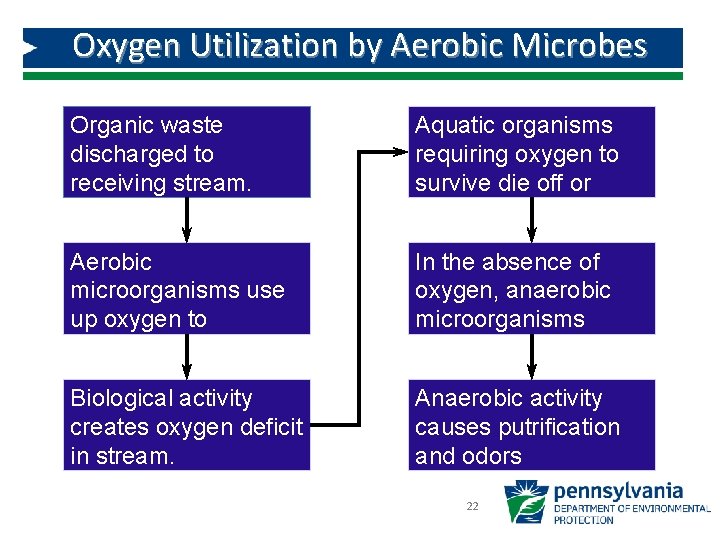
Oxygen Utilization by Aerobic Microbes Organic waste discharged to receiving stream. Aquatic organisms requiring oxygen to survive die off or migrate. Aerobic microorganisms use up oxygen to metabolize organic waste. Biological activity creates oxygen deficit in stream. In the absence of oxygen, anaerobic microorganisms dominate. Anaerobic activity causes putrification and odors 22
Human Health • Untreated wastewater may contain pathogens • Treatment Objectives: – Stabilization – Disinfection 23
Other Effects of WW Discharge • Workbook Page 2 -13 24
Natural Cycles • Workbook Page 2 -14 25
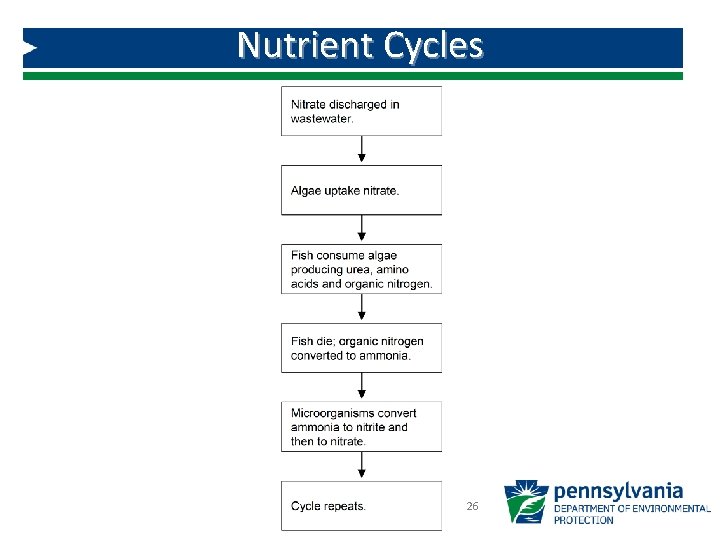
Nutrient Cycles 26
Key Points and Exercise • Key Point on 2 -16 • Unit 2 Exercise 27
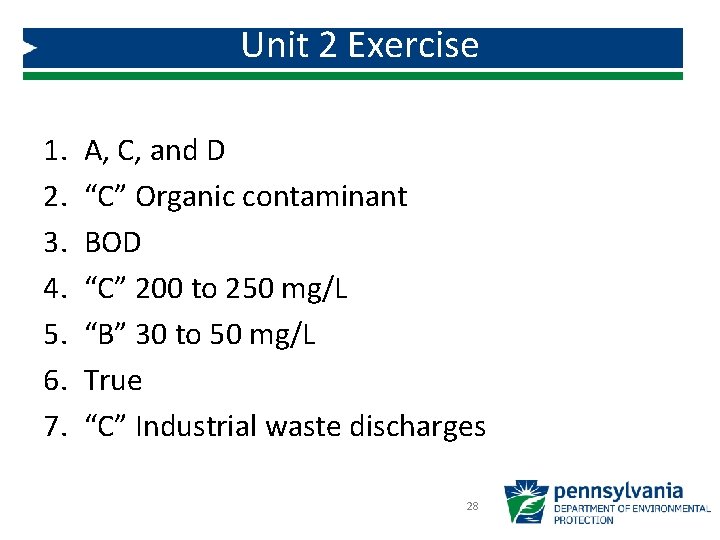
Unit 2 Exercise 1. 2. 3. 4. 5. 6. 7. A, C, and D “C” Organic contaminant BOD “C” 200 to 250 mg/L “B” 30 to 50 mg/L True “C” Industrial waste discharges 28
Unit 2 Exercise con’t 8. B and C 9. “B” Excessive nutrient availability… 10. Stabilization 11. True 12. Carbon, hydrogen, oxygen, sulfur, phosphorous, nitrogen 29
Unit 3–Basic Wastewater Treatment Processes Learning Objectives • Describe how wastewater is collected and transported to a treatment plant. • Indicate the function of each treatment process. • Describe two methods of effluent disposal. 30
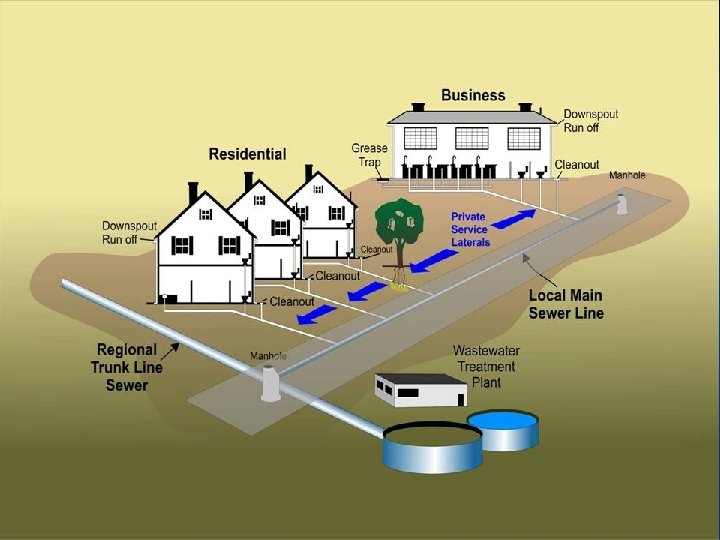
Collection Systems • Septicity definition (page 3 -2) • 3 Types: – Sanitary Sewer – Storm Sewer – Combine Sewer 31
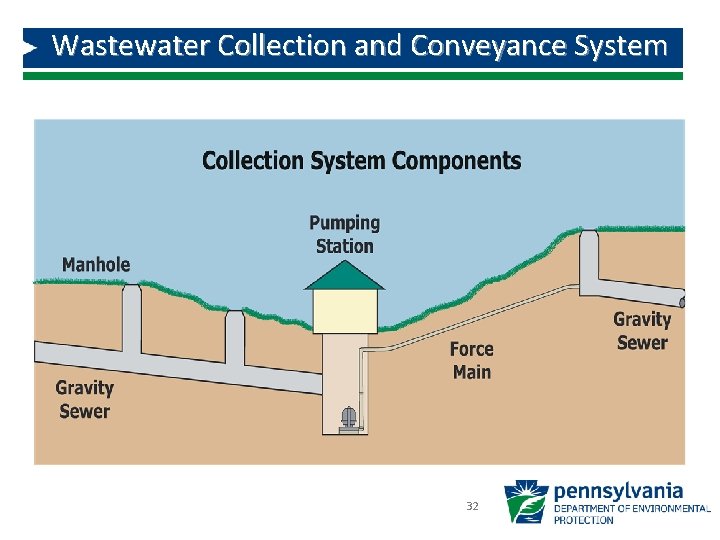
Wastewater Collection and Conveyance System 32
33
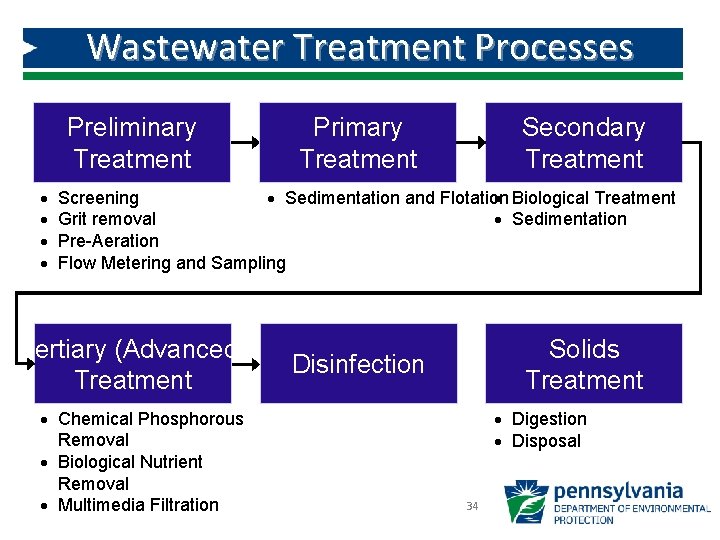
Wastewater Treatment Processes Preliminary Treatment · · Primary Treatment Secondary Treatment Screening · Sedimentation and Flotation · Biological Treatment Grit removal · Sedimentation Pre-Aeration Flow Metering and Sampling Tertiary (Advanced) Treatment · Chemical Phosphorous Removal · Biological Nutrient Removal · Multimedia Filtration Solids Treatment Disinfection · Digestion · Disposal 34
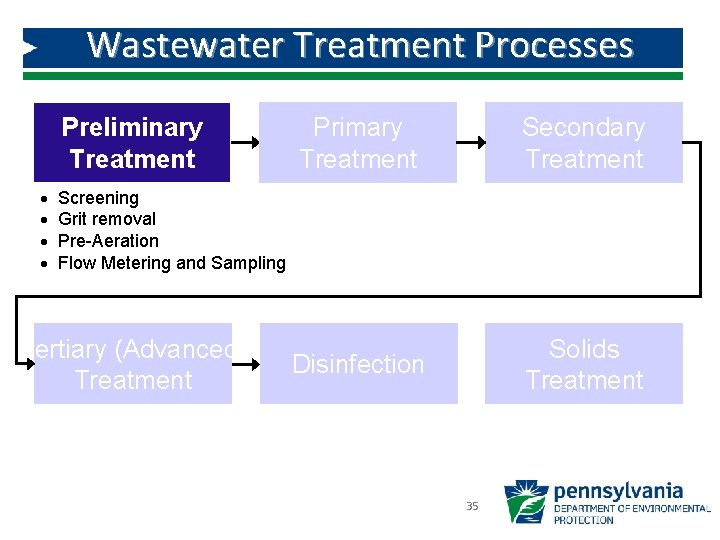
Wastewater Treatment Processes Preliminary Treatment · · Primary Treatment Secondary Treatment Disinfection Solids Treatment Screening Grit removal Pre-Aeration Flow Metering and Sampling Tertiary (Advanced) Treatment 35
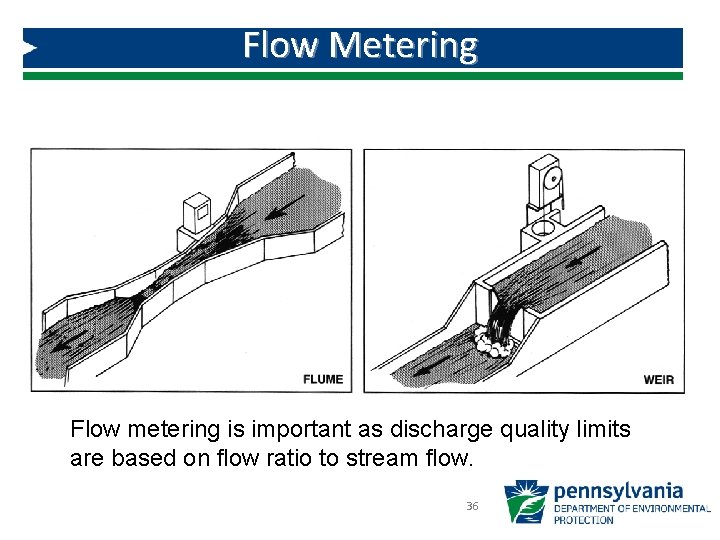
Flow Metering Flow metering is important as discharge quality limits are based on flow ratio to stream flow. 36
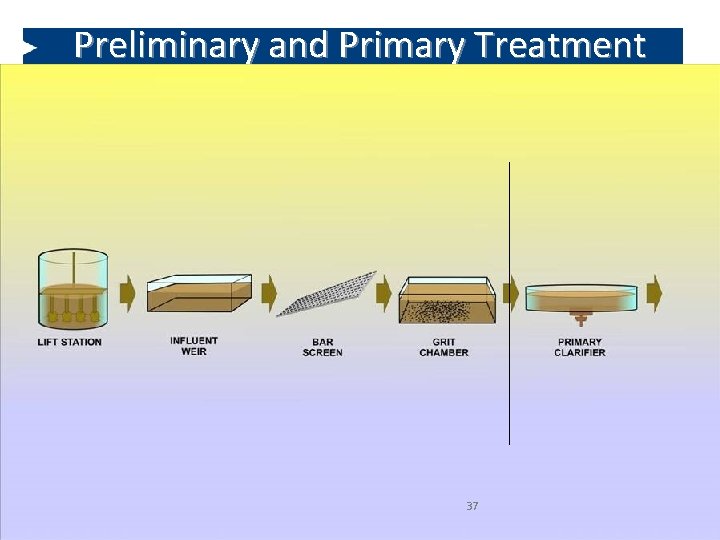
Preliminary and Primary Treatment 37
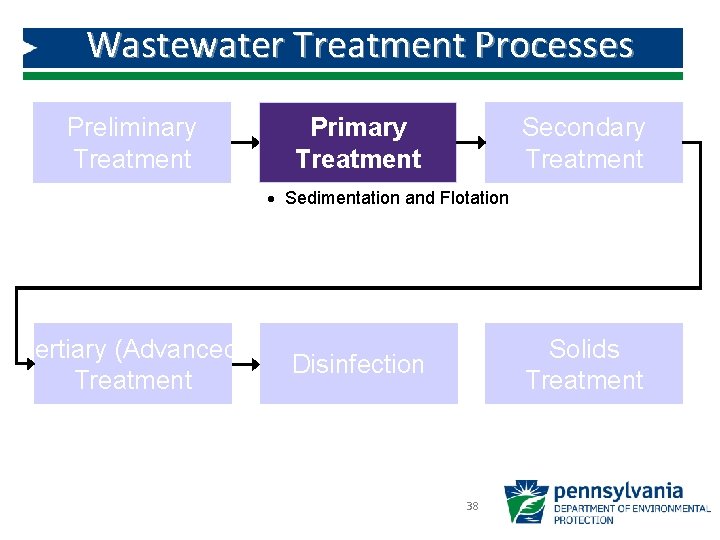
Wastewater Treatment Processes Preliminary Treatment Primary Treatment Secondary Treatment · Sedimentation and Flotation Tertiary (Advanced) Treatment Solids Treatment Disinfection 38
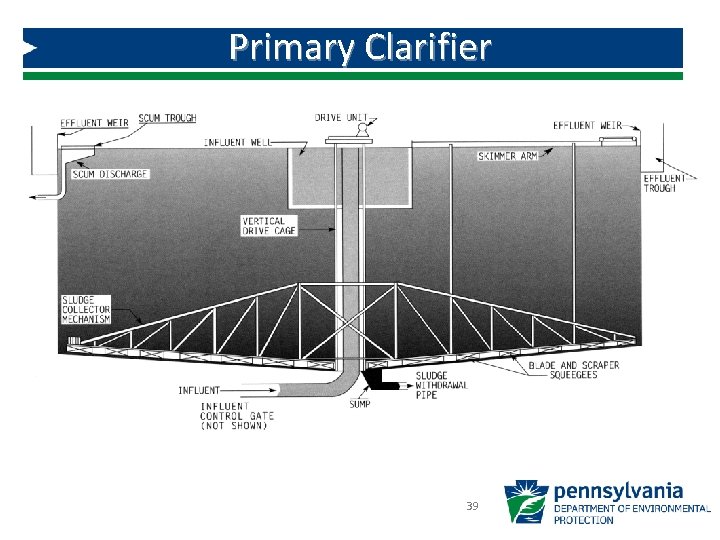
Primary Clarifier 39
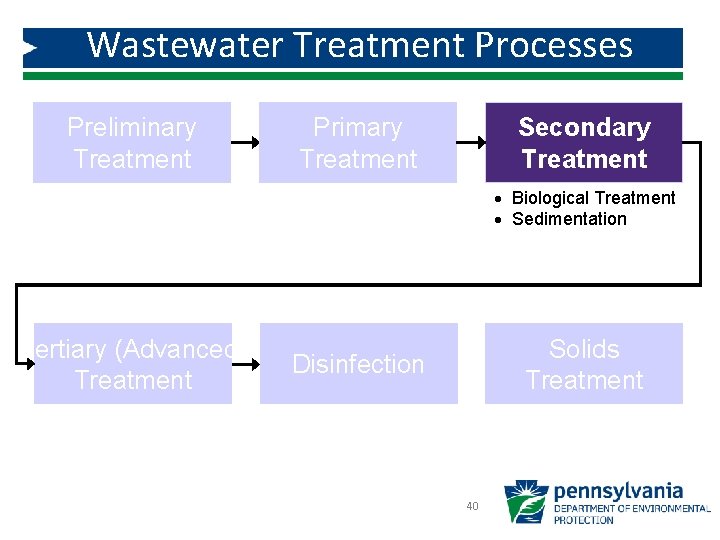
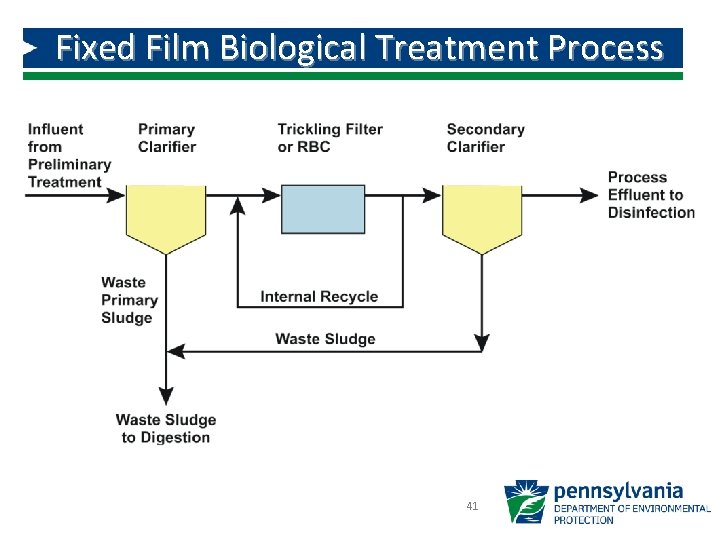
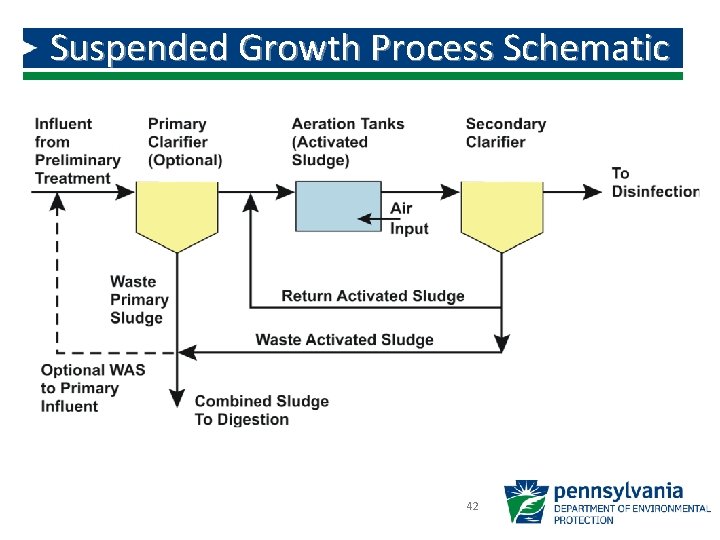
Wastewater Treatment Processes Preliminary Treatment Primary Treatment Secondary Treatment · Biological Treatment · Sedimentation Tertiary (Advanced) Treatment Solids Treatment Disinfection 40
Fixed Film Biological Treatment Process 41
Suspended Growth Process Schematic 42
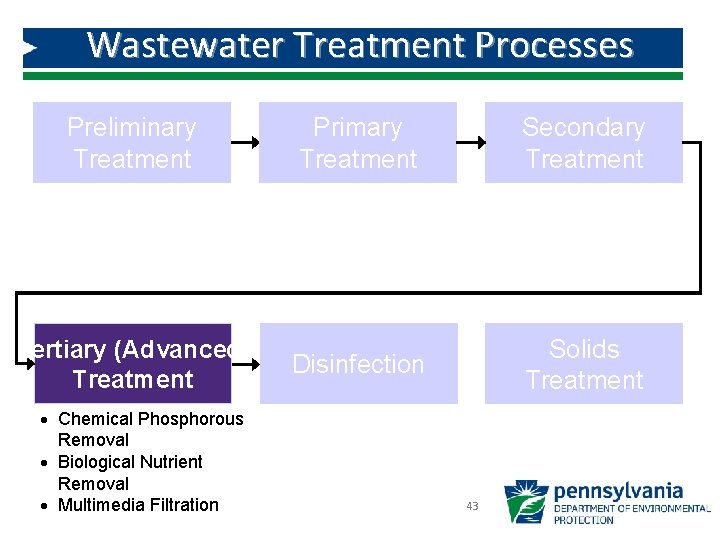
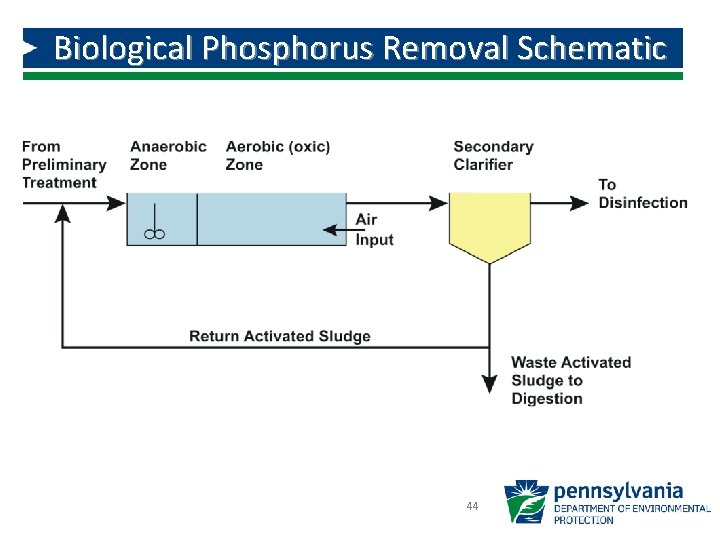
Wastewater Treatment Processes Preliminary Treatment Tertiary (Advanced) Treatment · Chemical Phosphorous Removal · Biological Nutrient Removal · Multimedia Filtration Primary Treatment Secondary Treatment Disinfection Solids Treatment 43
Biological Phosphorus Removal Schematic 44
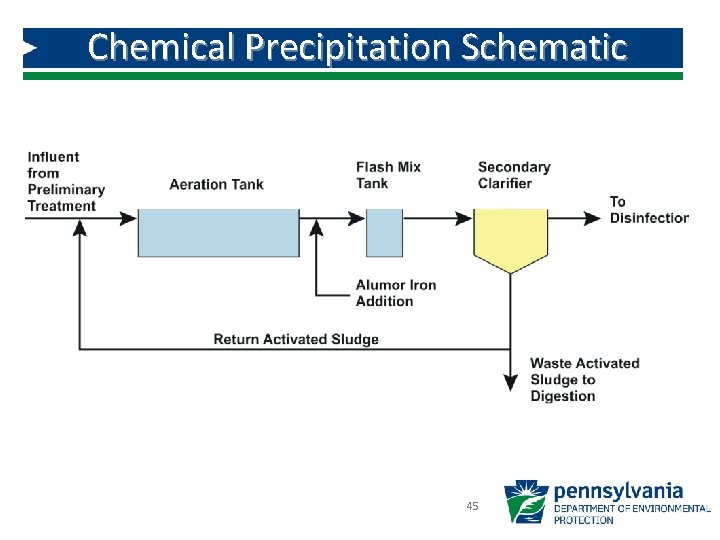
Chemical Precipitation Schematic 45
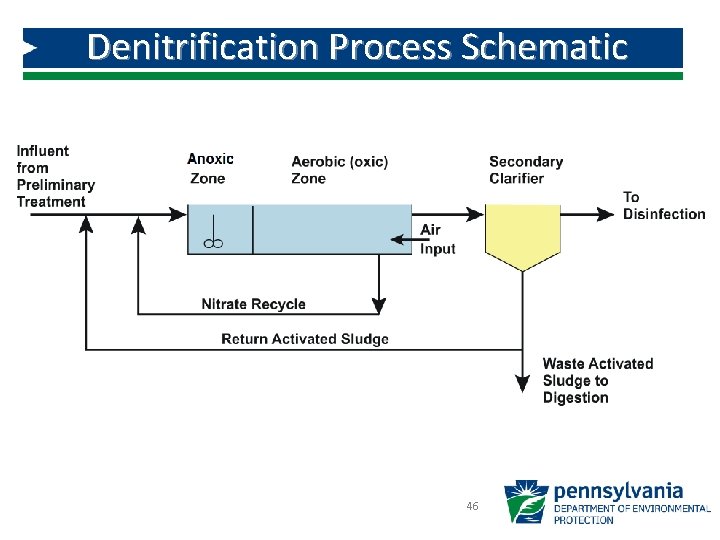
Denitrification Process Schematic 46
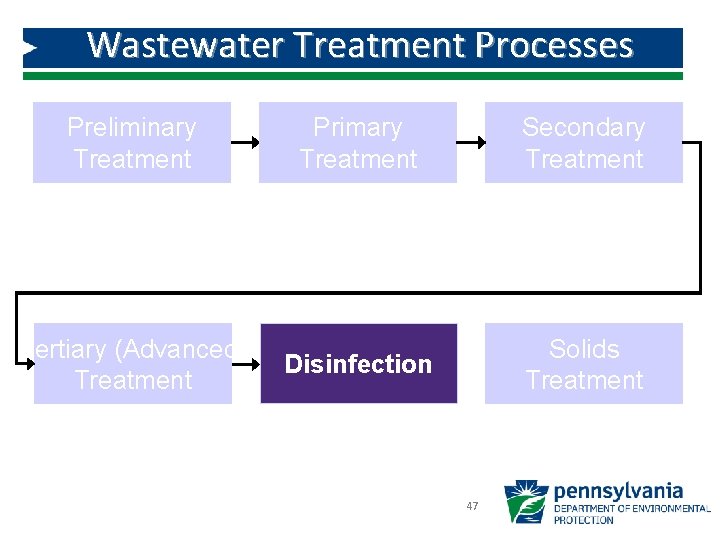
Wastewater Treatment Processes Preliminary Treatment Tertiary (Advanced) Treatment Primary Treatment Secondary Treatment Disinfection Solids Treatment 47
Disinfection • Necessary to reduce disease causing pathogens • Majority of plants use some form of chlorination • Ultra-violet light disinfection becoming more popular due to security and safety issues with chlorine 48
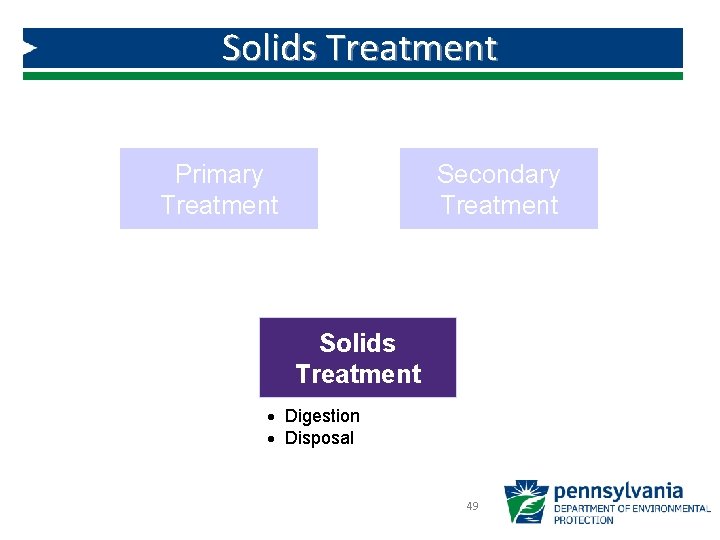
Solids Treatment Primary Treatment Secondary Treatment Solids Treatment · Digestion · Disposal 49
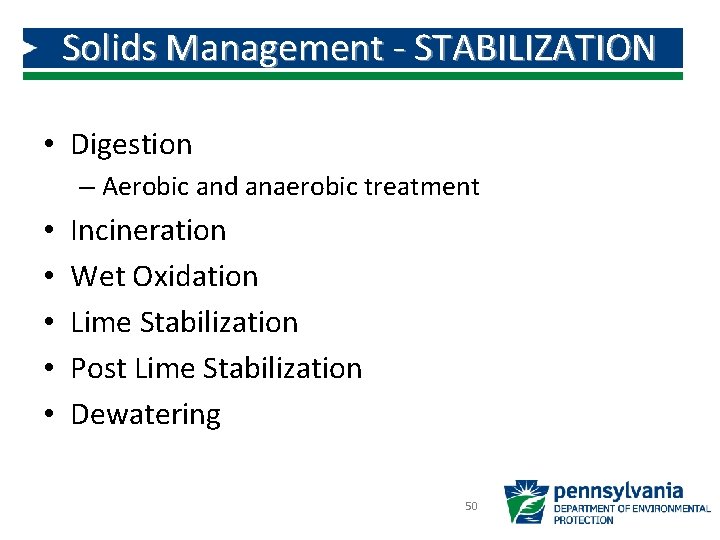
Solids Management - STABILIZATION • Digestion – Aerobic and anaerobic treatment • • • Incineration Wet Oxidation Lime Stabilization Post Lime Stabilization Dewatering 50
Disposal • Stream discharge • Land disposal 51
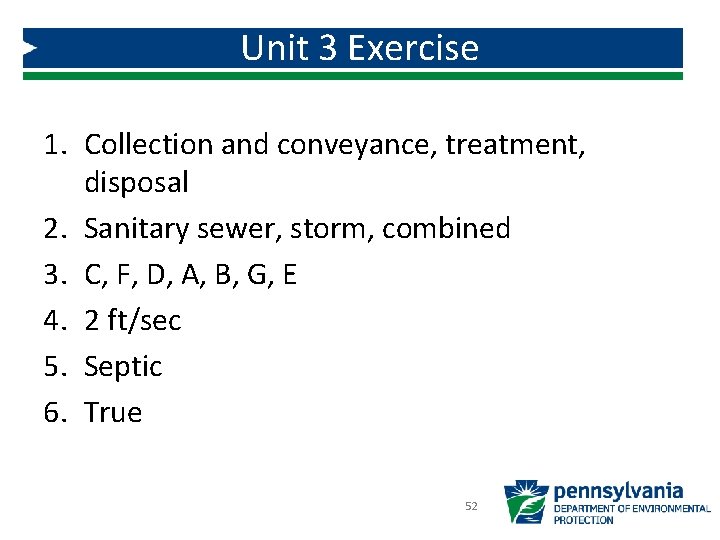
Unit 3 Exercise 1. Collection and conveyance, treatment, disposal 2. Sanitary sewer, storm, combined 3. C, F, D, A, B, G, E 4. 2 ft/sec 5. Septic 6. True 52
Unit 3 Exercise 7. Weir, Parshall flume, Kennison 8. “C” Sludge blanket 9. “B” Secondary clarifier 10. True 11. Nitrogen, Phosphorous 12. Stream discharge, land disposal 53
Unit 4–State and Federal Regulations Learning Objectives • List the purpose of the Drinking Water and Wastewater Systems Operators’ Certification Program • Identify the classification and sub-classifications for wastewater operator licenses • List the responsibilities of a licensed plant operator under Chapter 302. • Identify and locate state and federal regulations that govern wastewater treatment. 54
Certification Program • Chapter 302 • Exam requirements • Classes and subclasses 55
Operator • • O&M planning Report to system owner MAKE PROCESS CONTROL DECISIONS SOPs for non-certified operators 56
State Board for Certification • Page 4 -8 in the workbook – Duties of the Board 57
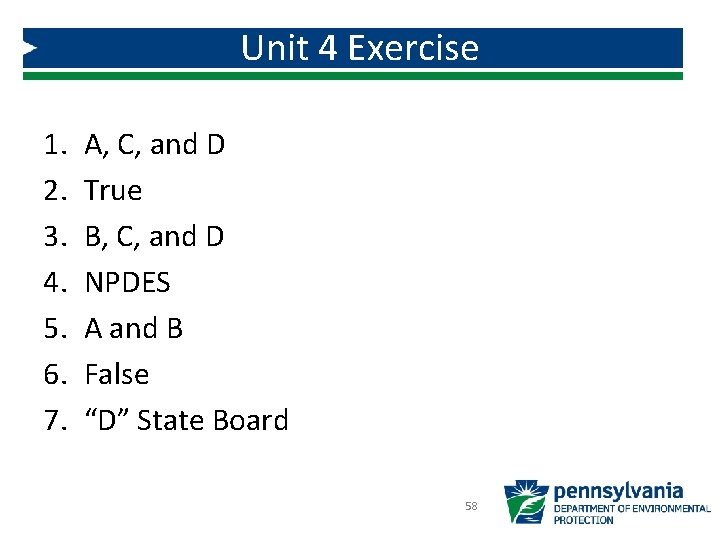
Unit 4 Exercise 1. 2. 3. 4. 5. 6. 7. A, C, and D True B, C, and D NPDES A and B False “D” State Board 58