
Module 1 Introduction to Epidemiology One experts prediction

- Slides: 19
Module 1: Introduction to Epidemiology
One expert’s prediction: • “Because infectious diseases have been largely controlled in the United States, we can now close the book on infectious diseases”. William Stewart, M. D. U. S. Surgeon General 1967
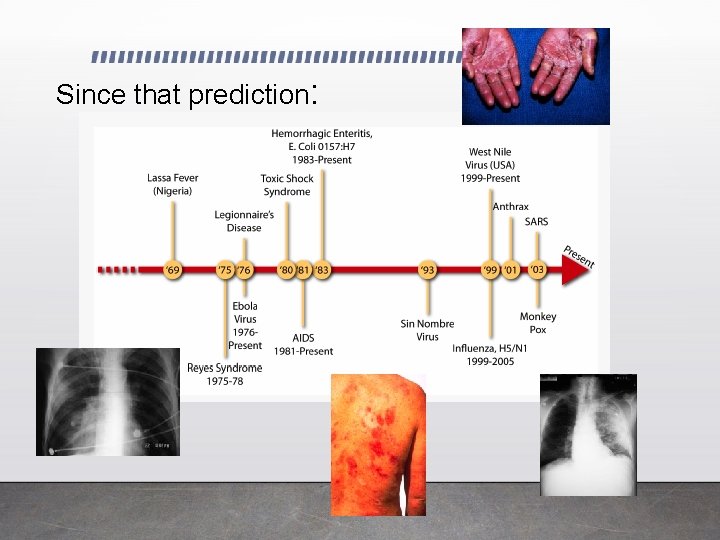
Since that prediction:
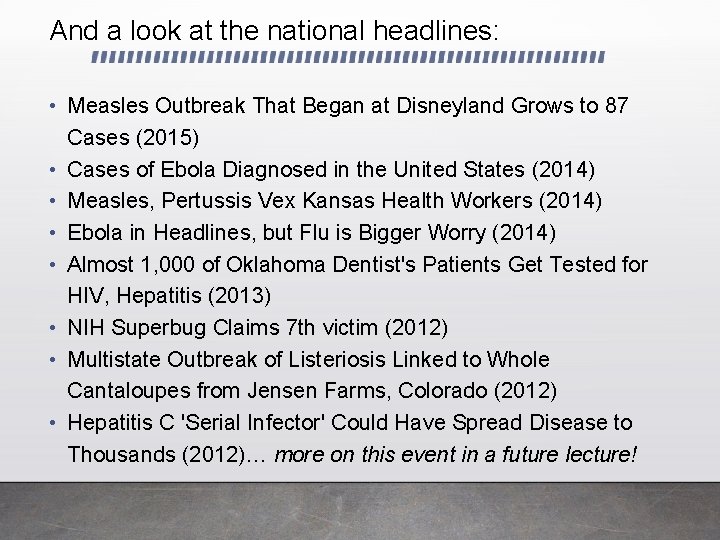
And a look at the national headlines: • Measles Outbreak That Began at Disneyland Grows to 87 Cases (2015) • Cases of Ebola Diagnosed in the United States (2014) • Measles, Pertussis Vex Kansas Health Workers (2014) • Ebola in Headlines, but Flu is Bigger Worry (2014) • Almost 1, 000 of Oklahoma Dentist's Patients Get Tested for HIV, Hepatitis (2013) • NIH Superbug Claims 7 th victim (2012) • Multistate Outbreak of Listeriosis Linked to Whole Cantaloupes from Jensen Farms, Colorado (2012) • Hepatitis C 'Serial Infector' Could Have Spread Disease to Thousands (2012)… more on this event in a future lecture!
Most recent headlines: 3 Babies Test Positive for Potentially Deadly Bacteria at Maryland Hospital Report finds traffic deaths jumped in first half of 2016 New Zika Infections Trigger CDC Travel Warning for Miami Beach Area Dozens of Ohio overdoses blamed on heroin mixed with elephant tranquilizer Most Drivers Exhibit Aggressive Behavior, New Study Concludes
And just five days ago, NBC news reported: • “Cancer is on track to become the leading cause of death in the United States, closing in on heart disease as America's number one killer, a new government study shows. ” • Cancer actually surpassed heart disease as the leading cause of death for 22 states in 2014, the study found. • Back in 2000, Alaska and Minnesota were the only two states where cancer killed more people than heart disease.
7 What is epidemiology? • “The study of the distribution and determinants of health related states and events in populations, and the application of this study to control health problems” • John M. Last, Dictionary of Epidemiology Breaking it down….
Key terms and concepts in the definition • Study - Epidemiology involves sound methods of scientific investigation. • Epidemiology is an observational science - capitalizes on naturally occurring circumstances to study disease and health-related events • Can be descriptive or analytic • Descriptive – characterizes the amount and distribution of disease (or events) within a population • Analytic - examines causal hypotheses regarding the association between exposures (determinants) and health conditions (outcomes) • Risk factor – an exposure that is associated with a disease, morbidity, mortality, or adverse event © 2010 Jones and Bartlett Publishers, LLC
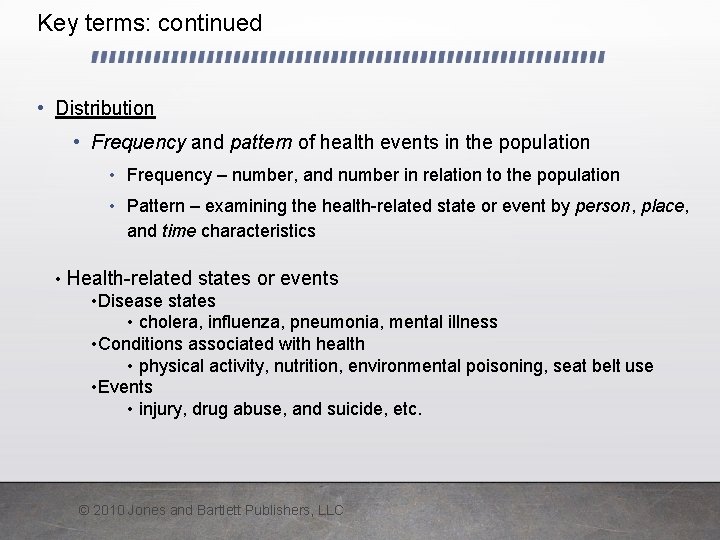
Key terms: continued • Distribution • Frequency and pattern of health events in the population • Frequency – number, and number in relation to the population • Pattern – examining the health-related state or event by person, place, and time characteristics • Health-related states or events • Disease states • cholera, influenza, pneumonia, mental illness • Conditions associated with health • physical activity, nutrition, environmental poisoning, seat belt use • Events • injury, drug abuse, and suicide, etc. © 2010 Jones and Bartlett Publishers, LLC
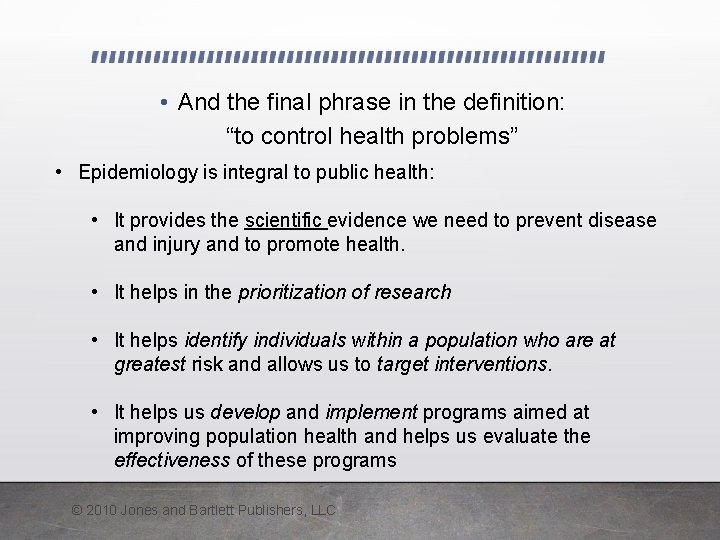
• And the final phrase in the definition: “to control health problems” • Epidemiology is integral to public health: • It provides the scientific evidence we need to prevent disease and injury and to promote health. • It helps in the prioritization of research • It helps identify individuals within a population who are at greatest risk and allows us to target interventions. • It helps us develop and implement programs aimed at improving population health and helps us evaluate the effectiveness of these programs © 2010 Jones and Bartlett Publishers, LLC
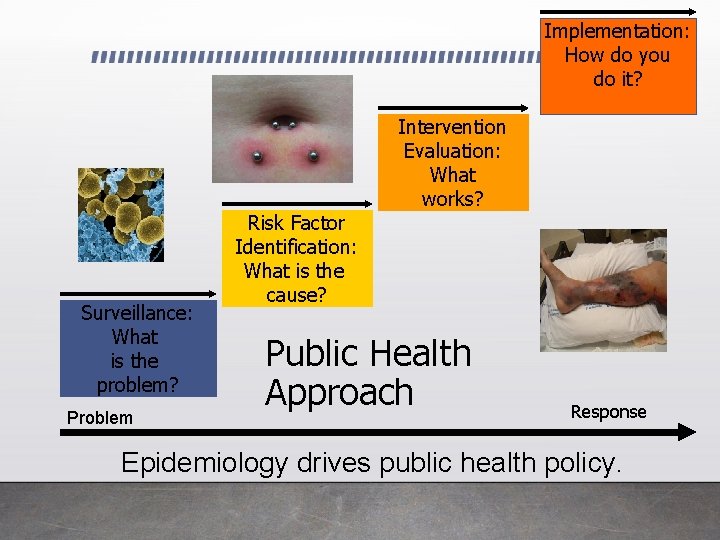
Implementation: How do you do it? Surveillance: What is the problem? Problem Risk Factor Identification: What is the cause? Intervention Evaluation: What works? Public Health Approach Response Epidemiology drives public health policy.
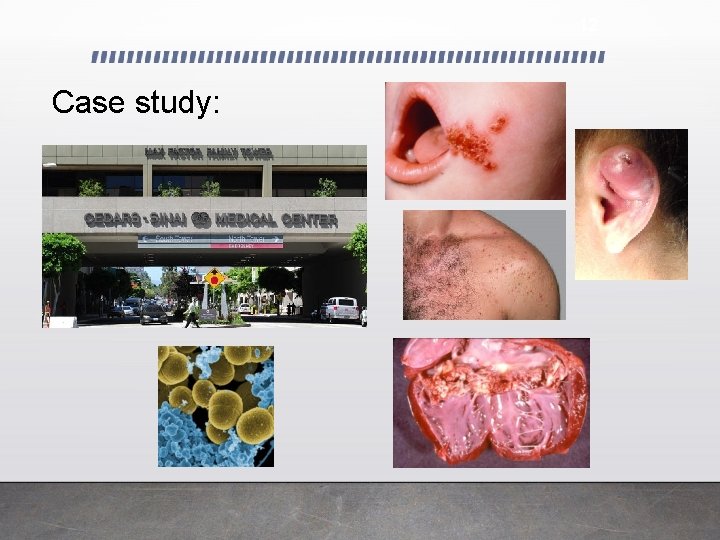
12 Case study:
13 • Los Angeles Times, December 8, 2012 • A heart surgeon at Cedars-Sinai Medical Center accidentally gave cardiac infections to five patients because his latex gloves tore during surgery (hospital officials confirmed the incident). • Valve replacement surgery can lead to microscopic rips in the gloves due to the repetitive tying of more than 100 knots and the use of thick sutures, both of which put extra stress on the gloves • Of the five patients who were diagnosed with endocarditis • Four of them had to return to the hospital for a second operation
14 • According to Rekha Murthy, medical director of the hospital's epidemiology department: • “Surgeons with open sores or known infections aren't supposed to operate, but there is no national standard on what to do if they have skin inflammation”. • She added that there were also no national standards on types of gloves used, whether to wear double gloves, or how many times surgeons should change those gloves during a procedure. • Current protocols now being re-examined.
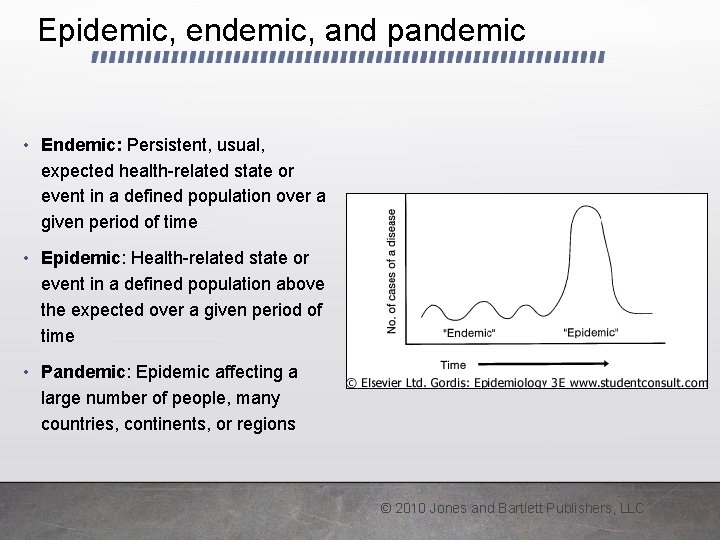
Epidemic, endemic, and pandemic • Endemic: Persistent, usual, expected health-related state or event in a defined population over a given period of time • Epidemic: Health-related state or event in a defined population above the expected over a given period of time • Pandemic: Epidemic affecting a large number of people, many countries, continents, or regions © 2010 Jones and Bartlett Publishers, LLC
The three levels of prevention used in public health and epidemiology: • Primary prevention (occurs prior to exposure) • Immunization • Sanitation • Media campaigns • Warning labels • Lifestyle changes • Community health education • Ensuring healthy conditions at home, school and workplace • Vitamin fortified foods • Fluoridation of public water supplies © 2010 Jones and Bartlett Publishers, LLC
Secondary prevention • Attempts to reduce the progress of disease • Attempt to identify the disease at the earliest point • Key concept: The disease already exists in the person • Ex. Cancer screening – cancer already present. • The goal is to detect the cancer before clinical symptoms arise in order to improve prognosis and prevent (or limit) the progression of the disease © 2010 Jones and Bartlett Publishers, LLC
Tertiary prevention • Attempts to reduce the limitation of disability from disease • The disease has already occurred • Examples: • Physical therapy for stroke victims • Programs for recovering alcoholics • Fitness programs for heart attack patients • Rehabilitation following physical trauma (physical/occupational therapy) © 2010 Jones and Bartlett Publishers, LLC
• Any questions?