
Module 1 Introduction to ECG Normal ECG Importance
- Slides: 39
Module 1: Introduction to ECG & Normal ECG
Importance of Correct anatomical positions • Measurements & Morphologies ONLY accurate if • Precise anatomical positions adhered to • Standardised techniques are used
ECG Equipment Settings • Frequency Response • 0. 05 Hz – 150 Hz • companies often set these at 0. 5 Hz – 50 HZ • These are filtered ECGs and can alter isoelectric line placement & morphologies • Gain sensitivity – calibration accuracy • 5, 10, 20 mm/m. V (standard 10 mm/m. V) • Chart paper speed • 25 mm. sec – standard • 50 mm/sec (AHA 2007)
Precordial (Chest ) leads • Variations in precordial lead placement DIAGNOSTICALLY affects the ECG • Studies have shown V 1& V 2 are consistently placed TOO HIGH • Correct anatomical positions should be used • Deviations must be annotated on ECG SCST (2010)
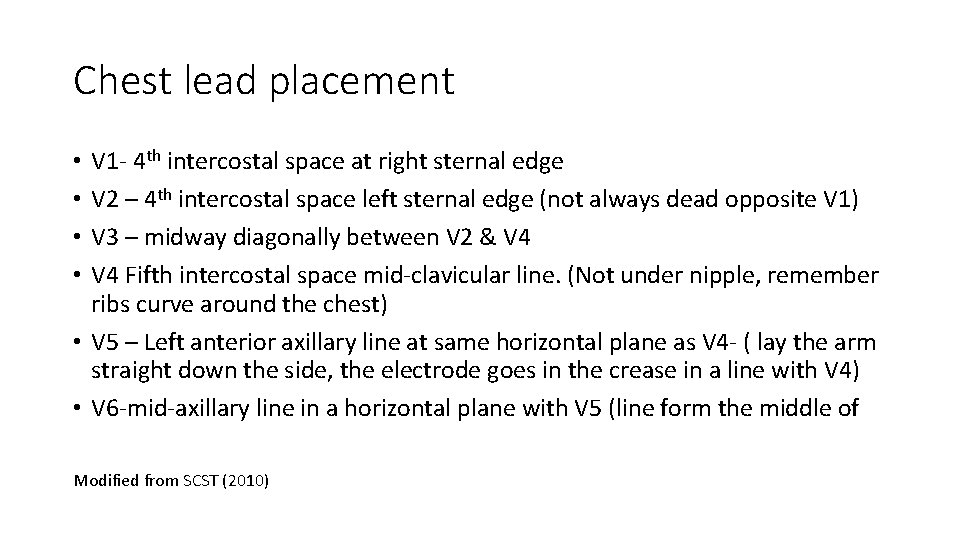
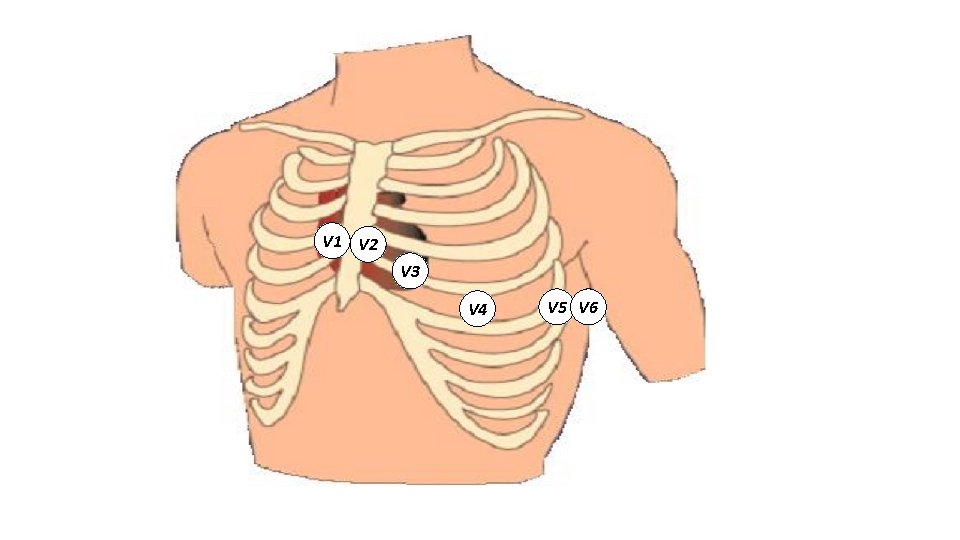
Chest lead placement V 1 - 4 th intercostal space at right sternal edge V 2 – 4 th intercostal space left sternal edge (not always dead opposite V 1) V 3 – midway diagonally between V 2 & V 4 Fifth intercostal space mid-clavicular line. (Not under nipple, remember ribs curve around the chest) • V 5 – Left anterior axillary line at same horizontal plane as V 4 - ( lay the arm straight down the side, the electrode goes in the crease in a line with V 4) • V 6 -mid-axillary line in a horizontal plane with V 5 (line form the middle of • • Modified from SCST (2010) middle of the arm-pit in a straight line with V 5) Modified from SCST (2010)
STANDARD LEADS V 1 V 2 V 3 V 4 V 5 V 6
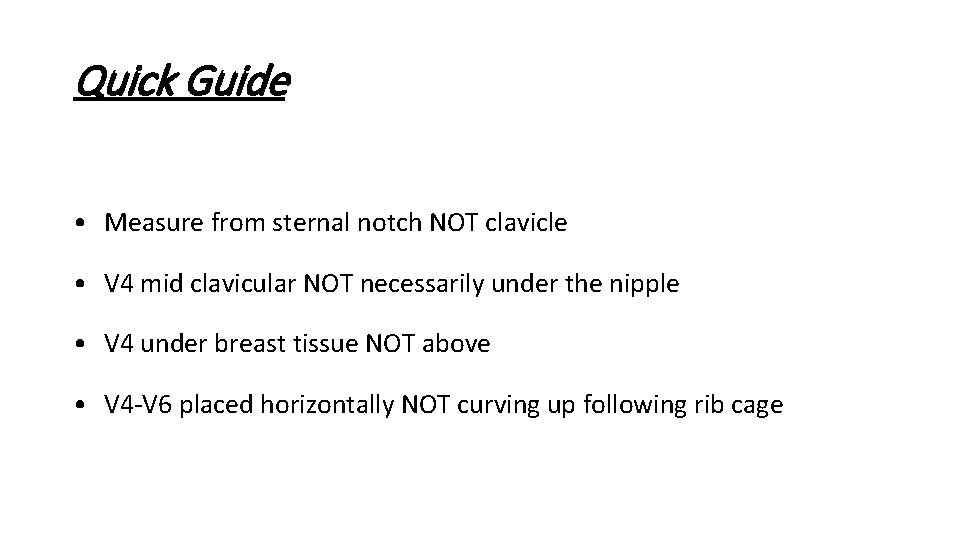
Quick Guide • Measure from sternal notch NOT clavicle • V 4 mid clavicular NOT necessarily under the nipple • V 4 under breast tissue NOT above • V 4 -V 6 placed horizontally NOT curving up following rib cage
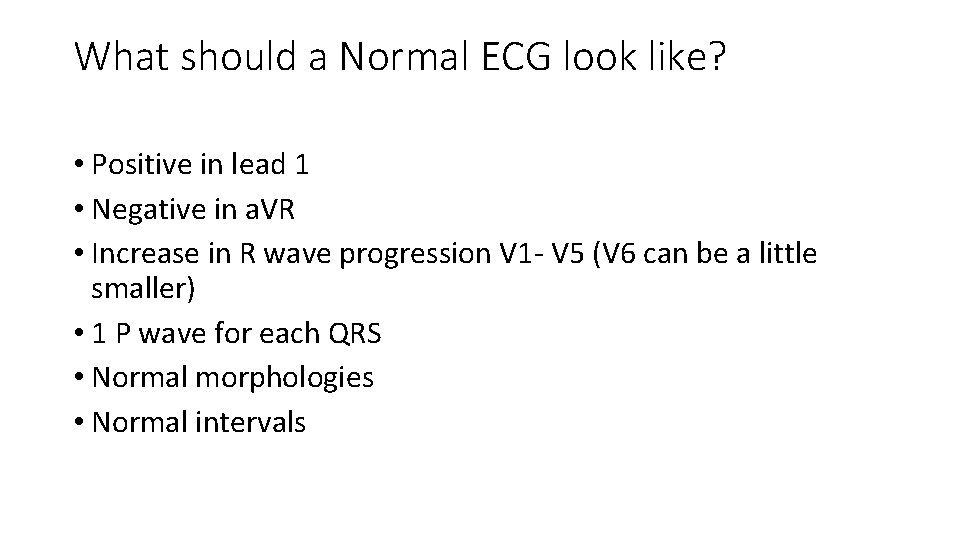
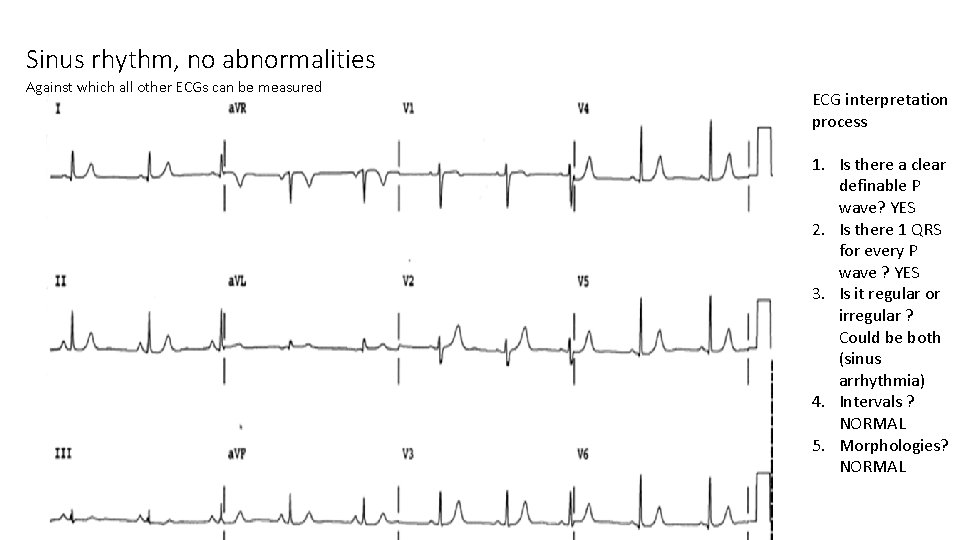
What should a Normal ECG look like? • Positive in lead 1 • Negative in a. VR • Increase in R wave progression V 1 - V 5 (V 6 can be a little smaller) • 1 P wave for each QRS • Normal morphologies • Normal intervals
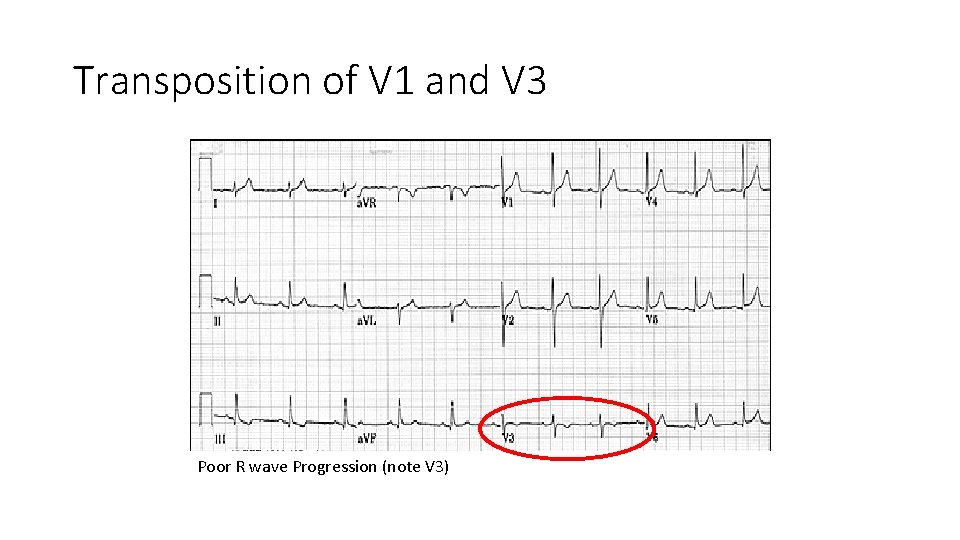
Transposition of V 1 and V 3 Poor R wave Progression (note V 3)
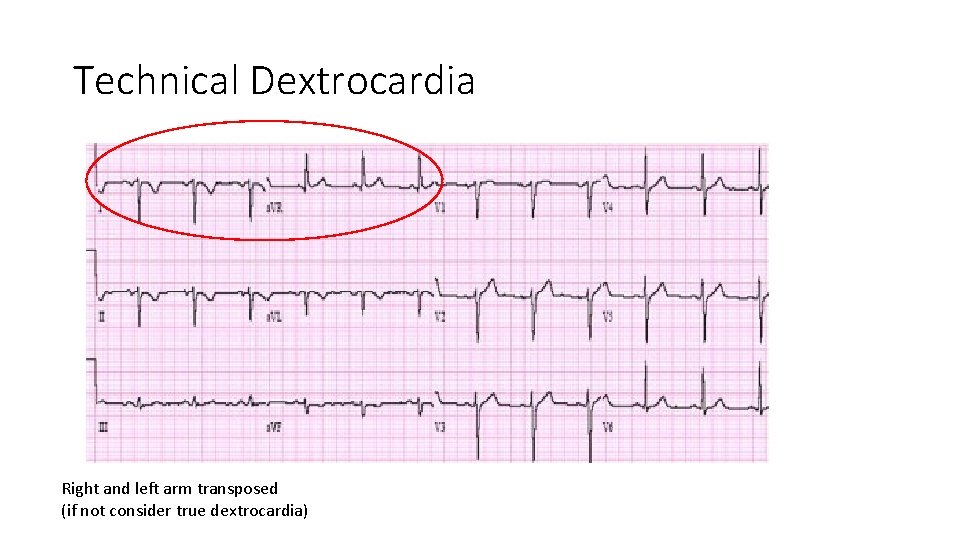
Technical Dextrocardia Right and left arm transposed (if not consider true dextrocardia)
References • Useful reading / guidelines • Crawford J & Doherty L ; Practical Aspects of ECG Recording: M&K publishing 2012 • Society of Cardiological Science & Technology and the British Cardiovascular Society. (2010) Clinical Guidelines by consensus: Recording a standard 12 -lead ECG an approved methodology. Available at http: //www. scst. org/resources/consensus_guideline_for_recording_ a_12_lead_ECG_Rev_072010 bpdf
Normal ECG
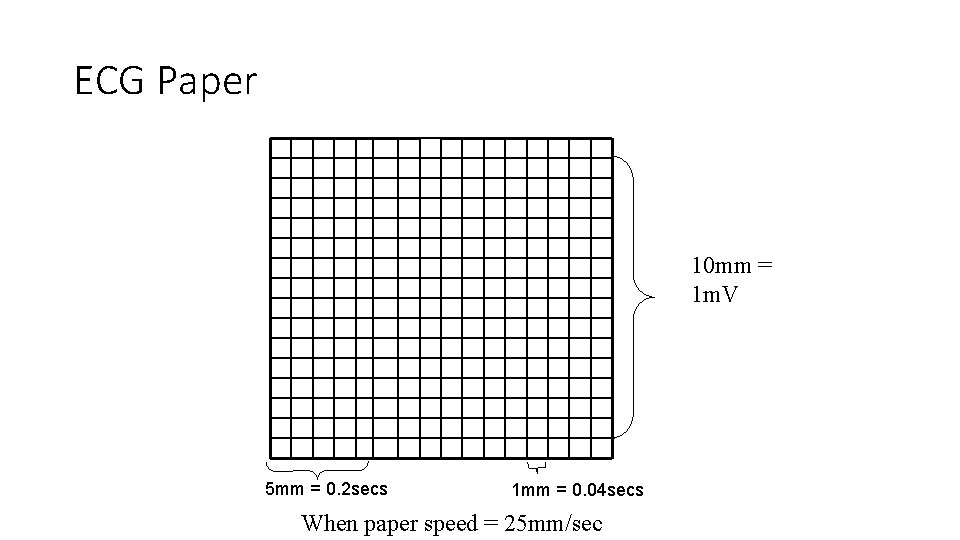
ECG Paper 10 mm = 1 m. V 5 mm = 0. 2 secs 1 mm = 0. 04 secs When paper speed = 25 mm/sec
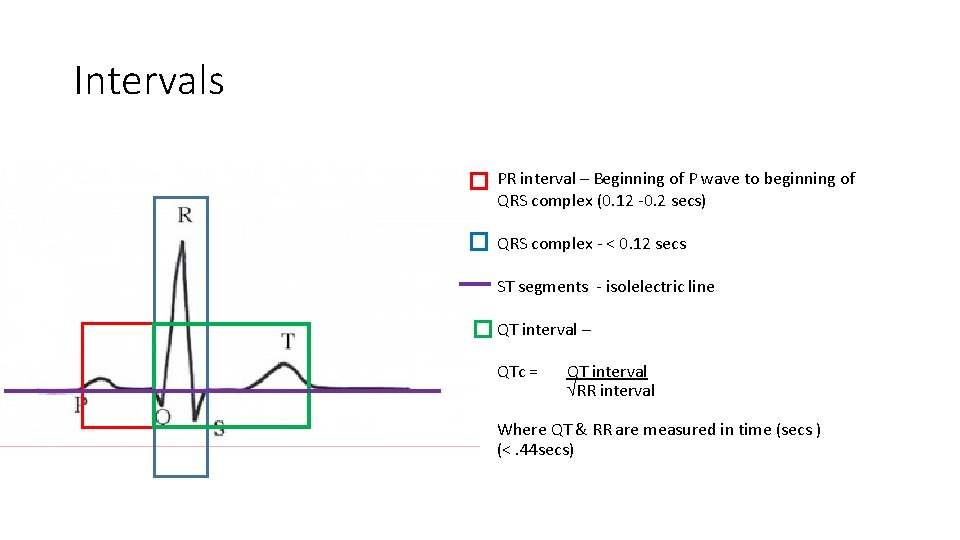
Intervals PR interval – Beginning of P wave to beginning of QRS complex (0. 12 -0. 2 secs) QRS complex - < 0. 12 secs ST segments - isolelectric line QT interval – QTc = QT interval RR interval Where QT & RR are measured in time (secs ) (<. 44 secs)
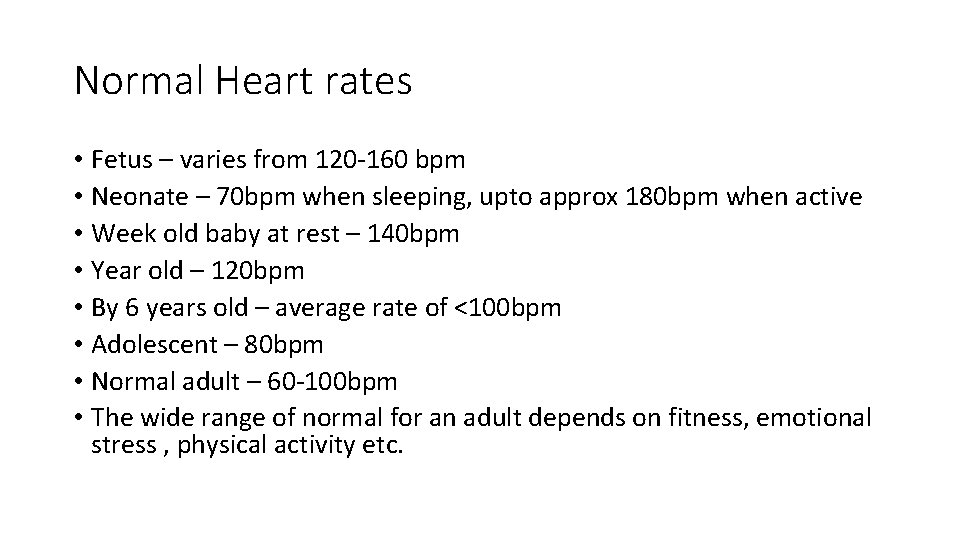
Normal Heart rates • Fetus – varies from 120 -160 bpm • Neonate – 70 bpm when sleeping, upto approx 180 bpm when active • Week old baby at rest – 140 bpm • Year old – 120 bpm • By 6 years old – average rate of <100 bpm • Adolescent – 80 bpm • Normal adult – 60 -100 bpm • The wide range of normal for an adult depends on fitness, emotional stress , physical activity etc.
Sinus rhythm, no abnormalities Against which all other ECGs can be measured ECG interpretation process 1. Is there a clear definable P wave? YES 2. Is there 1 QRS for every P wave ? YES 3. Is it regular or irregular ? Could be both (sinus arrhythmia) 4. Intervals ? NORMAL 5. Morphologies? NORMAL
Module 2 ATRIAL FIBRILLATION
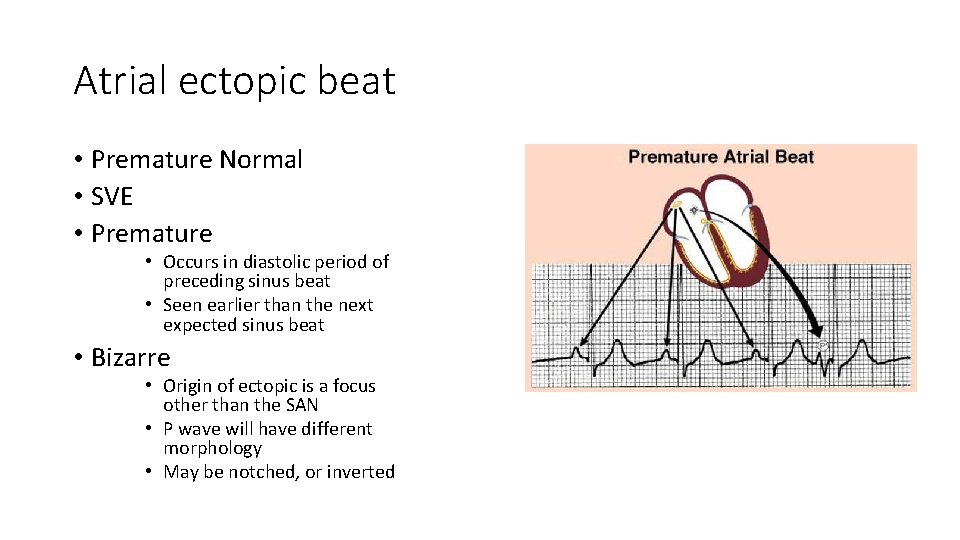
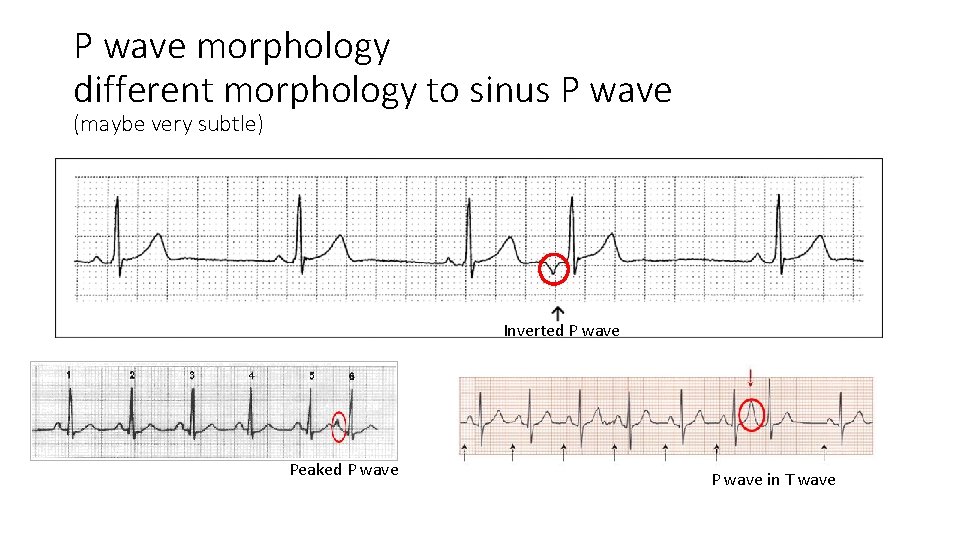
Atrial ectopic beat • Premature Normal • SVE • Premature • Occurs in diastolic period of preceding sinus beat • Seen earlier than the next expected sinus beat • Bizarre • Origin of ectopic is a focus other than the SAN • P wave will have different morphology • May be notched, or inverted
P wave morphology different morphology to sinus P wave (maybe very subtle) Inverted P wave Peaked P wave in T wave
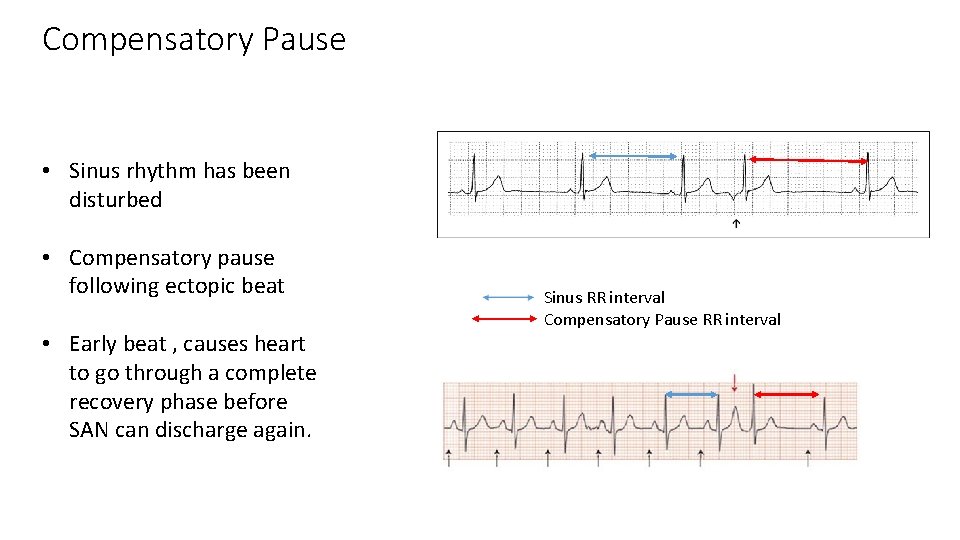
Compensatory Pause • Sinus rhythm has been disturbed • Compensatory pause following ectopic beat • Early beat , causes heart to go through a complete recovery phase before SAN can discharge again. Sinus RR interval Compensatory Pause RR interval
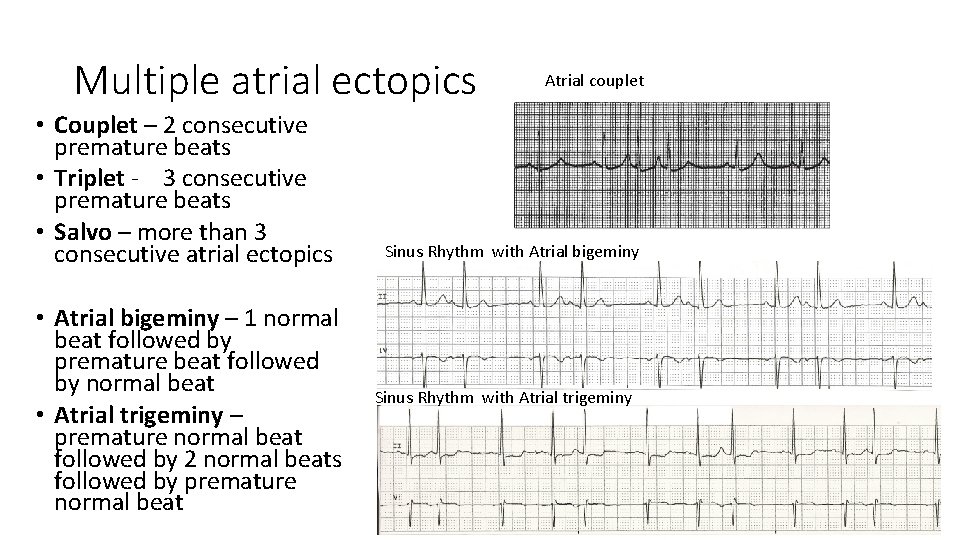
Multiple atrial ectopics • Couplet – 2 consecutive premature beats • Triplet - 3 consecutive premature beats • Salvo – more than 3 consecutive atrial ectopics • Atrial bigeminy – 1 normal beat followed by premature beat followed by normal beat • Atrial trigeminy – premature normal beat followed by 2 normal beats followed by premature normal beat Atrial couplet Sinus Rhythm with Atrial bigeminy Sinus Rhythm with Atrial trigeminy
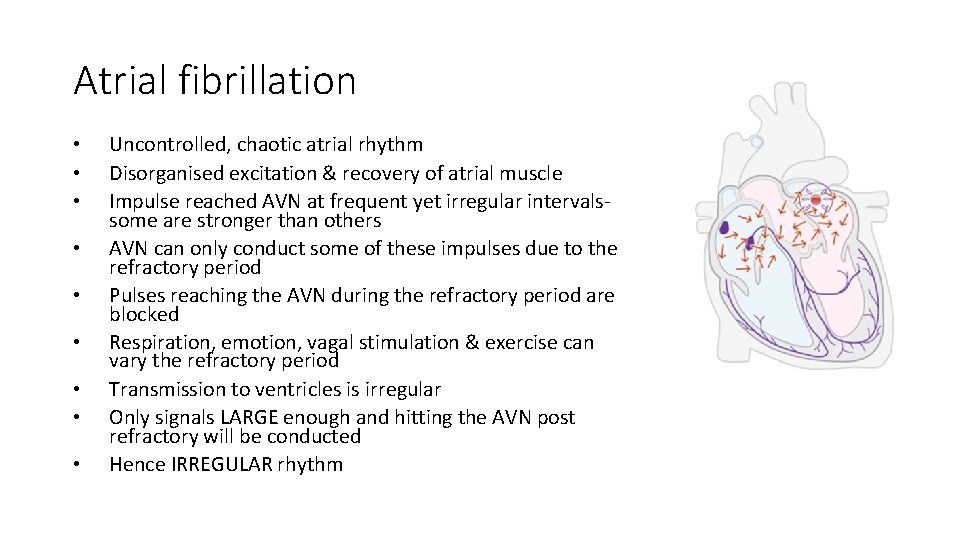
Atrial fibrillation • • • Uncontrolled, chaotic atrial rhythm Disorganised excitation & recovery of atrial muscle Impulse reached AVN at frequent yet irregular intervalssome are stronger than others AVN can only conduct some of these impulses due to the refractory period Pulses reaching the AVN during the refractory period are blocked Respiration, emotion, vagal stimulation & exercise can vary the refractory period Transmission to ventricles is irregular Only signals LARGE enough and hitting the AVN post refractory will be conducted Hence IRREGULAR rhythm
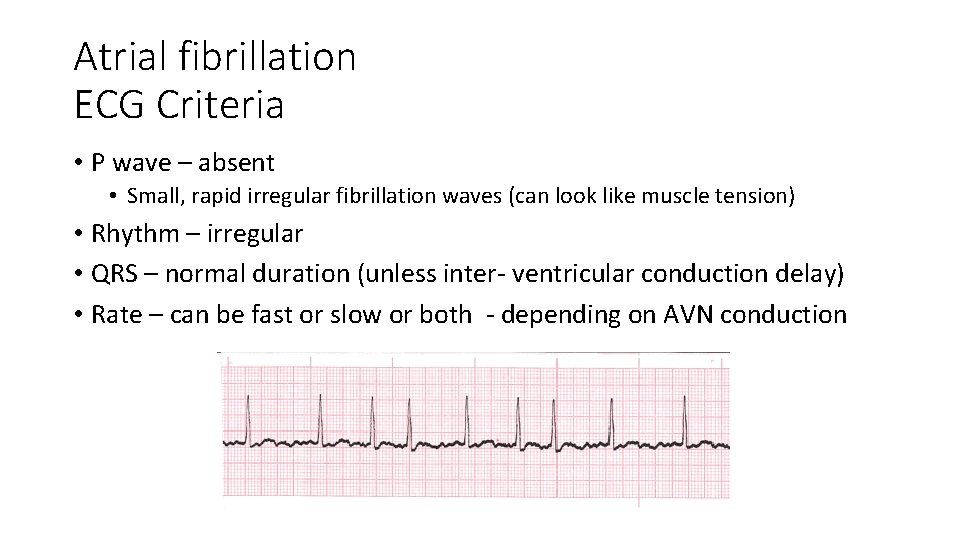
Atrial fibrillation ECG Criteria • P wave – absent • Small, rapid irregular fibrillation waves (can look like muscle tension) • Rhythm – irregular • QRS – normal duration (unless inter- ventricular conduction delay) • Rate – can be fast or slow or both - depending on AVN conduction
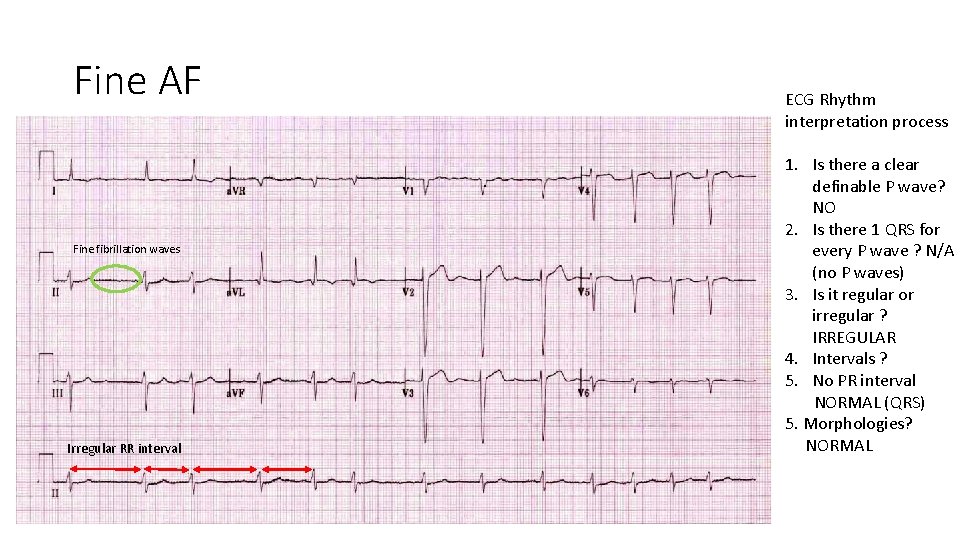
Fine AF Fine fibrillation waves Irregular RR interval ECG Rhythm interpretation process 1. Is there a clear definable P wave? NO 2. Is there 1 QRS for every P wave ? N/A (no P waves) 3. Is it regular or irregular ? IRREGULAR 4. Intervals ? 5. No PR interval NORMAL (QRS) 5. Morphologies? NORMAL
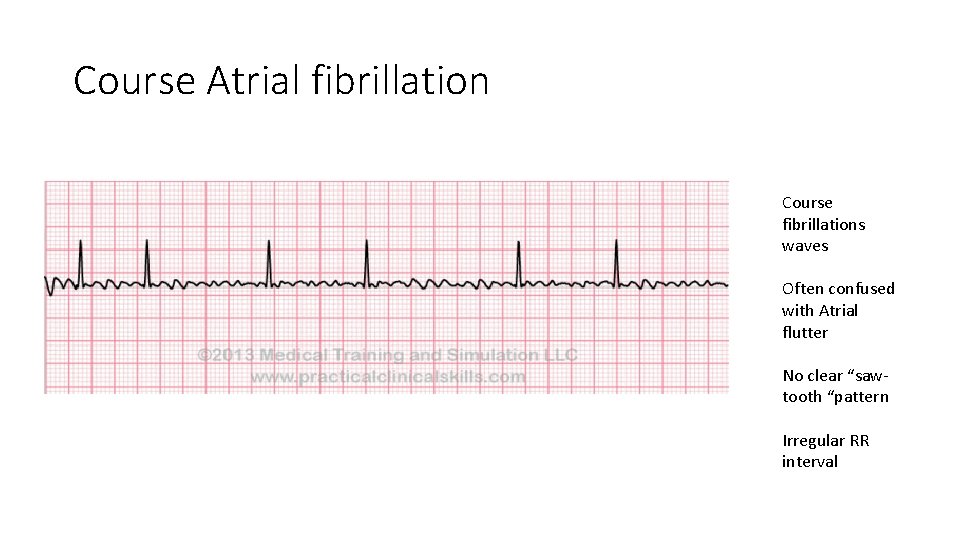
Course Atrial fibrillation Course fibrillations waves Often confused with Atrial flutter No clear “sawtooth “pattern Irregular RR interval
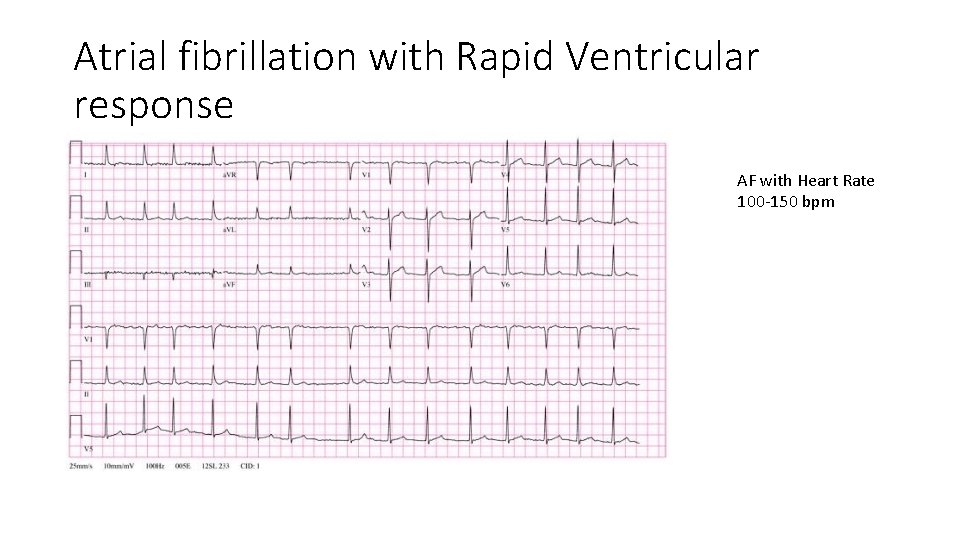
Atrial fibrillation with Rapid Ventricular response AF with Heart Rate 100 -150 bpm
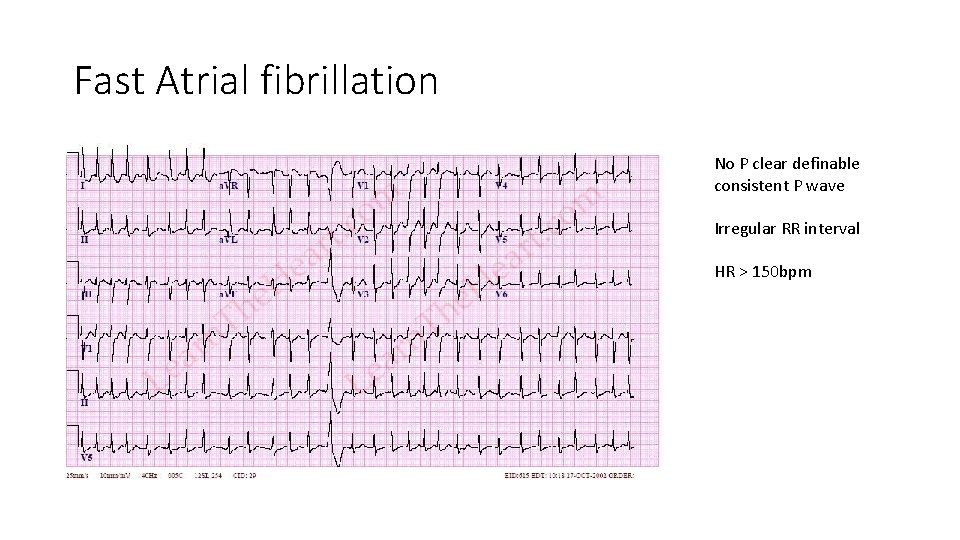
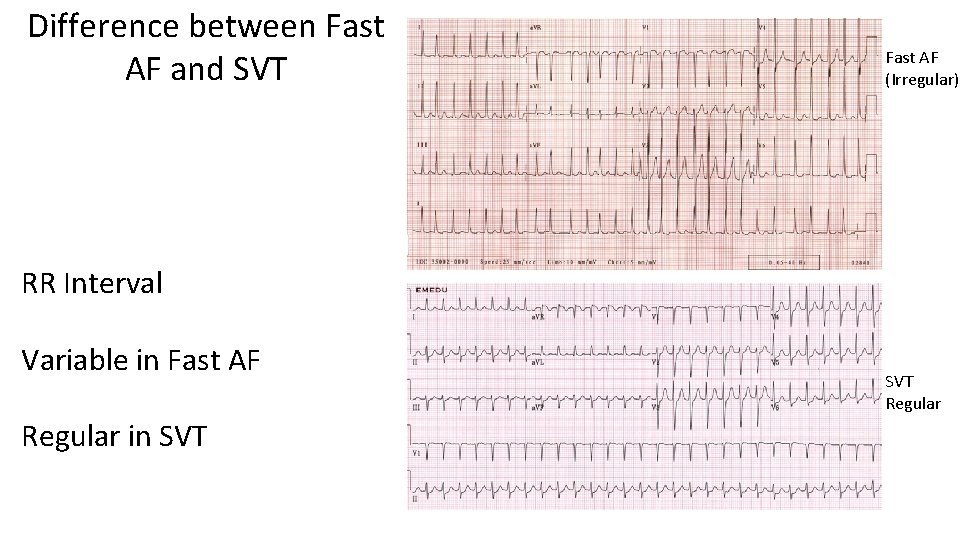
Fast Atrial fibrillation No P clear definable consistent P wave Irregular RR interval HR > 150 bpm
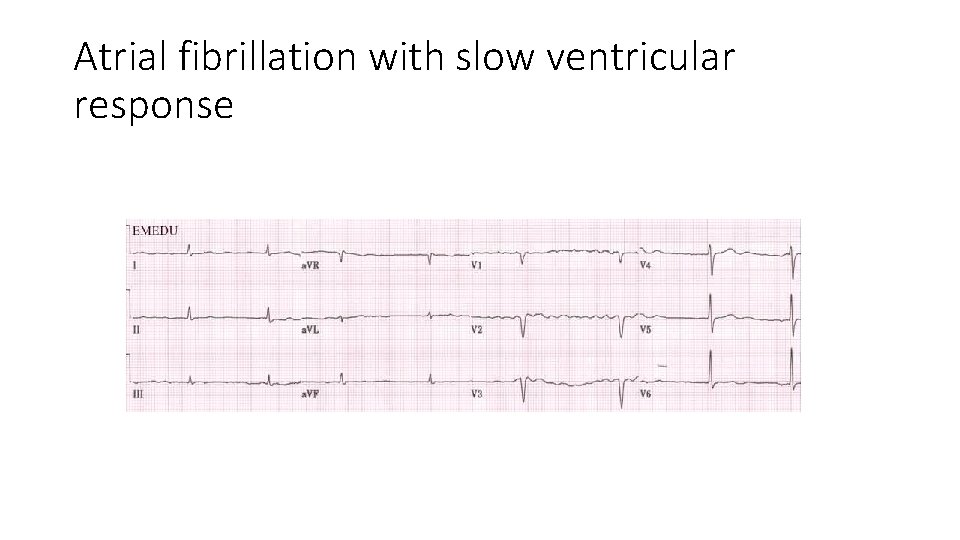
Atrial fibrillation with slow ventricular response
Module 3 Atrial flutter
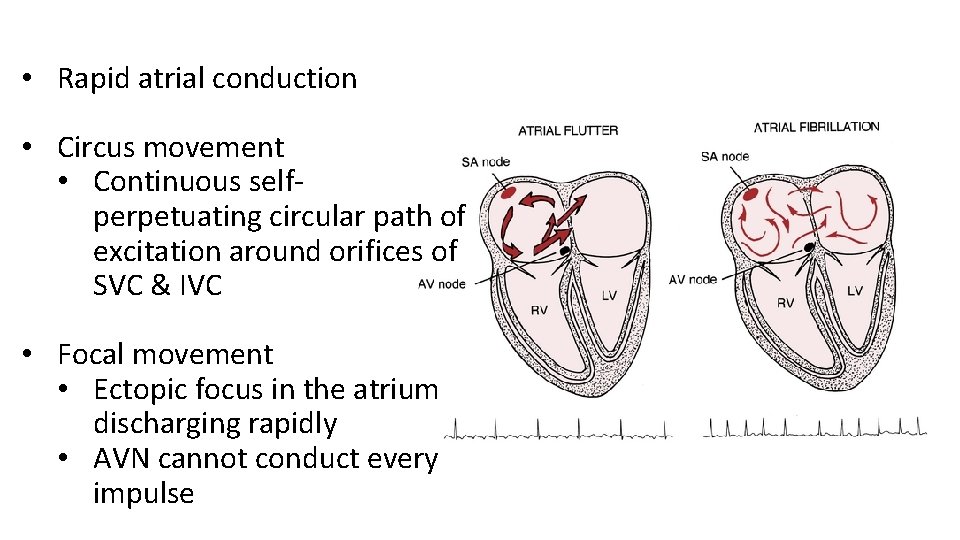
• Rapid atrial conduction • Circus movement • Continuous selfperpetuating circular path of excitation around orifices of SVC & IVC • Focal movement • Ectopic focus in the atrium discharging rapidly • AVN cannot conduct every impulse
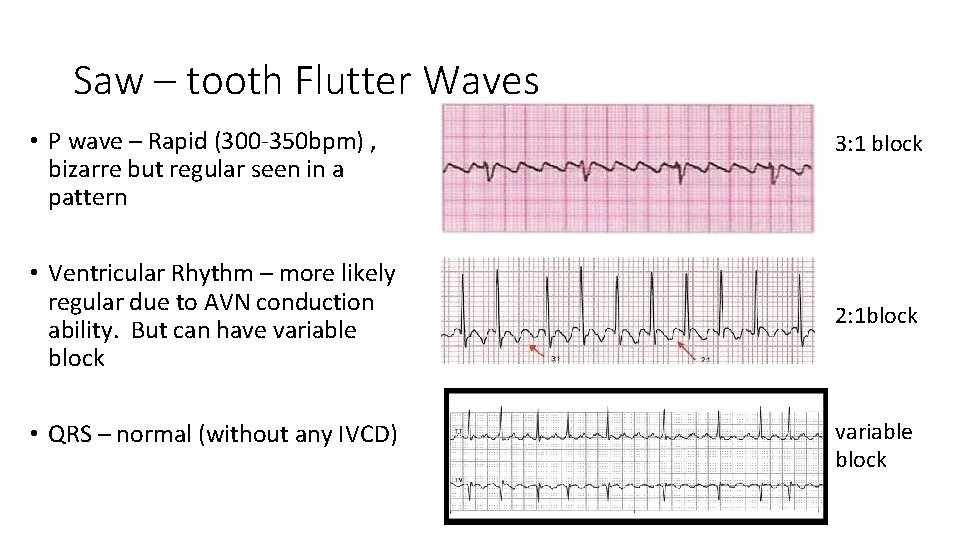
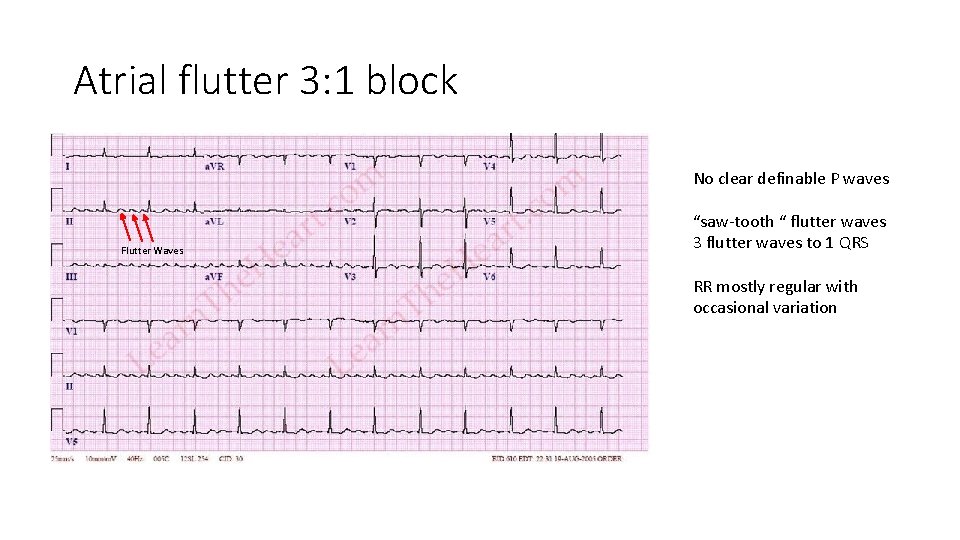
Saw – tooth Flutter Waves • P wave – Rapid (300 -350 bpm) , bizarre but regular seen in a pattern 3: 1 block • Ventricular Rhythm – more likely regular due to AVN conduction ability. But can have variable block 2: 1 block • QRS – normal (without any IVCD) variable block
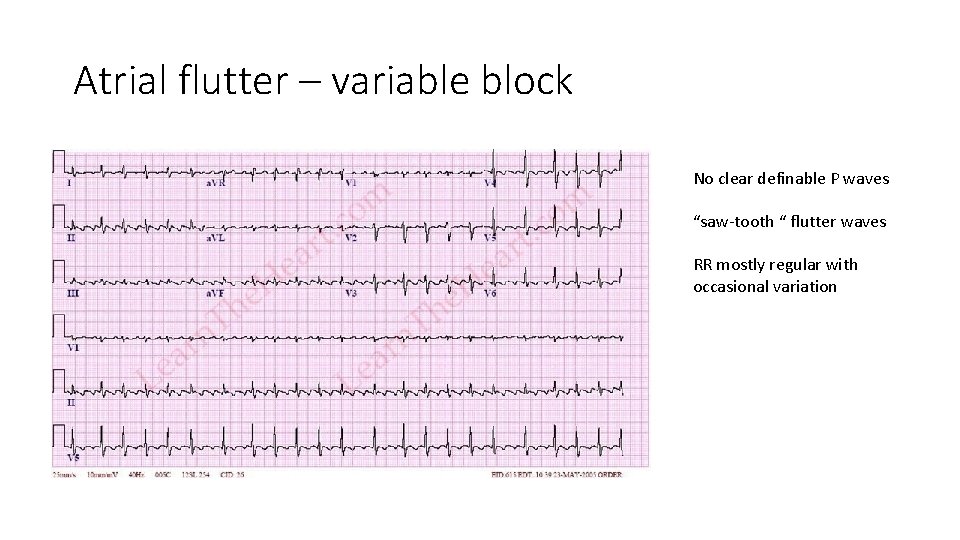
Atrial flutter – variable block No clear definable P waves “saw-tooth “ flutter waves RR mostly regular with occasional variation
Atrial flutter 3: 1 block No clear definable P waves Flutter Waves “saw-tooth “ flutter waves 3 flutter waves to 1 QRS RR mostly regular with occasional variation
Module 4: Supraventricular Tachycardia SVT
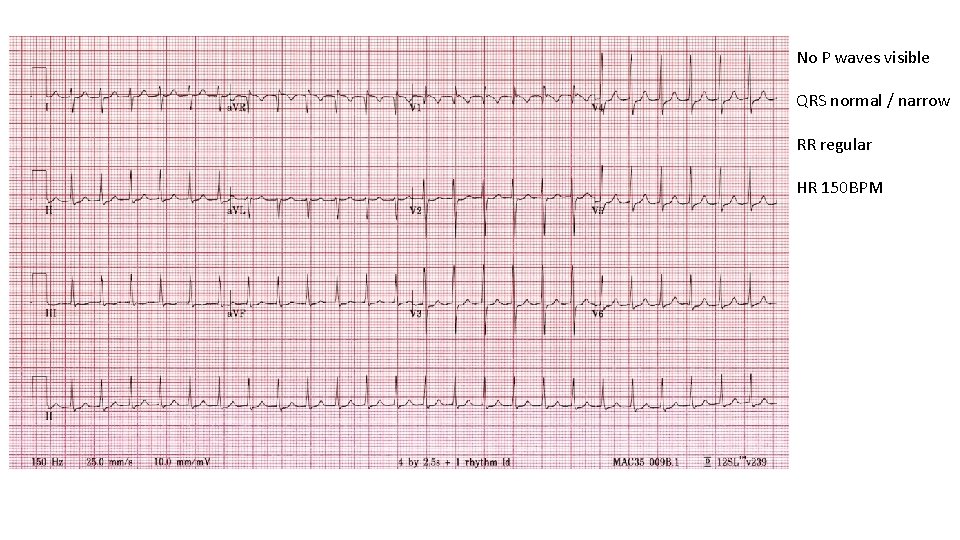
SVT • Narrow complex tachycardia • Focus above ventricles • Cycle can be shorter than refractory period • Some atrial impulses are blocked (normally 2: 1 or 3: 1) • Going so fast (>150 bpm) P waves cannot be identified
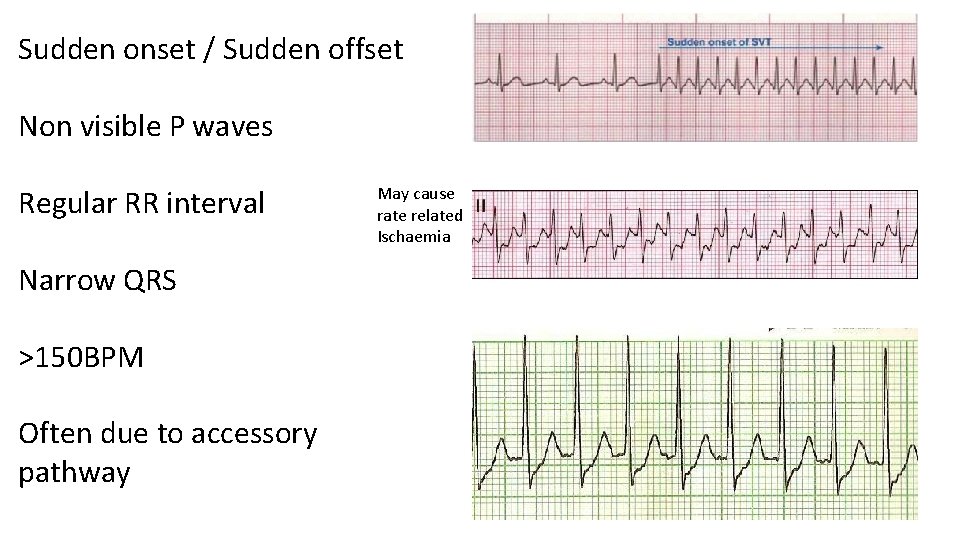
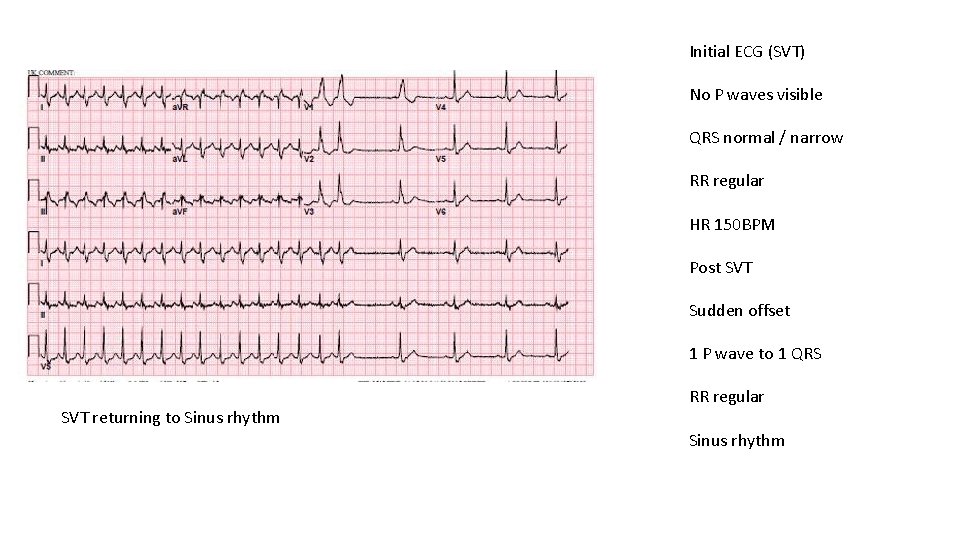
Sudden onset / Sudden offset Non visible P waves Regular RR interval Narrow QRS >150 BPM Often due to accessory pathway May cause rate related Ischaemia
No P waves visible QRS normal / narrow RR regular HR 150 BPM
Initial ECG (SVT) No P waves visible QRS normal / narrow RR regular HR 150 BPM Post SVT Sudden offset 1 P wave to 1 QRS SVT returning to Sinus rhythm RR regular Sinus rhythm
Difference between Fast AF and SVT Fast AF (Irregular) RR Interval Variable in Fast AF Regular in SVT Regular