
Module 1 Introduction to Diabetes University of Hawaii
Module 1: Introduction to Diabetes University of Hawai‘i John A. Burns School of Medicine Hawai‘i EXPORT Center Department of Native Hawaiian Health Diabetes 101 v 2. 1
Objectives By the end of this module, students will know… • What is diabetes? • What are the symptoms of diabetes? • Who is diagnosed with diabetes? • What are risk factors of diabetes? • What are the complications of diabetes? Diabetes 101 v 2. 1 12/12/2021 2
What is Diabetes? Diabetes 101 v 2. 1

Diabetes Is a chronic disease where a person’s body cannot make insulin or cannot use insulin properly. • Food Sugar (Glucose) Energy • People with diabetes don’t effectively burn glucose for energy, and glucose can build up in the blood. Diabetes 101 v 2. 1 12/12/2021 4
Types of Diabetes • • Pre-diabetes Type 1 Type 2 Gestational Diabetes 101 v 2. 1 12/12/2021 5

Pre-Diabetes • When blood sugars are higher than normal but not high enough to be called diabetic. Between 100 -125 mg/dl. 1 • Individuals diagnosed with pre-diabetes should be counseled on lifestyle changes. • Type 2 diabetes is still preventable • Before damage is done! 1 American Diabetes Association, www. diabetes. org Diabetes 101 v 2. 1 12/12/2021 6

Type 1 Diabetes • Once known as juvenile diabetes, usually affects children or adolescents as old as 19. • Makes up 5% of people with diabetes. • Autoimmune disease • Caused by genetics or certain virus • Must inject insulin every day • Glucose cannot be used by the body and be converted to energy – hyperglycemia • Thin body frame Diabetes 101 v 2. 1 12/12/2021 7
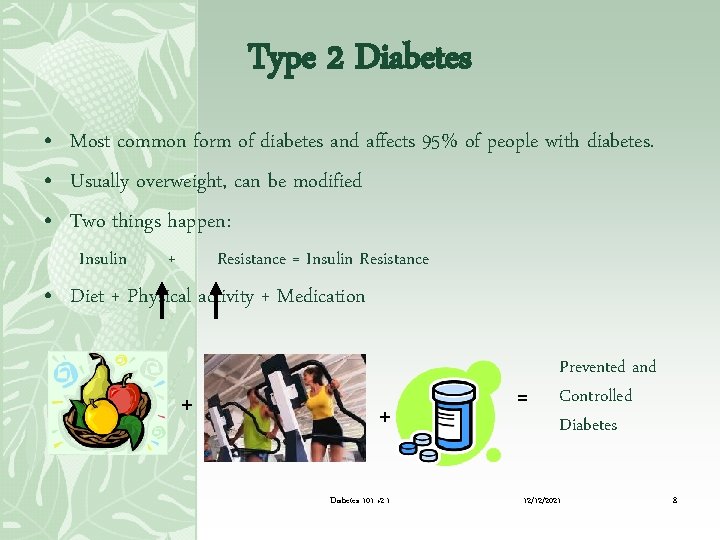
Type 2 Diabetes • Most common form of diabetes and affects 95% of people with diabetes. • Usually overweight, can be modified • Two things happen: Insulin + Resistance = Insulin Resistance • Diet + Physical activity + Medication + + Diabetes 101 v 2. 1 = Prevented and Controlled Diabetes 12/12/2021 8
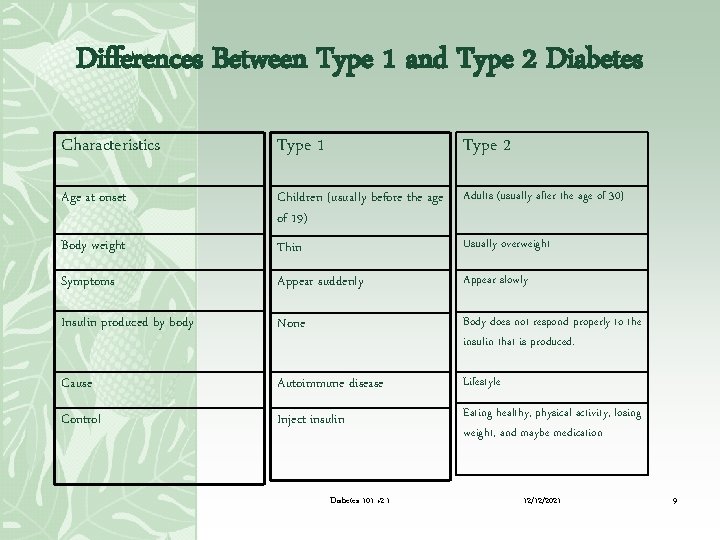
Differences Between Type 1 and Type 2 Diabetes Characteristics Type 1 Type 2 Age at onset Children (usually before the age of 19) Adults (usually after the age of 30) Body weight Thin Usually overweight Symptoms Appear suddenly Appear slowly Insulin produced by body None Body does not respond properly to the insulin that is produced. Cause Autoimmune disease Lifestyle Control Inject insulin Eating healthy, physical activity, losing weight, and maybe medication Diabetes 101 v 2. 1 12/12/2021 9

Diabetes 101 v 2. 1 12/12/2021 10
Gestational Diabetes • Diabetes that develops during pregnancy and is diagnosed between 24 -28 weeks. • Although the diabetes may go away after pregnancy these women are at an increased risk later in life to develop type 2 diabetes. • After pregnancy within the first year 5% to 10% of women with diabetes during pregnancy are diagnosed with type 2 diabetes. Diabetes 101 v 2. 1 12/12/2021 11
What are Symptoms of Diabetes? Diabetes 101 v 2. 1
Symptoms of Diabetes • • • Blurred vision Frequent urination Infections that take a long time to heal Persistent fatigue (always tired) Persistent thirst and hunger (always thirsty and hungry) Unexplained weight loss Diabetes 101 v 2. 1 12/12/2021 13
Who is diagnosed with diabetes? Diabetes 101 v 2. 1
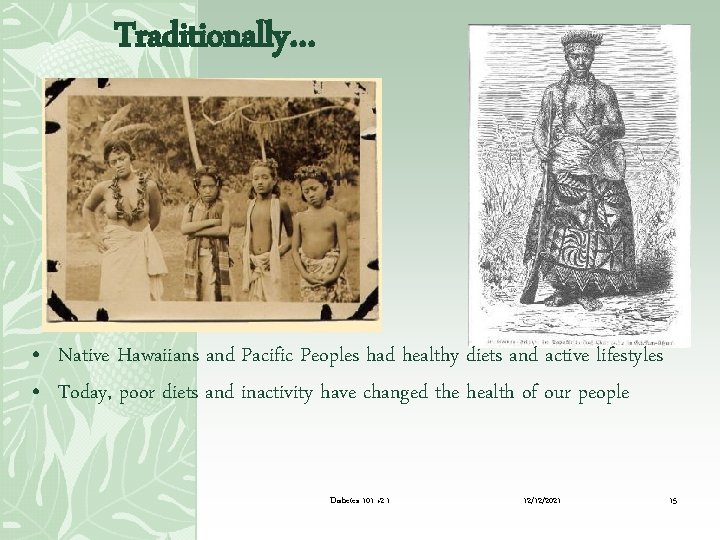
Traditionally… • Native Hawaiians and Pacific Peoples had healthy diets and active lifestyles • Today, poor diets and inactivity have changed the health of our people Diabetes 101 v 2. 1 12/12/2021 15
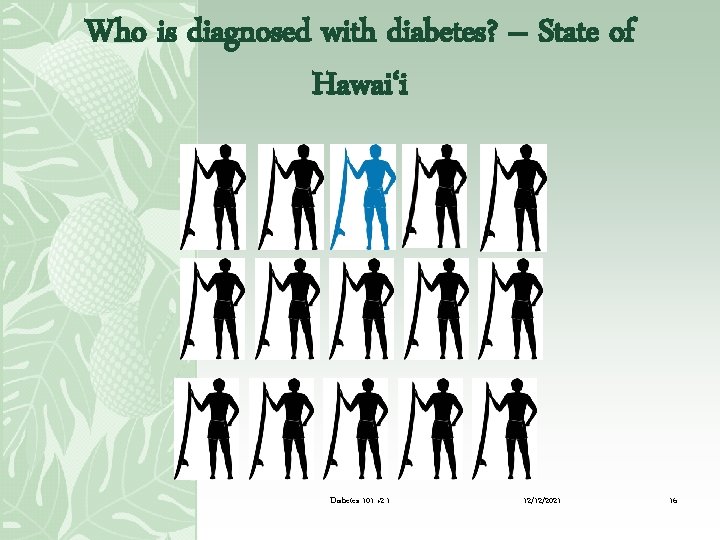
Who is diagnosed with diabetes? – State of Hawai‘i Diabetes 101 v 2. 1 12/12/2021 16
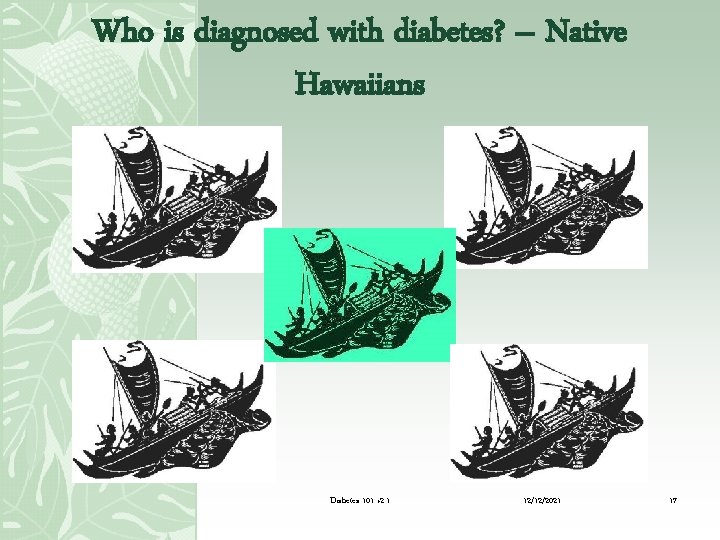
Who is diagnosed with diabetes? – Native Hawaiians Diabetes 101 v 2. 1 12/12/2021 17
What are the risk factors of diabetes? Diabetes 101 v 2. 1
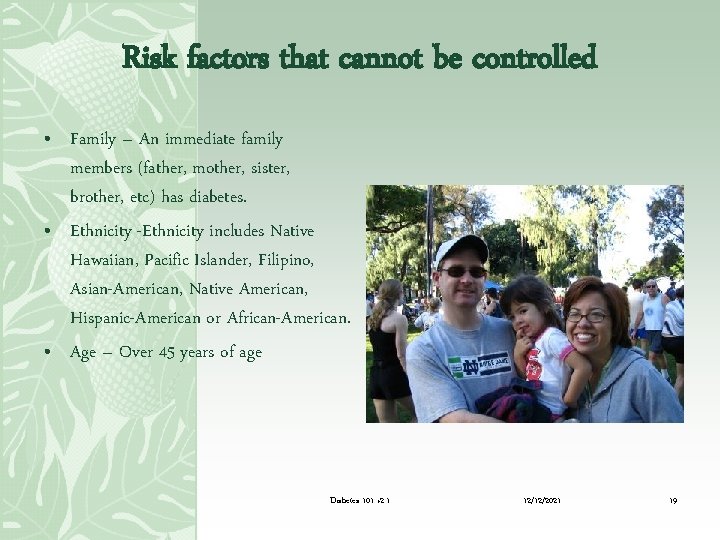
Risk factors that cannot be controlled • Family – An immediate family members (father, mother, sister, brother, etc) has diabetes. • Ethnicity -Ethnicity includes Native Hawaiian, Pacific Islander, Filipino, Asian-American, Native American, Hispanic-American or African-American. • Age – Over 45 years of age Diabetes 101 v 2. 1 12/12/2021 19
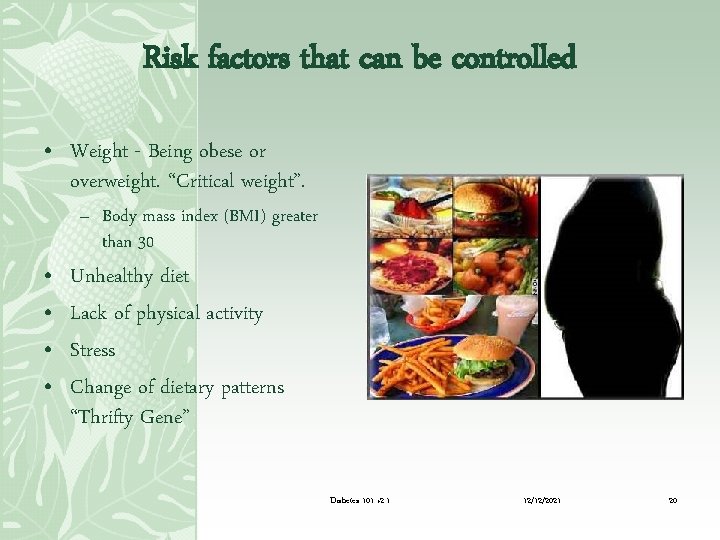
Risk factors that can be controlled • Weight - Being obese or overweight. “Critical weight”. • • – Body mass index (BMI) greater than 30 Unhealthy diet Lack of physical activity Stress Change of dietary patterns “Thrifty Gene” Diabetes 101 v 2. 1 12/12/2021 20
“Thrifty Gene” • • • Nomadic populations, populations where resources were limited. Results in resistance to insulin and efficient fat storage. When food was more readily available this was reversed. Modern industrialization has made high-carbohydrate and fatty foods available all year long. Then gene no longer serves a useful function and is now harmful because fat, originally stored for famine situations, is not used up. Example is the Pacific Islanders long distance ocean voyagers Diabetes 101 v 2. 1 12/12/2021 21
Complications of Diabetes 101 v 2. 1
Complication of Diabetes • • • Death Amputations Kidney disease Infections Nerve damage Eye disease Diabetes 101 v 2. 1 12/12/2021 23
Nerve Damage • Also known as diabetic neuropathy, it affects 60% of people with diabetes. • Caused by no blood flow to the nerves • Symptoms of diabetic nerve damage include numbness, burning, and aching of the feet and lower extremities. Diabetes 101 v 2. 1 12/12/2021 24
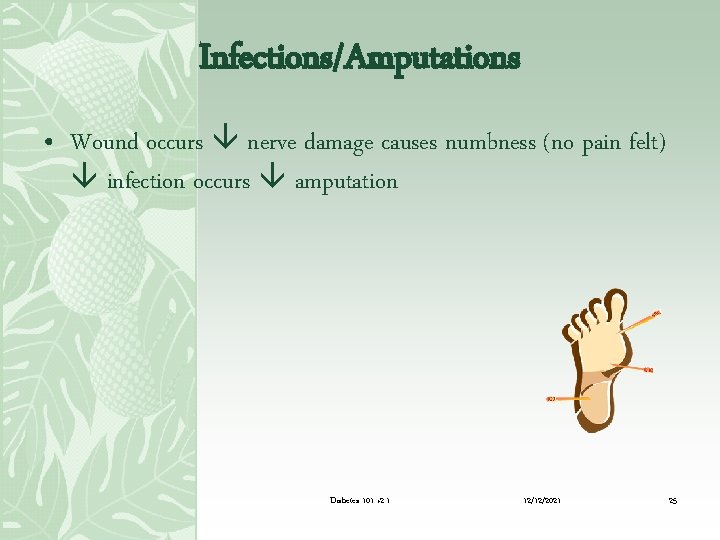
Infections/Amputations • Wound occurs nerve damage causes numbness (no pain felt) infection occurs amputation Diabetes 101 v 2. 1 12/12/2021 25
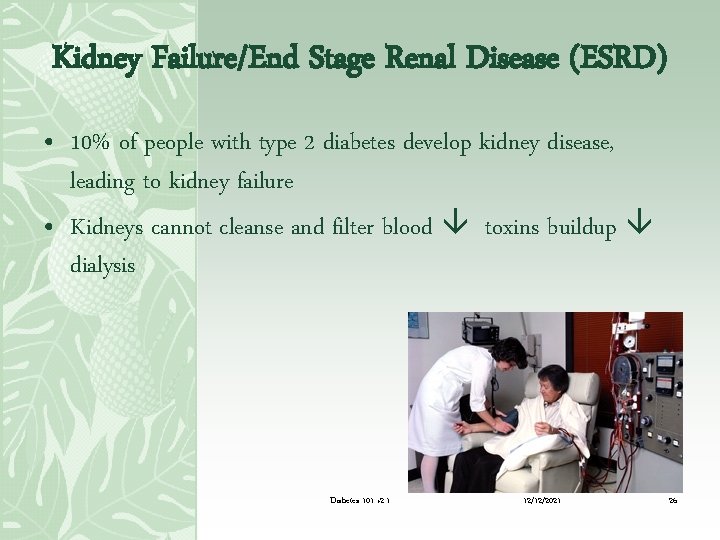
Kidney Failure/End Stage Renal Disease (ESRD) • 10% of people with type 2 diabetes develop kidney disease, leading to kidney failure • Kidneys cannot cleanse and filter blood toxins buildup dialysis Diabetes 101 v 2. 1 12/12/2021 26
Eye Disease • Retinopathy (problems with the retina) • Cataracts • Glaucoma Diabetes 101 v 2. 1 12/12/2021 27
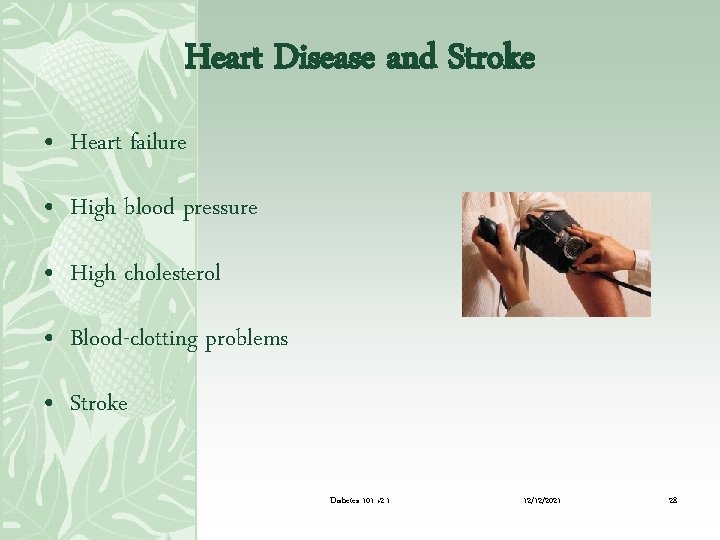
Heart Disease and Stroke • Heart failure • High blood pressure • High cholesterol • Blood-clotting problems • Stroke Diabetes 101 v 2. 1 12/12/2021 28
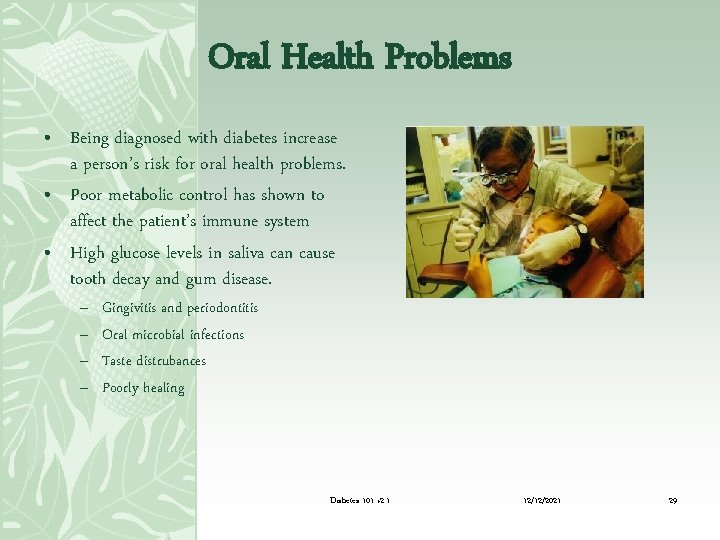
Oral Health Problems • Being diagnosed with diabetes increase a person’s risk for oral health problems. • Poor metabolic control has shown to affect the patient’s immune system • High glucose levels in saliva can cause tooth decay and gum disease. – – Gingivitis and periodontitis Oral microbial infections Taste distrubances Poorly healing Diabetes 101 v 2. 1 12/12/2021 29
Gestational Diabetes Complications • Affects 2 -5% of all American pregnant women. • Marcrosomia (large body size) over 9 pounds at delivery • Neonatal hypoglycemia (low blood sugar). Diabetes 101 v 2. 1 12/12/2021 30
Objectives Did we cover…. . • What is diabetes? • What are the symptoms of diabetes? • Who is diagnosed with diabetes? • What are risk factors of diabetes? • What are the complications of diabetes? Diabetes 101 v 2. 1 12/12/2021 31
Acknowledgement • The project described was supported by Grant Number P 20 MD 000173, from the National Center of Minority Health and Health Disparities, National Institutes of Health. Its contents are solely the responsibility of the authors and do not necessarily represent the official views of National Institutes of Health. Diabetes 101 v 2. 1 12/12/2021 32
- Slides: 32