
MODULE 1 INTERAGENCY GENDERBASED VIOLENCE CASE MANAGEMENT TRAINING
MODULE 1 INTERAGENCY GENDER-BASED VIOLENCE CASE MANAGEMENT TRAINING
MODULE 14 STEPS 4, 5 & 6: IMPLEMENTATION, FOLLOW -UP AND CASE CLOSURE
Effectively implement the case action plan with the survivor OBJECTIVES Understand how to use case conferencing to support the survivor Conduct appropriate case follow-up
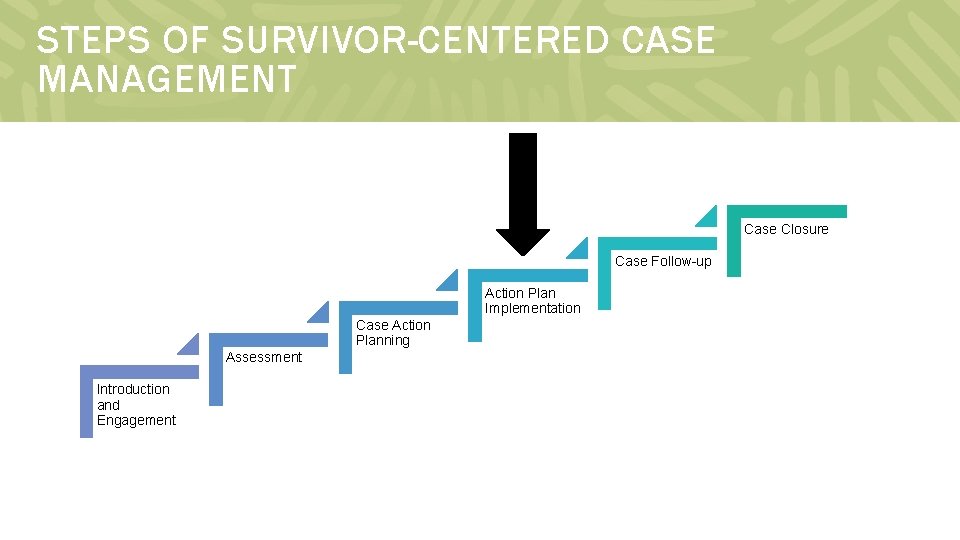
STEPS OF SURVIVOR-CENTERED CASE MANAGEMENT Case Closure Case Follow-up Action Plan Implementation Case Action Planning Assessment Introduction and Engagement
STEP 4: IMPLEMENTATION Purpose: Connect the survivor to relevant service providers through referrals, support them in accessing those services safely and ensure that the services are well coordinated. Step 4: Implementation • Make referrals • Advocate for and support survivors in accessing services • Lead case coordination • Provide direct services if relevant
MAKE REFERRALS AND SUPPORT SURVIVORS Caseworker will contact service providers to refer survivor’s case Assist the survivor in accessing those services by: • Accompanying survivors to service providers • Advocating on their behalf: • • • With police and security personnel to take protective measures For compassionate and quality medical care and treatment For survivor’s views and opinions to be followed and her rights upheld Meeting with service providers to provide information about the abuse so the survivor doesn’t have to repeat their story
REFERRAL PATHWAYS • Coordinate services • Multiple entry points • Ensure service providers know other services that are available and how to access them • Should be clear and documented
MANDATORY REPORTING • Always inform the survivor of your obligation to report (Step 1) • If the survivor shares information you must report, explain what information you must share, who you will share it with, and what is likely to happen next • Discuss any protection needs associated with mandatory reporting • Discuss the situation with your supervisor before reporting to the required authorities
In small groups, discuss your own experiences with mandatory reporting. ACTIVITY: MANDATORY REPORTING Does your program have mandatory reporting protocol? What else would you have liked to know/understand about mandatory reporting? How did you discuss reporting with your client? What risks or challenges might be involved in reporting cases in this way? Be prepared to discuss with the larger group.
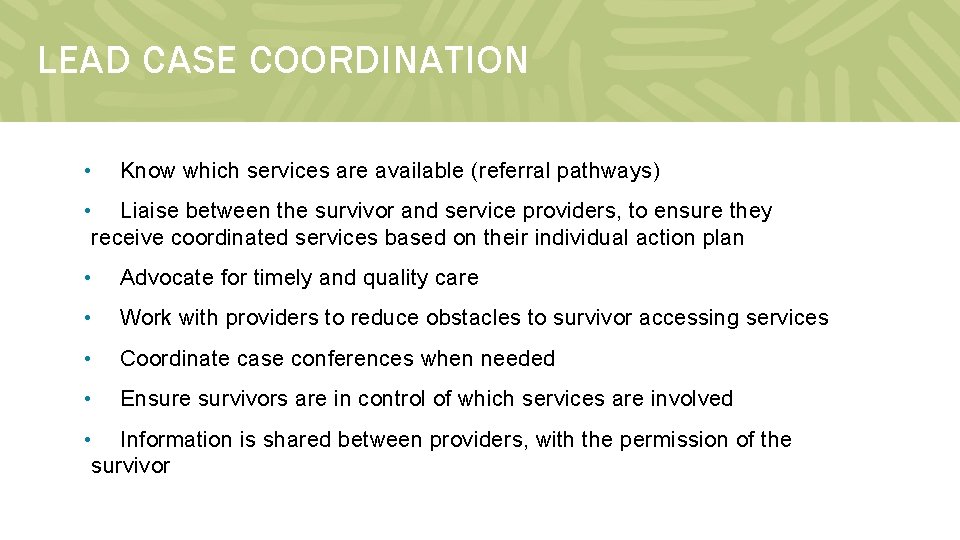
LEAD CASE COORDINATION • Know which services are available (referral pathways) • Liaise between the survivor and service providers, to ensure they receive coordinated services based on their individual action plan • Advocate for timely and quality care • Work with providers to reduce obstacles to survivor accessing services • Coordinate case conferences when needed • Ensure survivors are in control of which services are involved • Information is shared between providers, with the permission of the survivor
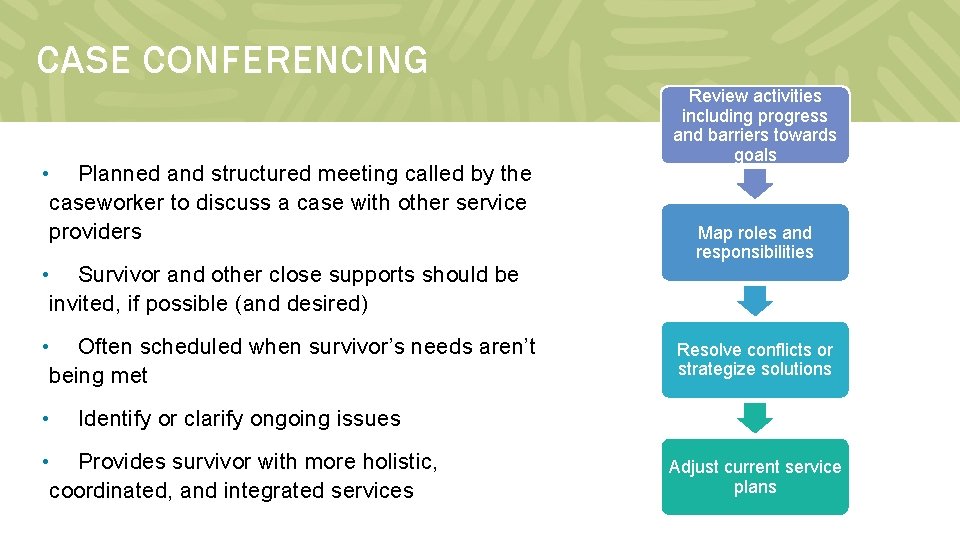
CASE CONFERENCING • Planned and structured meeting called by the caseworker to discuss a case with other service providers • Survivor and other close supports should be invited, if possible (and desired) • Often scheduled when survivor’s needs aren’t being met • Review activities including progress and barriers towards goals Map roles and responsibilities Resolve conflicts or strategize solutions Identify or clarify ongoing issues • Provides survivor with more holistic, coordinated, and integrated services Adjust current service plans
In small groups, discuss case coordination. To guide your discussion, think about: ACTIVITY: CASE COORDINATION (for groups with experience) Who is involved? Does your program have a protocol in place? In your experience, what makes a good conference? What makes a bad conference? Be prepared to share with the group. (for groups without experience) Who do you think should be involved? What would be included in a case coordination protocol? What might make a good case conference? What might make a bad one? Be prepared to share with the group.
ACTIVITY: CASE CONFERENCE ROLE PLAY 5 volunteers will help role play a case conference. The facilitator will play the survivor and each of the volunteers will be given a handout with background as the caseworker, supervisor, or other service provider. After the role play, we will come back as a large group to discuss what went well and what can be improved. Then, another 5 volunteers will do the role play, incorporating the feedback from the first group.
PSYCHOSOCIAL INTERVENTIONS Provide emotional support • Nonjudgmental, caring person in the survivor’s life • Continually making healing statements Facilitate the survivor’s reconnection with sources of strength and encouragement • Help survivors resume daily activities • Take time for activities that bring hope, strength and courage • Connect with people who are supportive and caring
PSYCHOSOCIAL INTERVENTIONS (CONT) Provide accurate information about causes, dynamics and impact of GBV • May help shift survivor’s thinking about self-blame or that there was something they could have done to prevent it or stop it • May help them better understand the range of feelings they are having Refer the survivor to specific interventions that your organization offers, (group support sessions, vocational or other livelihoods activities)
ACTIVITY: PSYCHOSOCIAL INTERVENTIONS Thinking about your own programs, individually map out the psychosocial resources you have available for your work with survivors.
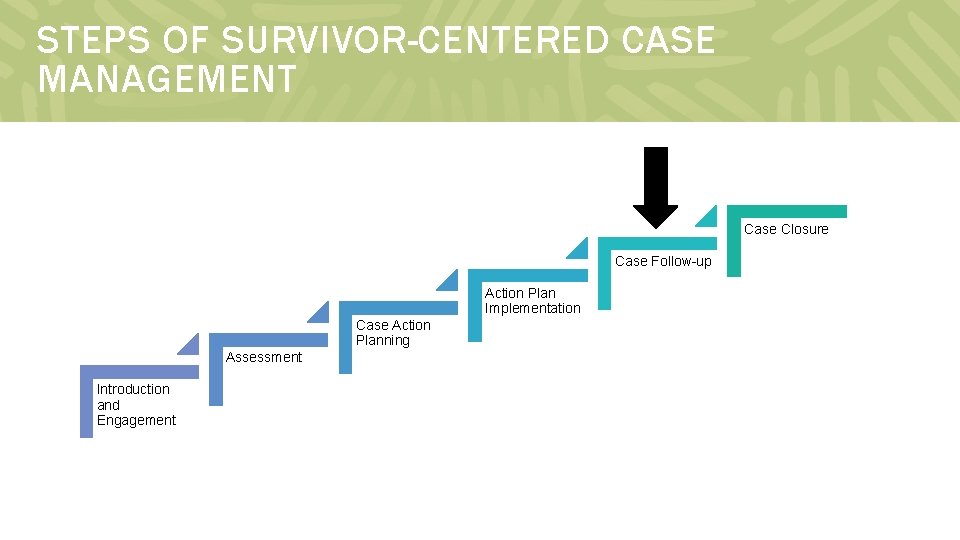
STEPS OF SURVIVOR-CENTERED CASE MANAGEMENT Case Closure Case Follow-up Action Plan Implementation Case Action Planning Assessment Introduction and Engagement
STEP 5: FOLLOW UP Purpose: Assess the status of the survivor’s situation and case action plan Step 5: Follow-up • • Meet with or contact the survivor as agreed Reassess safety Review and revise the case action plan Implement the revised case action plan
PURPOSE OF FOLLOW-UP Through case follow-up we seek to find out: • The status of the survivor in terms of their safety, health, family, social life (friends, school, work), feelings, and services. • Is the survivor getting the help and services they need, and in a timely manner? What is the outcome of the services they received? • Were previous plans connected to the above areas put into action? • Are there any barriers to achieving the case action goals? • Does the survivor have any new needs?
CASE FOLLOW-UP PROCESS Meet with or contact the survivor as agreed • Outlined in case action plan • Occur in a comfortable, safe and confidential location • Specific date, time, and place Reassess safety • Assess safety during every visit • Ask specific questions about safety • Make an updated safety plan if necessary Reassess psychosocial state and functioning
CASE FOLLOW-UP PROCESS Review the case action plan with the survivor • Discuss which services were accessed • Discuss any challenges • Identify new needs that have emerged Revise the case action plan • Document outcomes of referrals • Document any new needs • Schedule another follow-up visit Implement revised case action plan • Obtain consent for any new referrals
• You will be split into two groups, Group 1 and Group 2. Each person in Group 1 will match up with someone from Group 2 to role play the case follow-up process. ACTIVITY: FOLLOW-UP • Group 1, you will be the caseworkers. • Group 2, think of survivors from your own work for this exercise. Remember to omit names and identifying information for confidentiality. • Once you complete the role play, switch roles. • Be prepared to share back with the larger group.
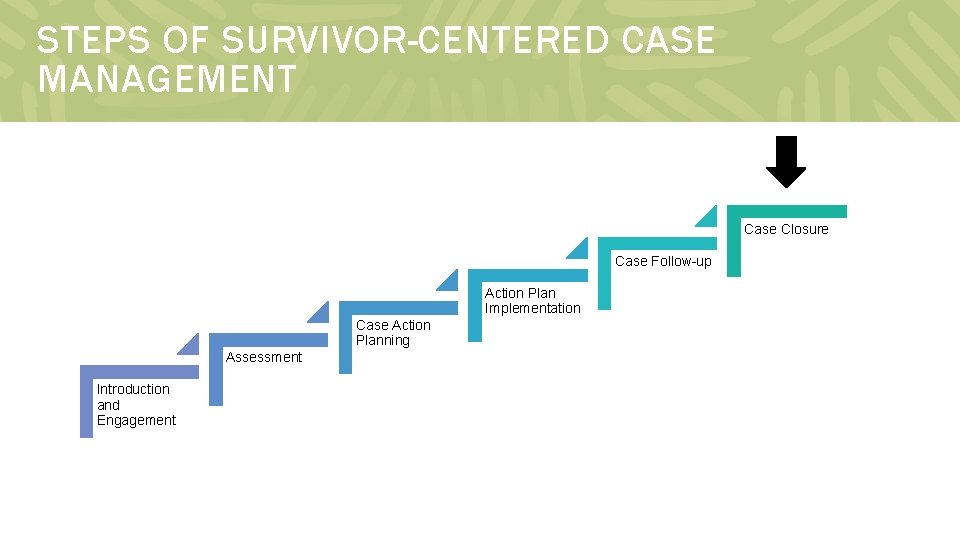
STEPS OF SURVIVOR-CENTERED CASE MANAGEMENT Case Closure Case Follow-up Action Plan Implementation Case Action Planning Assessment Introduction and Engagement
STEP 6: CASE CLOSURE Purpose: Recognize when the work is finished with a survivor and terminate with the survivor in a safe and supportive way. Step 6: Case Closure • Determine if/when the case should be closed • Document the case closure • If possible, administer client feedback survey • Safely store the closed case file (move the closed file to a new cabinet)
HOW TO CLOSE A CASE 1. Determine if the case meets criteria for closure 2. Document when a case is closed and the specific reasons for doing so 3. Safely store the closed case file
DETERMINING WHEN TO CLOSE • When the client’s needs are met and/or her support systems are functioning • When the survivor wants to close the case • When the survivor leaves the area or is relocated to another place • When you have not been able to reach the survivor for a minimum of 30 days
IMPORTANT ELEMENTS OF CASE CLOSURE • Ensure clear and open communication around closure • Follow-up with the survivor and discuss her situation • Review together the final action plan you made with her and the status of each goal • Review all of the progress made, changes in her life, and discuss her future aspirations • Explain that her case will close but reassure her that she can always return for services
DOCUMENTING CASE CLOSURE • Complete a case closure form if your program has one • Review the case with a supervisor and obtain approval for the closure • Review all of the forms in the survivor’s file and ensure the file is complete
SAFE STORAGE OF CLOSED CASES • Move the survivor’s file to a “closed cases” cabinet if your program has it • Do not include the consent form in the closed file • Leave the consent form in the original cabinet for consent forms OR • Move the consent form to a “closed case consent form” cabinet/file
• You will be split into two groups, Group 1 and Group 2. ACTIVITY: CLOSING CASES • Each group will be given a different case closure scenario to role play. One person from each group will partner with another from the other group. Group 1 will role play a caseworker first while Group 2 role plays the client. • After that role play has ended, the partners will switch roles with Group 1 role playing the survivor and Group 2 role playing the caseworker. • Be prepared to report back to the larger group.
CLIENT FEEDBACK SURVEY • Survey given to a survivor after the case closes • Administered by a supervisor or other caseworker, not the survivor’s caseworker • If the survivor is able to read and write and wants to complete the form on their own, allow for them to do so, otherwise it can be completed as an interview • Obtain informed consent from the survivor by telling them: • • The purpose of the survey – to help improve services That it is completely voluntary That all responses will be kept confidential That her responses will not impact her services
Round Robin case management role play in small groups. ACTIVITY: PUTTING IT ALL TOGETHER What parts of the process felt comfortable? What felt difficult? What did you notice about you/ your colleagues tendencies as caseworkers? What questions did it bring up for you?
CLOSING QUESTIONS? CONCERNS? REFLECTIONS?
- Slides: 33