
Module 1 Field History Preparing for field assessment

- Slides: 15
Module 1 Field History Preparing for field assessment Determine your survey approach Extension agent Wayne Cooley, ARS agronomist Randy Anderson, and farmer Gilbert Lindstrom Photo by Scott Bauer
Field History • • Ask questions! Get records, if possible Make general observations Learn to detect what might be causing the problem
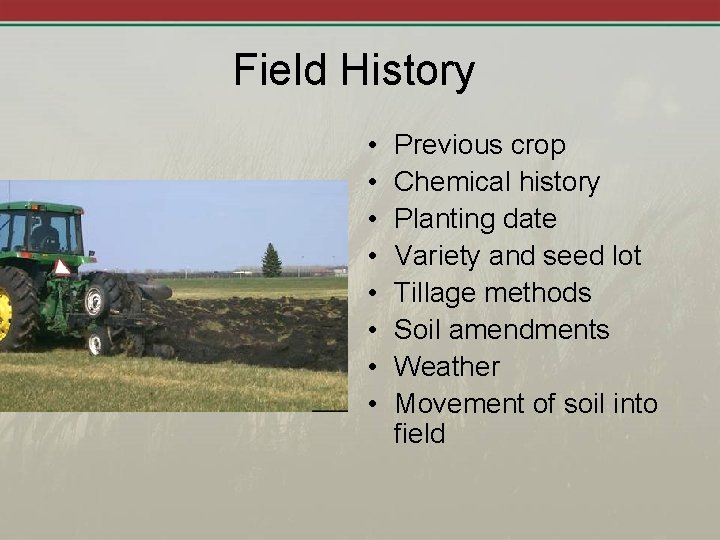
Field History • • Previous crop Chemical history Planting date Variety and seed lot Tillage methods Soil amendments Weather Movement of soil into field
Preparation for Field Assessment • Successful diagnosis starts with good preparation • Keep some useful tools around, and think about the history (as you know it) and nature of the concern
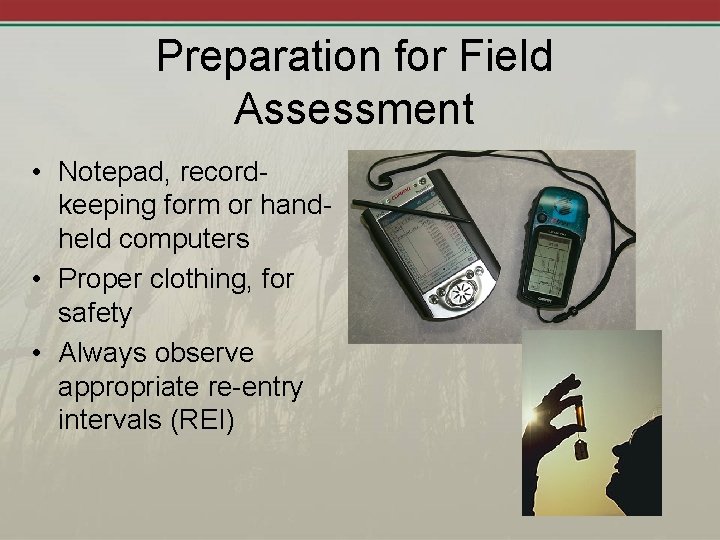
Preparation for Field Assessment • Notepad, recordkeeping form or handheld computers • Proper clothing, for safety • Always observe appropriate re-entry intervals (REI)
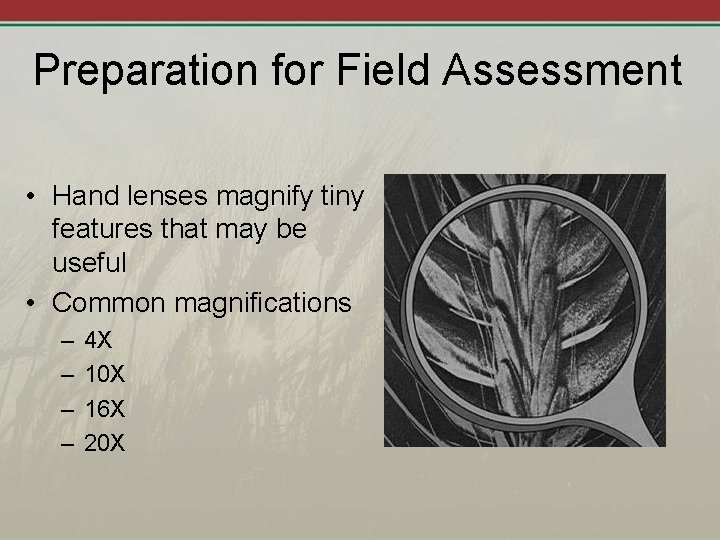
Preparation for Field Assessment • Hand lenses magnify tiny features that may be useful • Common magnifications – – 4 X 10 X 16 X 20 X
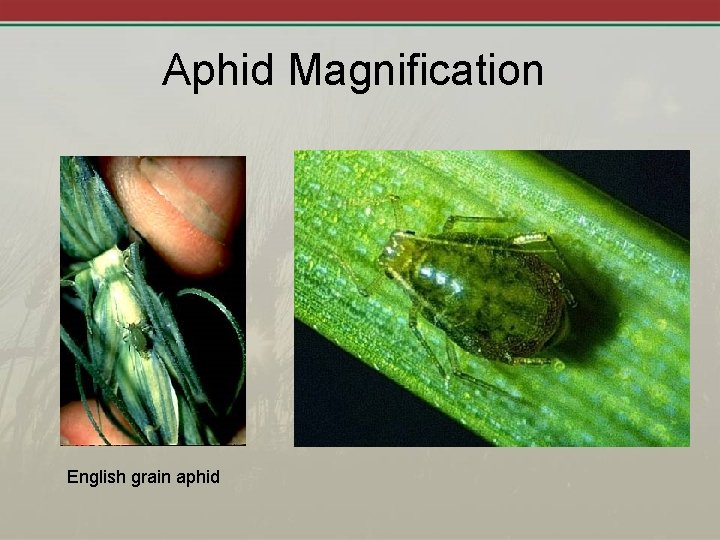
Aphid Magnification English grain aphid
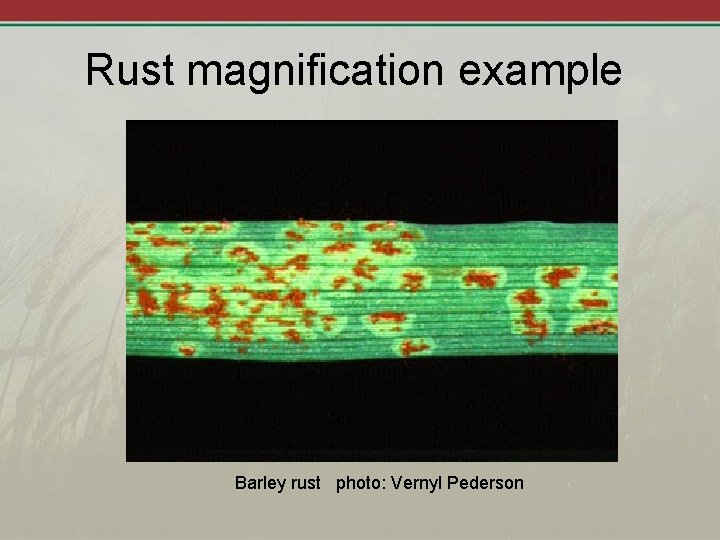
Rust magnification example Barley rust photo: Vernyl Pederson
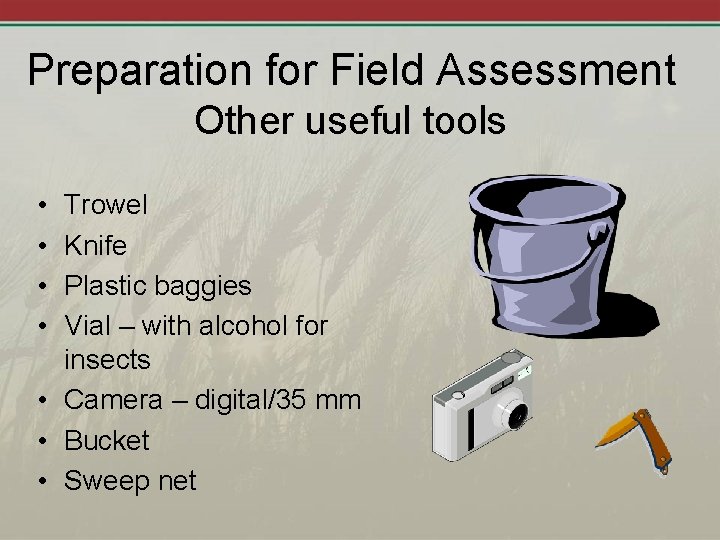
Preparation for Field Assessment Other useful tools • • Trowel Knife Plastic baggies Vial – with alcohol for insects • Camera – digital/35 mm • Bucket • Sweep net
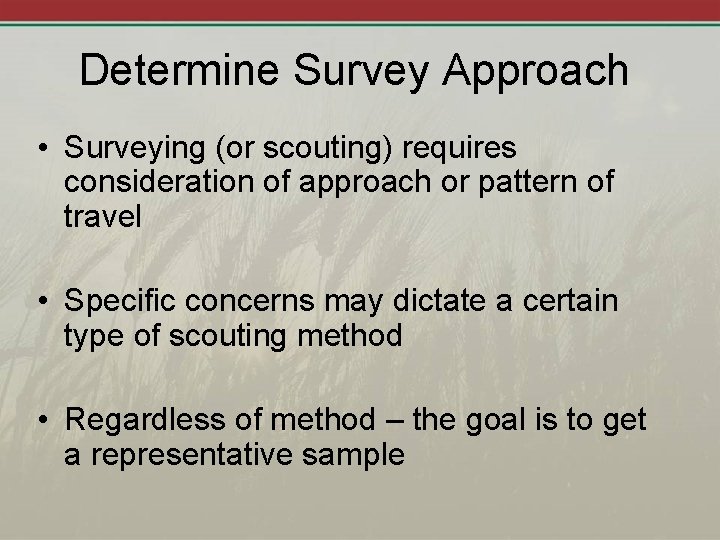
Determine Survey Approach • Surveying (or scouting) requires consideration of approach or pattern of travel • Specific concerns may dictate a certain type of scouting method • Regardless of method – the goal is to get a representative sample
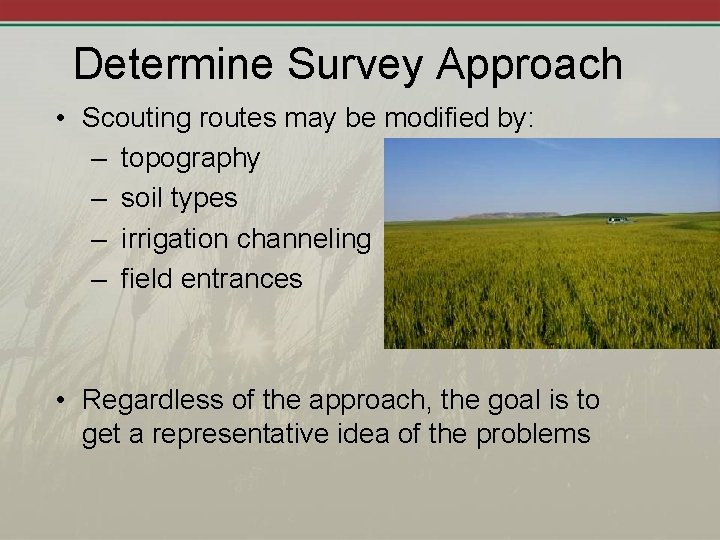
Determine Survey Approach • Scouting routes may be modified by: – topography – soil types – irrigation channeling – field entrances • Regardless of the approach, the goal is to get a representative idea of the problems
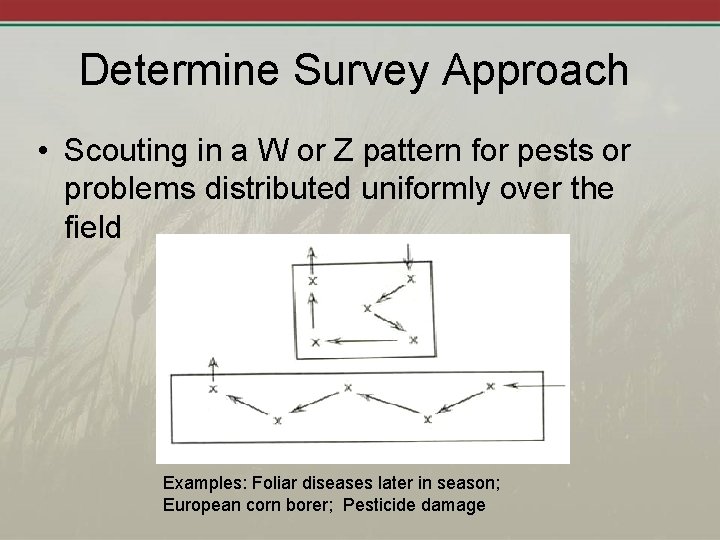
Determine Survey Approach • Scouting in a W or Z pattern for pests or problems distributed uniformly over the field Examples: Foliar diseases later in season; European corn borer; Pesticide damage
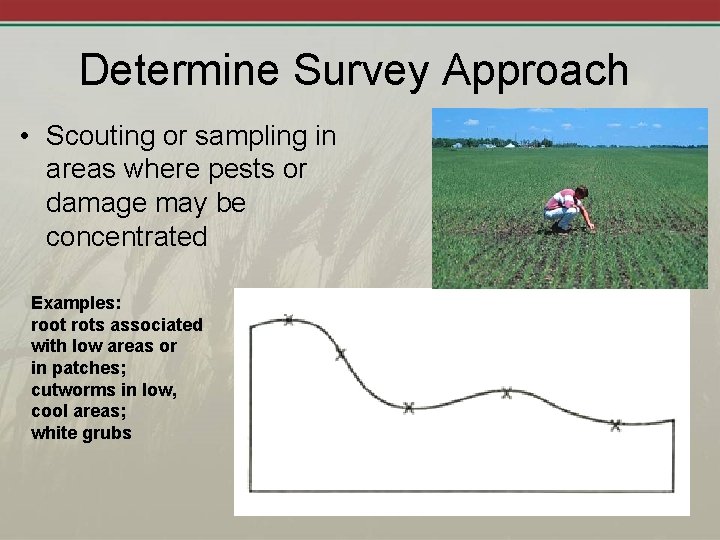
Determine Survey Approach • Scouting or sampling in areas where pests or damage may be concentrated Examples: root rots associated with low areas or in patches; cutworms in low, cool areas; white grubs
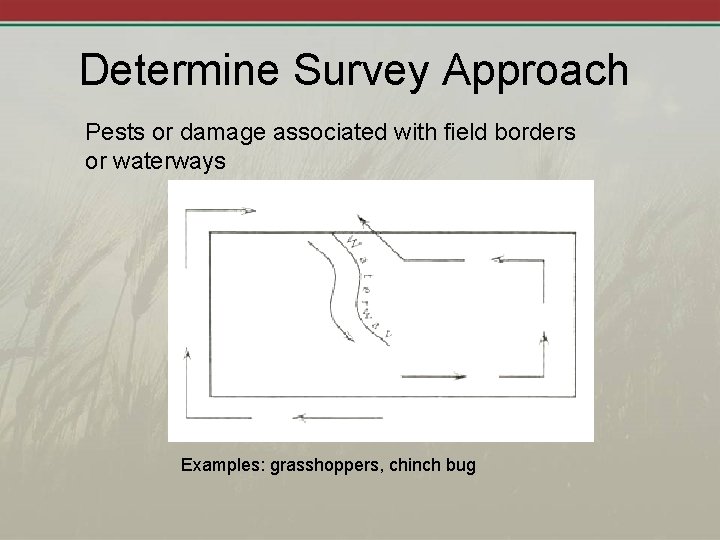
Determine Survey Approach Pests or damage associated with field borders or waterways Examples: grasshoppers, chinch bug
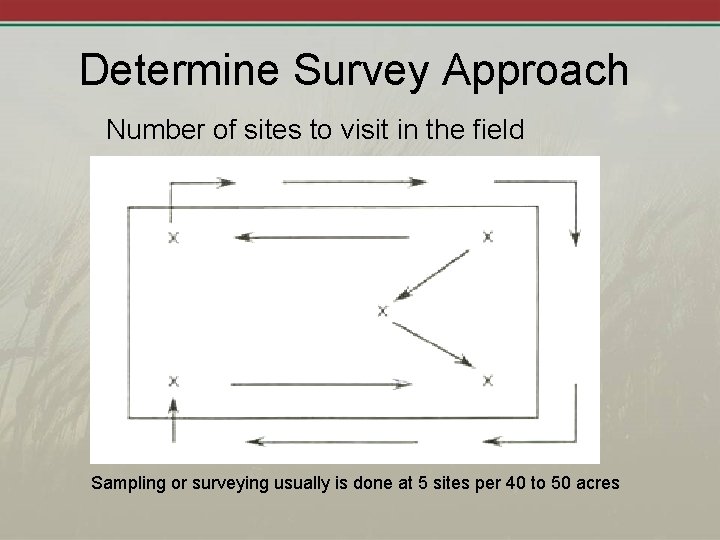
Determine Survey Approach Number of sites to visit in the field Sampling or surveying usually is done at 5 sites per 40 to 50 acres