
Module 1 Data Quality Indicators DQIs Common Measures

- Slides: 29
Module 1: Data Quality Indicators (DQIs) Common Measures Training Chelmsford, MA September 28, 2006
Goals of Module • Review DQI concepts • Illustrate data quality issues that might arise in this project
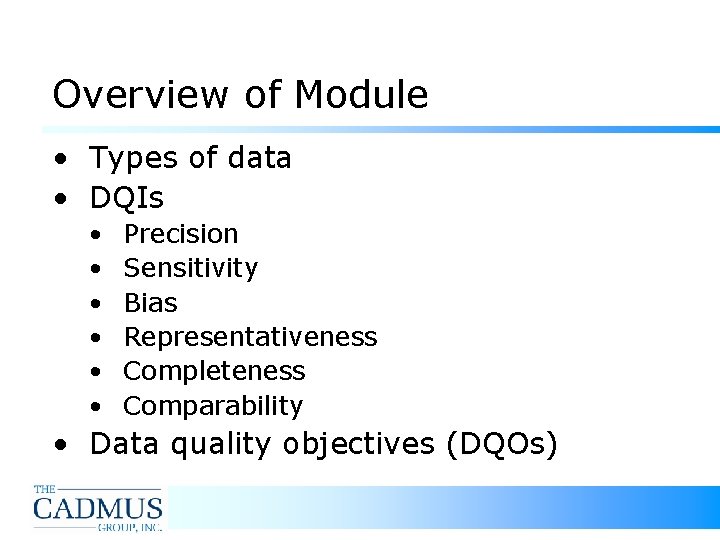
Overview of Module • Types of data • DQIs • • • Precision Sensitivity Bias Representativeness Completeness Comparability • Data quality objectives (DQOs)
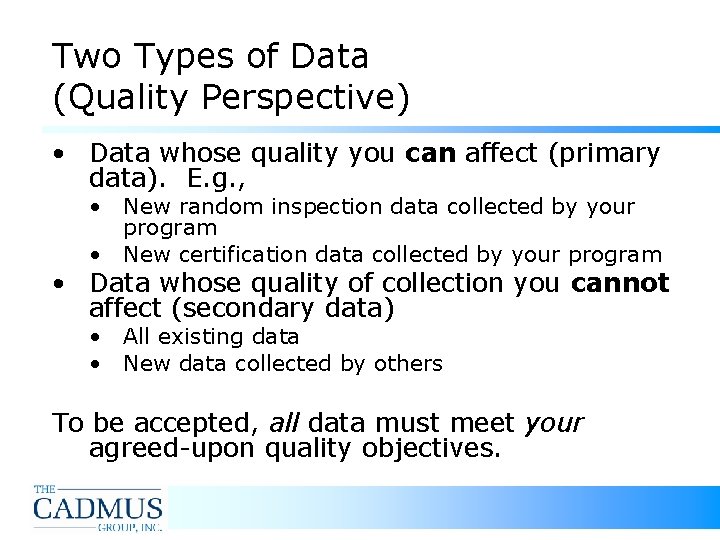
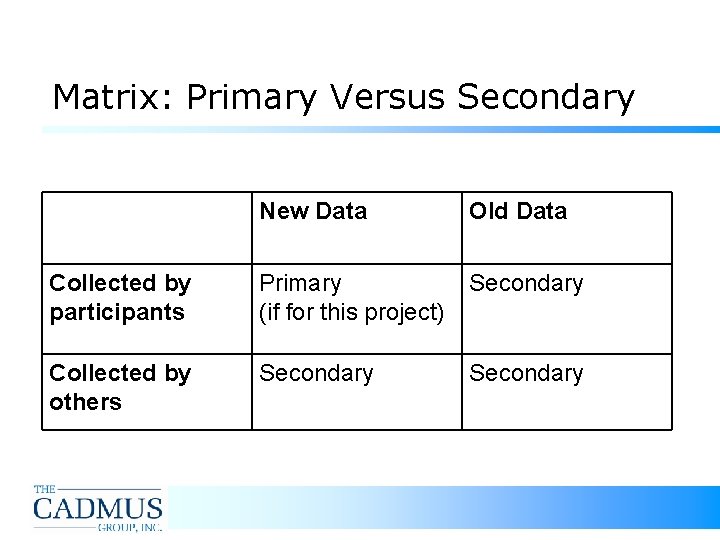
Two Types of Data (Quality Perspective) • Data whose quality you can affect (primary data). E. g. , • New random inspection data collected by your program • New certification data collected by your program • Data whose quality of collection you cannot affect (secondary data) • All existing data • New data collected by others To be accepted, all data must meet your agreed-upon quality objectives.
Matrix: Primary Versus Secondary New Data Old Data Collected by participants Primary (if for this project) Secondary Collected by others Secondary
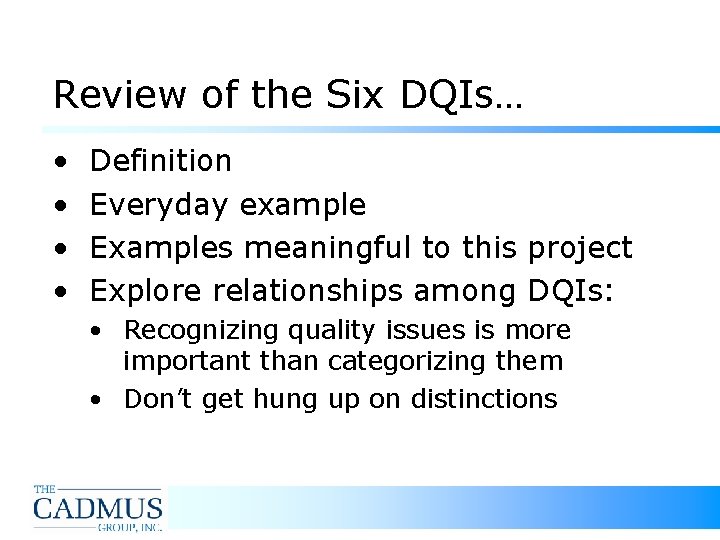
Review of the Six DQIs… • • Definition Everyday example Examples meaningful to this project Explore relationships among DQIs: • Recognizing quality issues is more important than categorizing them • Don’t get hung up on distinctions
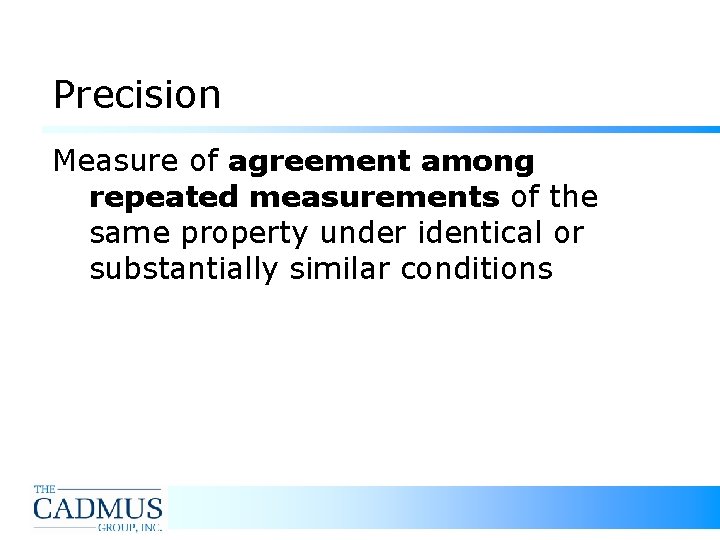
Precision Measure of agreement among repeated measurements of the same property under identical or substantially similar conditions
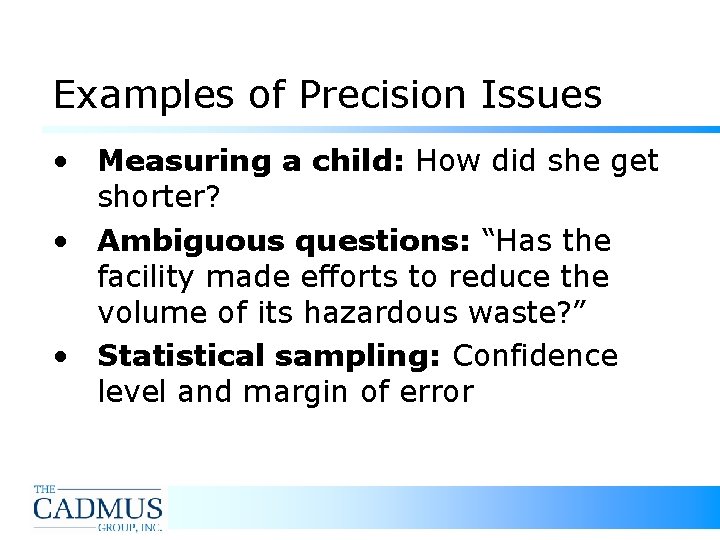
Examples of Precision Issues • Measuring a child: How did she get shorter? • Ambiguous questions: “Has the facility made efforts to reduce the volume of its hazardous waste? ” • Statistical sampling: Confidence level and margin of error
Looking through Different Lenses Each DQI can apply at multiple levels of analysis For example, precision applies in regard to: • Vague phrasing of an indicator question • Accuracy of responses to the indicator question (e. g. , comparison of self-cert responses and inspector findings) • Simple statistical analysis of responses • Statistical comparison with responses from other states
Sensitivity Measure of the capability of a method or instrument to discriminate between measurement responses representing different levels of the variable of interest. • How fine are the units of measurement?
Examples of Sensitivity Issues • • • Cooking: In your dish, can you taste the difference one grain of salt makes? 1 cup? Quantitative questions: "How much waste is generated? " vs. "Is more than 220 pounds of waste generated? " Rolled-up questions: "Facility labels properly? " vs. "Facility has labels on all containers? " and "All labels show correct contents of containers? " Observability: Can you be sure something occurred? (E. g. , "efforts" to reduce hazardous waste. ) Analyzing environmental samples: “Minimum detection limit” defines maximum sensitivity.
Balance of Precision and Sensitivity • Beware “spurious precision” • • E. g. , sequential measurements of 2010 lbs, 1600 lbs, and 2499 lbs all round to one ton. Precision is gained by reporting in tons, but artificially--useful sensitivity lost. Conversely, beware “spurious sensitivity” • If you collected those amounts in ounces, it’s more sensitive, but how likely is precision at that level?
Bias Systematic or persistent distortion of a measurement process that causes errors in one direction.
Examples of Bias Issues • “Dewey Beats Truman”: A telephone poll is biased in favor of telephone owners • Data collector: "Harsh" inspector in State A and "Easy" inspector in State B • Self-selected sample: Self-certification data from a voluntary certification program • Interested party: Facility-reported data, relative to inspector-collected data
Representativeness Degree to which a sample accurately and precisely represents the larger context. Lack of representativeness can… • Be a source of bias • Create comparability problems
Examples of Representativeness Issues • Mixing: Stir a fluid before taking a sample (e. g. , cooking a dish) • Defining your Indicator: Hazardous waste generation amounts • Monthly versus annual • Maximums versus averages • Randomness: Random sample is representative (but of what? ) • All volunteers, all registered facilities, or all facilities?
Completeness Measure of the amount of valid data needed to be obtained from a measurement system. • Incompleteness can be a source of bias
Examples of Completeness Issues • Cooking: Do you have enough of all the ingredients to make do? • Universe: Have all eligible facilities been identified? • Response rate: • What percentage of surveys are returned? • How many questions are left blank?
Comparability Measure of confidence that the underlying assumptions behind two data sets are similar enough that the data sets can be compared and/or combined to inform decisions. • Key comparisons in this project: • Intrastate (over time, among subgroups) • Interstate (between states, over time) • Other DQIs play a role in comparability
Examples of Comparability Issues • • Interpretation: “Amalgam wastes are properly collected and stored. ” Ambiguity across states? Timing: Compare data collected in the spring with data collected in the fall? Collected three years apart? Representativeness: Did two states define SQGs in the same way? Is the universe of facilities comparable in scope? Normalization: Tracking a background variable (e. g. , total population, total production) that puts a variable of interest into perspective…
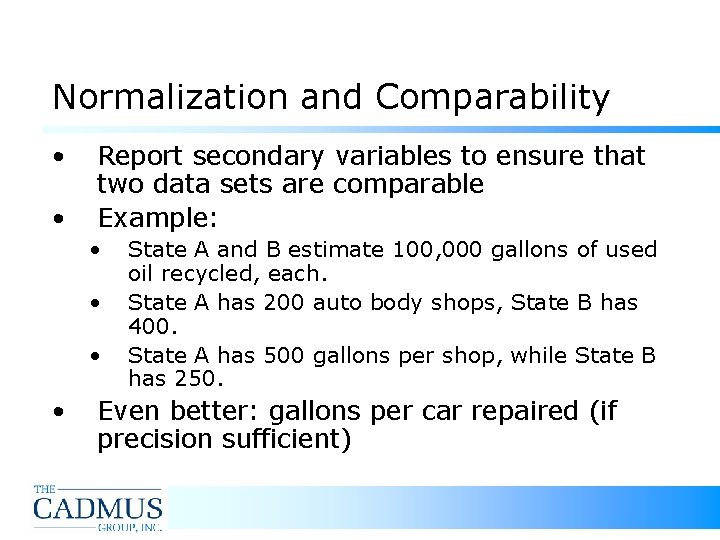
Normalization and Comparability • • Report secondary variables to ensure that two data sets are comparable Example: • • State A and B estimate 100, 000 gallons of used oil recycled, each. State A has 200 auto body shops, State B has 400. State A has 500 gallons per shop, while State B has 250. Even better: gallons per car repaired (if precision sufficient)
ID the DQI Issue “Sufficient records are maintained to demonstrate compliance. ”
ID the DQI Issue “How much amalgam separator waste was collected in the last month? ”
ID the DQI Issue “Is the facility in compliance with underground injection control requirements? ”
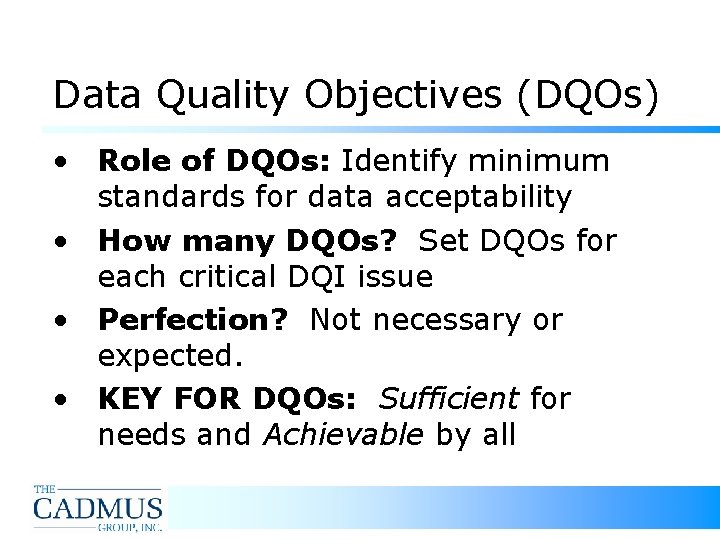
Data Quality Objectives (DQOs) • Role of DQOs: Identify minimum standards for data acceptability • How many DQOs? Set DQOs for each critical DQI issue • Perfection? Not necessary or expected. • KEY FOR DQOs: Sufficient for needs and Achievable by all
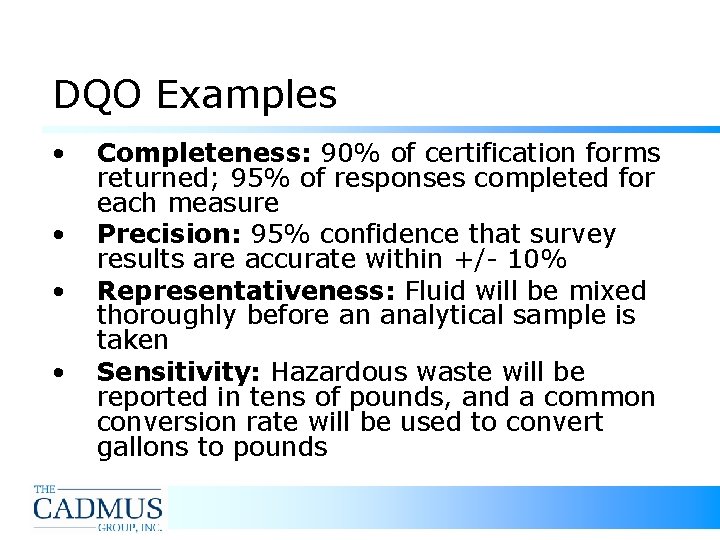
DQO Examples • • Completeness: 90% of certification forms returned; 95% of responses completed for each measure Precision: 95% confidence that survey results are accurate within +/- 10% Representativeness: Fluid will be mixed thoroughly before an analytical sample is taken Sensitivity: Hazardous waste will be reported in tens of pounds, and a common conversion rate will be used to convert gallons to pounds
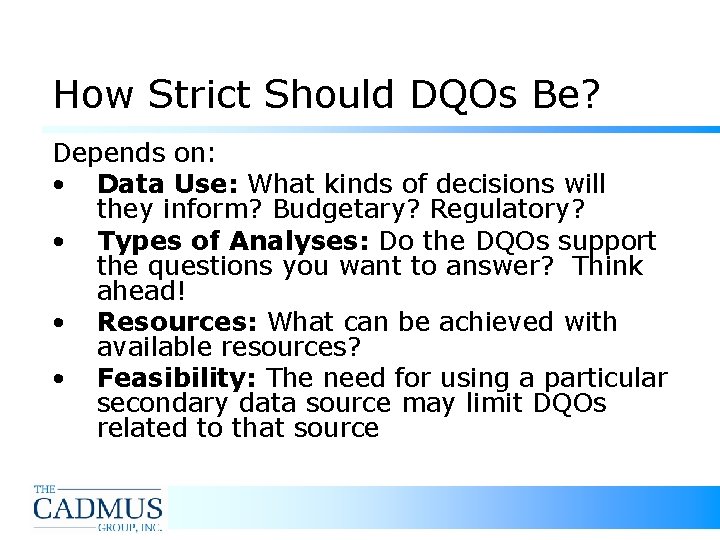
How Strict Should DQOs Be? Depends on: • Data Use: What kinds of decisions will they inform? Budgetary? Regulatory? • Types of Analyses: Do the DQOs support the questions you want to answer? Think ahead! • Resources: What can be achieved with available resources? • Feasibility: The need for using a particular secondary data source may limit DQOs related to that source
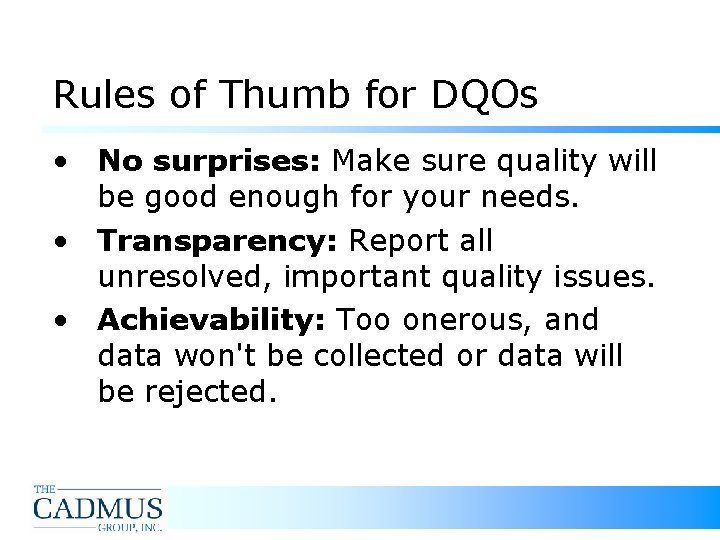
Rules of Thumb for DQOs • No surprises: Make sure quality will be good enough for your needs. • Transparency: Report all unresolved, important quality issues. • Achievability: Too onerous, and data won't be collected or data will be rejected.
For more information… Contact Michael Crow • E-mail: mcrow@cadmusgroup. com • Phone: 703 -247 -6131