
Module 1 Communication and Homeostasis Negative Feedback Glossary
Module 1: Communication and Homeostasis
• Negative Feedback Glossary – A process in which any change in a parameter brings about a reversal in that change • Positive Feedback – A process in which any change in a parameter brings about an increase in that change • Homeostasis – Maintaining a constant internal environment despite external changes • Endocrine gland – Secretes hormones directly into blood capillaries • Exocrine gland – Secretes substances into a duct • Hormone – Molecule released into the blood that acts as a chemical messenger • Target Tissue – Contains cells with receptors in their membranes complementary to a specific hormone molecule
Communication
Outline the need for communication systems within multicellular organisms • Need to monitor & respond to changes in the internal and external environment • Co-ordinate the activities of different organs
Cell Communication • Cells need to communicate with each other by a process called cell signalling • E. g. Neuronal (electrical) and hormonal (chemical) systems
Principles of Homeostasis • Receptors: – receives information • Control Mechanism: – respond to information • Effectors: – perform the appropriate action • Negative feedback: – restore original state
Ectotherm • Responses that maintain constant core body temperature: physiological, behavioural • Reference to peripheral temperature receptors, hypothalamus and effectors in the skin and muscle • Heat energy from outside the body Physiological Behavioural
Endotherm • Responses that maintain constant core body temperature: physiological, behavioural • Reference to peripheral temperature receptors, hypothalamus and effectors in the skin and muscle • Release heat energy within their body e. g mammals and birds Physiological Behavioural
Nerves
Roles of sensory receptors • Convert different form of energy in to nerve impulses (transducer) • For Example – Photoreceptor – Mechanoreceptor
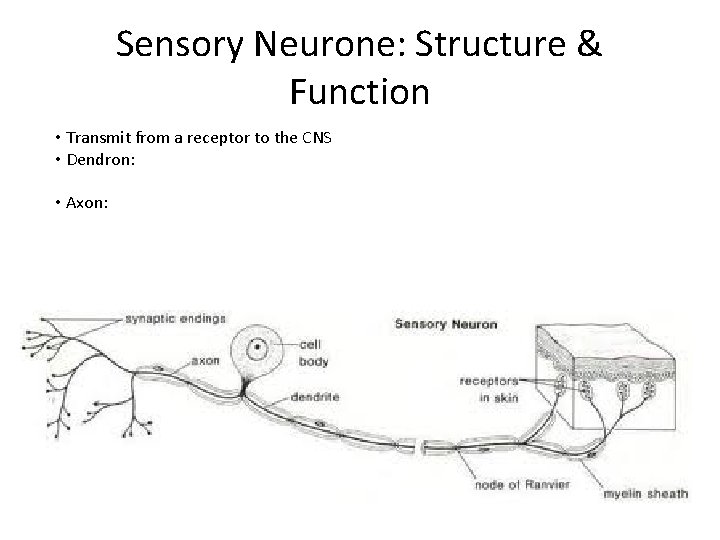
Sensory Neurone: Structure & Function • Transmit from a receptor to the CNS • Dendron: • Axon:
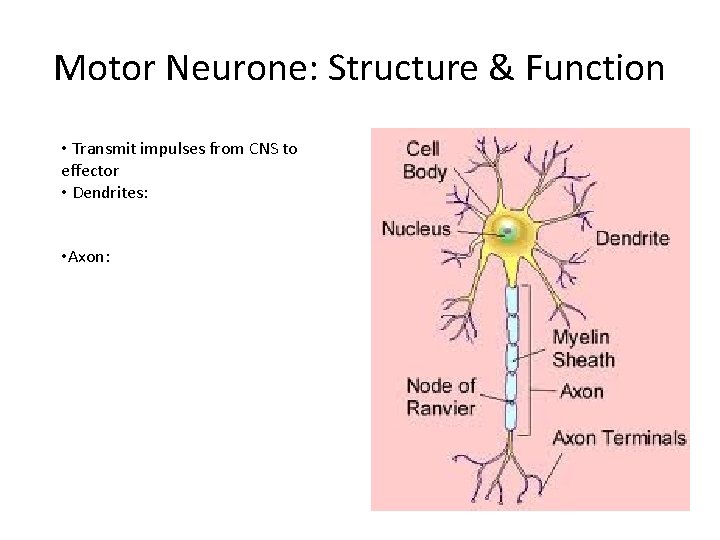
Motor Neurone: Structure & Function • Transmit impulses from CNS to effector • Dendrites: • Axon:
Resting Potential • Potential Difference across the membrane: – Inside has charge of -70 m. V compared to outside • Sodium Potassium Ion Pump – 2 K+ ions in – 3 Na+ ions out • Membrane is impermeable to Na+ but some K+ ions leak out
Action Potential • When membrane is depolarised and pd across the membrane reaches -40 m. V (generator potential) – Voltage gated Na+ channels open – Sodium ions move in (DEPOLARISATION) – Changes pd to +40 m. V – Na+ channels close & voltage gated K+ channels open (REPOLARISATION) – Changes pd to about -75 to -90 m. V (HYPERPOLARISATION) – Most of K+ channels close and Na+/K+ pump restores resting potential
Action Potential: Transmitted in a Myelinated neurone • Nerve impulse jumps from one Node of Ranvier to the next • Saltatory Conduction – Presence of action potential at one node sets up depolarisation at the next (local circuit) • Refractory Period – When membrane is hyperpolarised another action potential can’t form: action potential can only go one way
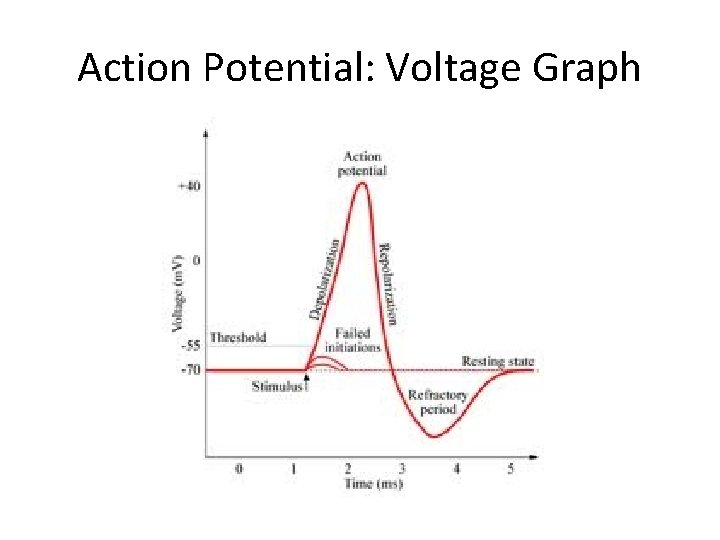
Action Potential: Voltage Graph
Significance of the frequency of impulse transmission • Actiona potential is an all or nothing response • Stronger signal at the receptor results in many action potentials
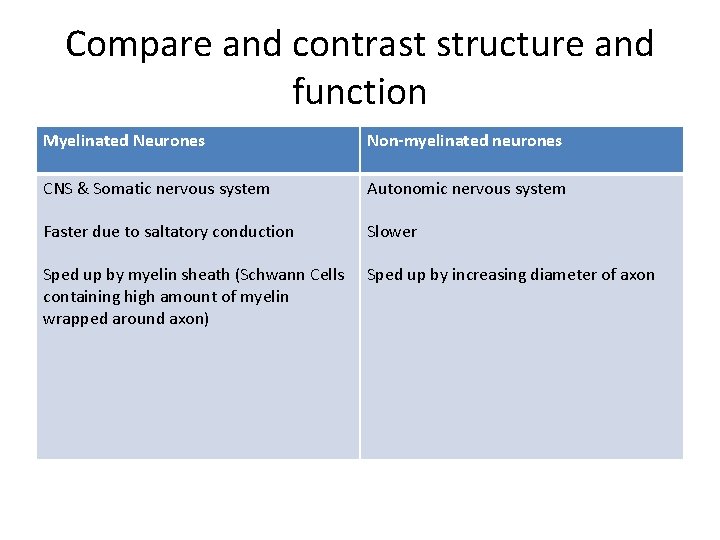
Compare and contrast structure and function Myelinated Neurones Non-myelinated neurones CNS & Somatic nervous system Autonomic nervous system Faster due to saltatory conduction Slower Sped up by myelin sheath (Schwann Cells containing high amount of myelin wrapped around axon) Sped up by increasing diameter of axon
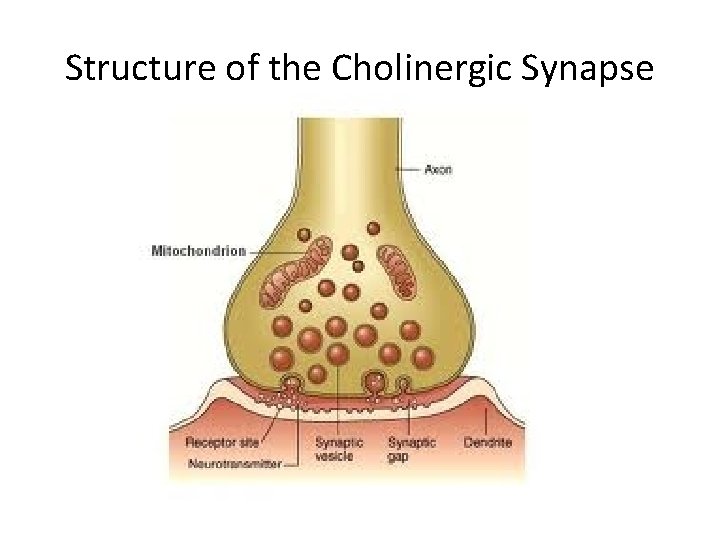
Structure of the Cholinergic Synapse
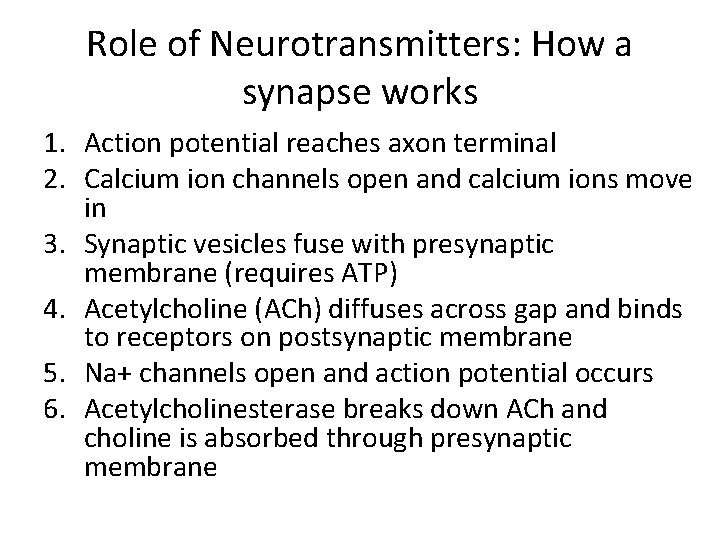
Role of Neurotransmitters: How a synapse works 1. Action potential reaches axon terminal 2. Calcium ion channels open and calcium ions move in 3. Synaptic vesicles fuse with presynaptic membrane (requires ATP) 4. Acetylcholine (ACh) diffuses across gap and binds to receptors on postsynaptic membrane 5. Na+ channels open and action potential occurs 6. Acetylcholinesterase breaks down ACh and choline is absorbed through presynaptic membrane
Roles of the Synapse in the Nervous System • One direction of transmission • May be excitatory or inhibitory • Spatial summation – When two synapses on the same neurone get action potentials at same time depolarisation of postsynaptic membrane is greater • Temporal summation – When two action potentials arrive one after the other the depolarisation of the postsynaptic membrane is greater • Facilitation – Arrival of first action potential makes the postsynaptic membrane more responsive to the next
Hormones
First and Second Messengers: adrenaline & c. AMP • Adrenaline doesn’t enter the target tissue • Adrenaline is the first messenger • Adrenaline binds to receptor on cell surface, activating adenyl cyclase inside the cell • Adenyl cyclase increases concentration of c. AMP • c. AMP is the second messenger • c. AMP activates cascade of enzymes
Functions of the Adrenal Gland • Adrenal Cortex – Makes certain steroid hormones – Control concentrations of Na and K in the blood – Control metabolism of sugars and proteins • Adrenal Medulla – Makes adrenaline – Increases heart rate
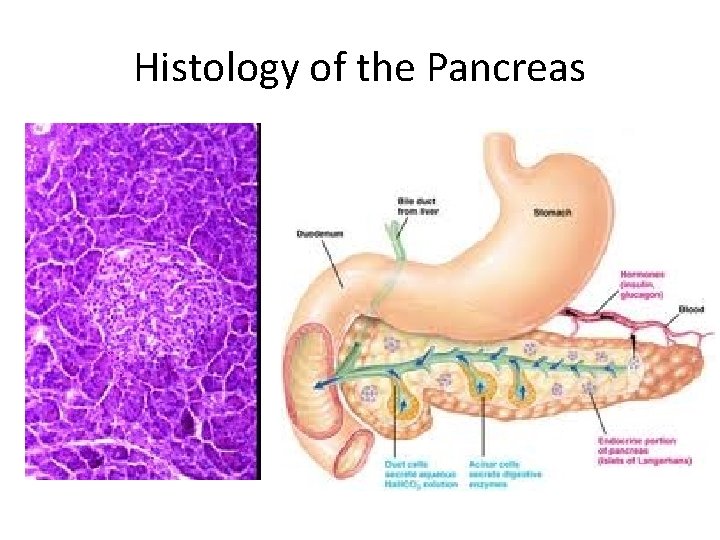
Histology of the Pancreas
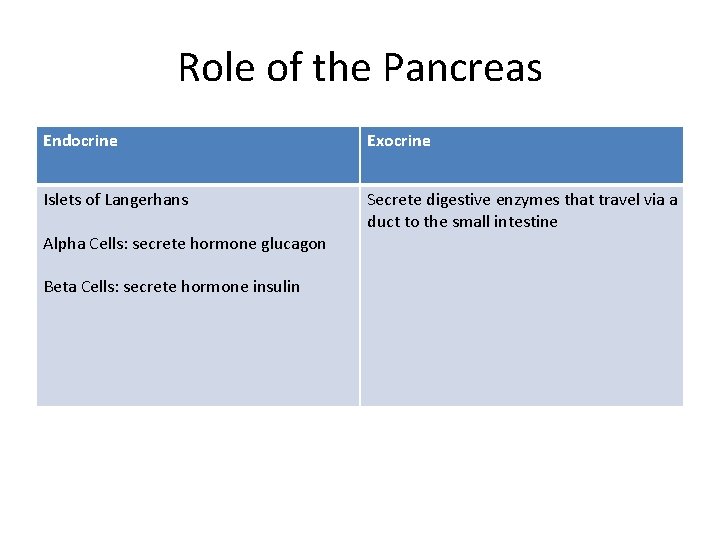
Role of the Pancreas Endocrine Exocrine Islets of Langerhans Secrete digestive enzymes that travel via a duct to the small intestine Alpha Cells: secrete hormone glucagon Beta Cells: secrete hormone insulin
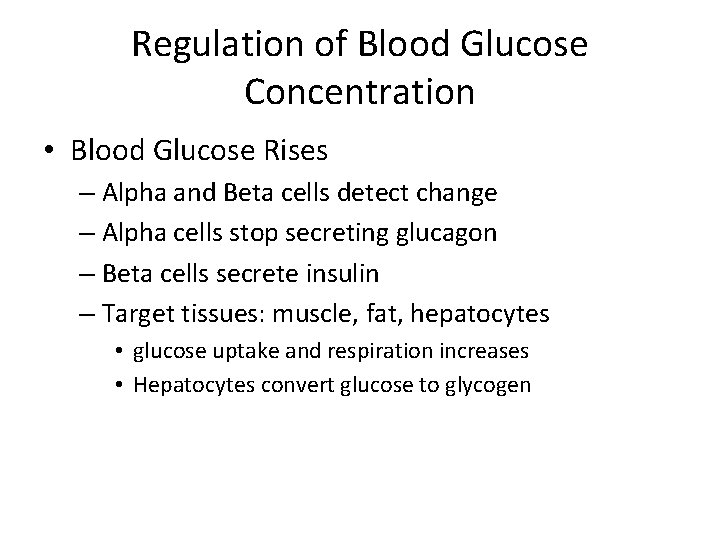
Regulation of Blood Glucose Concentration • Blood Glucose Rises – Alpha and Beta cells detect change – Alpha cells stop secreting glucagon – Beta cells secrete insulin – Target tissues: muscle, fat, hepatocytes • glucose uptake and respiration increases • Hepatocytes convert glucose to glycogen
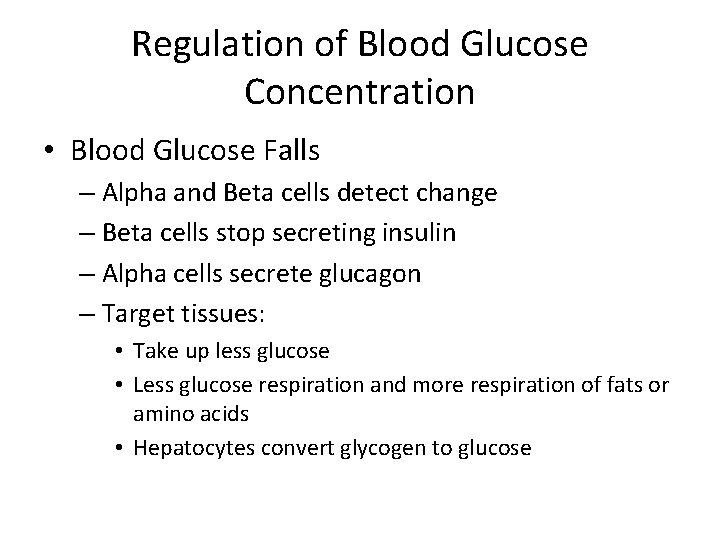
Regulation of Blood Glucose Concentration • Blood Glucose Falls – Alpha and Beta cells detect change – Beta cells stop secreting insulin – Alpha cells secrete glucagon – Target tissues: • Take up less glucose • Less glucose respiration and more respiration of fats or amino acids • Hepatocytes convert glycogen to glucose
Insulin Secretion • Beta cells have negative resting potential, caused by ATP sensitive K+ channels • When blood glucose levels increase, ATP enters Beta Cells and is repired • Closes K+ channels • Membrane depolarisation causes Ca ions to enter • Insulin released by exocytosis
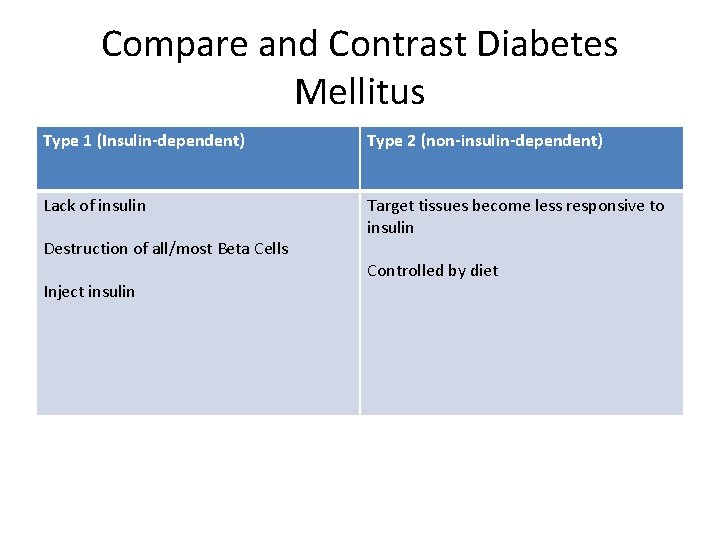
Compare and Contrast Diabetes Mellitus Type 1 (Insulin-dependent) Type 2 (non-insulin-dependent) Lack of insulin Target tissues become less responsive to insulin Destruction of all/most Beta Cells Inject insulin Controlled by diet
Diabetes Treatments • Human Insulin from GM Bacteria – E. coli make human insulin as they have been given the gene – Decreases risk of immune response – Patients respond faster – Removes ethical issues of using animal insulin • Stem Cells – Using embryonic stem cells to make insulin – Placed in porous capsules in abdomen to prevent rejection
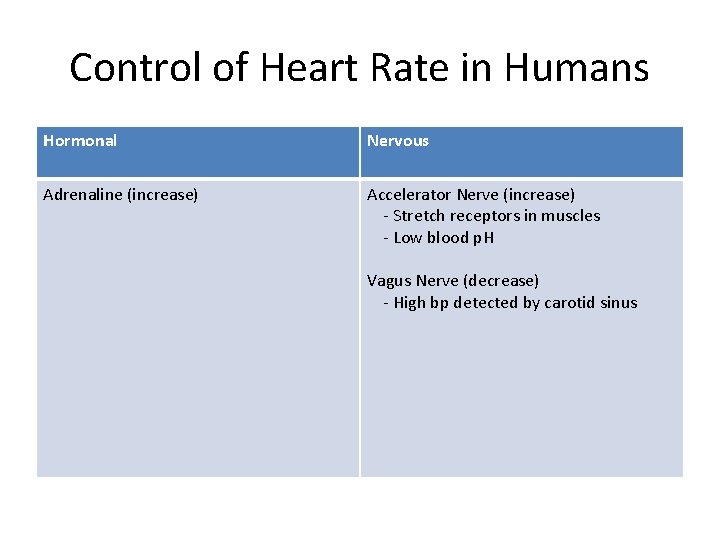
Control of Heart Rate in Humans Hormonal Nervous Adrenaline (increase) Accelerator Nerve (increase) - Stretch receptors in muscles - Low blood p. H Vagus Nerve (decrease) - High bp detected by carotid sinus
Module 2: Excretion
Glossary • Excretion – Removal of metabolic waste (waste from reactions inside cells) from the body
Importance of removing metabolic wastes from the body • Carbon Dioxide – Can increase the p. H of the blood – Excreted via the lungs • Nitrogenous waste – Makes the toxic ammonia – Liver turns it into urea – Removed from the blood by the kidneys
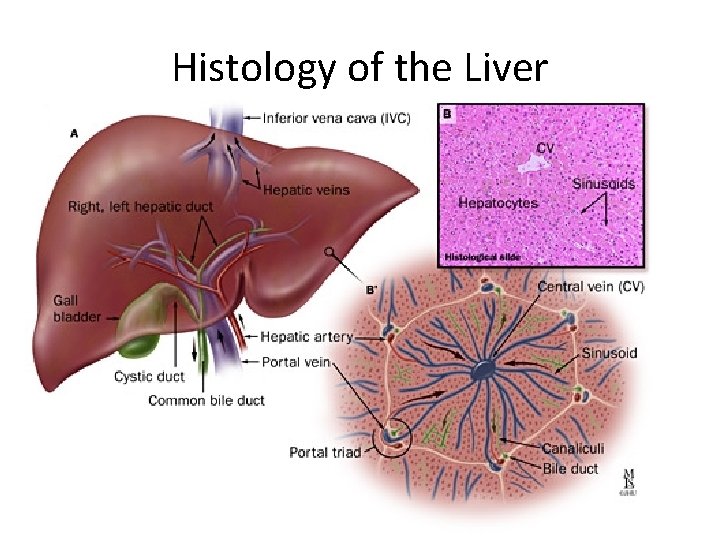
Histology of the Liver
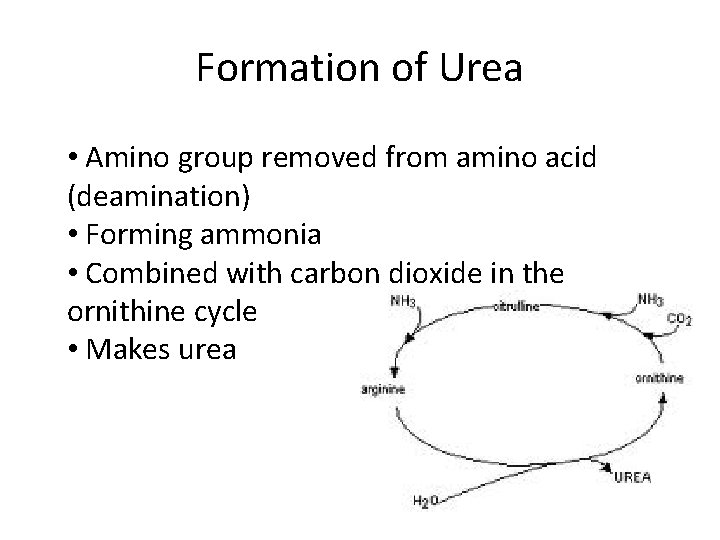
Formation of Urea • Amino group removed from amino acid (deamination) • Forming ammonia • Combined with carbon dioxide in the ornithine cycle • Makes urea
Roles of the Liver • Liver made up of several lobes • Hepatocytes are arranged in lobules • Roles – Detoxification of e. g. Alcohol – Formation of urea – Glucose homeostasis
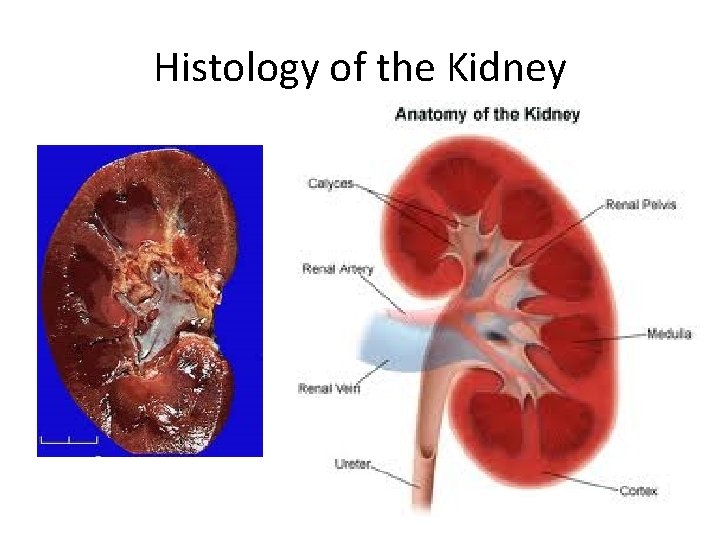
Histology of the Kidney
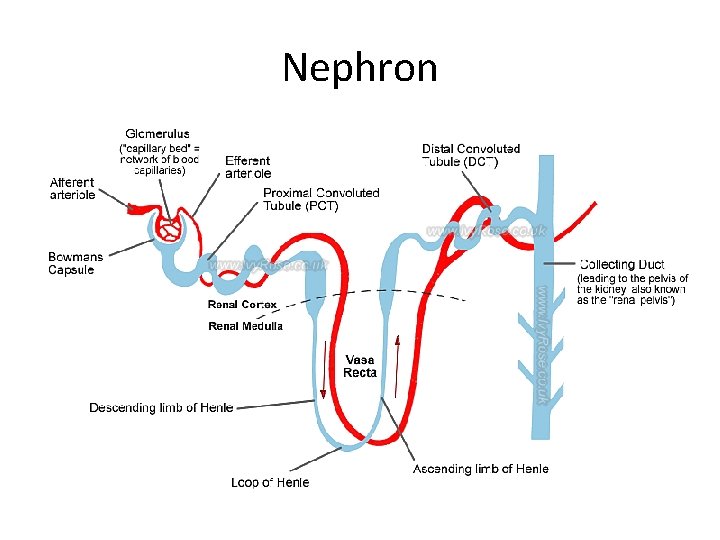
Nephron
Production of Urine • Ultrafiltration (Glomerulus & Bowman’s Capsule) – High pressure in glomerulus caused by narrower efferent arteriole – Filters smaller molecules into the nephron – Basement membrane around capillaries and podocytes of Bowman’s capsule improve filtration • Selective Reabsorption (PCT) – Glucose, amino acids, vitamins and some ions reabsorbed into blood
Control of Water content in the blood • Water is filtered out of blood into nephron • 65% absorbed back into blood by osmosis in PCT • In Loop of Henle – Countercurrent mechanism: • Ions pumped out of ascending loop of Henle • Decreases water potential of medulla • Ions diffuse into descending limb to be recycled • Low water potential of medulla around the collecting duct means water moves out of permeable collecting duct – Permeability of collecting duct increased by ADH
Kidney Failure • Problems – Increased retention of water and salts – High blood pressure and odema • Renal Dialysis – Blood passed through membrane where good stuff moves in and bad out by diffusion • Transplant – Fix problem, but need a tissue type match and take immunosuppresants
Urine Samples • Test for Pregnancy – Embryo makes human chorionicgonadatrophin hormone (h. CG) – Found in urine 6 days after conception – Pregnancy test: • Monoclonal antibodies tagged with blue bead bind with h. CG • Antibodies move • Immobilised enzymes bind to antibodies and hold beads into a blue line • Test for Anabolic Steroids – Urine sample analysed with mass spectrometry
- Slides: 44