
Module 1 2 1 4 n Read text
- Slides: 28
Module 1. 2 -1. 4 n Read text sections 1. 21. 4 define anatomy and physiology and describe the levels of organization and the characteristics of life.
Chapter 1 Introduction to Human Anatomy and Physiology
Anatomy and Physiology n Anatomy deals with the structure (morphology) of the body and its parts, in other words, what are things called? n Physiology studies the functions of these parts or asks the question, “how do they work? n The two disciplines are closely interrelated because the functional role of a part depends on how it is constructed.
Module 1. 5 n Read text section 1. 5 Describe factors that maintain life and how the body maintains an internal environment.
Homeostasis: n n Maintenance of a stable internal environment is called homeostasis. Homeostasis is regulated through control systems which have receptors, a set point and effectors in common. Examples include: a. Homeostatic mechanisms regulate body temperature in a manner similar to the functioning of a home heating thermostat. b. Another homeostatic mechanism employs pressuresensitive receptors to regulate blood pressure.
Homeostasis: Many of the body's homeostatic controls are negative feedback mechanisms. n Each individual uses homeostatic mechanisms to keep body levels within a normal range; normal ranges can vary from one individual to the next. n
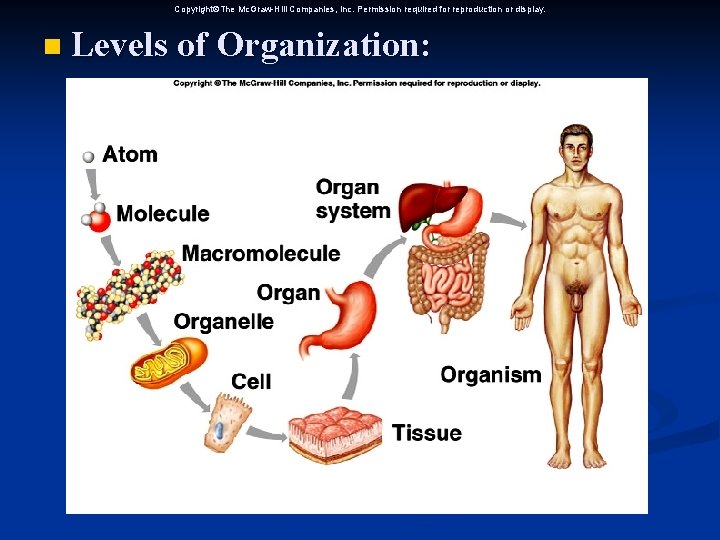
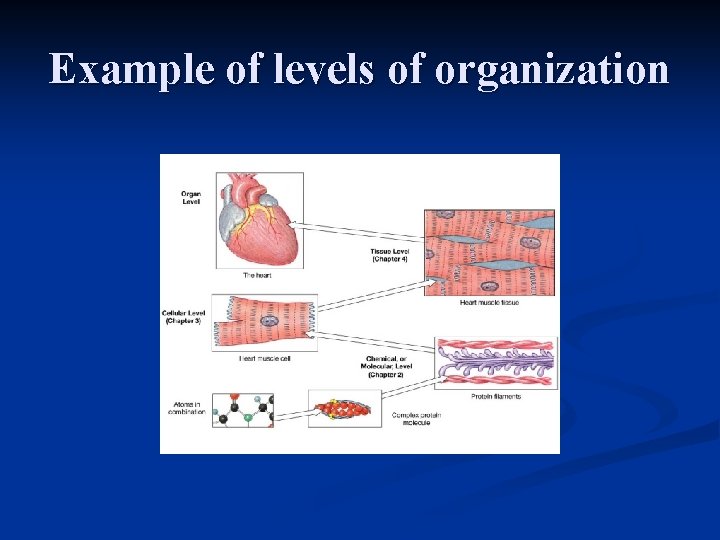
Copyright The Mc. Graw-Hill Companies, Inc. Permission required for reproduction or display. n Levels of Organization:
Module 1. 6 n Read section 1. 6 Organization of the Human Body
n Organization of the Human Body n Major features of the human body include its cavities, membranes, and organ systems.
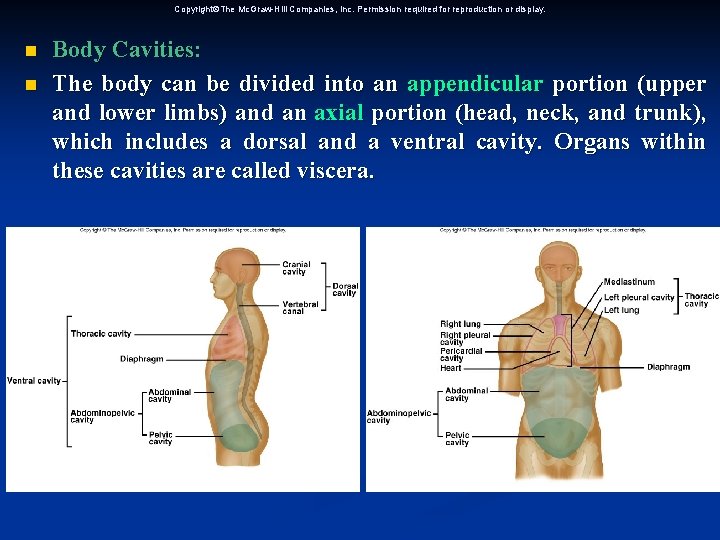
Copyright The Mc. Graw-Hill Companies, Inc. Permission required for reproduction or display. n n Body Cavities: The body can be divided into an appendicular portion (upper and lower limbs) and an axial portion (head, neck, and trunk), which includes a dorsal and a ventral cavity. Organs within these cavities are called viscera.
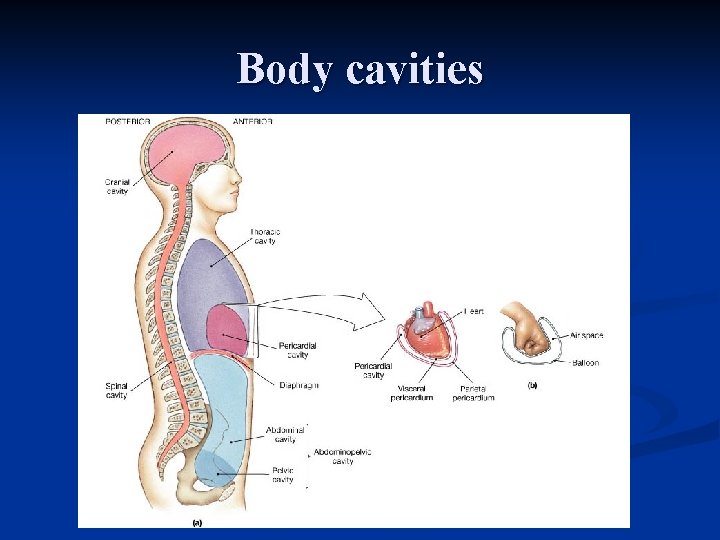
Body cavities
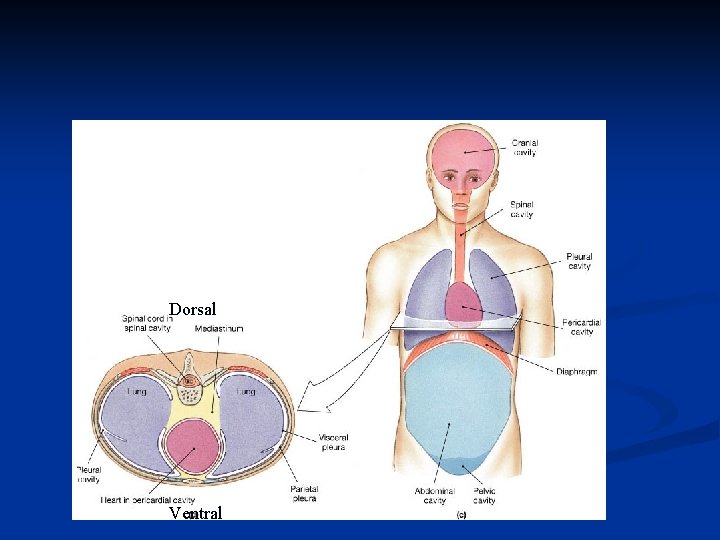
Dorsal Ventral
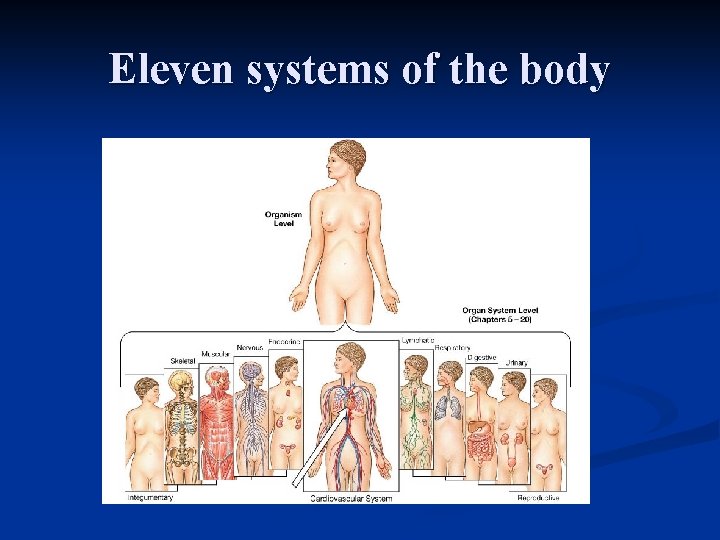
Eleven systems of the body
Example of levels of organization
Organ Systems: n Body Covering a. The integumentary system, including skin, hair, nails, and various glands, covers the body, senses changes outside the body, and helps regulate body temperature. n
n Support and Movement a. The skeletal system, made up of bones and ligaments. It supports, protects, provides frameworks, stores inorganic salts, and houses blood-forming tissues. b. The muscular system consists of the muscles that provide body movement, posture, and body heat.
n Integration and Coordination a. The nervous system consists of the brain, spinal cord, nerves, and sense organs. It integrates information incoming information from receptors and sends impulses to muscles and glands. b. The endocrine system, including all of the glands that secrete hormones, helps to integrate metabolic functions
n Transport a. The cardiovascular system, made up of the heart and blood vessels, distributes oxygen and nutrients throughout the body while removing wastes from the cells. b. The lymphatic system, consisting of lymphatic vessels, lymph nodes, thymus, and spleen, drains excess tissue fluid and includes cells of immunity.
n n Absorption and Excretion a. The digestive system is made up of the mouth, esophagus, stomach, intestines and accessory organs. It receives, breaks down, and absorbs nutrients. b. The respiratory system exchanges gases between the blood and air and is made up of the lungs and passageways. c. The urinary system, consisting of the kidneys, ureters, bladder, and urethra, removes wastes from the blood and helps to maintain water and electrolyte balance.
n Reproduction a. The reproductive system produces new organisms. i. The male reproductive system consists of the testes, accessory organs, and vessels that conduct sperm to the penis. ii. The female reproductive system consists of ovaries, uterine tubes, uterus, vagina, and external genitalia. The female reproductive system also houses the developing offspring.
Module 1. 7 n Read section 1. 7 and use anatomical terms
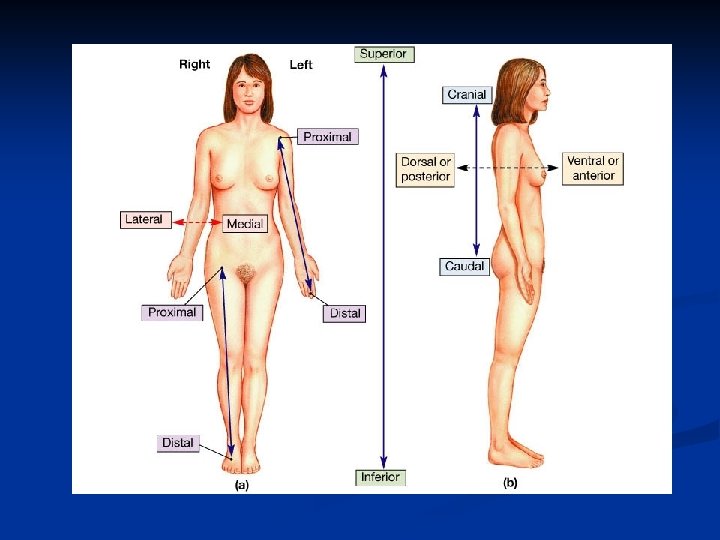
n n Anatomical Terminology Relative Positions: 1. Terms of relative position are used to describe the location of a part relative to another part. 2. Terms of relative position include: superior, inferior, anterior, posterior, medial, lateral, proximal, distal, superficial (peripheral), and deep.
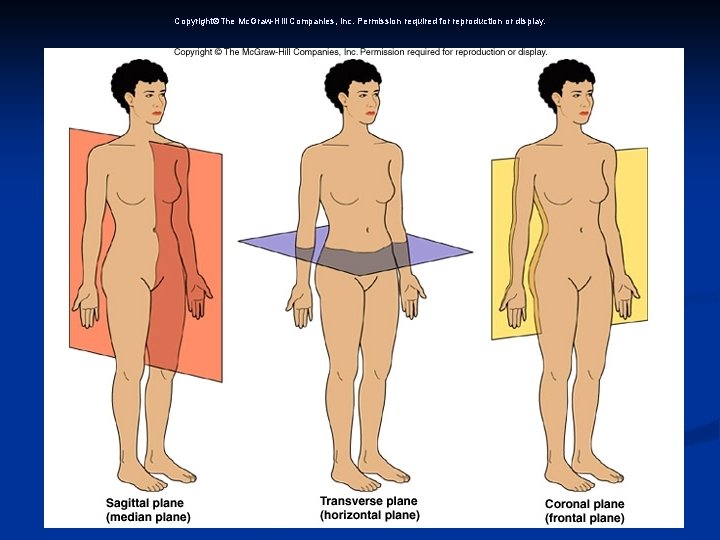
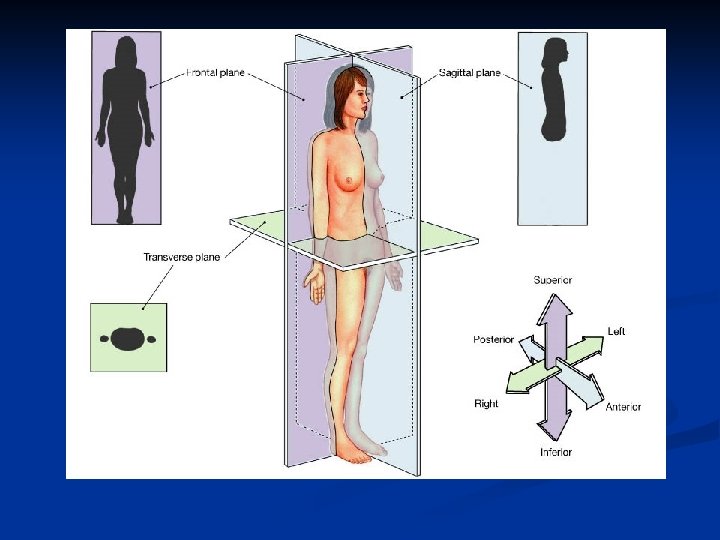
n Body Sections: 1. A sagittal section divides the body into right and left portions. 2. A transverse section divides the body into superior and inferior portions. It is often called a “cross section”. 3. A coronal section divides the body into anterior and posterior sections.
Copyright The Mc. Graw-Hill Companies, Inc. Permission required for reproduction or display.
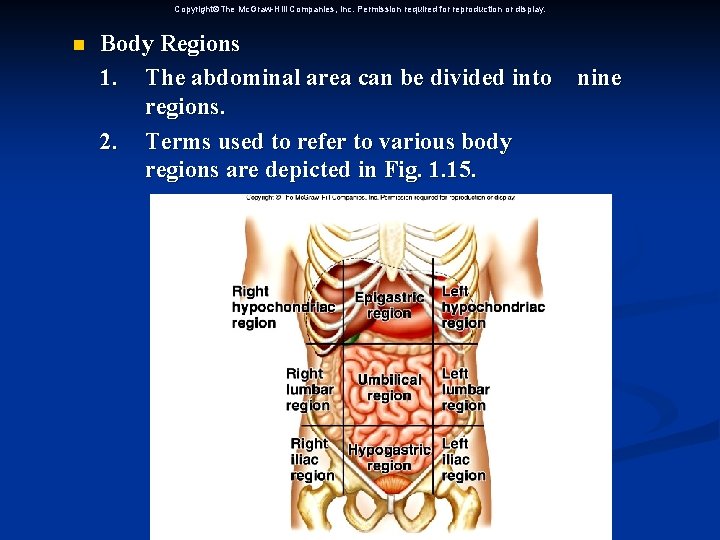
Copyright The Mc. Graw-Hill Companies, Inc. Permission required for reproduction or display. n Body Regions 1. The abdominal area can be divided into regions. 2. Terms used to refer to various body regions are depicted in Fig. 1. 15. nine
Finished Module 1 n n Review terms and concepts learned Take module 1 quiz.