
Module 09 HUMAN FACTORS for B 1 B

Module 09 HUMAN FACTORS for B 1 & B 2 certification
GENERAL
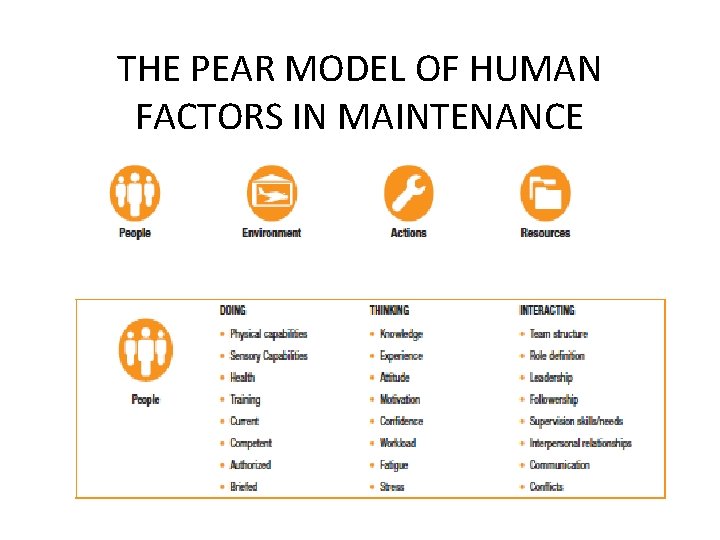
THE PEAR MODEL OF HUMAN FACTORS IN MAINTENANCE
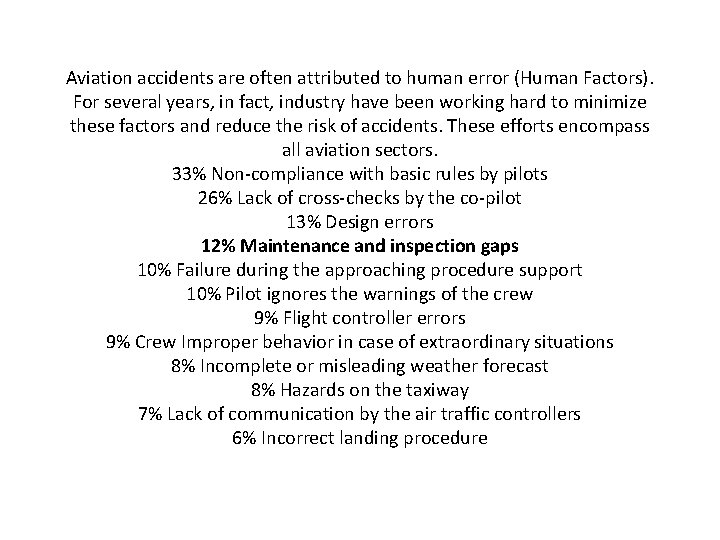
Aviation accidents are often attributed to human error (Human Factors). For several years, in fact, industry have been working hard to minimize these factors and reduce the risk of accidents. These efforts encompass all aviation sectors. 33% Non-compliance with basic rules by pilots 26% Lack of cross-checks by the co-pilot 13% Design errors 12% Maintenance and inspection gaps 10% Failure during the approaching procedure support 10% Pilot ignores the warnings of the crew 9% Flight controller errors 9% Crew Improper behavior in case of extraordinary situations 8% Incomplete or misleading weather forecast 8% Hazards on the taxiway 7% Lack of communication by the air traffic controllers 6% Incorrect landing procedure
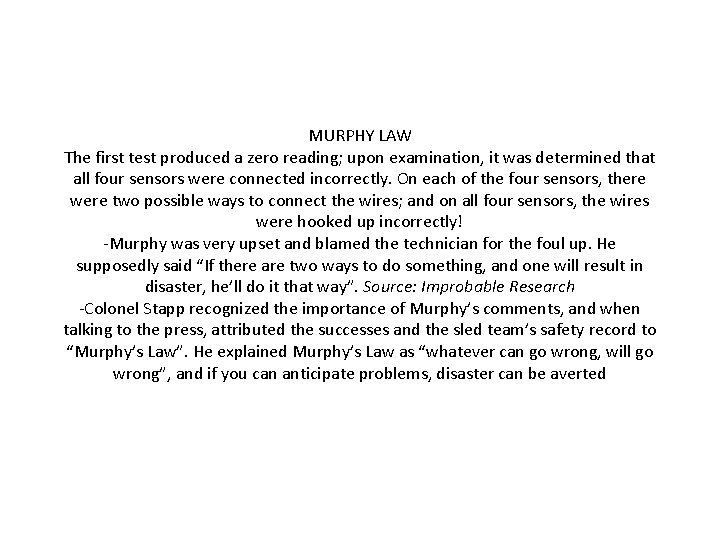
MURPHY LAW The first test produced a zero reading; upon examination, it was determined that all four sensors were connected incorrectly. On each of the four sensors, there were two possible ways to connect the wires; and on all four sensors, the wires were hooked up incorrectly! -Murphy was very upset and blamed the technician for the foul up. He supposedly said “If there are two ways to do something, and one will result in disaster, he’ll do it that way”. Source: Improbable Research -Colonel Stapp recognized the importance of Murphy’s comments, and when talking to the press, attributed the successes and the sled team’s safety record to “Murphy’s Law”. He explained Murphy’s Law as “whatever can go wrong, will go wrong”, and if you can anticipate problems, disaster can be averted
MURPHY LAW -Failures in aviation and space exploration can be extremely costly. In one unmanned orbiting vessel, (ironically) a set of sensors were all connected incorrectly. When the sensors failed to operate as designed, the parachutes that were to slow down the spacecraft didn’t open. -Because of costly failures, designers have installed “fail safes”. -Fail safes are referred to as “idiot proof”. But Murphy’s Law always seems to strike, even when precautions have been put in place; resulting in “Grave’s Law”, which states, if you make something idiot proof, the world will create a better idiot”. -So what can we learn from this in relation to Human Factors? We can use Murphy’s Law as a tool, if we expect things to go wrong and put maintenance safety culture into action, just like Murphy’s sled team, a good safety record can be maintained
- Slides: 6