
Module 08 Sleep Dreams and Body Rhythms Module
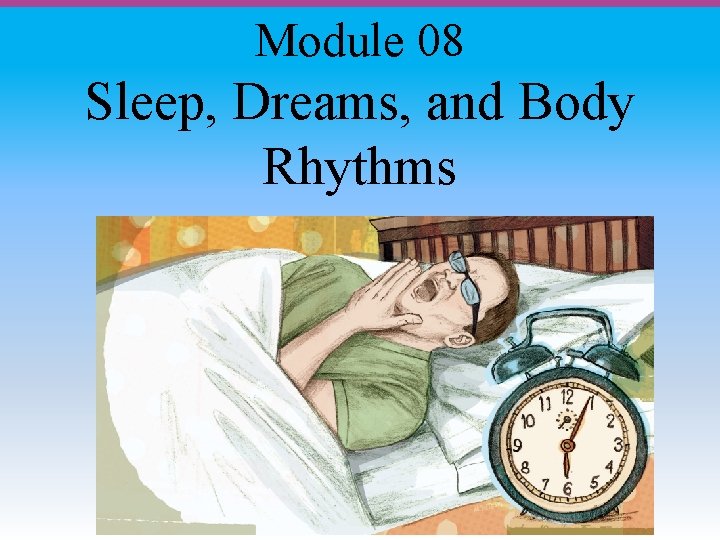
Module 08 Sleep, Dreams, and Body Rhythms
Module Overview • • • Consciousness Body Rhythms Sleep and Sleep Deficit Why We Sleep Stages, REM Sleep and Dreaming Sleep Disorders and Sleep Problems Click on the any of the above hyperlinks to go to that section in the presentation.
Consciousness • Awareness of yourself and your environment.
Module 08: Sleep, Dreams, and Body Rhythms
Pseudoscientific Claim • Any assertion that appears scientific but is not based on science. • Appears to be scientific but is not
Biological Rhythms • Periodic physiological fluctuations. • Can affect physiological functioning • Fall into three main categories – Circadian Rhythms – Ultradian Rhythms – Infradian Rhythms
Circadian Rhythms • Biological rhythms (for example, of temperature and wakefulness) that occur approximately every 24 hours. • Example: Sleep-wake cycle and temperature
Ultradian Rhythms • Biological rhythms that occur more than once each day. • Example: Stages of sleep throughout the night
Infradian Rhythms • Biological rhythms that occur once a month or once a season. • Example: Women’s menstrual cycle
Module 08: Sleep, Dreams, and Body Rhythms Sleep and Sleep Deficit
Sleep Deprivation Effects • Decreases efficiency of immune system functioning • Safety and accident issues • Contributes to hypertension, impaired concentration, irritability, etc.
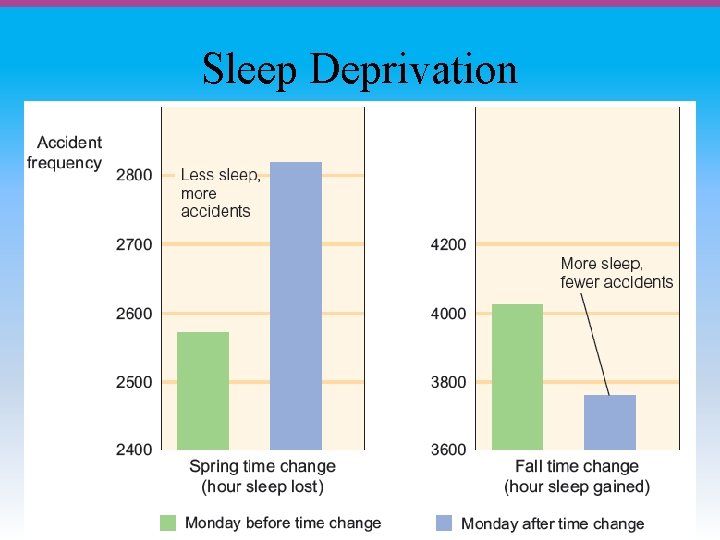
Sleep Deprivation
Module 08: Sleep, Dreams, and Body Rhythms Why We Sleep
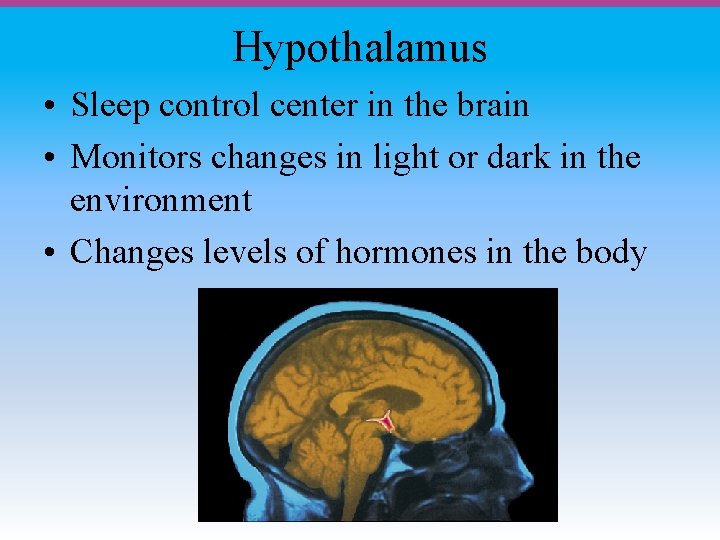
Hypothalamus • Sleep control center in the brain • Monitors changes in light or dark in the environment • Changes levels of hormones in the body
Melatonin • Hormone that helps regulate daily biological rhythms. • Linked to the sleep-wake cycle • Melatonin level increases during the night and decreases with exposure to morning light
Reasons for Sleep • Two primary reasons: – Preservation: keep us protected from the dangers of the night – Restoration: recuperate from the wear and tear of the day
Module 08: Sleep, Dreams, and Body Rhythms Sleep Stages, REM Sleep and Dreaming

EEG
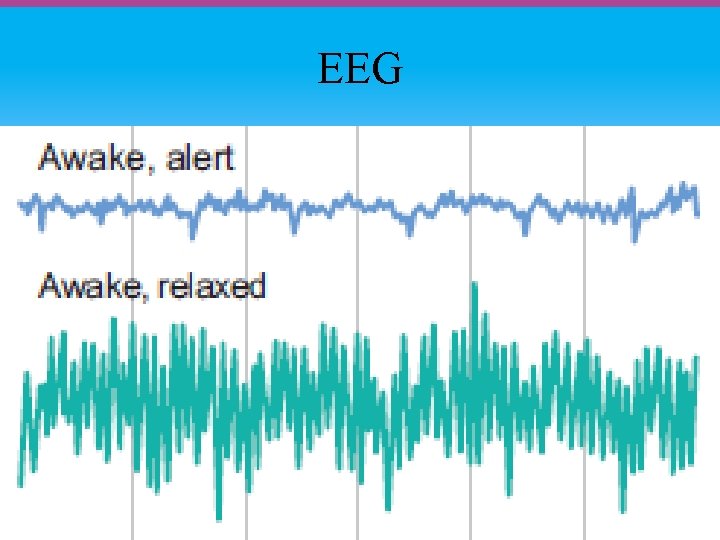
EEG

Wake State to Stage 1
Stage 1 Sleep • Breathing is slowed. • Brain waves become irregular. • It is easy to wake the person, who will insist they are not asleep. • Rarely lasts longer than 5 minutes
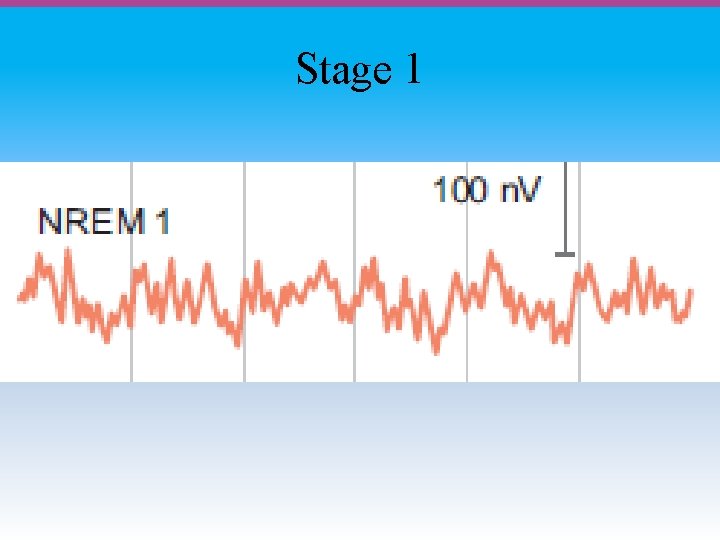
Stage 1
Stage 2 Sleep • Brain wave cycle slows. • First time through stage 2 last about 20 minutes.
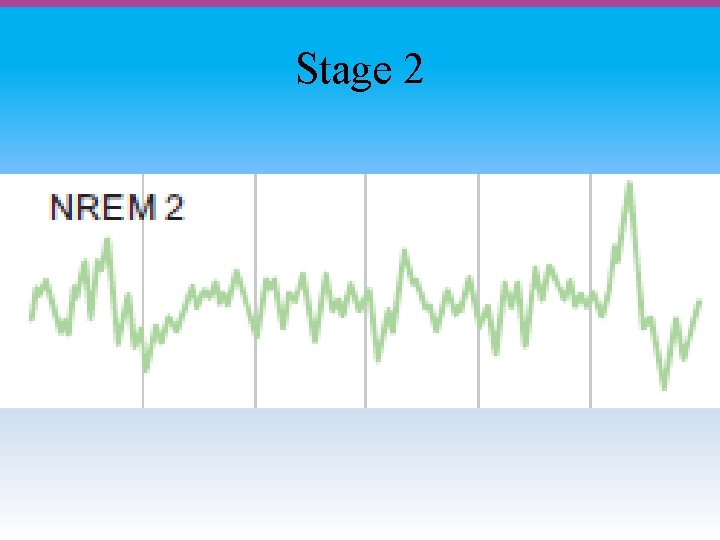
Stage 2
Stages 3 and 4 Sleep • Slow wave sleep • First time through stage 4 is about 30 minutes and is where one gets rejuvenated
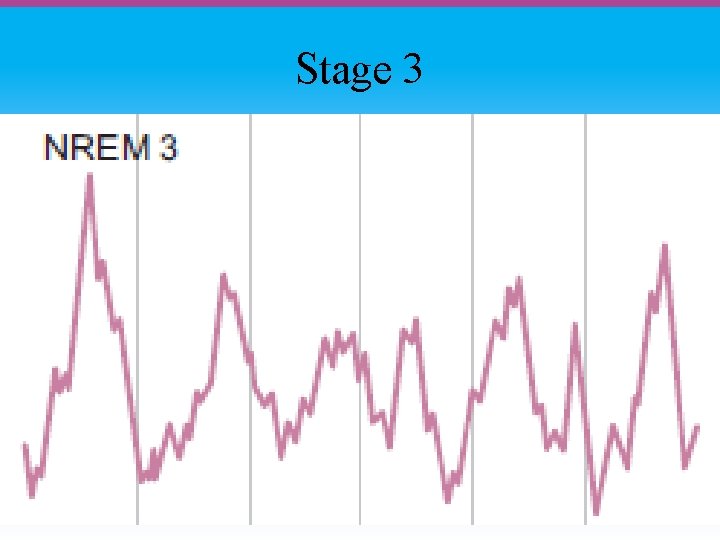
Stage 3
Module 08: Sleep, Dreams, and Body Rhythms Sleep Stages, REM, and Dreaming: REM Sleep
Non-REM Sleep • Stages 1 - 4 considered N-REM (non. REM sleep)
Rapid Eye Movement (REM) Sleep • Recurring sleep stage during which vivid dreams commonly occur. • Called rapid eye movement (REM Sleep) as eyes move quickly back and forth • Considered “paradoxical sleep” • Term coined by William Dement
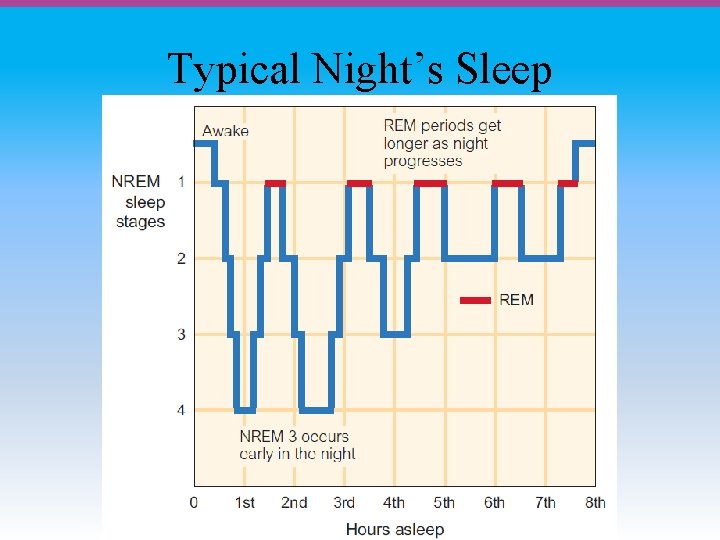
Typical Night’s Sleep

Stage 4/REM Changes
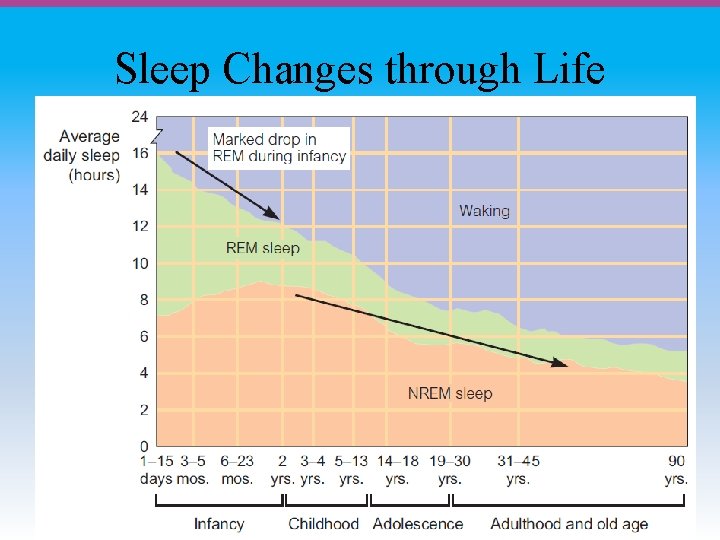
Sleep Changes through Life
Module 08: Sleep, Dreams, and Body Rhythms Sleep Stages, REM, and Dreaming: Why Do We Dream?
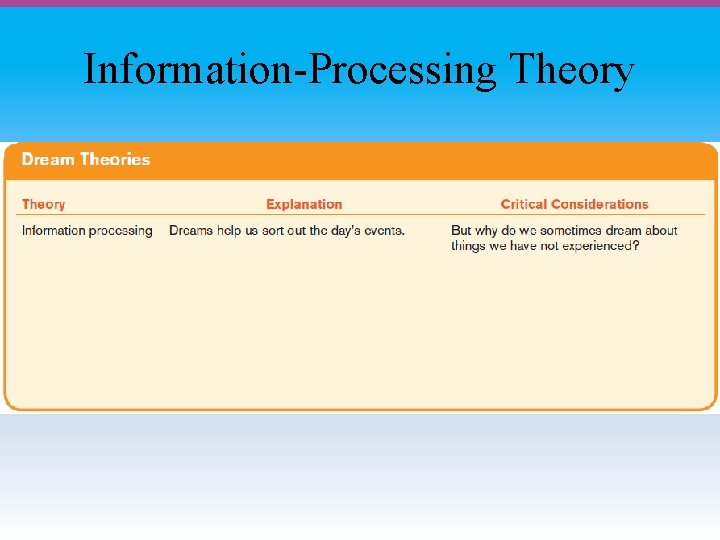
Information-Processing Theory • Dreams serve an important memoryrelated function by sorting and sifting through the day’s experiences • Research suggests REM sleep helps memory storage.
Information-Processing Theory
Physiological Function Theory • Neural activity during REM sleep provides periodic stimulation of the brain.
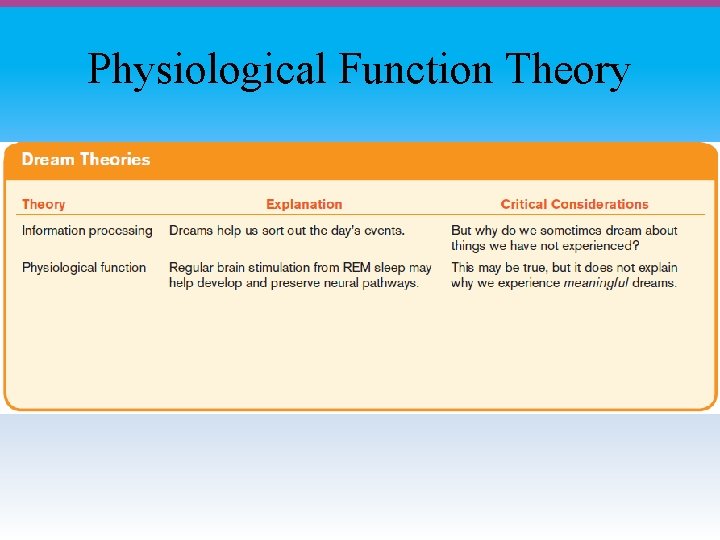
Physiological Function Theory
Activation-Synthesis Theory • Dreams are the mind’s attempt to make sense of random neural firings in the brain as one sleeps.
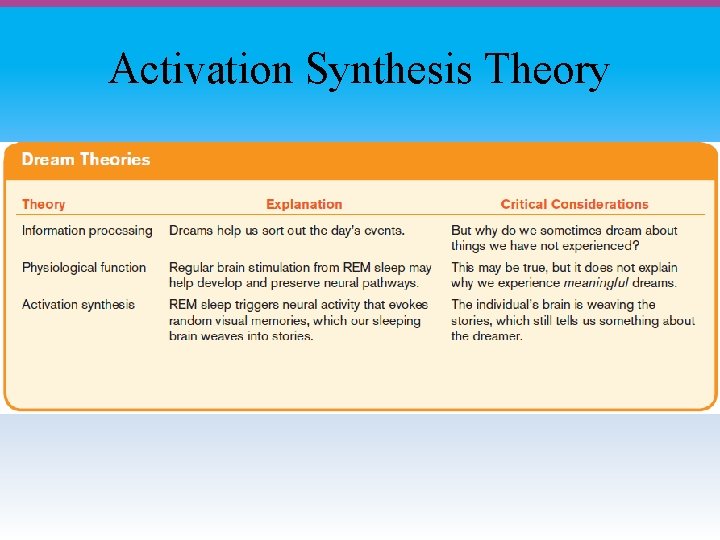
Activation Synthesis Theory
Cognitive Development Theory • Dreams part of the maturation process • Dreams reflect our knowledge • Reflection of normal cognitive development
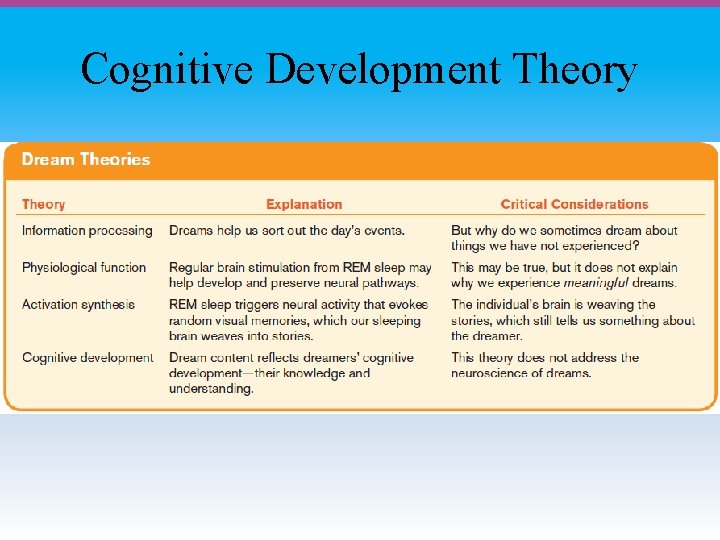
Cognitive Development Theory
Module 08: Sleep, Dreams, and Body Rhythms Sleep Disorders and Sleep Problems
Insomnia • Recurring problems falling asleep or staying asleep. • Sleeping pills tend to inhibit or suppress REM sleep; worsen the problem • Alcohol suppresses REM sleep; also worsens the problem • Studies show most people overestimate how long it took them to get to sleep
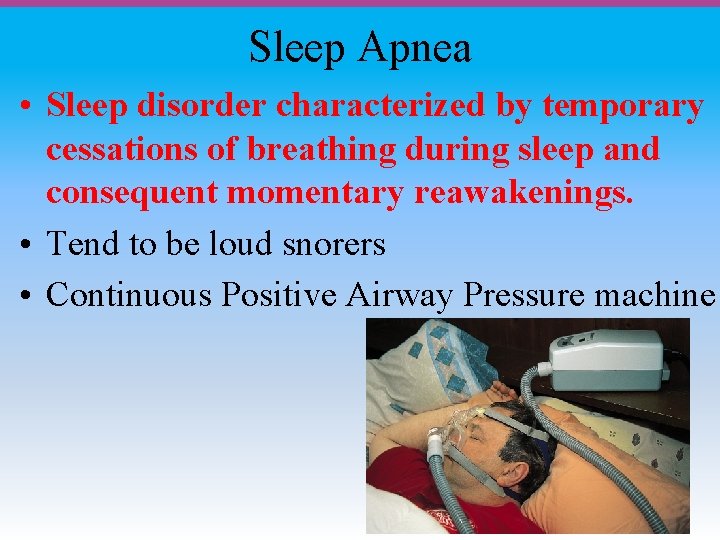
Sleep Apnea • Sleep disorder characterized by temporary cessations of breathing during sleep and consequent momentary reawakenings. • Tend to be loud snorers • Continuous Positive Airway Pressure machine
Narcolepsy • Sleep disorder characterized by uncontrollable sleep attacks; • the sufferer may lapse directly into REM sleep, often at inopportune times. • Nervous system getting aroused tends to trigger the sleep attack
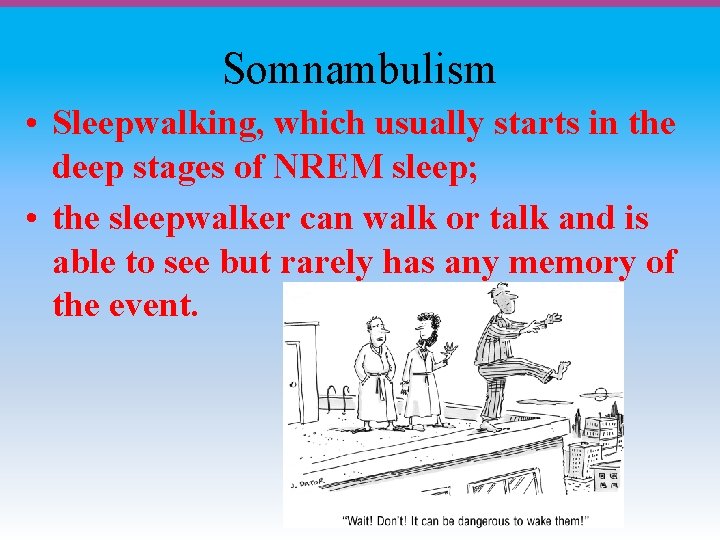
Somnambulism • Sleepwalking, which usually starts in the deep stages of NREM sleep; • the sleepwalker can walk or talk and is able to see but rarely has any memory of the event.
Night Terrors • Sleep related problem characterized by high arousal and an appearance of being terrified; • unlike nightmares, they occur during NREM 3 sleep, occur within two or three hours of falling sleep, and • are seldom remembered.
Other Sleep Disorders • Bruxism – teeth grinding • Enuresis – bed wetting • Myoclonus – sudden jerk of a body part occurring during stage 1 sleep – Everyone has occasional episodes of myoclonus

The End
- Slides: 49