
Modifying the General Curriculum for Students with Disabilities
Modifying the General Curriculum for Students with Disabilities DIFFERENTIATING WITH ENVISION
Before You Begin Please ensure that you have printed the article • Article should be read before viewing • Although focus of the article is students with moderate to severe disabilities, much applies to those with mild disabilities too!
Overview You will learn : • General curriculum access via differentiation • Application to En. Vision program
Why Increased Rigor? Mathematical demands have increased for ALL students • Emphasis should be on real-life application As the article states…. • We must move beyond teaching basic skills!
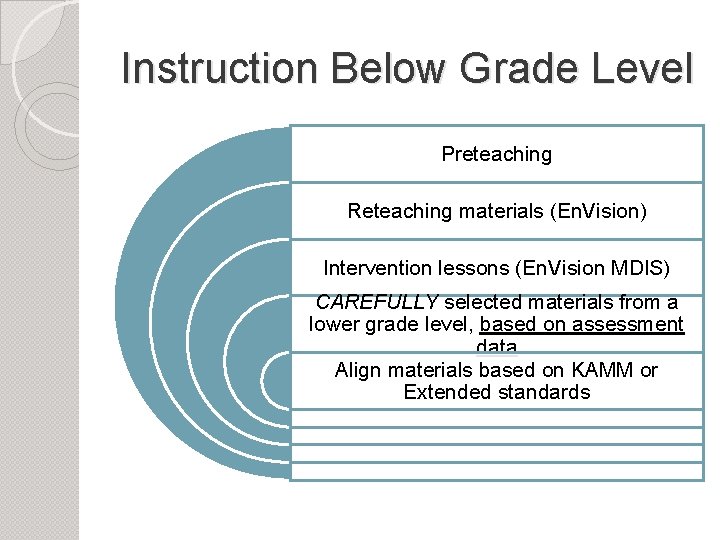
Instruction Below Grade Level Preteaching Reteaching materials (En. Vision) Intervention lessons (En. Vision MDIS) CAREFULLY selected materials from a lower grade level, based on assessment data Align materials based on KAMM or Extended standards
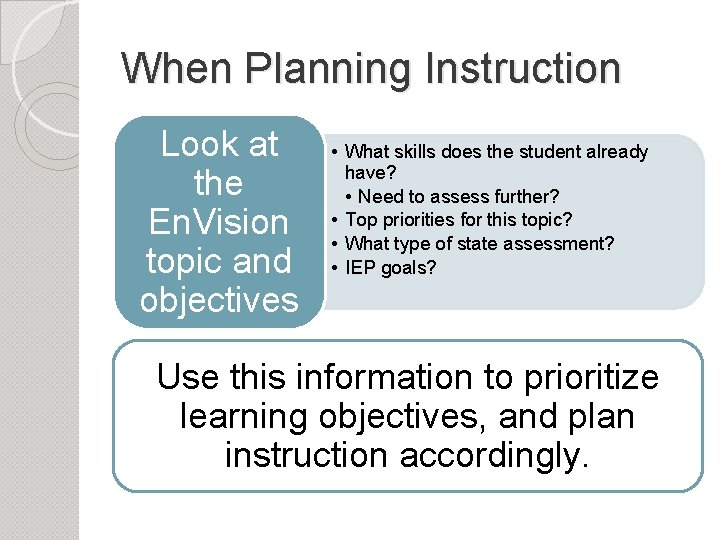
When Planning Instruction Look at the En. Vision topic and objectives • What skills does the student already have? • Need to assess further? • Top priorities for this topic? • What type of state assessment? • IEP goals? Use this information to prioritize learning objectives, and plan instruction accordingly.
Planning Lessons Consider En. Vision materials available • Balance rigor with feasibility • Incorporate realistic simulations and activities to teach the skills • Most of the En. Vision activities were designed with this in
Evidence-Based Practice In addition to strategies from the En. Vision Teacher’s Edition, consider: • Constant Time Delay • System of Least Prompts • Task Analysis • See Table 2 in handout
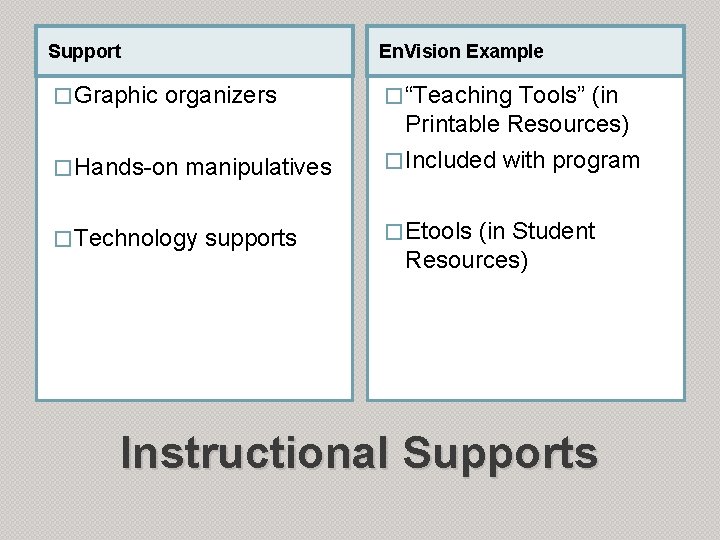
Support � Graphic En. Vision Example organizers � Hands-on manipulatives � Technology supports � “Teaching Tools” (in Printable Resources) � Included with program � Etools (in Student Resources) Instructional Supports
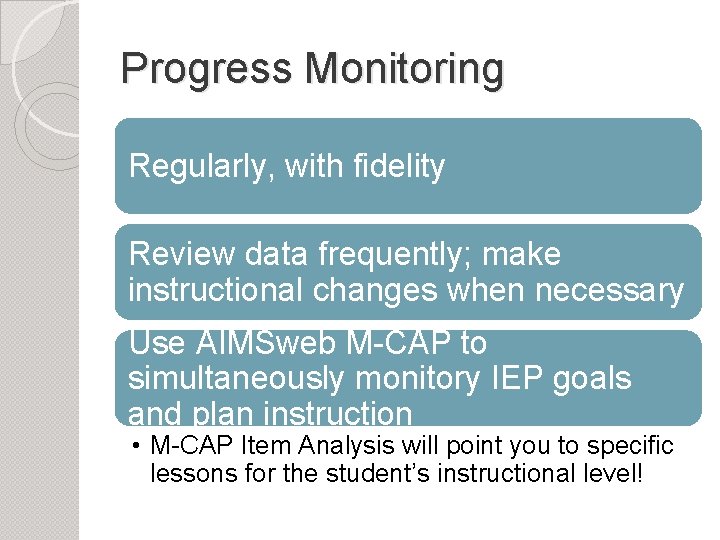
Progress Monitoring Regularly, with fidelity Review data frequently; make instructional changes when necessary Use AIMSweb M-CAP to simultaneously monitory IEP goals and plan instruction • M-CAP Item Analysis will point you to specific lessons for the student’s instructional level!
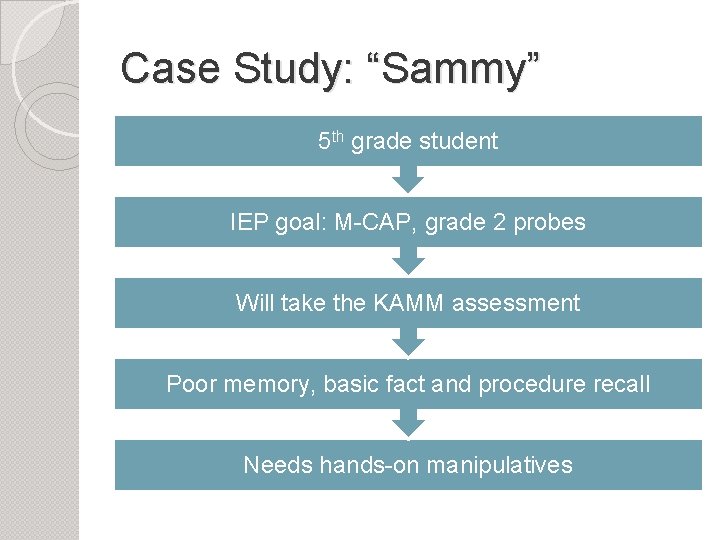
Case Study: “Sammy” 5 th grade student IEP goal: M-CAP, grade 2 probes Will take the KAMM assessment Poor memory, basic fact and procedure recall Needs hands-on manipulatives
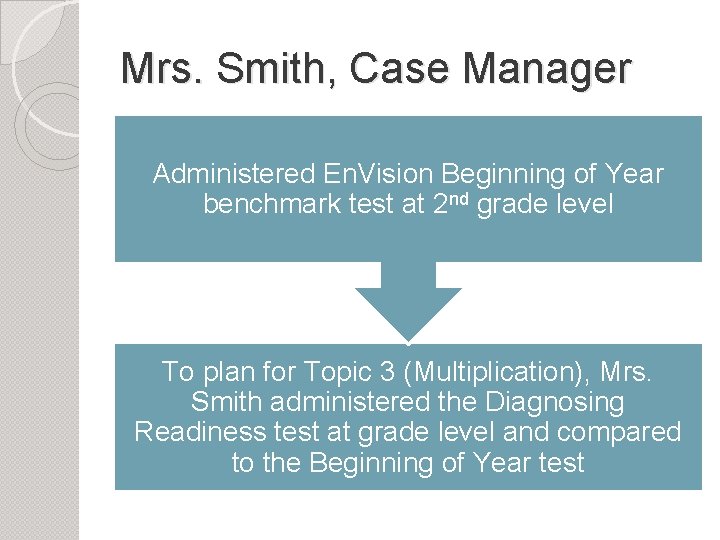
Mrs. Smith, Case Manager Administered En. Vision Beginning of Year benchmark test at 2 nd grade level To plan for Topic 3 (Multiplication), Mrs. Smith administered the Diagnosing Readiness test at grade level and compared to the Beginning of Year test
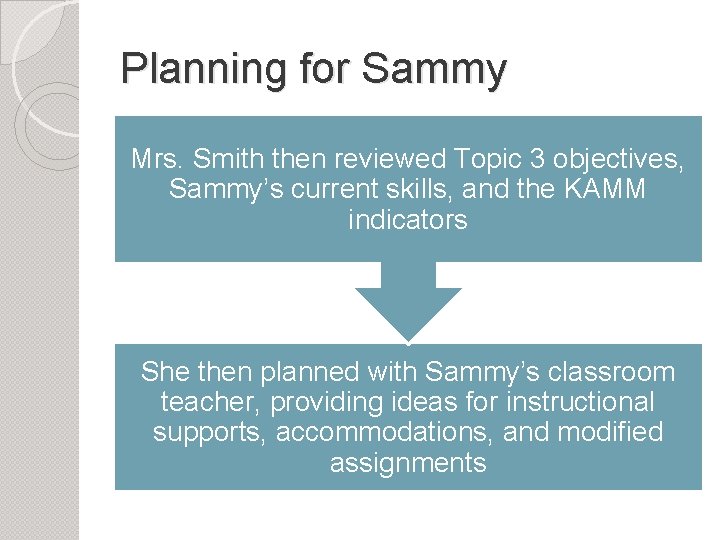
Planning for Sammy Mrs. Smith then reviewed Topic 3 objectives, Sammy’s current skills, and the KAMM indicators She then planned with Sammy’s classroom teacher, providing ideas for instructional supports, accommodations, and modified assignments
Sammy’s Resulting Program Based on KAMM indicators Left room for pre-teaching new skills Provided independent work selected specifically for Sammy’s personal learning profile Included several instructional supports to assist with memory of basic facts: multiplication chart, graphic organizer, access to manipulatives, and mnemonic strategies for memorization of facts
Monitoring Progress • Recorded scores, viewed the progress Administere chart, and analyzed d AIMSweb missed items M-CAP probes once • Reviewed classroom work samples and per week compared with AIMSweb data
Conclusion In this modul e, you learne d: • How students can access the general curriculum • How En. Vision can be modified to meet student needs • That careful assessment and progress monitoring is vital to successfully differentiating math instruction
Ongoing Support Please contact Joy if you would like assistance with planning instruction for your students!
- Slides: 17