
Modified Newton Methods Lecture 9 Alessandra Nardi Thanks
- Slides: 33
Modified Newton Methods Lecture 9 Alessandra Nardi Thanks to Prof. Jacob White, Jaime Peraire, Michal Rewienski, and Karen Veroy
Last lecture review • Solving nonlinear systems of equations – SPICE DC Analysis • Newton’s Method – – Derivation of Newton Quadratic Convergence Examples Convergence Testing • Multidimensonal Newton Method – Basic Algorithm – Quadratic convergence – Application to circuits
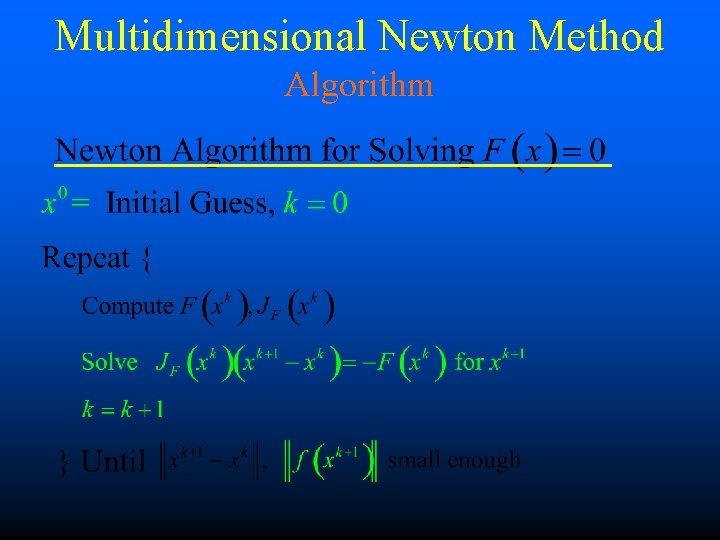
Multidimensional Newton Method Algorithm
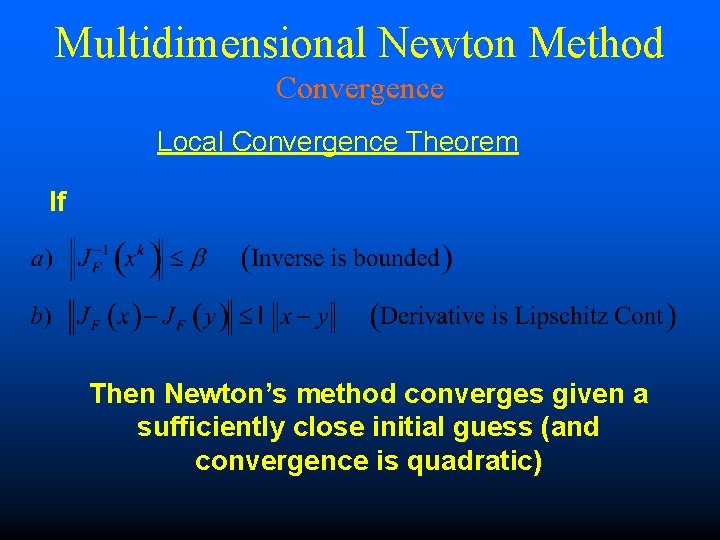
Multidimensional Newton Method Convergence Local Convergence Theorem If Then Newton’s method converges given a sufficiently close initial guess (and convergence is quadratic)
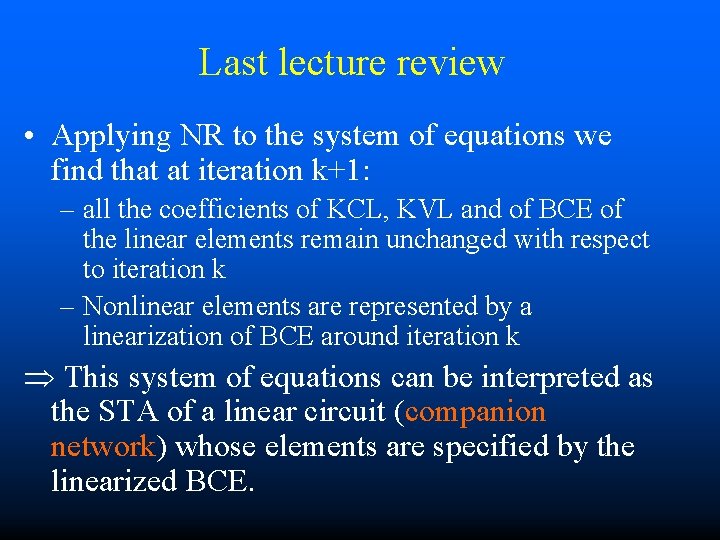
Last lecture review • Applying NR to the system of equations we find that at iteration k+1: – all the coefficients of KCL, KVL and of BCE of the linear elements remain unchanged with respect to iteration k – Nonlinear elements are represented by a linearization of BCE around iteration k This system of equations can be interpreted as the STA of a linear circuit (companion network) whose elements are specified by the linearized BCE.
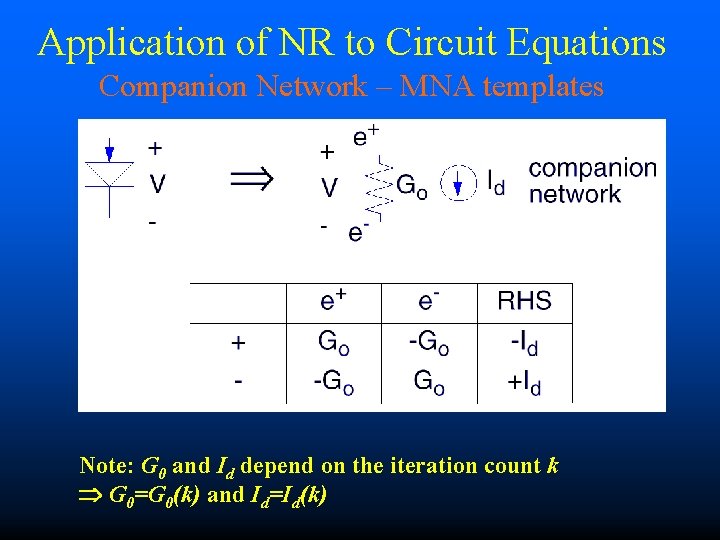
Application of NR to Circuit Equations Companion Network – MNA templates Note: G 0 and Id depend on the iteration count k G 0=G 0(k) and Id=Id(k)
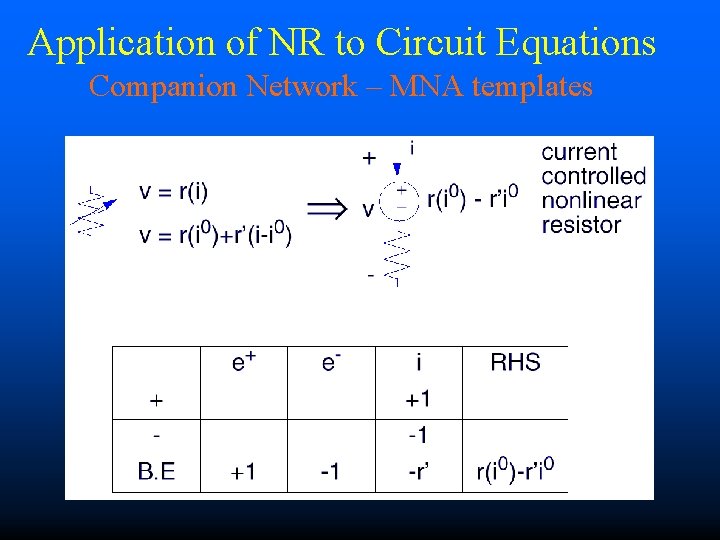
Application of NR to Circuit Equations Companion Network – MNA templates
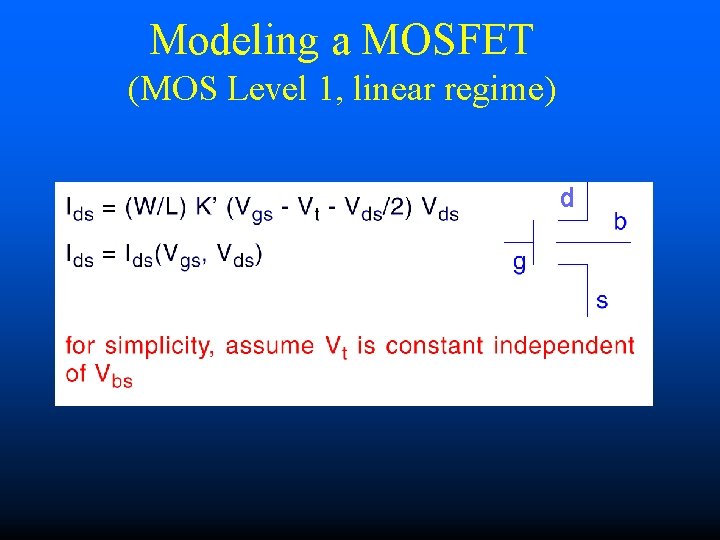
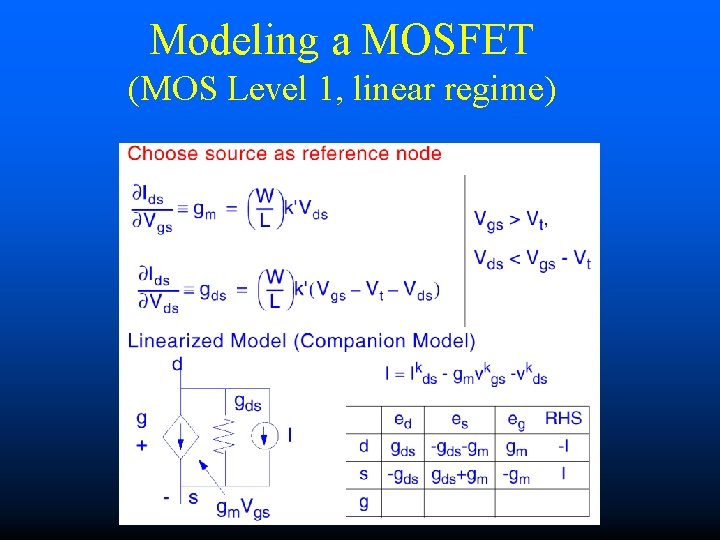
Modeling a MOSFET (MOS Level 1, linear regime) d
Modeling a MOSFET (MOS Level 1, linear regime)
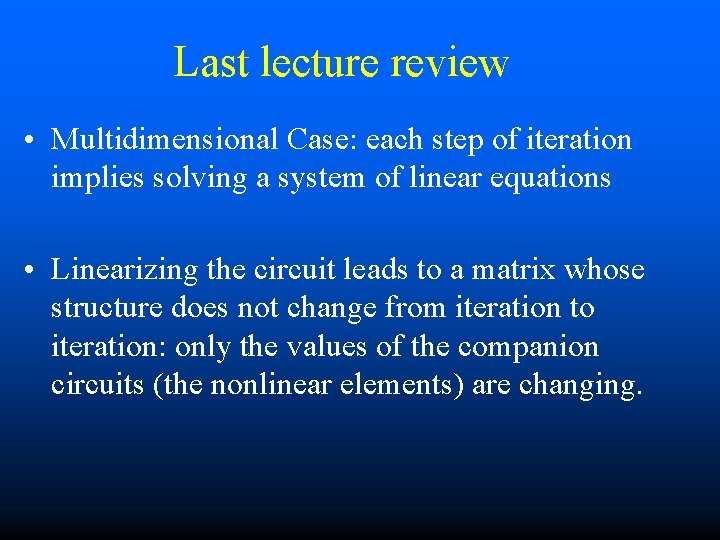
Last lecture review • Multidimensional Case: each step of iteration implies solving a system of linear equations • Linearizing the circuit leads to a matrix whose structure does not change from iteration to iteration: only the values of the companion circuits (the nonlinear elements) are changing.
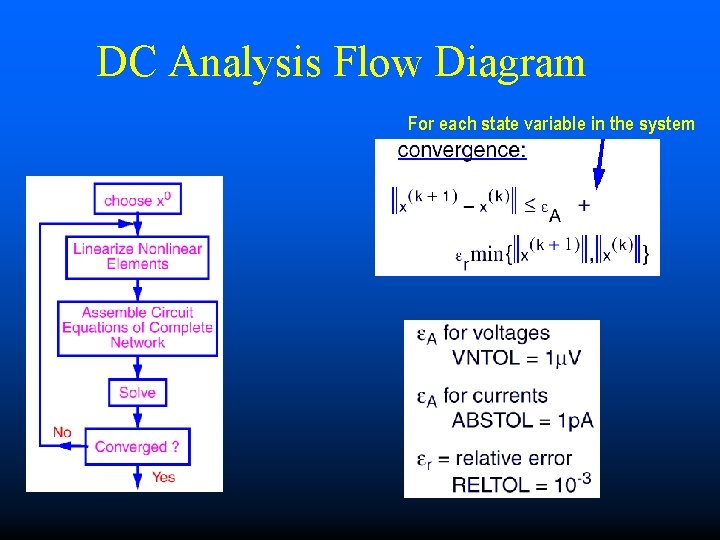
DC Analysis Flow Diagram For each state variable in the system
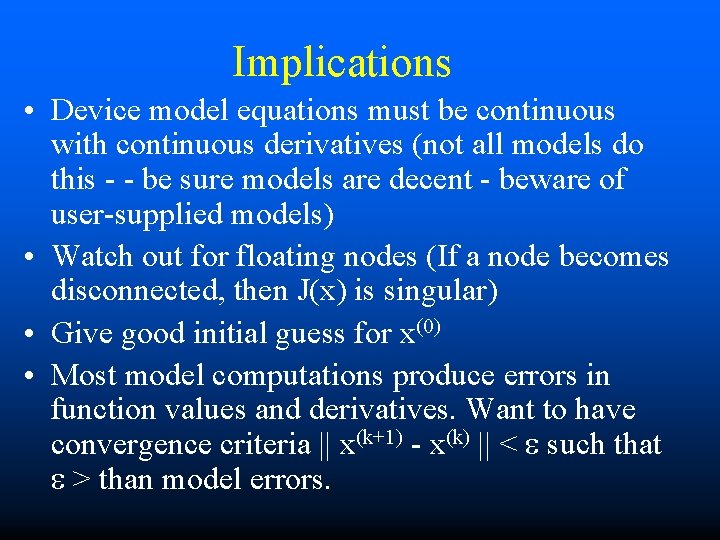
Implications • Device model equations must be continuous with continuous derivatives (not all models do this - - be sure models are decent - beware of user-supplied models) • Watch out for floating nodes (If a node becomes disconnected, then J(x) is singular) • Give good initial guess for x(0) • Most model computations produce errors in function values and derivatives. Want to have convergence criteria || x(k+1) - x(k) || < such that > than model errors.
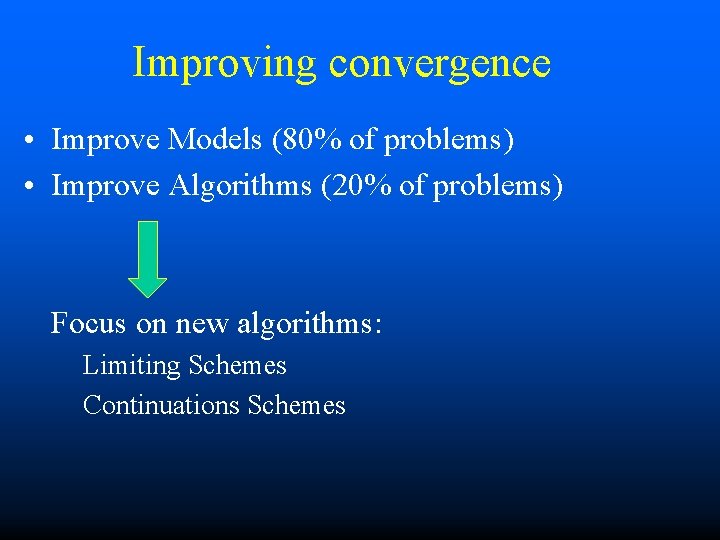
Improving convergence • Improve Models (80% of problems) • Improve Algorithms (20% of problems) Focus on new algorithms: Limiting Schemes Continuations Schemes
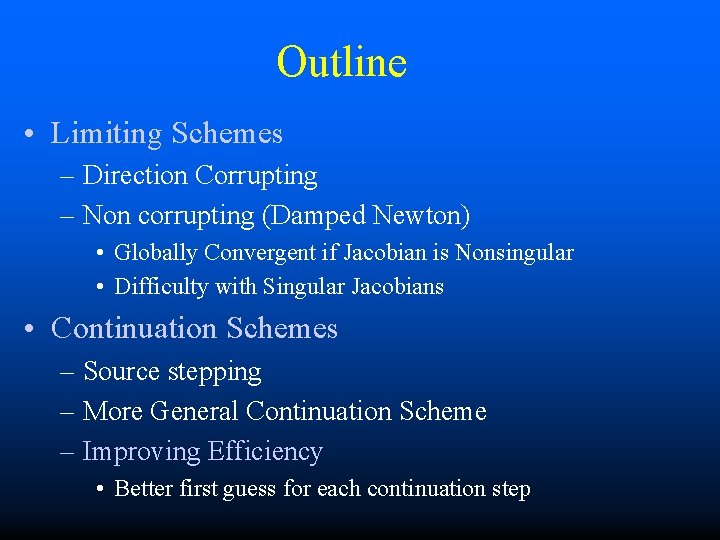
Outline • Limiting Schemes – Direction Corrupting – Non corrupting (Damped Newton) • Globally Convergent if Jacobian is Nonsingular • Difficulty with Singular Jacobians • Continuation Schemes – Source stepping – More General Continuation Scheme – Improving Efficiency • Better first guess for each continuation step
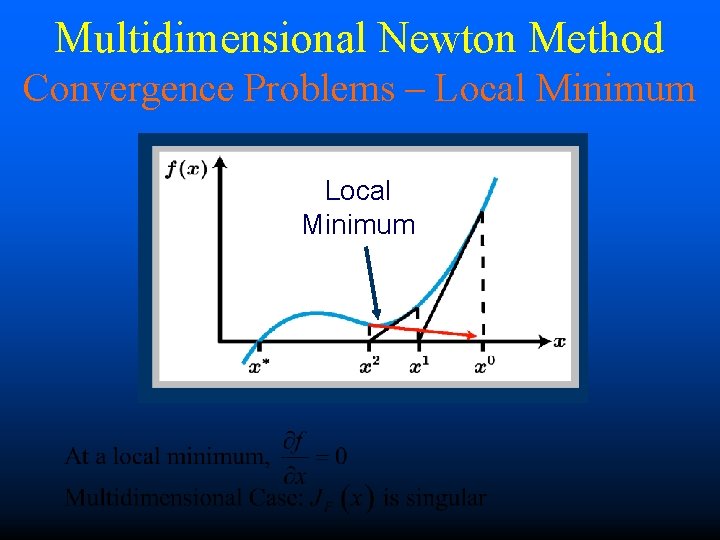
Multidimensional Newton Method Convergence Problems – Local Minimum
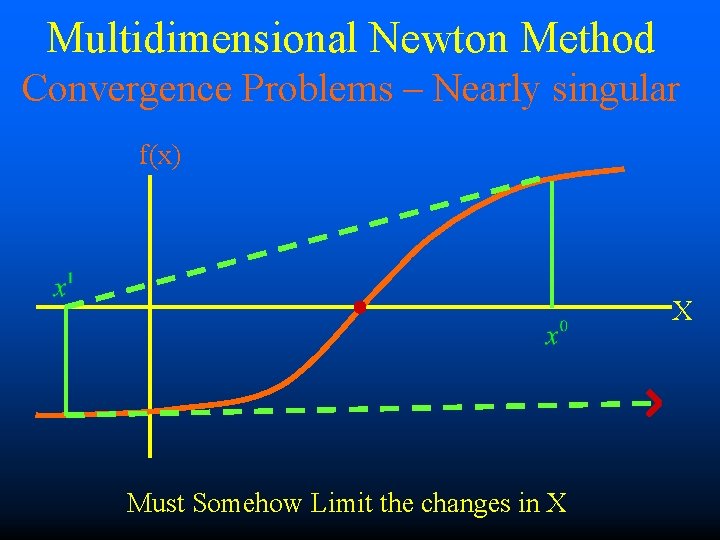
Multidimensional Newton Method Convergence Problems – Nearly singular f(x) X Must Somehow Limit the changes in X
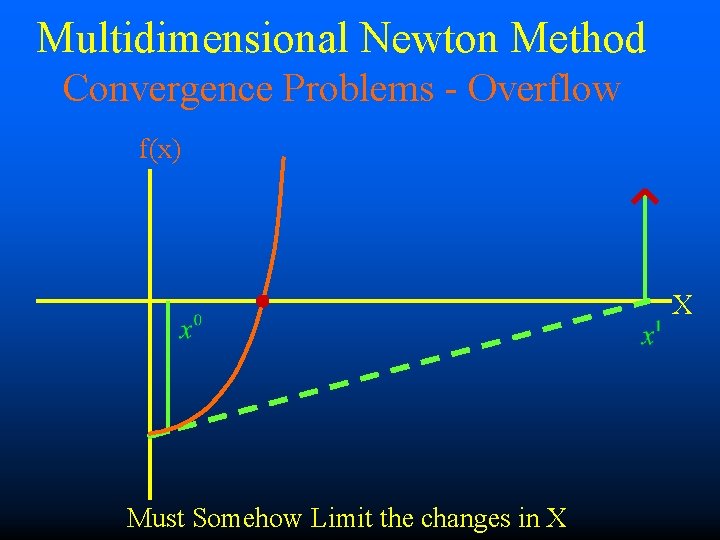
Multidimensional Newton Method Convergence Problems - Overflow f(x) X Must Somehow Limit the changes in X
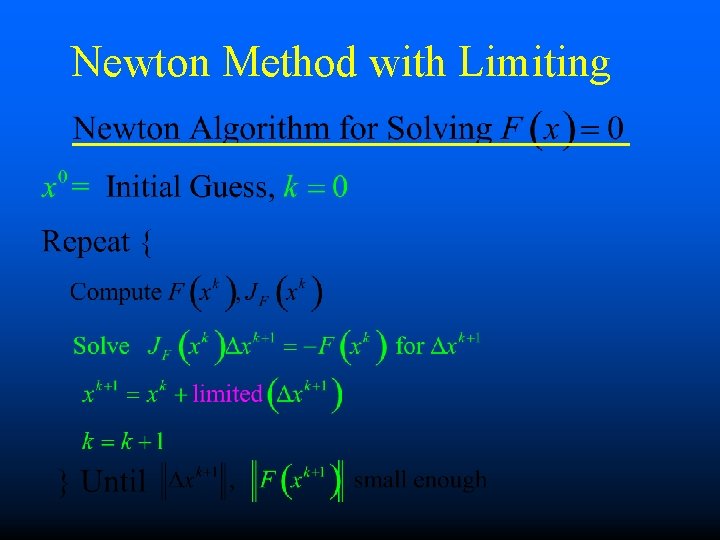
Newton Method with Limiting
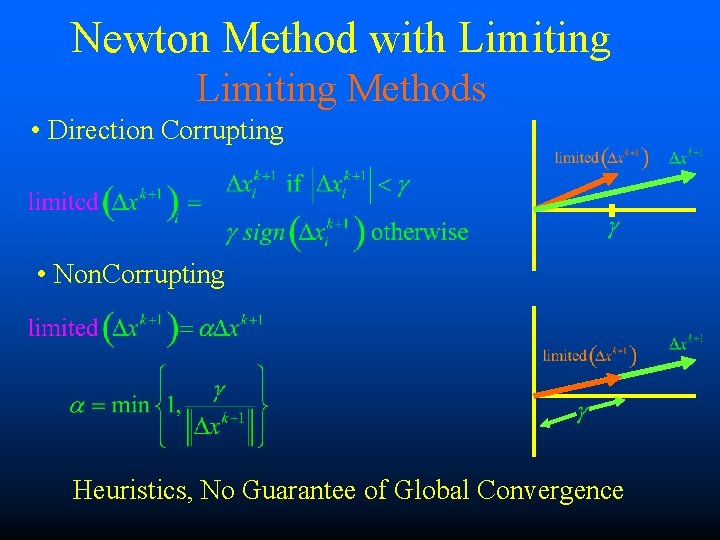
Newton Method with Limiting Methods • Direction Corrupting • Non. Corrupting Heuristics, No Guarantee of Global Convergence
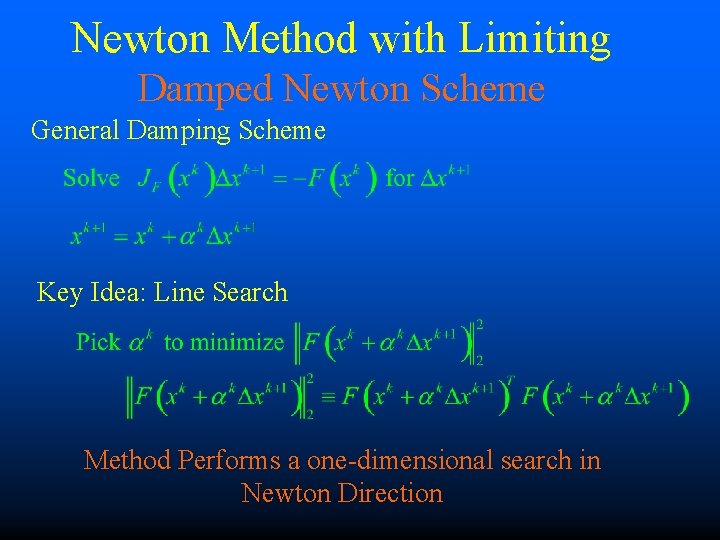
Newton Method with Limiting Damped Newton Scheme General Damping Scheme Key Idea: Line Search Method Performs a one-dimensional search in Newton Direction
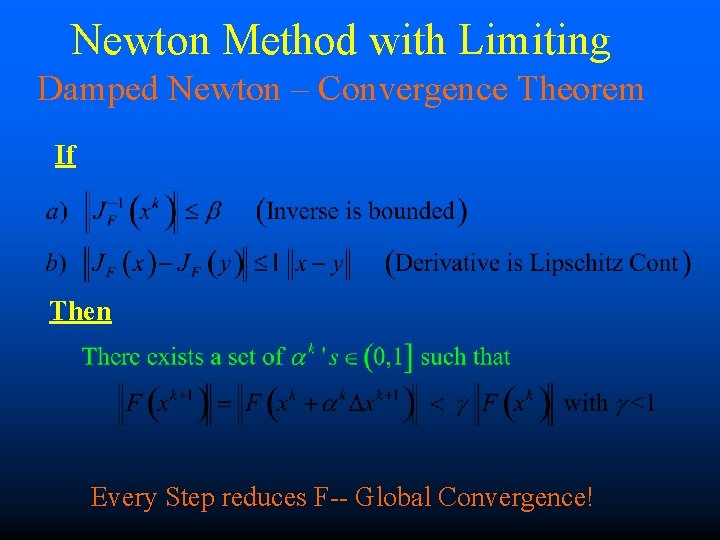
Newton Method with Limiting Damped Newton – Convergence Theorem If Then Every Step reduces F-- Global Convergence!
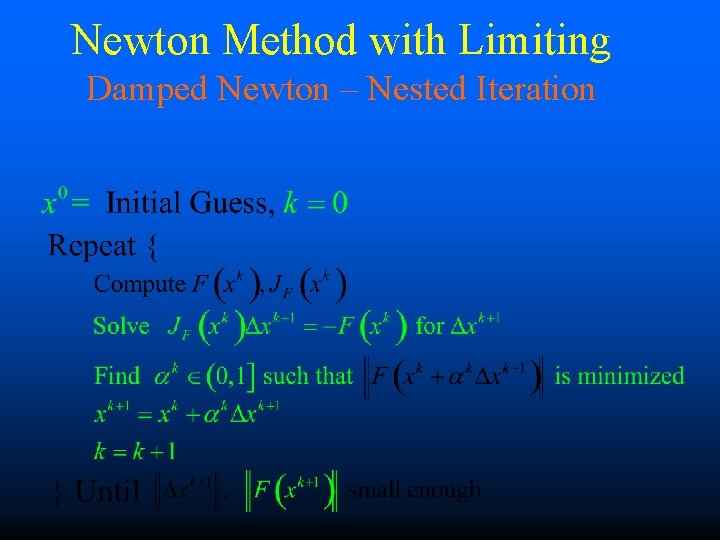
Newton Method with Limiting Damped Newton – Nested Iteration
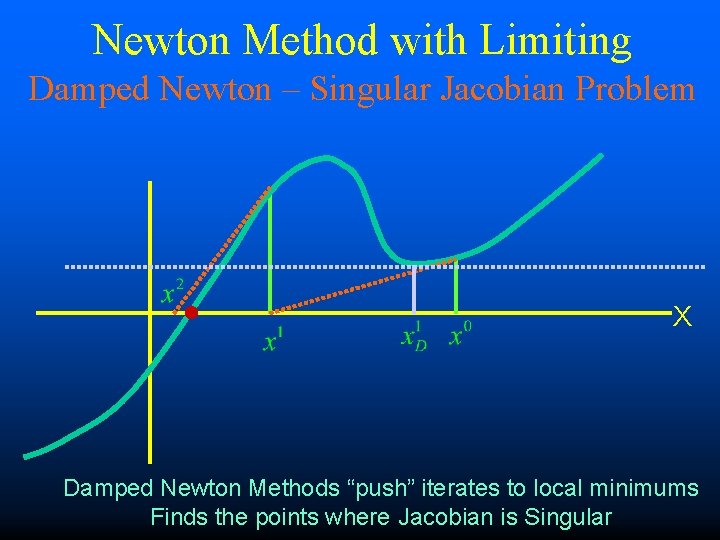
Newton Method with Limiting Damped Newton – Singular Jacobian Problem X Damped Newton Methods “push” iterates to local minimums Finds the points where Jacobian is Singular
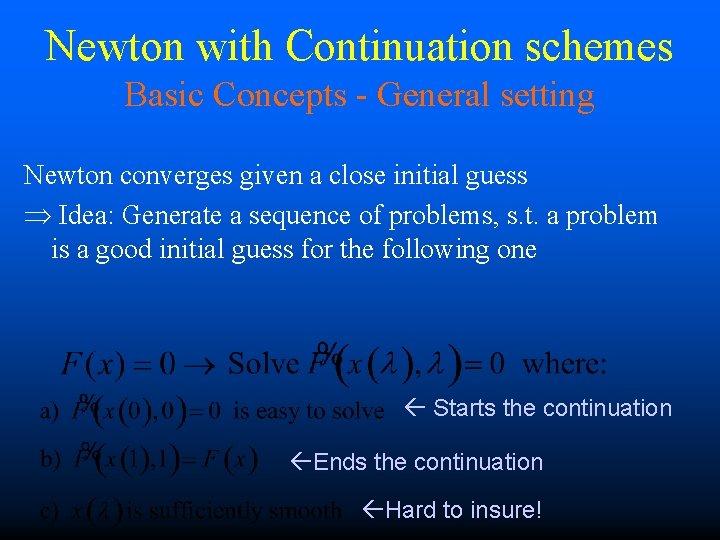
Newton with Continuation schemes Basic Concepts - General setting Newton converges given a close initial guess Idea: Generate a sequence of problems, s. t. a problem is a good initial guess for the following one Starts the continuation Ends the continuation Hard to insure!
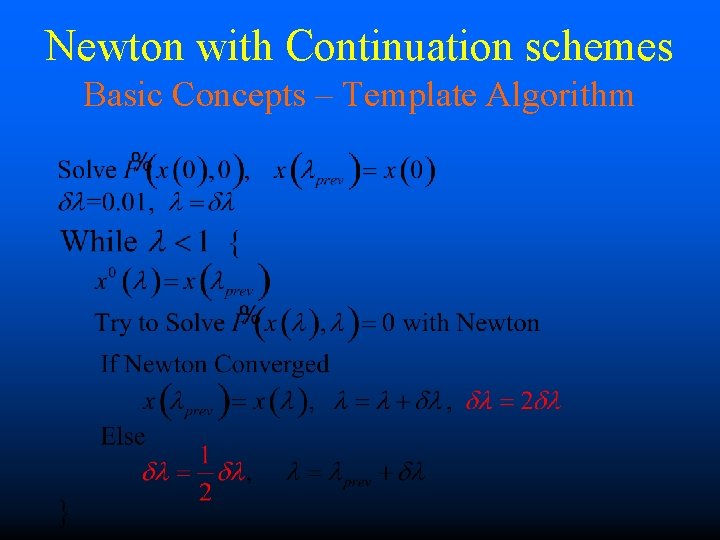
Newton with Continuation schemes Basic Concepts – Template Algorithm
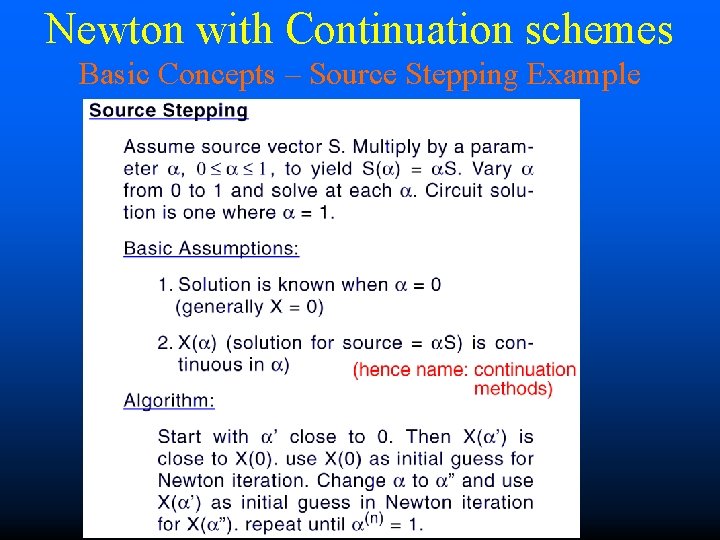
Newton with Continuation schemes Basic Concepts – Source Stepping Example
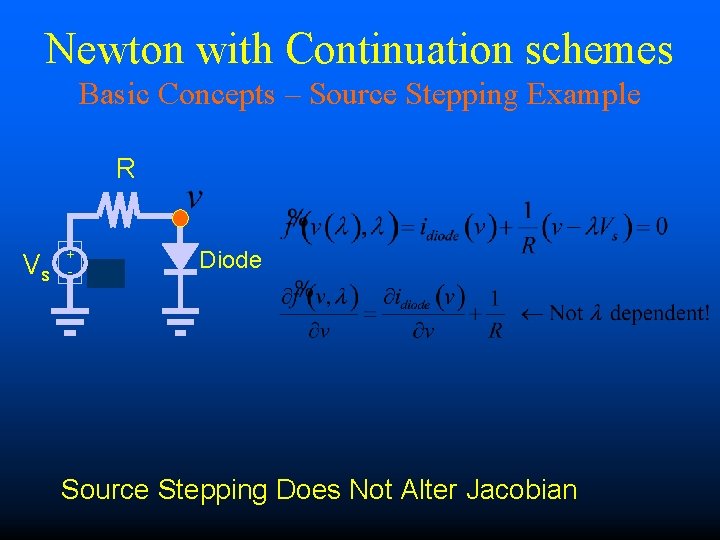
Newton with Continuation schemes Basic Concepts – Source Stepping Example R Vs + - Diode Source Stepping Does Not Alter Jacobian
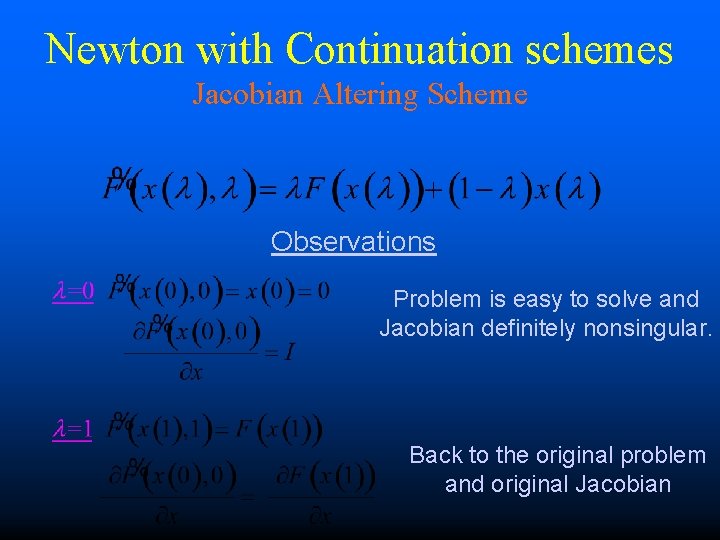
Newton with Continuation schemes Jacobian Altering Scheme Observations Problem is easy to solve and Jacobian definitely nonsingular. Back to the original problem and original Jacobian
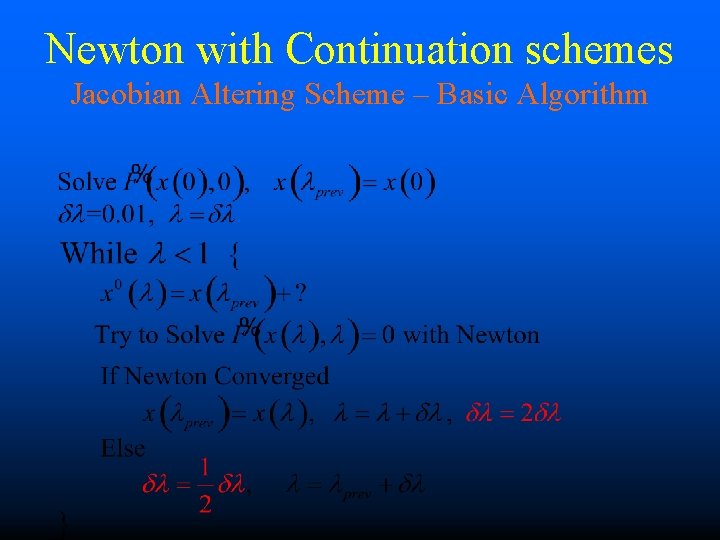
Newton with Continuation schemes Jacobian Altering Scheme – Basic Algorithm
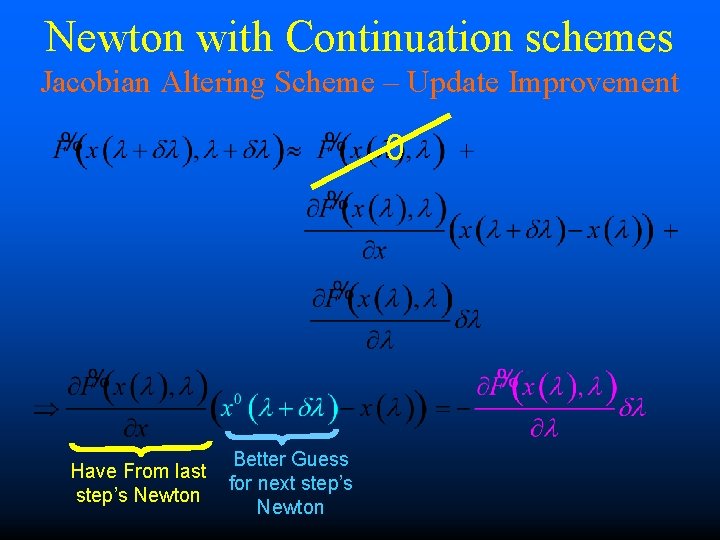
Newton with Continuation schemes Jacobian Altering Scheme – Update Improvement 0 Have From last step’s Newton Better Guess for next step’s Newton
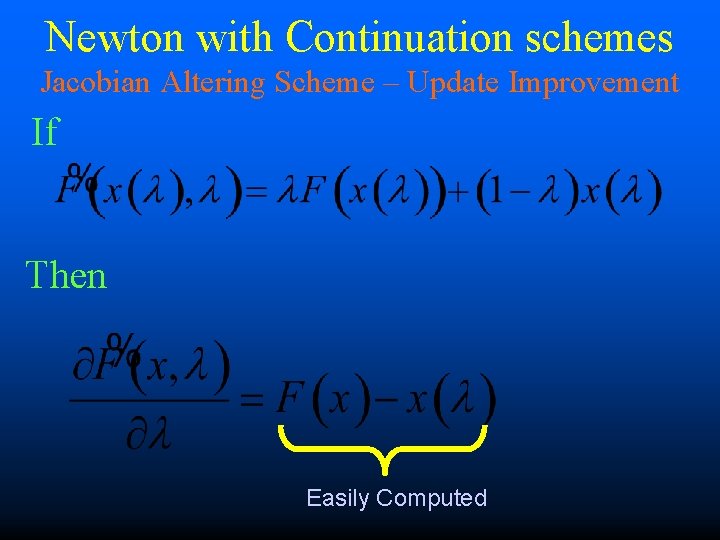
Newton with Continuation schemes Jacobian Altering Scheme – Update Improvement If Then Easily Computed
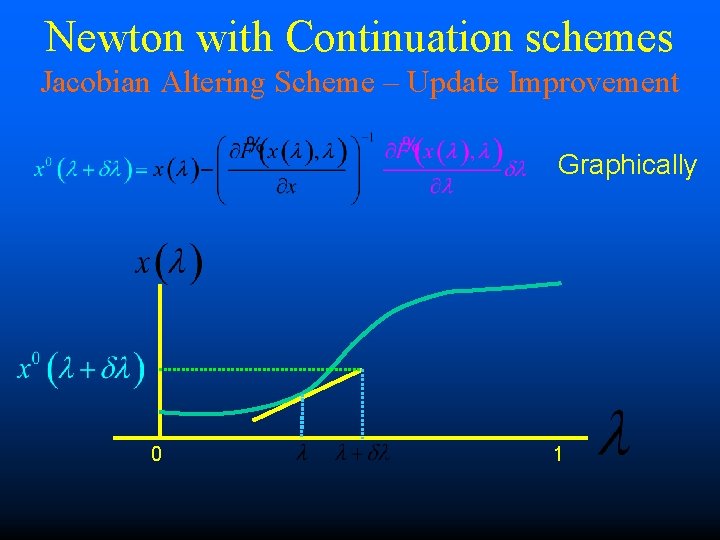
Newton with Continuation schemes Jacobian Altering Scheme – Update Improvement Graphically 0 1
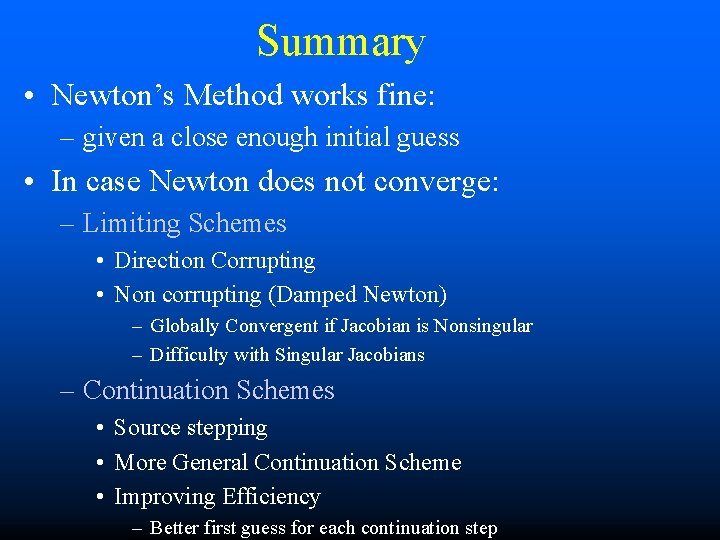
Summary • Newton’s Method works fine: – given a close enough initial guess • In case Newton does not converge: – Limiting Schemes • Direction Corrupting • Non corrupting (Damped Newton) – Globally Convergent if Jacobian is Nonsingular – Difficulty with Singular Jacobians – Continuation Schemes • Source stepping • More General Continuation Scheme • Improving Efficiency – Better first guess for each continuation step