
MODIFIED GLOVE USE FOR CONTACT PRECAUTIONS HEALTH CARE


- Slides: 8
MODIFIED GLOVE USE FOR CONTACT PRECAUTIONS: HEALTH CARE WORKERS’ PERCEPTIONS AND ACCEPTANCE Susan Jain RN, MN, Kate Clezy MBBS, Mary-Louise Mc. Laws Ph. D American Journal of Infection Control 47 (2019) 938 -944 Emily Walits MPH, CIC Mount Sinai Hospital February 19, 2020 APIC Greater NY Chapter 13 Journal Club Presentation
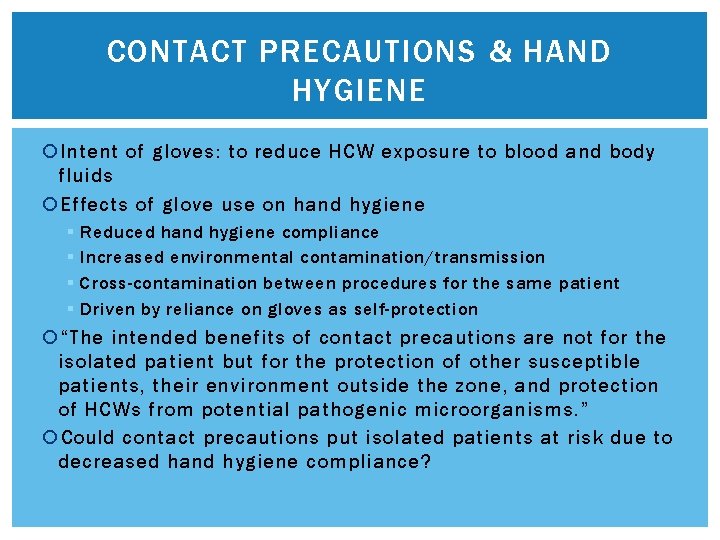
CONTACT PRECAUTIONS & HAND HYGIENE Intent of gloves: to reduce HCW exposure to blood and body fluids Effects of glove use on hand hygiene § § Reduced hand hygiene compliance Increased environmental contamination/transmission Cross-contamination between procedures for the same patient Driven by reliance on gloves as self-protection “The intended benefits of contact precautions are not for the isolated patient but for the protection of other susceptible patients, their environment outside the zone, and protection of HCWs from potential pathogenic microorganisms. ” Could contact precautions put isolated patients at risk due to decreased hand hygiene compliance?
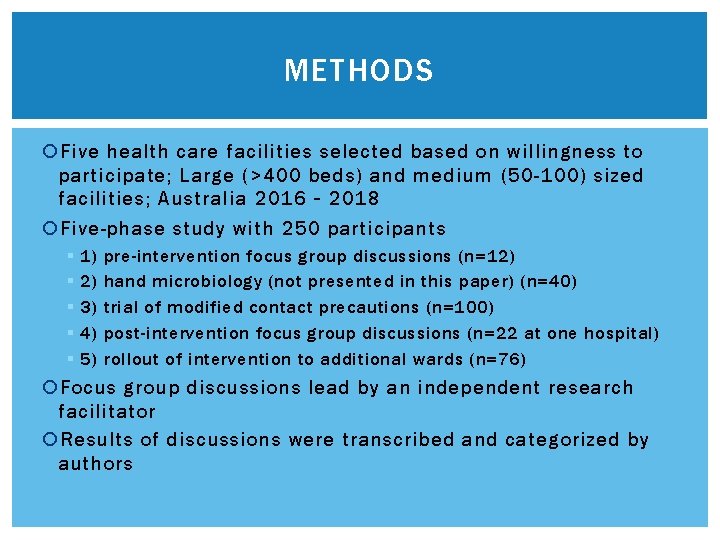
METHODS Five health care facilities selected based on willingness to participate; Large (>400 beds) and medium (50 -100) sized facilities; Australia 2016 – 2018 Five-phase study with 250 participants § § § 1) 2) 3) 4) 5) pre-intervention focus group discussions (n=12) hand microbiology (not presented in this paper) (n=40) trial of modified contact precautions (n=100) post-intervention focus group discussions (n=22 at one hospital) rollout of intervention to additional wards (n=76) Focus group discussions lead by an independent research facilitator Results of discussions were transcribed and categorized by authors
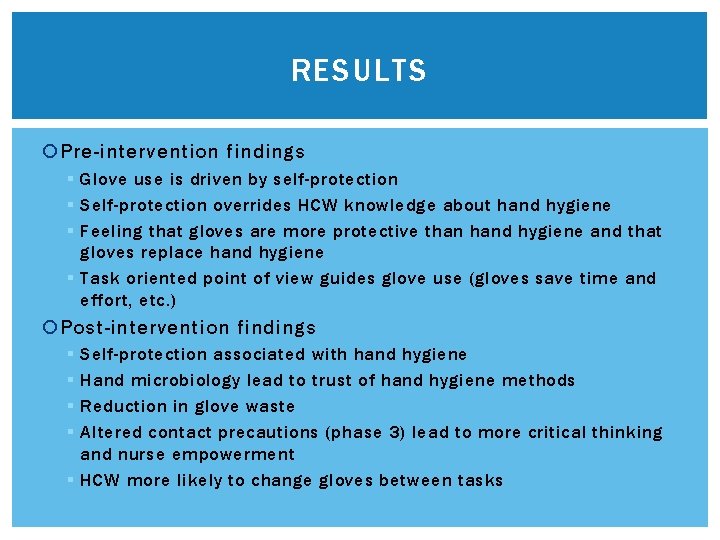
RESULTS Pre-intervention findings § Glove use is driven by self-protection § Self-protection overrides HCW knowledge about hand hygiene § Feeling that gloves are more protective than hand hygiene and that gloves replace hand hygiene § Task oriented point of view guides glove use (gloves save time and effort, etc. ) Post-intervention findings § § Self-protection associated with hand hygiene Hand microbiology lead to trust of hand hygiene methods Reduction in glove waste Altered contact precautions (phase 3) lead to more critical thinking and nurse empowerment § HCW more likely to change gloves between tasks
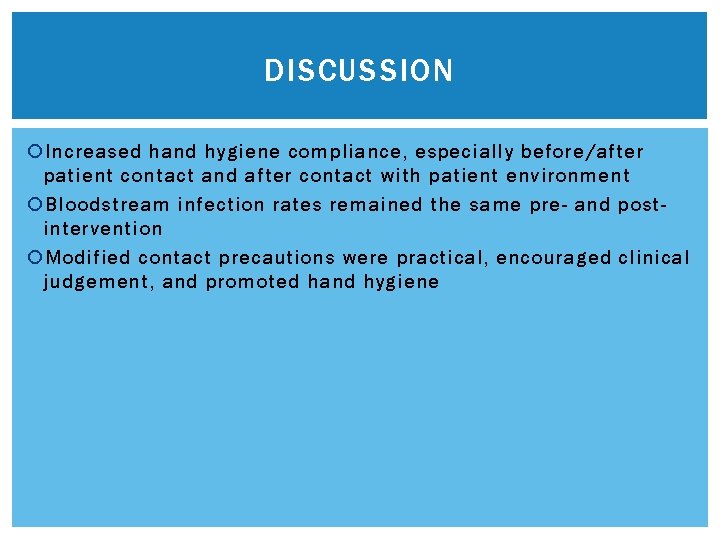
DISCUSSION Increased hand hygiene compliance, especially before/after patient contact and after contact with patient environment Bloodstream infection rates remained the same pre- and postintervention Modified contact precautions were practical, encouraged clinical judgement, and promoted hand hygiene
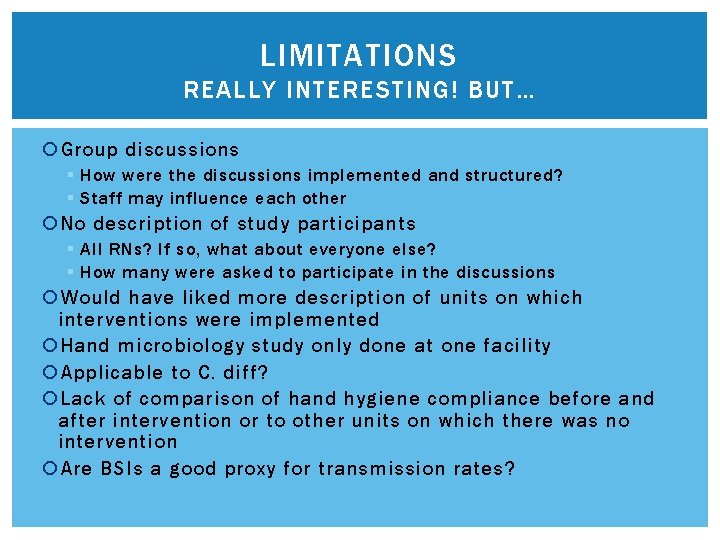
LIMITATIONS REALLY INTERESTING! BUT… Group discussions § How were the discussions implemented and structured? § Staff may influence each other No description of study participants § All RNs? If so, what about everyone else? § How many were asked to participate in the discussions Would have liked more description of units on which interventions were implemented Hand microbiology study only done at one facility Applicable to C. diff? Lack of comparison of hand hygiene compliance before and after intervention or to other units on which there was no intervention Are BSIs a good proxy for transmission rates?