
MODIFIED from a slide show by Kim Foglia
MODIFIED from a slide show by Kim Foglia http: //www. explorebiology. com/documents/37 Ch 12 Mitosis. Regulation 2005 a. pdf
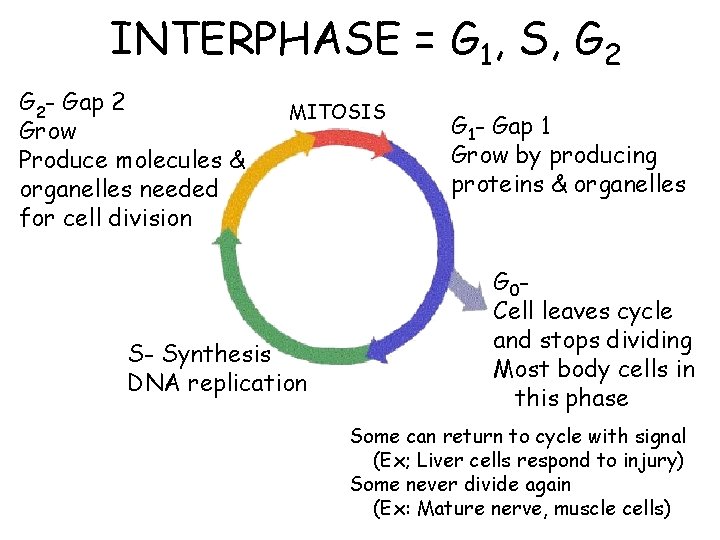
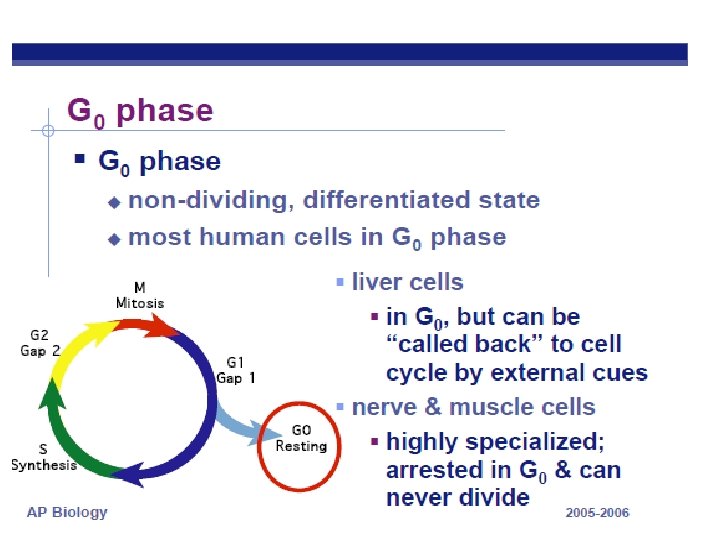
INTERPHASE = G 1, S, G 2 - Gap 2 Grow Produce molecules & organelles needed for cell division MITOSIS S- Synthesis DNA replication G 1 - Gap 1 Grow by producing proteins & organelles G 0 Cell leaves cycle and stops dividing Most body cells in this phase Some can return to cycle with signal (Ex; Liver cells respond to injury) Some never divide again (Ex: Mature nerve, muscle cells)
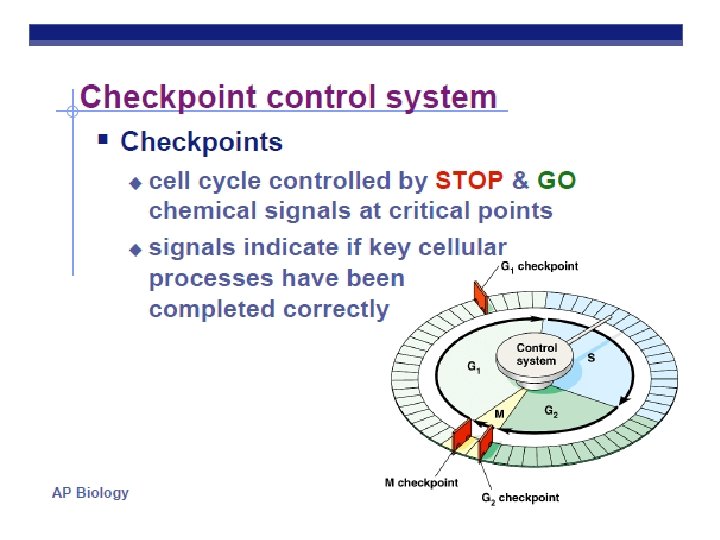
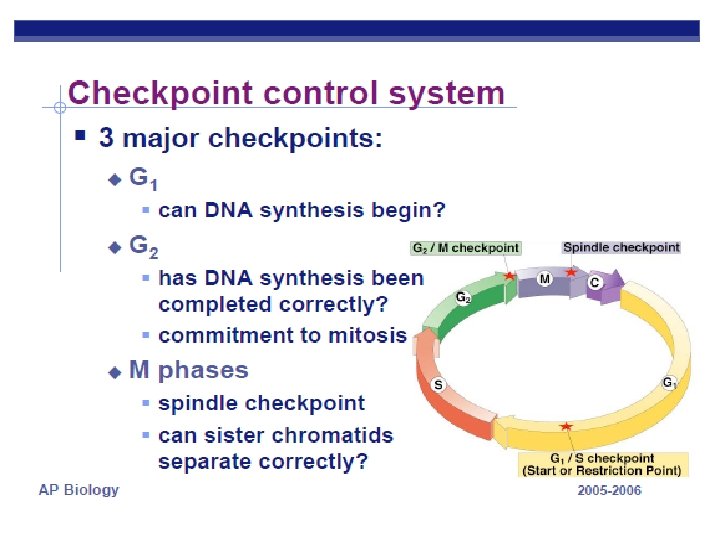
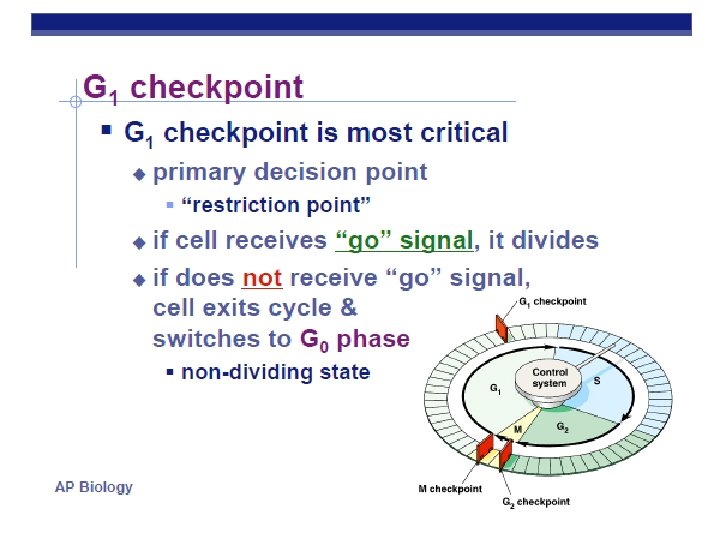
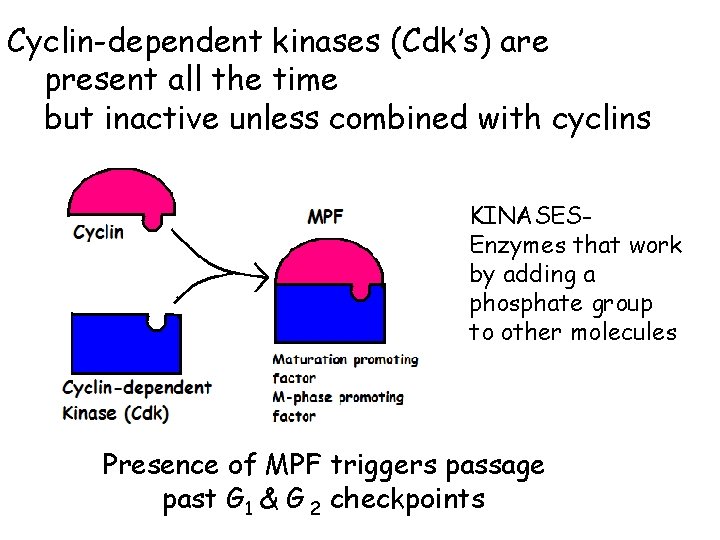
Cyclin-dependent kinases (Cdk’s) are present all the time but inactive unless combined with cyclins KINASESEnzymes that work by adding a phosphate group to other molecules Presence of MPF triggers passage past G 1 & G 2 checkpoints
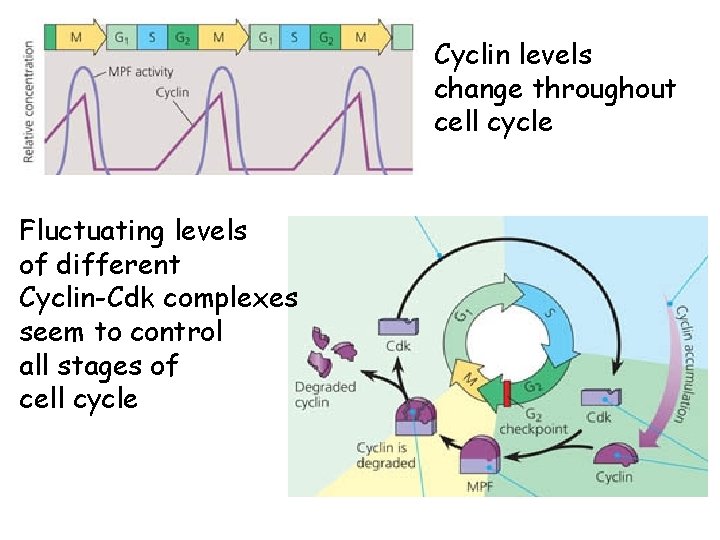
Cyclin levels change throughout cell cycle Fluctuating levels of different Cyclin-Cdk complexes seem to control all stages of cell cycle
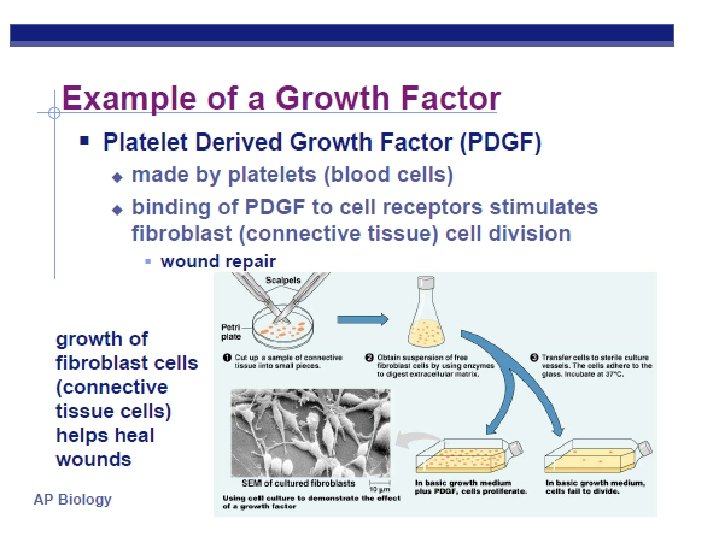
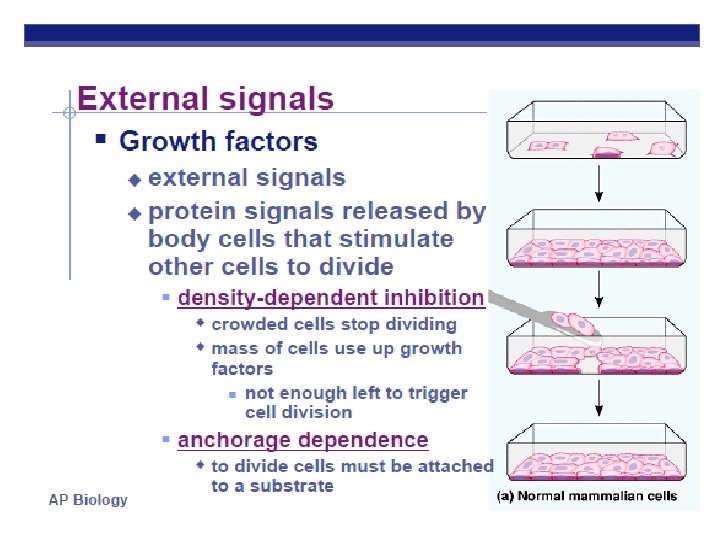
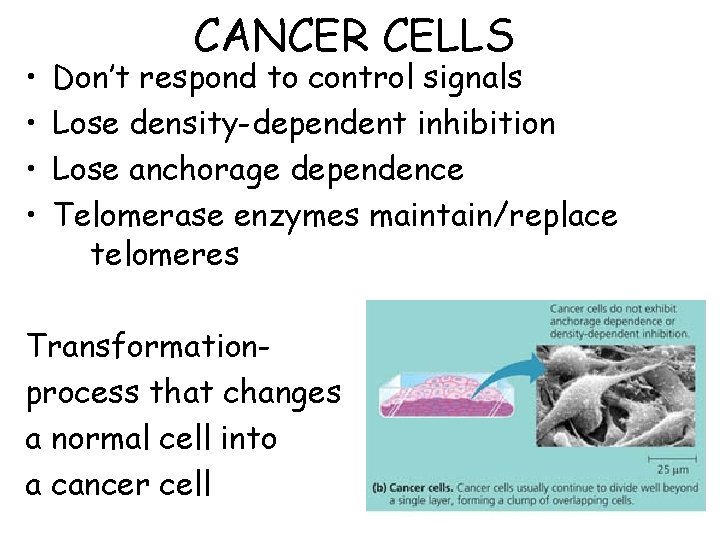
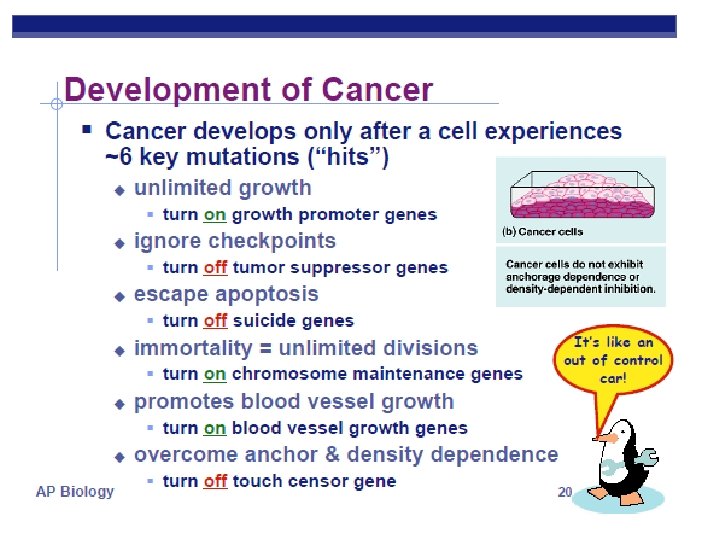
• • CANCER CELLS Don’t respond to control signals Lose density-dependent inhibition Lose anchorage dependence Telomerase enzymes maintain/replace telomeres Transformationprocess that changes a normal cell into a cancer cell
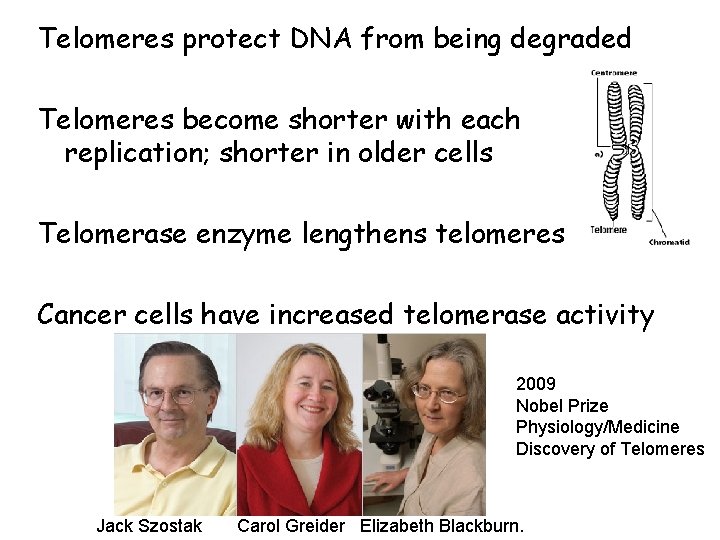
Telomeres protect DNA from being degraded Telomeres become shorter with each replication; shorter in older cells Telomerase enzyme lengthens telomeres Cancer cells have increased telomerase activity 2009 Nobel Prize Physiology/Medicine Discovery of Telomeres Jack Szostak Carol Greider Elizabeth Blackburn.
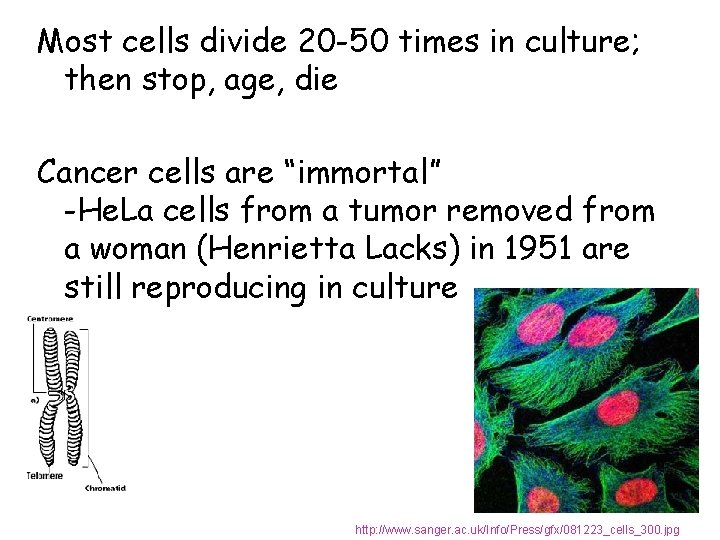
Most cells divide 20 -50 times in culture; then stop, age, die Cancer cells are “immortal” -He. La cells from a tumor removed from a woman (Henrietta Lacks) in 1951 are still reproducing in culture http: //www. sanger. ac. uk/Info/Press/gfx/081223_cells_300. jpg
- Slides: 21