
Modification of legs in insects Structure of typical
- Slides: 10
Modification of legs in insects
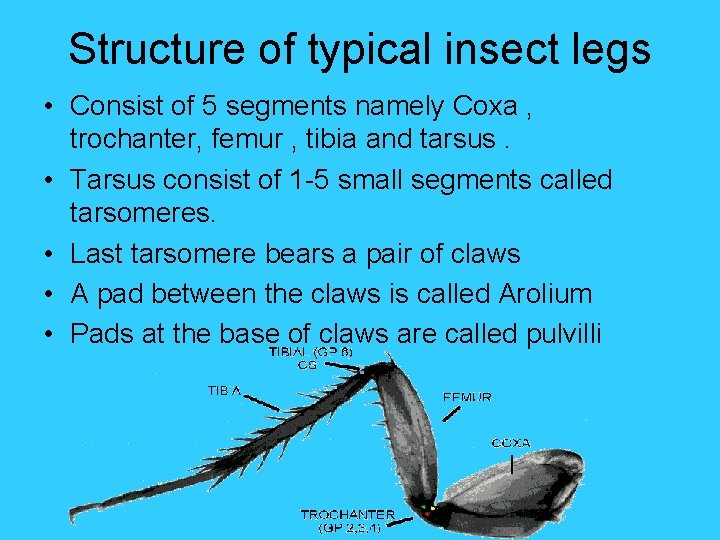
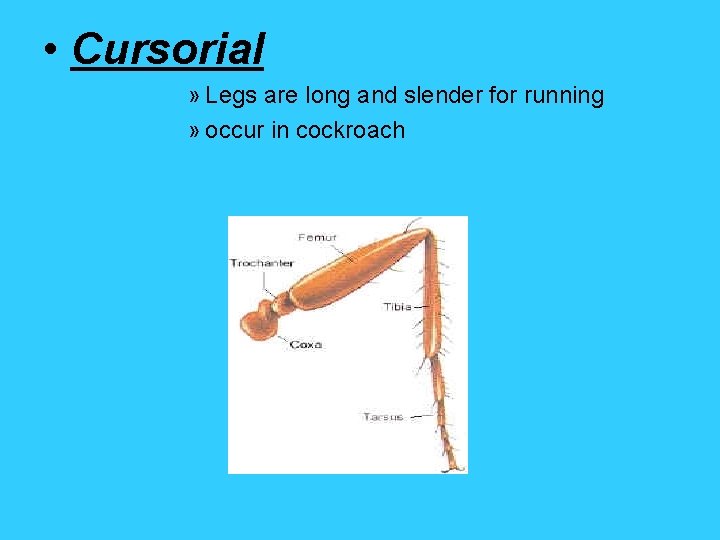
Structure of typical insect legs • Consist of 5 segments namely Coxa , trochanter, femur , tibia and tarsus. • Tarsus consist of 1 -5 small segments called tarsomeres. • Last tarsomere bears a pair of claws • A pad between the claws is called Arolium • Pads at the base of claws are called pulvilli
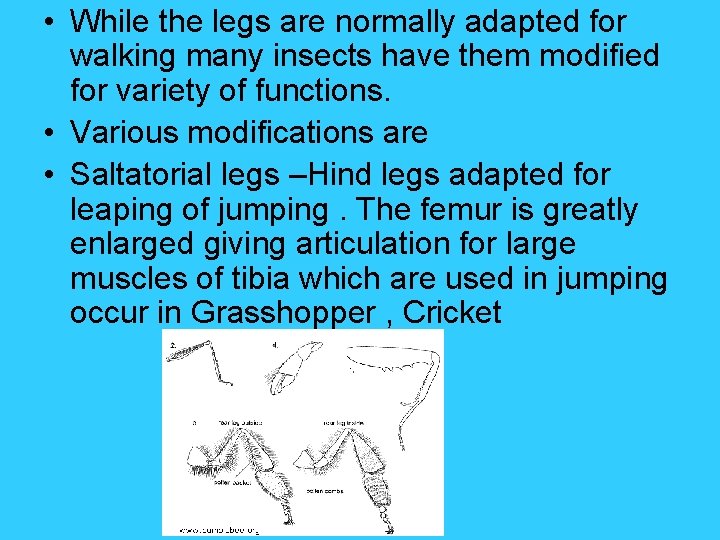
• While the legs are normally adapted for walking many insects have them modified for variety of functions. • Various modifications are • Saltatorial legs –Hind legs adapted for leaping of jumping. The femur is greatly enlarged giving articulation for large muscles of tibia which are used in jumping occur in Grasshopper , Cricket
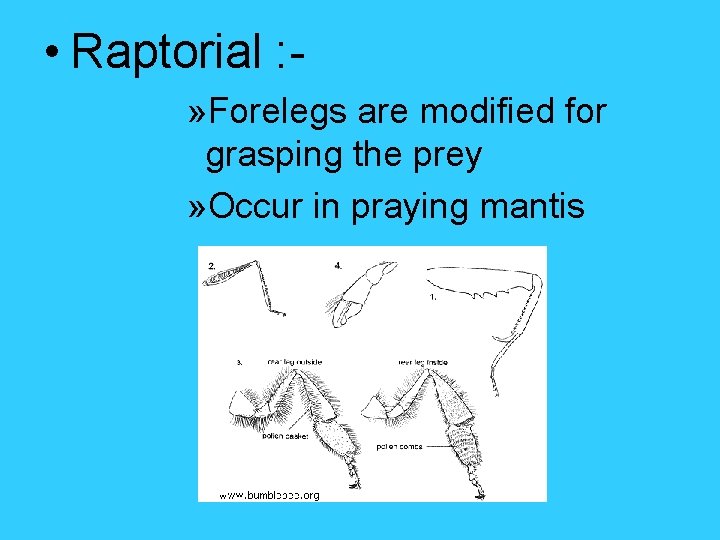
• Raptorial : » Forelegs are modified for grasping the prey » Occur in praying mantis
• Scansorial The legs of louse are modified for clinging the tibia being stout and bearing at one end a thumb like process with a distal tarsal segment and a curved pretarsal claw. While grasping the body , tarsus and pretarsus work against the thumb
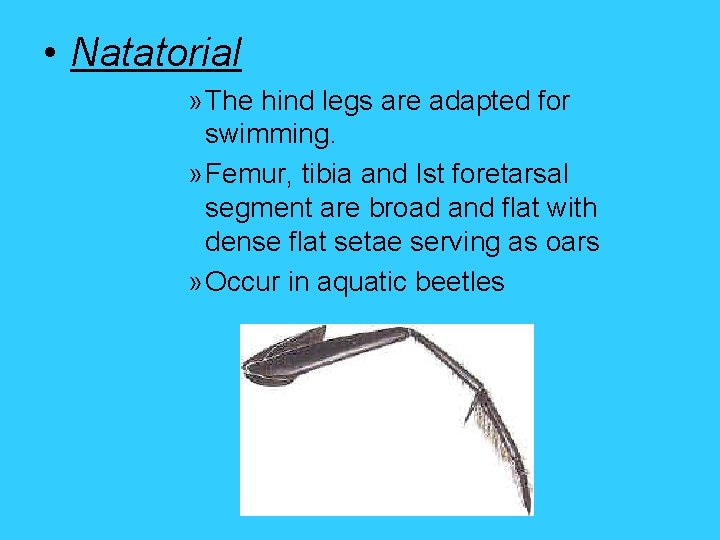
• Natatorial » The hind legs are adapted for swimming. » Femur, tibia and Ist foretarsal segment are broad and flat with dense flat setae serving as oars » Occur in aquatic beetles
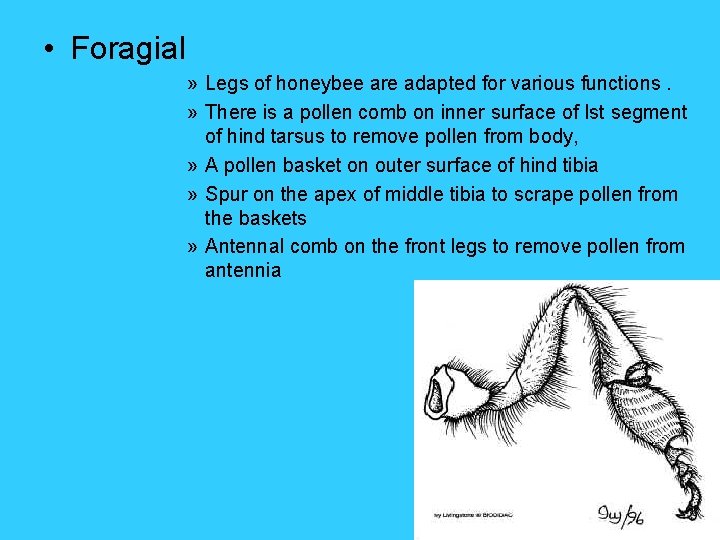
• Foragial » Legs of honeybee are adapted for various functions. » There is a pollen comb on inner surface of Ist segment of hind tarsus to remove pollen from body, » A pollen basket on outer surface of hind tibia » Spur on the apex of middle tibia to scrape pollen from the baskets » Antennal comb on the front legs to remove pollen from antennia
• Cursorial » Legs are long and slender for running » occur in cockroach
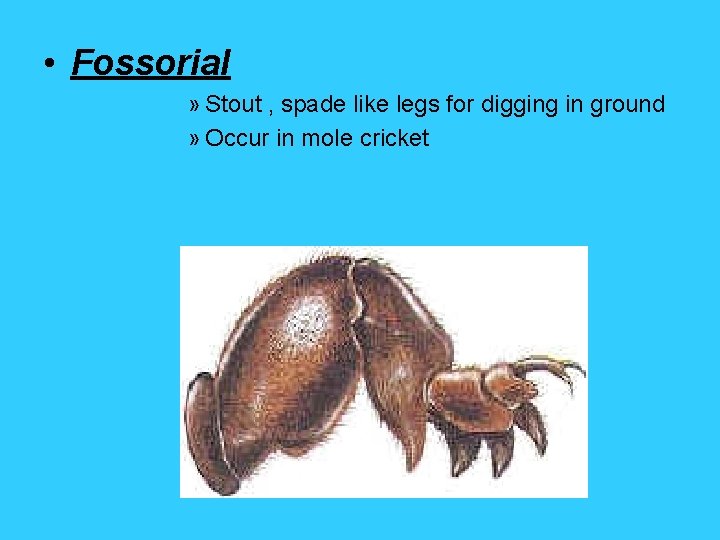
• Fossorial » Stout , spade like legs for digging in ground » Occur in mole cricket
Stridulatory Legs have sound producing apparatus Occur in cricket Auditory Legs with sound producing tympanum Occur in long horned grasshopper