
Modes of Failure in Revision Hip and Knee


- Slides: 48
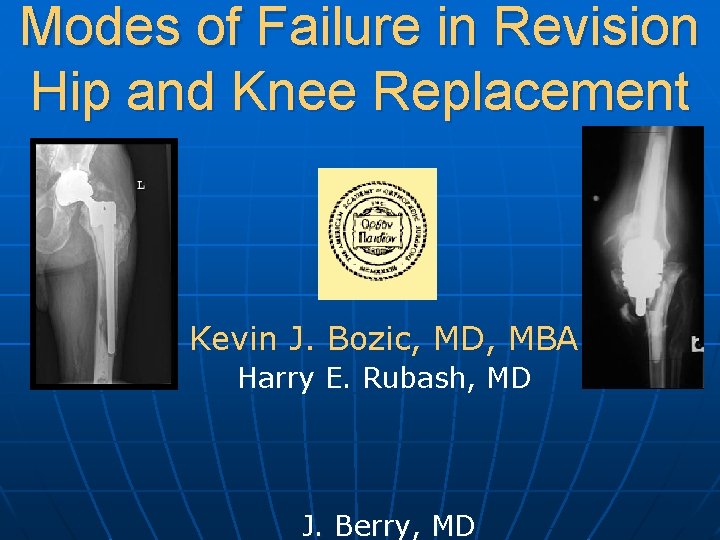
Modes of Failure in Revision Hip and Knee Replacement Kevin J. Bozic, MD, MBA Harry E. Rubash, MD J. Berry, MD
“It’s like déjà vu all over again!”
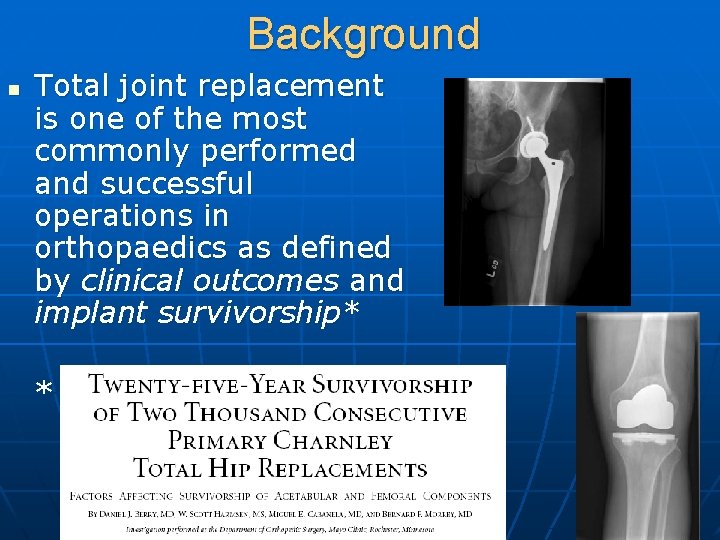
Background n Total joint replacement is one of the most commonly performed and successful operations in orthopaedics as defined by clinical outcomes and implant survivorship* *
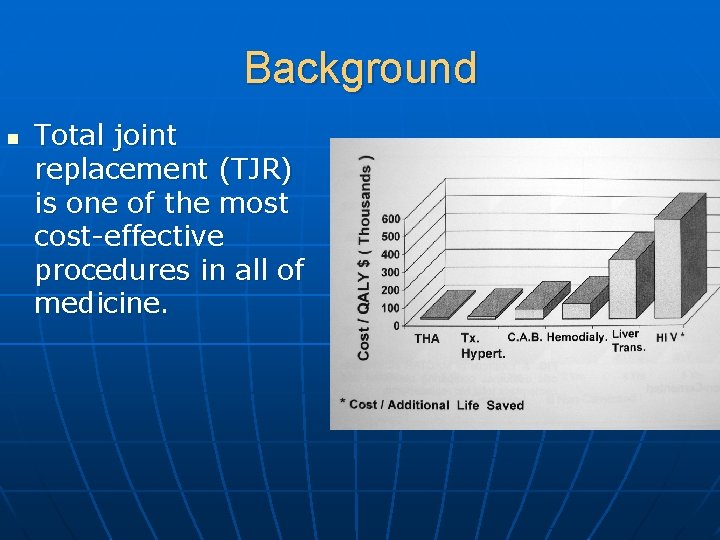
Background n Total joint replacement (TJR) is one of the most cost-effective procedures in all of medicine.
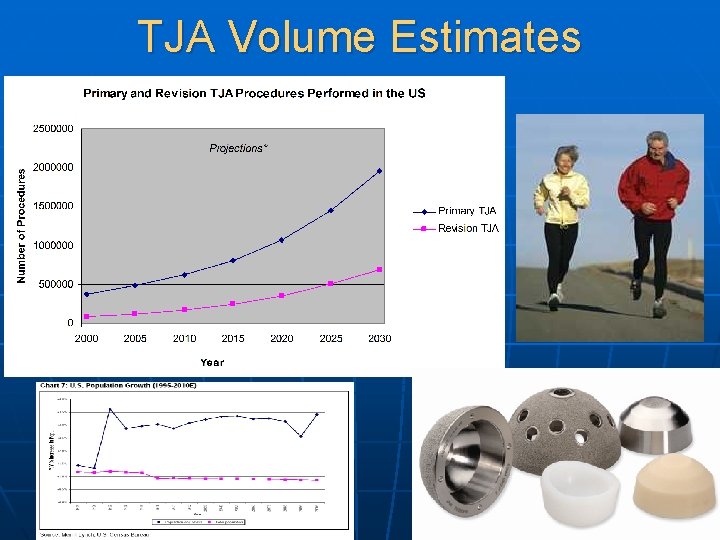
TJA Volume Estimates
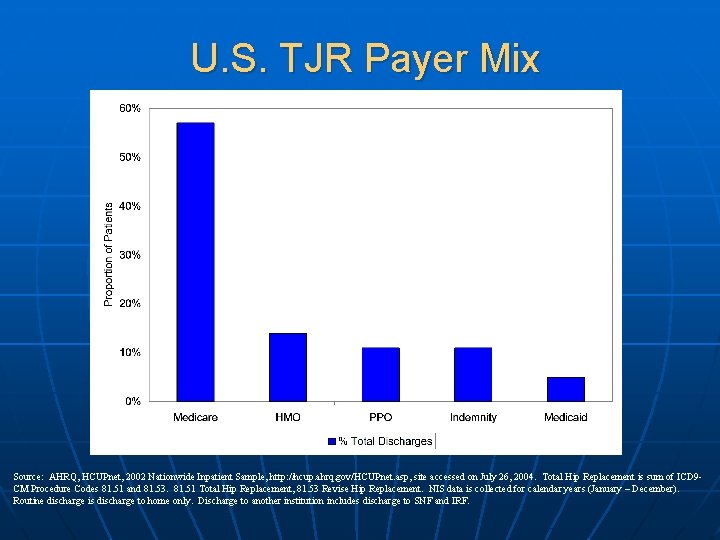
U. S. TJR Payer Mix Source: AHRQ, HCUPnet, 2002 Nationwide Inpatient Sample, http: //hcup. ahrq. gov/HCUPnet. asp, site accessed on July 26, 2004. Total Hip Replacement is sum of ICD 9 CM Procedure Codes 81. 51 and 81. 53. 81. 51 Total Hip Replacement, 81. 53 Revise Hip Replacement. NIS data is collected for calendar years (January – December). Routine discharge is discharge to home only. Discharge to another institution includes discharge to SNF and IRF.
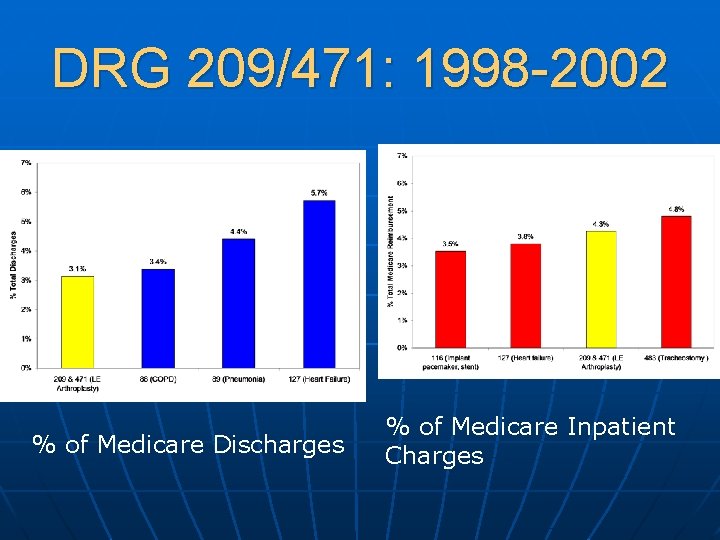
DRG 209/471: 1998 -2002 % of Medicare Discharges % of Medicare Inpatient Charges
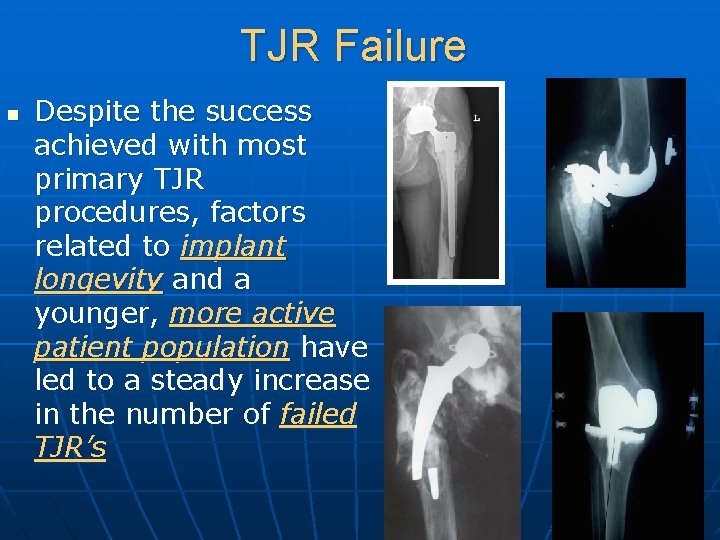
TJR Failure n Despite the success achieved with most primary TJR procedures, factors related to implant longevity and a younger, more active patient population have led to a steady increase in the number of failed TJR’s
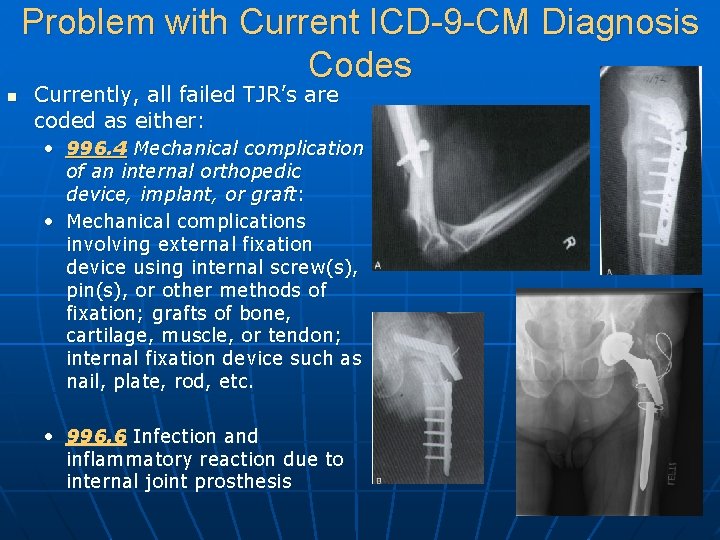
Problem with Current ICD-9 -CM Diagnosis Codes n Currently, all failed TJR’s are coded as either: • 996. 4 Mechanical complication of an internal orthopedic device, implant, or graft: • Mechanical complications involving external fixation device using internal screw(s), pin(s), or other methods of fixation; grafts of bone, cartilage, muscle, or tendon; internal fixation device such as nail, plate, rod, etc. • 996. 6 Infection and inflammatory reaction due to internal joint prosthesis
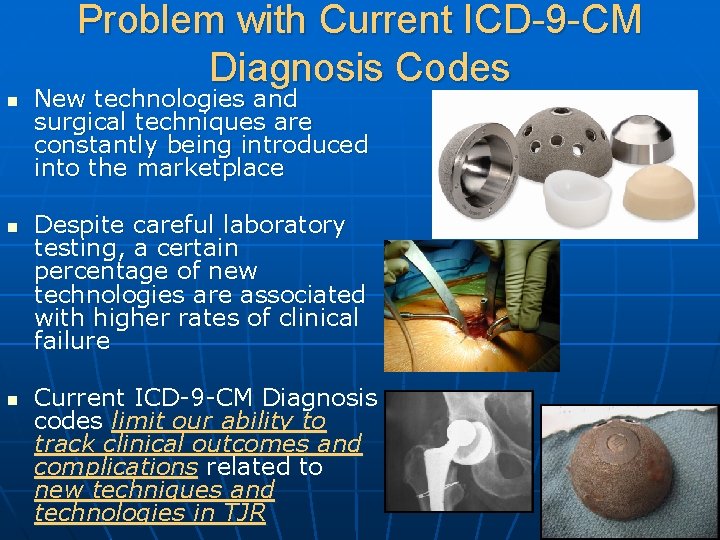
Problem with Current ICD-9 -CM Diagnosis Codes n n n New technologies and surgical techniques are constantly being introduced into the marketplace Despite careful laboratory testing, a certain percentage of new technologies are associated with higher rates of clinical failure Current ICD-9 -CM Diagnosis codes limit our ability to track clinical outcomes and complications related to new techniques and technologies in TJR
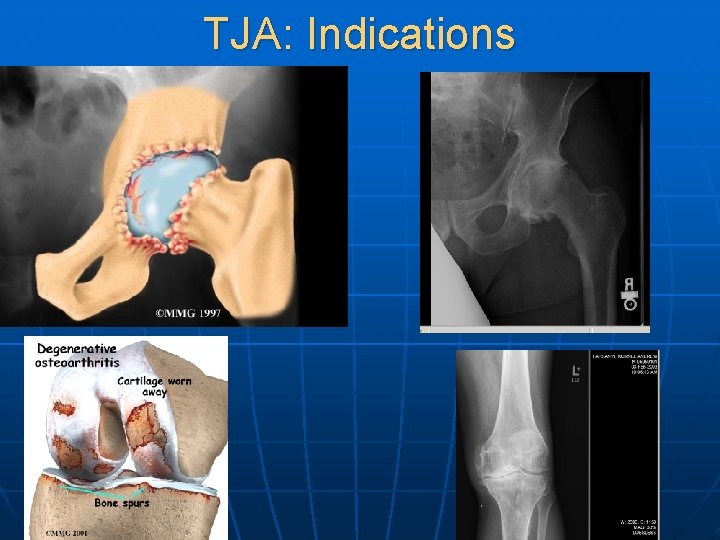
TJA: Indications
Arthritis—Background n Arthritis is the second most common chronic condition in the US (sinusitis is first) • Most common among elderly n 20 -30% of people over age 70 suffer from osteoarthritis (OA) of the hip n Arthritis affects over 32 million people in the US n Total costs associated with arthritis are over $82 B/year, including hospital and drug costs, nursing home costs, and lost productivity and work
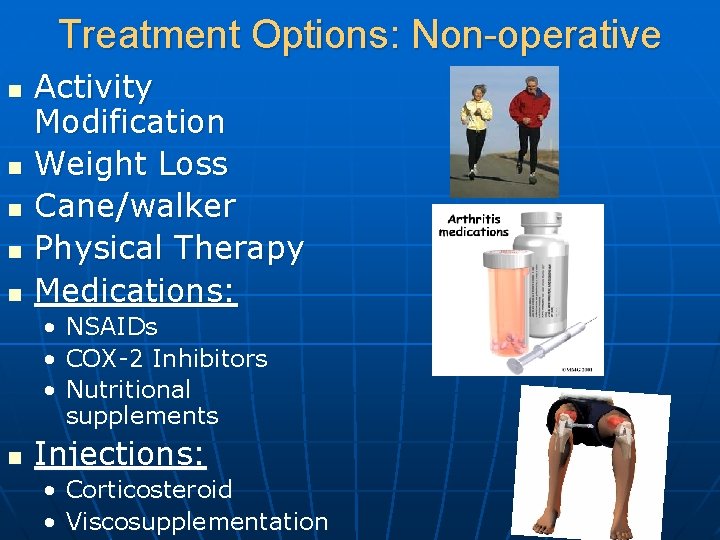
Treatment Options: Non-operative n n n Activity Modification Weight Loss Cane/walker Physical Therapy Medications: • NSAIDs • COX-2 Inhibitors • Nutritional supplements n Injections: • Corticosteroid • Viscosupplementation
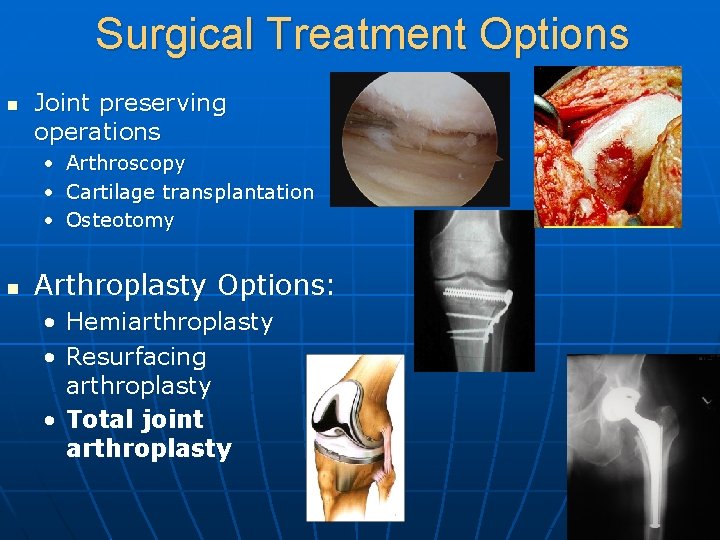
Surgical Treatment Options n Joint preserving operations • • • n Arthroscopy Cartilage transplantation Osteotomy Arthroplasty Options: • Hemiarthroplasty • Resurfacing arthroplasty • Total joint arthroplasty
Goals of Joint Replacement Surgery n n Relieve pain!!! Restore function, mobility
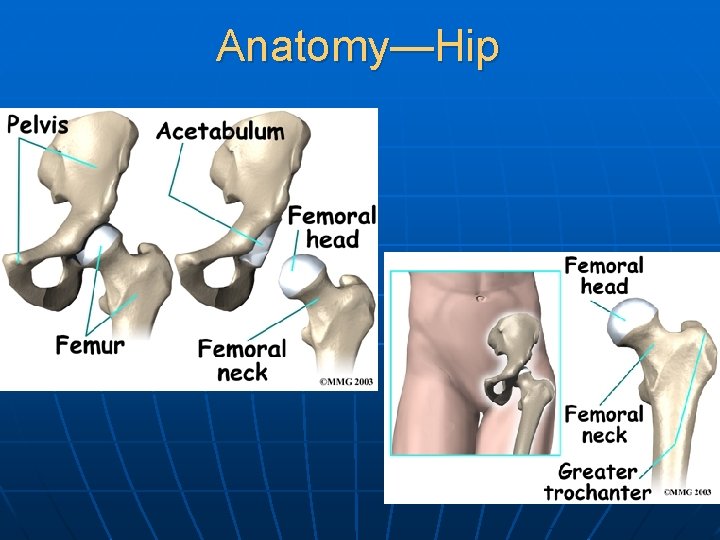
Anatomy—Hip
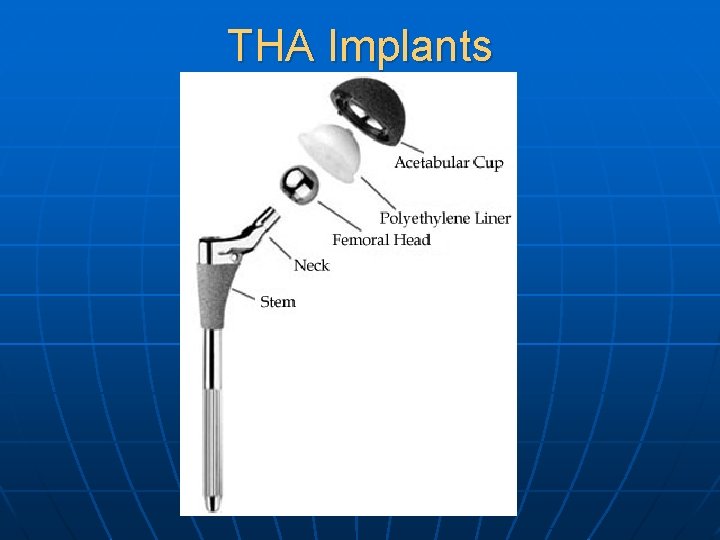
THA Implants
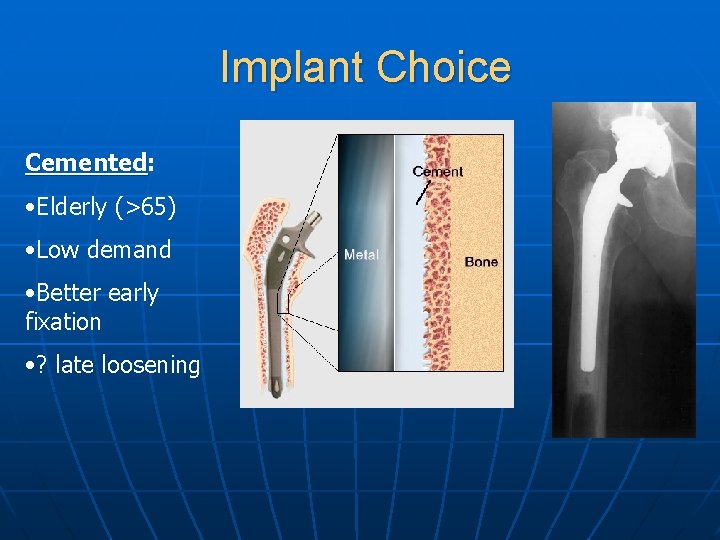
Implant Choice Cemented: Cemented • Elderly (>65) • Low demand • Better early fixation • ? late loosening
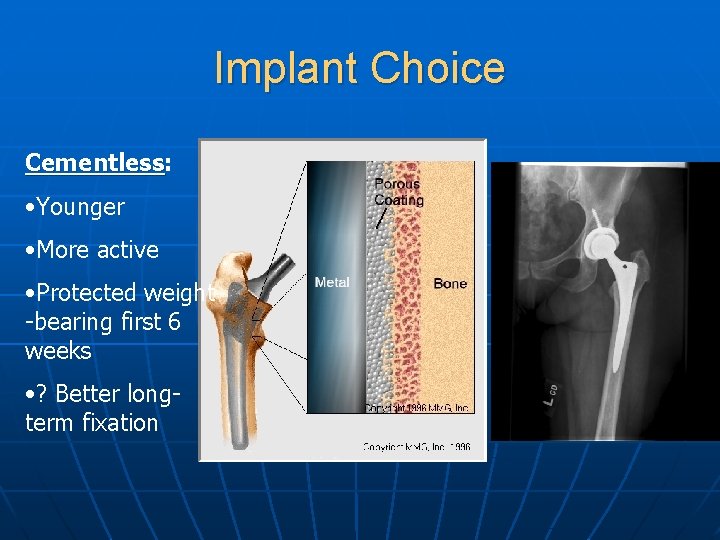
Implant Choice Cementless: Cementless • Younger • More active • Protected weight -bearing first 6 weeks • ? Better longterm fixation
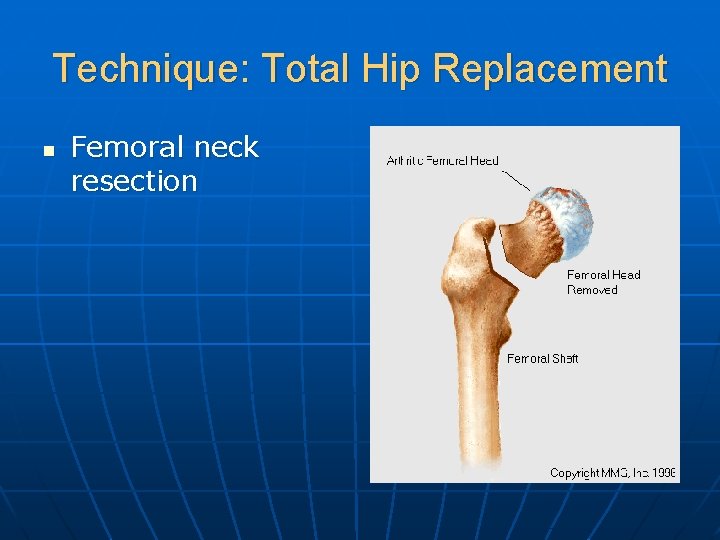
Technique: Total Hip Replacement n Femoral neck resection
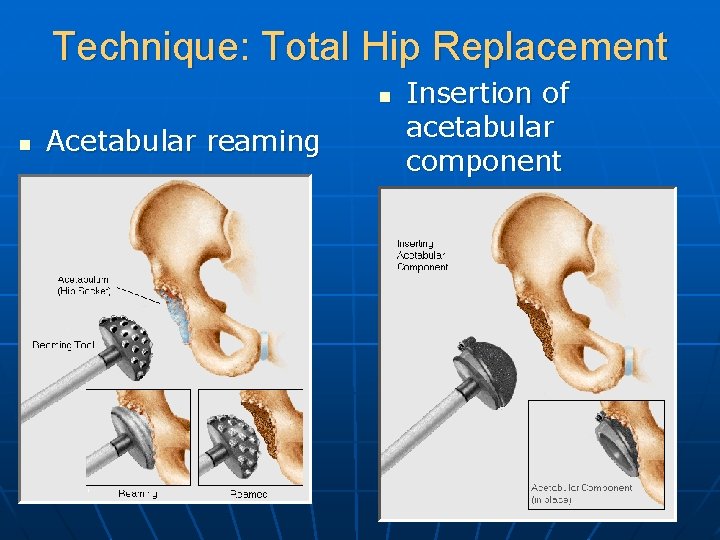
Technique: Total Hip Replacement n n Acetabular reaming Insertion of acetabular component
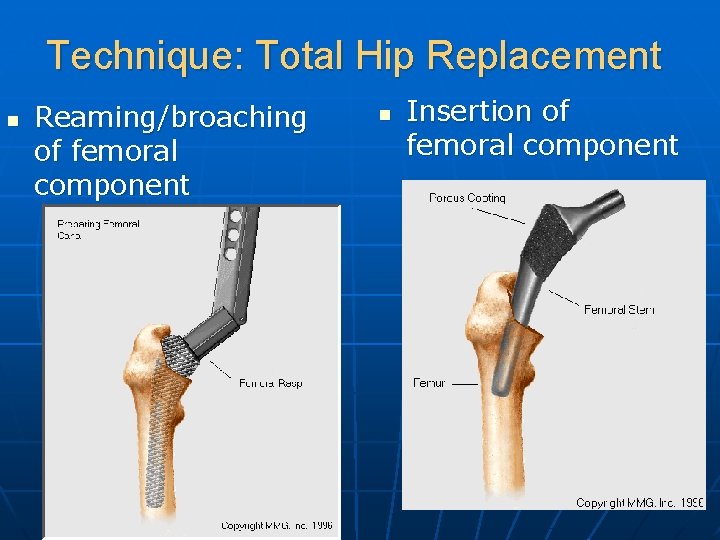
Technique: Total Hip Replacement n Reaming/broaching of femoral component n Insertion of femoral component
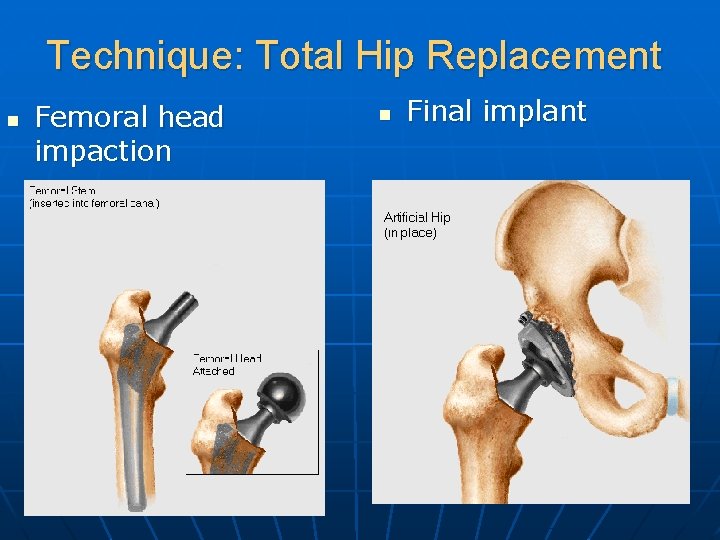
Technique: Total Hip Replacement n Femoral head impaction n Final implant
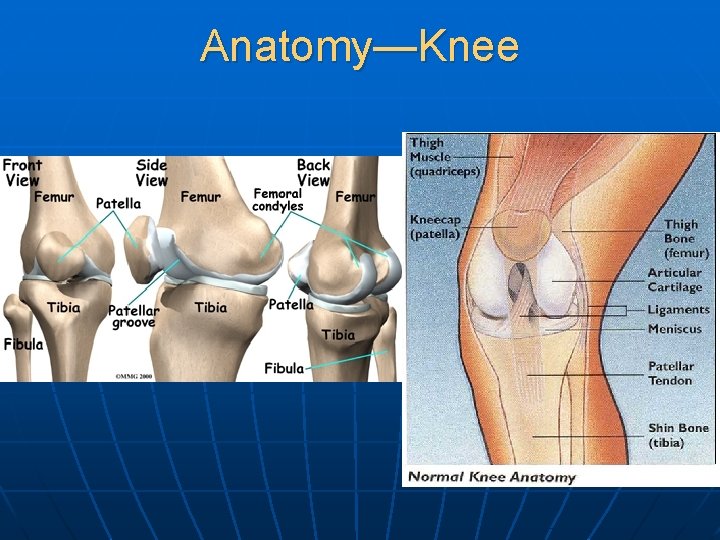
Anatomy—Knee
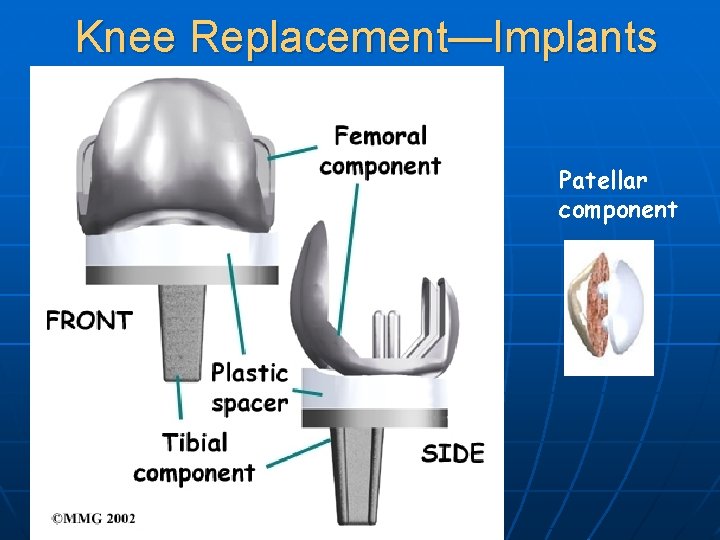
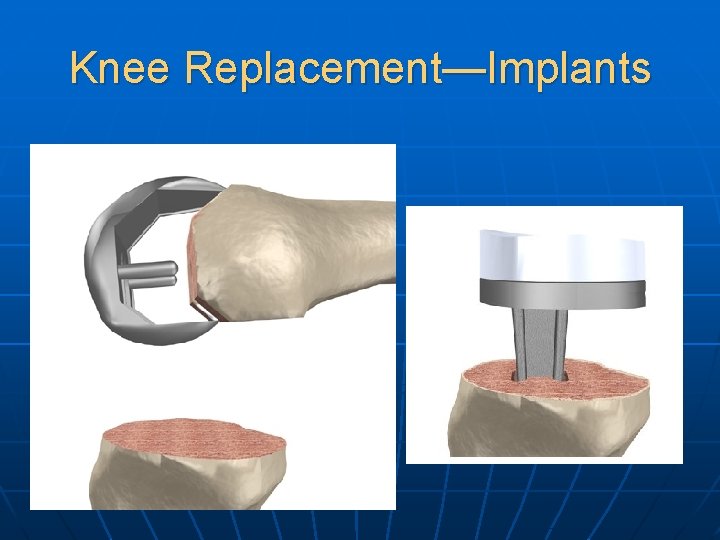
Knee Replacement—Implants Patellar component
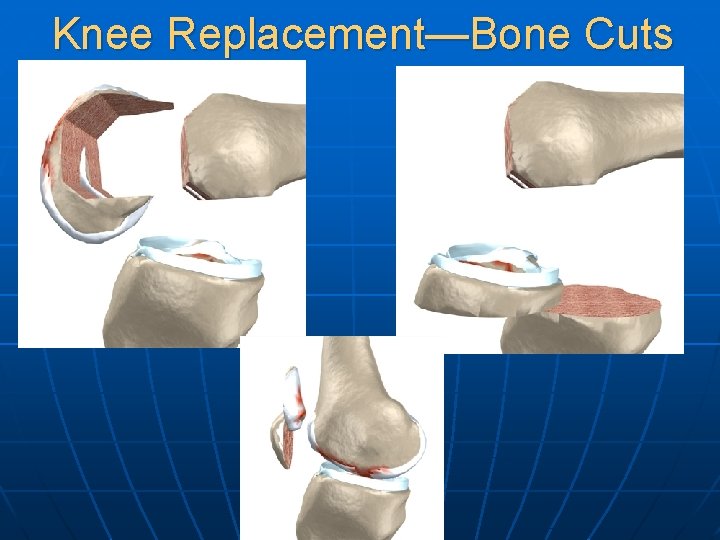
Knee Replacement—Bone Cuts
Knee Replacement—Implants
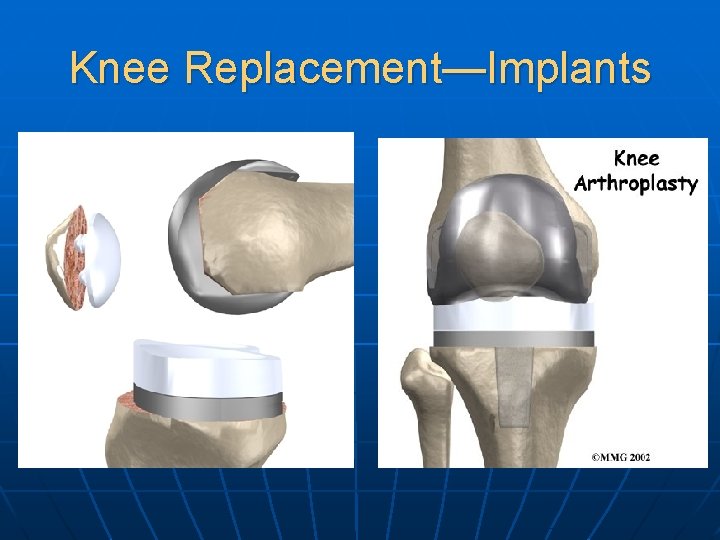
Knee Replacement—Implants
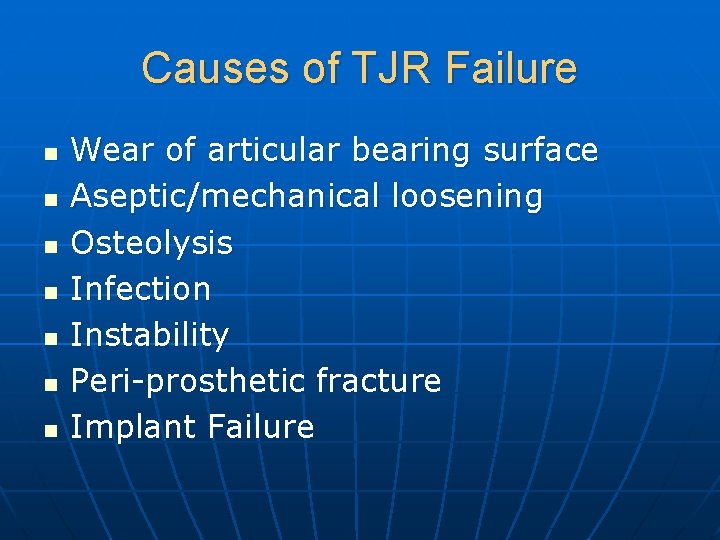
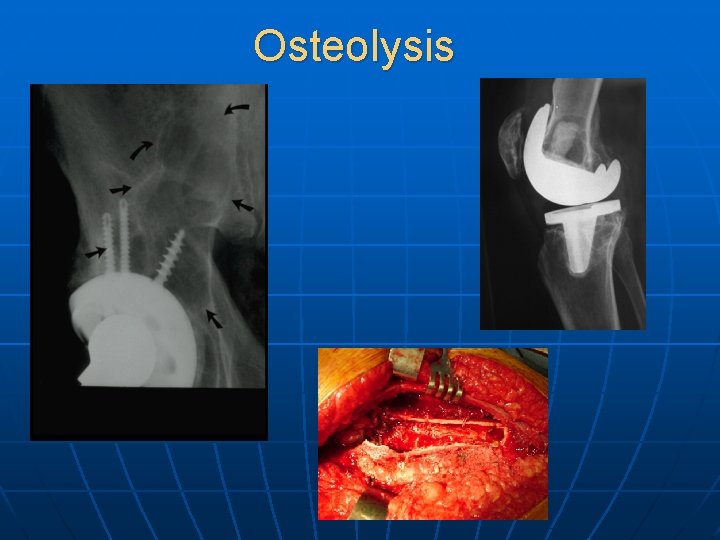
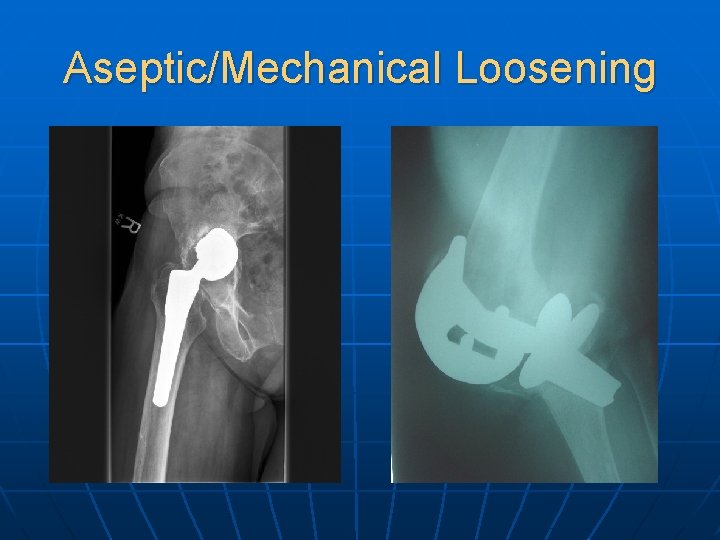
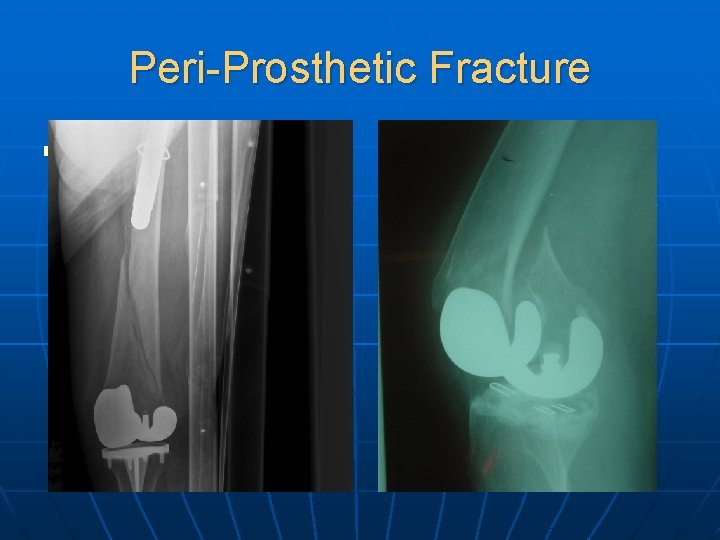
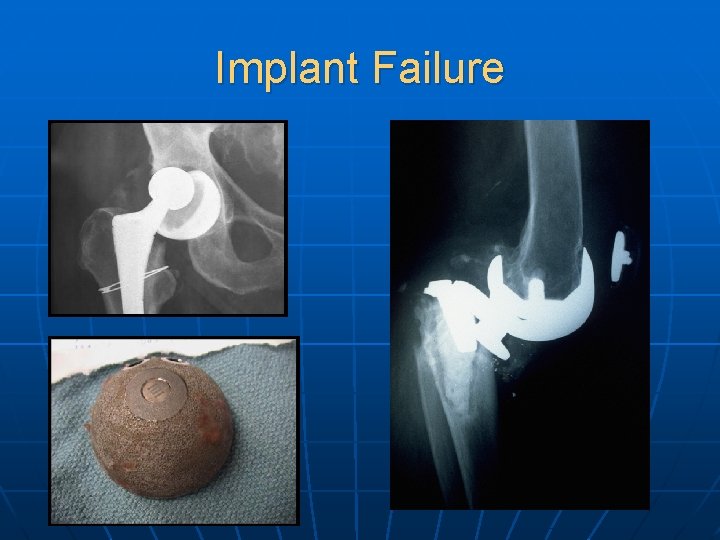
Causes of TJR Failure n n n n Wear of articular bearing surface Aseptic/mechanical loosening Osteolysis Infection Instability Peri-prosthetic fracture Implant Failure
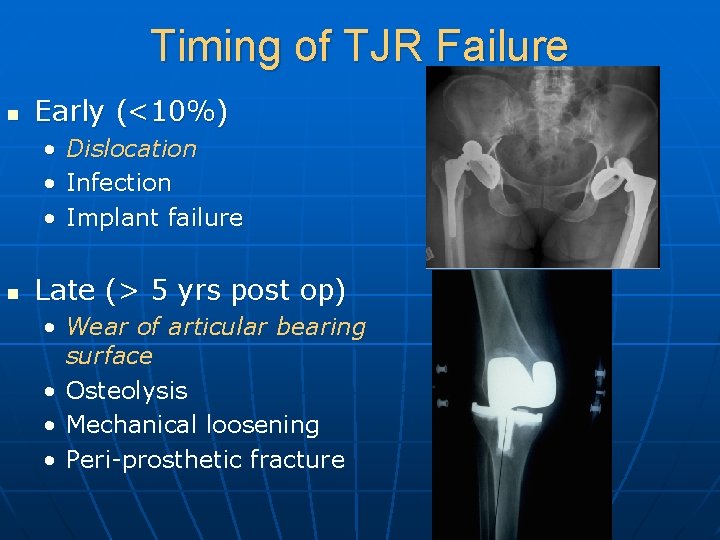
Timing of TJR Failure n Early (<10%) • • • n Dislocation Infection Implant failure Late (> 5 yrs post op) • Wear of articular bearing surface • Osteolysis • Mechanical loosening • Peri-prosthetic fracture
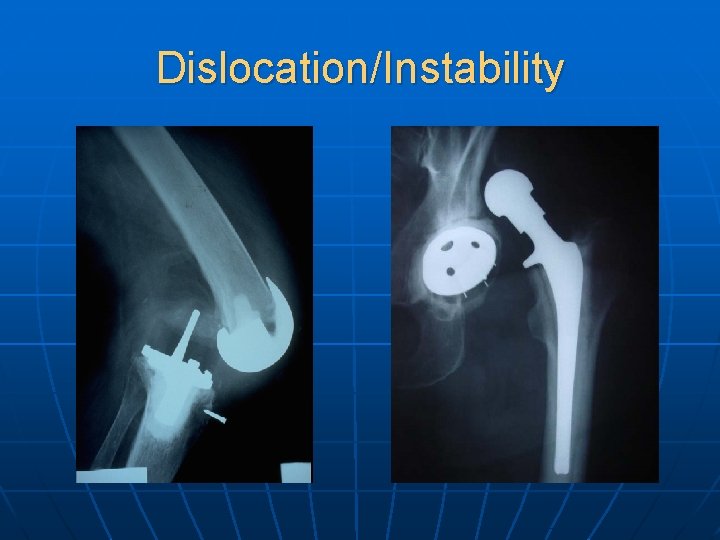
Dislocation/Instability
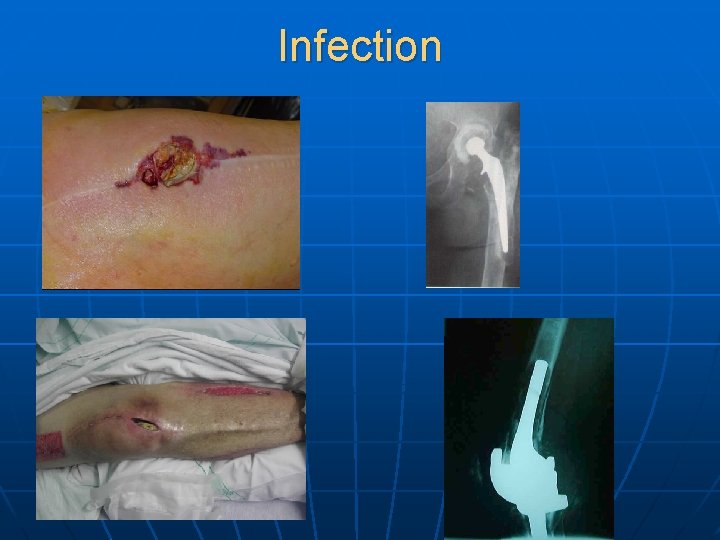
Infection
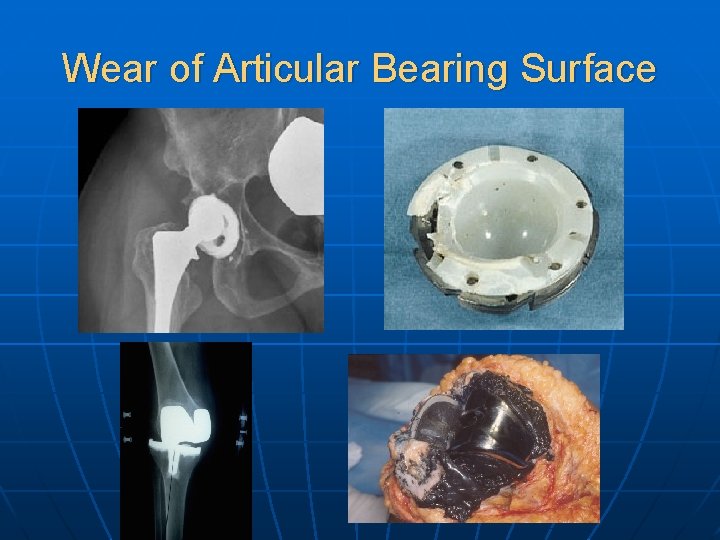
Wear of Articular Bearing Surface
Osteolysis
Aseptic/Mechanical Loosening
Peri-Prosthetic Fracture n Sri: PP fracture
Implant Failure
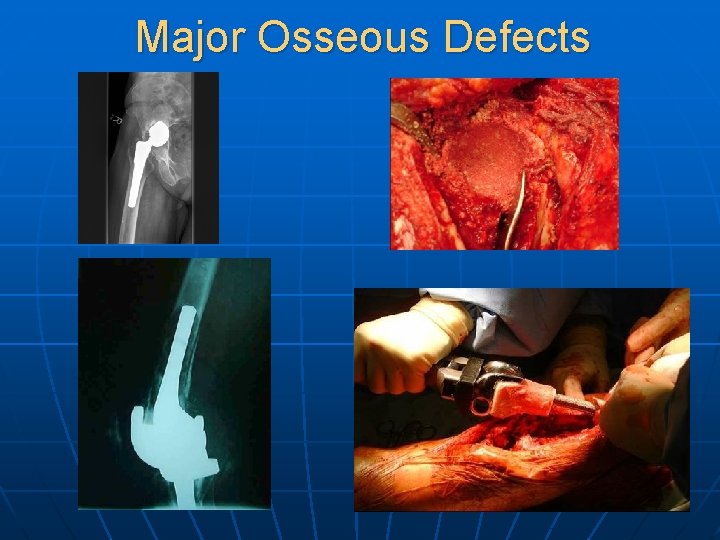
Major Osseous Defects
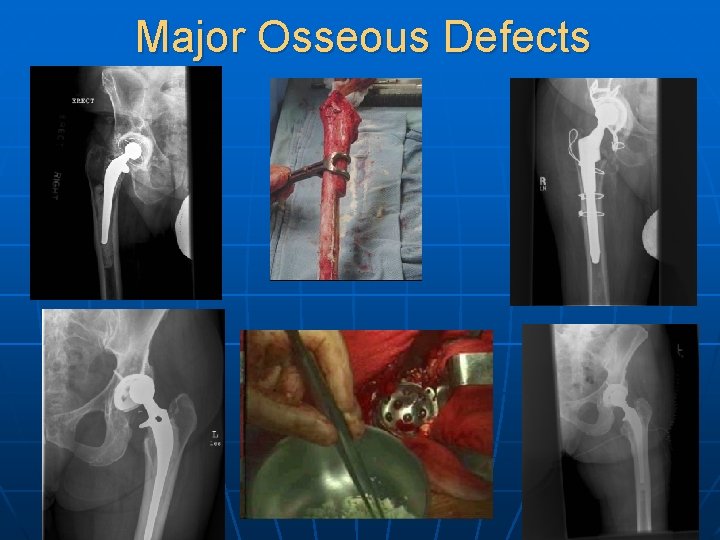
Major Osseous Defects
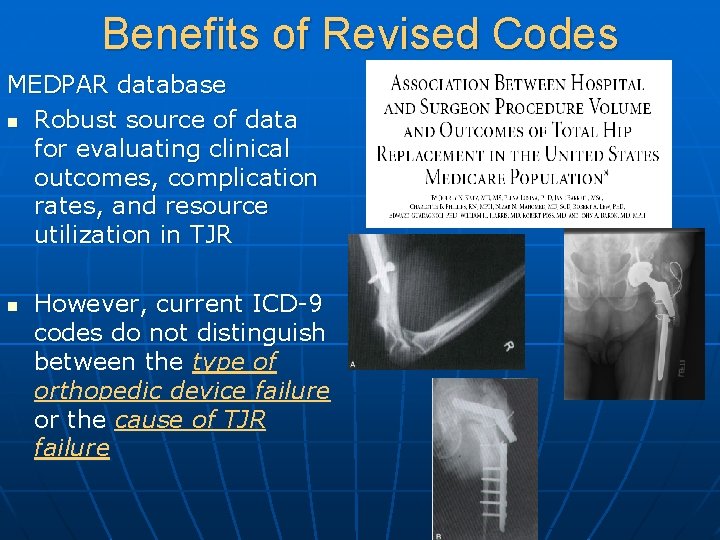
Benefits of Revised Codes MEDPAR database n Robust source of data for evaluating clinical outcomes, complication rates, and resource utilization in TJR n However, current ICD-9 codes do not distinguish between the type of orthopedic device failure or the cause of TJR failure
Benefits of Revised Codes n n n Ability to specify the cause of implant failure Ability to evaluate implant-specific TJR failure rates => refine indications, surgical technique, and implant choice Facilitates steady, continuous quality improvement by shortening the time span for detection of poor performance of new techniques and technologies
Benefits of Revised Codes American Joint Replacement Registry(AJRR) n Goals • • • n Accurately define the epidemiology of TJR in the U. S. Identify risk factors for poor outcomes To improve outcomes through continuous feedback to participating centers and surgeons The success of this project is critically dependent on having revised ICD-9 -CM Codes that differentiate between different modes of failure in TJA!!
Benefits of Revised Codes • Credited with substantially reducing revision rates through early identification of failures • Revision rate of 8% (vs. 17% in U. S. ) • Estimated that over 11, 000 revisions have been avoided n Direct cost savings of $140 million
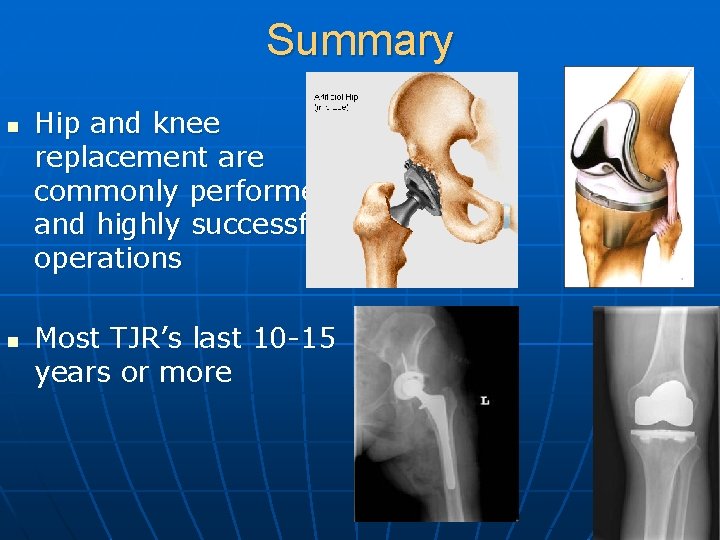
Summary n n Hip and knee replacement are commonly performed and highly successful operations Most TJR’s last 10 -15 years or more
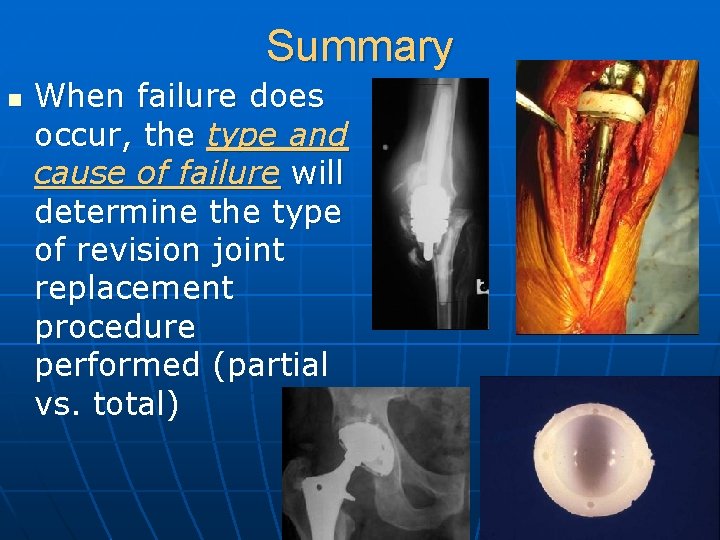
Summary n When failure does occur, the type and cause of failure will determine the type of revision joint replacement procedure performed (partial vs. total)
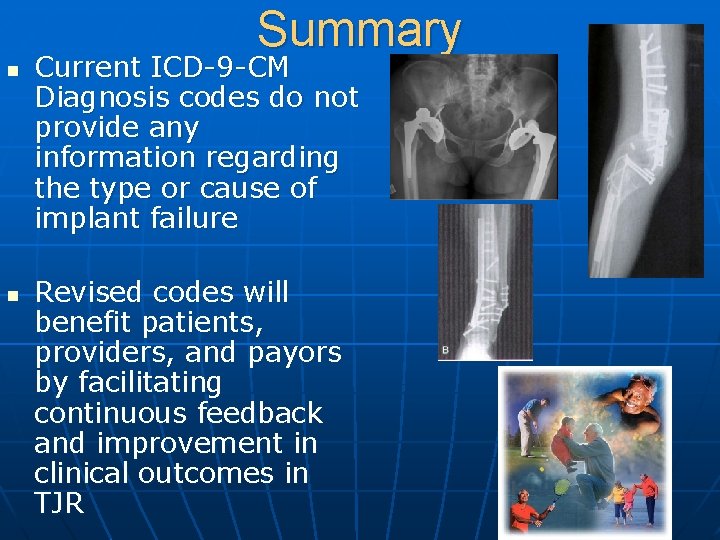
Summary n n Current ICD-9 -CM Diagnosis codes do not provide any information regarding the type or cause of implant failure Revised codes will benefit patients, providers, and payors by facilitating continuous feedback and improvement in clinical outcomes in TJR
Thank You!!!
Questions? ?