
Modernism and The Harlem Renaissance 1910 1940 Historical
- Slides: 17
Modernism and The Harlem Renaissance 1910 -1940
Historical Context • World War I – The Great War – Broke out in Europe in 1914 – Ended in 1918 – Involved 32 nations – New kind of war: • Massive scale • Weaponry reflecting technological advances – Signaled an end to idealism – Ushered in an era marked by hedonism, political corruption, and ruthless business practices
The Jazz Age • Disillusionment with traditional values led to escapement with entertainment • The 1920’s, with its booming economy, became known as The Roaring Twenties – Young people rebelled against values of past and authority of elders – Experiment with new fashions and attitudes – Actively seeking out fun and freedom
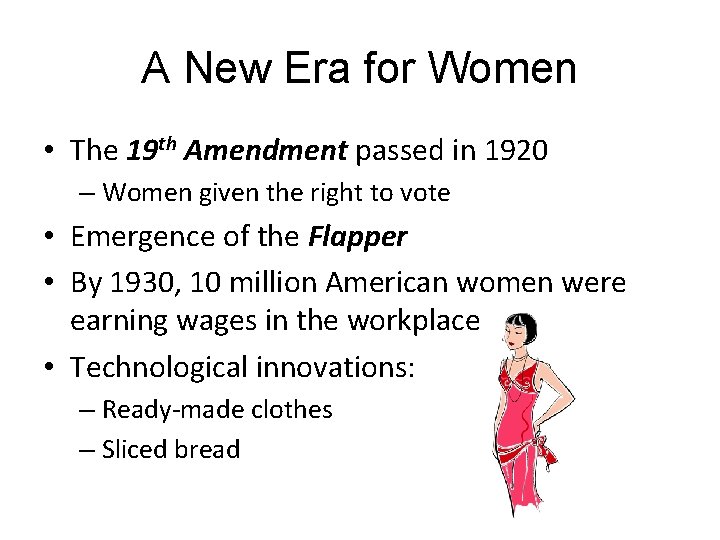
A New Era for Women • The 19 th Amendment passed in 1920 – Women given the right to vote • Emergence of the Flapper • By 1930, 10 million American women were earning wages in the workplace • Technological innovations: – Ready-made clothes – Sliced bread
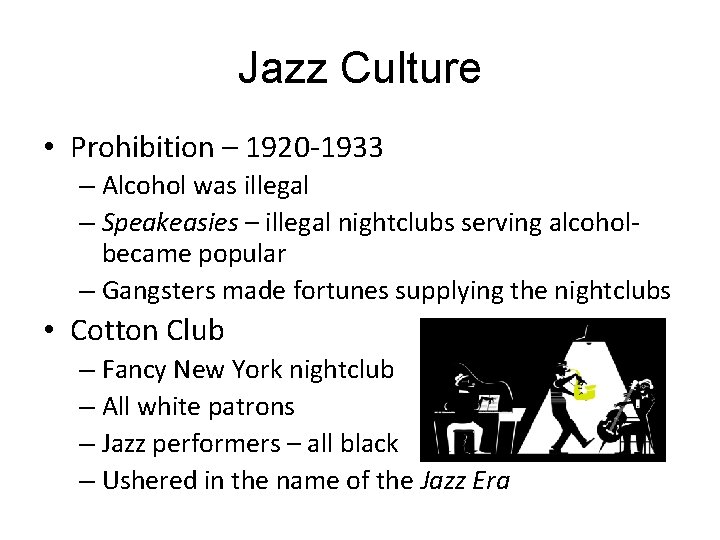
Jazz Culture • Prohibition – 1920 -1933 – Alcohol was illegal – Speakeasies – illegal nightclubs serving alcoholbecame popular – Gangsters made fortunes supplying the nightclubs • Cotton Club – Fancy New York nightclub – All white patrons – Jazz performers – all black – Ushered in the name of the Jazz Era
New Directions – Mass Culture • Mass Media – Advertising new goods allowed items once considered to be luxuries to be deemed necessities • Mass Production – Henry Ford perfected the assembly-line process • Convenience leads to Criticism – Significant writers began to criticize Americans’ conformity and materialism
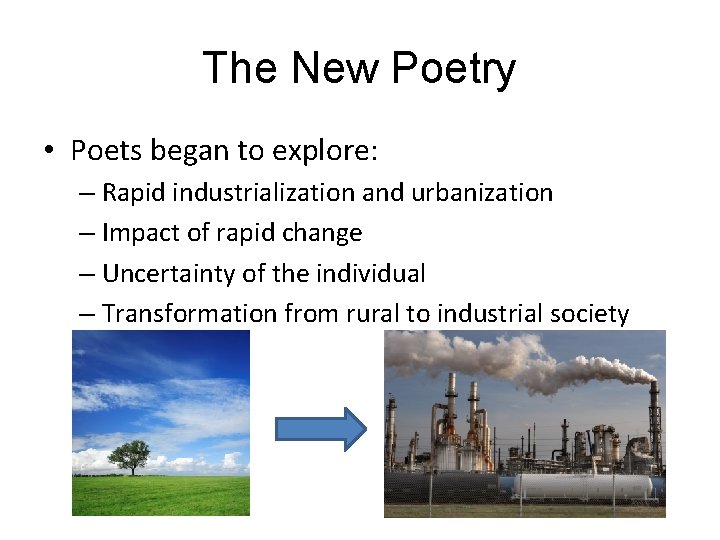
The New Poetry • Poets began to explore: – Rapid industrialization and urbanization – Impact of rapid change – Uncertainty of the individual – Transformation from rural to industrial society
Poetry - Modernism • Comprises a diversity of individual styles • Rejection of traditional subject matter and themes – Inability to connect (antithesis of love) – Focus on change and impermanence • Instead of heroes, focus on alienated individuals • Understatement and Irony (unlike Romantics and Transcendentalists) • Symbols and Images to suggest meaning
Poetry - Imagism • Seeks to re-create an image – Not comment or interpret an image – Simply present the image • Cast off sentimentality, formal structures, and rhyme schemes • Use of Free Verse – poetry without predictable rhyme or metric scheme
Poetry - Objectivism • Poets let the objects they render speak for themselves • Poets invite readers to experience the “homely simplicity of an object for no other reason than to understand its ‘this-ness’”
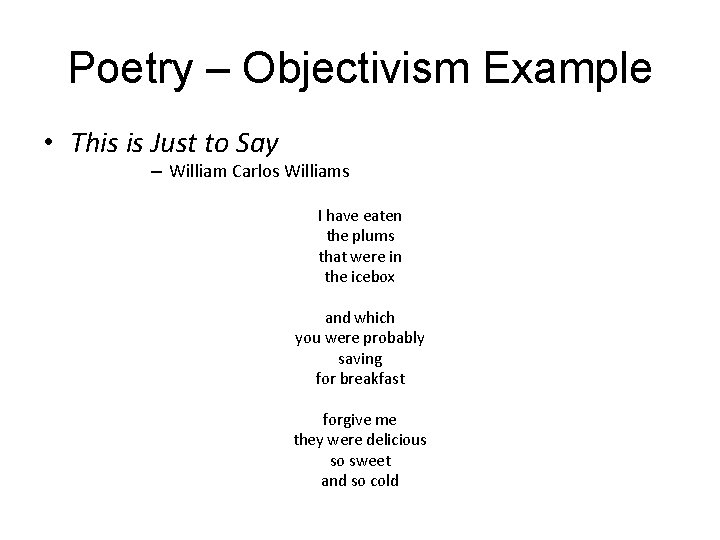
Poetry – Objectivism Example • This is Just to Say – William Carlos Williams I have eaten the plums that were in the icebox and which you were probably saving for breakfast forgive me they were delicious so sweet and so cold
The Modern Short Story • 1890 -1930 – called “The Age of the Short Story” • Americans wanted “fast” literature – much like fast food today • Growth of magazines allowed for high fees for short stories – F. Scott Fitzgerald received as much as $4, 000 for a single story – William Faulkner earned more from four short stories than he did from his first four novels
Short Story - Themes • With WWI, idealism turned to uncertainty • Writers sought to capture alienation and confusion • Some young American writers had such shattered foundations they were labeled “the lost generation” – Broke with traditional themes and styles of the past – Short, fragmented stories without traditional beginnings or endings – Left out narrative voice
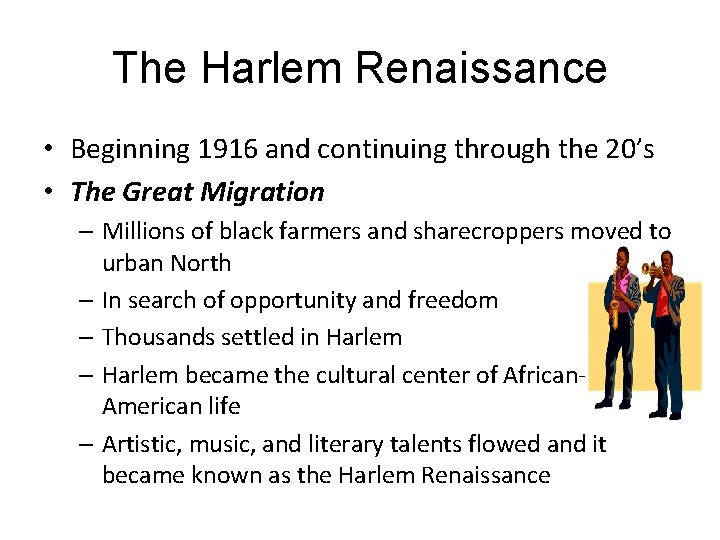
The Harlem Renaissance • Beginning 1916 and continuing through the 20’s • The Great Migration – Millions of black farmers and sharecroppers moved to urban North – In search of opportunity and freedom – Thousands settled in Harlem – Harlem became the cultural center of African. American life – Artistic, music, and literary talents flowed and it became known as the Harlem Renaissance
Harlem Renaissance – Literary Movement • Unofficial kickoff: – Dinner given March 21, 1924 – Nation’s most celebrated thinkers and writers – black and white- met at New York City’s Civic Club – Sponsored by older generation of black intellectuals – Dinner was for the younger, influential writers
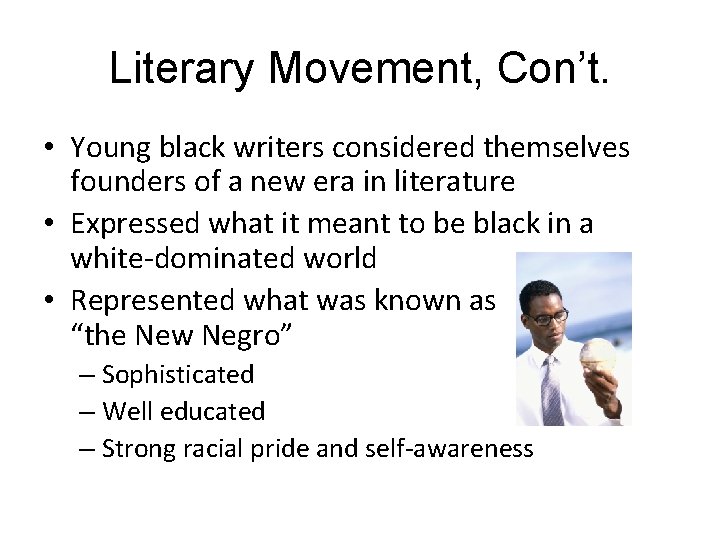
Literary Movement, Con’t. • Young black writers considered themselves founders of a new era in literature • Expressed what it meant to be black in a white-dominated world • Represented what was known as “the New Negro” – Sophisticated – Well educated – Strong racial pride and self-awareness
End of an Era • Harlem Renaissance brought to an end due to the Great Depression – Many writers in Harlem had to scatter and take other jobs to support themselves – However, their work planted seeds that continue to generate important writing from the African-American perspective