
Modern World History Christianity Jews and the Roman
- Slides: 11
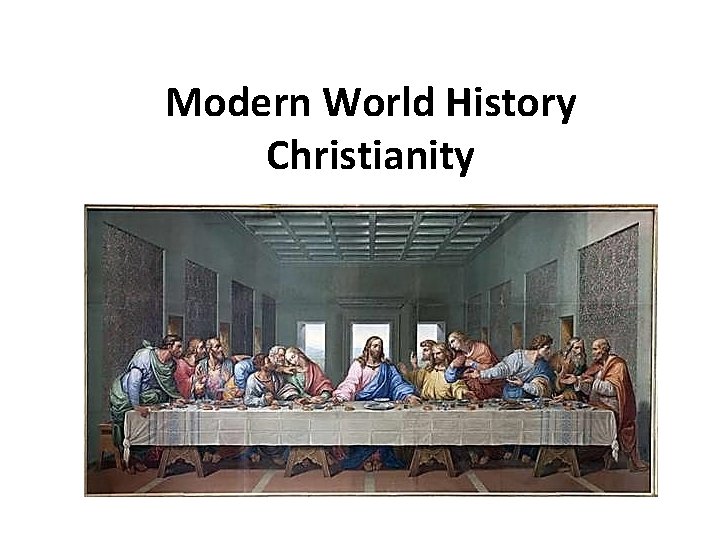
Modern World History Christianity
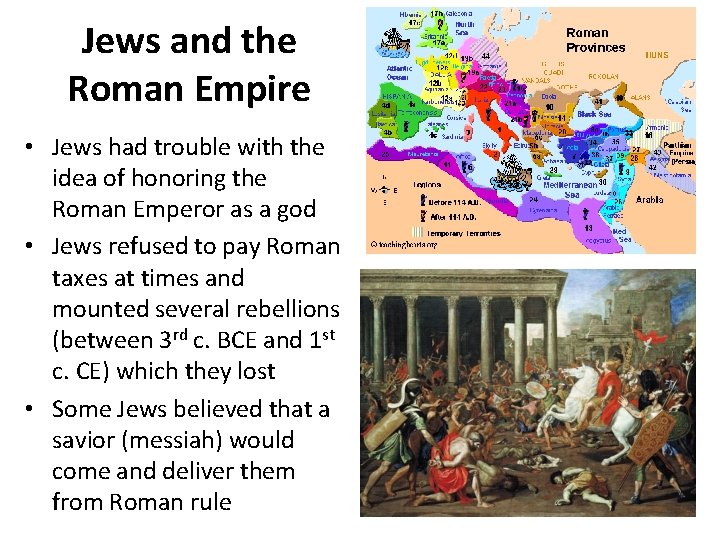
Jews and the Roman Empire • Jews had trouble with the idea of honoring the Roman Emperor as a god • Jews refused to pay Roman taxes at times and mounted several rebellions (between 3 rd c. BCE and 1 st c. CE) which they lost • Some Jews believed that a savior (messiah) would come and deliver them from Roman rule
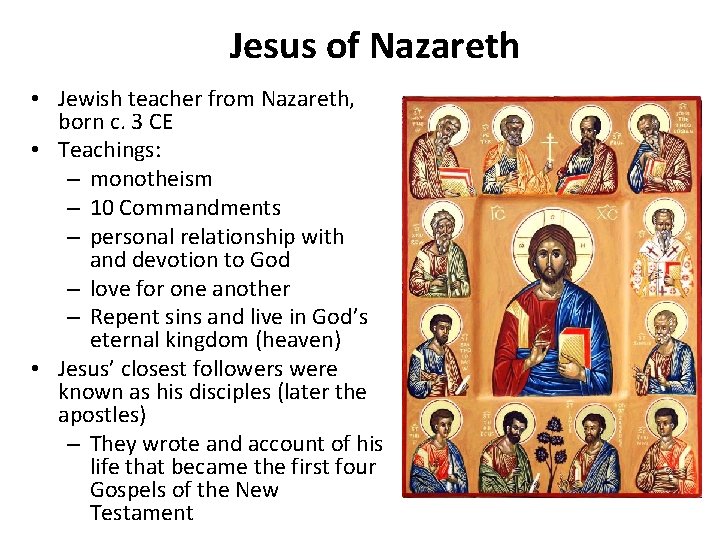
Jesus of Nazareth • Jewish teacher from Nazareth, born c. 3 CE • Teachings: – monotheism – 10 Commandments – personal relationship with and devotion to God – love for one another – Repent sins and live in God’s eternal kingdom (heaven) • Jesus’ closest followers were known as his disciples (later the apostles) – They wrote and account of his life that became the first four Gospels of the New Testament
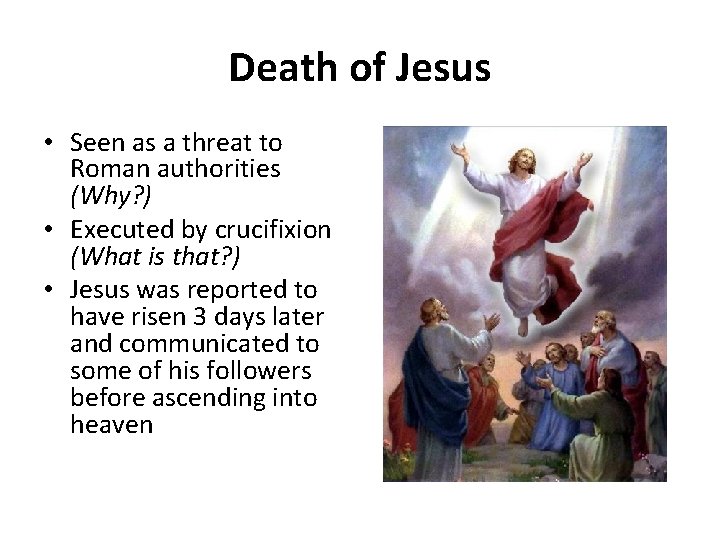
Death of Jesus • Seen as a threat to Roman authorities (Why? ) • Executed by crucifixion (What is that? ) • Jesus was reported to have risen 3 days later and communicated to some of his followers before ascending into heaven
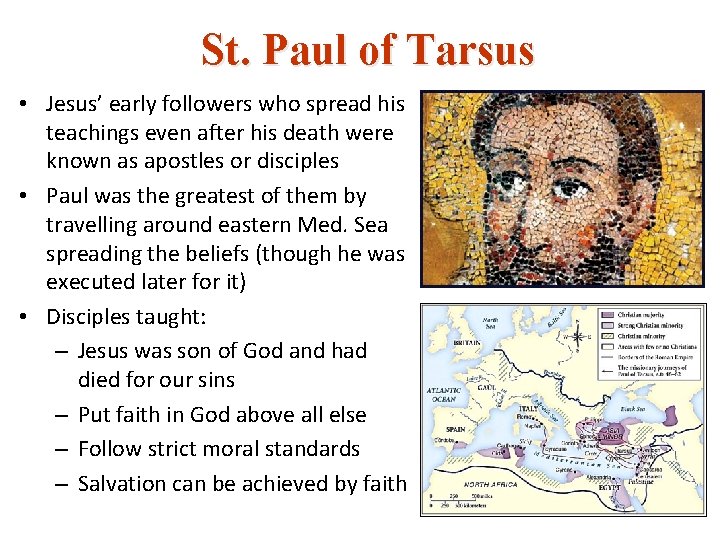
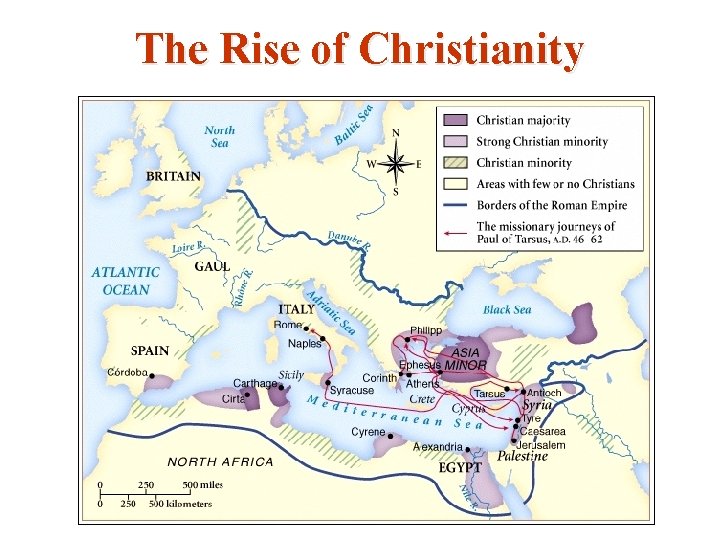
St. Paul of Tarsus • Jesus’ early followers who spread his teachings even after his death were known as apostles or disciples • Paul was the greatest of them by travelling around eastern Med. Sea spreading the beliefs (though he was executed later for it) • Disciples taught: – Jesus was son of God and had died for our sins – Put faith in God above all else – Follow strict moral standards – Salvation can be achieved by faith
The Rise of Christianity
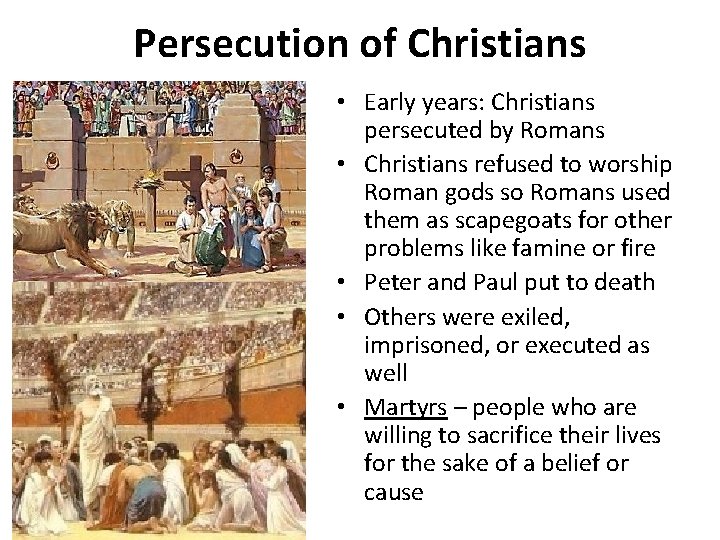
Persecution of Christians • Early years: Christians persecuted by Romans • Christians refused to worship Roman gods so Romans used them as scapegoats for other problems like famine or fire • Peter and Paul put to death • Others were exiled, imprisoned, or executed as well • Martyrs – people who are willing to sacrifice their lives for the sake of a belief or cause
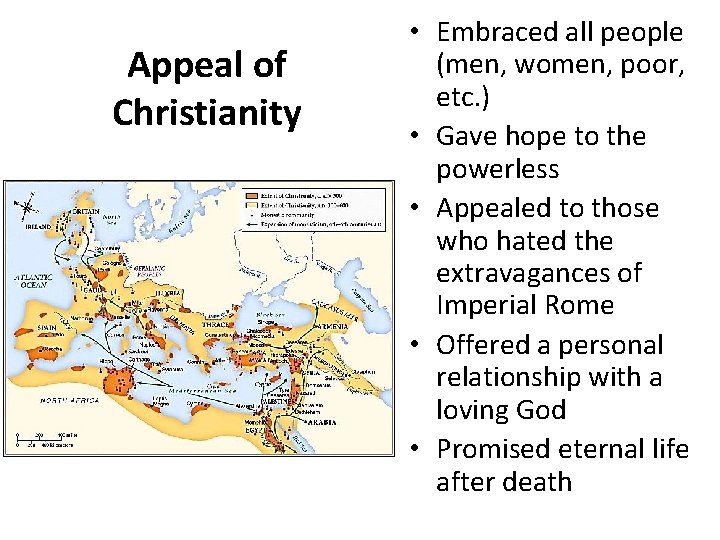
Appeal of Christianity • Embraced all people (men, women, poor, etc. ) • Gave hope to the powerless • Appealed to those who hated the extravagances of Imperial Rome • Offered a personal relationship with a loving God • Promised eternal life after death
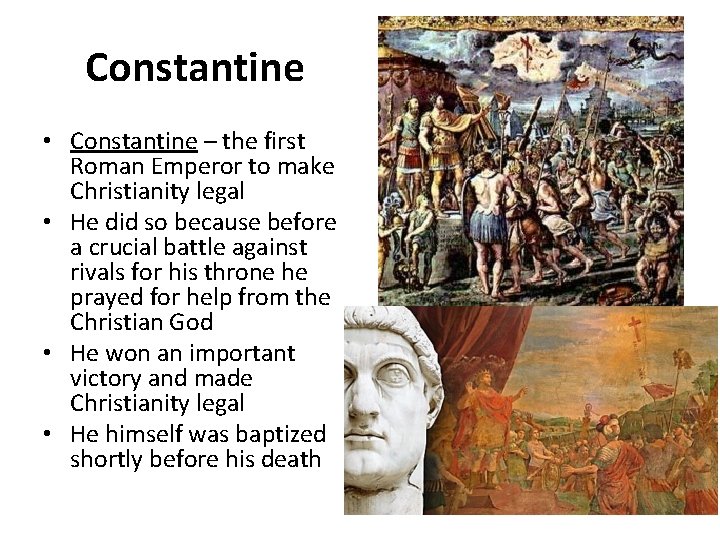
Constantine • Constantine – the first Roman Emperor to make Christianity legal • He did so because before a crucial battle against rivals for his throne he prayed for help from the Christian God • He won an important victory and made Christianity legal • He himself was baptized shortly before his death
Christianity Definitions Roman Catholic • Bishop – a priest who supervised several local churches • Pope – father or head of the Christian church who was the Bishop of Rome and the Roman Catholic Church • Heresy – any belief that appeared to contradict the basic teachings of the Church Eastern Orthodox • Patriarch – bishop of Constantinople who was the leader of the Eastern Orthodox Church who was under the power of the emperor • Excommunication – the declaring of someone(by the Pope or the Patriarch) to be outcast from the Church) • Schism – means split (refers to the permanent split between the Eastern Orthodox Church and the western Roman Catholic Church
The Great Schism Differences Between the 2 Branches Roman Catholic Eastern Orthodox • Services in Latin • Pope authority over bishops • Pope authority over kings and emperors • Priests can’t marry • Divorce not permitted • Services in Greek • Patriarch and the top bishops head the church • Emperor claims authority over the Patriarch and the bishops • Priests may be married • Divorce allowed under certain circumstances