
Modern U S History The Living Constitution The
- Slides: 51
Modern U. S. History The Living Constitution
The 7 “Principles” of the Constitution Popular Sovereignty Republicanism Federalism Separation of Powers Checks and Balances Limited Government Individual Rights
Popular Sovereignty Popular Sovereignty: a government in which the people rule. Preamble: “We the people of the United States establish the Constitution for the United States of America”
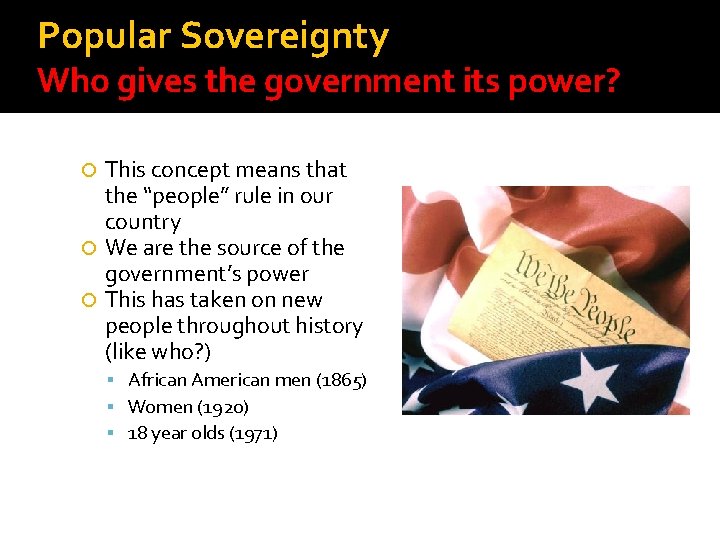
Popular Sovereignty Who gives the government its power? This concept means that the “people” rule in our country We are the source of the government’s power This has taken on new people throughout history (like who? ) African American men (1865) Women (1920) 18 year olds (1971)
Republicanism Republicanism: based on the belief that the people exercise their power by voting (the power of the ballot prompts candidates to listen to peoples concerns) The Framers believed that people exercise their power by voting The Constitution calls for every state to have a “republican form of government”.
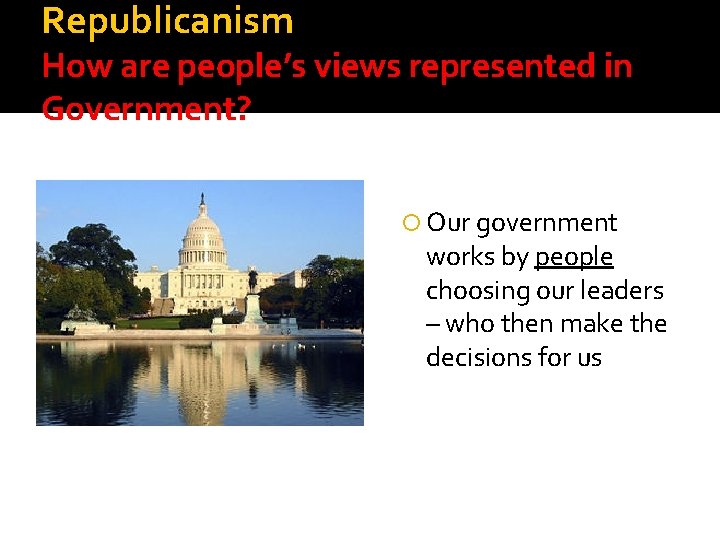
Republicanism How are people’s views represented in Government? Our government works by people choosing our leaders – who then make the decisions for us
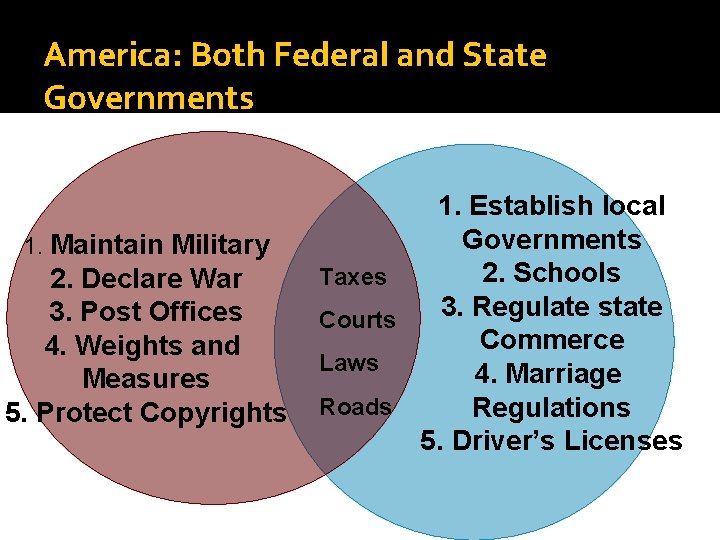
Federalism Federalism: a system of government in which power is divided between a central government and small political units (states). The Framers wanted the states and nation to become partners in governing. Delegated Powers – power granted to the national government Reserved Powers – powers granted to the state governments Concurrent Powers – powers shared by national and state governments
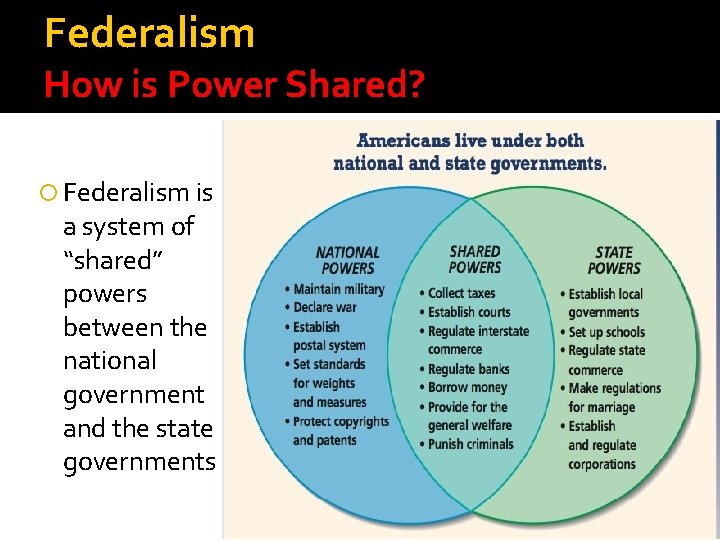
Federalism How is Power Shared? Federalism is a system of “shared” powers between the national government and the state governments
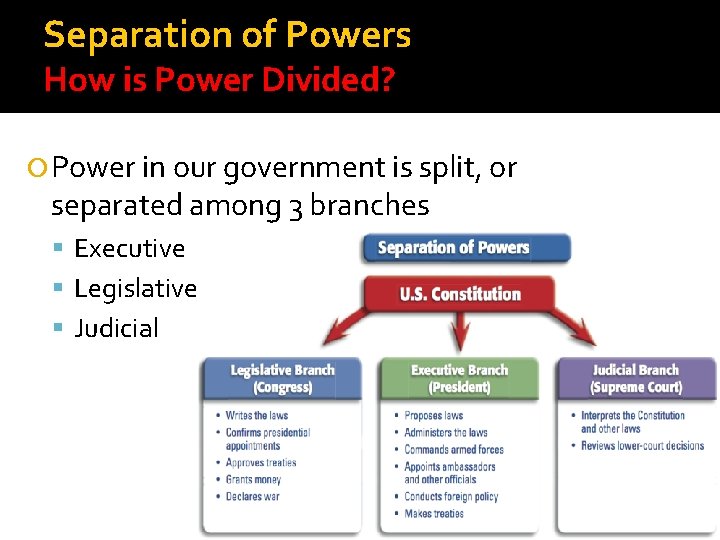
Separation of Powers Separation of Powers: the division of basic government roles into branches (no one branch is given all the power). The Framers were concerned that too much power might fall in the hands of a single group. Legislative Branch – Congress makes the laws Executive Branch – President enforces the laws Judicial Branch – Supreme Court interprets the laws
Separation of Powers How is Power Divided? Power in our government is split, or separated among 3 branches Executive Legislative Judicial
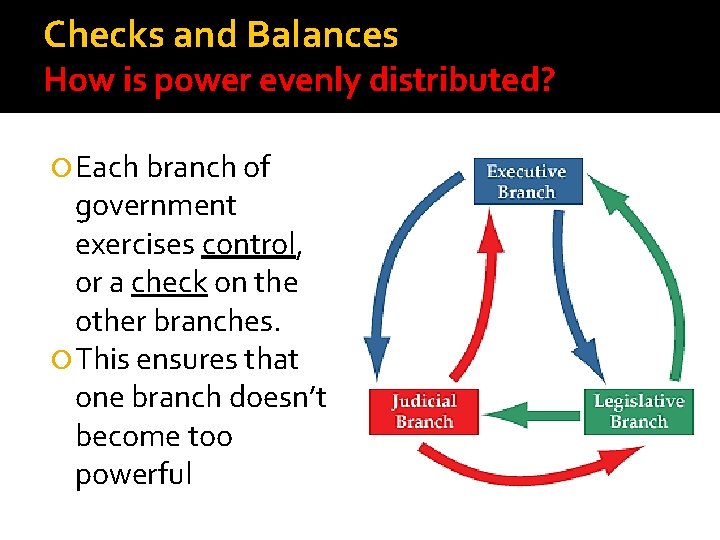
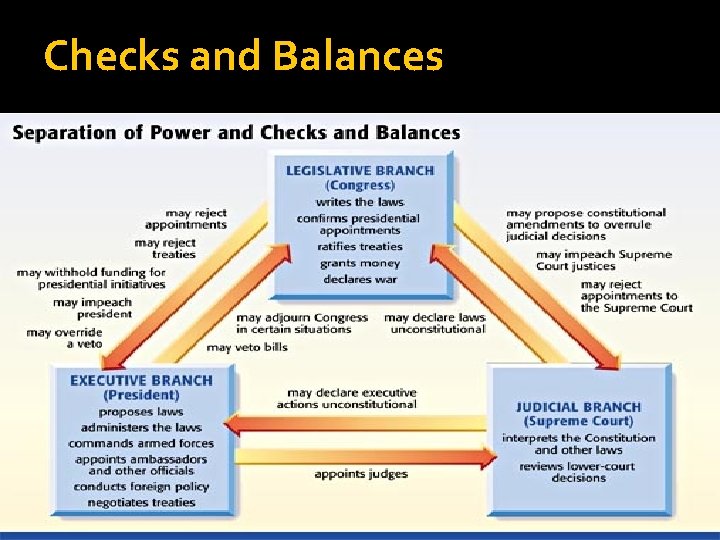
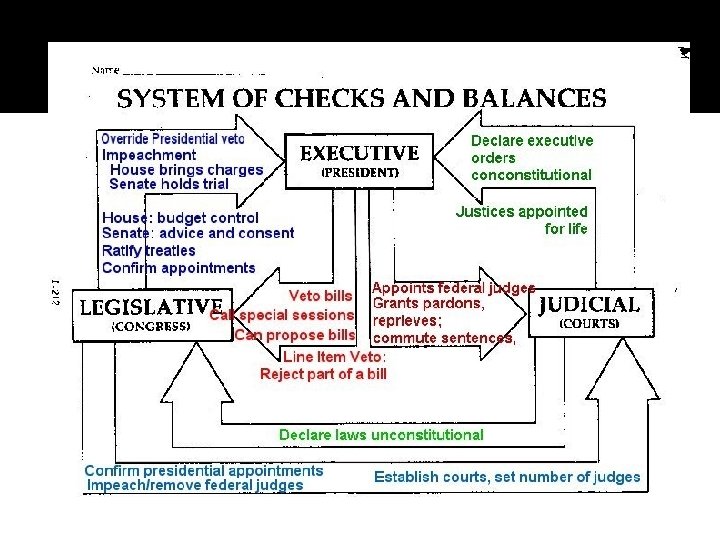
Checks and Balances Checks and Balances: each branch of government can exercise checks, or controls, over the other branches. The Framers included a system of checks and balances in the Constitution to make sure that the branches work together fairly.
Checks and Balances How is power evenly distributed? Each branch of government exercises control, or a check on the other branches. This ensures that one branch doesn’t become too powerful
Checks and Balances
Limited Government Limited Government: “rule of law” The Framers restricted the power of the government Article 1 Section 9 – Powers denied to Congress Article 1 Section 10 – Powers denied to states
Limited Government Limited Government: Constitution lists things that the government cannot do. It also explain how all citizens, weak or strong, must obey the law
Individual Rights Individual Rights: Bill of Rights guarantees certain individual rights or personal liberties and privileges.
Individual Rights How are personal freedoms prevented? Individual Rights: People get certain individual privileges – protections from powerful government
Elastic Clause Congress is granted the power “to make all laws necessary and proper” for carrying out all of the powers given to it by the Constitution This allows future generations to expand the meaning of the Constitution to apply to new situations as they come up What kinds of things would that Framers of the Constitution not be able to anticipate?
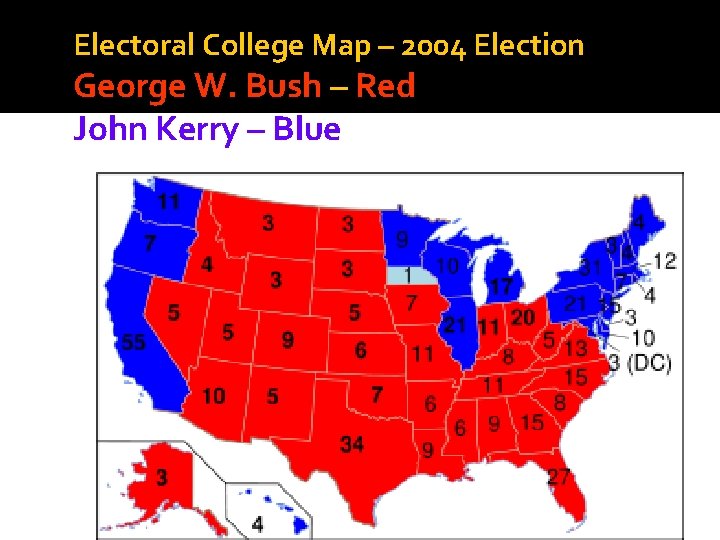
The Electoral College Voters don’t choose President directly Each state has “electors” that make up the Electoral College Number of electors per state determined by the number of Senators and members of the House of Reps. that the state has Winner take all – meaning that if a candidate wins a state – they get all of that state’s ‘electors’ (with some exceptions)
Electoral College Map – 2004 Election George W. Bush – Red John Kerry – Blue
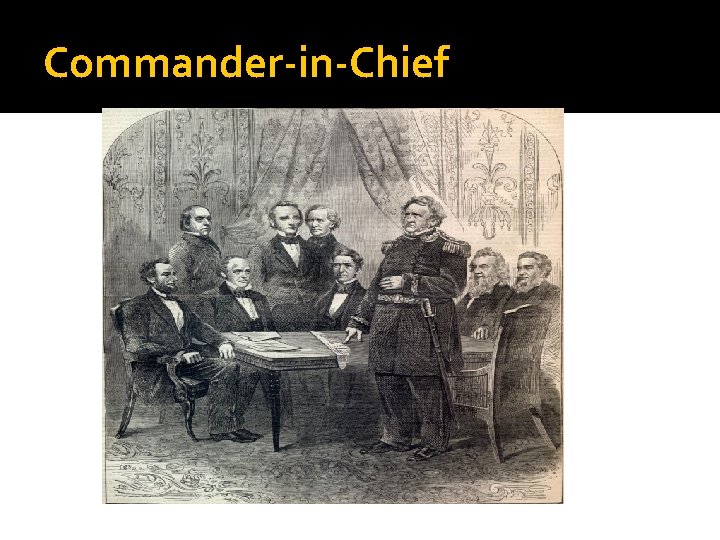
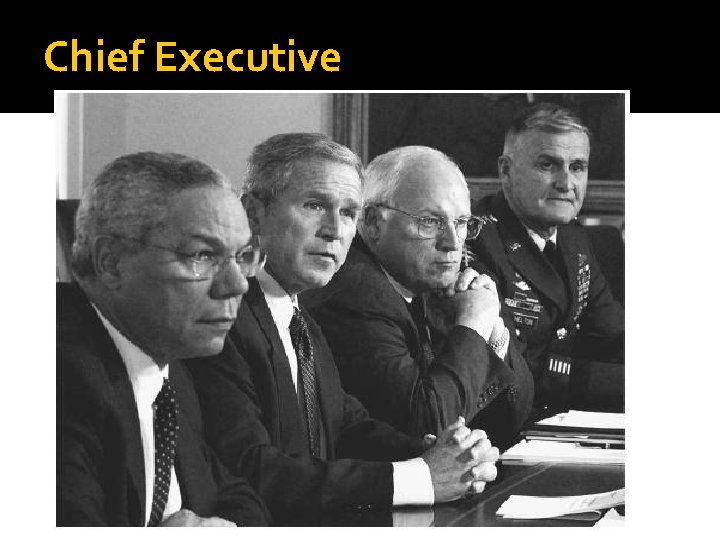
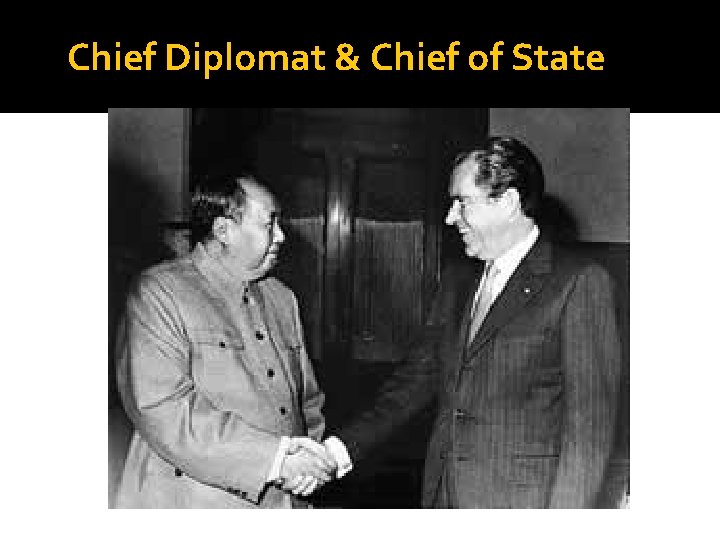
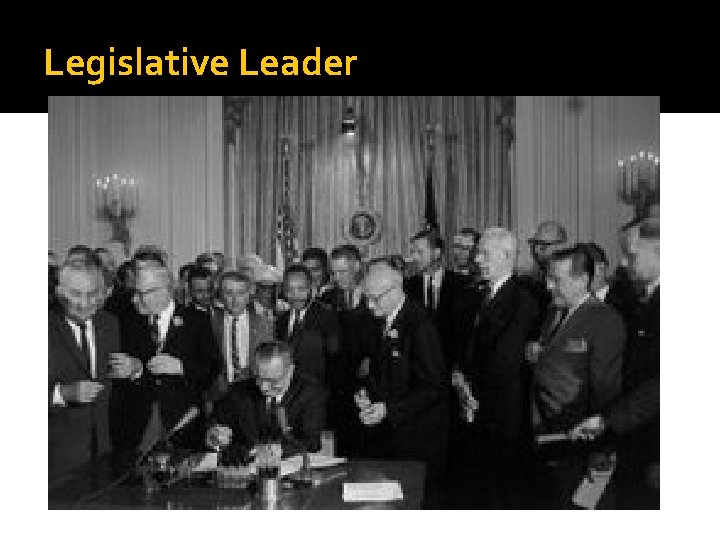
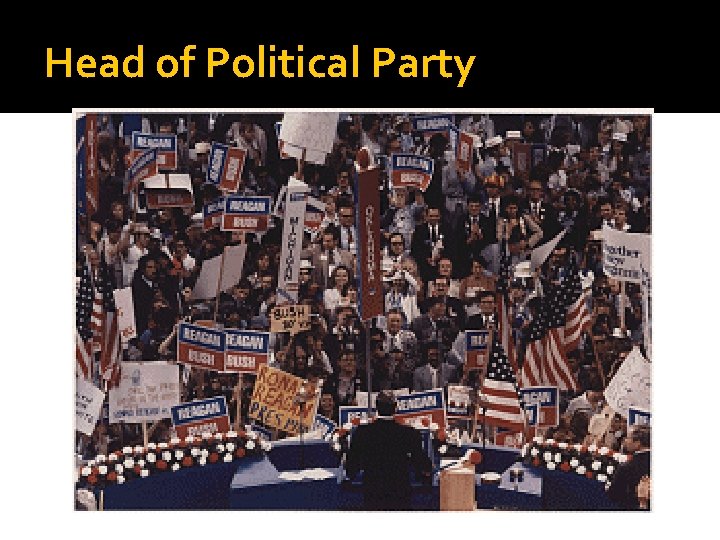
Roles of the President Commander-in-Chief Executive Chief Diplomat Legislative Leader Head of Political Party
Commander-in-Chief
Chief Executive
Chief Diplomat & Chief of State
Legislative Leader
Head of Political Party
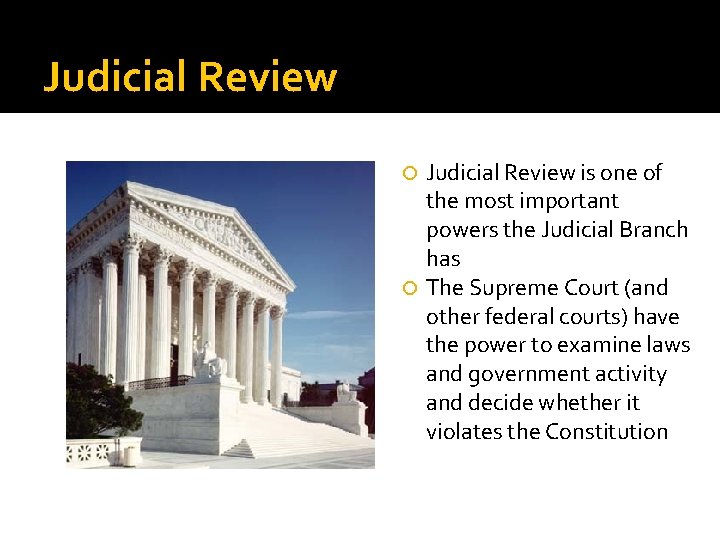
Judicial Review is one of the most important powers the Judicial Branch has The Supreme Court (and other federal courts) have the power to examine laws and government activity and decide whether it violates the Constitution
America: Both Federal and State Governments 1. Maintain Military 2. Declare War 3. Post Offices 4. Weights and Measures 5. Protect Copyrights 1. Establish local Governments 2. Schools Taxes 3. Regulate state Courts Commerce Laws 4. Marriage Roads Regulations 5. Driver’s Licenses
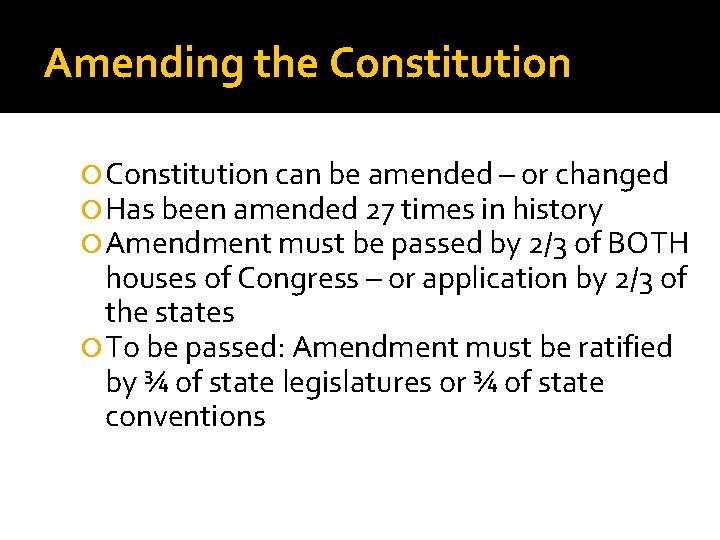
Amending the Constitution can be amended – or changed Has been amended 27 times in history Amendment must be passed by 2/3 of BOTH houses of Congress – or application by 2/3 of the states To be passed: Amendment must be ratified by ¾ of state legislatures or ¾ of state conventions
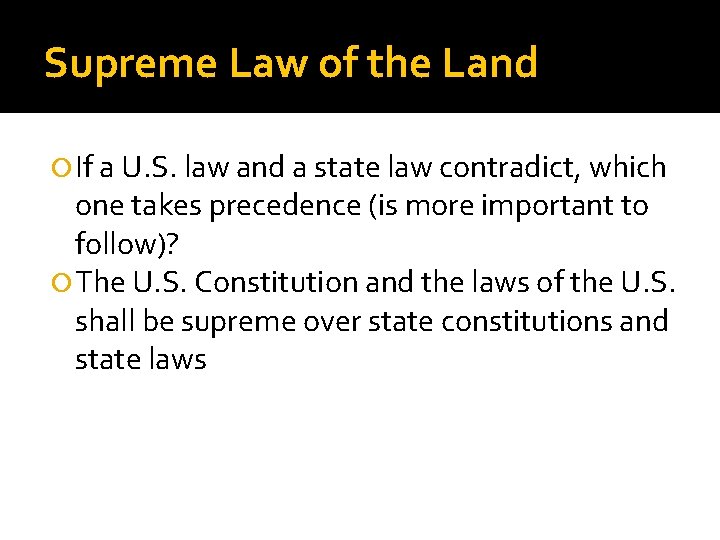
Supreme Law of the Land If a U. S. law and a state law contradict, which one takes precedence (is more important to follow)? The U. S. Constitution and the laws of the U. S. shall be supreme over state constitutions and state laws
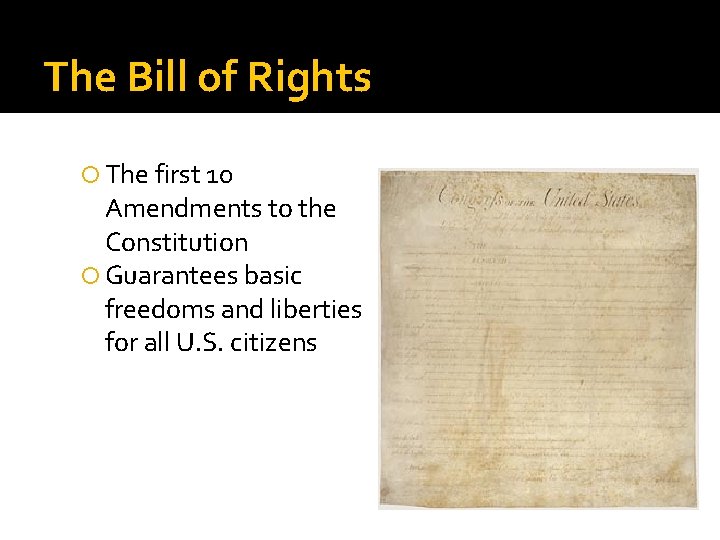
The Bill of Rights The first 10 Amendments to the Constitution Guarantees basic freedoms and liberties for all U. S. citizens
The 1 st Amendment guarantees Freedom of Religion Freedom of Speech Freedom of the Press Freedom of Assembly Freedom to Petition the Government
Amendments 2 -4 The 2 nd Amendment: Citizens have the right to keep and bear arms The 3 rd Amendment: The government cannot quarter troops in your home The 4 th Amendment: Citizens have protection against illegal searches and seizures (gov’t must obtain a warrant & have probable cause to conduct a search)
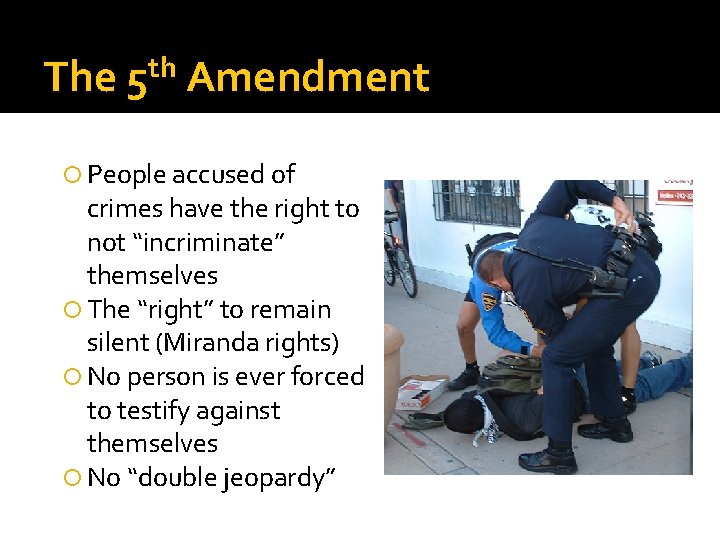
The 5 th Amendment People accused of crimes have the right to not “incriminate” themselves The “right” to remain silent (Miranda rights) No person is ever forced to testify against themselves No “double jeopardy”
Amendments 6 -8: Protects those accused of crimes 6 th Amendment: Right to a Speedy and Public Trial (also the right to hear the charges, right to call witnesses in your favor, and right to an attorney) 7 th Amendment: Trial by Jury in Civil cases 8 th Amendment: Limits of Fines and Punishments (no ‘excessive’ bail, or ‘cruel and unusual’ punishment) 9 th Amendment: Addresses the rights of people that aren’t specifically stated in the Constitution 10 th Amendment: Says that anything the Constitution doesn’t mention is left up to the states
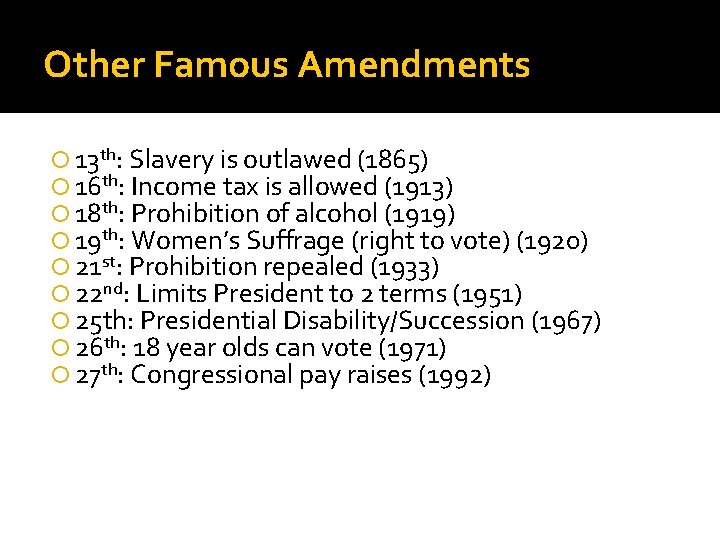
Other Famous Amendments 13 th: Slavery is outlawed (1865) 16 th: Income tax is allowed (1913) 18 th: Prohibition of alcohol (1919) 19 th: Women’s Suffrage (right to vote) (1920) 21 st: Prohibition repealed (1933) 22 nd: Limits President to 2 terms (1951) 25 th: Presidential Disability/Succession (1967) 26 th: 18 year olds can vote (1971) 27 th: Congressional pay raises (1992)
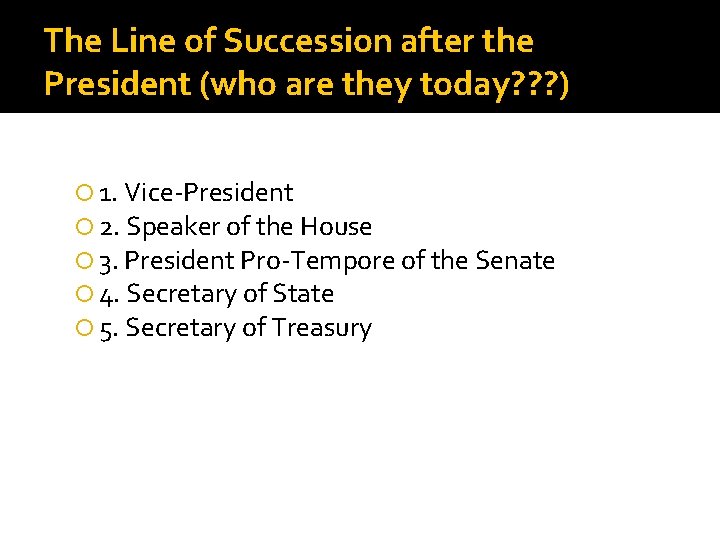
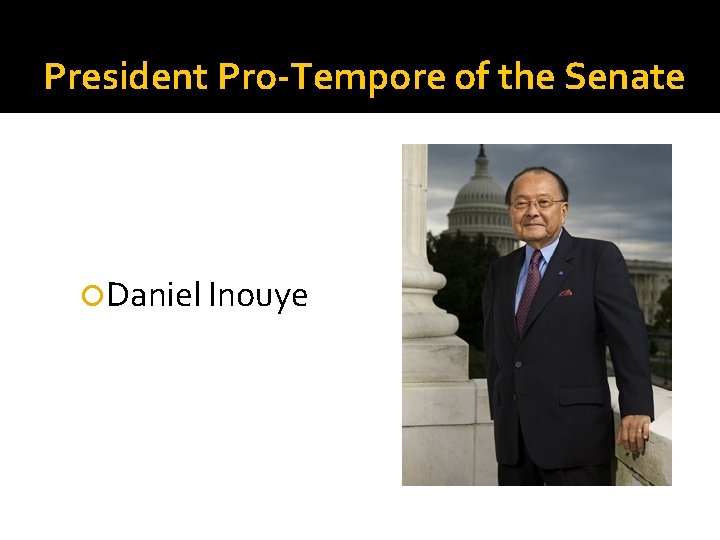
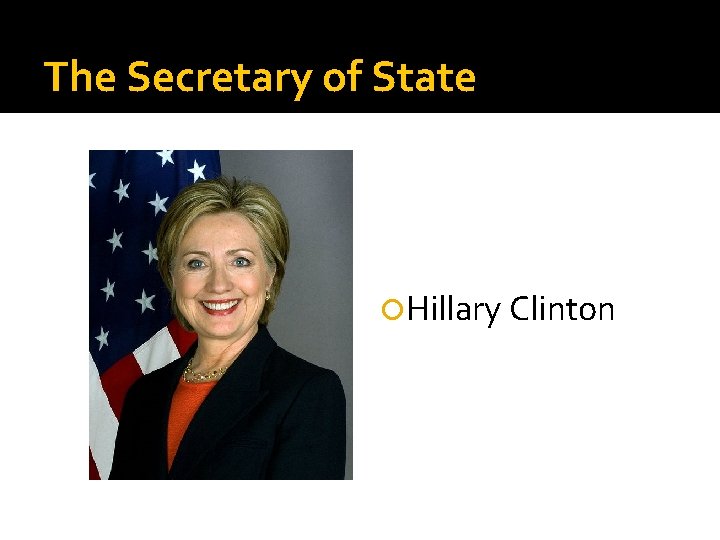
The Line of Succession after the President (who are they today? ? ? ) 1. Vice-President 2. Speaker of the House 3. President Pro-Tempore of the Senate 4. Secretary of State 5. Secretary of Treasury
Executive Departments (The President’s Cabinet) Leaders of all the Executive Departments serve in the President’s Cabinet – or closest group of advisors
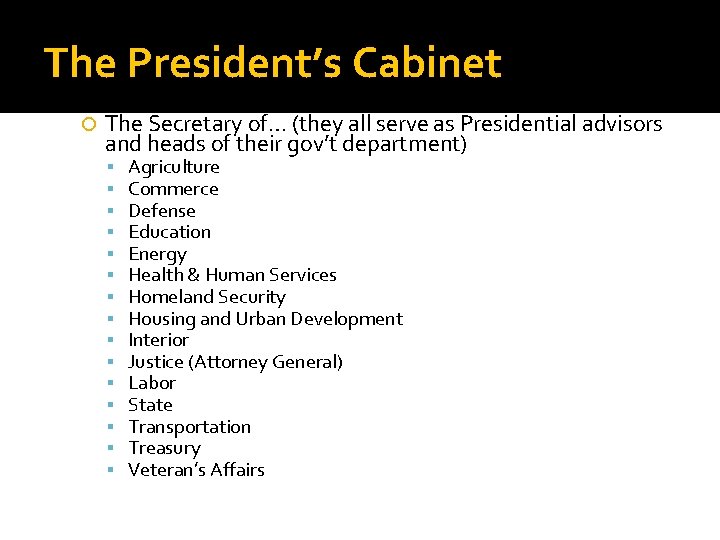
The President’s Cabinet The Secretary of… (they all serve as Presidential advisors and heads of their gov’t department) Agriculture Commerce Defense Education Energy Health & Human Services Homeland Security Housing and Urban Development Interior Justice (Attorney General) Labor State Transportation Treasury Veteran’s Affairs
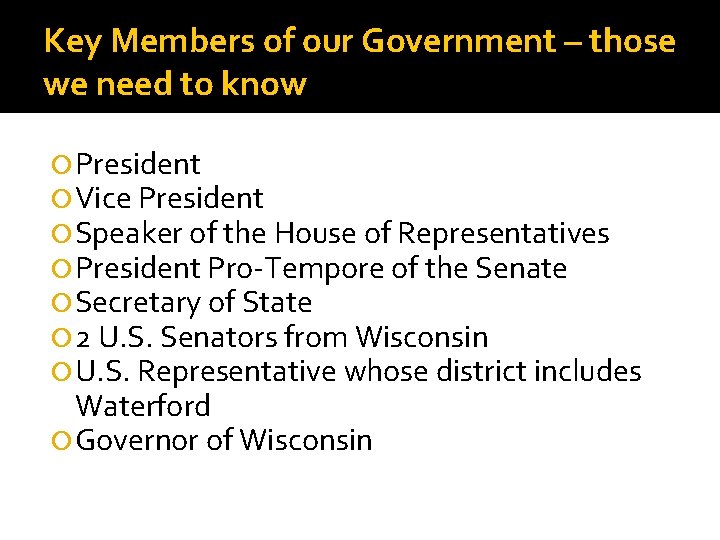
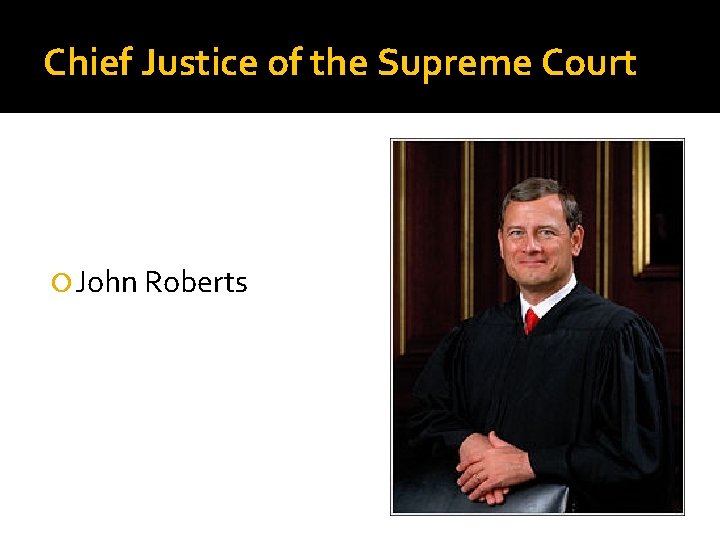
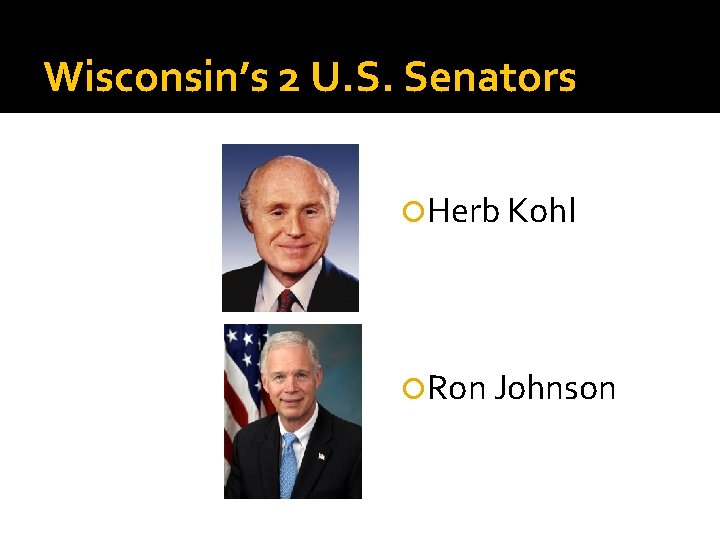
Key Members of our Government – those we need to know President Vice President Speaker of the House of Representatives President Pro-Tempore of the Senate Secretary of State 2 U. S. Senators from Wisconsin U. S. Representative whose district includes Waterford Governor of Wisconsin
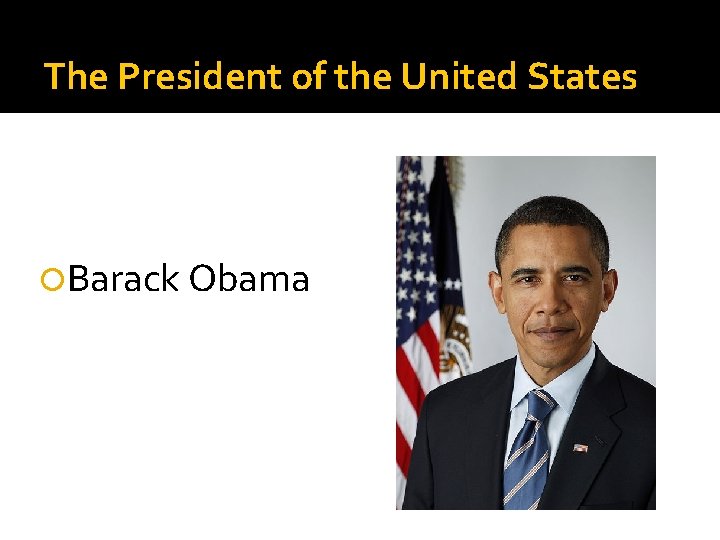
The President of the United States Barack Obama
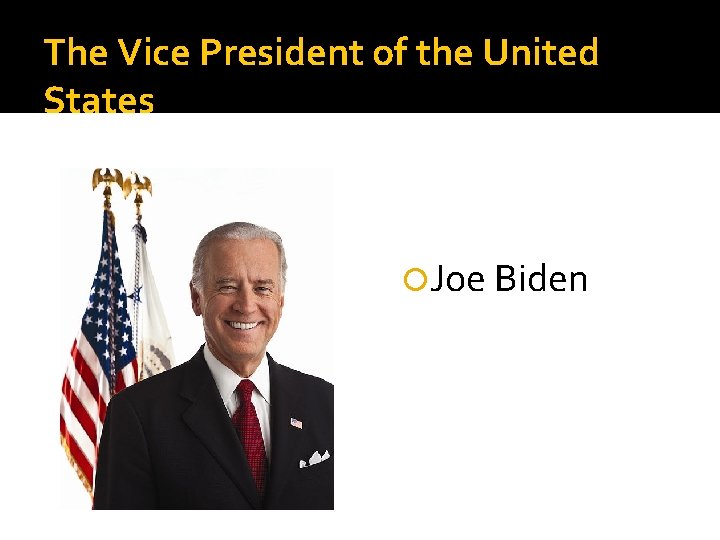
The Vice President of the United States Joe Biden
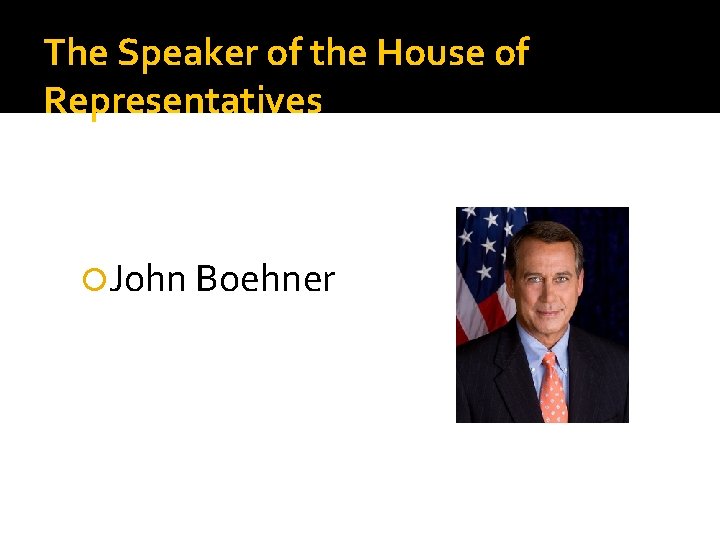
The Speaker of the House of Representatives John Boehner
President Pro-Tempore of the Senate Daniel Inouye
The Secretary of State Hillary Clinton
Chief Justice of the Supreme Court John Roberts
Wisconsin’s 2 U. S. Senators Herb Kohl Ron Johnson
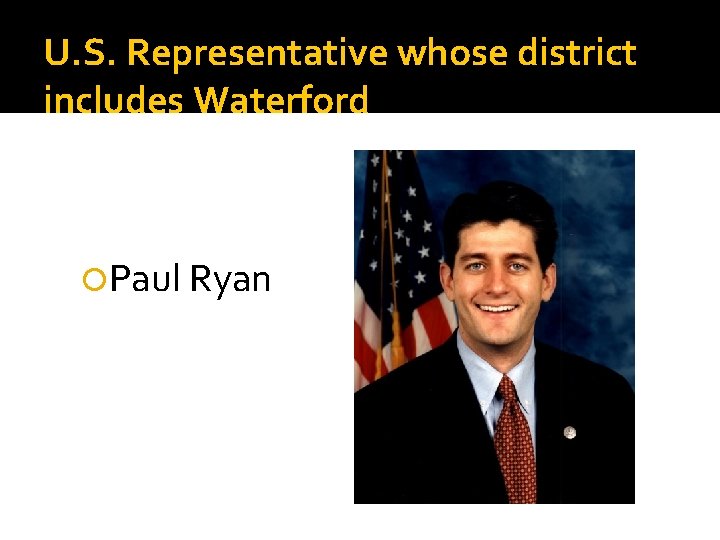
U. S. Representative whose district includes Waterford Paul Ryan
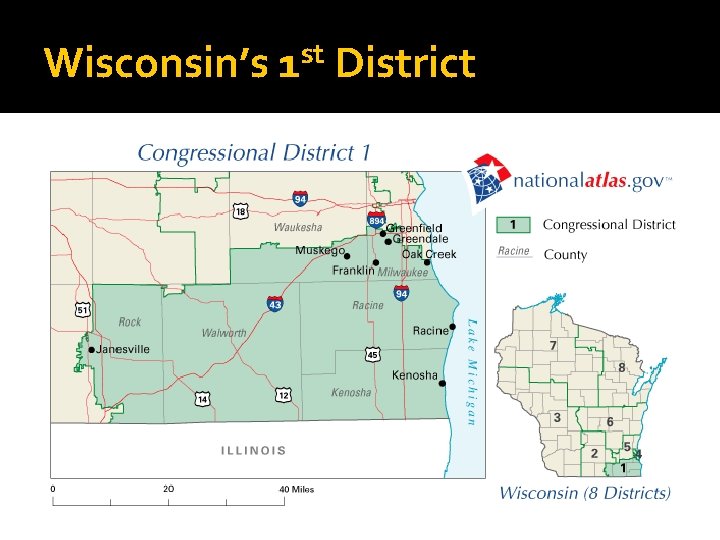
Wisconsin’s st 1 District
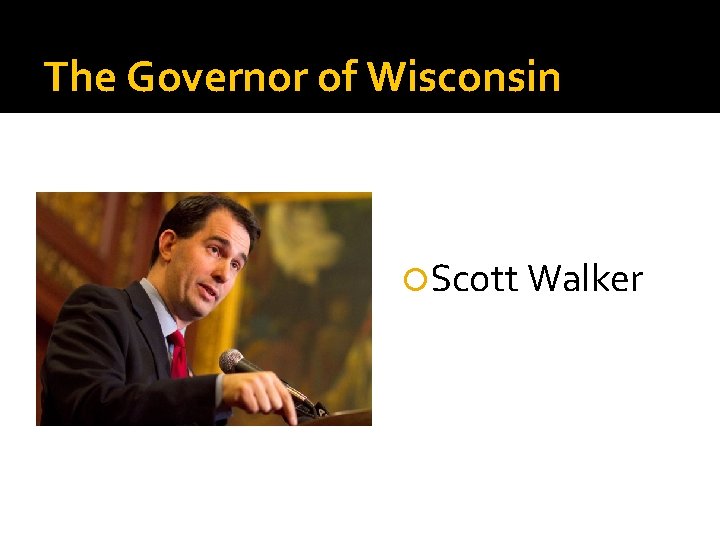
The Governor of Wisconsin Scott Walker