
Modern Theory of employment Effective Demand Keynesian principle
- Slides: 7
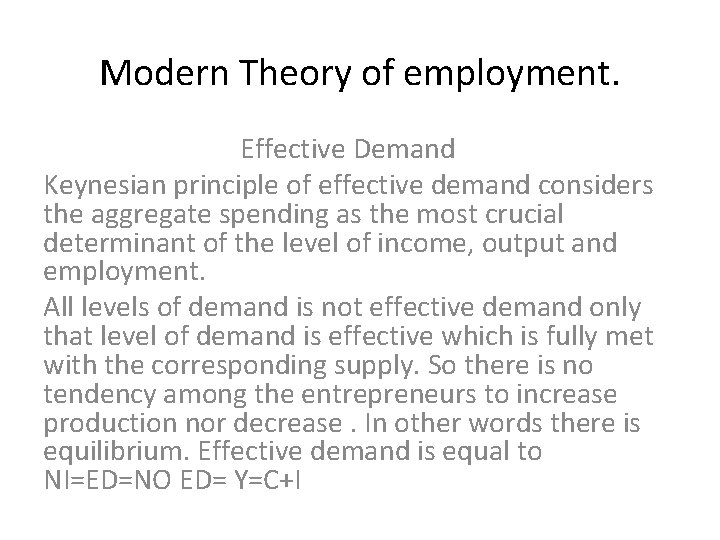
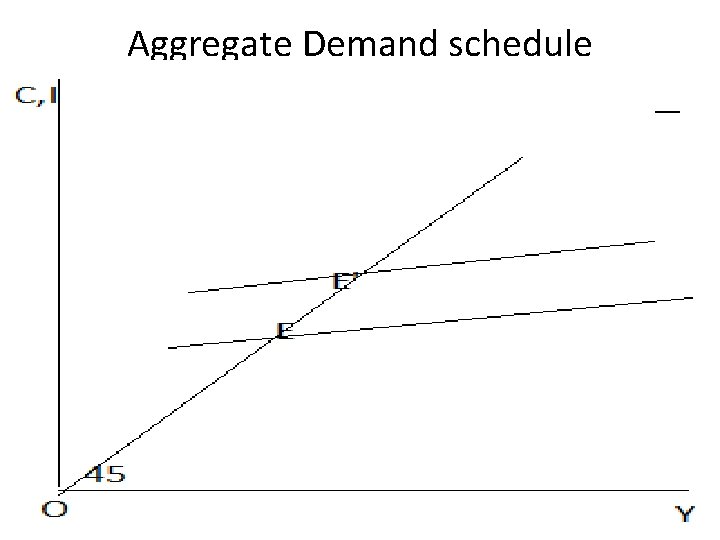
Modern Theory of employment. Effective Demand Keynesian principle of effective demand considers the aggregate spending as the most crucial determinant of the level of income, output and employment. All levels of demand is not effective demand only that level of demand is effective which is fully met with the corresponding supply. So there is no tendency among the entrepreneurs to increase production nor decrease. In other words there is equilibrium. Effective demand is equal to NI=ED=NO ED= Y=C+I
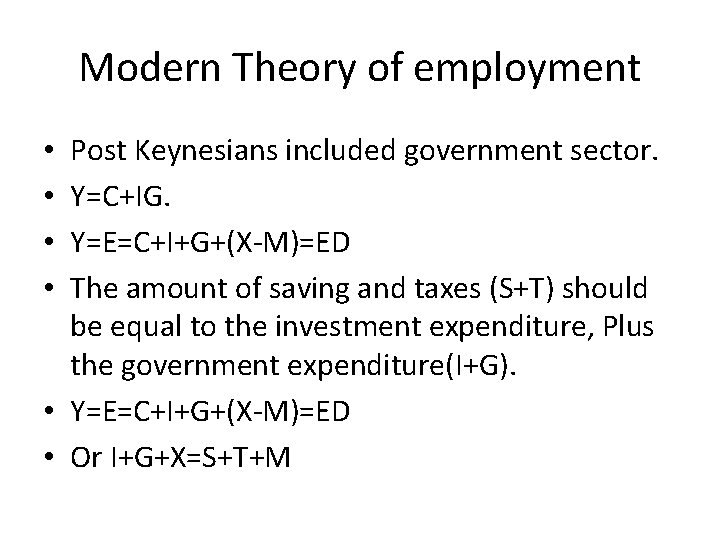
Modern Theory of employment Post Keynesians included government sector. Y=C+IG. Y=E=C+I+G+(X-M)=ED The amount of saving and taxes (S+T) should be equal to the investment expenditure, Plus the government expenditure(I+G). • Y=E=C+I+G+(X-M)=ED • Or I+G+X=S+T+M • •
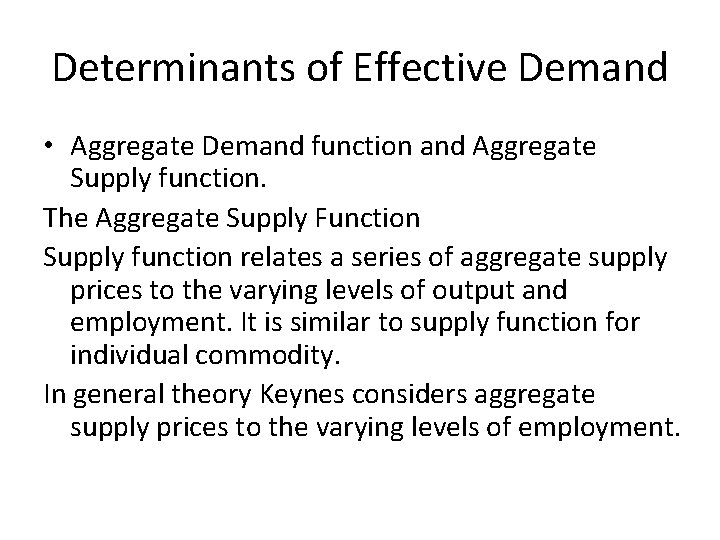
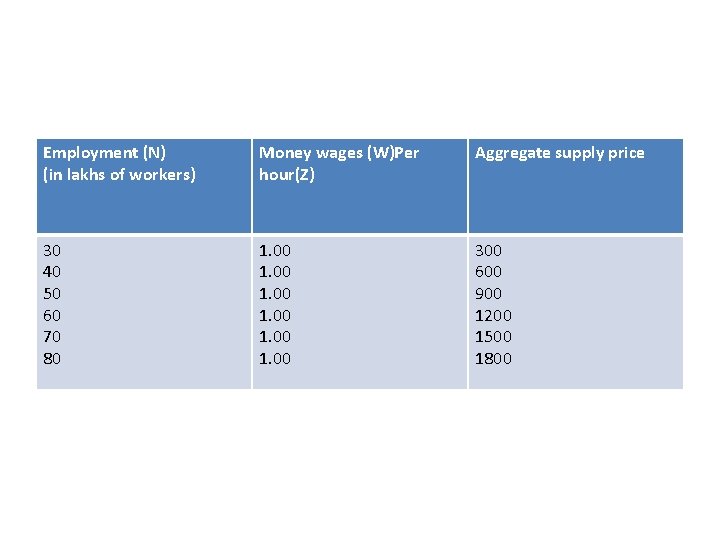
Determinants of Effective Demand • Aggregate Demand function and Aggregate Supply function. The Aggregate Supply Function Supply function relates a series of aggregate supply prices to the varying levels of output and employment. It is similar to supply function for individual commodity. In general theory Keynes considers aggregate supply prices to the varying levels of employment.
Employment (N) (in lakhs of workers) Money wages (W)Per hour(Z) Aggregate supply price 30 40 50 60 70 80 1. 00 300 600 900 1200 1500 1800
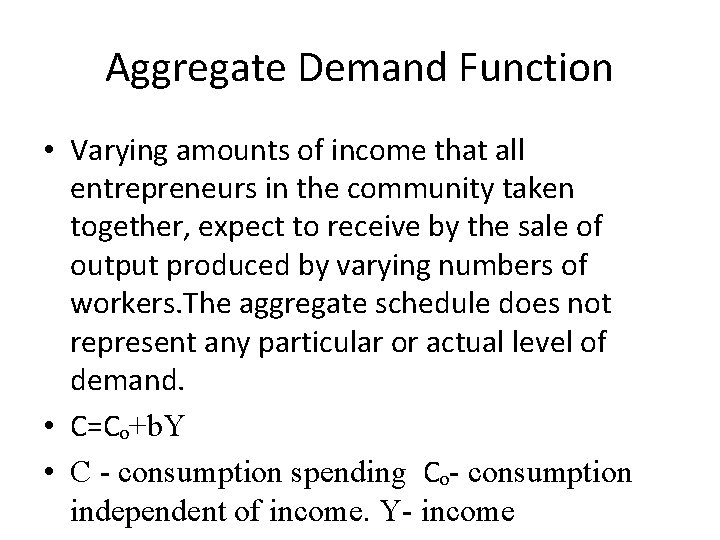
Aggregate Demand Function • Varying amounts of income that all entrepreneurs in the community taken together, expect to receive by the sale of output produced by varying numbers of workers. The aggregate schedule does not represent any particular or actual level of demand. • C=Cₒ+b. Y • C - consumption spending Cₒ- consumption independent of income. Y- income
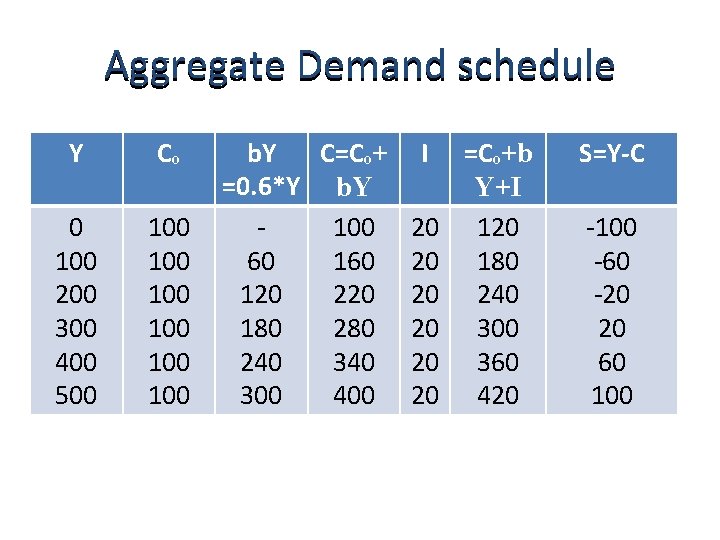
Aggregate Demand schedule Y Cₒ 0 100 200 300 400 500 100 100 100 b. Y C=Cₒ+ I =Cₒ+b =0. 6*Y b. Y Y+I 100 20 120 60 160 20 180 120 20 240 180 20 300 240 340 20 360 300 400 20 420 S=Y-C -100 -60 -20 20 60 100
Aggregate Demand schedule