
Modern Taxonomy traditional classification grouped species according to

- Slides: 11
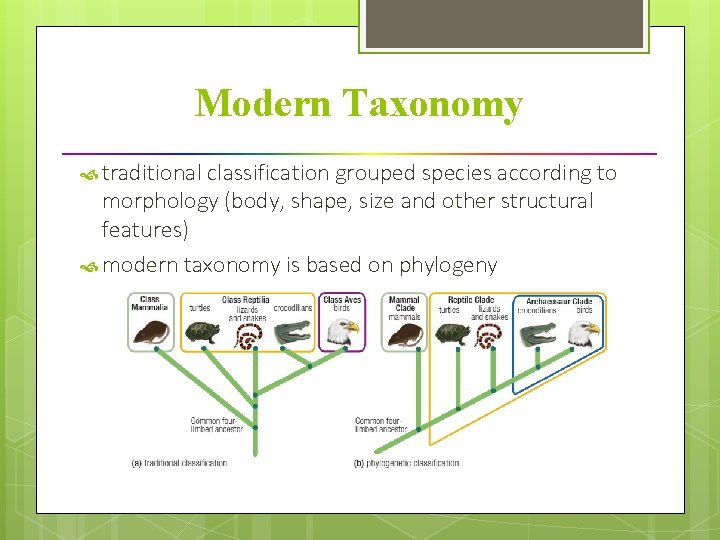
Modern Taxonomy traditional classification grouped species according to morphology (body, shape, size and other structural features) modern taxonomy is based on phylogeny
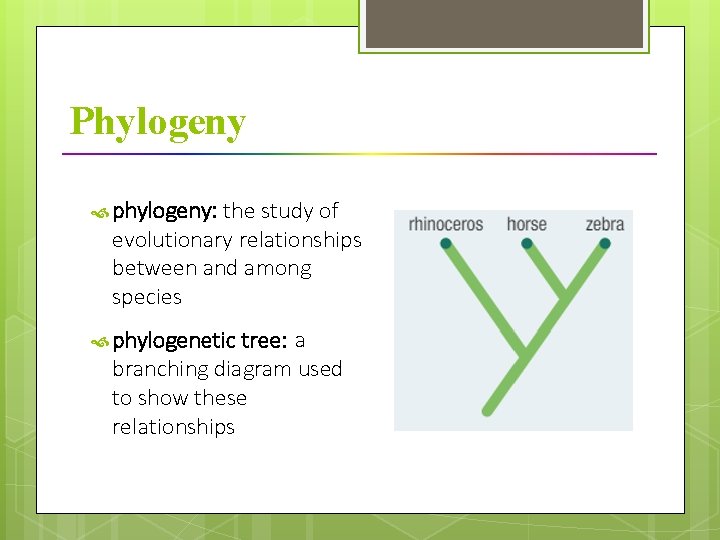
Phylogeny phylogeny: the study of evolutionary relationships between and among species phylogenetic tree: a branching diagram used to show these relationships
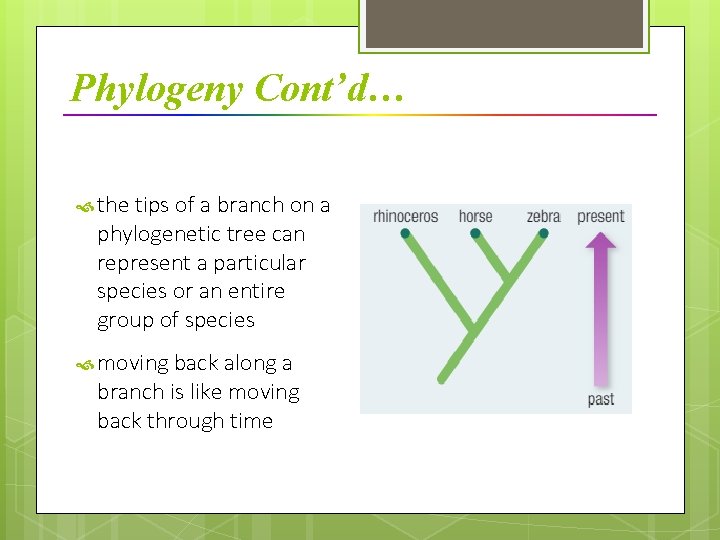
Phylogeny Cont’d… the tips of a branch on a phylogenetic tree can represent a particular species or an entire group of species moving back along a branch is like moving back through time
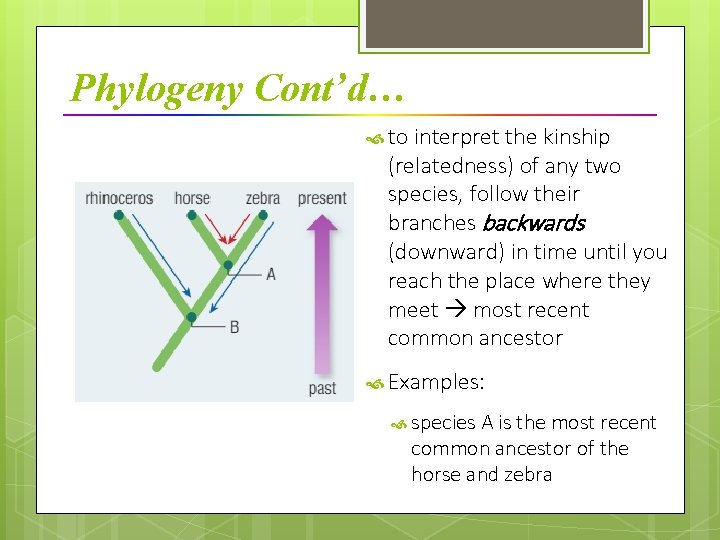
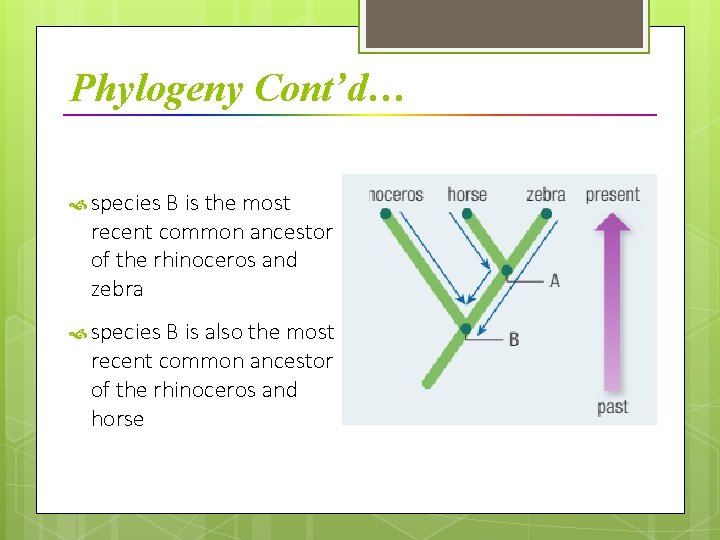
Phylogeny Cont’d… to interpret the kinship (relatedness) of any two species, follow their branches backwards (downward) in time until you reach the place where they meet most recent common ancestor Examples: species A is the most recent common ancestor of the horse and zebra
Phylogeny Cont’d… species B is the most recent common ancestor of the rhinoceros and zebra species B is also the most recent common ancestor of the rhinoceros and horse
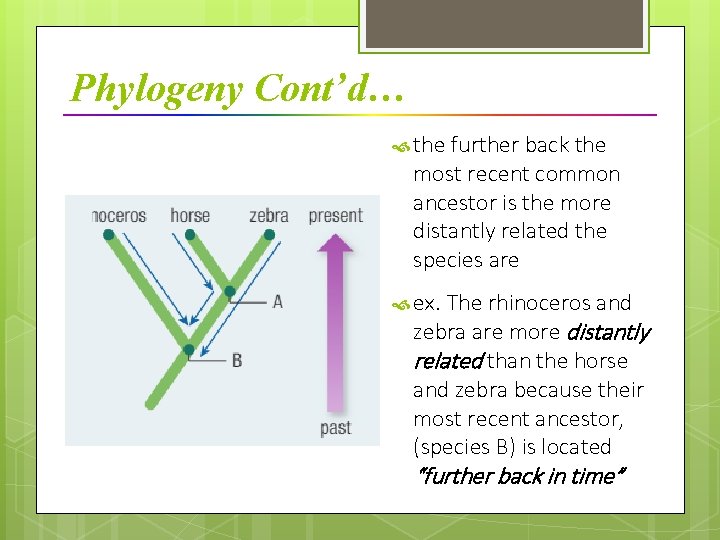
Phylogeny Cont’d… the further back the most recent common ancestor is the more distantly related the species are ex. The rhinoceros and zebra are more distantly related than the horse and zebra because their most recent ancestor, (species B) is located “further back in time”
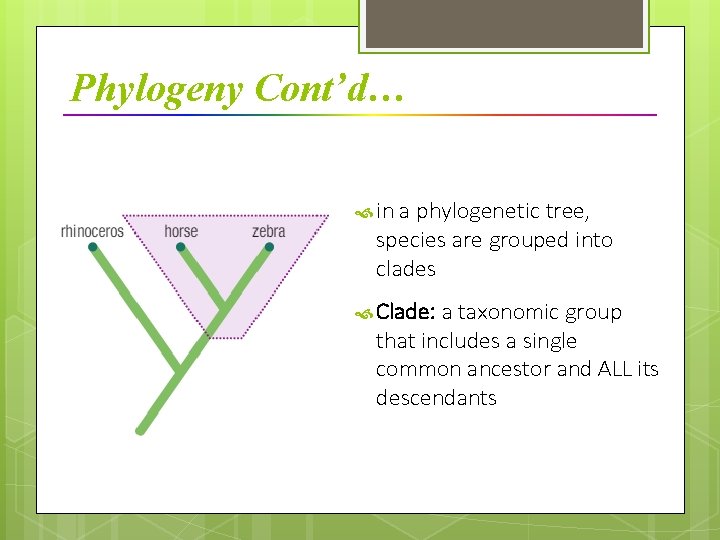
Phylogeny Cont’d… in a phylogenetic tree, species are grouped into clades Clade: a taxonomic group that includes a single common ancestor and ALL its descendants
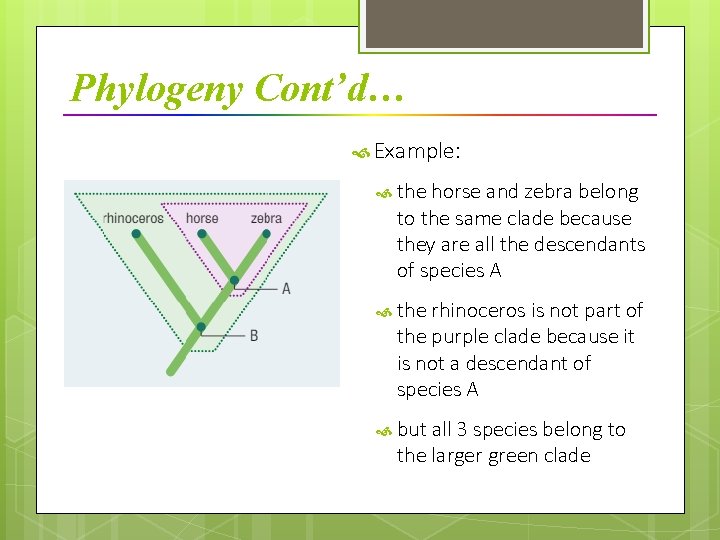
Phylogeny Cont’d… Example: the horse and zebra belong to the same clade because they are all the descendants of species A the rhinoceros is not part of the purple clade because it is not a descendant of species A but all 3 species belong to the larger green clade
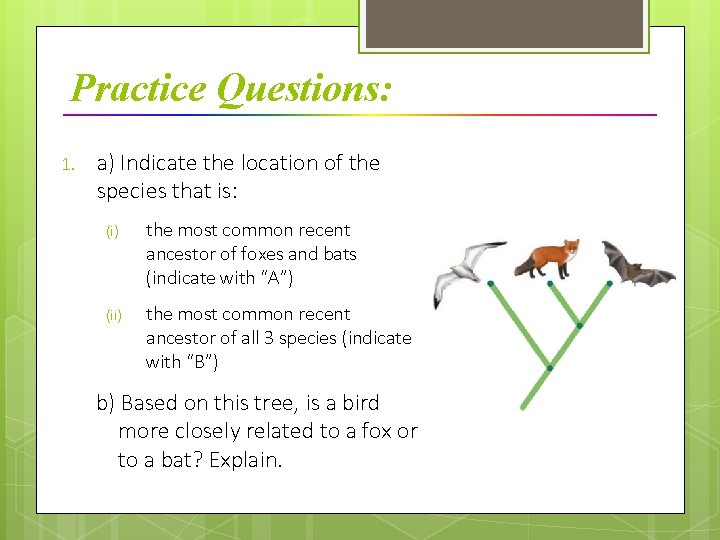
Practice Questions: 1. a) Indicate the location of the species that is: (i) the most common recent ancestor of foxes and bats (indicate with “A”) (ii) the most common recent ancestor of all 3 species (indicate with “B”) b) Based on this tree, is a bird more closely related to a fox or to a bat? Explain.
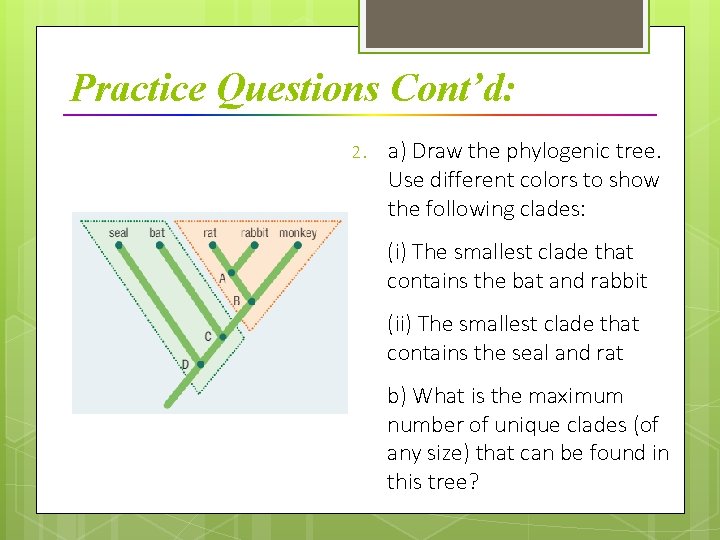
Practice Questions Cont’d: 2. a) Draw the phylogenic tree. Use different colors to show the following clades: (i) The smallest clade that contains the bat and rabbit (ii) The smallest clade that contains the seal and rat b) What is the maximum number of unique clades (of any size) that can be found in this tree?
Homework Read article and complete questions #1 -2 1. 3 questions # 3 -6 on page 25