
Modern Slavery Overview Rachel CollinsWhite Daniel Douglas r

- Slides: 15
Modern Slavery Overview Rachel Collins-White Daniel Douglas r. collins-white@unseenuk. org d. douglas@unseenuk. org Copyright © 2017 Unseen
Working towards a world without slavery; Supporting survivors and potential victims of slavery; by providing access to a range of specialist services, enabling them to safely recover and develop resilient independent lives Equipping stakeholders; by providing training, advice and resources to facilitate the identification and support of potential victims of slavery Influencing systemic changes; by using our experience and research to impact and inspire transformation across legislation, policy and society. Copyright © 2016 Unseen
Trafficking is the movement of people by means such as force, fraud, coercion or deception with the aim of exploiting them. It is modern day SLAVERY Copyright © 2016 Unseen
Someone is in slavery if they are: • forced to work - through mental or physical threat • owned or controlled by an 'employer', usually through mental or physical abuse or the threat of abuse • dehumanised, treated as a commodity or bought and sold as 'property' • physically constrained or has restrictions placed on his/her freedom Copyright © 2016 Unseen
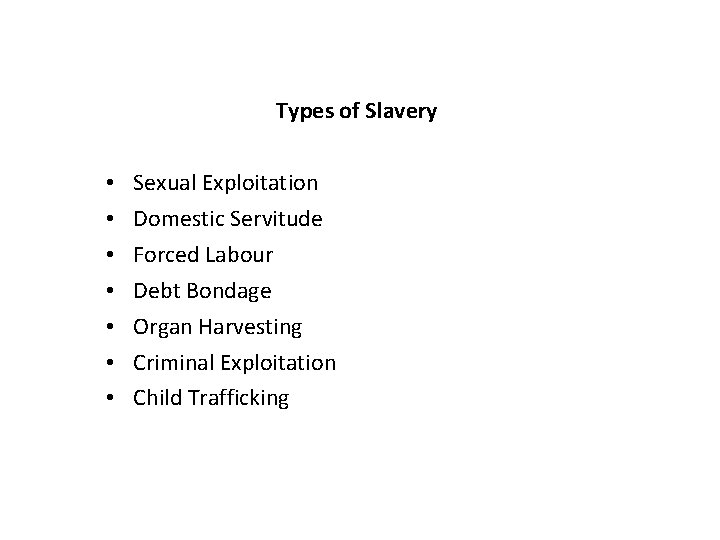
Types of Slavery • • Sexual Exploitation Domestic Servitude Forced Labour Debt Bondage Organ Harvesting Criminal Exploitation Child Trafficking
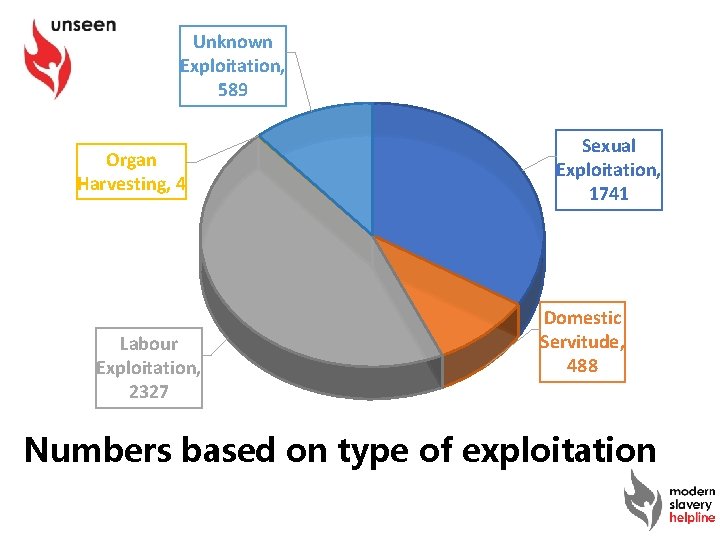
Unknown Exploitation, 589 Organ Harvesting, 4 Labour Exploitation, 2327 Sexual Exploitation, 1741 Domestic Servitude, 488 Numbers based on type of exploitation
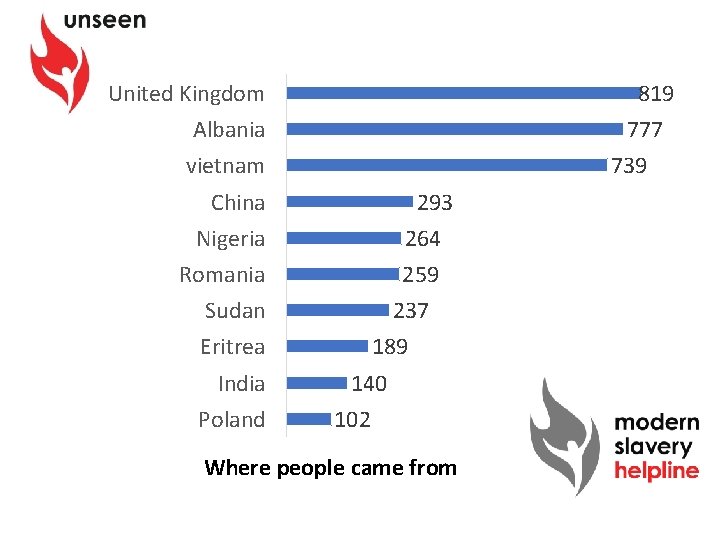
United Kingdom 819 Albania 777 vietnam 739 China 293 Nigeria 264 Romania 259 Sudan 237 Eritrea India Poland 189 140 102 Where people came from
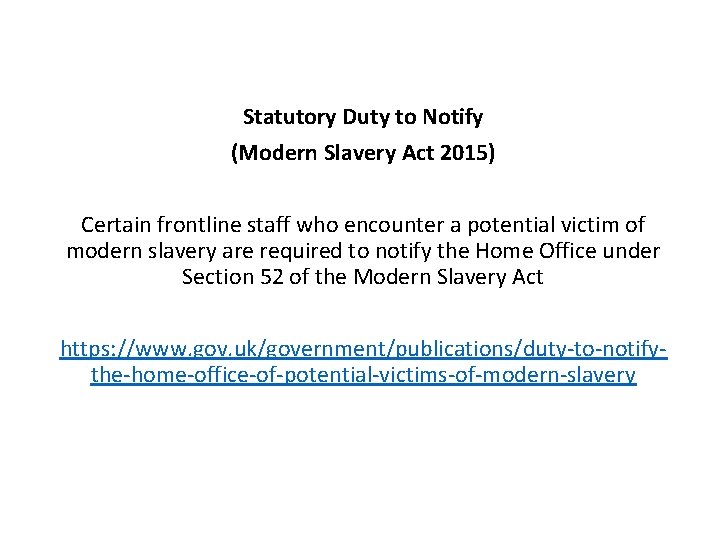
Statutory Duty to Notify (Modern Slavery Act 2015) Certain frontline staff who encounter a potential victim of modern slavery are required to notify the Home Office under Section 52 of the Modern Slavery Act https: //www. gov. uk/government/publications/duty-to-notifythe-home-office-of-potential-victims-of-modern-slavery
The National Referral Mechanism (NRM) • Framework used to identify victims and collate data • Used to provide appropriate support and protection (via Salvation Army) • Grants a minimum 45 -day reflection and recovery period during the process – with access to counselling, housing, finance, legal advice • Any one can identify a potential victim but referrals into this mechanism must be made by First Responders
The National Referral Mechanism Through the NRM, if they want to leave their situation, they will be able to access: • • • Temporary safe accommodation Support worker (in accommodation or as outreach) Medical treatment Help to cope with experience Interpreters Assistance finding independent legal advice Via The Salvation Army Adult Care Contract 0300 3038151
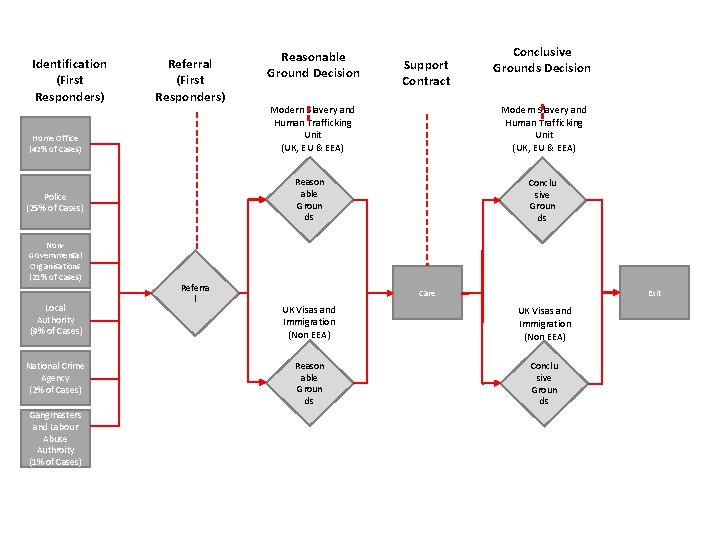
Identification (First Responders) Referral (First Responders) Home Office (42% of Cases) Local Authority (9% of Cases) National Crime Agency (2% of Cases) Gangmasters and Labour Abuse Authroity (1% of Cases) Support Contract Referra l Conclusive Grounds Decision Modern Slavery and Human Trafficking Unit (UK, EU & EEA) Reason able Groun ds Police (25% of Cases) Non. Governmental Organisations (21% of Cases) Reasonable Ground Decision Conclu sive Groun ds Care Exit UK Visas and Immigration (Non EEA) Reason able Groun ds Conclu sive Groun ds
Barriers victims may face • • Language barriers Cultural and Religious barriers Voodoo and Spiritual practices Stockholm Syndrome Threats to self Threats to family Debt bondage • • Family implicit in their exploitation Learning difficulties System not offering them assistance Time Trust Shame and guilt Immigration status
Next Steps… • Inform yourself – what am I looking out for? What are the alarm bells for my role and who do I go to if concerned? • Identify key risk areas and vulnerabilities in your team/organisation – where might you encounter people • What are your organisational policy’s and statutory duties
Any questions? Copyright © 2016 Unseen