
Modern Physics WaveParticle Duality Light behaves as both
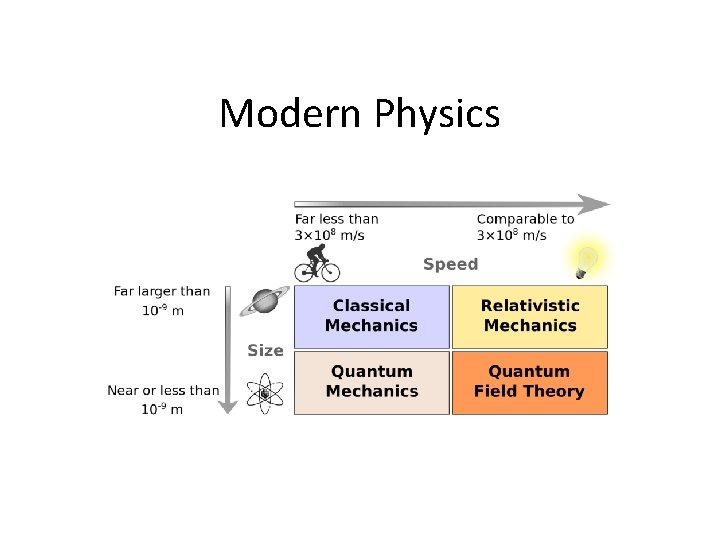
Modern Physics
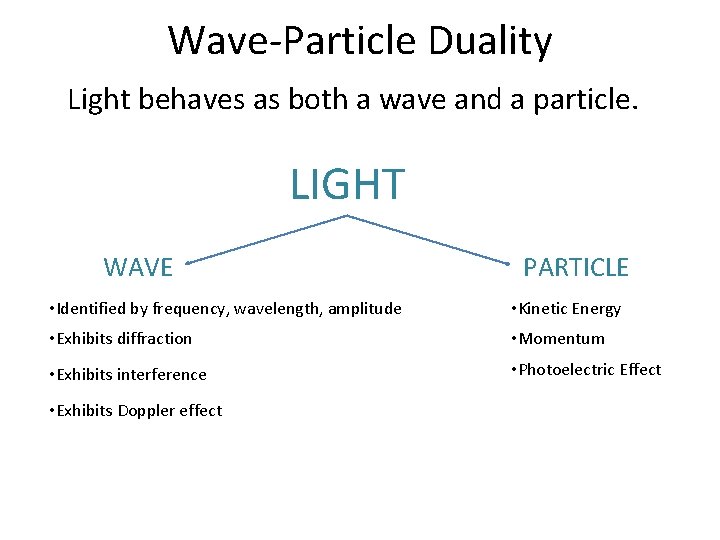
Wave-Particle Duality Light behaves as both a wave and a particle. LIGHT WAVE PARTICLE • Identified by frequency, wavelength, amplitude • Kinetic Energy • Exhibits diffraction • Momentum • Exhibits interference • Photoelectric Effect • Exhibits Doppler effect
Light acting like a PARTICLE- “particles” of EM radiation are called photons. In certain interactions light, or any electromagnetic radiation, acts as if it is composed of particles possessing kinetic energy and momentum. This is what Einstein discovered that won him his Nobel Prize…not E=mc 2.
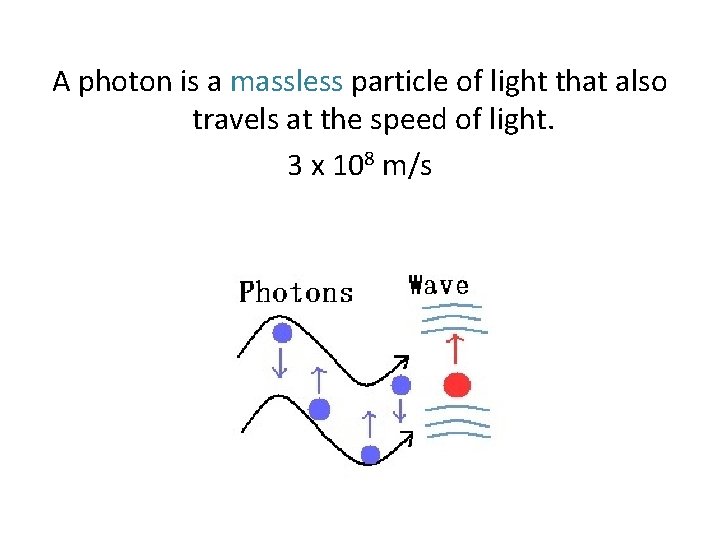
A photon is a massless particle of light that also travels at the speed of light. 3 x 10⁸ m/s
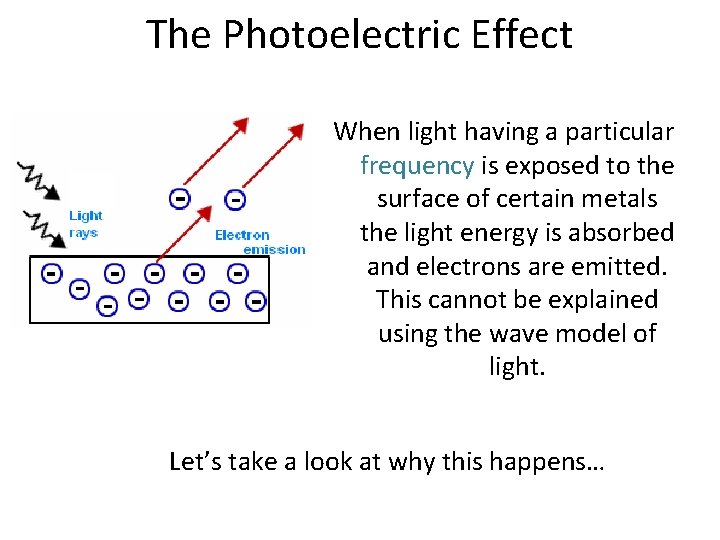
The Photoelectric Effect When light having a particular frequency is exposed to the surface of certain metals the light energy is absorbed and electrons are emitted. This cannot be explained using the wave model of light. Let’s take a look at why this happens…
Quantum Theory Quantum theory assumes that electromagnetic energy is emitted from, and absorbed by, matter in discrete/fixed amounts or packets. Each packet of electromagnetic energy emitted, or absorbed, is called a quantum (quantities) of energy.
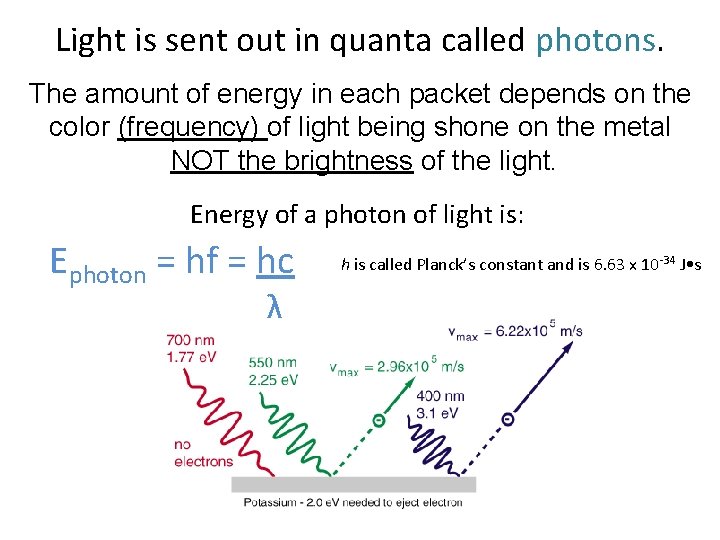
Light is sent out in quanta called photons. The amount of energy in each packet depends on the color (frequency) of light being shone on the metal NOT the brightness of the light. Energy of a photon of light is: Ephoton = hf = hc λ h is called Planck’s constant and is 6. 63 x 10 -34 J • s
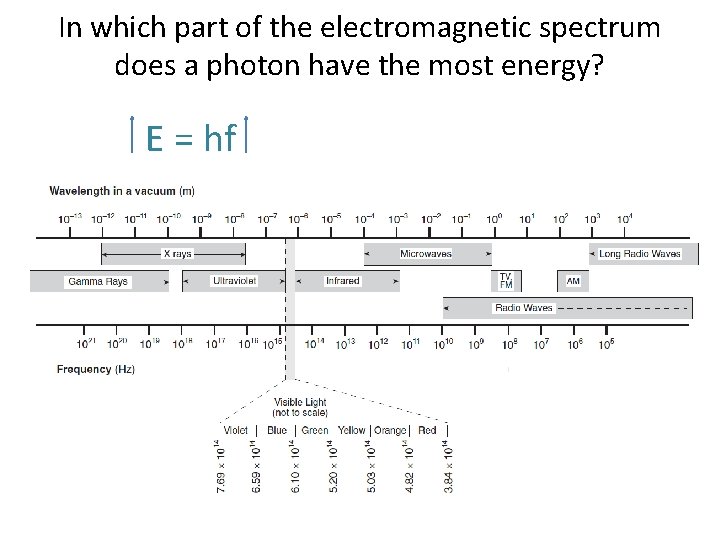
In which part of the electromagnetic spectrum does a photon have the most energy? E = hf
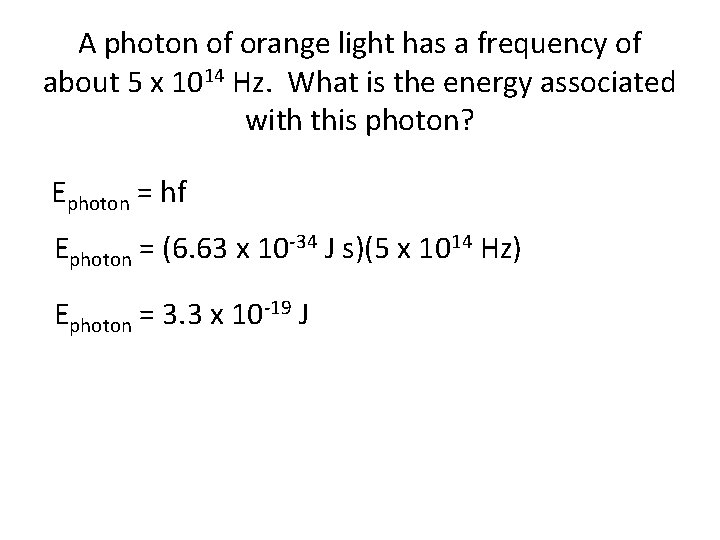
A photon of orange light has a frequency of about 5 x 10¹⁴ Hz. What is the energy associated with this photon? Ephoton = hf Ephoton = (6. 63 x 10 -34 J s)(5 x 10¹⁴ Hz) Ephoton = 3. 3 x 10 -19 J
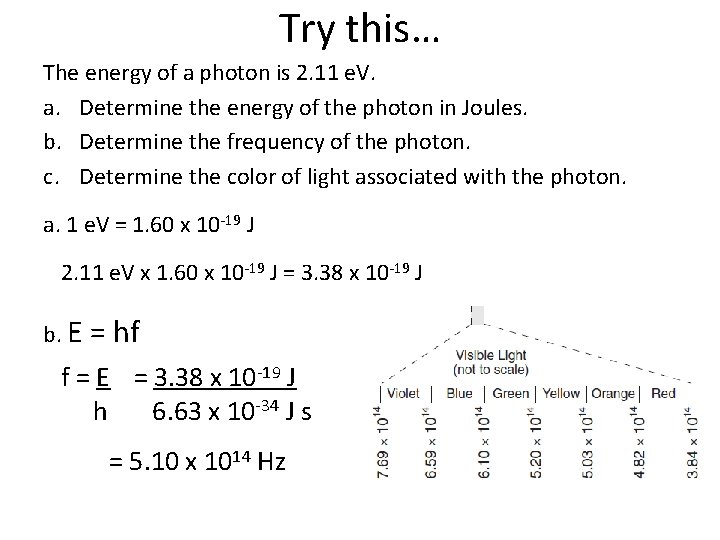
Try this… The energy of a photon is 2. 11 e. V. a. Determine the energy of the photon in Joules. b. Determine the frequency of the photon. c. Determine the color of light associated with the photon. a. 1 e. V = 1. 60 x 10 -19 J 2. 11 e. V x 1. 60 x 10 -19 J = 3. 38 x 10 -19 J b. E = hf f = E = 3. 38 x 10 -19 J h 6. 63 x 10 -34 J s = 5. 10 x 1014 Hz
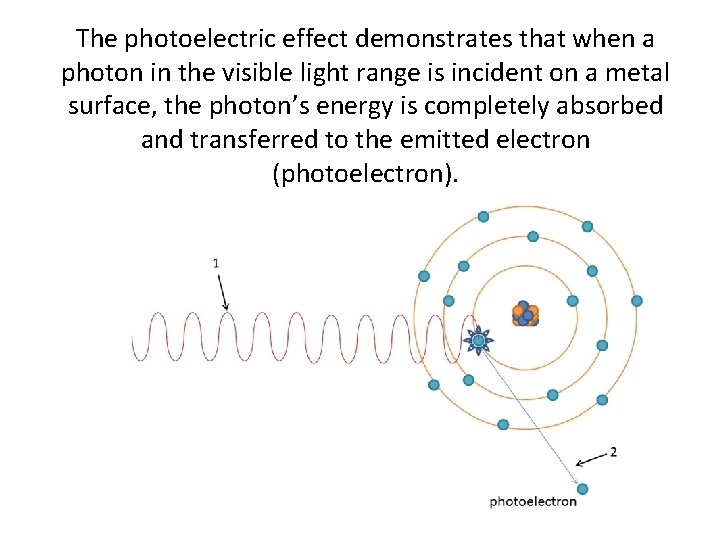
The photoelectric effect demonstrates that when a photon in the visible light range is incident on a metal surface, the photon’s energy is completely absorbed and transferred to the emitted electron (photoelectron).
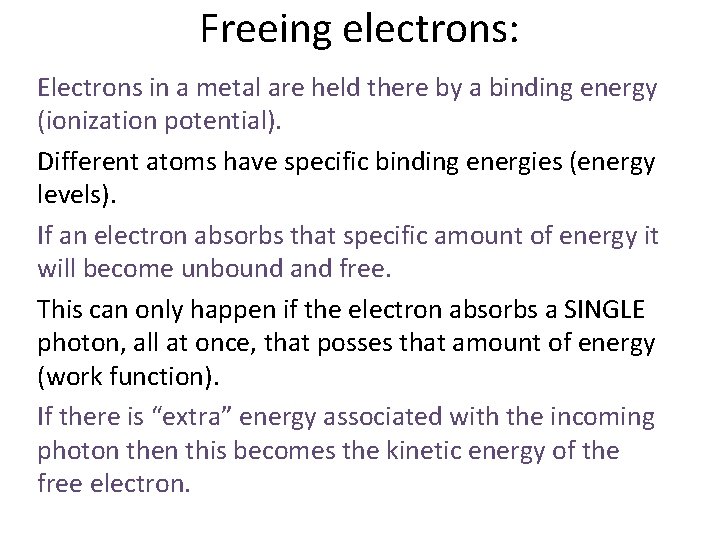
Freeing electrons: Electrons in a metal are held there by a binding energy (ionization potential). Different atoms have specific binding energies (energy levels). If an electron absorbs that specific amount of energy it will become unbound and free. This can only happen if the electron absorbs a SINGLE photon, all at once, that posses that amount of energy (work function). If there is “extra” energy associated with the incoming photon then this becomes the kinetic energy of the free electron.
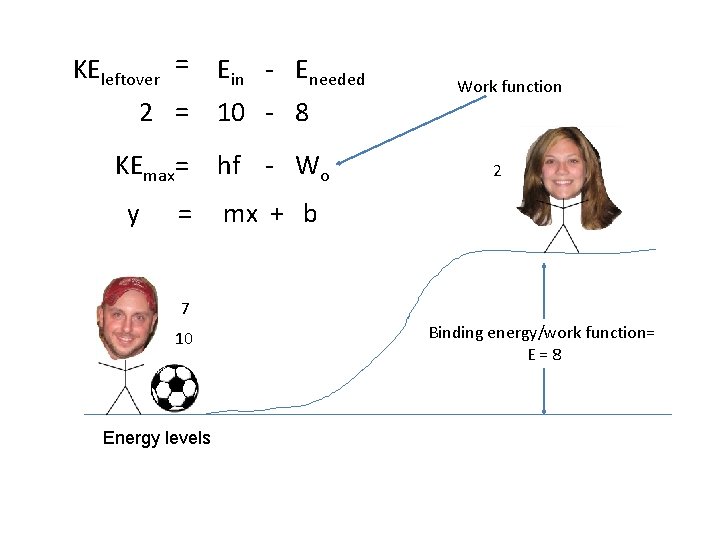
KEleftover = 2 = KEmax= y = Ein - Eneeded 10 - 8 hf - Wo Work function 2 mx + b 7 10 Energy levels Binding energy/work function= E=8
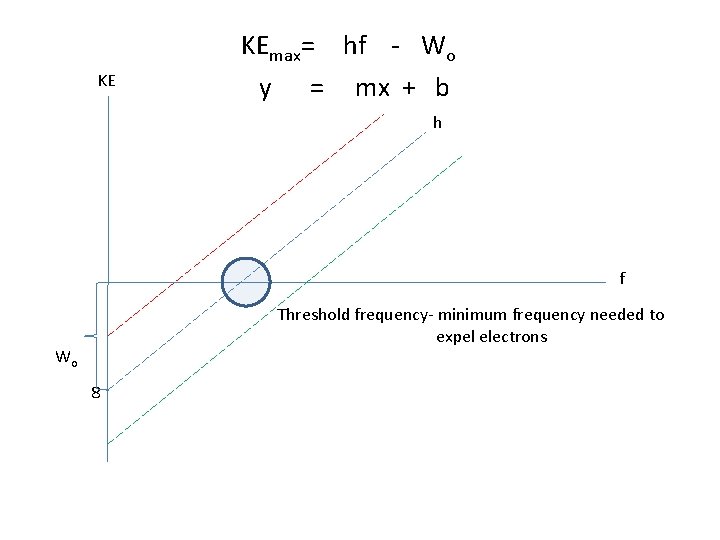
KE KEmax= hf - Wo y = mx + b h f Threshold frequency- minimum frequency needed to expel electrons Wo 8
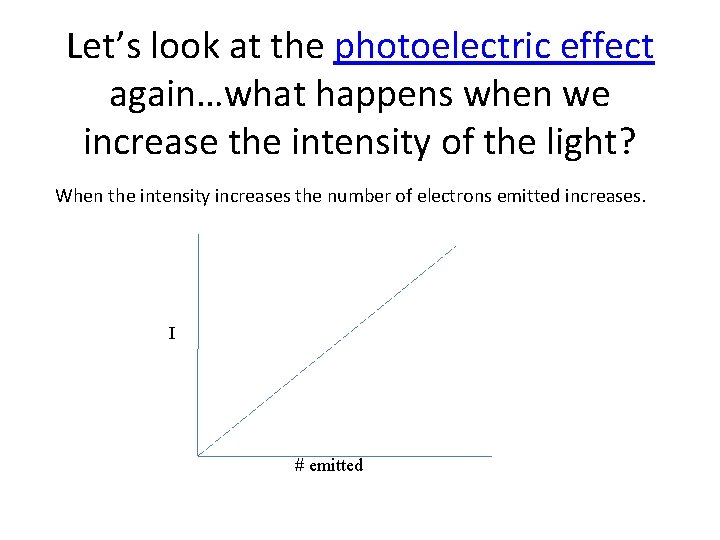
Let’s look at the photoelectric effect again…what happens when we increase the intensity of the light? When the intensity increases the number of electrons emitted increases. I # emitted
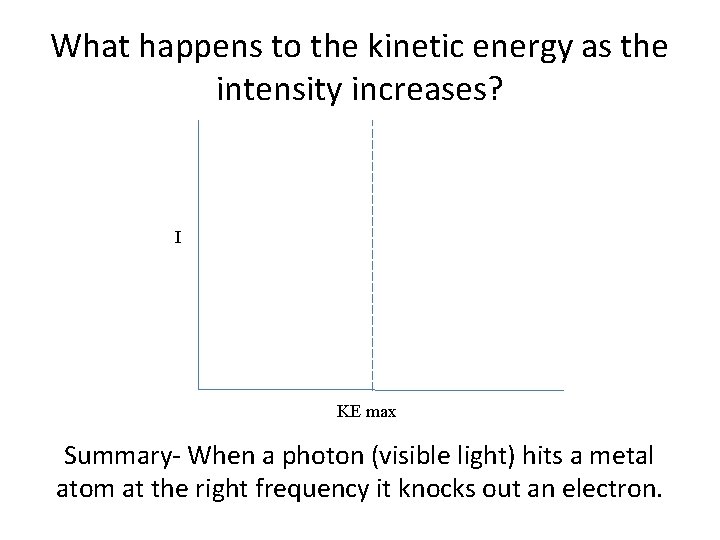
What happens to the kinetic energy as the intensity increases? I KE max Summary- When a photon (visible light) hits a metal atom at the right frequency it knocks out an electron.
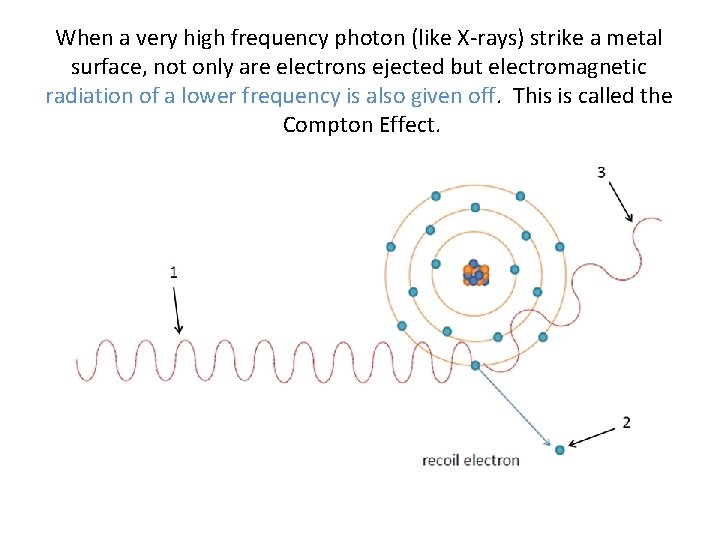
When a very high frequency photon (like X-rays) strike a metal surface, not only are electrons ejected but electromagnetic radiation of a lower frequency is also given off. This is called the Compton Effect.
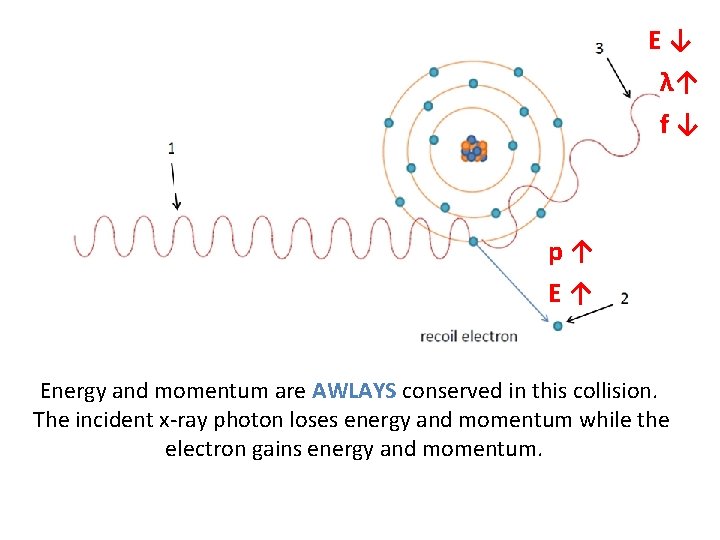
E↓ λ↑ f↓ P↑ p↑ E↑ Energy and momentum are AWLAYS conserved in this collision. The incident x-ray photon loses energy and momentum while the electron gains energy and momentum.
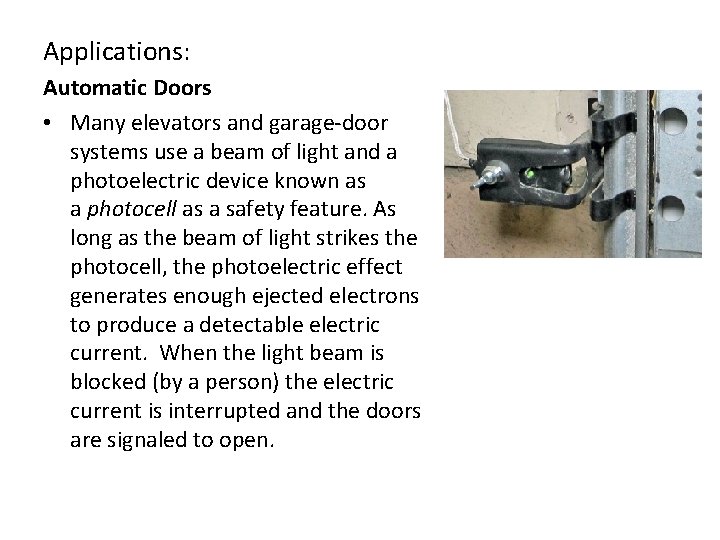
Applications: Automatic Doors • Many elevators and garage-door systems use a beam of light and a photoelectric device known as a photocell as a safety feature. As long as the beam of light strikes the photocell, the photoelectric effect generates enough ejected electrons to produce a detectable electric current. When the light beam is blocked (by a person) the electric current is interrupted and the doors are signaled to open.
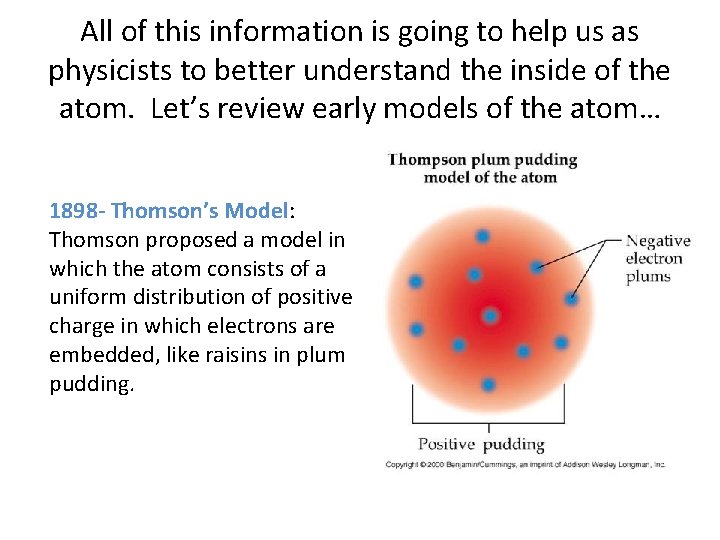
All of this information is going to help us as physicists to better understand the inside of the atom. Let’s review early models of the atom… 1898 - Thomson’s Model: Thomson proposed a model in which the atom consists of a uniform distribution of positive charge in which electrons are embedded, like raisins in plum pudding.
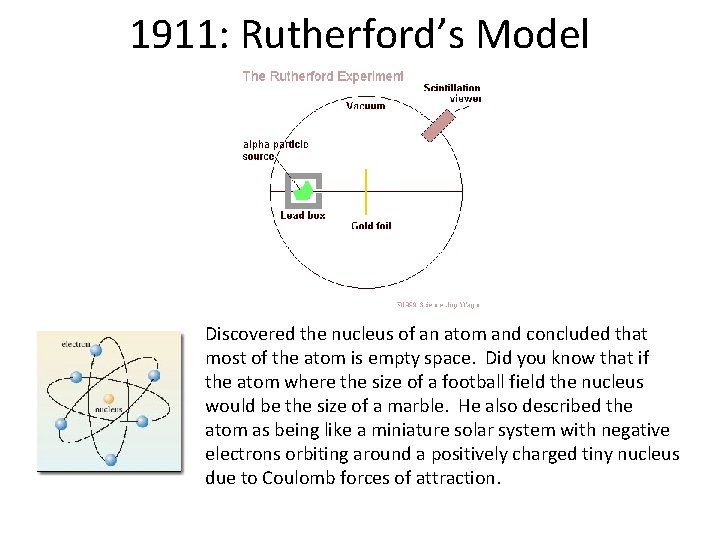
1911: Rutherford’s Model Discovered the nucleus of an atom and concluded that most of the atom is empty space. Did you know that if the atom where the size of a football field the nucleus would be the size of a marble. He also described the atom as being like a miniature solar system with negative electrons orbiting around a positively charged tiny nucleus due to Coulomb forces of attraction.
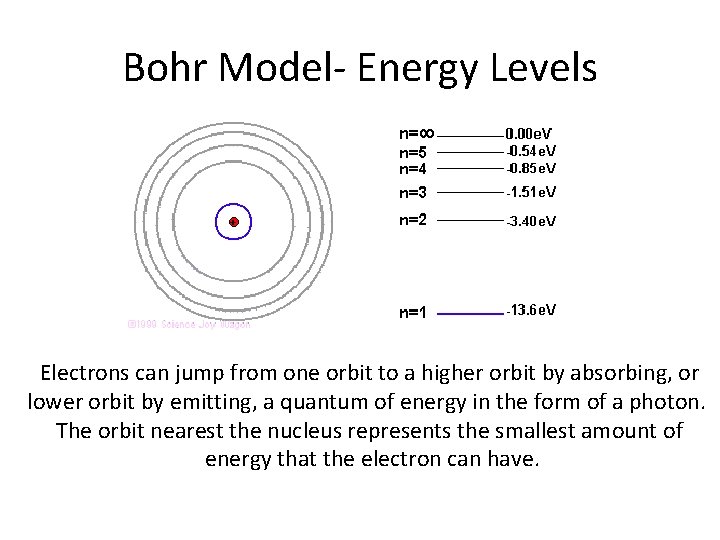
Bohr Model- Energy Levels Electrons can jump from one orbit to a higher orbit by absorbing, or lower orbit by emitting, a quantum of energy in the form of a photon. The orbit nearest the nucleus represents the smallest amount of energy that the electron can have.
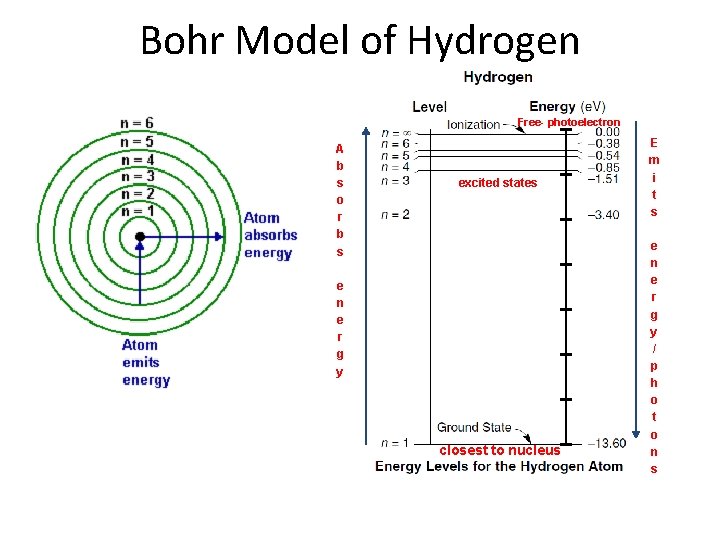
Bohr Model of Hydrogen Free- photoelectron A b s o r b s excited states e n e r g y closest to nucleus E m i t s e n e r g y / p h o t o n s
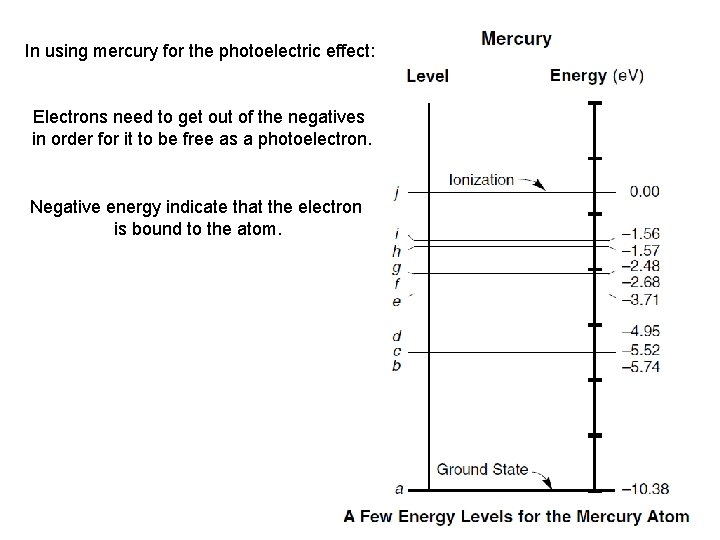
In using mercury for the photoelectric effect: Electrons need to get out of the negatives in order for it to be free as a photoelectron. Negative energy indicate that the electron is bound to the atom.
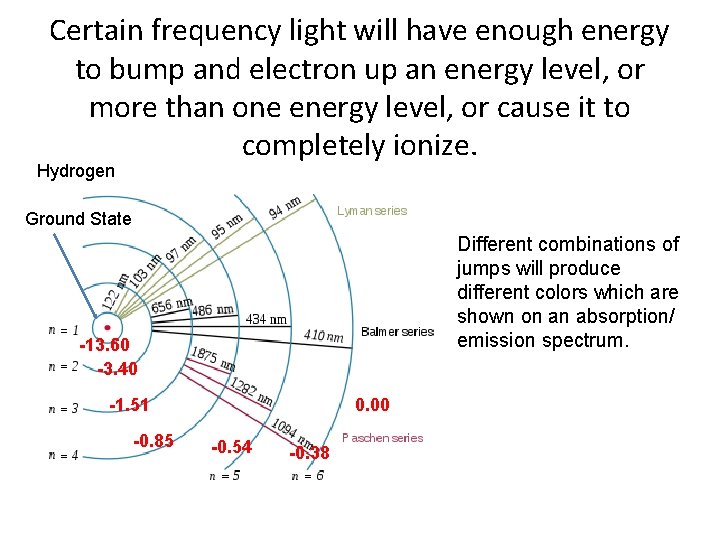
Certain frequency light will have enough energy to bump and electron up an energy level, or more than one energy level, or cause it to completely ionize. Hydrogen Ground State Different combinations of jumps will produce different colors which are shown on an absorption/ emission spectrum. -13. 60 -3. 40 -1. 51 -0. 85 0. 00 -0. 54 -0. 38
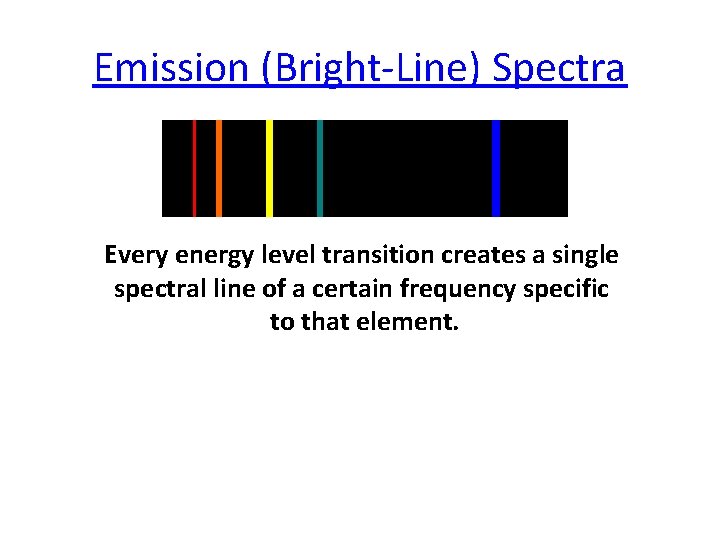
Emission (Bright-Line) Spectra Every energy level transition creates a single spectral line of a certain frequency specific to that element.
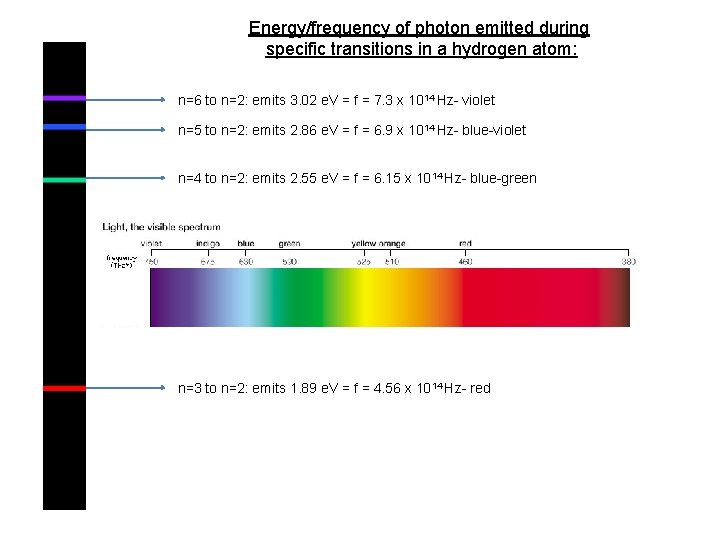
Energy/frequency of photon emitted during specific transitions in a hydrogen atom: n=6 to n=2: emits 3. 02 e. V = f = 7. 3 x 10¹⁴ Hz- violet n=5 to n=2: emits 2. 86 e. V = f = 6. 9 x 10¹⁴ Hz- blue-violet n=4 to n=2: emits 2. 55 e. V = f = 6. 15 x 1014 Hz- blue-green n=3 to n=2: emits 1. 89 e. V = f = 4. 56 x 1014 Hz- red
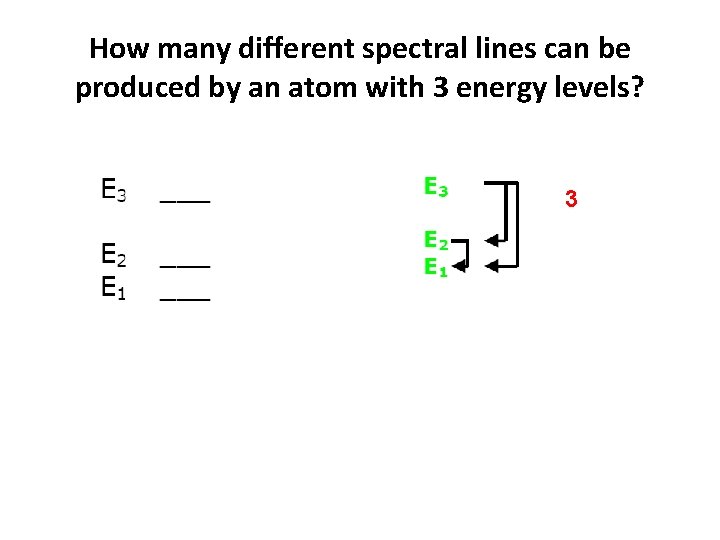
How many different spectral lines can be produced by an atom with 3 energy levels? 3
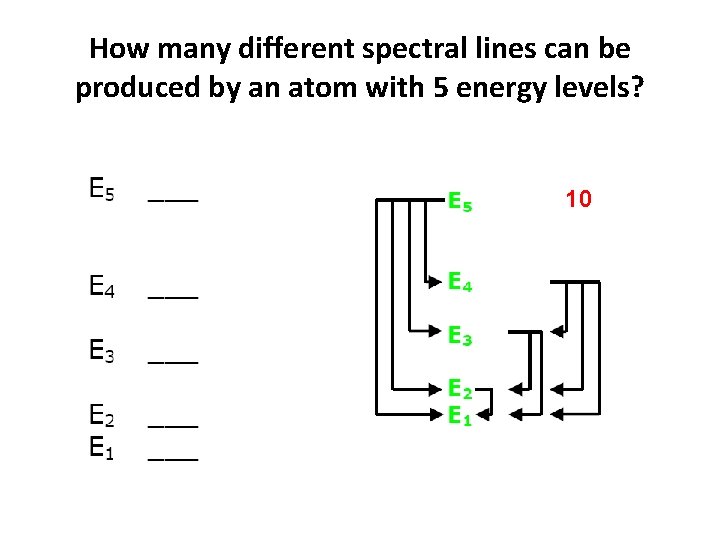
How many different spectral lines can be produced by an atom with 5 energy levels? 10
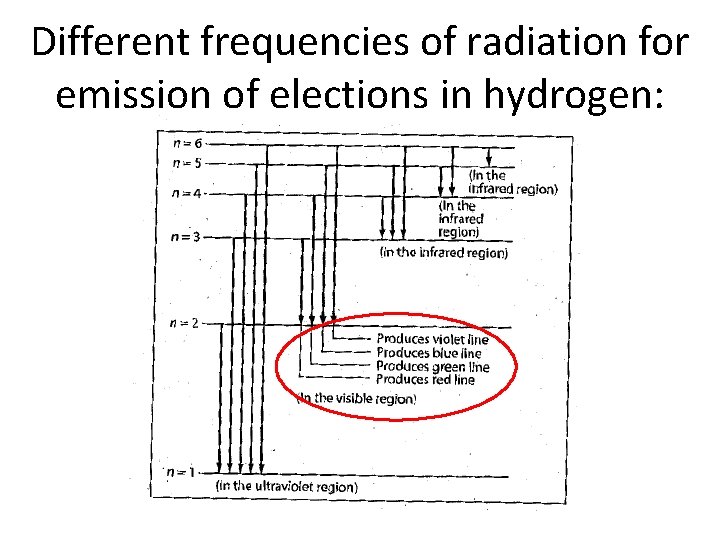
Different frequencies of radiation for emission of elections in hydrogen:
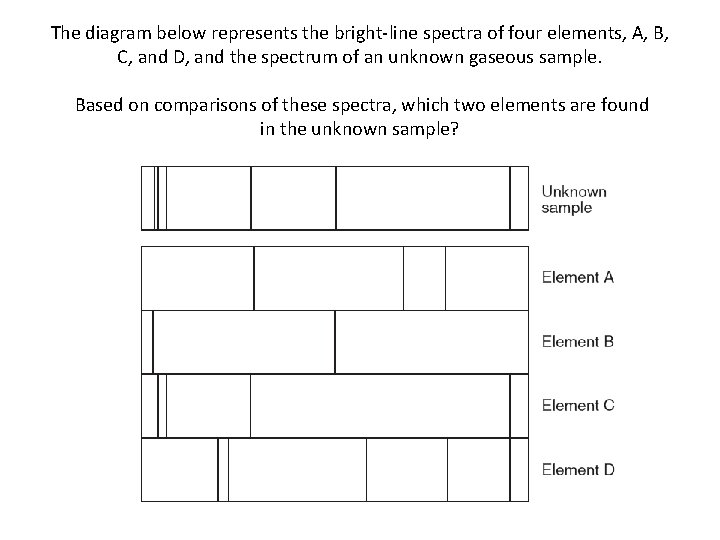
The diagram below represents the bright-line spectra of four elements, A, B, C, and D, and the spectrum of an unknown gaseous sample. Based on comparisons of these spectra, which two elements are found in the unknown sample?
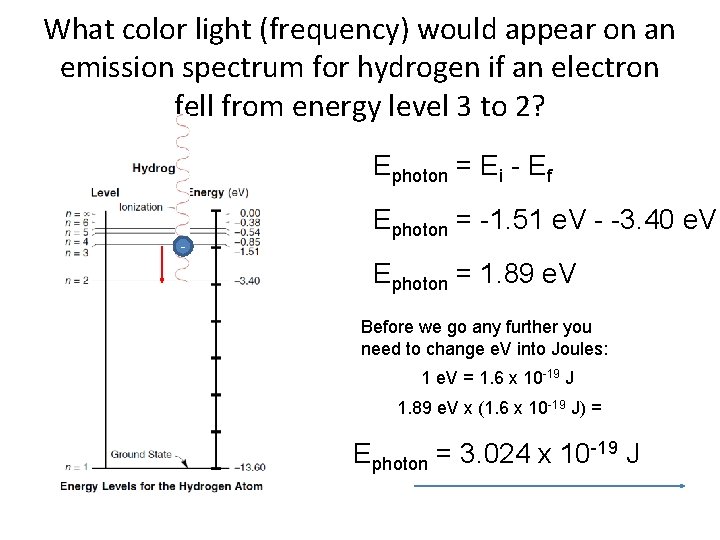
What color light (frequency) would appear on an emission spectrum for hydrogen if an electron fell from energy level 3 to 2? Ephoton = Ei - Ef - Ephoton = -1. 51 e. V - -3. 40 e. V Ephoton = 1. 89 e. V Before we go any further you need to change e. V into Joules: 1 e. V = 1. 6 x 10 -19 J 1. 89 e. V x (1. 6 x 10 -19 J) = Ephoton = 3. 024 x 10 -19 J
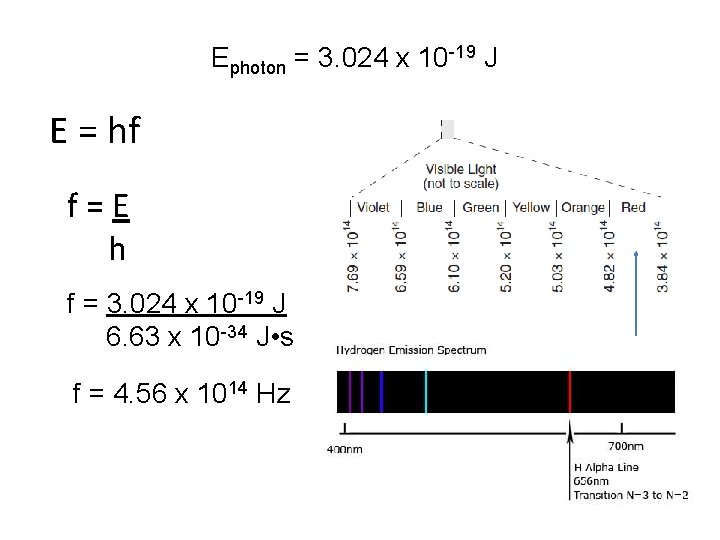
Ephoton = 3. 024 x 10 -19 J E = hf f=E h f = 3. 024 x 10 -19 J 6. 63 x 10 -34 J • s f = 4. 56 x 1014 Hz
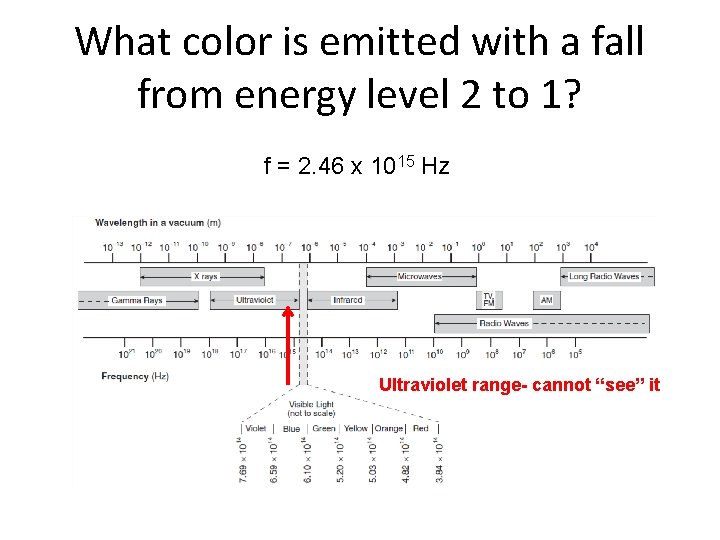
What color is emitted with a fall from energy level 2 to 1? f = 2. 46 x 1015 Hz Ultraviolet range- cannot “see” it
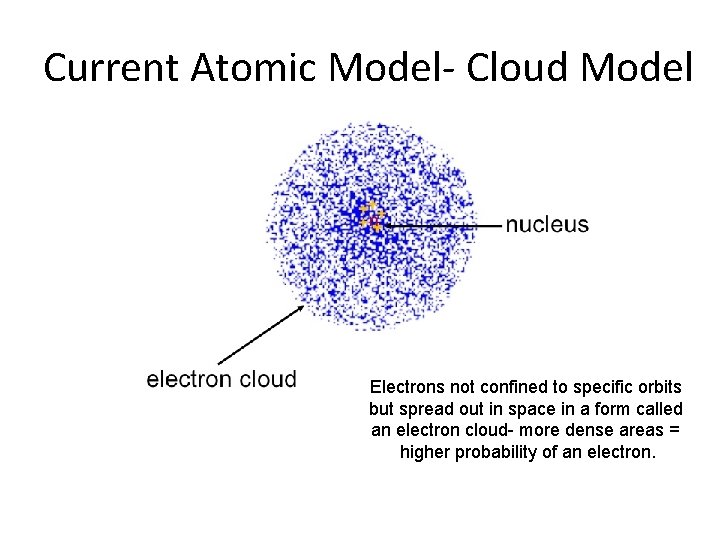
Current Atomic Model- Cloud Model Electrons not confined to specific orbits but spread out in space in a form called an electron cloud- more dense areas = higher probability of an electron.
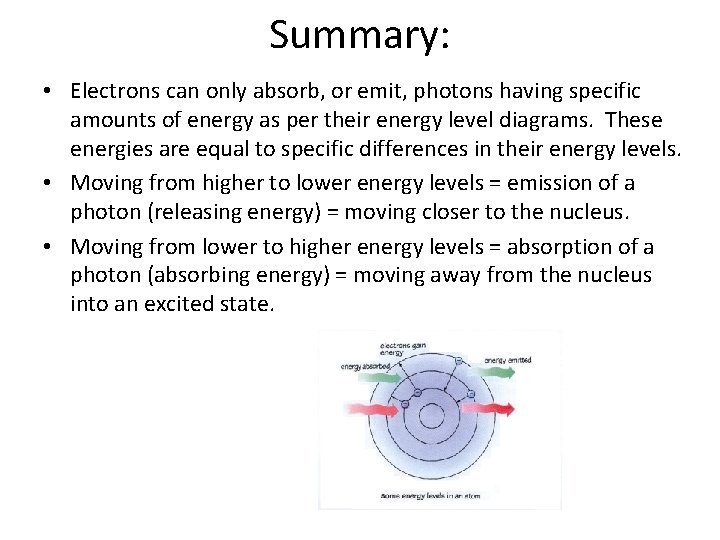
Summary: • Electrons can only absorb, or emit, photons having specific amounts of energy as per their energy level diagrams. These energies are equal to specific differences in their energy levels. • Moving from higher to lower energy levels = emission of a photon (releasing energy) = moving closer to the nucleus. • Moving from lower to higher energy levels = absorption of a photon (absorbing energy) = moving away from the nucleus into an excited state.
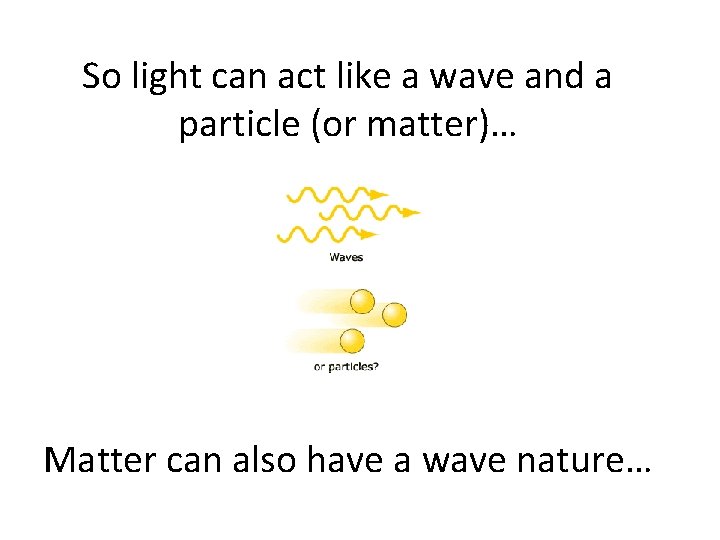
So light can act like a wave and a particle (or matter)… Matter can also have a wave nature…
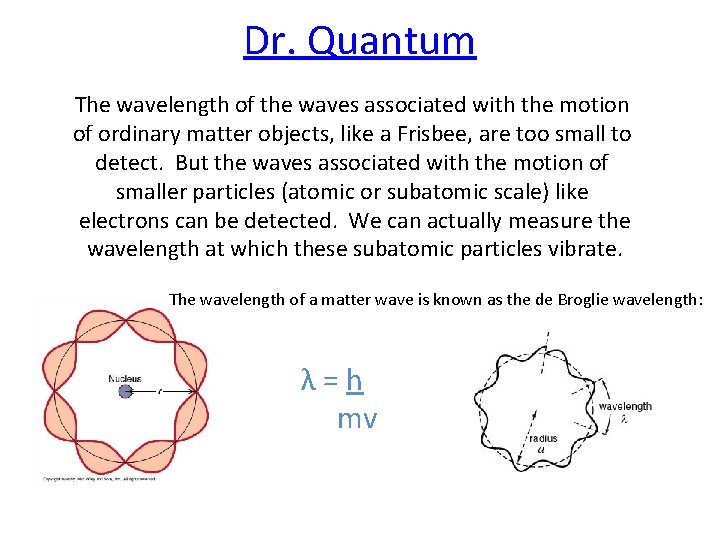
Dr. Quantum The wavelength of the waves associated with the motion of ordinary matter objects, like a Frisbee, are too small to detect. But the waves associated with the motion of smaller particles (atomic or subatomic scale) like electrons can be detected. We can actually measure the wavelength at which these subatomic particles vibrate. The wavelength of a matter wave is known as the de Broglie wavelength: λ=h mv
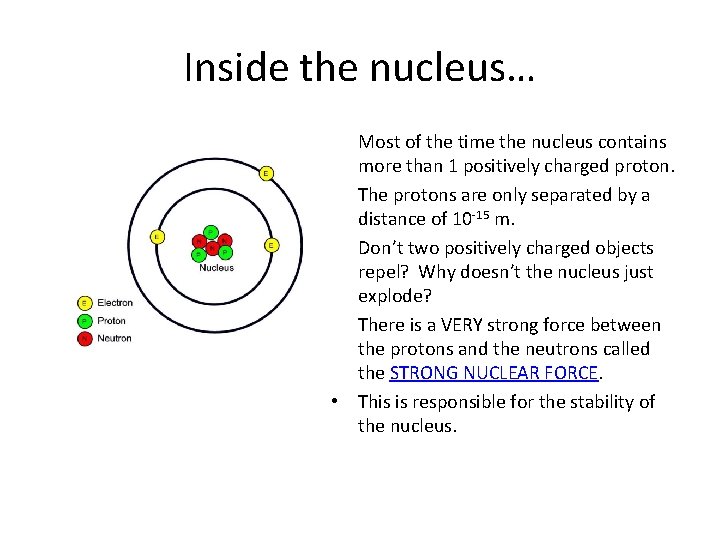
Inside the nucleus… • Most of the time the nucleus contains more than 1 positively charged proton. • The protons are only separated by a distance of 10 -15 m. • Don’t two positively charged objects repel? Why doesn’t the nucleus just explode? • There is a VERY strong force between the protons and the neutrons called the STRONG NUCLEAR FORCE. • This is responsible for the stability of the nucleus.
Universal Mass Unit (u) • 1 u = 1. 66 x 10 -27 kg. • More convenient then using very small numbers in kg. • What’s the mass of a Helium nucleus (2 protons, 2 neutrons)? • Protons = 1. 0073 u x 2 = 2. 0146 u • Neutrons = 1. 0087 u x 2 = 2. 0174 • Mass of proton is 1. 0073 u • Mass of neutron is 1. 0087 u • Mass of electron 0. 0005 u • Expected Total = 4. 032 u • Actual Mass of Helium nucleus = 4. 016 u
Where is the missing. 016 u? • The lost mass is called the mass defect. • When nucleons come together to form a nucleus, energy is released (binding energy) and an equivalent amount of matter is lost. • To break up the nucleus and separate the nucleons, work must be done against the strong nuclear force. • The energy needed to separate the nucleons (binding energy) appears as an equivalent increase in their total mass.
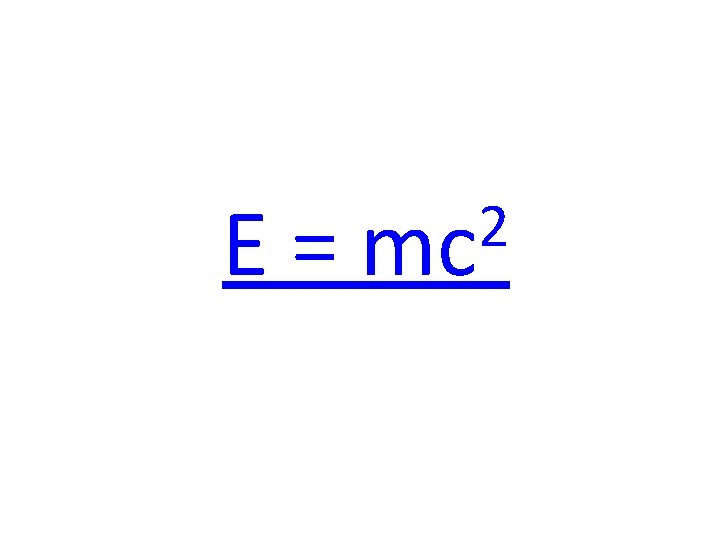
E= 2 mc
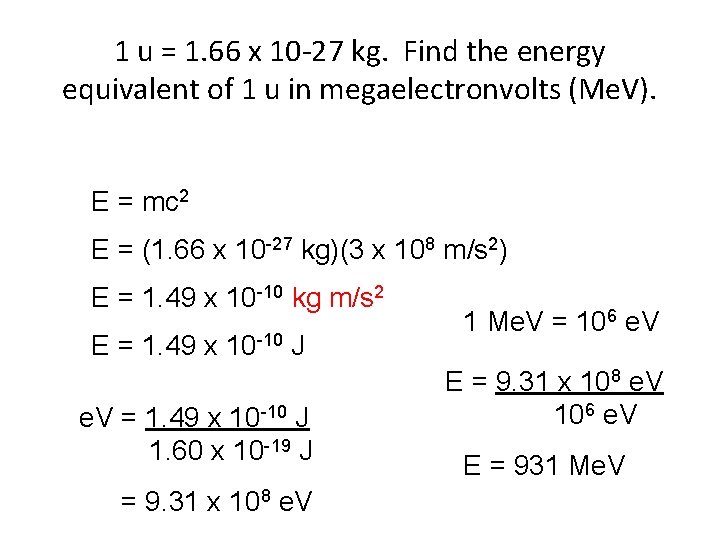
1 u = 1. 66 x 10 -27 kg. Find the energy equivalent of 1 u in megaelectronvolts (Me. V). E = mc 2 E = (1. 66 x 10 -27 kg)(3 x 10⁸ m/s 2) E = 1. 49 x 10 -10 kg m/s 2 E = 1. 49 x 10 -10 J e. V = 1. 49 x 10 -10 J 1. 60 x 10 -19 J = 9. 31 x 108 e. V 1 Me. V = 106 e. V E = 9. 31 x 108 e. V 106 e. V E = 931 Me. V
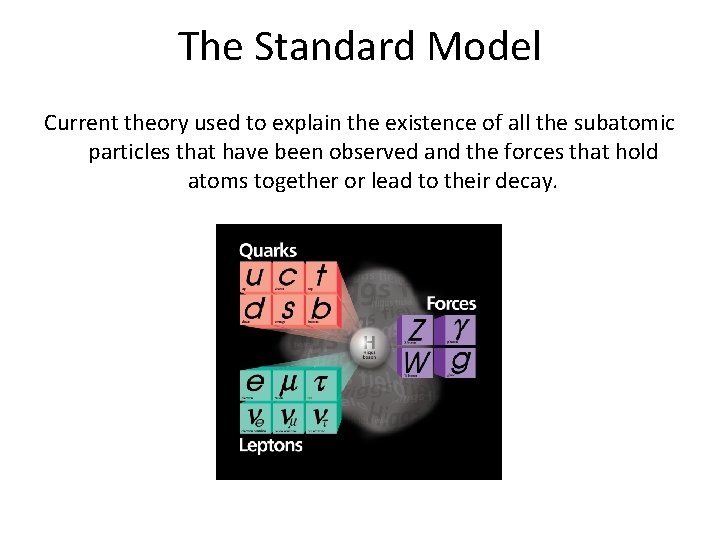
The Standard Model Current theory used to explain the existence of all the subatomic particles that have been observed and the forces that hold atoms together or lead to their decay.
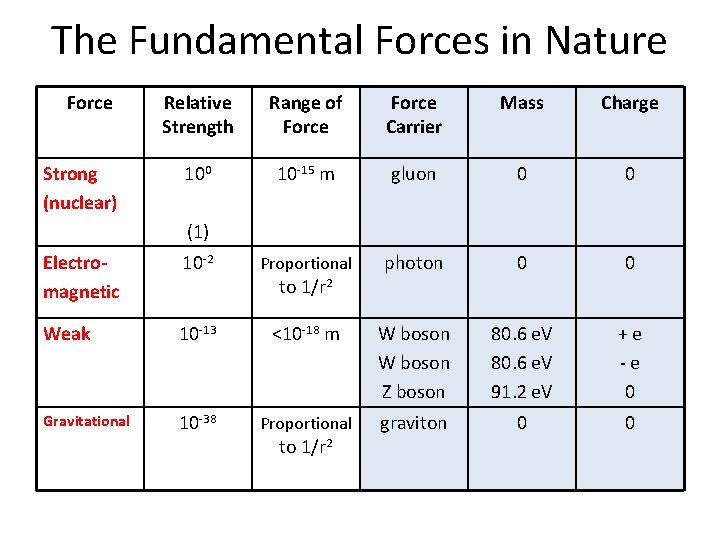
The Fundamental Forces in Nature Force Strong (nuclear) Relative Strength Range of Force Carrier Mass Charge 100 10 -15 m gluon 0 0 photon 0 0 (1) Electromagnetic 10 -2 Proportional Weak 10 -13 <10 -18 m W boson Z boson 80. 6 e. V 91. 2 e. V +e -e 0 Gravitational 10 -38 Proportional graviton 0 0 to 1/r 2
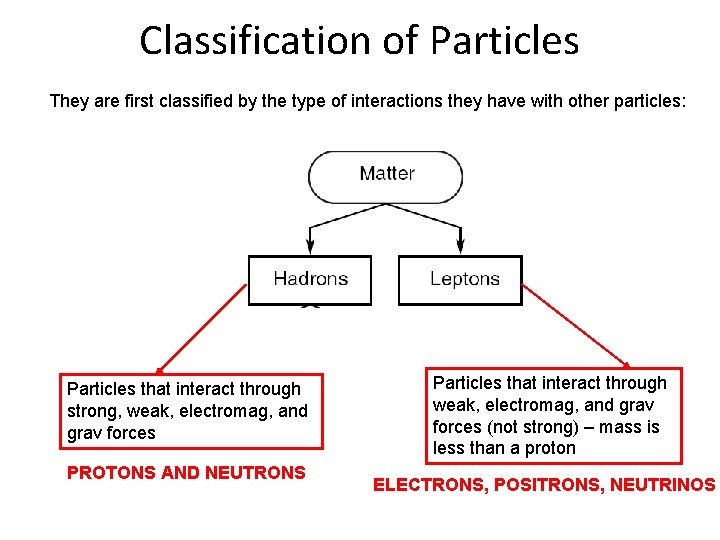
Classification of Particles They are first classified by the type of interactions they have with other particles: Particles that interact through strong, weak, electromag, and grav forces PROTONS AND NEUTRONS Particles that interact through weak, electromag, and grav forces (not strong) – mass is less than a proton ELECTRONS, POSITRONS, NEUTRINOS
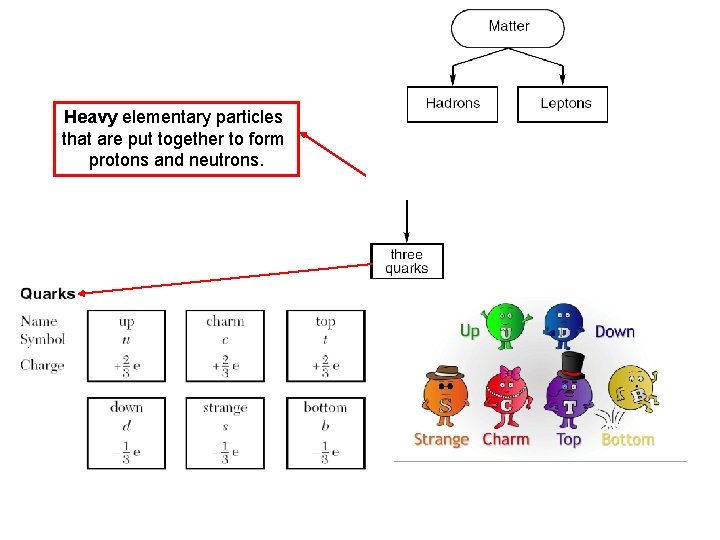
Heavy elementary particles that are put together to form protons and neutrons.
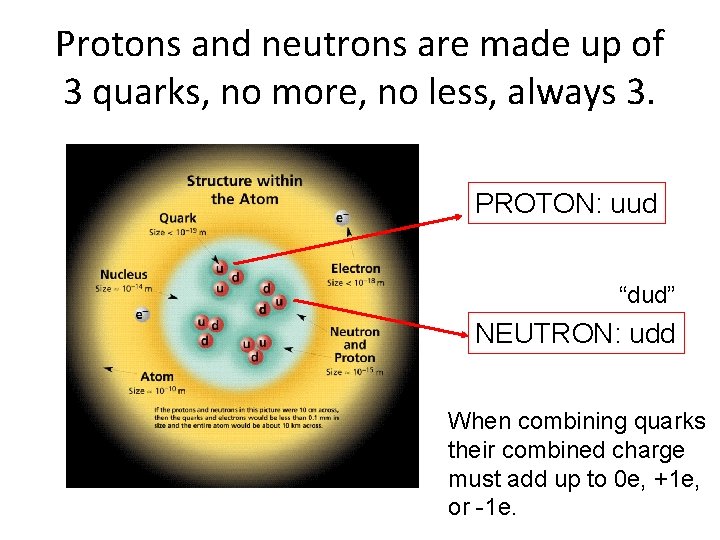
Protons and neutrons are made up of 3 quarks, no more, no less, always 3. PROTON: uud “dud” NEUTRON: udd When combining quarks their combined charge must add up to 0 e, +1 e, or -1 e.
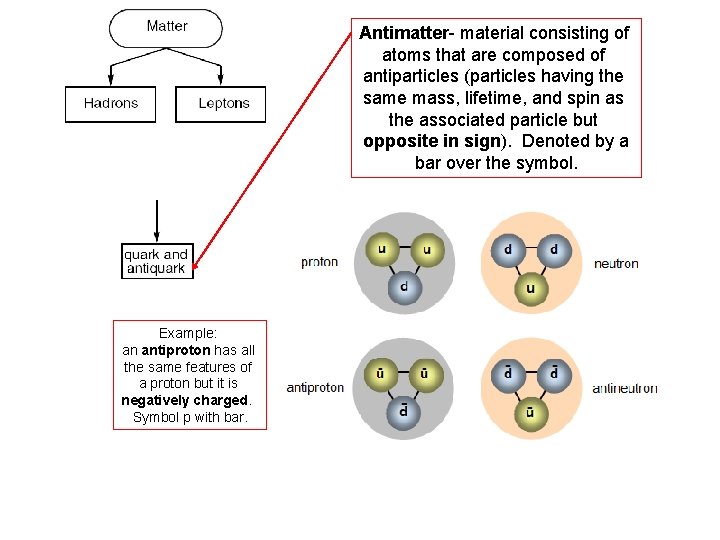
Antimatter- material consisting of atoms that are composed of antiparticles (particles having the same mass, lifetime, and spin as the associated particle but opposite in sign). Denoted by a bar over the symbol. Example: an antiproton has all the same features of a proton but it is negatively charged. Symbol p with bar.
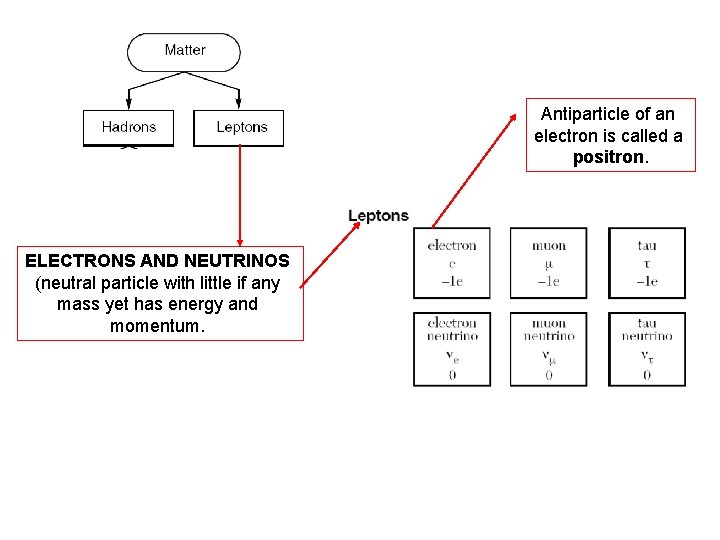
Antiparticle of an electron is called a positron. ELECTRONS AND NEUTRINOS (neutral particle with little if any mass yet has energy and momentum.
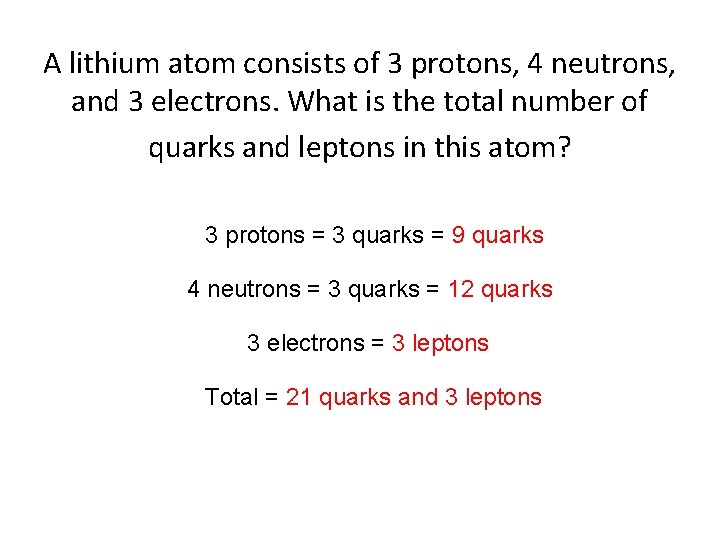
A lithium atom consists of 3 protons, 4 neutrons, and 3 electrons. What is the total number of quarks and leptons in this atom? 3 protons = 3 quarks = 9 quarks 4 neutrons = 3 quarks = 12 quarks 3 electrons = 3 leptons Total = 21 quarks and 3 leptons
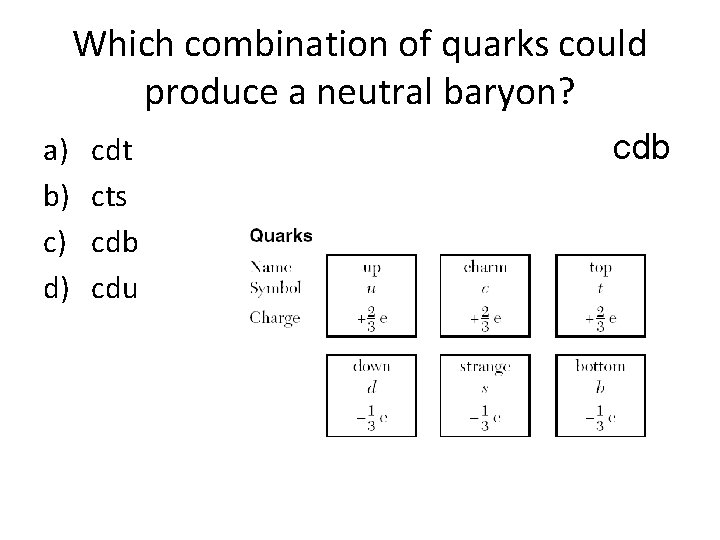
Which combination of quarks could produce a neutral baryon? a) b) c) d) cdt cts cdb cdu cdb
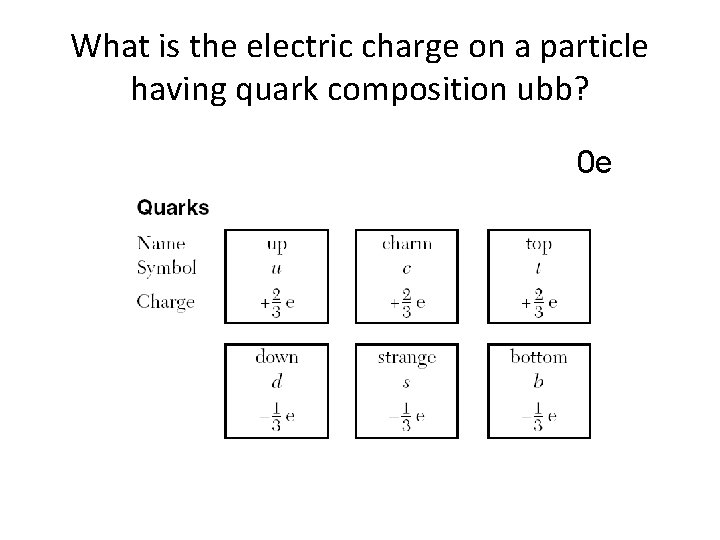
What is the electric charge on a particle having quark composition ubb? 0 e
- Slides: 53