
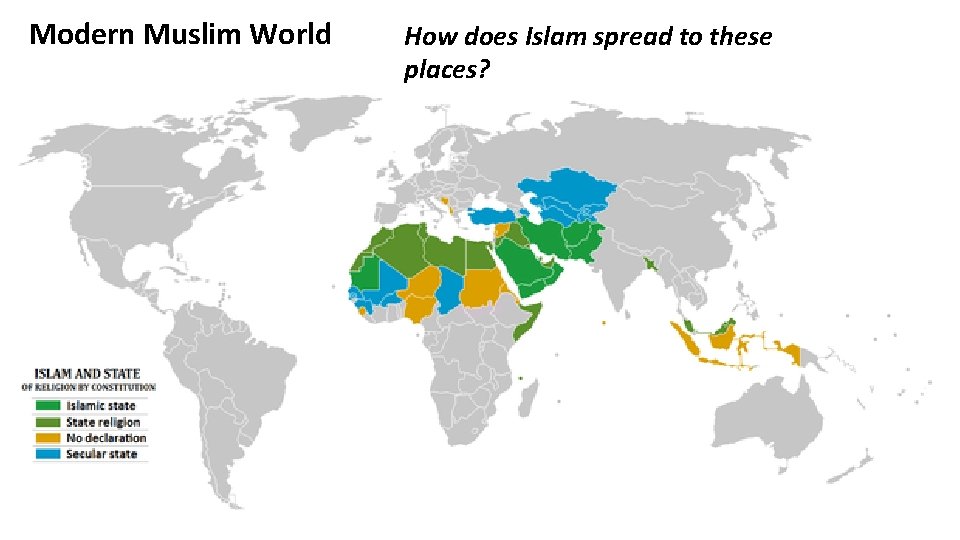
Modern Muslim World How does Islam spread to
- Slides: 25
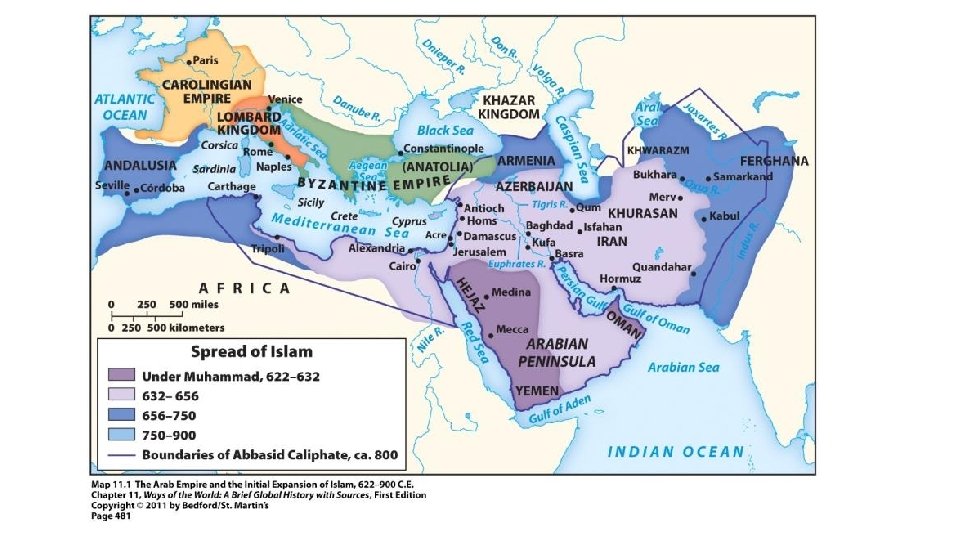
Modern Muslim World How does Islam spread to these places?
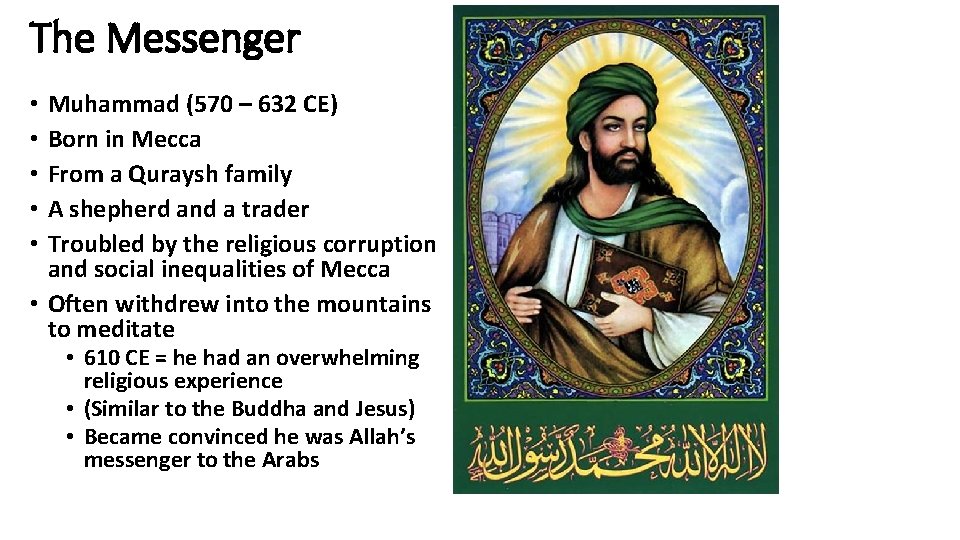
The Messenger Muhammad (570 – 632 CE) Born in Mecca From a Quraysh family A shepherd and a trader Troubled by the religious corruption and social inequalities of Mecca • Often withdrew into the mountains to meditate • • • 610 CE = he had an overwhelming religious experience • (Similar to the Buddha and Jesus) • Became convinced he was Allah’s messenger to the Arabs
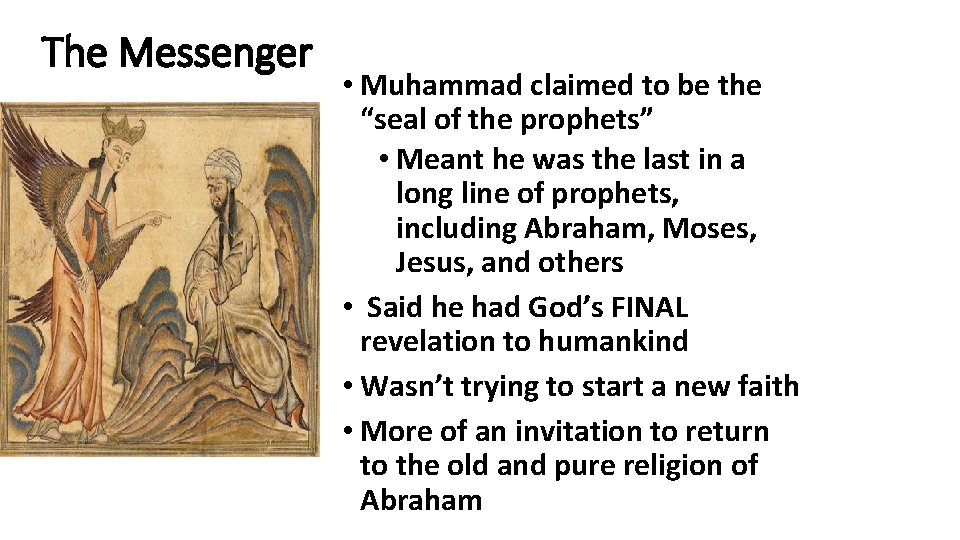
The Messenger • Muhammad claimed to be the “seal of the prophets” • Meant he was the last in a long line of prophets, including Abraham, Moses, Jesus, and others • Said he had God’s FINAL revelation to humankind • Wasn’t trying to start a new faith • More of an invitation to return to the old and pure religion of Abraham
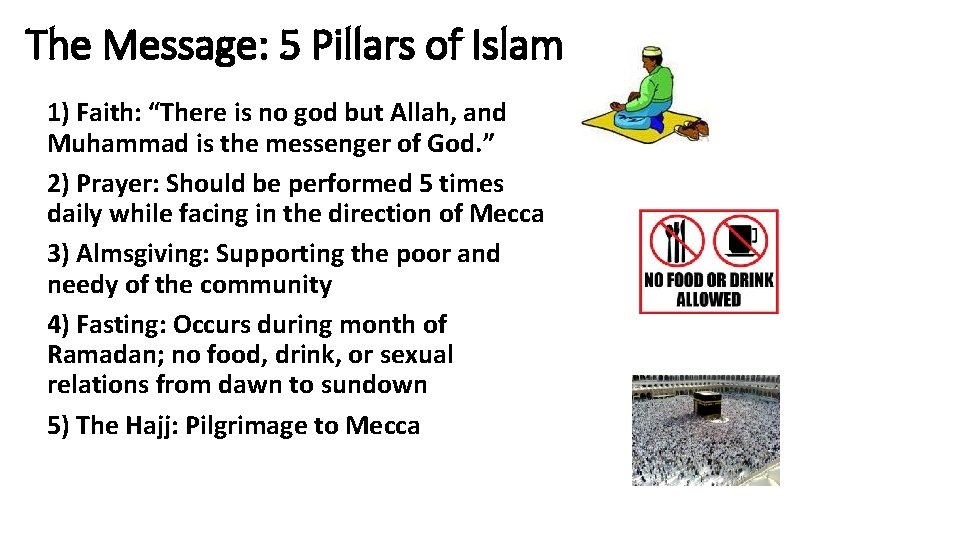
The Message: 5 Pillars of Islam 1) Faith: “There is no god but Allah, and Muhammad is the messenger of God. ” 2) Prayer: Should be performed 5 times daily while facing in the direction of Mecca 3) Almsgiving: Supporting the poor and needy of the community 4) Fasting: Occurs during month of Ramadan; no food, drink, or sexual relations from dawn to sundown 5) The Hajj: Pilgrimage to Mecca
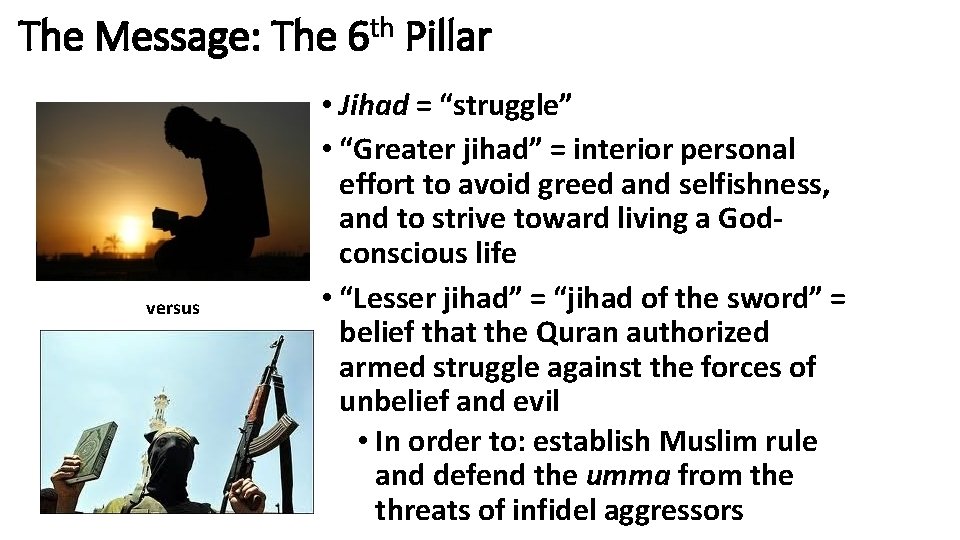
The Message: The 6 th Pillar versus • Jihad = “struggle” • “Greater jihad” = interior personal effort to avoid greed and selfishness, and to strive toward living a Godconscious life • “Lesser jihad” = “jihad of the sword” = belief that the Quran authorized armed struggle against the forces of unbelief and evil • In order to: establish Muslim rule and defend the umma from the threats of infidel aggressors
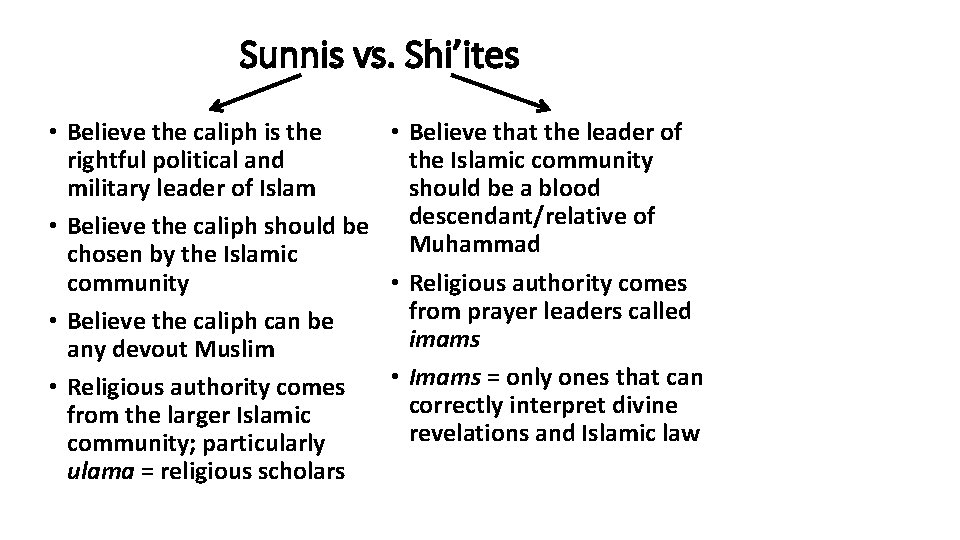
Sunnis vs. Shi’ites • Believe that the leader of • Believe the caliph is the Islamic community rightful political and should be a blood military leader of Islam • Believe the caliph should be descendant/relative of Muhammad chosen by the Islamic • Religious authority comes community from prayer leaders called • Believe the caliph can be imams any devout Muslim • Imams = only ones that can • Religious authority comes correctly interpret divine from the larger Islamic revelations and Islamic law community; particularly ulama = religious scholars
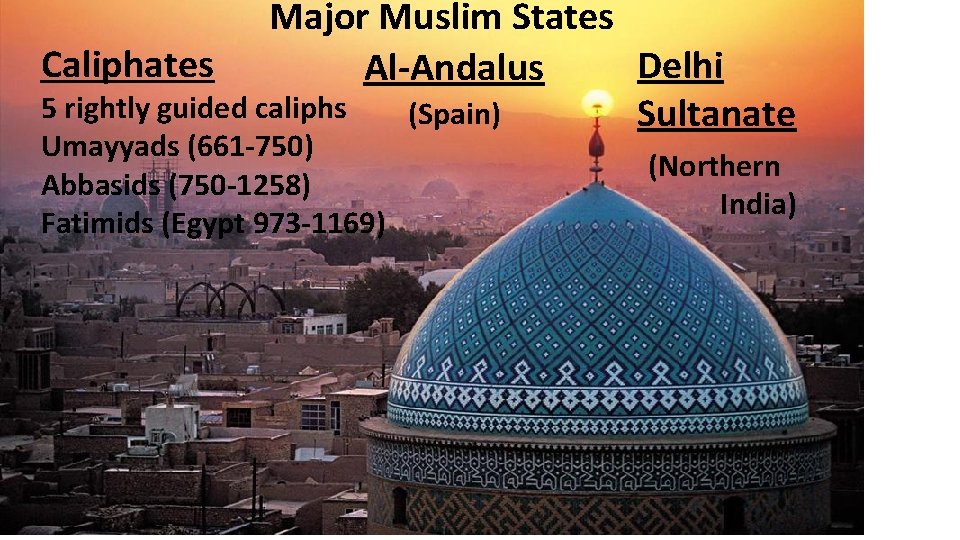
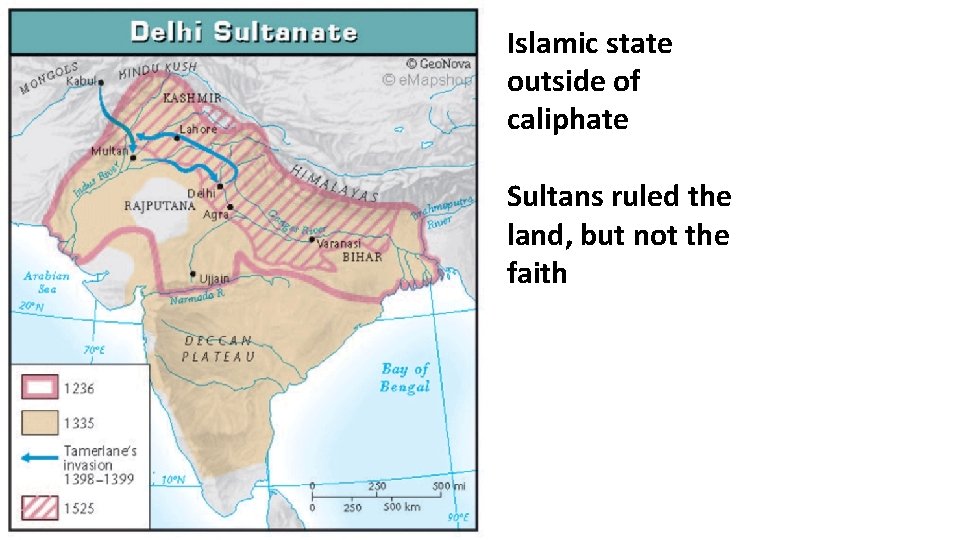
Major Muslim States Caliphates Delhi Al-Andalus 5 rightly guided caliphs (Spain) Sultanate Umayyads (661 -750) Abbasids (750 -1258) Fatimids (Egypt 973 -1169) (Northern India)
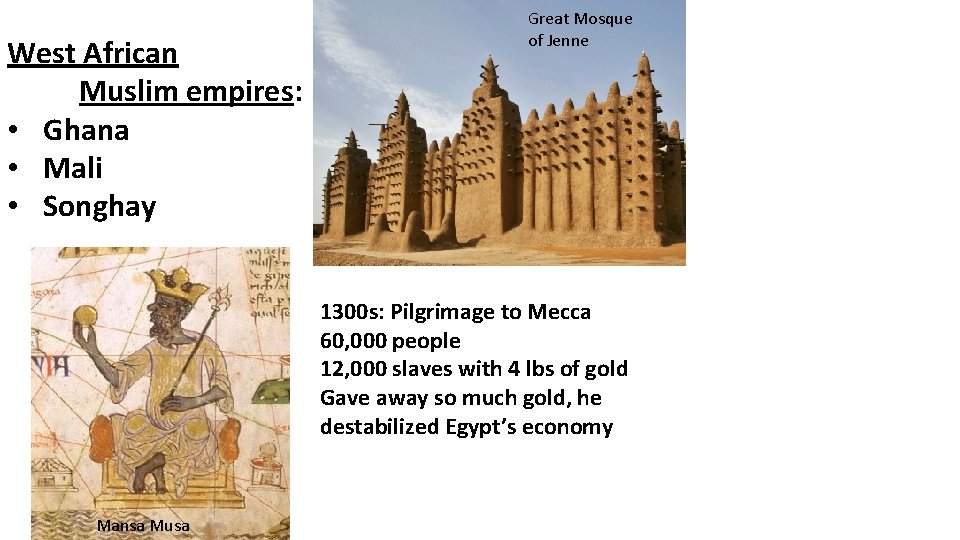
West African Muslim empires: • Ghana • Mali • Songhay Great Mosque of Jenne 1300 s: Pilgrimage to Mecca 60, 000 people 12, 000 slaves with 4 lbs of gold Gave away so much gold, he destabilized Egypt’s economy Mansa Musa
Islamic state outside of caliphate Sultans ruled the land, but not the faith
Al-Andalus (aka Andalusia) (aka Islamic Spain) http: //explorethemed. com/reconquista. asp
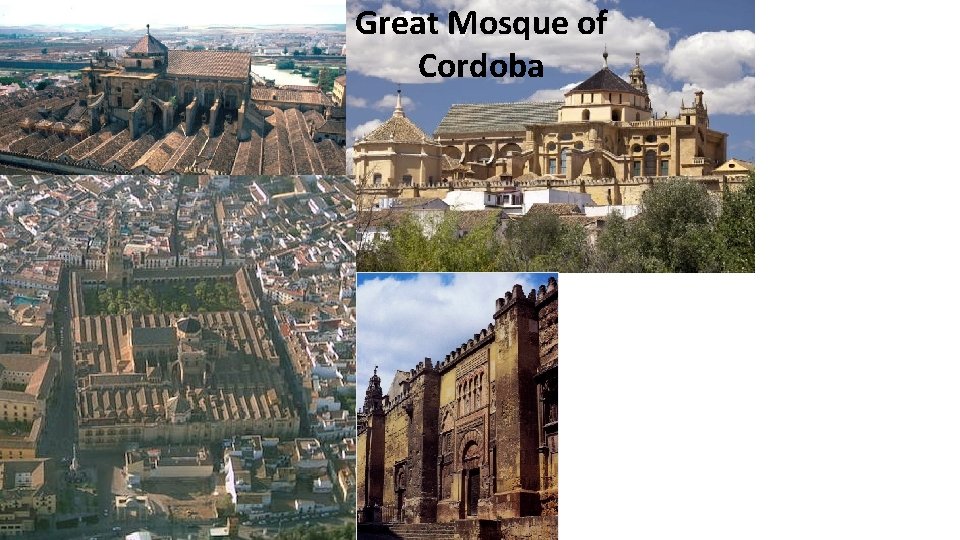
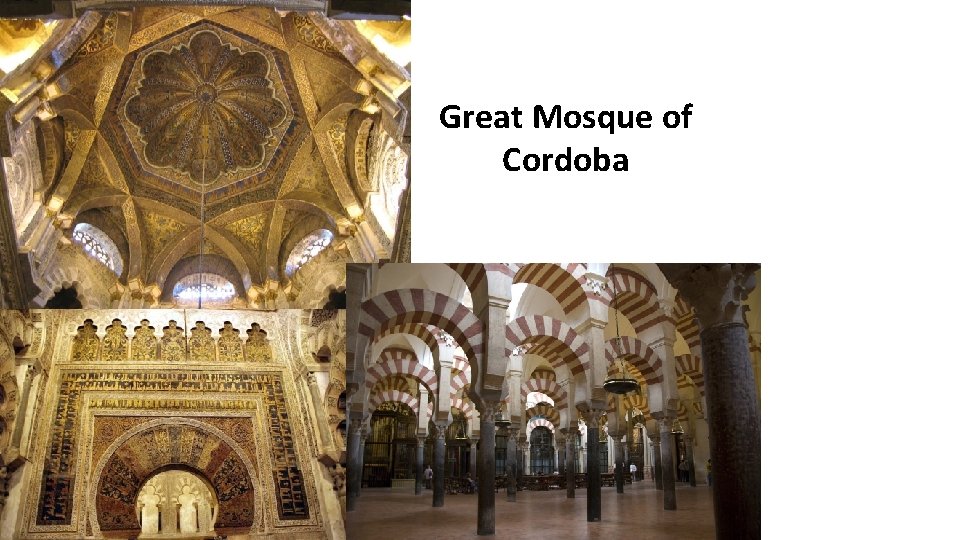
Great Mosque of Cordoba
Great Mosque of Cordoba
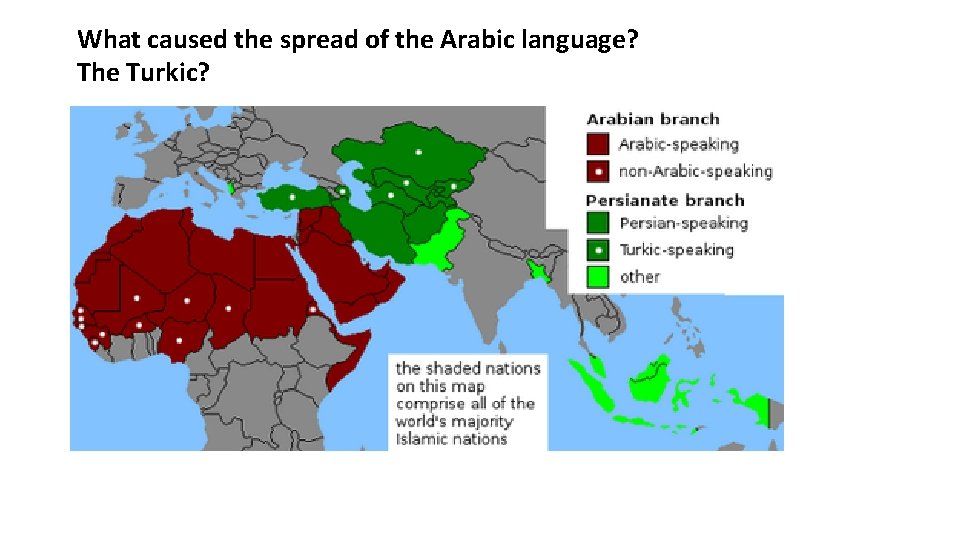
What caused the spread of the Arabic language? The Turkic?
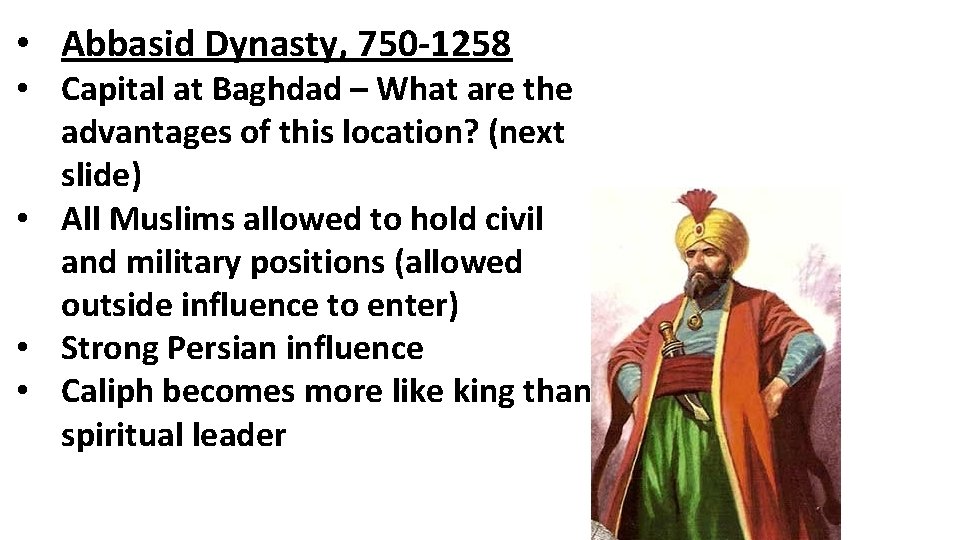
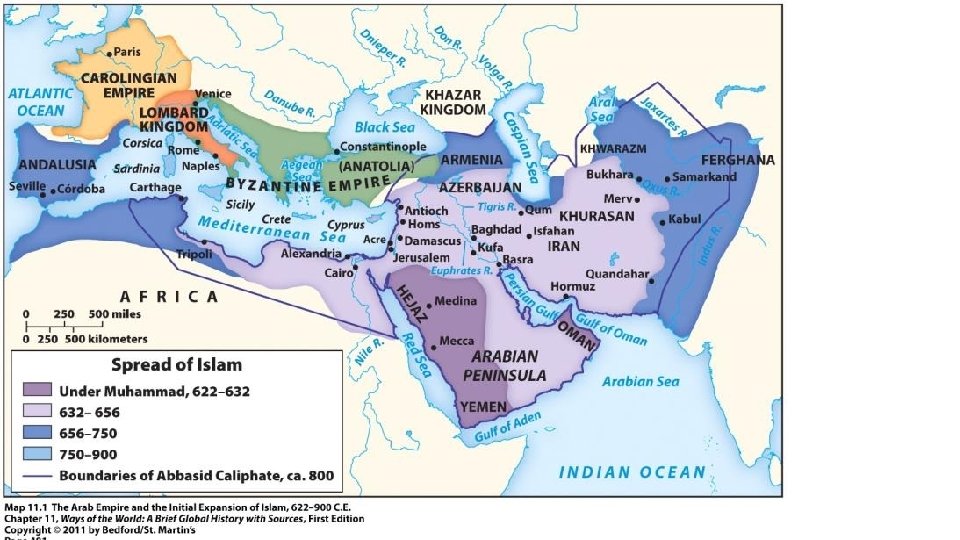
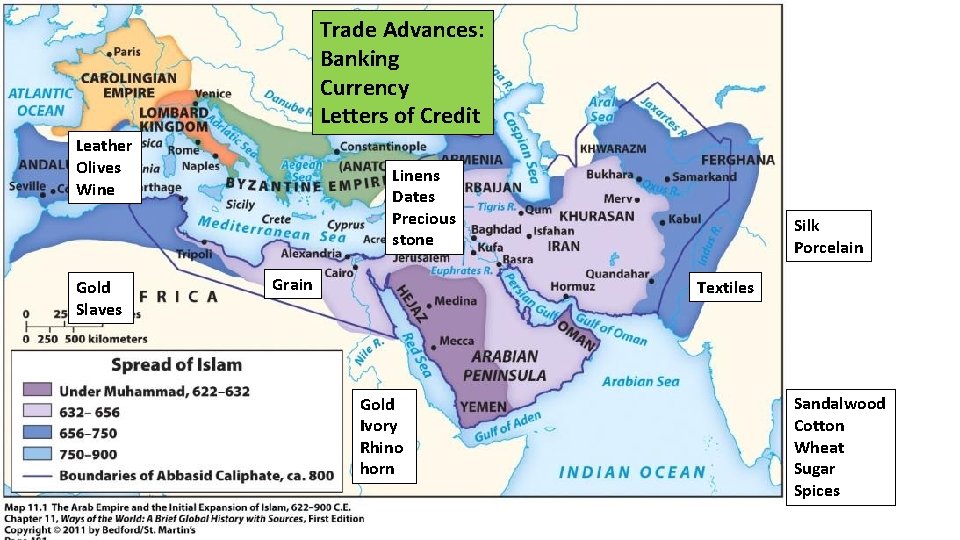
• Abbasid Dynasty, 750 -1258 • Capital at Baghdad – What are the advantages of this location? (next slide) • All Muslims allowed to hold civil and military positions (allowed outside influence to enter) • Strong Persian influence • Caliph becomes more like king than spiritual leader
Trade Advances: Banking Currency Letters of Credit Leather Olives Wine Gold Slaves Linens Dates Precious stone Grain Silk Porcelain Textiles Gold Ivory Rhino horn Sandalwood Cotton Wheat Sugar Spices
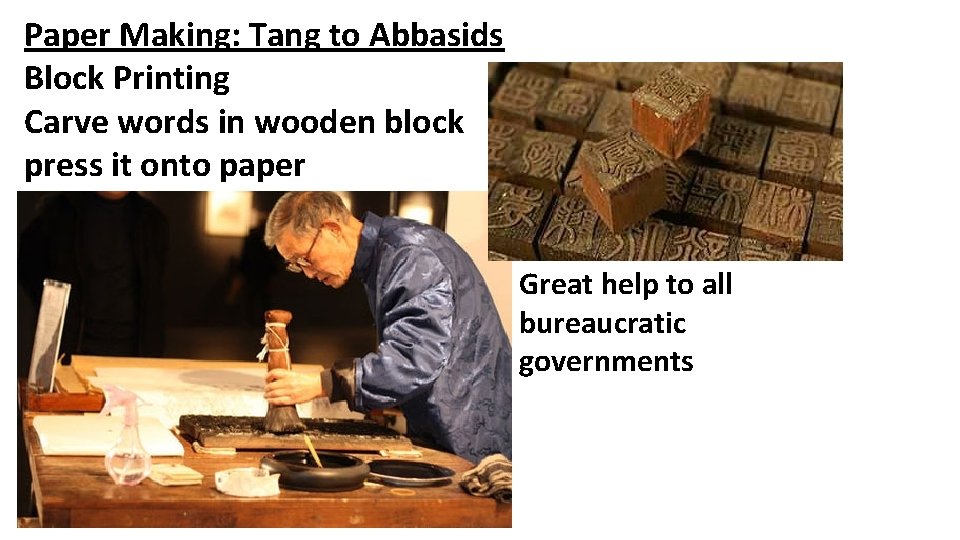
Paper Making: Tang to Abbasids Block Printing Carve words in wooden block press it onto paper Great help to all bureaucratic governments
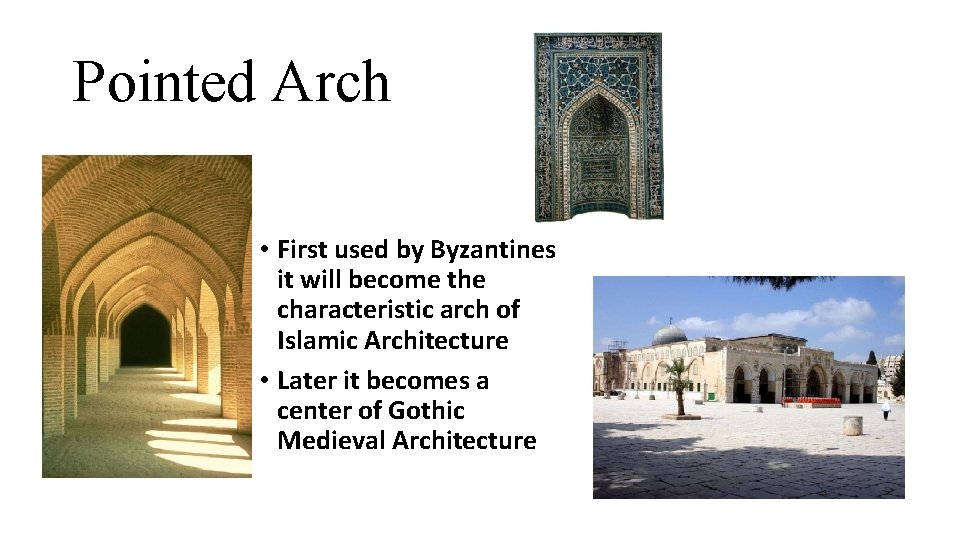
Pointed Arch • First used by Byzantines it will become the characteristic arch of Islamic Architecture • Later it becomes a center of Gothic Medieval Architecture
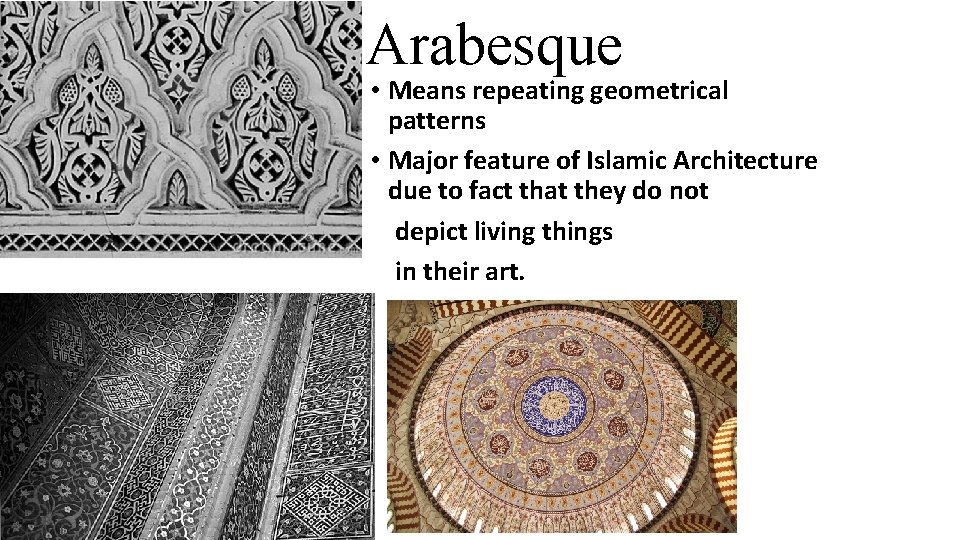
Arabesque • Means repeating geometrical patterns • Major feature of Islamic Architecture due to fact that they do not depict living things in their art.
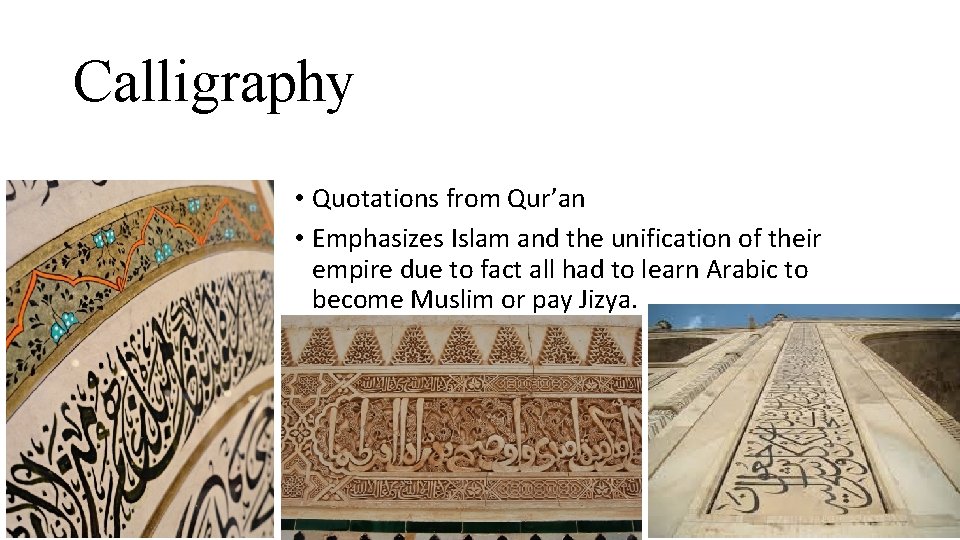
Calligraphy • Quotations from Qur’an • Emphasizes Islam and the unification of their empire due to fact all had to learn Arabic to become Muslim or pay Jizya.
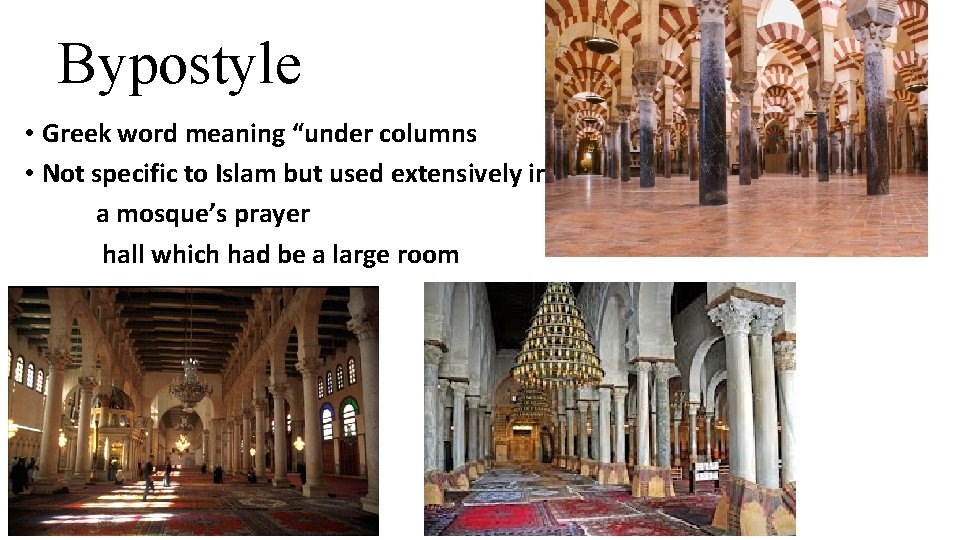
Bypostyle • Greek word meaning “under columns • Not specific to Islam but used extensively in a mosque’s prayer hall which had be a large room
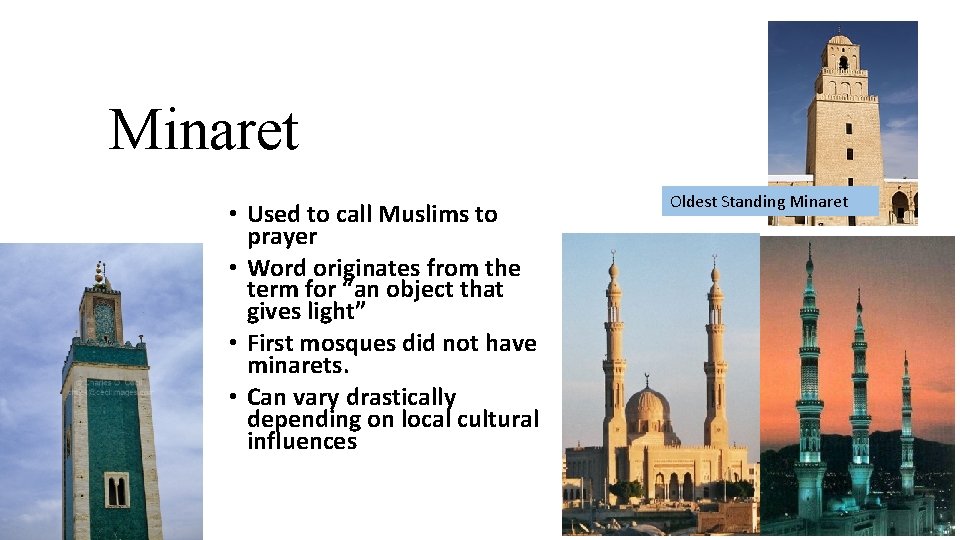
Minaret • Used to call Muslims to prayer • Word originates from the term for “an object that gives light” • First mosques did not have minarets. • Can vary drastically depending on local cultural influences Oldest Standing Minaret
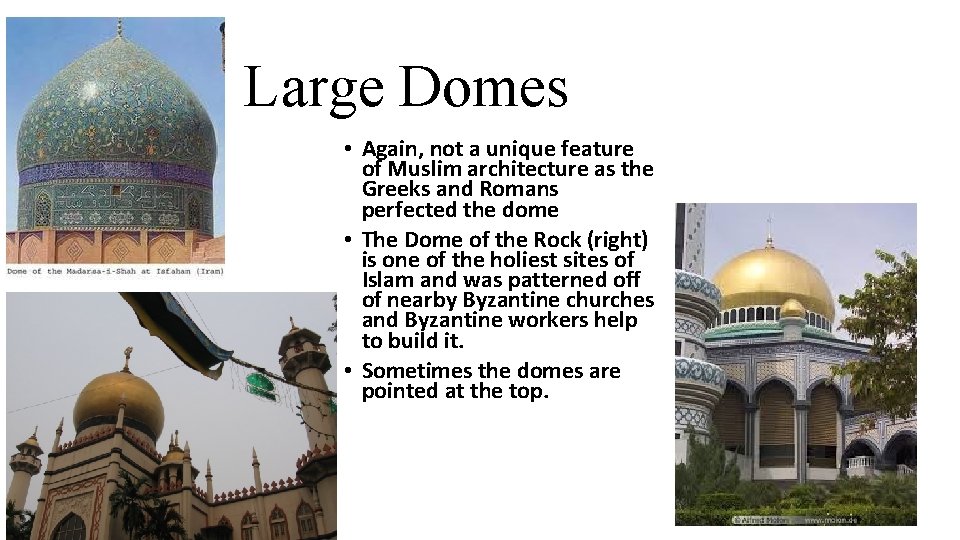
Large Domes • Again, not a unique feature of Muslim architecture as the Greeks and Romans perfected the dome • The Dome of the Rock (right) is one of the holiest sites of Islam and was patterned off of nearby Byzantine churches and Byzantine workers help to build it. • Sometimes the domes are pointed at the top.
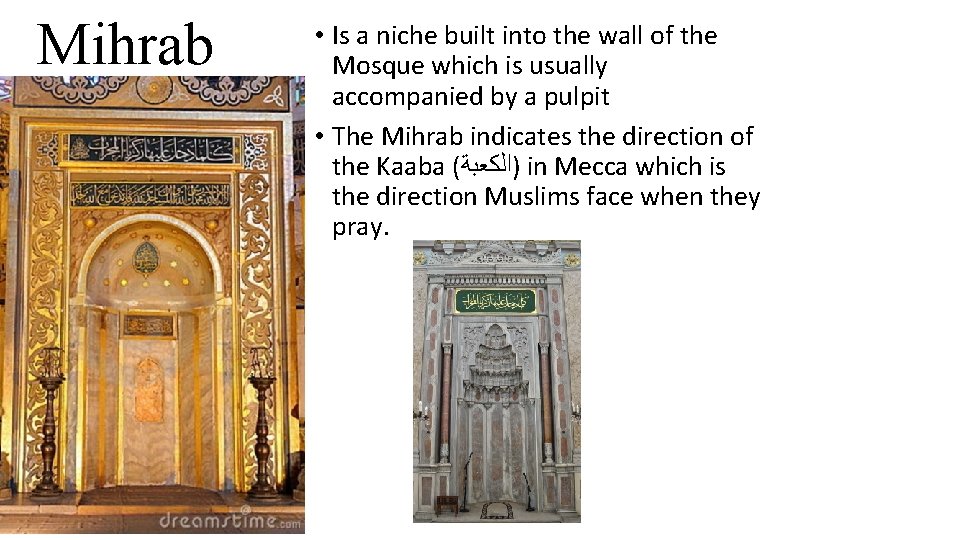
Mihrab • Is a niche built into the wall of the Mosque which is usually accompanied by a pulpit • The Mihrab indicates the direction of the Kaaba ( )ﺍﻟﻜﻌﺒﺔ in Mecca which is the direction Muslims face when they pray.