
Modern Monarchies What is a Monarchy Monarchies are

- Slides: 7
Modern Monarchies
What is a Monarchy? �Monarchies are governments in which one person, a king or queen, holds power, usually until death. �Most monarchies are royal family members who inherited the position from a parent or sibling. �Monarchies were once very powerful and ruled most of Europe.
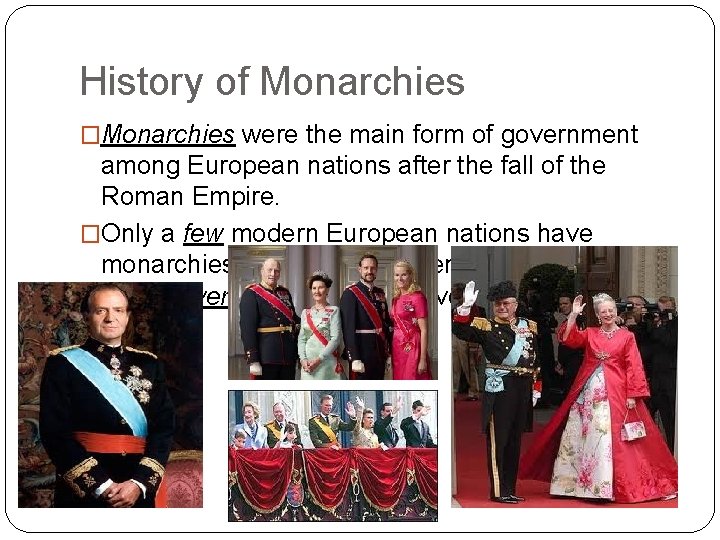
History of Monarchies �Monarchies were the main form of government among European nations after the fall of the Roman Empire. �Only a few modern European nations have monarchies (Great Britain, Denmark, Spain) and their powers have changed over time.
Royal Duties �Monarchies no longer hold complete power. In fact they have no real power in the government. Instead they act as ambassadors (representatives) for their country. �Royal “roles” include: military service (mainly for the males), opening and closing parliament, weekly meetings with the prime minister and hosting dinners/parties for world leaders.
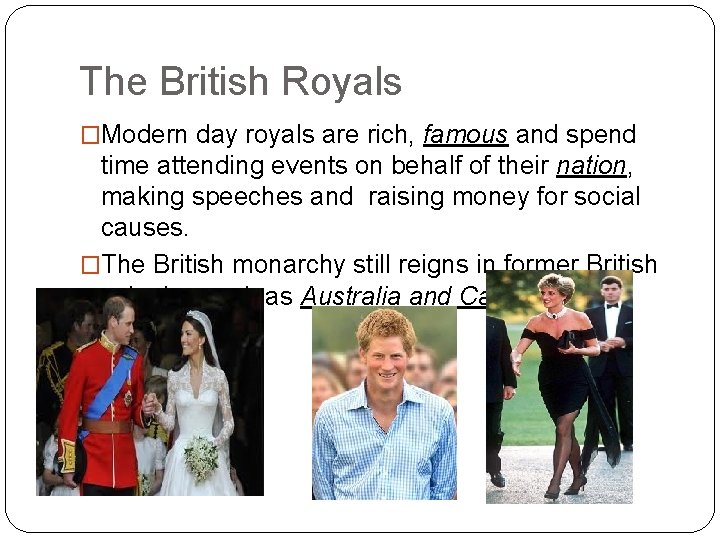
The British Royals �Modern day royals are rich, famous and spend time attending events on behalf of their nation, making speeches and raising money for social causes. �The British monarchy still reigns in former British colonies such as Australia and Canada.
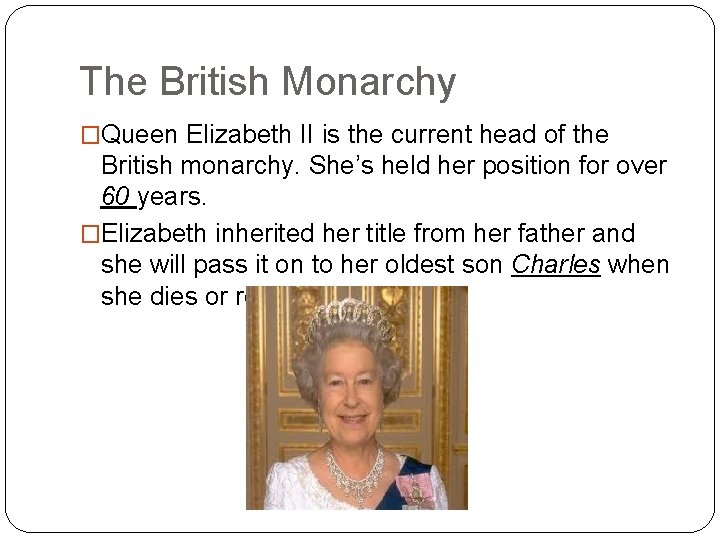
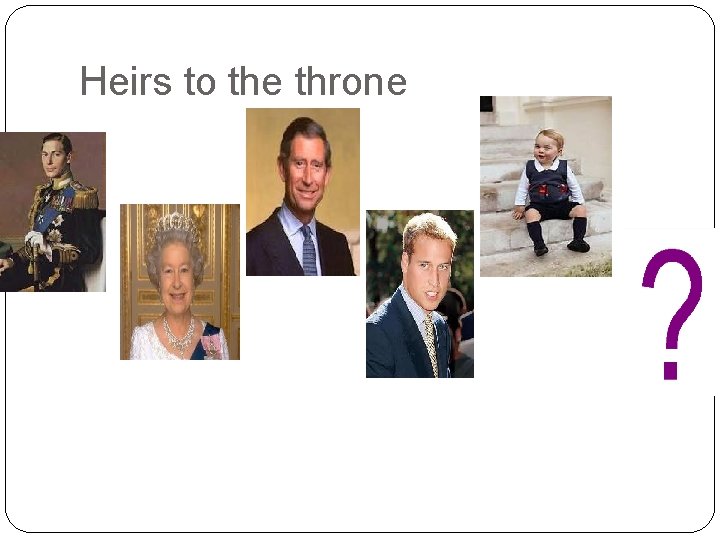
The British Monarchy �Queen Elizabeth II is the current head of the British monarchy. She’s held her position for over 60 years. �Elizabeth inherited her title from her father and she will pass it on to her oldest son Charles when she dies or retires.
Heirs to the throne