
Modern mentoring as an effective developmental tool Prof

- Slides: 16
Modern mentoring as an effective developmental tool Prof David Clutterbuck © Clutterbuck Associates 2008 C 1
What is Mentoring? “Off-line help by one person to another in making significant transitions in knowledge, work or thinking. ” Megginson & Clutterbuck ‘Mentoring in Action’, 1995 © Clutterbuck Associates, 2008
What do we mean by mentoring? Mentoring is a helping relationship based on an exchange of knowledge, experience and goodwill. Mentors help someone less experienced gain confidence, clearer purpose, insight, and wisdom. In developmental mentoring, the mentor, too, is changed by the relationship. © Clutterbuck Associates, 2008
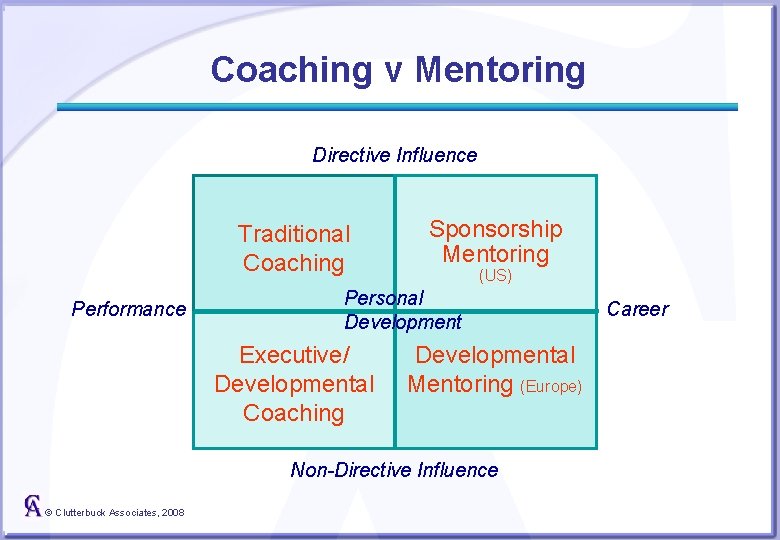
Coaching v Mentoring Directive Influence Traditional Coaching Performance Sponsorship Mentoring (US) Personal Development Executive/ Developmental Coaching Developmental Mentoring (Europe) Non-Directive Influence © Clutterbuck Associates, 2008 Career
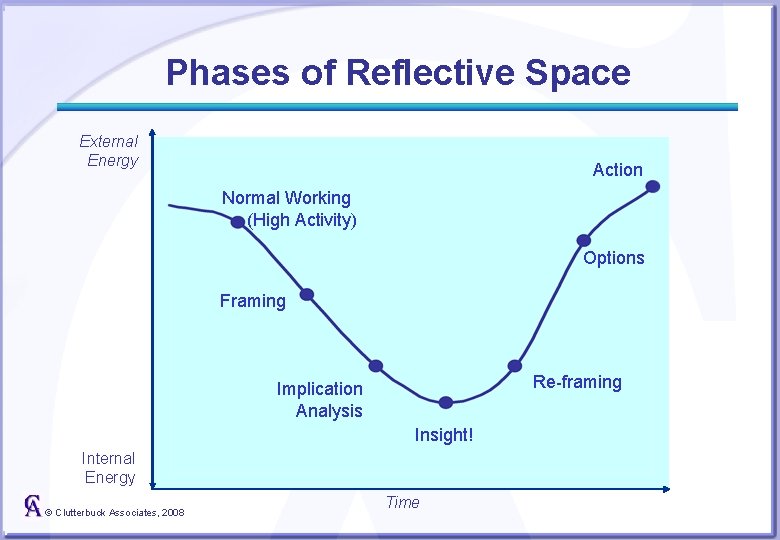
Phases of Reflective Space External Energy Action Normal Working (High Activity) Options Framing Re-framing Implication Analysis Insight! Internal Energy © Clutterbuck Associates, 2008 Time
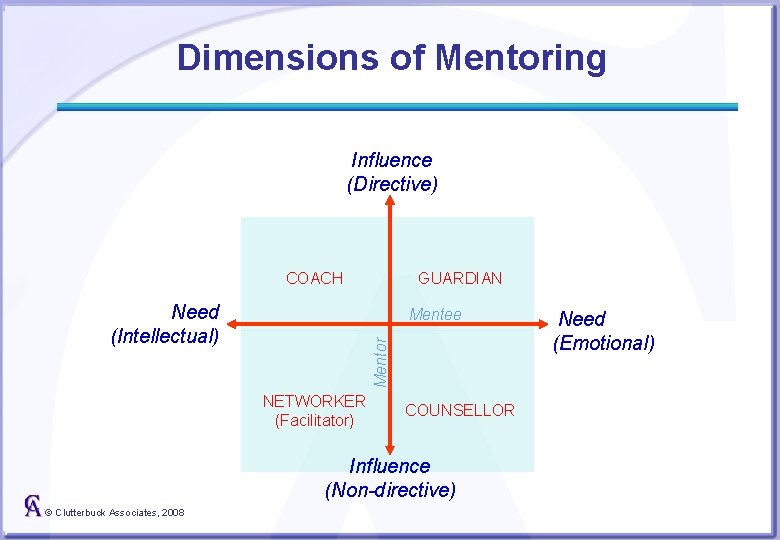
Dimensions of Mentoring Influence (Directive) COACH Need (Intellectual) GUARDIAN Mentor Mentee NETWORKER (Facilitator) COUNSELLOR Influence (Non-directive) © Clutterbuck Associates, 2008 Need (Emotional)
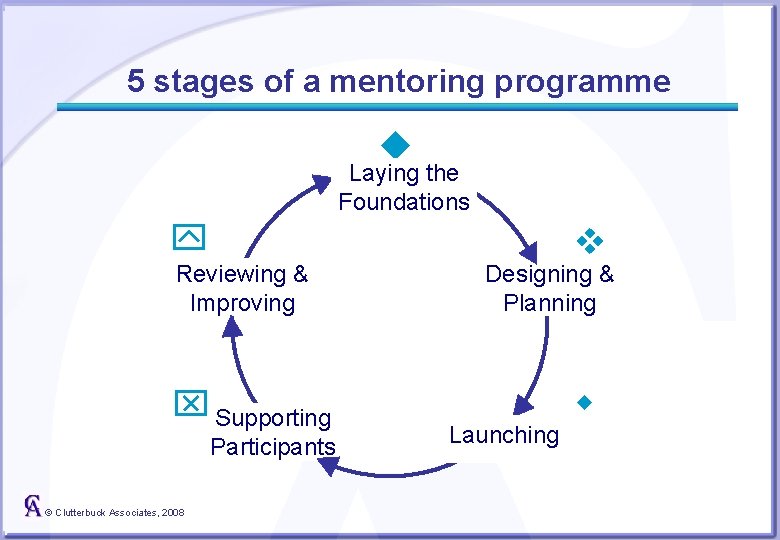
5 stages of a mentoring programme Laying the Foundations Reviewing & Improving Supporting Participants © Clutterbuck Associates, 2008 Designing & Planning Launching
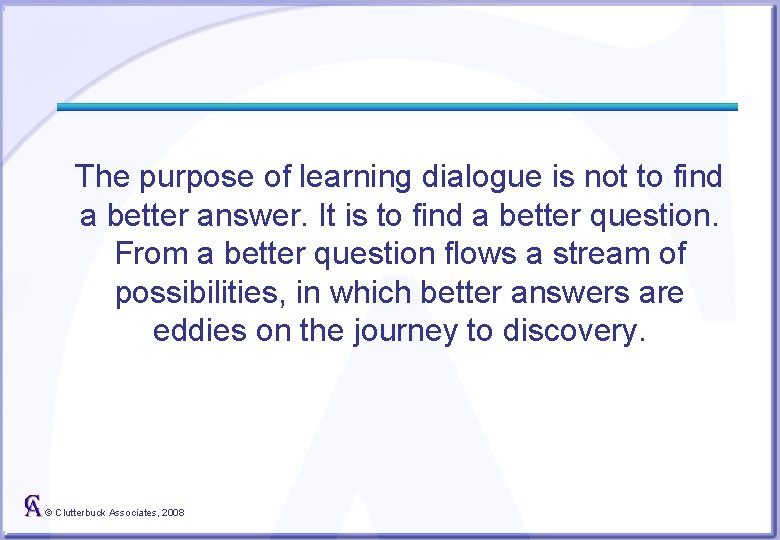
The purpose of learning dialogue is not to find a better answer. It is to find a better question. From a better question flows a stream of possibilities, in which better answers are eddies on the journey to discovery. © Clutterbuck Associates, 2008
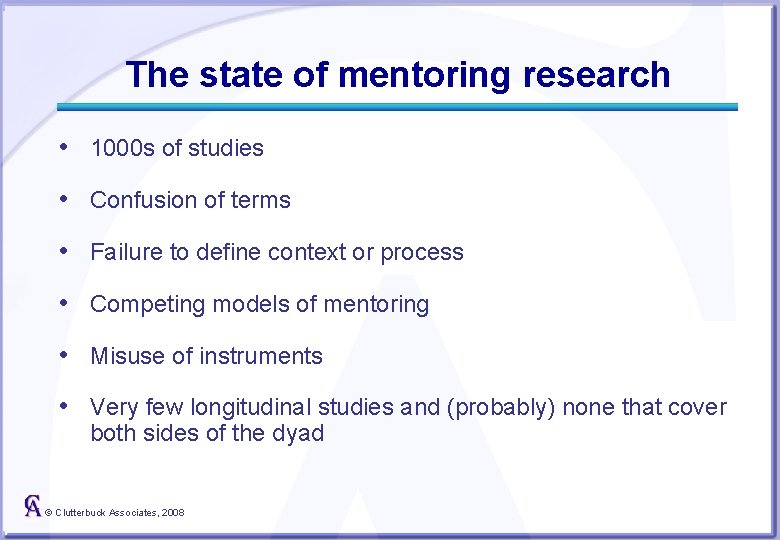
The state of mentoring research • 1000 s of studies • Confusion of terms • Failure to define context or process • Competing models of mentoring • Misuse of instruments • Very few longitudinal studies and (probably) none that cover both sides of the dyad © Clutterbuck Associates, 2008
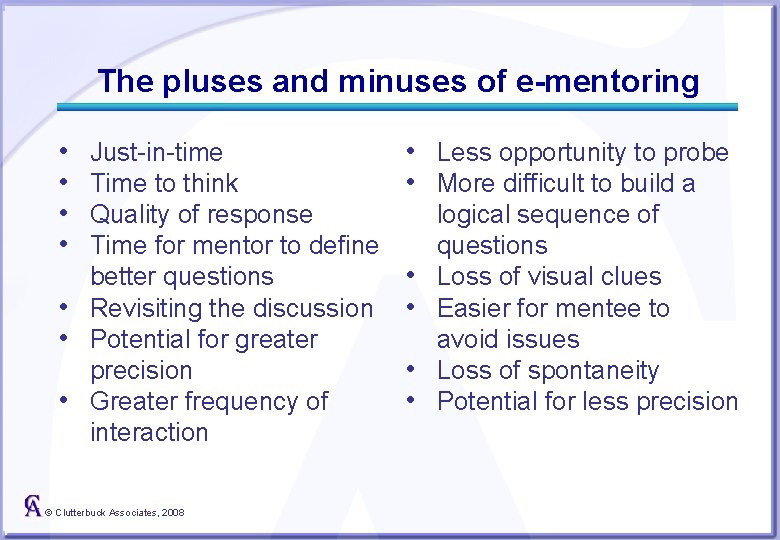
The pluses and minuses of e-mentoring • • Just-in-time Time to think Quality of response Time for mentor to define better questions • Revisiting the discussion • Potential for greater precision • Greater frequency of interaction © Clutterbuck Associates, 2008 • Less opportunity to probe • More difficult to build a • • logical sequence of questions Loss of visual clues Easier for mentee to avoid issues Loss of spontaneity Potential for less precision
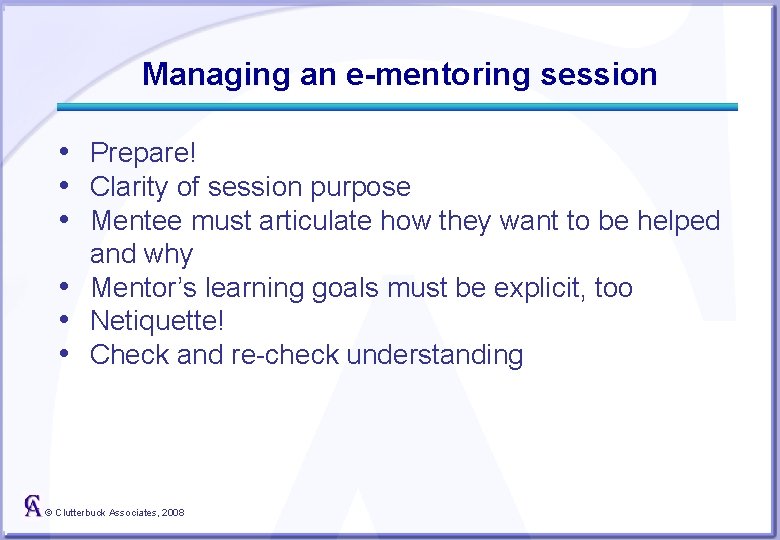
Managing an e-mentoring session • Prepare! • Clarity of session purpose • Mentee must articulate how they want to be helped and why • Mentor’s learning goals must be explicit, too • Netiquette! • Check and re-check understanding © Clutterbuck Associates, 2008
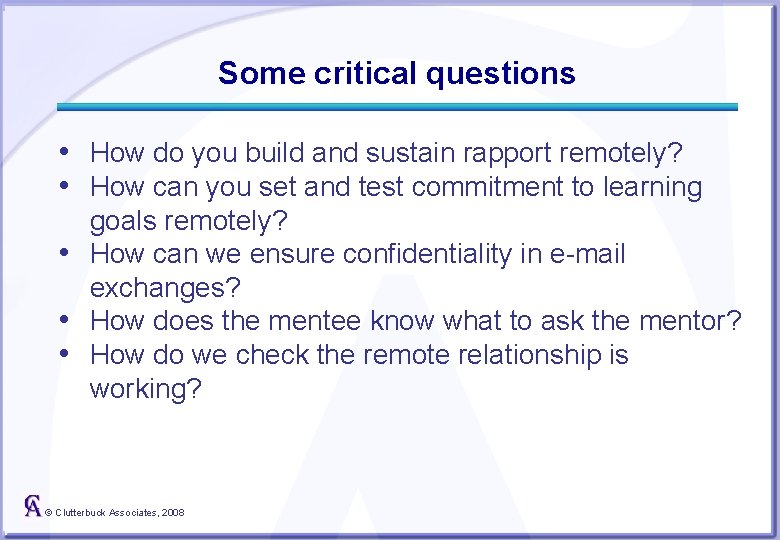
Some critical questions • How do you build and sustain rapport remotely? • How can you set and test commitment to learning goals remotely? • How can we ensure confidentiality in e-mail exchanges? • How does the mentee know what to ask the mentor? • How do we check the remote relationship is working? © Clutterbuck Associates, 2008
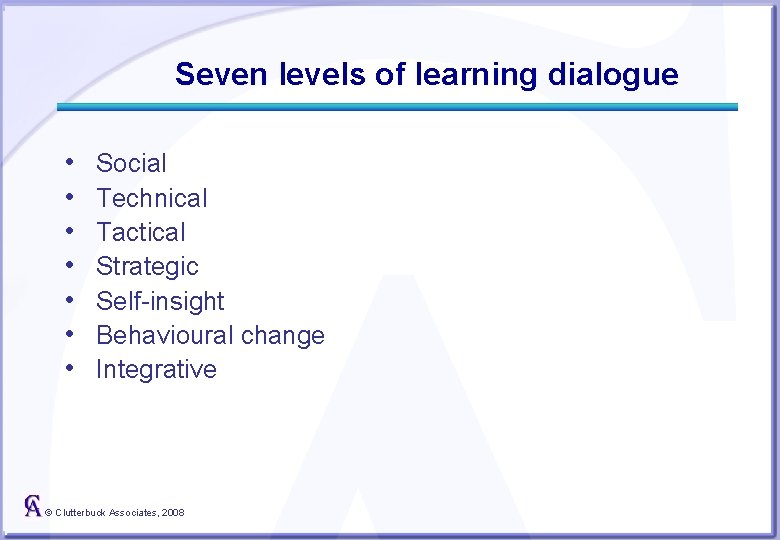
Seven levels of learning dialogue • • Social Technical Tactical Strategic Self-insight Behavioural change Integrative © Clutterbuck Associates, 2008
Seven conversations in mentoring © Clutterbuck Associates, 2008
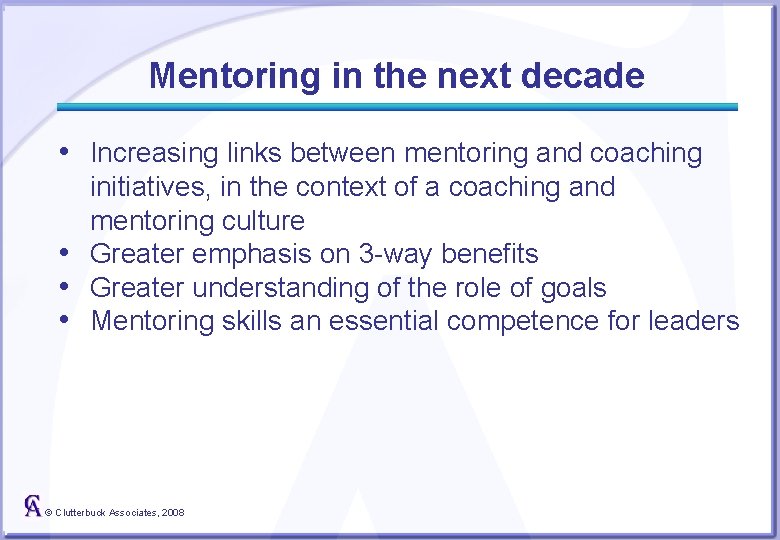
Mentoring in the next decade • Increasing links between mentoring and coaching initiatives, in the context of a coaching and mentoring culture • Greater emphasis on 3 -way benefits • Greater understanding of the role of goals • Mentoring skills an essential competence for leaders © Clutterbuck Associates, 2008
Clutterbuck Associates 01628 661667 info@clutterbuckassociates. co. uk www. clutterbuckassociates. com © Clutterbuck Associates, 2008