
Modern Landfill Field Trip Friday 3 5 p
- Slides: 30
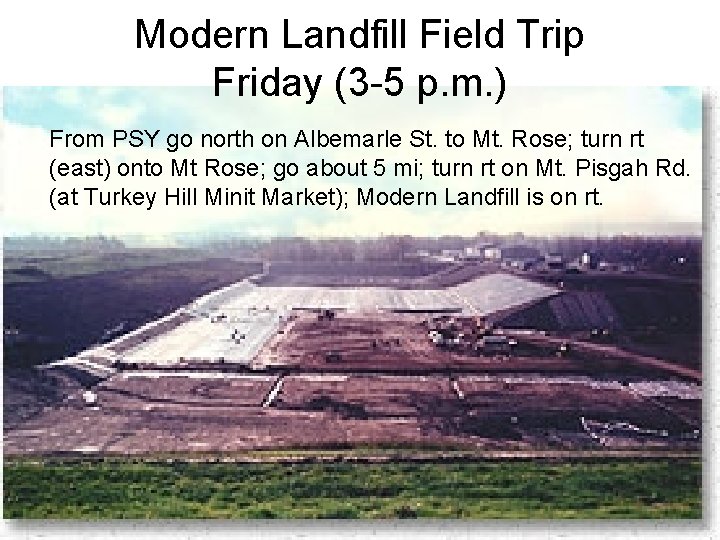
Modern Landfill Field Trip Friday (3 -5 p. m. ) From PSY go north on Albemarle St. to Mt. Rose; turn rt (east) onto Mt Rose; go about 5 mi; turn rt on Mt. Pisgah Rd. (at Turkey Hill Minit Market); Modern Landfill is on rt.
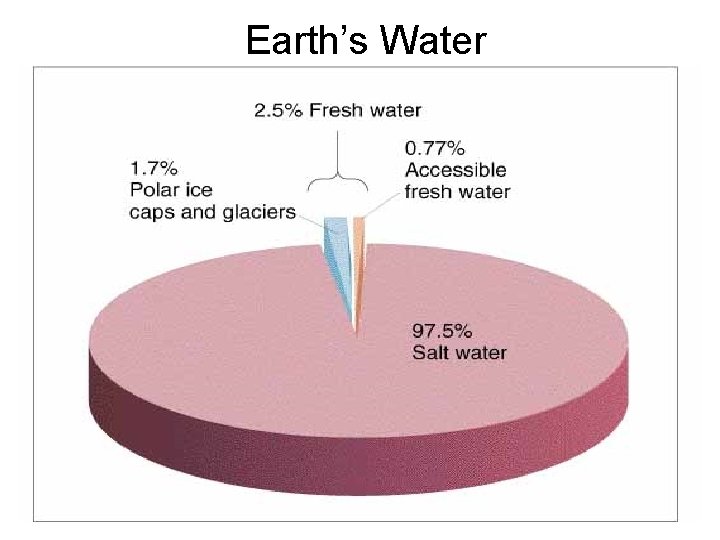
Earth’s Water
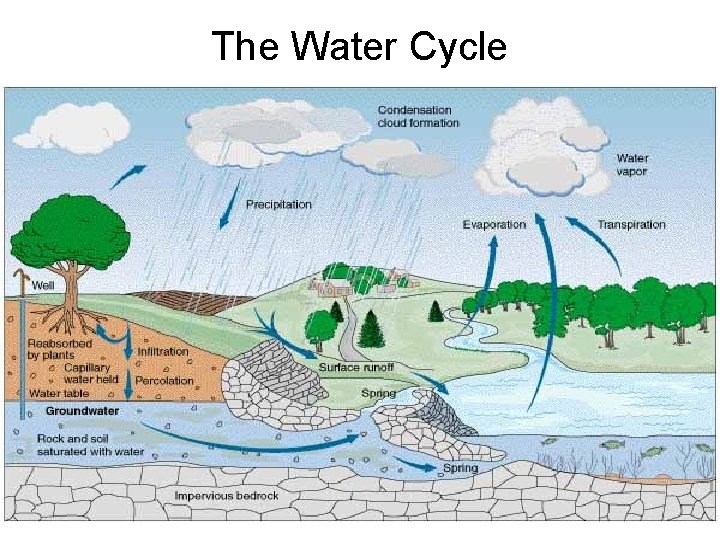
Water • The water cycle (hydrologic cycle): – Evaporation and transpiration (water vapor) versus condensation and precipitation (liquid/solid water). – What is water’s fate once on the Earth’s surface? • Human demands for freshwater resources. • Human impacts on the hydrologic cycle affect quantity and quality of the resource and ecosystems. • Getting more water versus conservation of existing resources.
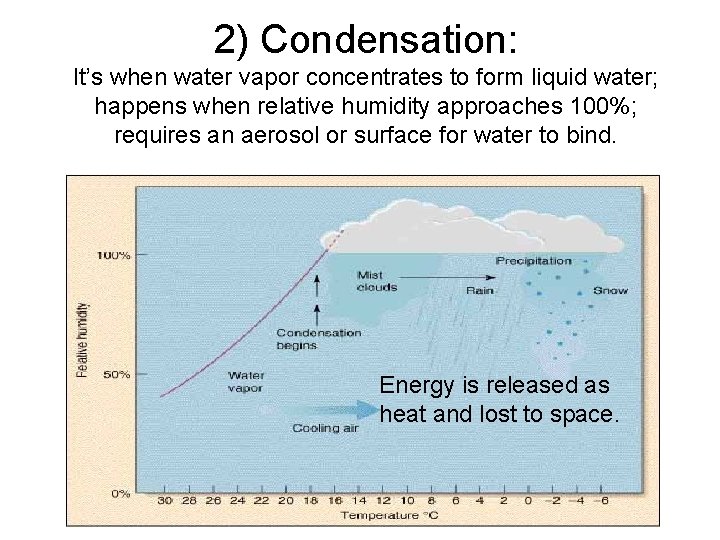
Atmospheric Processes 1) Evaporation: water molecules move from liquid to gaseous state. Energy input required. • What’s transpiration? Is there an energy input? • Relative humidity: percent water vapor relative to the maximum at a given temperature. Hot air holds more water vapor. What if air cools? • Water purification results from evaporation and condensation; impurities are left behind.
2) Condensation: It’s when water vapor concentrates to form liquid water; happens when relative humidity approaches 100%; requires an aerosol or surface for water to bind. Energy is released as heat and lost to space.
Condensation to Precipitation (3) • Adiabatic cooling: warm moist air rises to lower atm. pressure; expands and cools. • High relative humidity + aerosols = clouds • Increasing condensation = larger water droplets Gravity prevails and droplets fall (i. e. rain) • Atm. pollutants are carried by precipitation back to the Earth’s surface (e. g. acid rain nitric acid. )
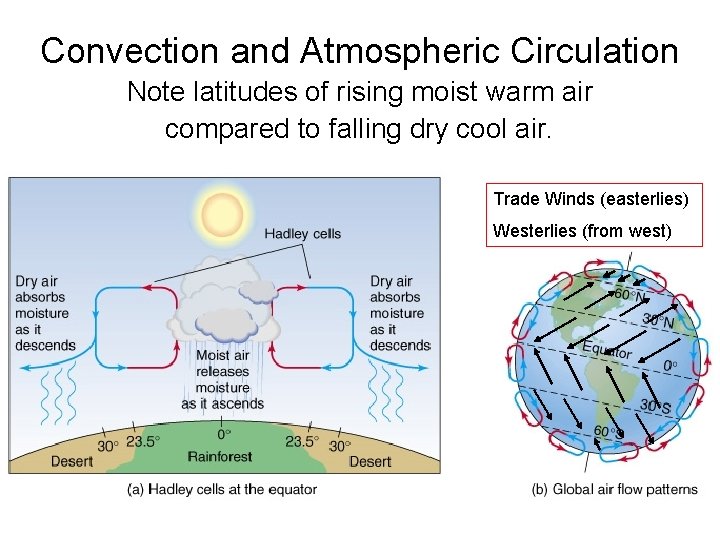
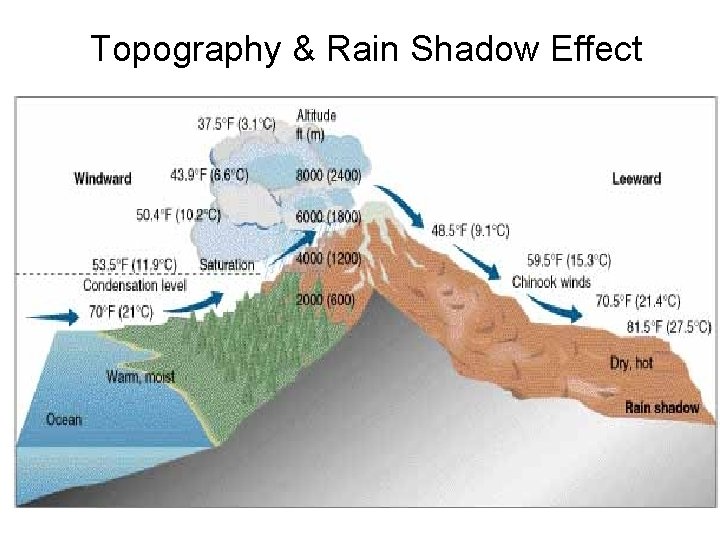
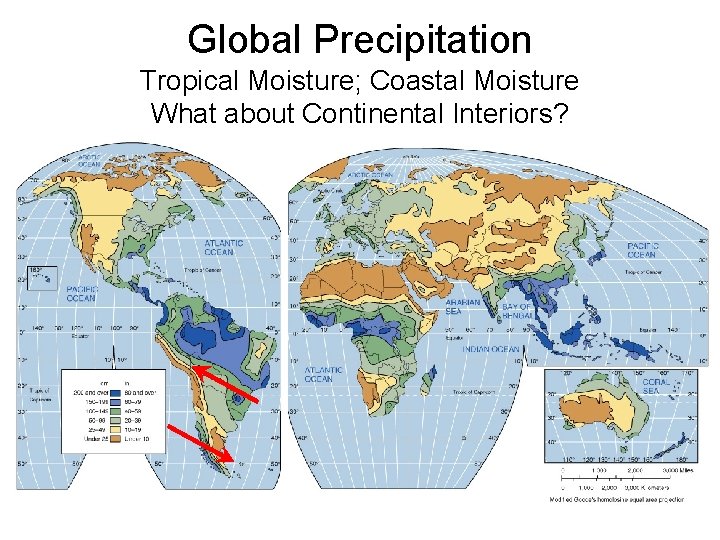
Global Precipitation Patterns • Global precipitation distribution depends on patterns of rising and falling air masses. • Two main factors: – Global convection currents (winds) – Topography (rain shadow effect)
Convection and Atmospheric Circulation Note latitudes of rising moist warm air compared to falling dry cool air. Trade Winds (easterlies) Westerlies (from west)
Topography & Rain Shadow Effect
Global Precipitation Tropical Moisture; Coastal Moisture What about Continental Interiors?
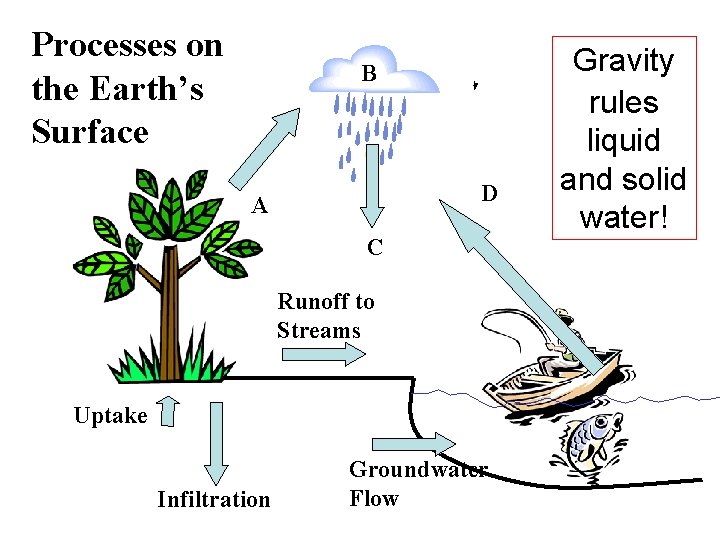
Processes on the Earth’s Surface B D A C Runoff to Streams Uptake Infiltration Groundwater Flow Gravity rules liquid and solid water!
The Water Cycle
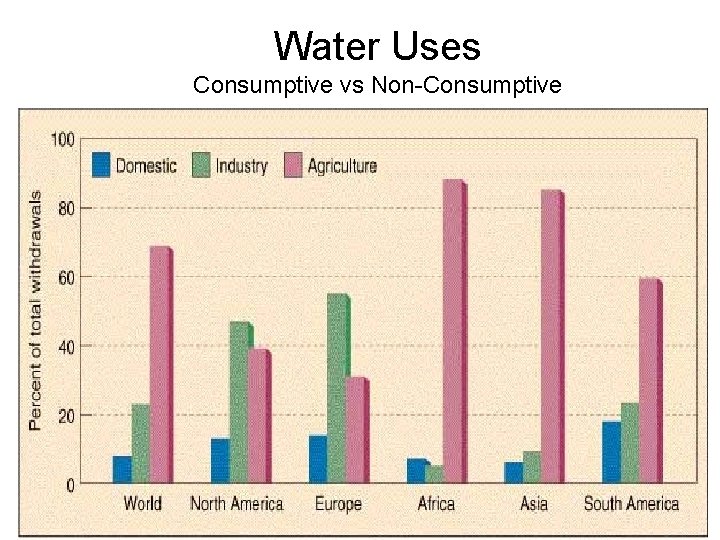
Water Uses Consumptive vs Non-Consumptive
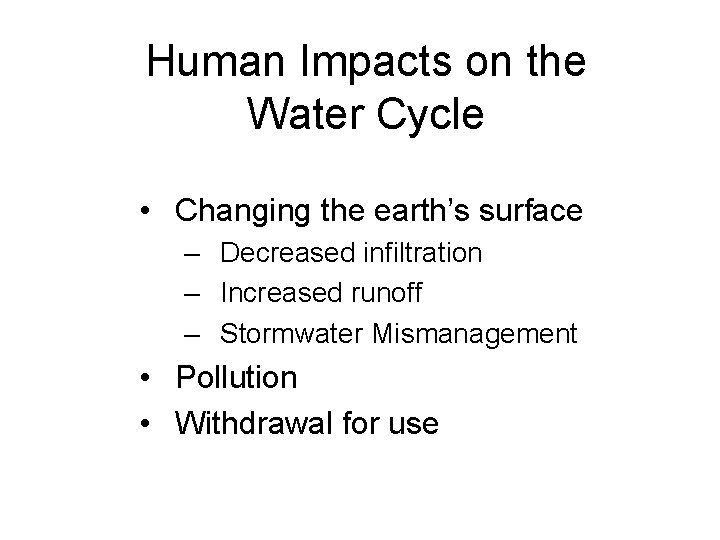
Human Impacts on the Water Cycle • Changing the earth’s surface – Decreased infiltration – Increased runoff – Stormwater Mismanagement • Pollution • Withdrawal for use
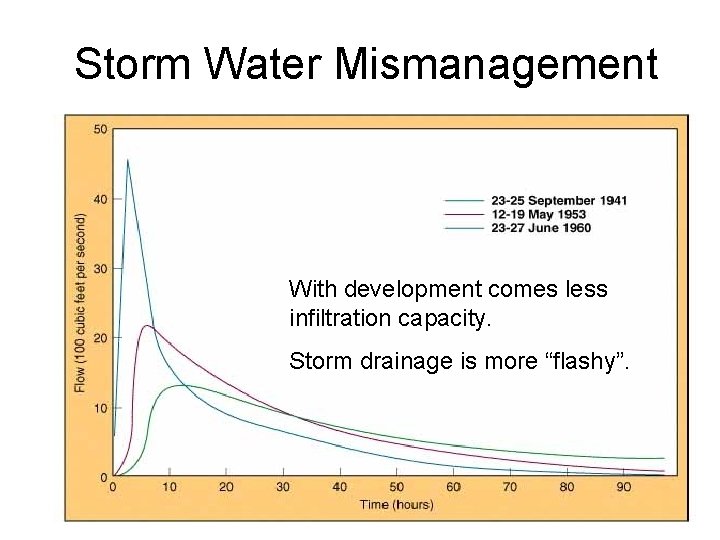
Storm Water Mismanagement With development comes less infiltration capacity. Storm drainage is more “flashy”.
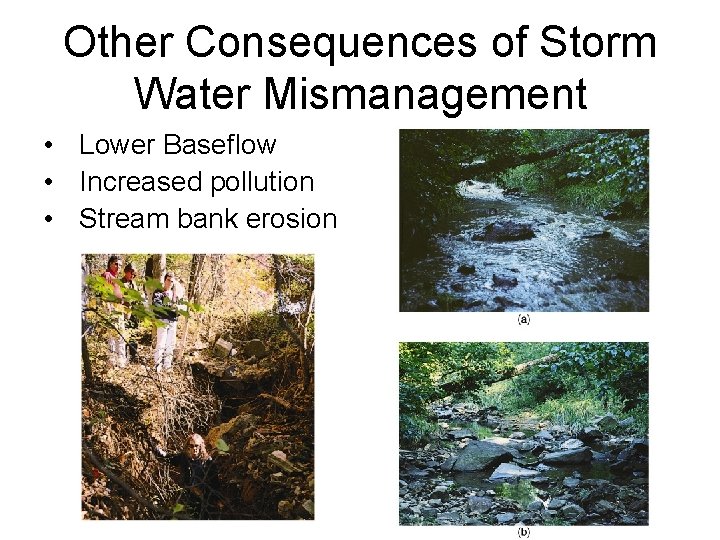
Other Consequences of Storm Water Mismanagement • Lower Baseflow • Increased pollution • Stream bank erosion
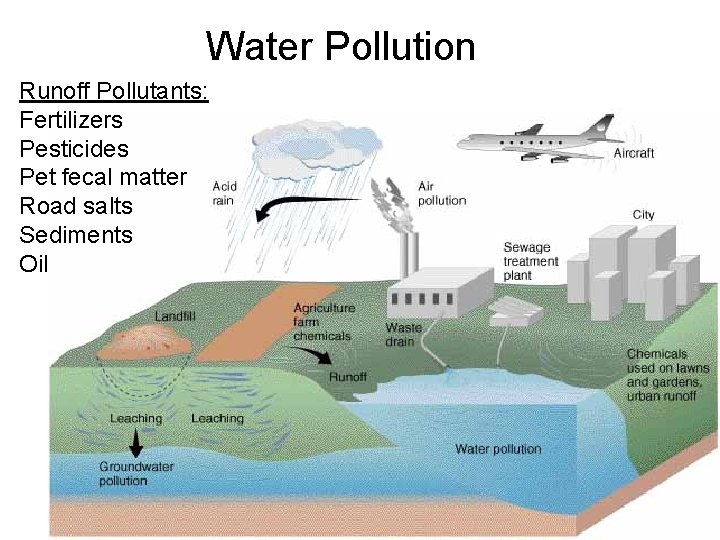
Water Pollution Runoff Pollutants: Fertilizers Pesticides Pet fecal matter Road salts Sediments Oil
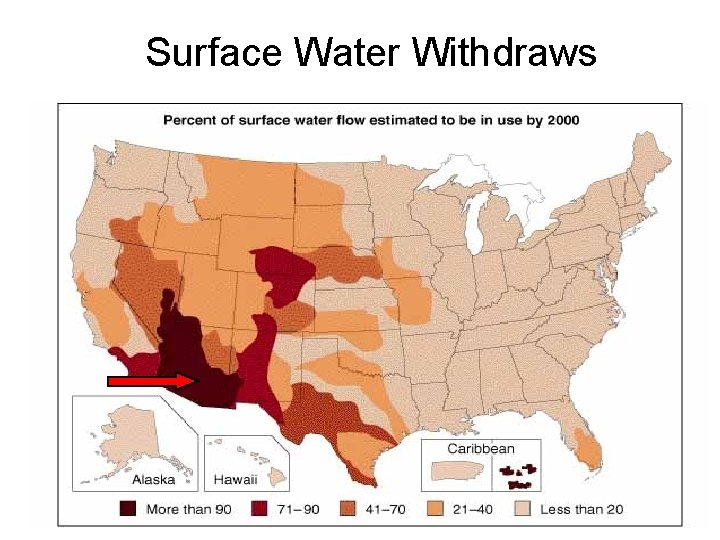
Surface Water Withdraws
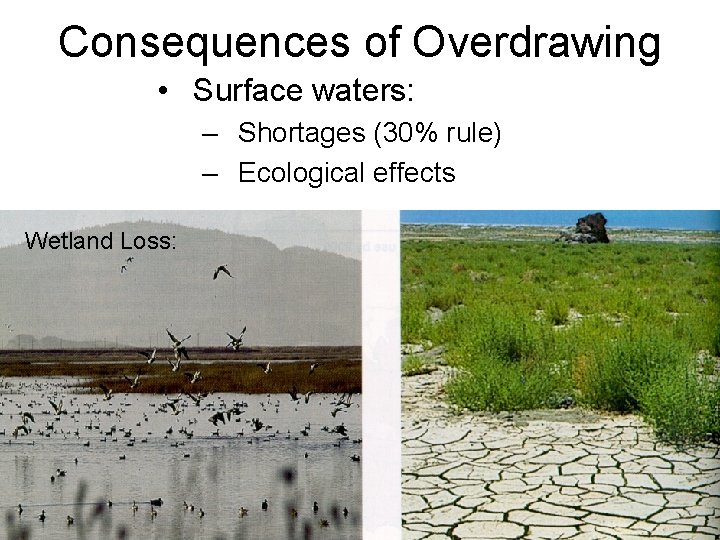
Consequences of Overdrawing • Surface waters: – Shortages (30% rule) – Ecological effects Wetland Loss:
Values of Wetlands: Ecosystem Services • • • Purify waters (nutrients and sediments) Control floods Protect shorelines from erosion Recharge groundwater Wildlife feeding and rearing habitat Increases biodiversity – Aquatic – Terrestrial
Wetland Values - Economic • • Pelt and skin harvesting (alligator) Waterfowl hunting Sport and commercial fishing Timber harvesting (hardwood and cypress swamps) • Bird watching and wildlife photography • Recreation (hiking, boating) • Biological laboratory for students of all ages
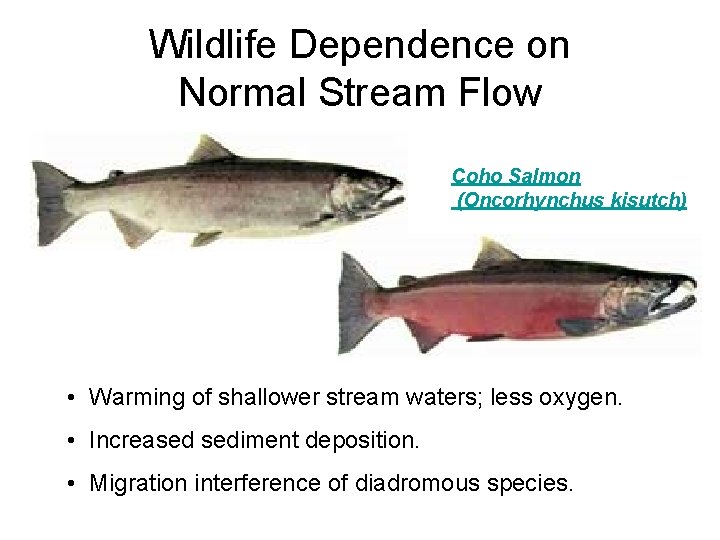
Wildlife Dependence on Normal Stream Flow Coho Salmon (Oncorhynchus kisutch) • Warming of shallower stream waters; less oxygen. • Increased sediment deposition. • Migration interference of diadromous species.
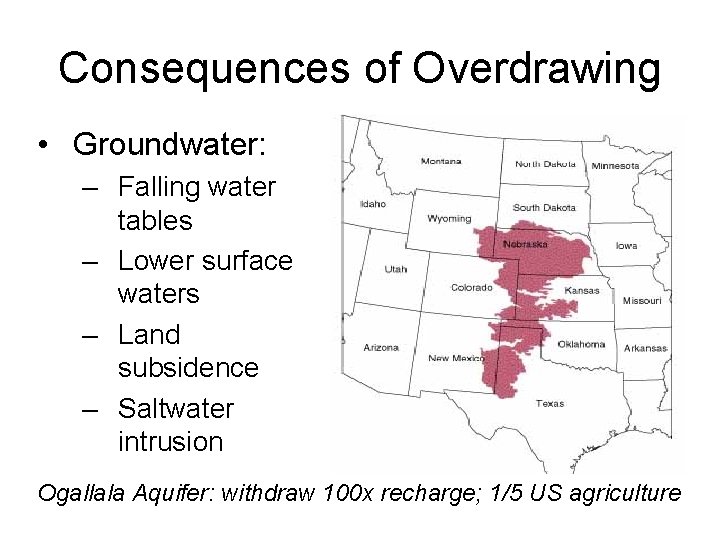
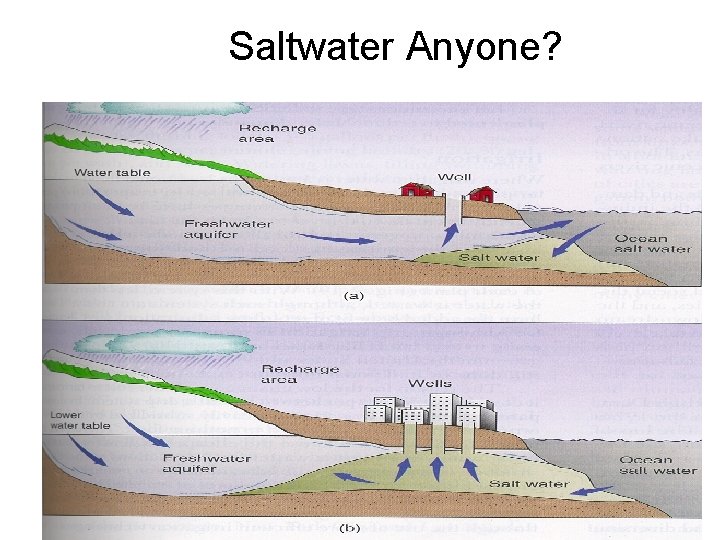
Consequences of Overdrawing • Groundwater: – Falling water tables – Lower surface waters – Land subsidence – Saltwater intrusion Ogallala Aquifer: withdraw 100 x recharge; 1/5 US agriculture
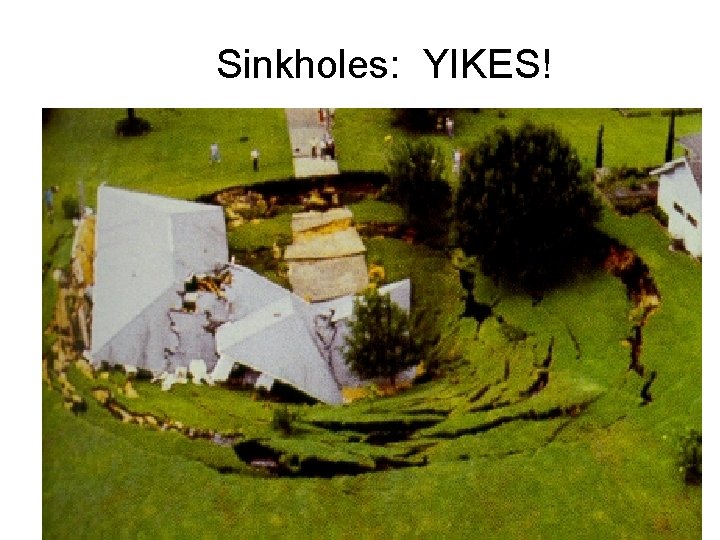
Sinkholes: YIKES!
Saltwater Anyone?
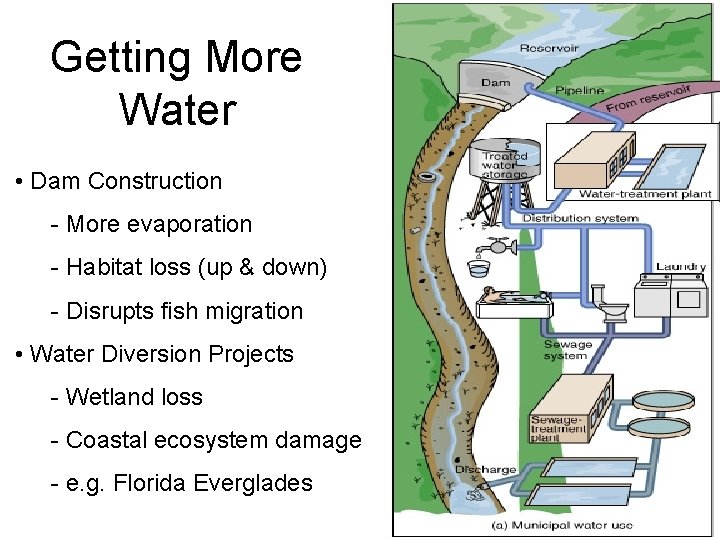
Getting More Water • Dam Construction - More evaporation - Habitat loss (up & down) - Disrupts fish migration • Water Diversion Projects - Wetland loss - Coastal ecosystem damage - e. g. Florida Everglades
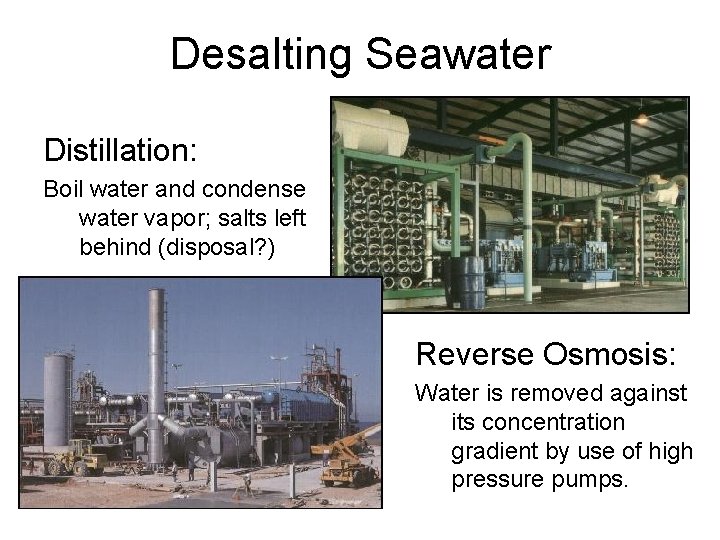
Desalting Seawater Distillation: Boil water and condense water vapor; salts left behind (disposal? ) Reverse Osmosis: Water is removed against its concentration gradient by use of high pressure pumps.
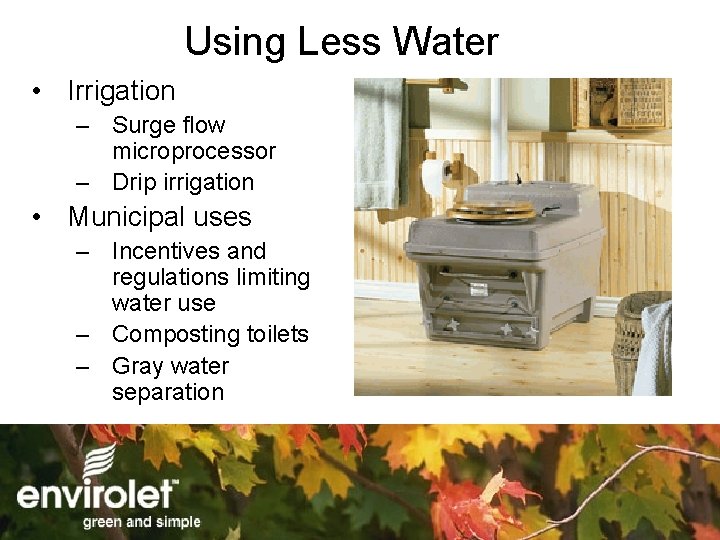
Using Less Water • Irrigation – Surge flow microprocessor – Drip irrigation • Municipal uses – Incentives and regulations limiting water use – Composting toilets – Gray water separation
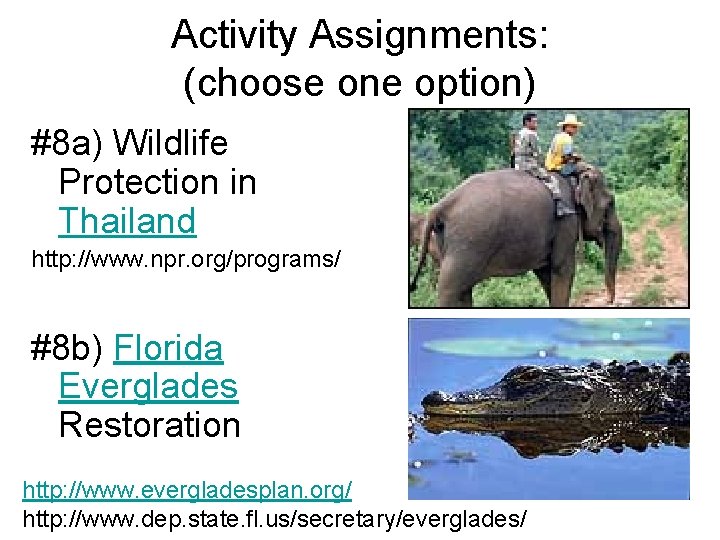
Activity Assignments: (choose one option) #8 a) Wildlife Protection in Thailand http: //www. npr. org/programs/ #8 b) Florida Everglades Restoration http: //www. evergladesplan. org/ http: //www. dep. state. fl. us/secretary/everglades/
Activity Assignment #8 Details • #8 a) Thailand Wildlife Protection: – – – Listen to the series of three NPR broadcasts. Write a paragraph that defines the problems of illegal wildlife trade. Write a paragraph on the growing causes of the problem. Write a paragraph that discusses solutions. Include your perspective on the subject. • #8 b) Florida Everglades Restoration: – – – Use both websites as resources. Write a paragraph on the history of the water divergence problem. Write a paragraph on the damage to the Everglade Ecosystem. Write a paragraph on the restoration project as a solution. Include your perspective on the subject.