
MODERN GENETICS Genetic Engineering gene DNA sequence that




- Slides: 44
MODERN GENETICS
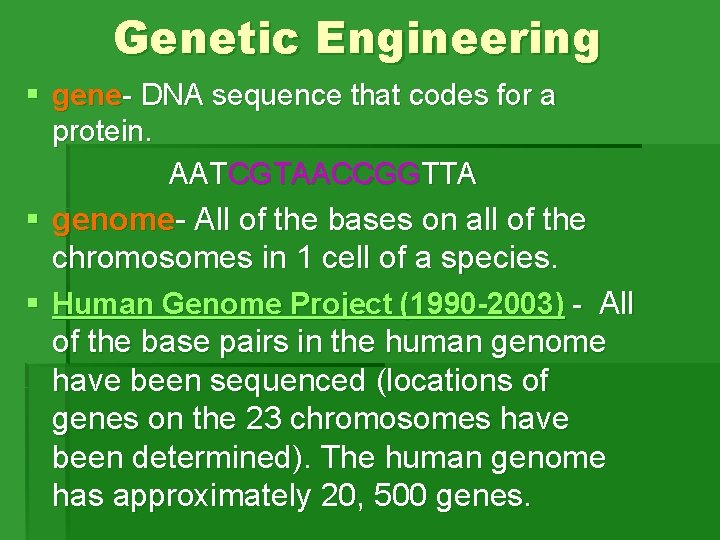
Genetic Engineering § gene- DNA sequence that codes for a protein. AATCGTAACCGGTTA § genome- All of the bases on all of the chromosomes in 1 cell of a species. § Human Genome Project (1990 -2003) - All of the base pairs in the human genome have been sequenced (locations of genes on the 23 chromosomes have been determined). The human genome has approximately 20, 500 genes.
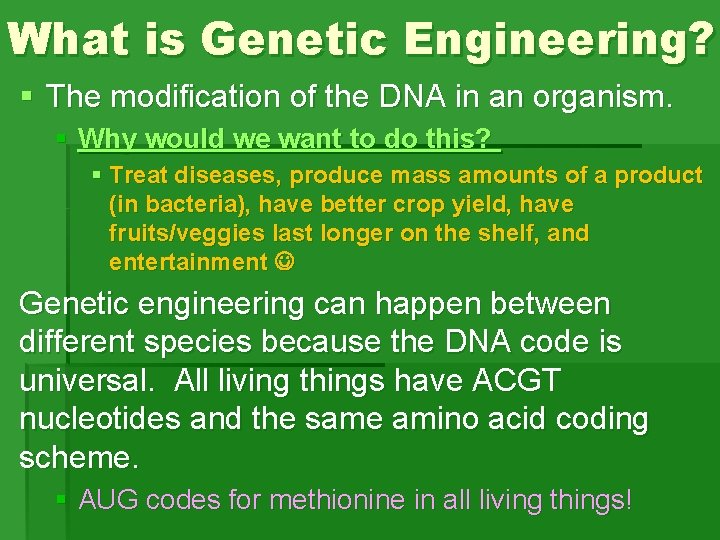
What is Genetic Engineering? § The modification of the DNA in an organism. § Why would we want to do this? § Treat diseases, produce mass amounts of a product (in bacteria), have better crop yield, have fruits/veggies last longer on the shelf, and entertainment Genetic engineering can happen between different species because the DNA code is universal. All living things have ACGT nucleotides and the same amino acid coding scheme. § AUG codes for methionine in all living things!
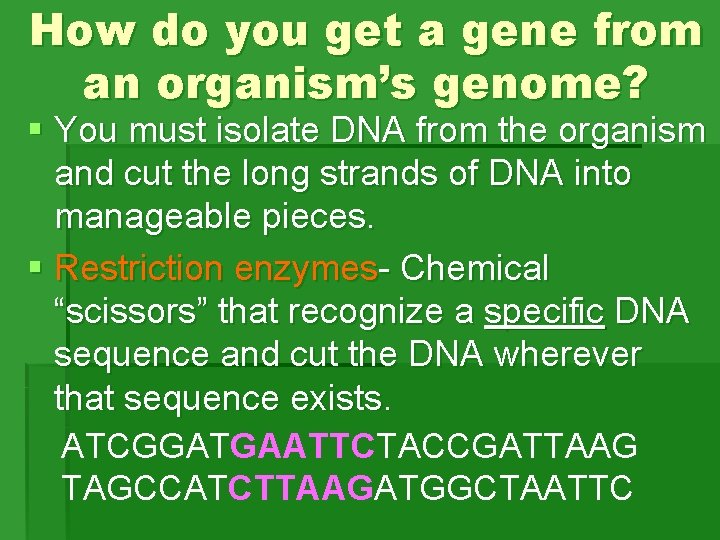
How do you get a gene from an organism’s genome? § You must isolate DNA from the organism and cut the long strands of DNA into manageable pieces. § Restriction enzymes- Chemical “scissors” that recognize a specific DNA sequence and cut the DNA wherever that sequence exists. ATCGGATGAATTCTACCGATTAAG TAGCCATCTTAAGATGGCTAATTC
How is the gene of interest separated from other genes? § Gel electrophoresis
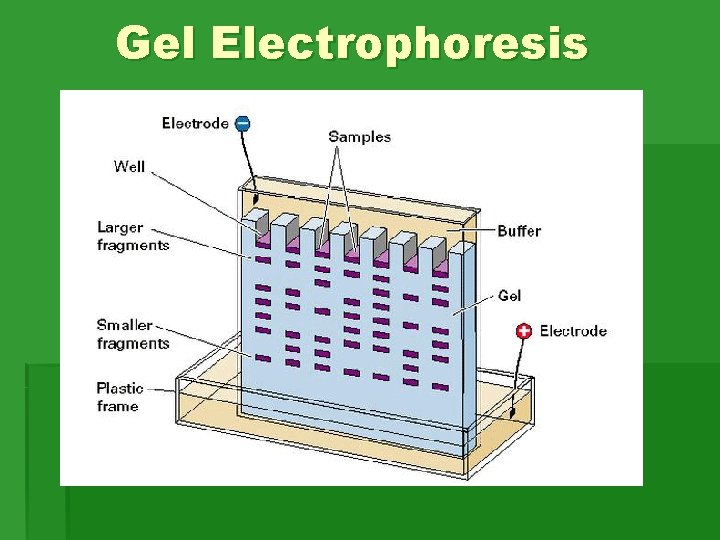
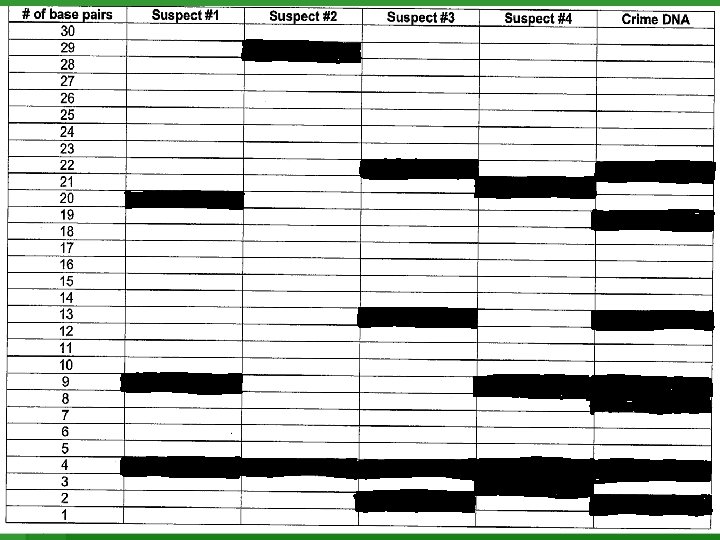
Gel Electrophoresis (DNA Fingerprinting) § DNA samples are placed in a porous gel which is connected to an electric current. § DNA is negatively charged so the positive end should be positioned at the opposite end of the gel from where samples are loaded. § The current moves the DNA pieces and separates them based on their size. The smallest pieces move the fastest and end up at the bottom. § We can use this technique to isolate genes for genetic engineering, determine genetic relationships (paternity), determine evolutionary relationships, and solve crimes.
Gel Electrophoresis
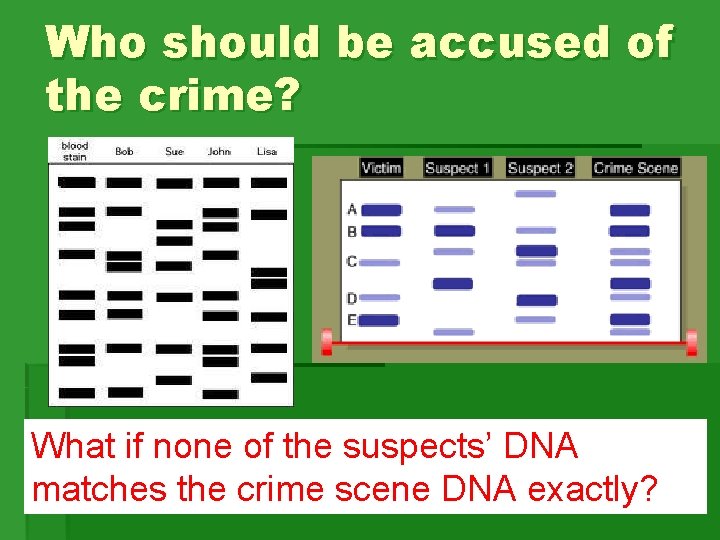
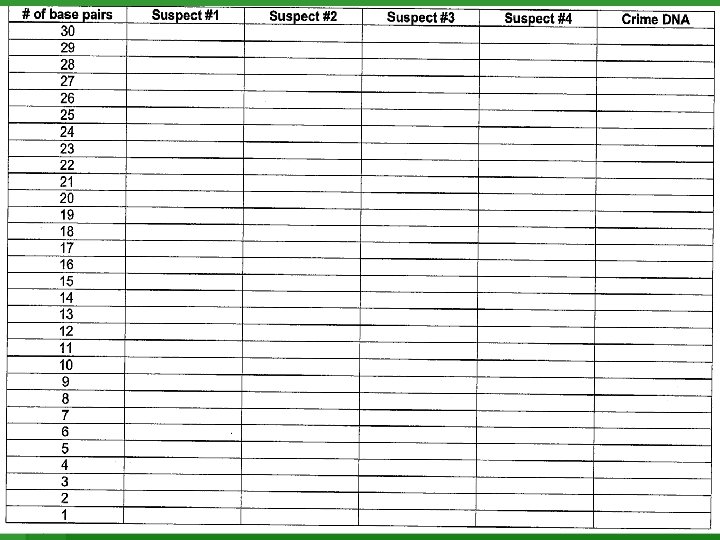
Who should be accused of the crime? What if none of the suspects’ DNA matches the crime scene DNA exactly?
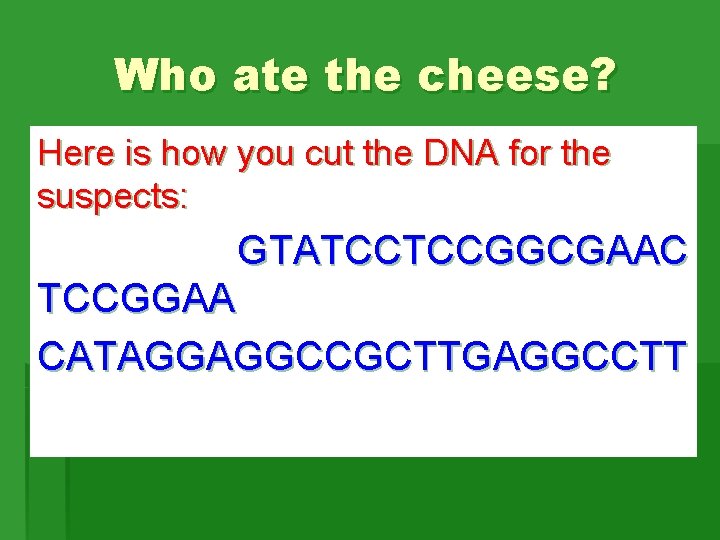
Who ate the cheese? Here is how you cut the DNA for the suspects: GTATCCTCCGGCGAAC TCCGGAA CATAGGAGGCCGCTTGAGGCCTT
Who ate the cheese? Follow-up Because all of maid Ada Nine’s DNA fingerprint was found in the crime scene sample, her house was investigated and she was questioned by detectives. Detectives discovered her pet mouse, Mickey, living luxuriously in her home. A sample of Mickey’s blood was run on an electrophoresis gel and analysts concluded that the two outlier DNA bands belonged to Mickey. Ada Nine then admitted that she took Mickey to work with her that night and they “shared” some of the cheese for their snack. Ada and Mickey were sentenced to life in prison without the opportunity for parole. Ada claimed, “It was all worth it. The cheese was that delicious and I got to share it with my best friend”.
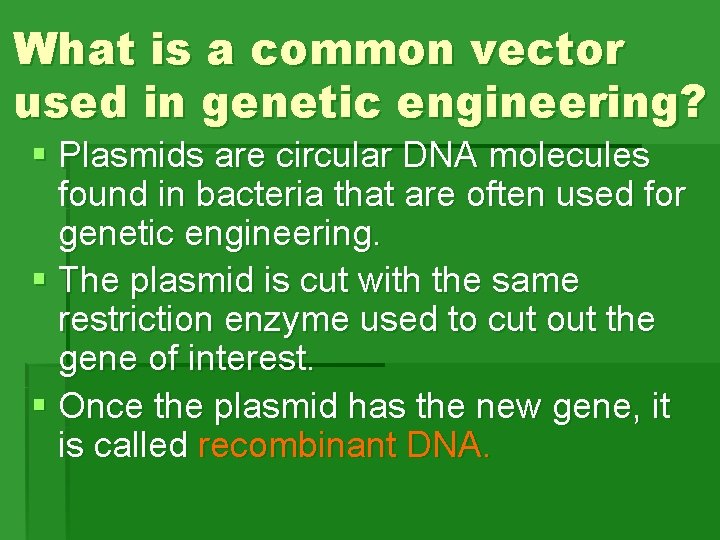
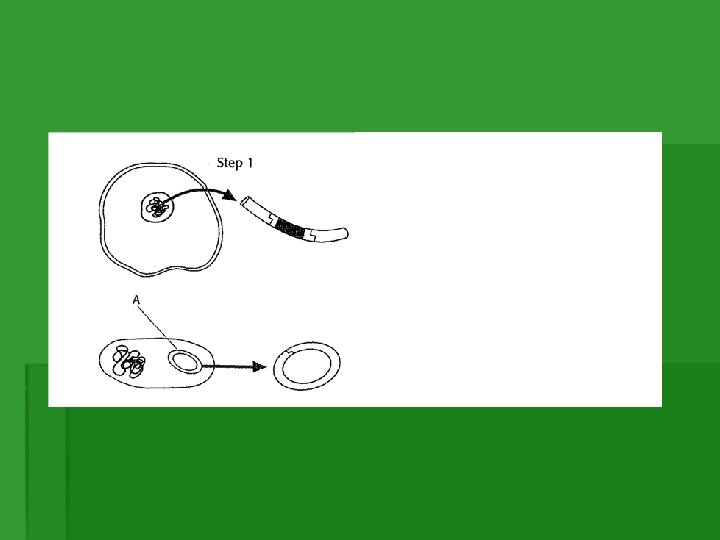
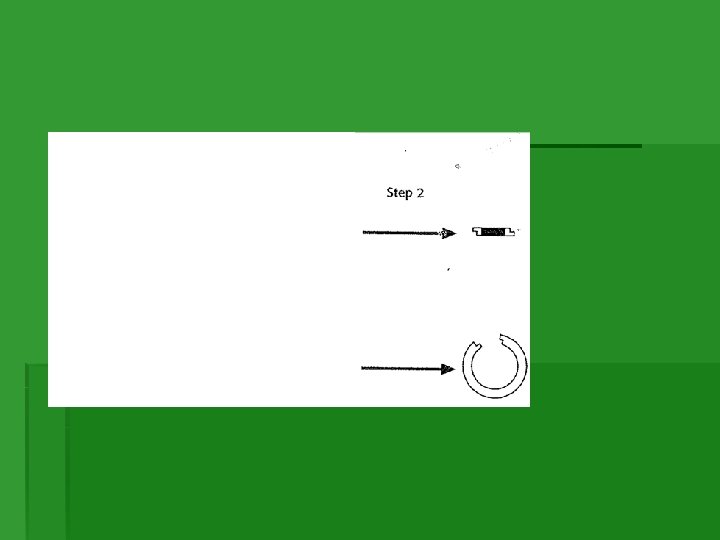
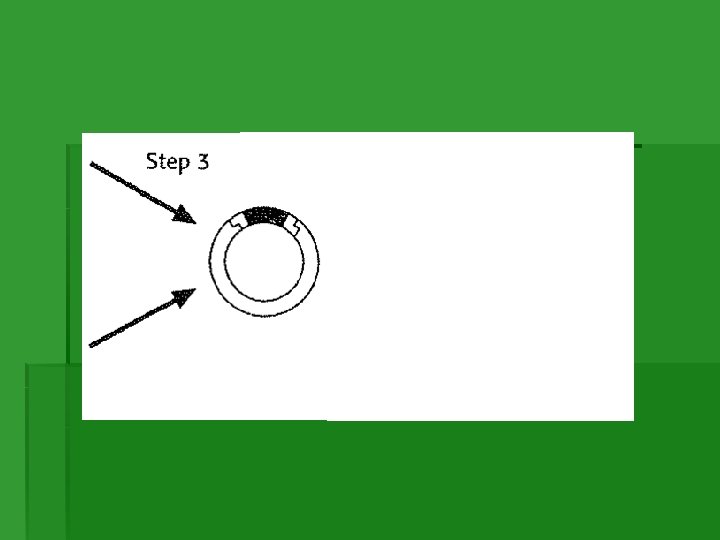
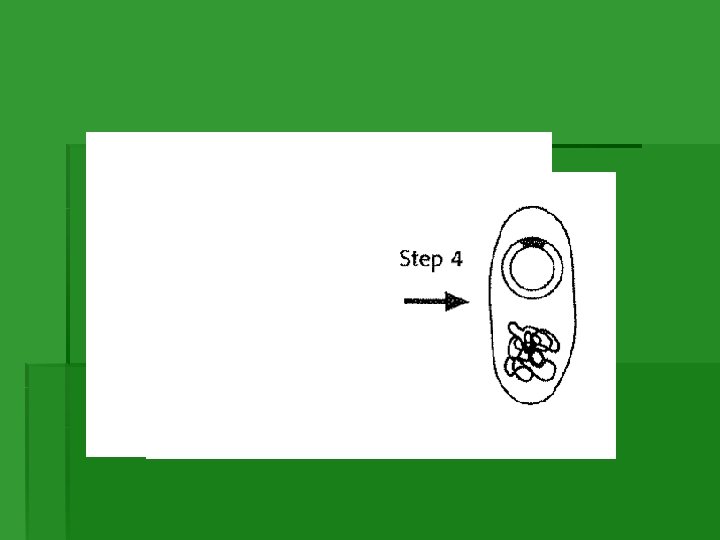
How is a new gene inserted into an organism? § 1. A gene of interest is removed from a genome through restriction enzymes and gel electrophoresis. § 2. The gene is attached to a vector (transporter) and delivered into a host cell § 3. The host cell is put into a nutrient medium and allowed to divide many times to create many copies of the cell containing the new gene. § 4. The copied host cells are inserted into the organism.
What is a common vector used in genetic engineering? § Plasmids are circular DNA molecules found in bacteria that are often used for genetic engineering. § The plasmid is cut with the same restriction enzyme used to cut out the gene of interest. § Once the plasmid has the new gene, it is called recombinant DNA.
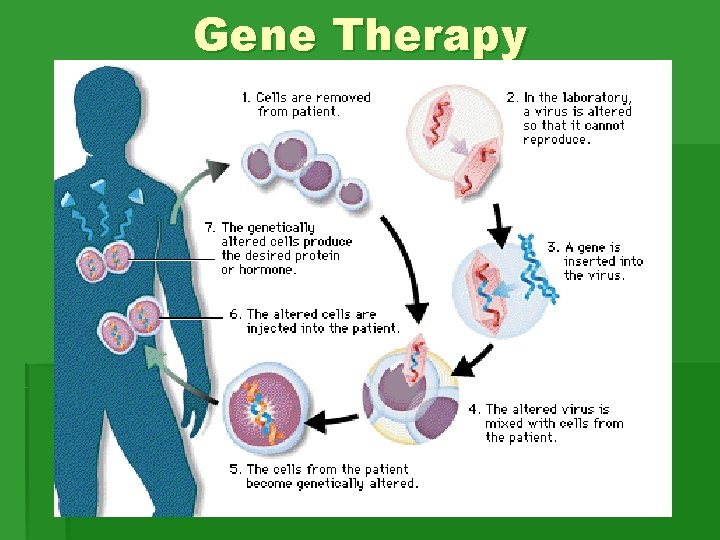
Gene Therapy § Humans can be genetically engineered. § Normal genes can be inserted into cells containing defective genes in order to correct genetic disorders. § Help the blind be able to see § Prevent HIV infection § GM Human Embryos Cure Parkinson’s disease
Gene Therapy
Gel Electrophoresis PTC Lab
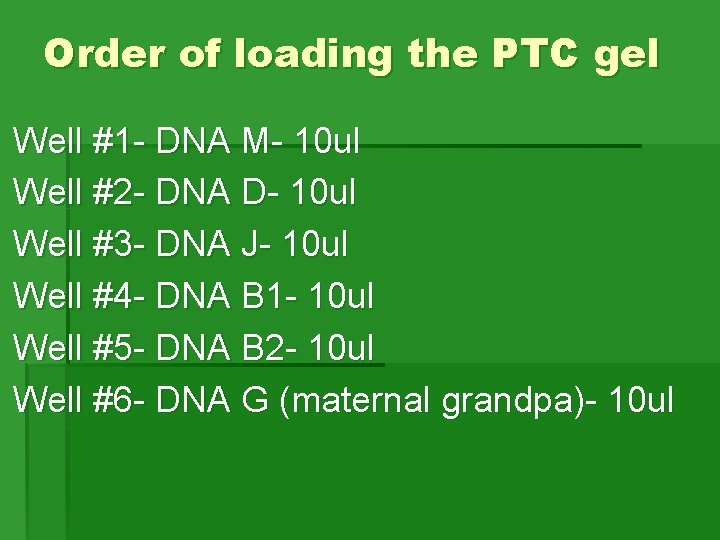
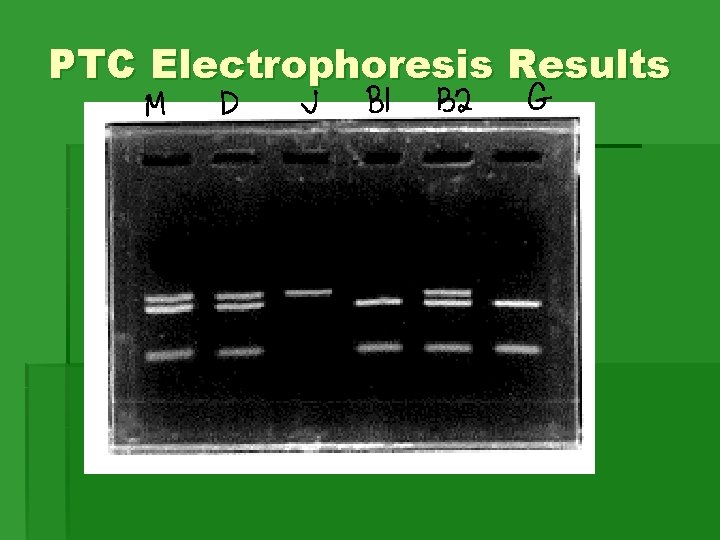
Order of loading the PTC gel Well #1 - DNA M- 10 ul Well #2 - DNA D- 10 ul Well #3 - DNA J- 10 ul Well #4 - DNA B 1 - 10 ul Well #5 - DNA B 2 - 10 ul Well #6 - DNA G (maternal grandpa)- 10 ul
PTC Electrophoresis Results
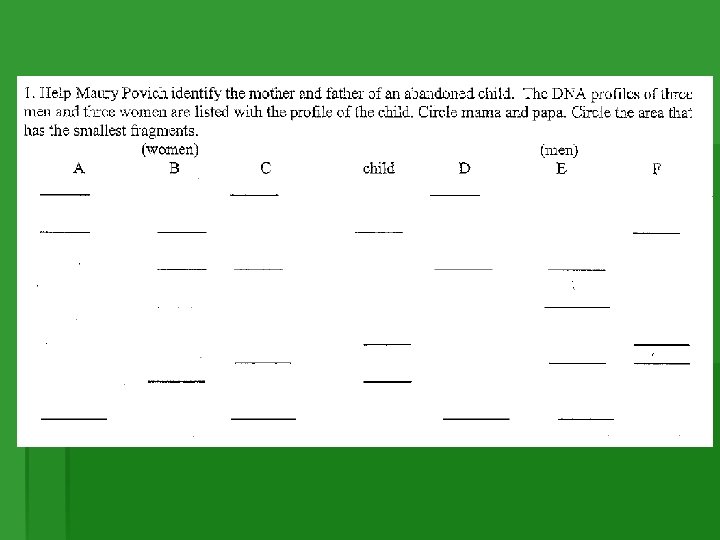
Paternity Testing If there is uncertainty about a child’s biological father, DNA samples from the possible fathers can be compared with the DNA of the child and mother. All DNA samples are treated with the same restriction enzyme and are run on a gel by electrophoresis. A child’s DNA pieces are a combination of pieces from the mother and father (each DNA band must match a band from one parent).
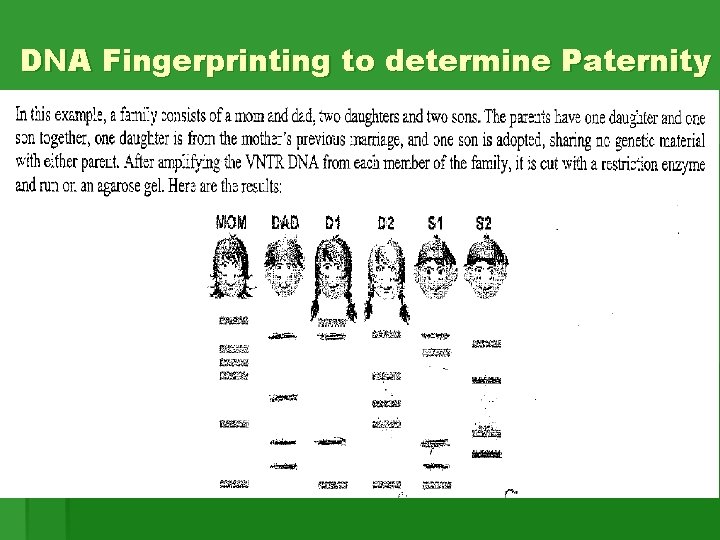
DNA Fingerprinting to determine Paternity
Who is the father? • Circle the smallest DNA fragment(s). • Box the largest DNA fragment(s).
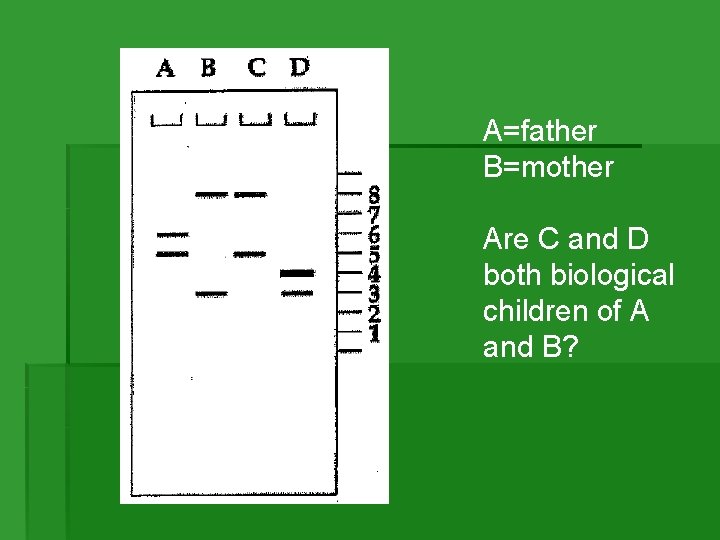
A=father B=mother Are C and D both biological children of A and B?
What is Cloning? § Making an exact genetic copy of a cell, organ organism § This process uses SOMATIC CELLS (non-sex cells) instead of sex cells because somatic cells contain a complete set of chromosomes (46).
Basics of the Cloning Procedure Somatic Cell Nuclear Transfer § This happens in vitro (outside the body in a petri dish). § The nucleus of a somatic cell is placed inside an egg cell that has had its nucleus removed. § Electricity sparks cell division of the egg cell and an embryo is formed.
Basics of the Cloning Procedure § An embryo is the form of the organism in its early stages. It is a group of undifferentiated cells. § The embryo is placed in the uterus of the egg donor or surrogate mother. § A surrogate mother is a female who carries the baby for another female.
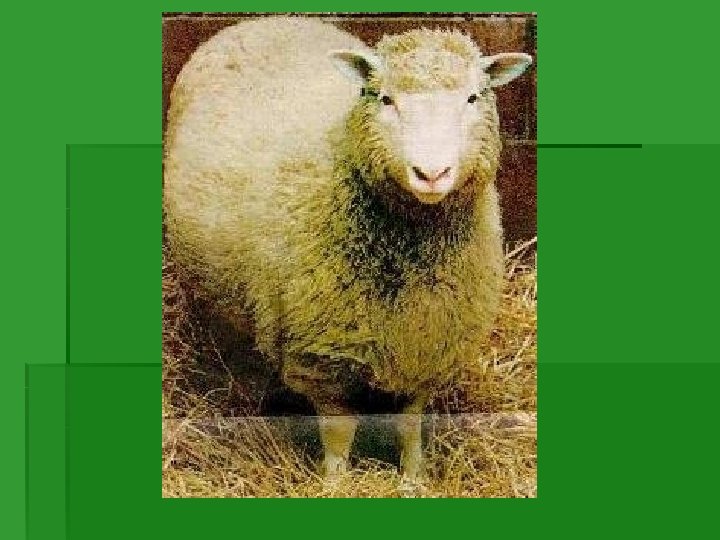
SCNT Class Example
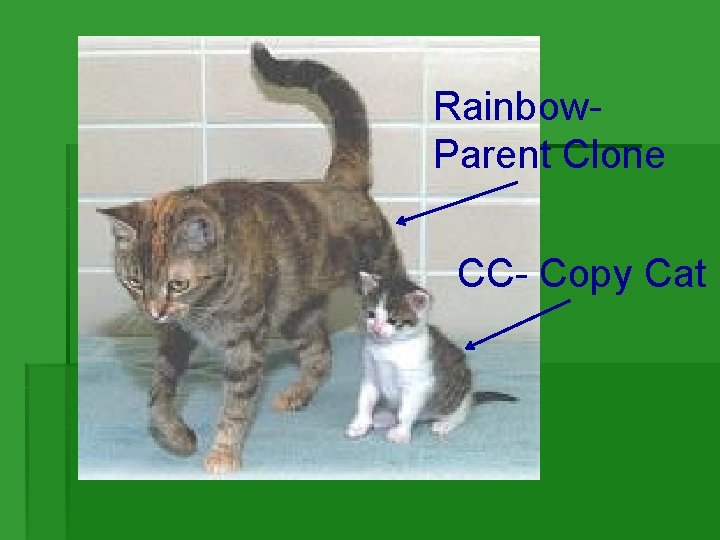
Cloning does not always produce expected results. It is also expensive and inefficient! § CC the cat cost $50, 000 to create. Her genetics were the same as her clone, however she did not appear identical! Why? § X-inactivation § In females, 1 x sex chromosome is inactivated immediately after the egg is fertilized. CC had a different x inactivated! § Horse- 841 attempts =. 12% efficiency § Sheep- 277 attempts =. 36% efficiency
Rainbow. Parent Clone CC- Copy Cat
Cloning Pros/Cons Pros § Can clone organs for transplant patients. § Can help infertile couples have offspring genetically linked to one of the parents. § Can increase populations of endangered species or bring back extinct species. § Can bring back a deceased pet. § Can replicate living things with desirable traits- like trees that grow quickly. Cons § Does not help to improve the genetic diversity of a species. § Could create a black market for transplant organs-Create clones to harvest organs! § Expensive and inefficient!
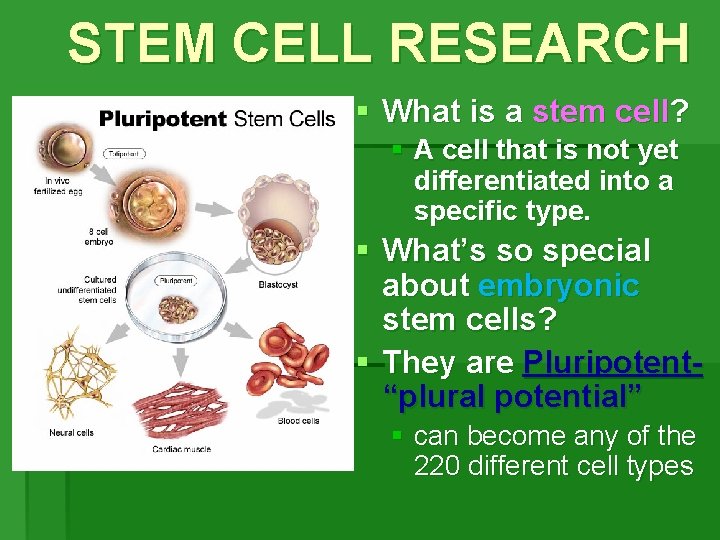
STEM CELL RESEARCH § What is a stem cell? § A cell that is not yet differentiated into a specific type. § What’s so special about embryonic stem cells? § They are Pluripotent“plural potential” § can become any of the 220 different cell types
Why is the use of embryonic stem cells so controversial? § Removing a stem cell from an embryo for experimentation destroys the embryo. § Is this murder? § When does life begin?
Therapeutic potential Turn the stem cells into: § Pancreas cells to produce insulin to relieve diabetes § Dopamine producing cells in the brain to relieve Parkinson’s disease § Spinal cord injuries § Connective tissue to repair shoulder and knee injuries § A new organ for transplant
Is it controversial to experiment on all stem cells? § In addition to embryonic stem cells, there adult stem cells. § Adult stem cells are found in many organs and tissues, including brain, bone marrow, blood and skin. § These stem cells are multipotent which means they can only become a limited type of cell(s). § Their purpose is to maintain and repair the tissue in which they are found.
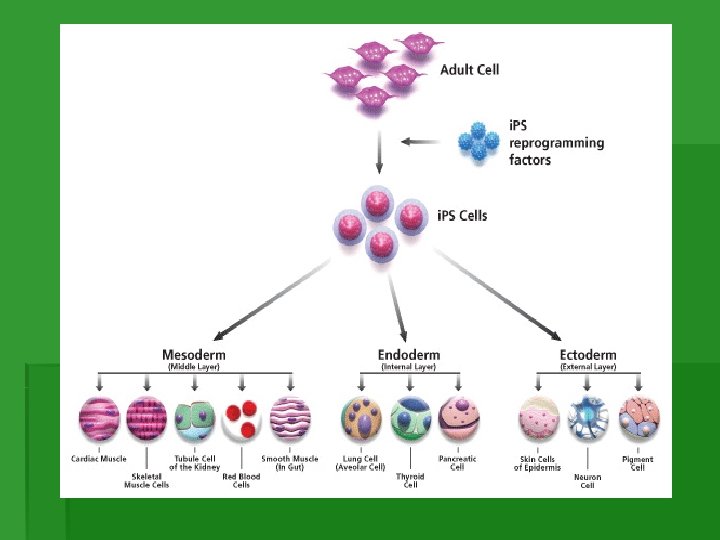
Is it controversial to experiment on all stem cells? § Experimenting with adult stem cells is not controversial because it does not harm the adult if the cells are removed from the body. § There has been some exciting recent research that has demonstrated the ability to turn adult stem cells into embryo-like stem cells. These are called “induced pluripotent stem cells” (IPSCs).
Genetics Technology Bingo 1. Cloning 2. Induced pluripotent stem cells 3. Embryo 4. Multipotent 5. Surrogate 6. Mrs. Mc. Loughlin 7. Gel electrophoresis 8. Plasmid 9. Adult stem cell 10. Genetic engineering 11. Electricity 12. Restriction enzyme 13. Gene therapy 14. Genome 15. Gene 16. Recombinant DNA 17. In vitro 18. Somatic cell 19. Somatic cell nuclear transfer 20. Vector 21. Uterus 22. X-inactivation 23. Embryonic stem cell 24. Pluripotent