
Modern Evolutionary Classification CHAPTER 18 2 Dichotomous Key
- Slides: 16
Modern Evolutionary Classification CHAPTER 18. 2
Dichotomous Key � Used to identify objects or organisms that have already been described by another scientist. � “di”- means two �Each is made up of paired statements. � As you go down step to step, the classification is narrowed down until all organisms have been identified.
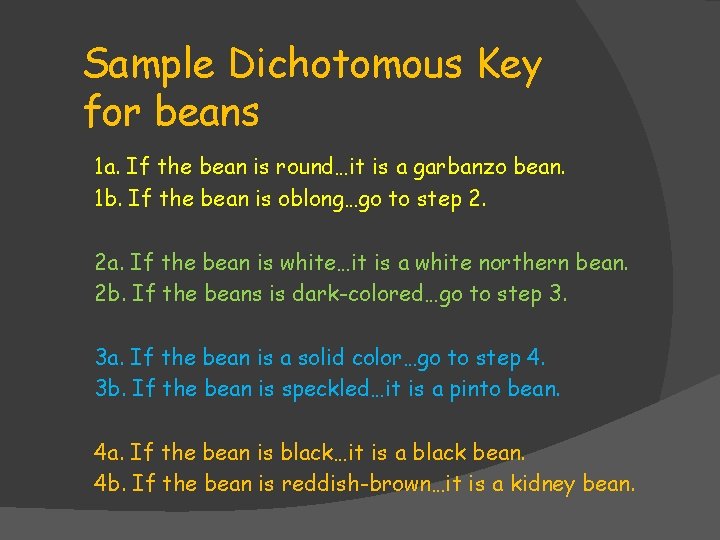
Sample Dichotomous Key for beans 1 a. If the bean is round…it is a garbanzo bean. 1 b. If the bean is oblong…go to step 2. 2 a. If the bean is white…it is a white northern bean. 2 b. If the beans is dark-colored…go to step 3. 3 a. If the bean is a solid color…go to step 4. 3 b. If the bean is speckled…it is a pinto bean. 4 a. If the bean is black…it is a black bean. 4 b. If the bean is reddish-brown…it is a kidney bean.
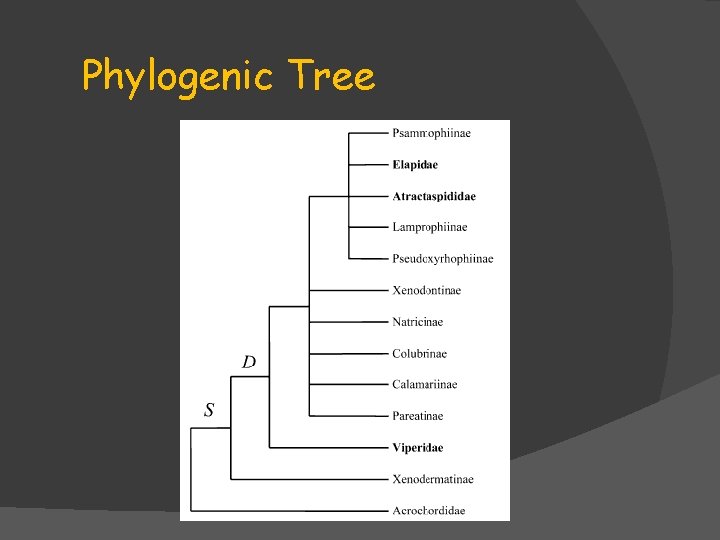
Cladistics is classification based on common ancestery. � To classify species on how they are related, scientists must look at more than just physical traits. � Modern classification is based on figuring out evolutionary relationships using evidence from living species and the fossil record. � Phylogeny: evolutionary history for a group of species. � can be shown as branching tree diagrams.
Phylogenic Tree
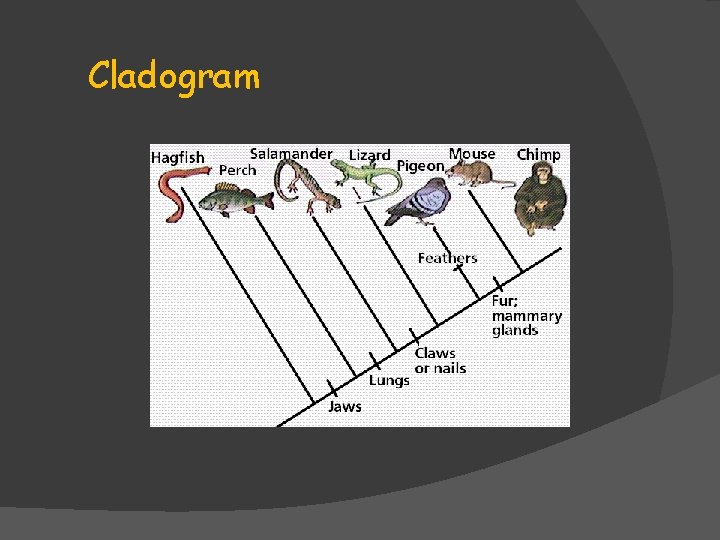
Cladistics � Cladistics: classification based on common ancestry. � Goal: to place species in the order in which they descended from a common ancestor. � Cladogram: evolutionary tree that proposes how species may be related to each other through common ancestors.
Cladogram
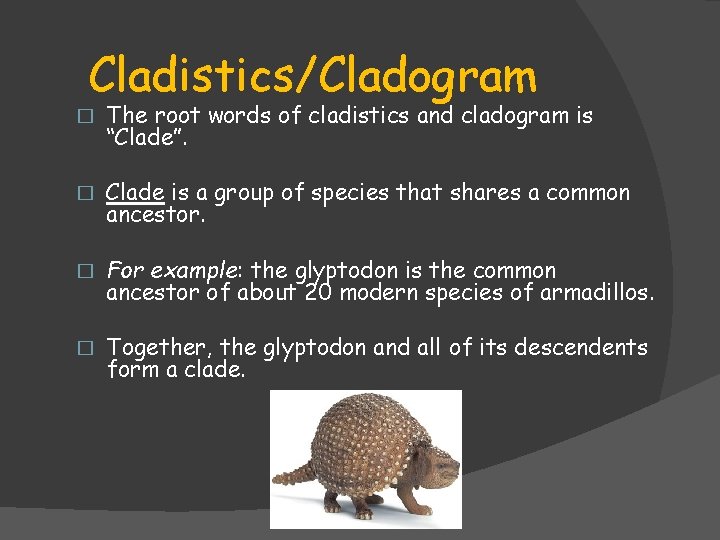
Cladistics/Cladogram � The root words of cladistics and cladogram is “Clade”. � Clade is a group of species that shares a common ancestor. � For example: the glyptodon is the common ancestor of about 20 modern species of armadillos. � Together, the glyptodon and all of its descendents form a clade.
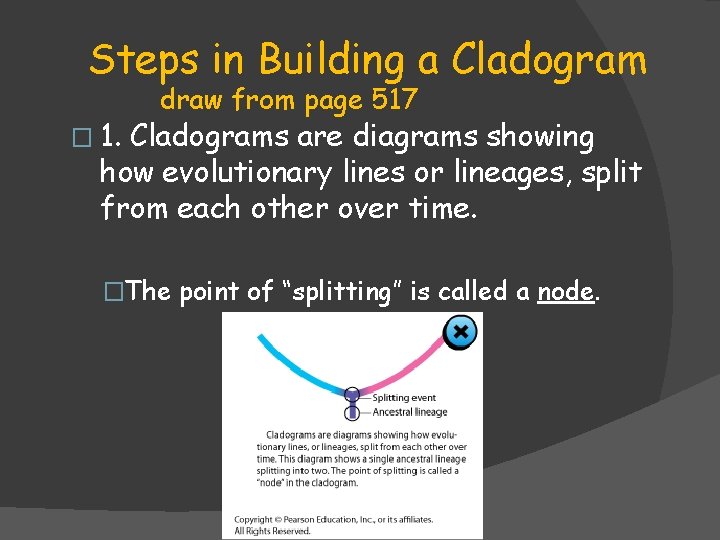
Steps in Building a Cladogram � 1. draw from page 517 Cladograms are diagrams showing how evolutionary lines or lineages, split from each other over time. �The point of “splitting” is called a node.
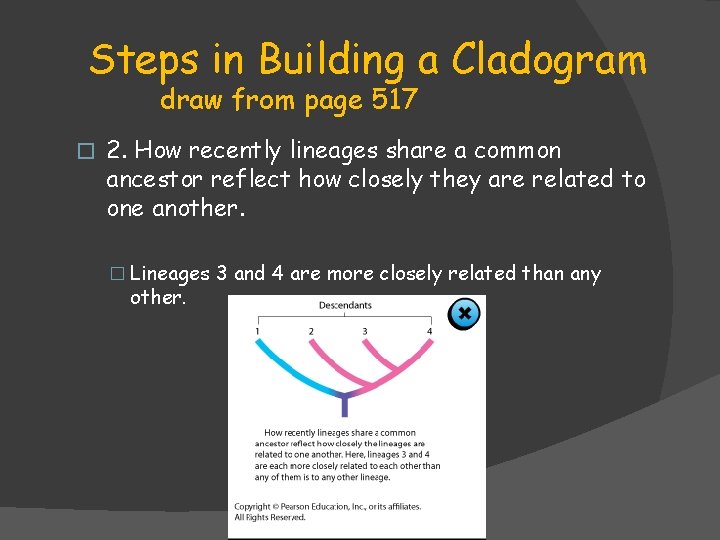
Steps in Building a Cladogram draw from page 517 � 2. How recently lineages share a common ancestor reflect how closely they are related to one another. � Lineages 3 and 4 are more closely related than any other.
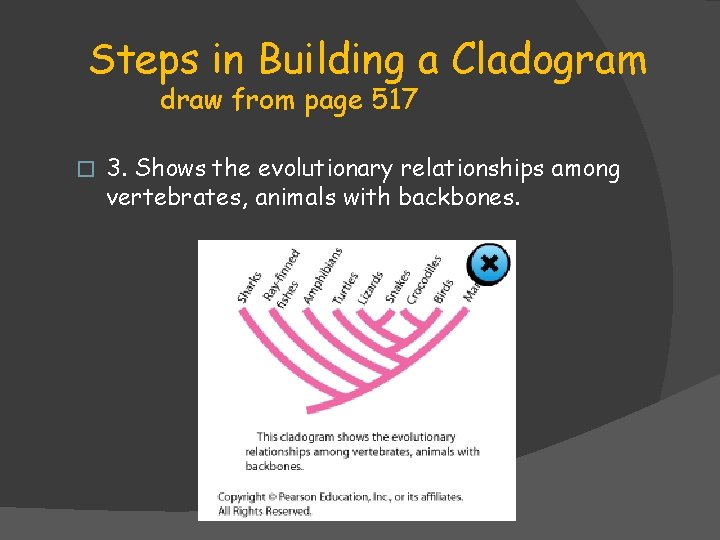
Steps in Building a Cladogram draw from page 517 � 3. Shows the evolutionary relationships among vertebrates, animals with backbones.
Interpreting a Cladogram � Main features of a cladogram: 1. Derived characters 2. Nodes 3. Identifying clades
Derived Characters 1. Derived characters: �a trait that arose in the most recent common ancestor or a particular lineage and was passed along to its descendants. � shown as hash marks --- between the branches of the cladogram.
Nodes 2. Nodes: �Each place where a branch splits. �Represents the most recent common ancestor shared by a clade. �How many nodes are in the cladogram handout? ○5
Identifying clades 3. Identifying clades: �You can identify clades by using the “snip” rule. �Whenever you “snip” a branch under a node, a clade falls off. �If you “snip” below the node where turles and tortoises branch off, you would be left with which clade? �Reptilia clade
Closing/Homework �“Cladogram Analysis” �In your lab groups of 3 -4, work on the worksheet together. �Due Monday 2/27