
Modern Control Systems MCS Lecture37 38 Design of

- Slides: 30
Modern Control Systems (MCS) Lecture-37 -38 Design of Control Systems in Sate Space LIAPUNOV STABILITY ANALYSIS Dr. Imtiaz Hussain email: imtiaz. hussain@faculty. muet. edu. pk URL : http: //imtiazhussainkalwar. weebly. com/
Outline • • Introduction Equilibrium State of a Dynamic System Phase Plane Analysis Liapunov stability Analysis
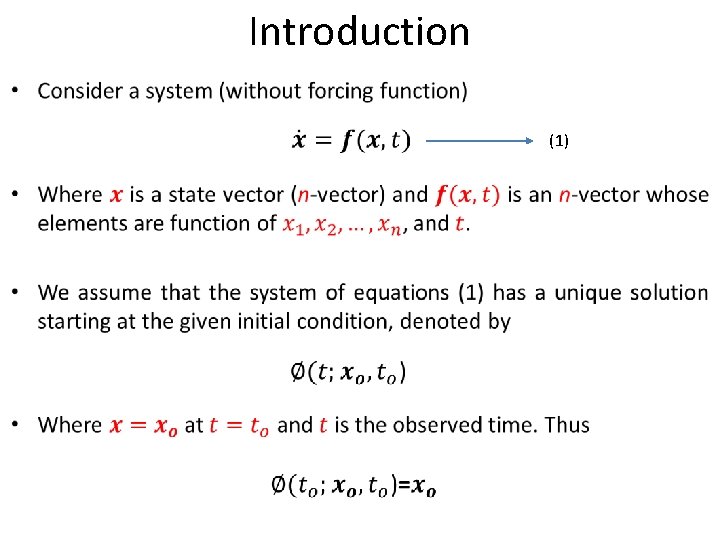
Introduction (1)
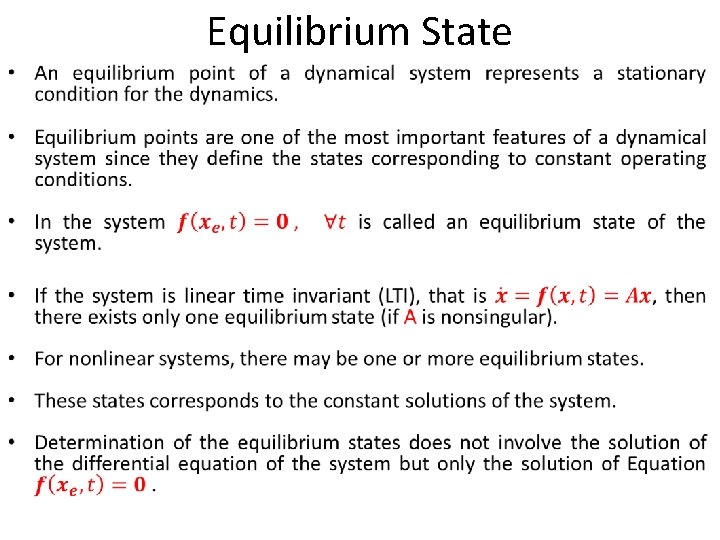
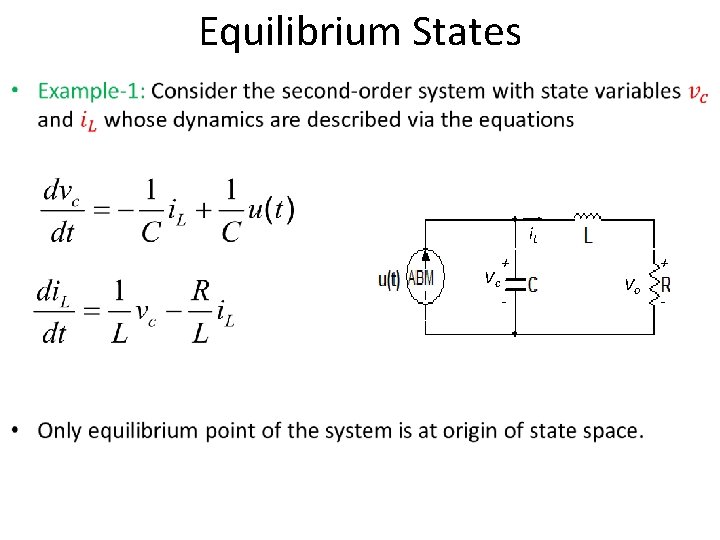
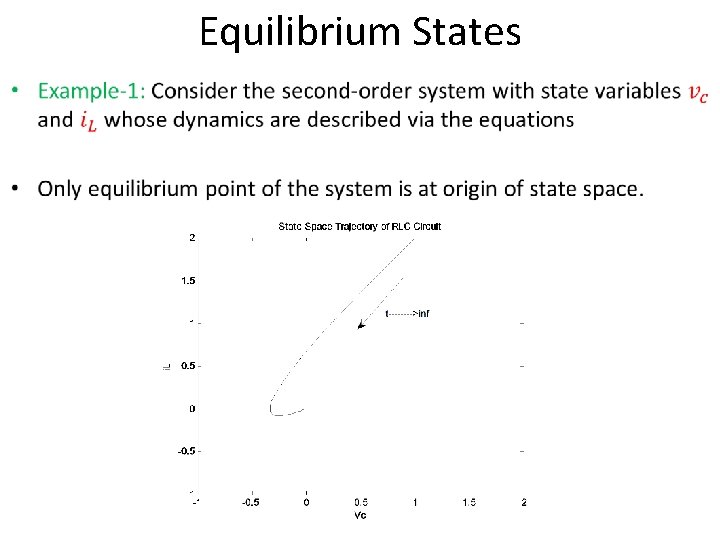
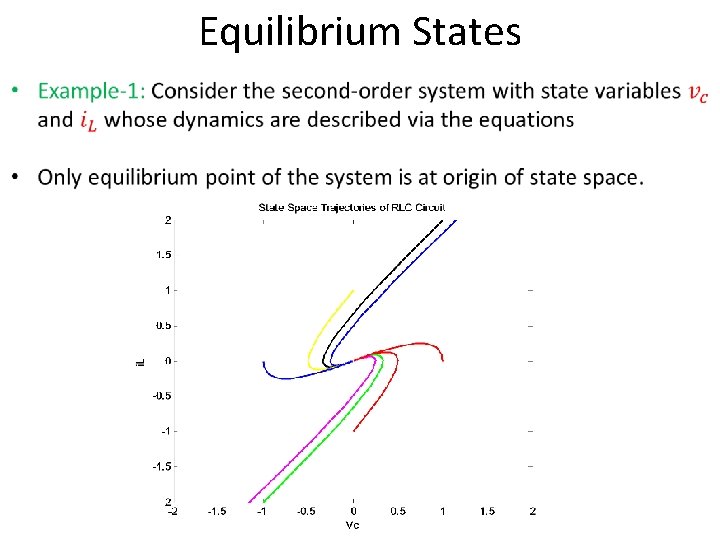
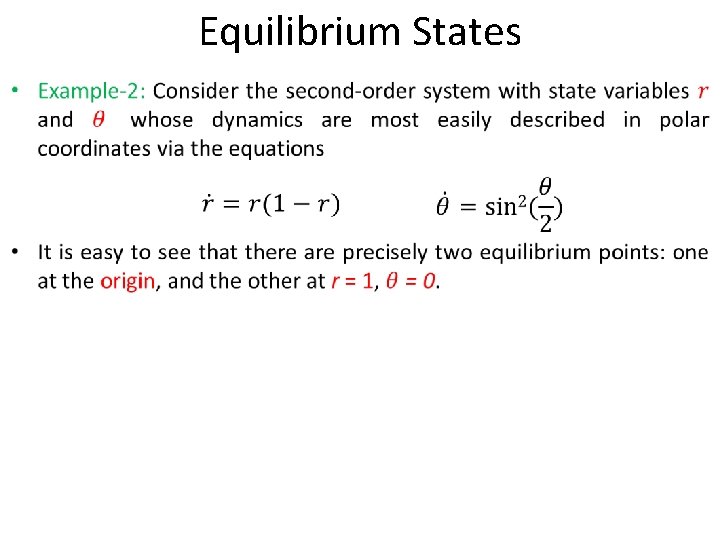
Equilibrium State
Equilibrium States i. L Vc + - Vo + -
Equilibrium States
Equilibrium States
Equilibrium States
Phase Portrait • When the state variables are represented in phase variable form the resulting state space is called phase plane. • The state space trajectories plotted in phase plane for number of different initial conditions is called phase portrait. • Phase portrait helps to graphically visualize stability of an equilibrium state. • Phase portraits can generally only be plotted for two dimensions dynamical systems, but they often give insight into the dynamics of much more complicated systems. • The stable system if system released from an initial condition converges to equilibrium point as time increased indefinitely.
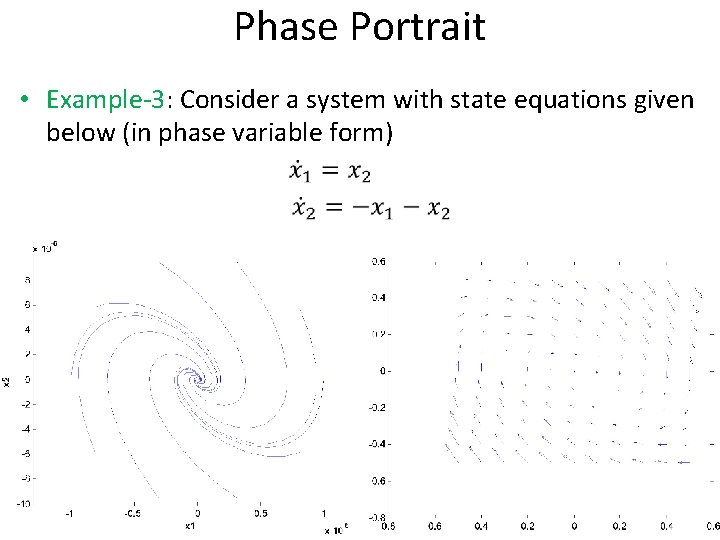
Phase Portrait • Example-3: Consider a system with state equations given below (in phase variable form)
Phase Portrait
Liapunov Stability Analysis • For a given control system stability is usually most important thing to be determined. • If the system is linear and time invariant, many stability criteria are available (Nyquist stability, Routh Herwitz etc. ). • If the system is nonlinear or linear but time varying such stability criteria do not apply. • Liapunov stability analysis is used to determine the stability of linear, nonlinear, time varying, time invariant systems. • There are two methods of Liapunov – 1 st method – 2 nd method (Direct method of Liapunov)
Liapunov Stability Analysis • Second method of Liapunov is the most general method for determination of stability of systems. • In addition this method is also useful for solving some optimization problems.
Second Method of Liapunov • In 1892 A. M Liapunov presented two methods (called first and second methods) for determining the stability of dynamic systems described by ordinary differential equations. • The first method consists of all procedures in which the explicit form of solution of differential equations are used for analysis. • The second method on the other hand does not require the solutions of the differential equations.
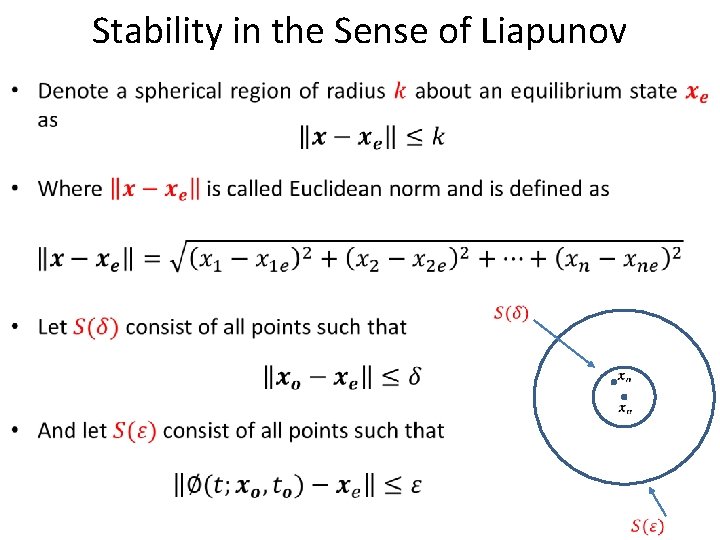
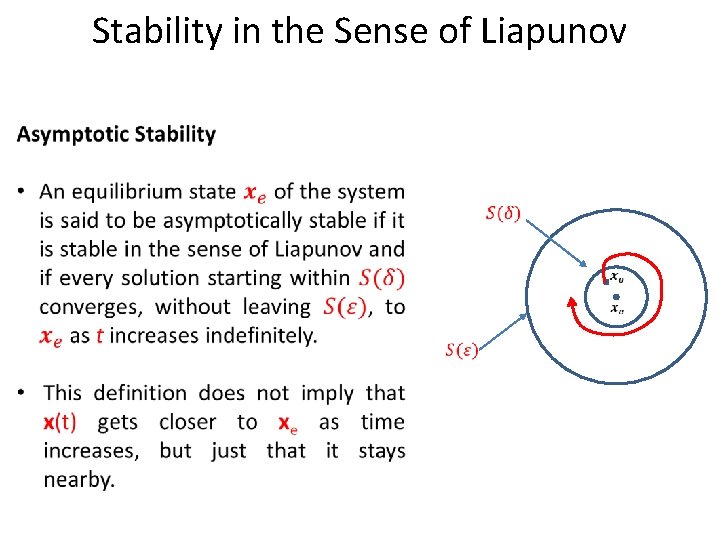
Stability in the Sense of Liapunov
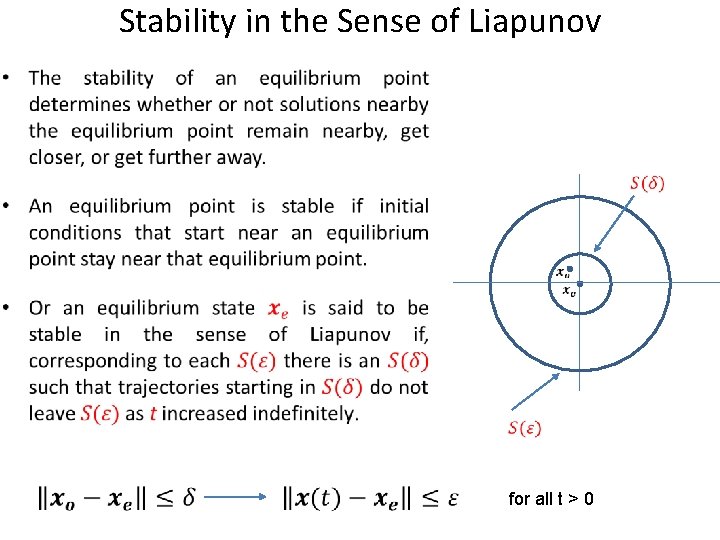
Stability in the Sense of Liapunov • for all t > 0
Stability in the Sense of Liapunov
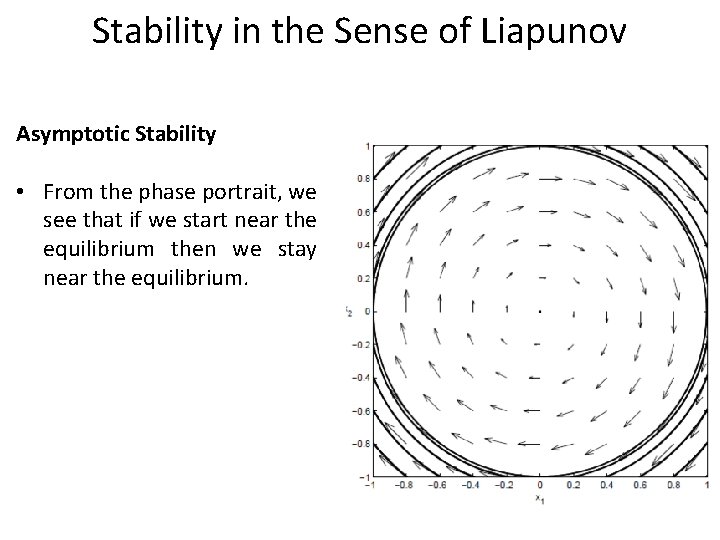
Stability in the Sense of Liapunov Asymptotic Stability • From the phase portrait, we see that if we start near the equilibrium then we stay near the equilibrium.
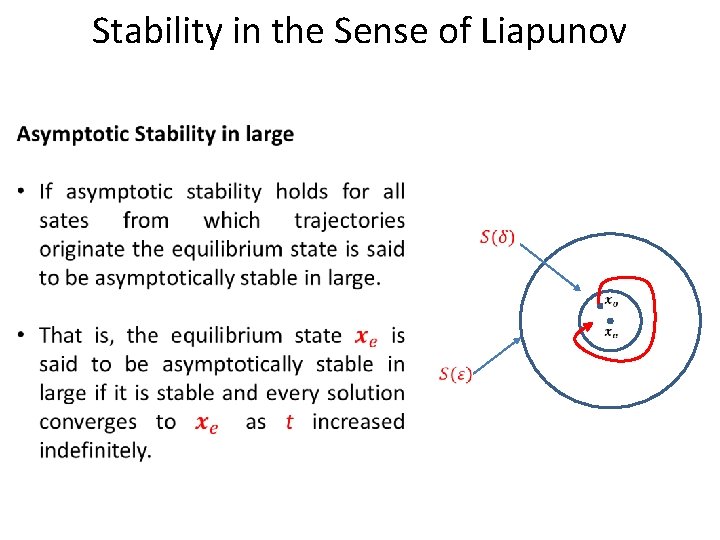
Stability in the Sense of Liapunov
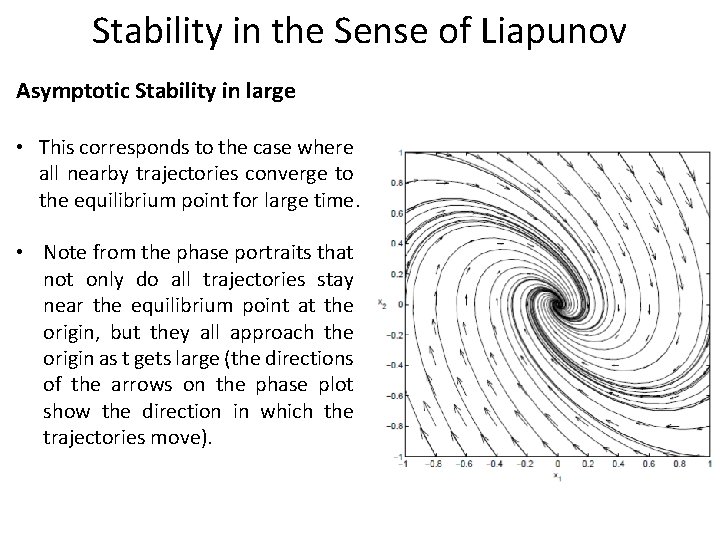
Stability in the Sense of Liapunov Asymptotic Stability in large • This corresponds to the case where all nearby trajectories converge to the equilibrium point for large time. • Note from the phase portraits that not only do all trajectories stay near the equilibrium point at the origin, but they all approach the origin as t gets large (the directions of the arrows on the phase plot show the direction in which the trajectories move).
Stability in the Sense of Liapunov
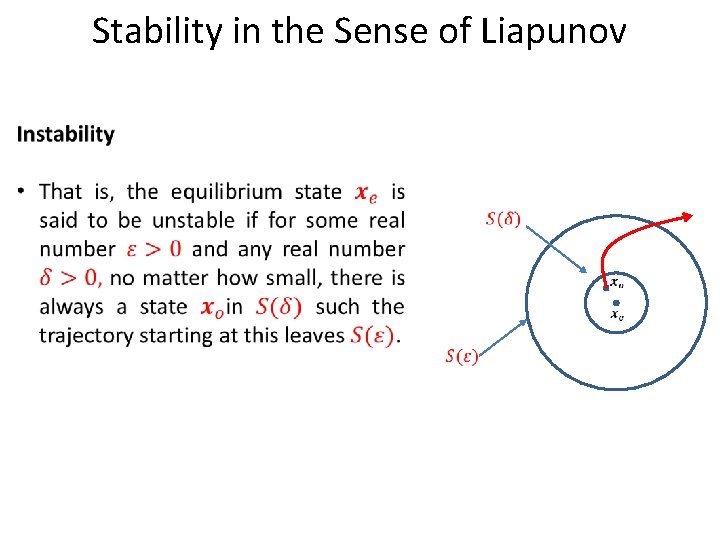
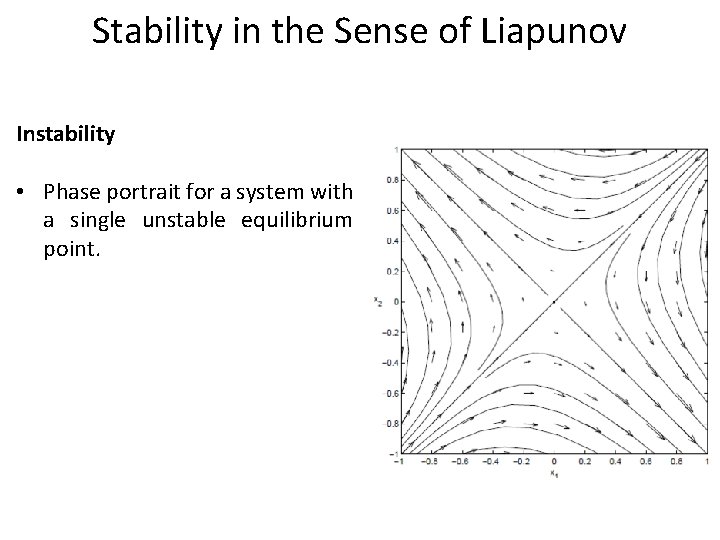
Stability in the Sense of Liapunov Instability • Phase portrait for a system with a single unstable equilibrium point.
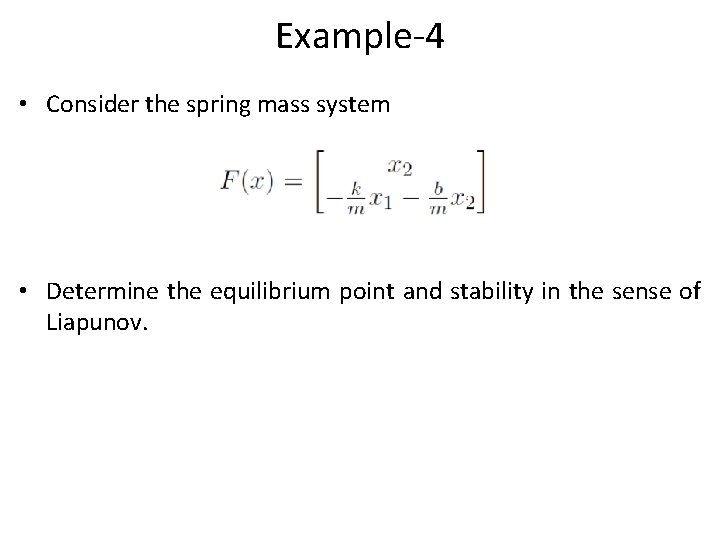
Example-4 • Consider the spring mass system • Determine the equilibrium point and stability in the sense of Liapunov.
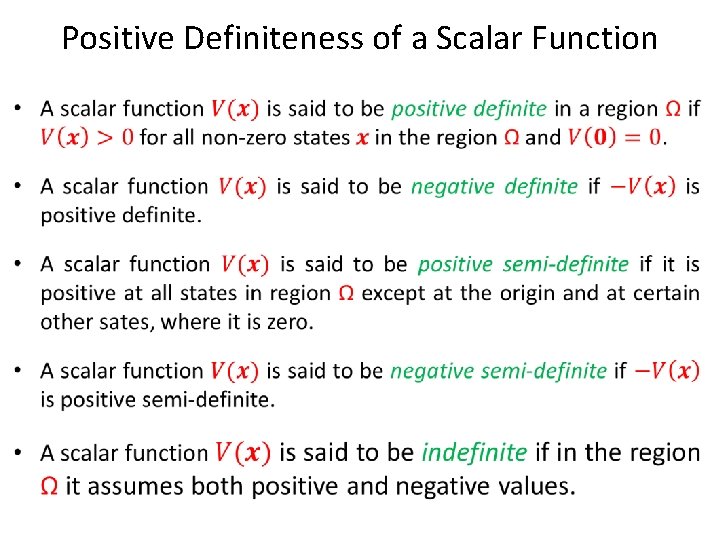
Positive Definiteness of a Scalar Function •
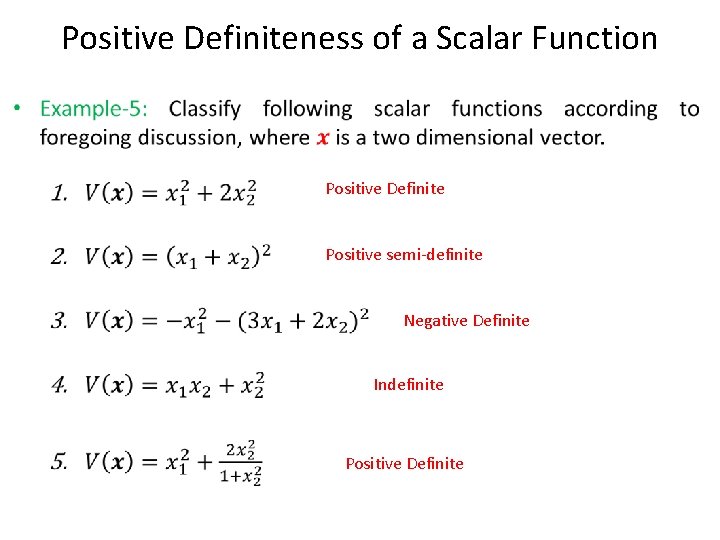
Positive Definiteness of a Scalar Function • Positive Definite Positive semi-definite Negative Definite Indefinite Positive Definite
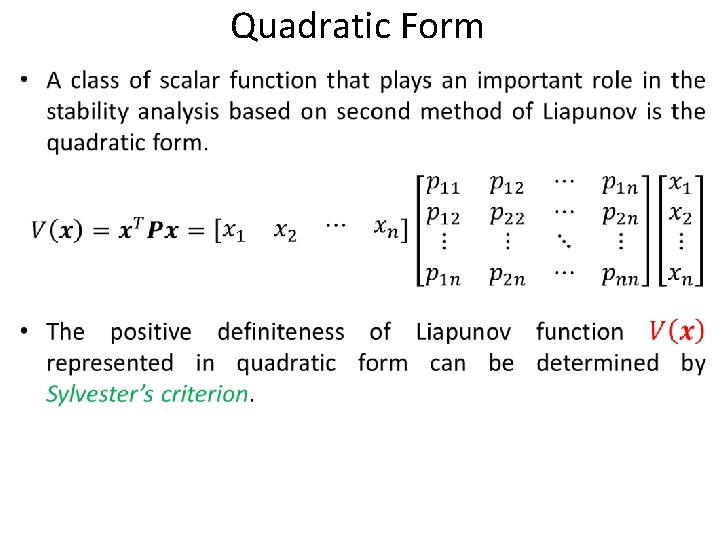
Quadratic Form •
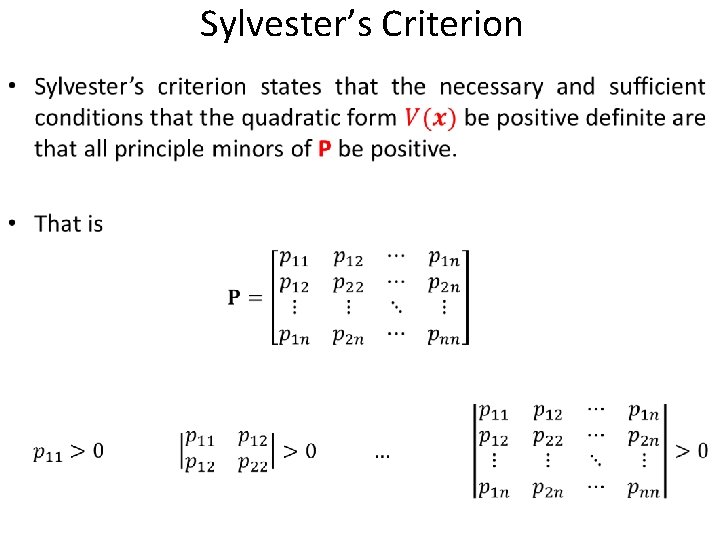
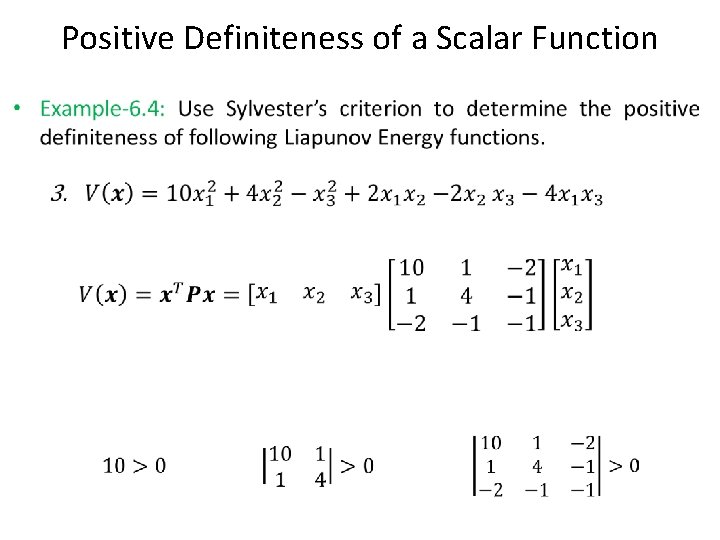
Sylvester’s Criterion •
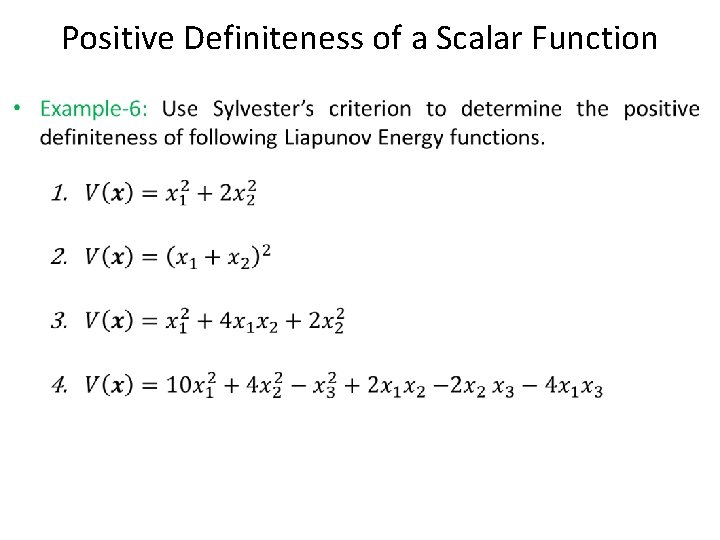
Positive Definiteness of a Scalar Function •
Positive Definiteness of a Scalar Function •
To download this lecture visit http: //imtiazhussainkalwar. weebly. com/ END OF LECTURES-37 -38