
MODERN CIVIL RIGHTS MOVEMENT A 29 c Q
- Slides: 27
MODERN CIVIL RIGHTS MOVEMENT A 29 c. Q 8. 4. 21
GUIDING QUESTION Why was there an increase in concern for African American civil rights during the 1940 s and 1950 s? Who? How much?
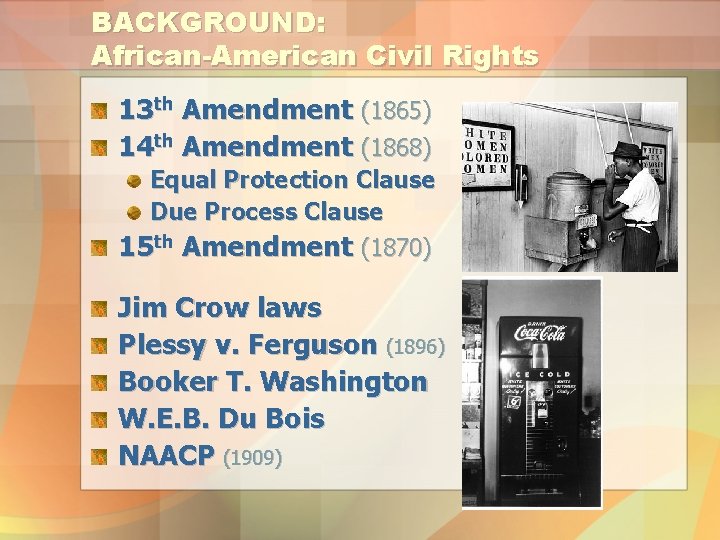
BACKGROUND: African-American Civil Rights 13 th Amendment (1865) 14 th Amendment (1868) Equal Protection Clause Due Process Clause 15 th Amendment (1870) Jim Crow laws Plessy v. Ferguson (1896) Booker T. Washington W. E. B. Du Bois NAACP (1909)
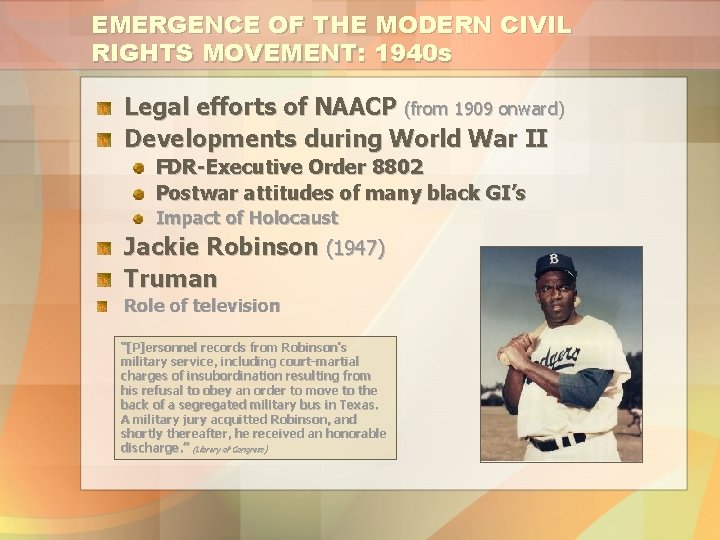
EMERGENCE OF THE MODERN CIVIL RIGHTS MOVEMENT: 1940 s Legal efforts of NAACP (from 1909 onward) Developments during World War II FDR-Executive Order 8802 Postwar attitudes of many black GI’s Impact of Holocaust Jackie Robinson (1947) Truman Role of television “[P]ersonnel records from Robinson's military service, including court-martial charges of insubordination resulting from his refusal to obey an order to move to the back of a segregated military bus in Texas. A military jury acquitted Robinson, and shortly thereafter, he received an honorable discharge. ” (Library of Congress)
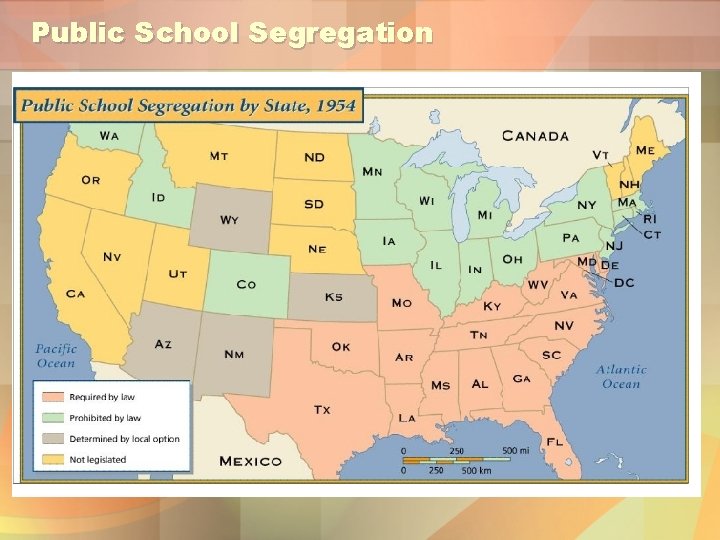
Public School Segregation
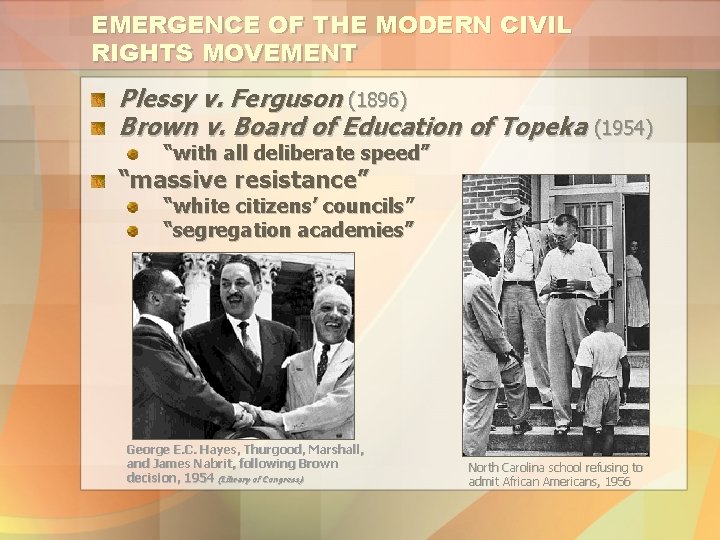
EMERGENCE OF THE MODERN CIVIL RIGHTS MOVEMENT Plessy v. Ferguson (1896) Brown v. Board of Education of Topeka (1954) “with all deliberate speed” “massive resistance” “white citizens’ councils” “segregation academies” George E. C. Hayes, Thurgood, Marshall, and James Nabrit, following Brown decision, 1954 (Library of Congress) North Carolina school refusing to admit African Americans, 1956
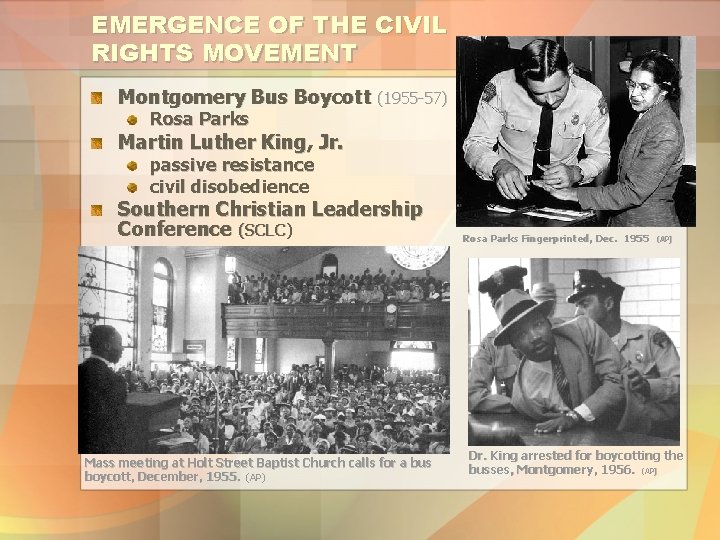
EMERGENCE OF THE CIVIL RIGHTS MOVEMENT Montgomery Bus Boycott (1955 -57) Rosa Parks Martin Luther King, Jr. passive resistance civil disobedience Southern Christian Leadership Conference (SCLC) Mass meeting at Holt Street Baptist Church calls for a bus boycott, December, 1955. (AP) Rosa Parks Fingerprinted, Dec. 1955 (AP) Dr. King arrested for boycotting the busses, Montgomery, 1956. (AP)
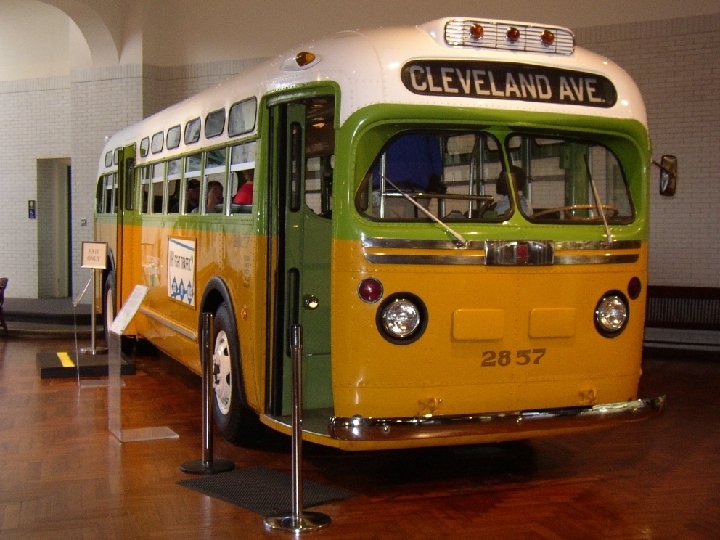
Rosa Parks Bus
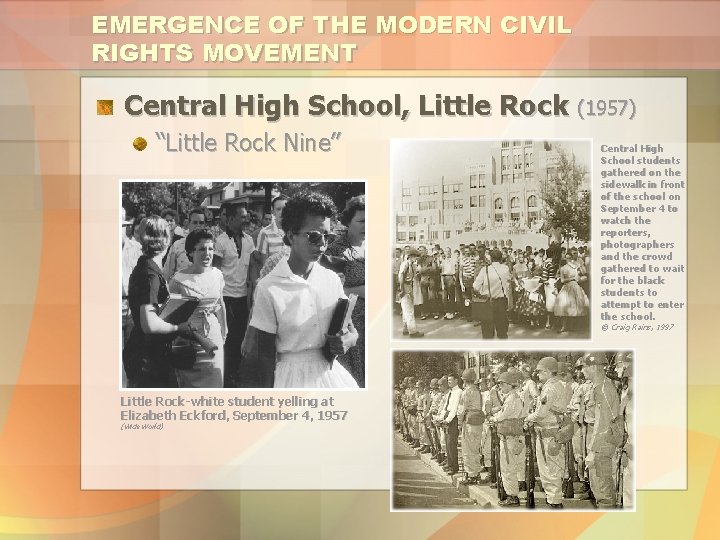
EMERGENCE OF THE MODERN CIVIL RIGHTS MOVEMENT Central High School, Little Rock (1957) “Little Rock Nine” Central High School students gathered on the sidewalk in front of the school on September 4 to watch the reporters, photographers and the crowd gathered to wait for the black students to attempt to enter the school. © Craig Rains, 1997 Little Rock-white student yelling at Elizabeth Eckford, September 4, 1957 (Wide World)
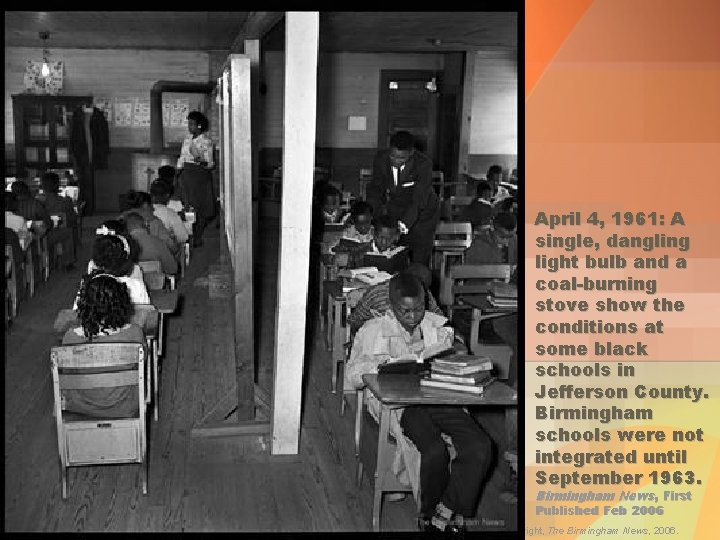
April 4, 1961: A single, dangling light bulb and a coal-burning stove show the conditions at some black schools in Jefferson County. Birmingham schools were not integrated until September 1963. Birmingham News, First Published Feb 2006 Copyright, The Birmingham News, 2006.
CIVIL RIGHTS IN THE 1960 s GUIDING QUESTION How did the goals, strategies, and support of the movement for African American civil rights change during the 1960 s?
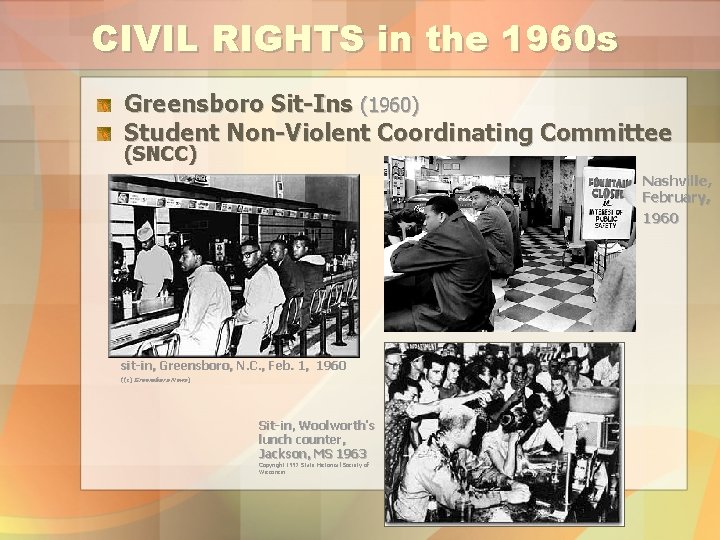
CIVIL RIGHTS in the 1960 s Greensboro Sit-Ins (1960) Student Non-Violent Coordinating Committee (SNCC) Nashville, February, 1960 sit-in, Greensboro, N. C. , Feb. 1, 1960 ((c) Greensboro News) Sit-in, Woolworth's lunch counter, Jackson, MS 1963 Copyright 1997 State Historical Society of Wisconsin
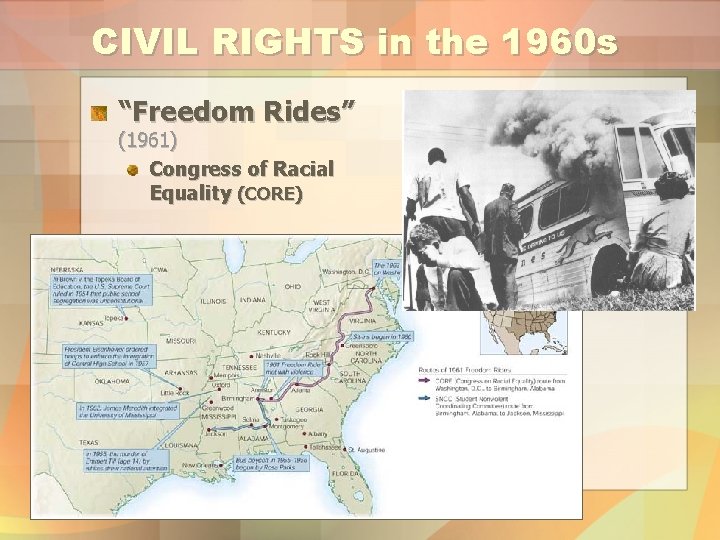
CIVIL RIGHTS in the 1960 s “Freedom Rides” (1961) Congress of Racial Equality (CORE)
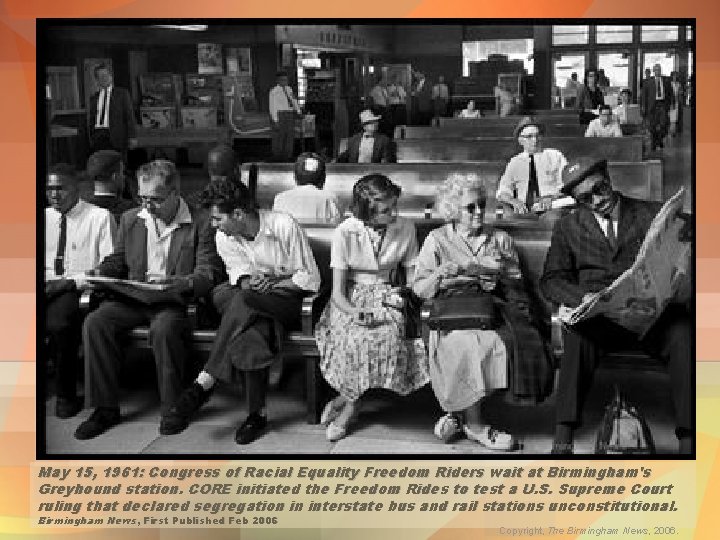
May 15, 1961: Congress of Racial Equality Freedom Riders wait at Birmingham's Greyhound station. CORE initiated the Freedom Rides to test a U. S. Supreme Court ruling that declared segregation in interstate bus and rail stations unconstitutional. Birmingham News, First Published Feb 2006 Copyright, The Birmingham News, 2006.
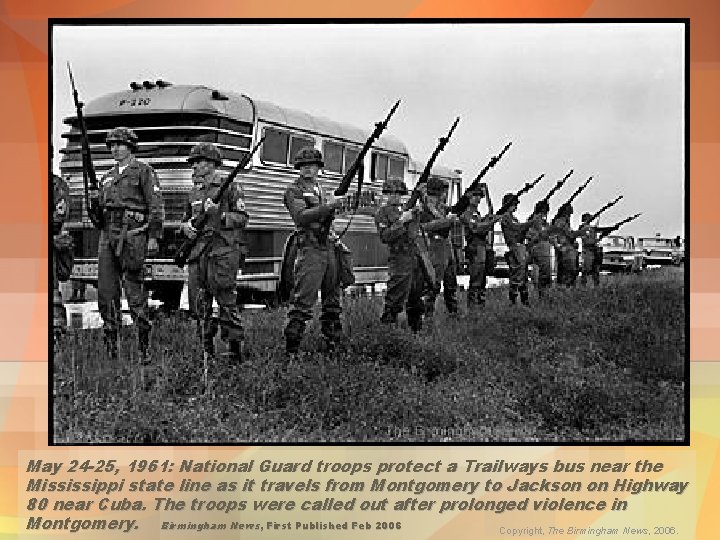
May 24 -25, 1961: National Guard troops protect a Trailways bus near the Mississippi state line as it travels from Montgomery to Jackson on Highway 80 near Cuba. The troops were called out after prolonged violence in Montgomery. Birmingham News, First Published Feb 2006 Copyright, The Birmingham News, 2006.
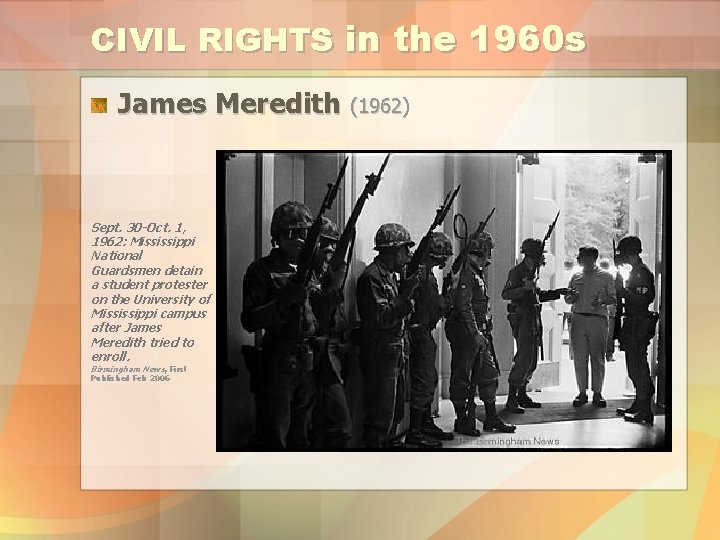
CIVIL RIGHTS in the 1960 s James Meredith Sept. 30 -Oct. 1, 1962: Mississippi National Guardsmen detain a student protester on the University of Mississippi campus after James Meredith tried to enroll. Birmingham News, First Published Feb 2006 (1962)
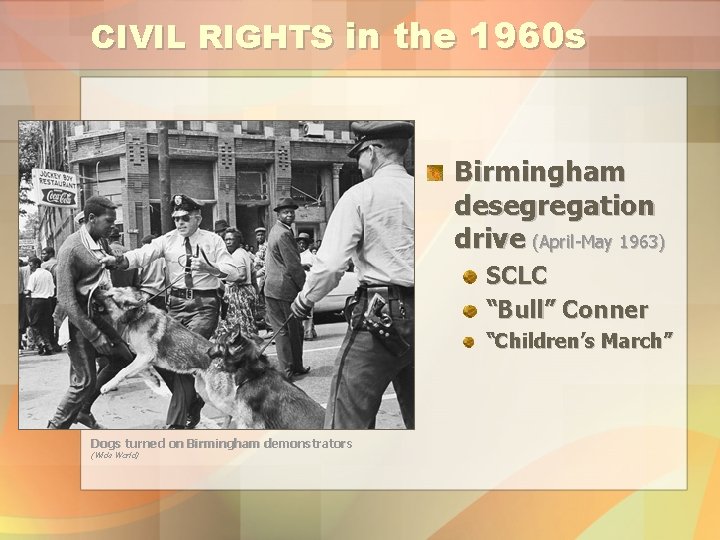
CIVIL RIGHTS in the 1960 s Birmingham desegregation drive (April-May 1963) SCLC “Bull” Conner “Children’s March” Dogs turned on Birmingham demonstrators (Wide World)
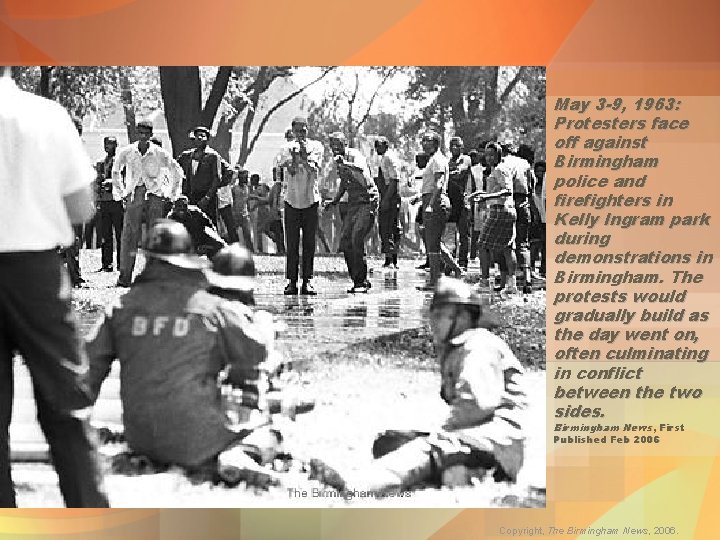
May 3 -9, 1963: Protesters face off against Birmingham police and firefighters in Kelly Ingram park during demonstrations in Birmingham. The protests would gradually build as the day went on, often culminating in conflict between the two sides. Birmingham News, First Published Feb 2006 Copyright, The Birmingham News, 2006.
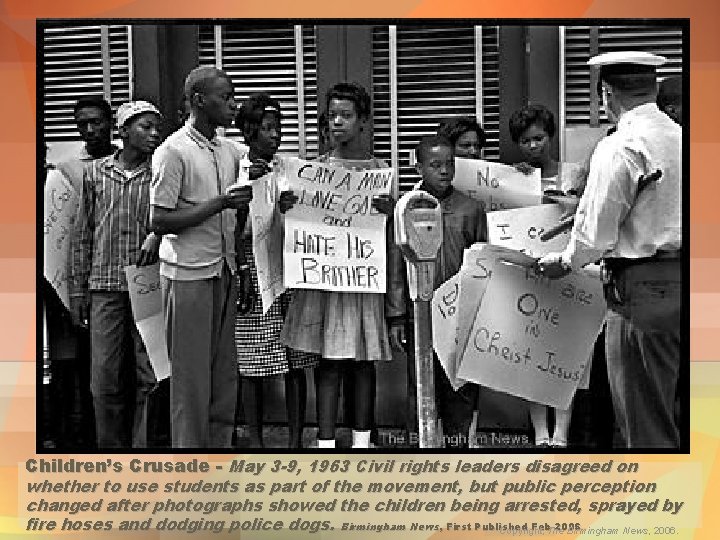
Children’s Crusade - May 3 -9, 1963 Civil rights leaders disagreed on whether to use students as part of the movement, but public perception changed after photographs showed the children being arrested, sprayed by fire hoses and dodging police dogs. Birmingham News, First Published Feb. The 2006 Copyright, Birmingham News, 2006.
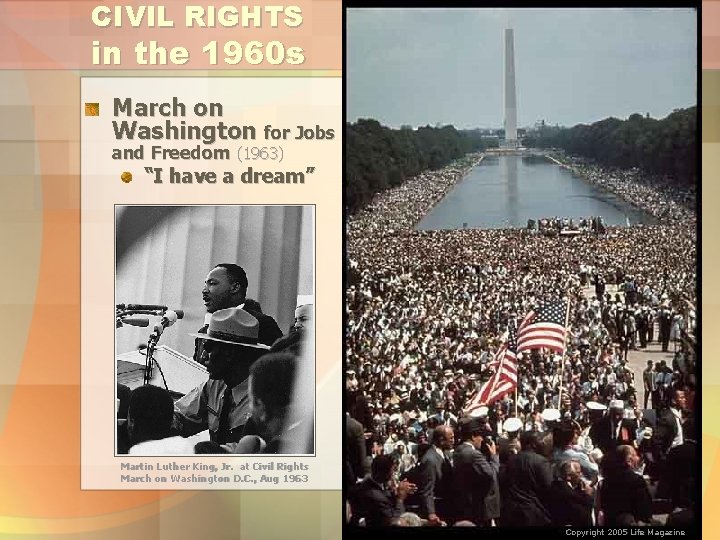
CIVIL RIGHTS in the 1960 s March on Washington for Jobs and Freedom (1963) “I have a dream” Martin Luther King, Jr. at Civil Rights March on Washington D. C. , Aug 1963 Copyright 2005 Life Magazine
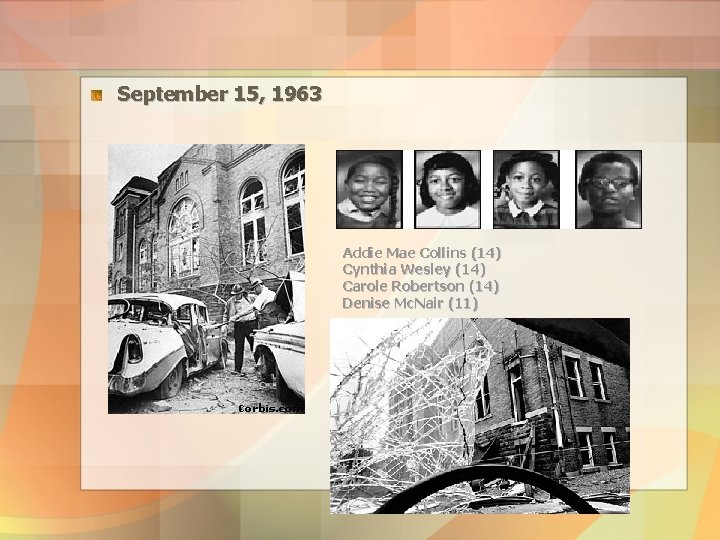
September 15, 1963 Addie Mae Collins (14) Cynthia Wesley (14) Carole Robertson (14) Denise Mc. Nair (11)
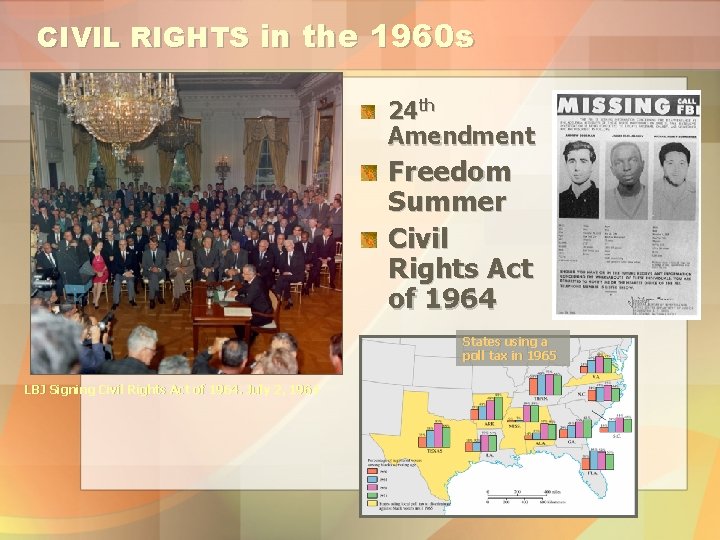
CIVIL RIGHTS in the 1960 s 24 th Amendment Freedom Summer Civil Rights Act of 1964 States using a poll tax in 1965 LBJ Signing Civil Rights Act of 1964. July 2, 1964
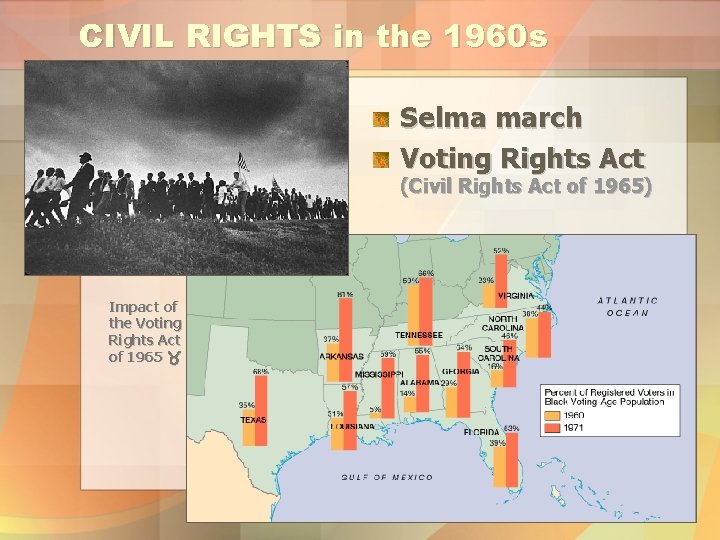
CIVIL RIGHTS in the 1960 s Selma march Voting Rights Act (Civil Rights Act of 1965) Impact of the Voting Rights Act of 1965
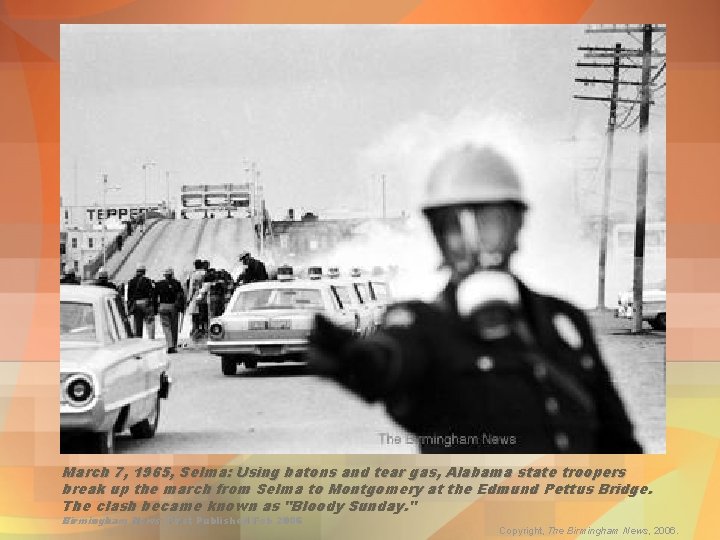
March 7, 1965, Selma: Using batons and tear gas, Alabama state troopers break up the march from Selma to Montgomery at the Edmund Pettus Bridge. The clash became known as "Bloody Sunday. " Birmingham News, First Published Feb 2006 Copyright, The Birmingham News, 2006.
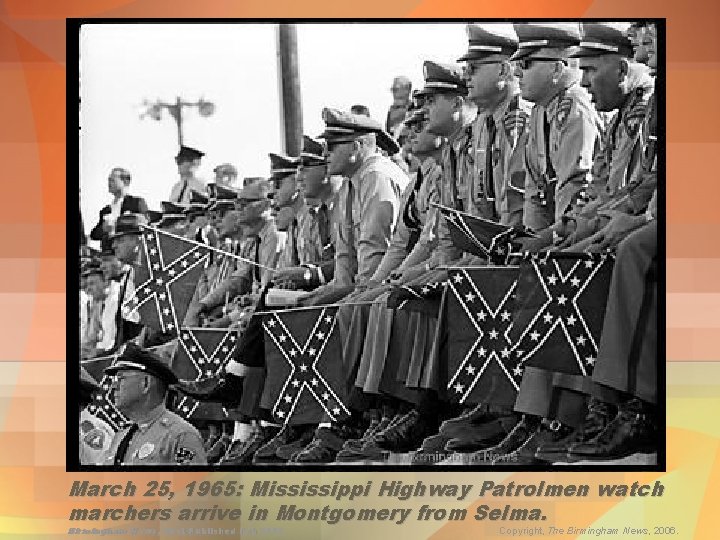
March 25, 1965: Mississippi Highway Patrolmen watch marchers arrive in Montgomery from Selma. Birmingham News, First Published Feb 2006 Copyright, The Birmingham News, 2006.
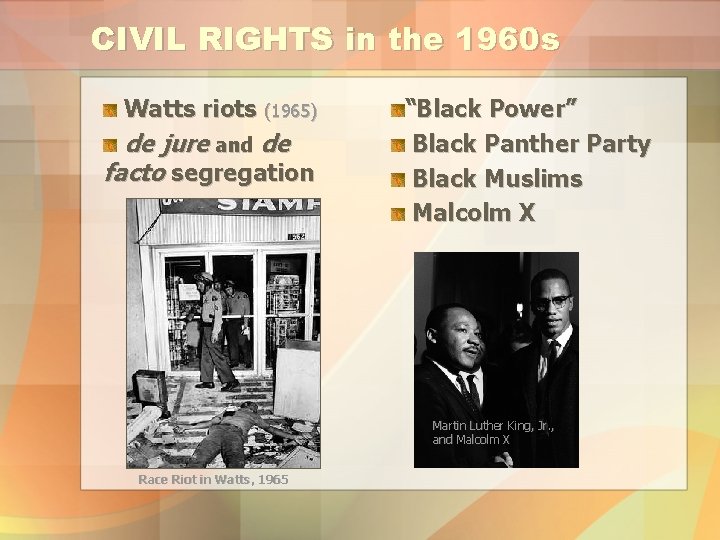
CIVIL RIGHTS in the 1960 s Watts riots (1965) de jure and de facto segregation “Black Power” Black Panther Party Black Muslims Malcolm X Martin Luther King, Jr. , and Malcolm X Race Riot in Watts, 1965
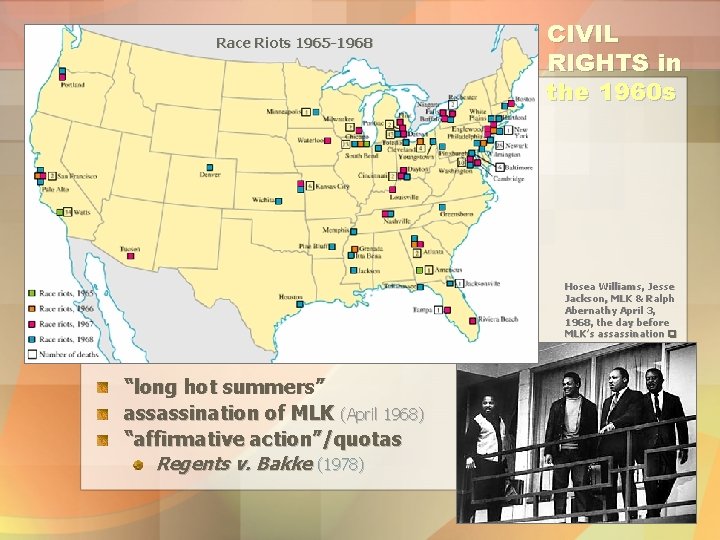
Race Riots 1965 -1968 CIVIL RIGHTS in the 1960 s Hosea Williams, Jesse Jackson, MLK & Ralph Abernathy April 3, 1968, the day before MLK’s assassination “long hot summers” assassination of MLK (April 1968) “affirmative action”/quotas Regents v. Bakke (1978)