
Moderate Acute Malnutrition MAM Contributes to 10 of

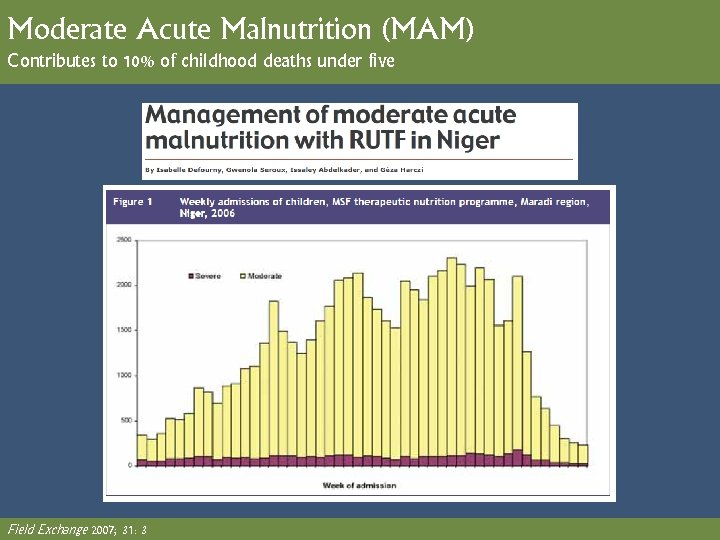
Moderate Acute Malnutrition (MAM) Contributes to 10% of childhood deaths under five Field Exchange 2007; 31: 3
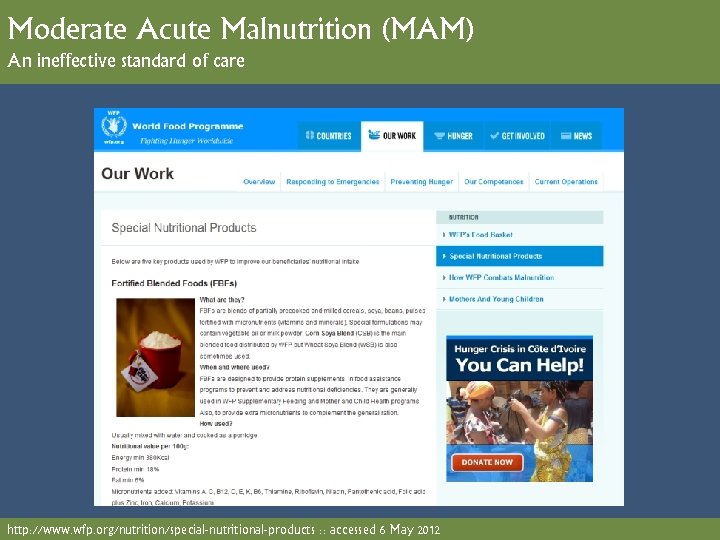
Moderate Acute Malnutrition (MAM) An ineffective standard of care http: //www. wfp. org/nutrition/special-nutritional-products : : accessed 6 May 2012
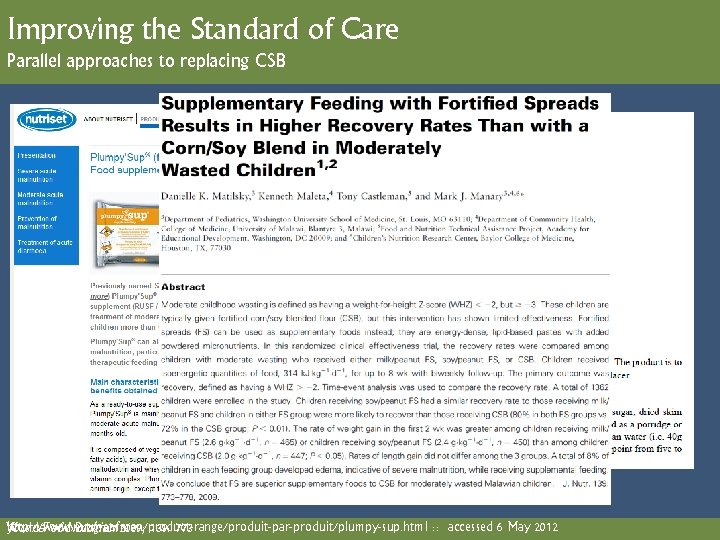
Improving the Standard of Care Parallel approaches to replacing CSB http: //www. nutriset. fr/en/product-range/produit-par-produit/plumpy-sup. html : : accessed 6 May 2012 Journal of Nutrition 2009; 139: 773 World Food Programme
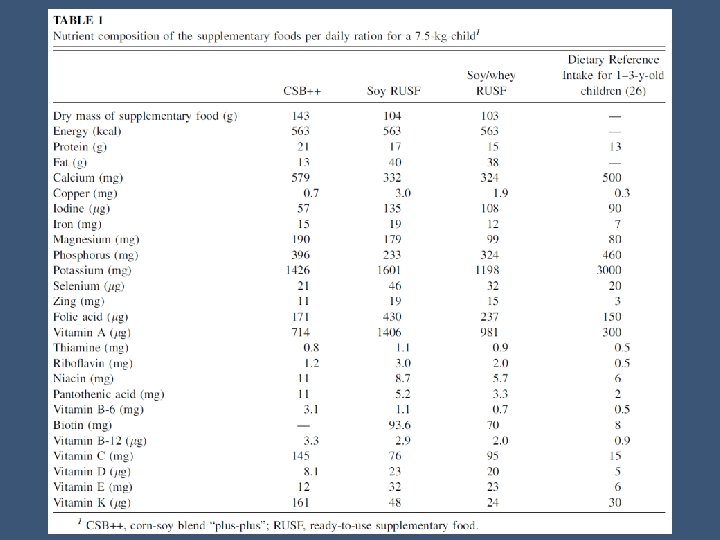
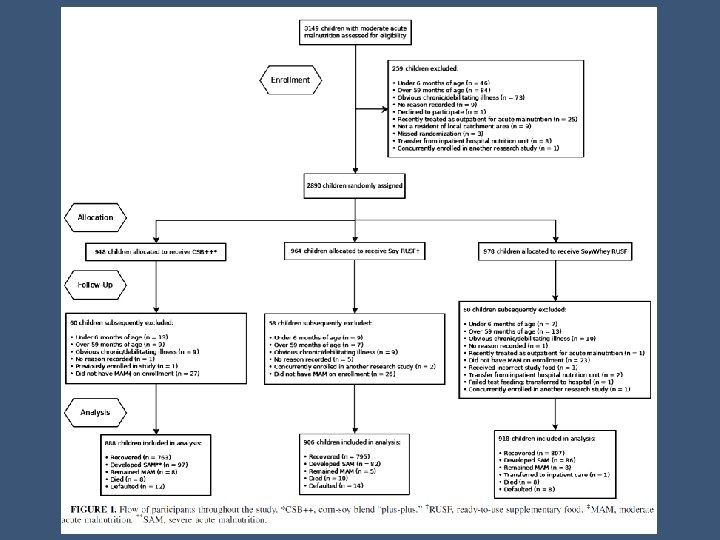
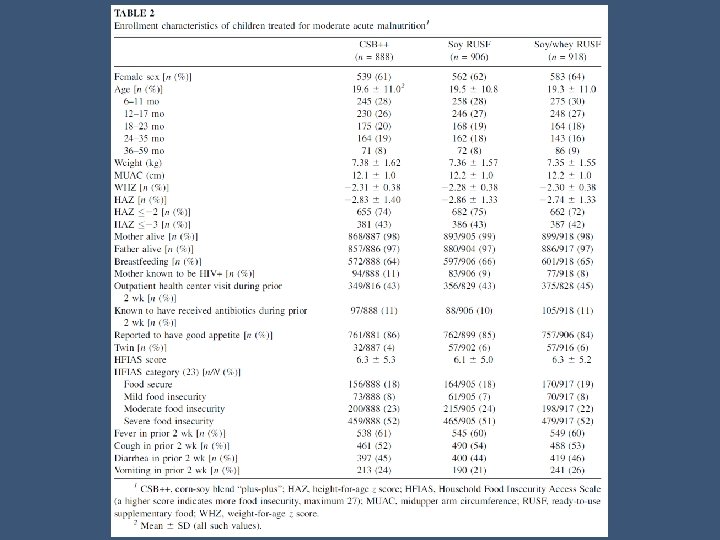
Supplementary Foods for Moderate Acute Malnutrition Prospective, randomized, investigator-blinded clinical effectiveness trial Population : : Children 6 -59 months old with moderate acute malnutrition (MAM) who qualify for community-based therapy (i. e. , demonstrate an appetite and a reliable caretaker) • -3 < Weight-for-height Z-score (WHZ) < -2 without edema • Within walking distance of one of 18 rural clinic sites in southern Malawi • Exclusions : : obvious chronic debilitating illness (excluding HIV & TB); recently enrolled in a therapeutic feeding program for acute malnutrition (inpatient or outpatient) Intervention : : One of two untested supplementary foods at a dose of 75 kcal/kg/d • CSB++ developed by World Food Programme, manufactured in Malawi : : $0. 16/d • 58% maize flour, 20% de-hulled soy flour, 9% sugar, 8% milk powder, 3% oil, multivitamin mix • Plumpy’Sup® developed and manufactured by Nutriset in France : : $0. 38/d • Peanut paste, sugar, vegetable fat, whey, soy protein isolates, maltodextrin, cocoa, multivitamin mix • “Soy/whey RUSF” Comparison : : Soy-peanut ready-to-use-supplementary food (RUSF) manufactured in Malawi : : $0. 22/d • Peanut paste, sugar, oil, extruded soy flour, multivitamin mix (no animal source proteins) • “Soy RUSF” Outcomes • Primary : : adverse effects; nutritional recovery (WHZ > -2); mortality • Secondary : : time to recovery; growth parameters (gains in height, weight, MUAC)
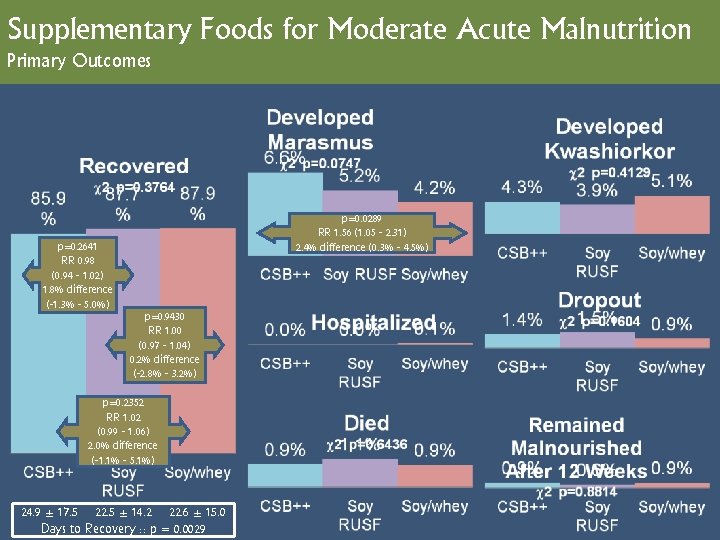
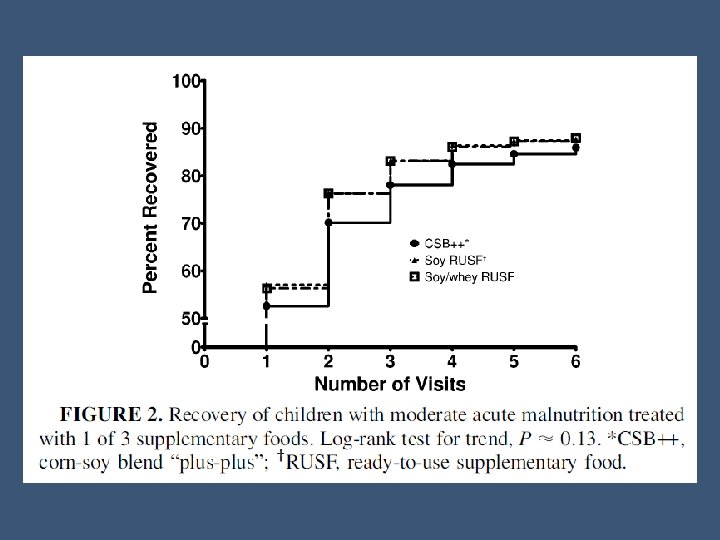
Supplementary Foods for Moderate Acute Malnutrition Primary Outcomes p=0. 0289 RR 1. 56 (1. 05 - 2. 31) 2. 4% difference (0. 3% - 4. 5%) p=0. 2641 RR 0. 98 (0. 94 - 1. 02) 1. 8% difference (-1. 3% - 5. 0%) p=0. 9430 RR 1. 00 (0. 97 - 1. 04) 0. 2% difference (-2. 8% - 3. 2%) p=0. 2352 RR 1. 02 (0. 99 - 1. 06) 2. 0% difference (-1. 1% - 5. 1%) 24. 9 ± 17. 5 22. 5 ± 14. 2 22. 6 ± 15. 0 Days to Recovery : : p = 0. 0029
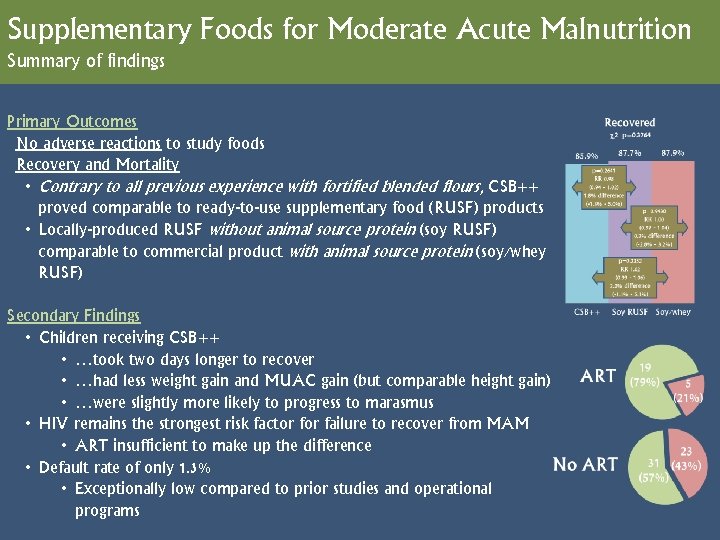
Supplementary Foods for Moderate Acute Malnutrition Summary of findings Primary Outcomes No adverse reactions to study foods Recovery and Mortality • Contrary to all previous experience with fortified blended flours, CSB++ proved comparable to ready-to-use supplementary food (RUSF) products • Locally-produced RUSF without animal source protein (soy RUSF) comparable to commercial product with animal source protein (soy/whey RUSF) Secondary Findings • Children receiving CSB++ • …took two days longer to recover • …had less weight gain and MUAC gain (but comparable height gain) • …were slightly more likely to progress to marasmus • HIV remains the strongest risk factor failure to recover from MAM • ART insufficient to make up the difference • Default rate of only 1. 3% • Exceptionally low compared to prior studies and operational programs
Supplementary Foods for Moderate Acute Malnutrition Differences between CSB and CSB++ • Increased energy density due to added oil, sugar, milk powder • More phosphorus (28%), potassium (49%), vitamin B 6 (316%), vitamin B 12 (121%), vitamin C (141%), vitamin D (115%), zinc (43%), riboflavin (62%) • Addition of vitamin K (113 g / 100 g) and pantothenic acid (7. 4 mg / 100 g) • Tighter specifications regarding aflatoxin and coliform contamination • Reduced anti-nutrient content by including less soy beans and maize and by dehulling soy beans • Animal source food included (milk powder)
Supplementary Foods for Moderate Acute Malnutrition A paradigm shift Cost comparison of supplementary foods studied • CSB++ : : $0. 03 per 100 kcal • Soy RUSF : : $0. 04 per 100 kcal • Soy/whey RUSF : : $0. 07 per 100 kcal Operational concerns about fortified blended flours : : the old dogma • Requires cooking (water, firewood, dishes) : : may discourage preparation and increase spoilage • Similar in taste and appearance to staple foods : : may encourage sharing • Low energy density compared to RUSF : : requires children to eat large volumes of food • Typical programs scoop flour out of 25 -50 kg bags into family containers, whereas this study provided CSB++ in sealed 250 g plastic bags (1 -2 days ration) : : may have led to decreased contamination and spillage and promoted the understanding that CSB++ is a medicinal food

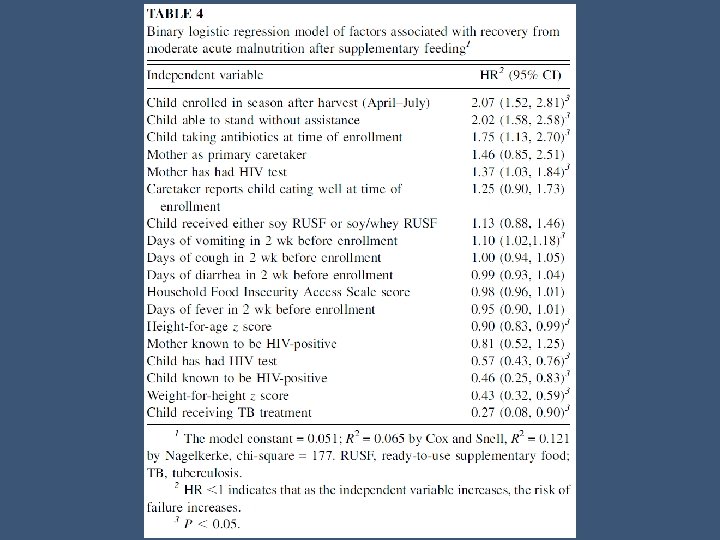
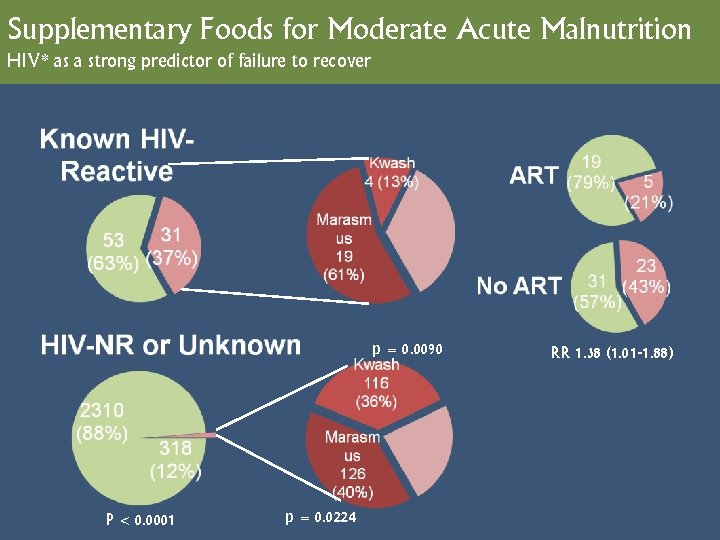
Supplementary Foods for Moderate Acute Malnutrition HIV* as a strong predictor of failure to recover p = 0. 0090 P < 0. 0001 p = 0. 0224 RR 1. 38 (1. 01 -1. 88)
- Slides: 16