
MODELS OF THE ATOM CHM 130 GCC Review

- Slides: 54
MODELS OF THE ATOM CHM 130 GCC
Review - Rounding • Round 399 Hopefully you said 400 not 4. What is wrong with 4? ? ? The zeroes ARE important, they are place holders. 400 and 4 are NOT the same! If you had $400 in the bank but they said you had only $4 you’d be pissed off! Round 2389 to 2 sig fig, now round to 1 sig fig Answer: 2400 NOT 24 2000 NOT 2
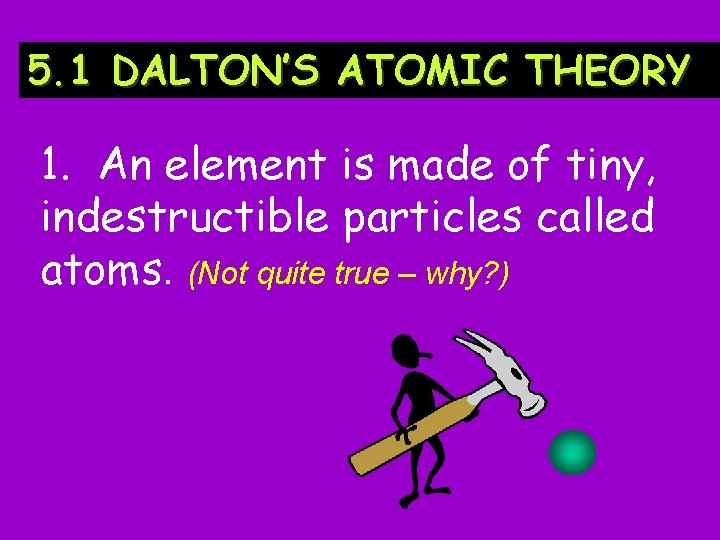
5. 1 DALTON’S ATOMIC THEORY 1. An element is made of tiny, indestructible particles called atoms. (Not quite true – why? )
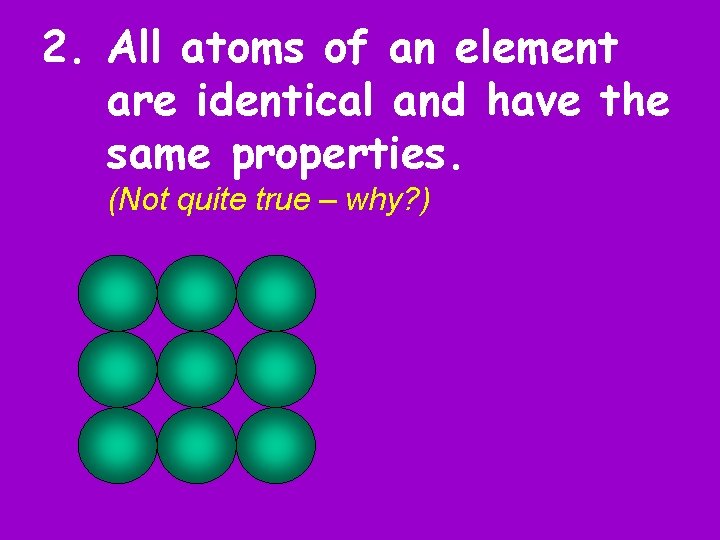
2. All atoms of an element are identical and have the same properties. (Not quite true – why? )
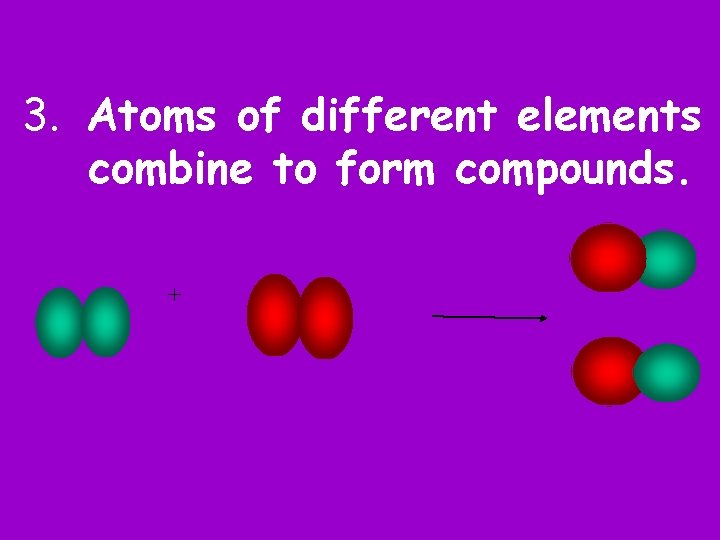
3. Atoms of different elements combine to form compounds. +
4. Compounds contain atoms in small whole number ratios. e. g. Each H 2 O molecule consists of one O and two H atoms, not ½ atoms or ¾ atoms.
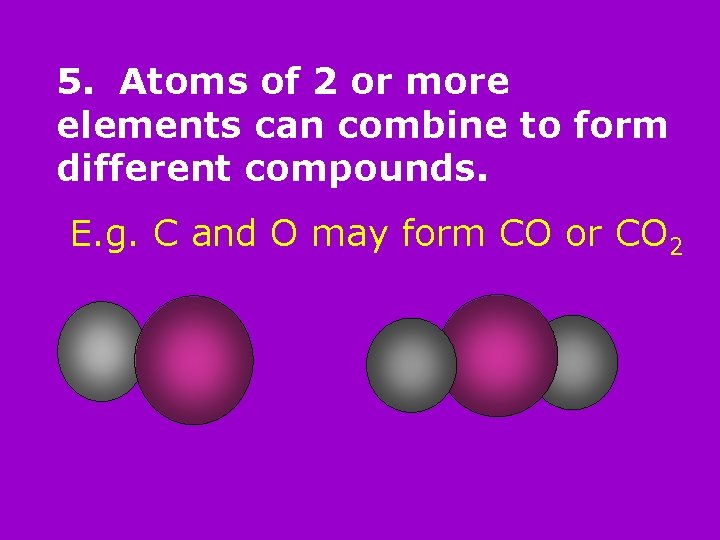
5. Atoms of 2 or more elements can combine to form different compounds. E. g. C and O may form CO or CO 2
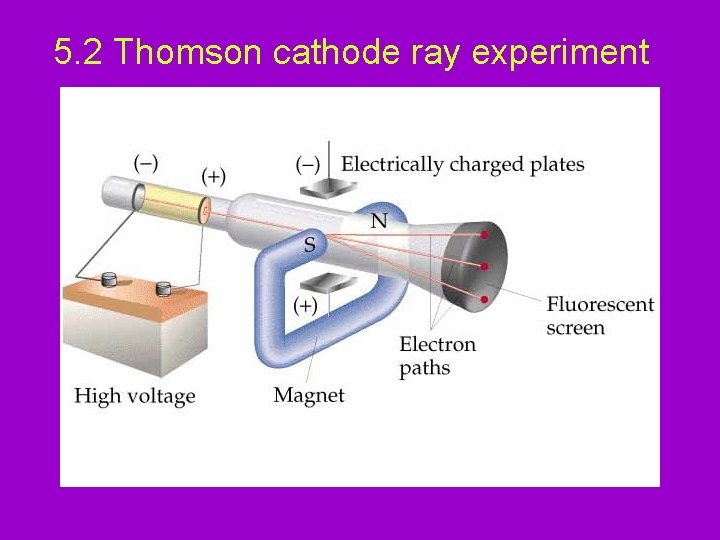
5. 2 Thomson cathode ray experiment
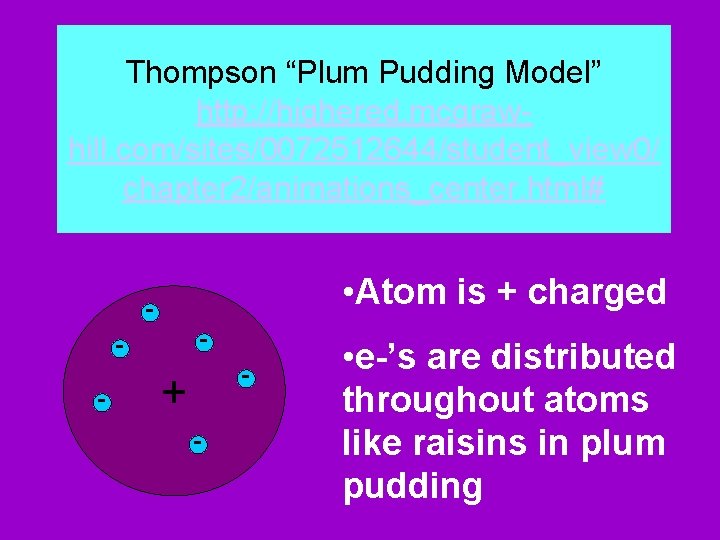
Thompson “Plum Pudding Model” http: //highered. mcgrawhill. com/sites/0072512644/student_view 0/ chapter 2/animations_center. html# • Atom is + charged - - + • e-’s are distributed throughout atoms like raisins in plum pudding - -
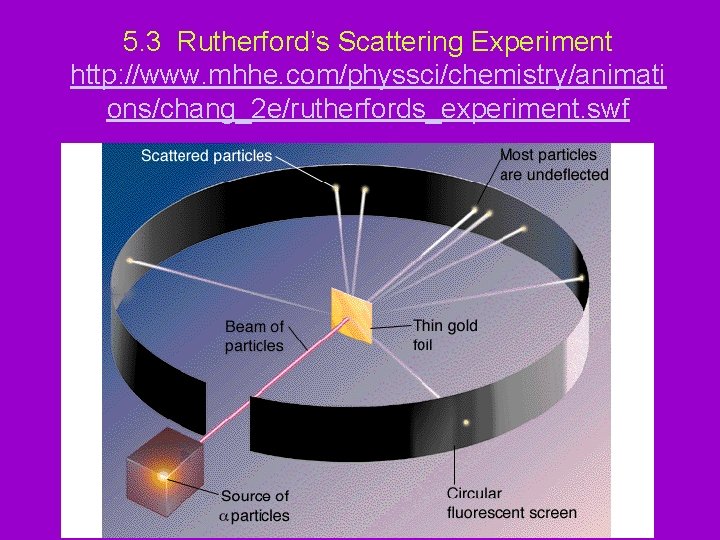
5. 3 Rutherford’s Scattering Experiment http: //www. mhhe. com/physsci/chemistry/animati ons/chang_2 e/rutherfords_experiment. swf
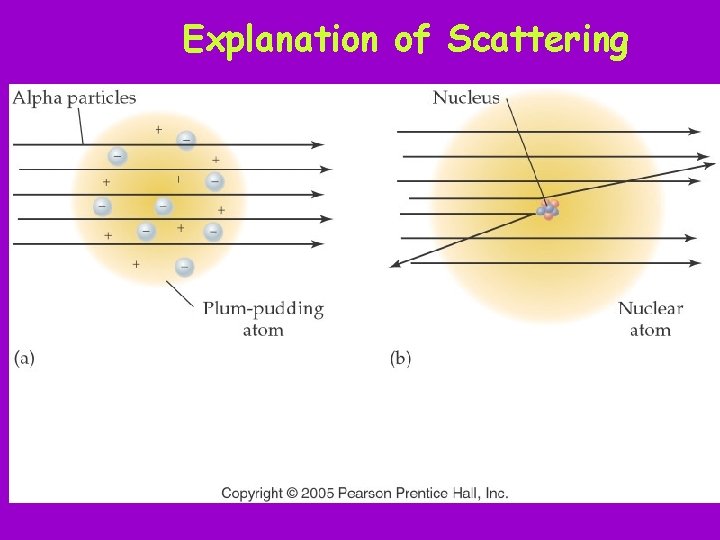
Explanation of Scattering
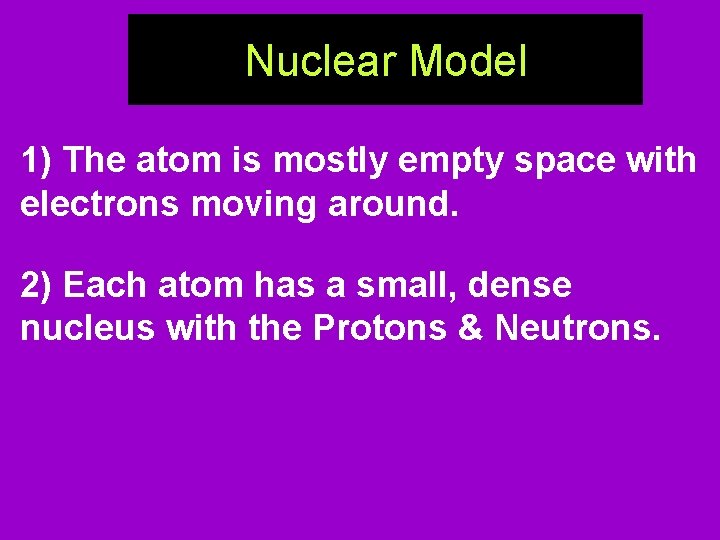
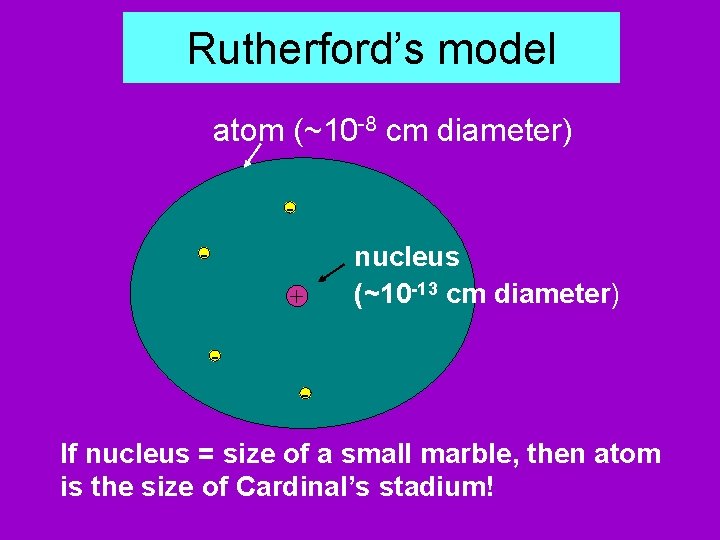
Nuclear Model 1) The atom is mostly empty space with electrons moving around. 2) Each atom has a small, dense nucleus with the Protons & Neutrons.
Rutherford’s model atom (~10 -8 cm diameter) + nucleus (~10 -13 cm diameter) - If nucleus = size of a small marble, then atom is the size of Cardinal’s stadium!
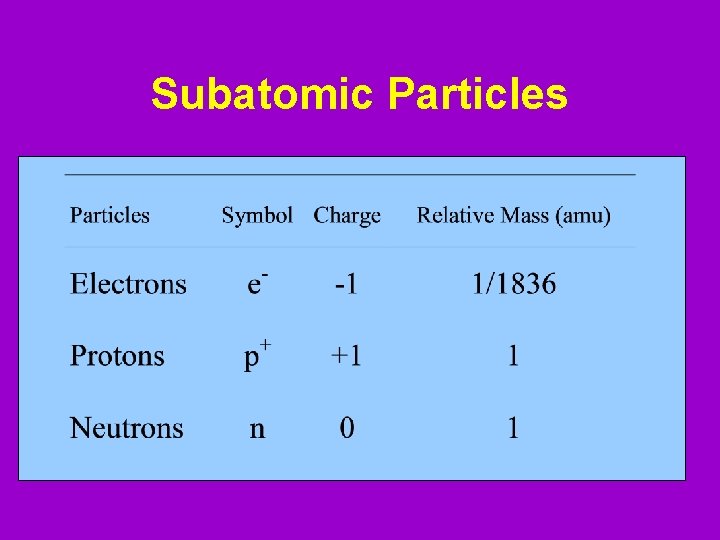
Subatomic Particles
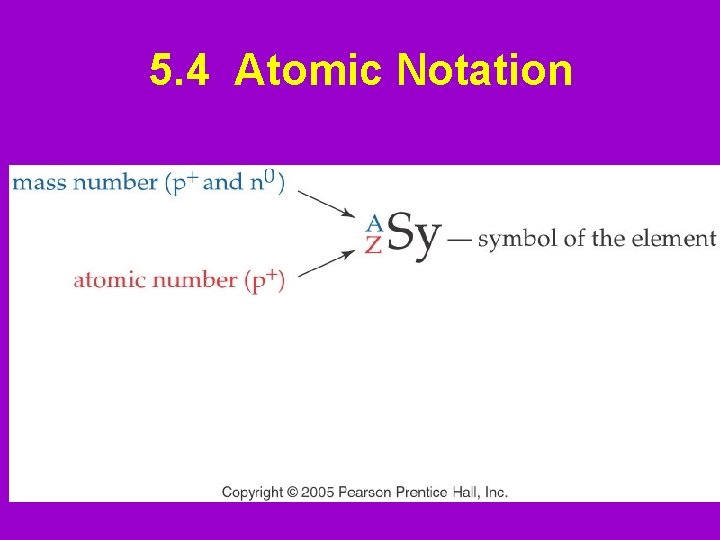
5. 4 Atomic Notation
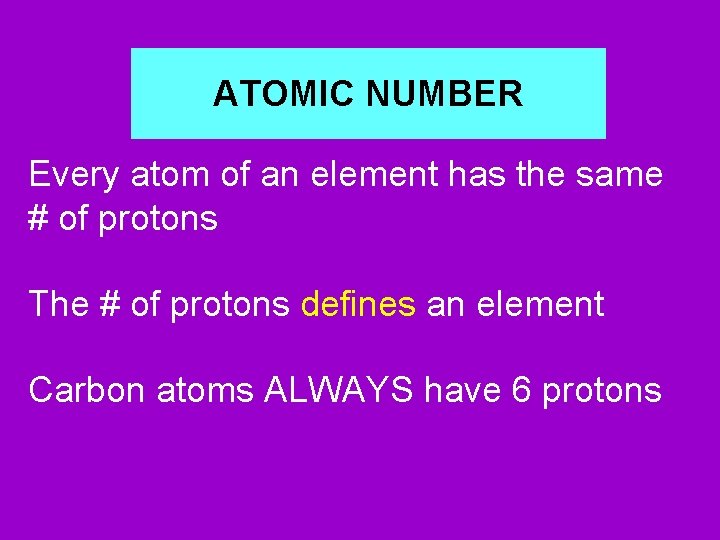
ATOMIC NUMBER Every atom of an element has the same # of protons The # of protons defines an element Carbon atoms ALWAYS have 6 protons
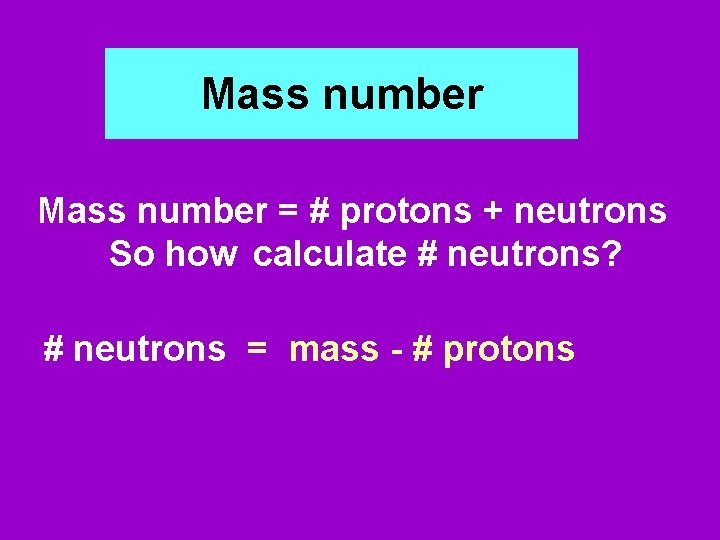
Mass number = # protons + neutrons So how calculate # neutrons? # neutrons = mass - # protons
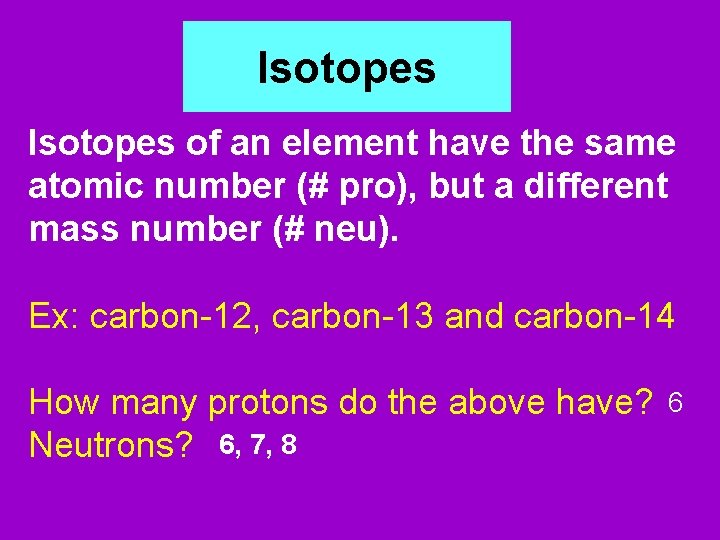
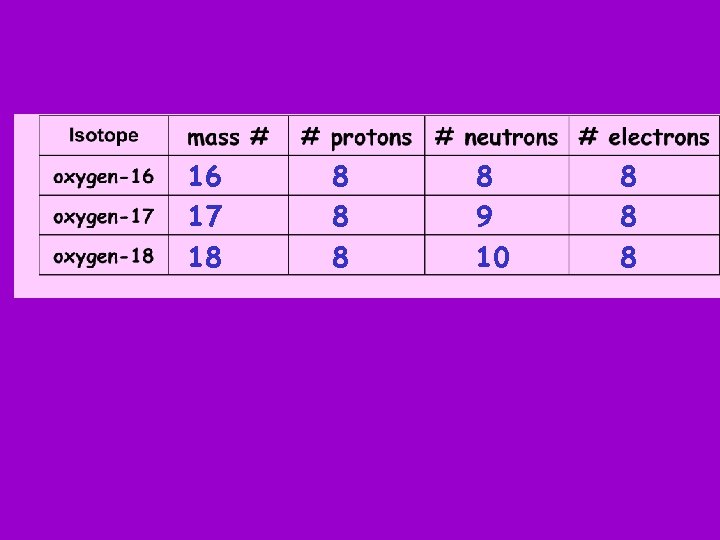
Isotopes of an element have the same atomic number (# pro), but a different mass number (# neu). Ex: carbon-12, carbon-13 and carbon-14 How many protons do the above have? Neutrons? 6, 7, 8 6
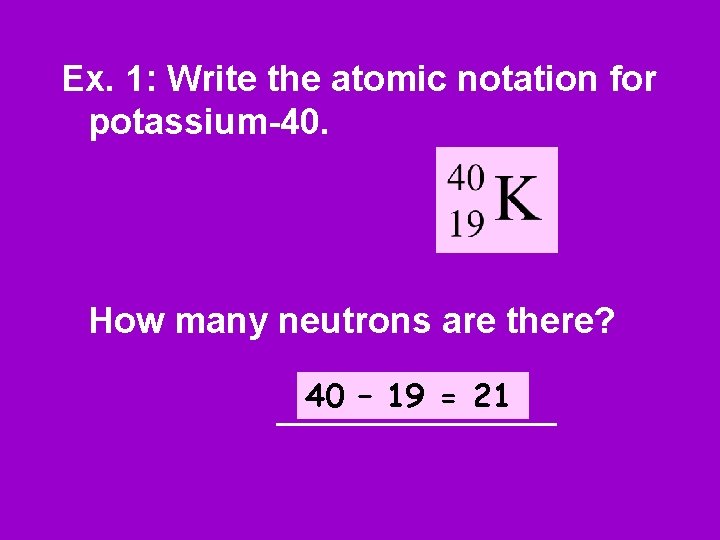
Ex. 1: Write the atomic notation for potassium-40. How many neutrons are there? 40 – 19 = 21 _______
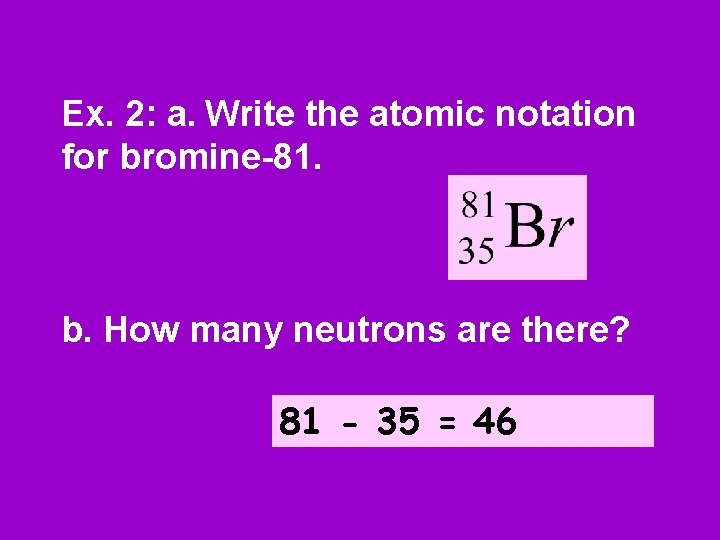
Ex. 2: a. Write the atomic notation for bromine-81. b. How many neutrons are there? _________ 81 - 35 = 46
16 17 18 8 8 9 10 8 8 8
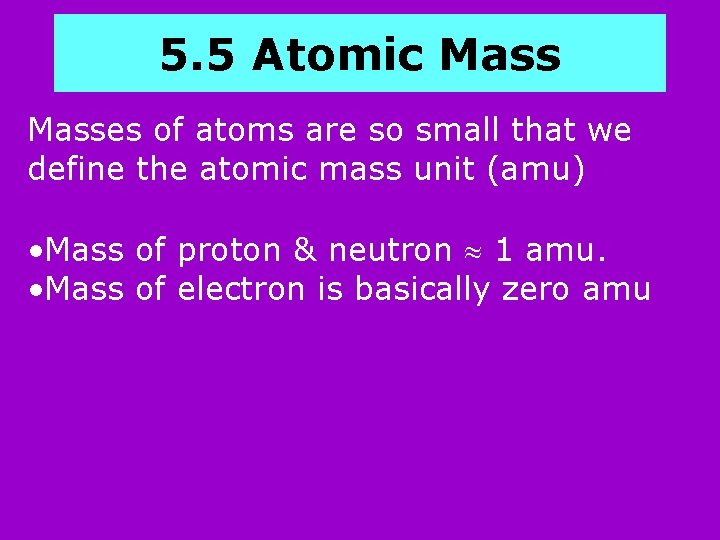
5. 5 Atomic Masses of atoms are so small that we define the atomic mass unit (amu) • Mass of proton & neutron 1 amu. • Mass of electron is basically zero amu
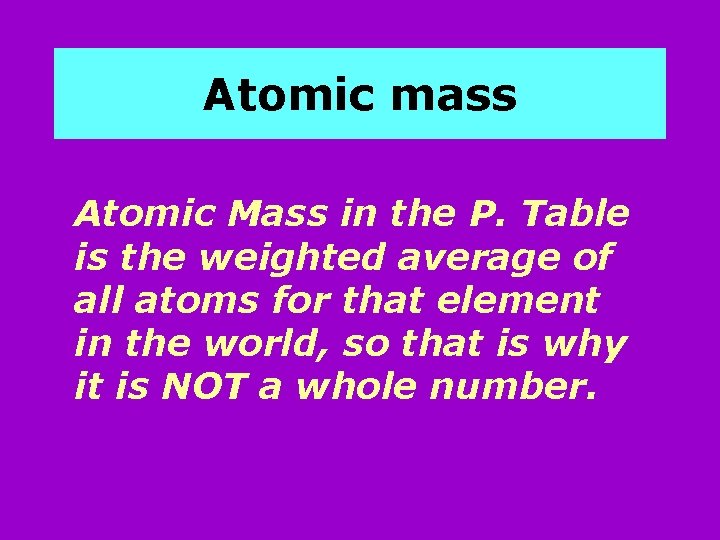
Atomic mass Atomic Mass in the P. Table is the weighted average of all atoms for that element in the world, so that is why it is NOT a whole number.
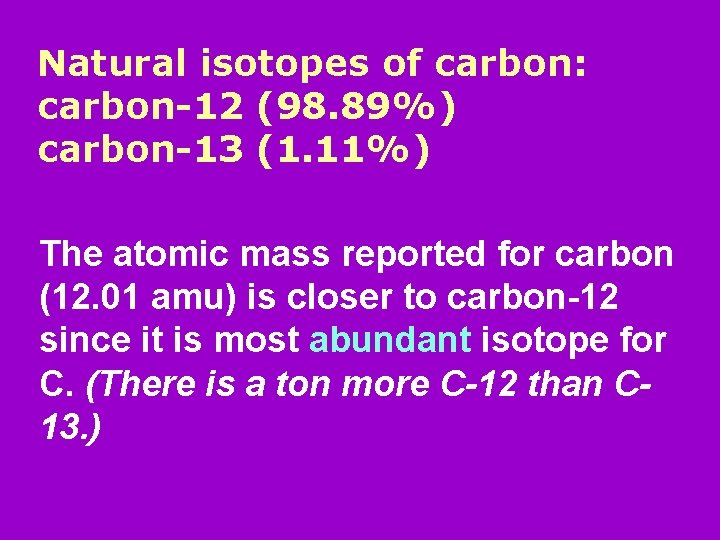
Natural isotopes of carbon: carbon-12 (98. 89%) carbon-13 (1. 11%) The atomic mass reported for carbon (12. 01 amu) is closer to carbon-12 since it is most abundant isotope for C. (There is a ton more C-12 than C 13. )
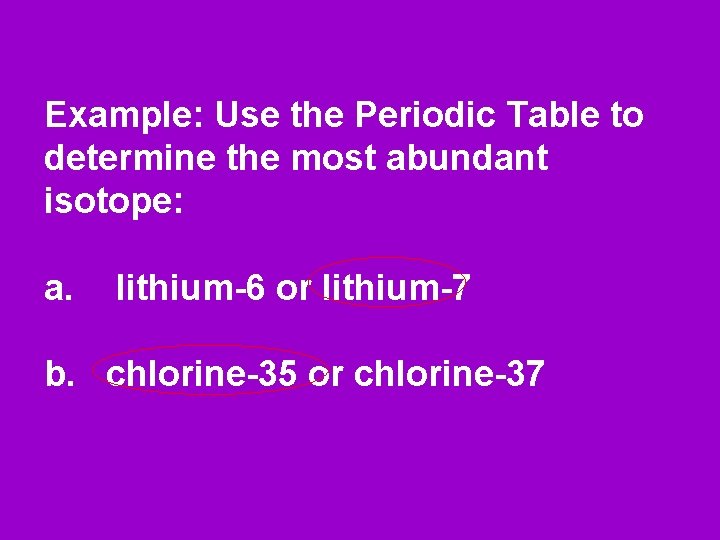
Example: Use the Periodic Table to determine the most abundant isotope: a. lithium-6 or lithium-7 b. chlorine-35 or chlorine-37
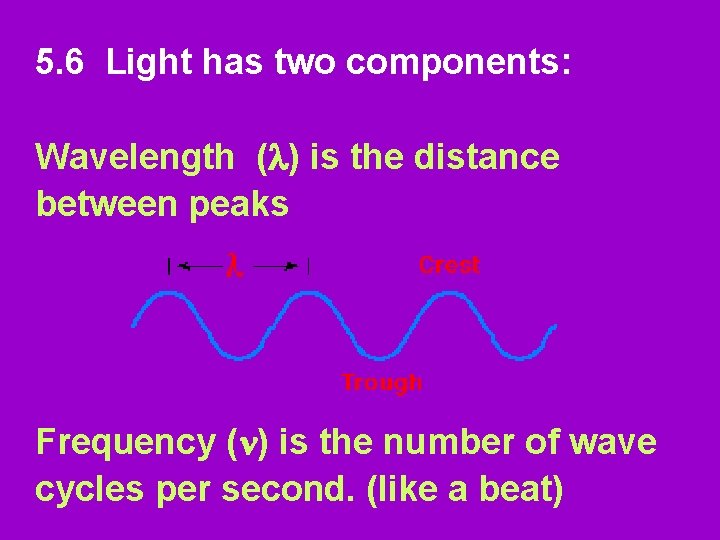
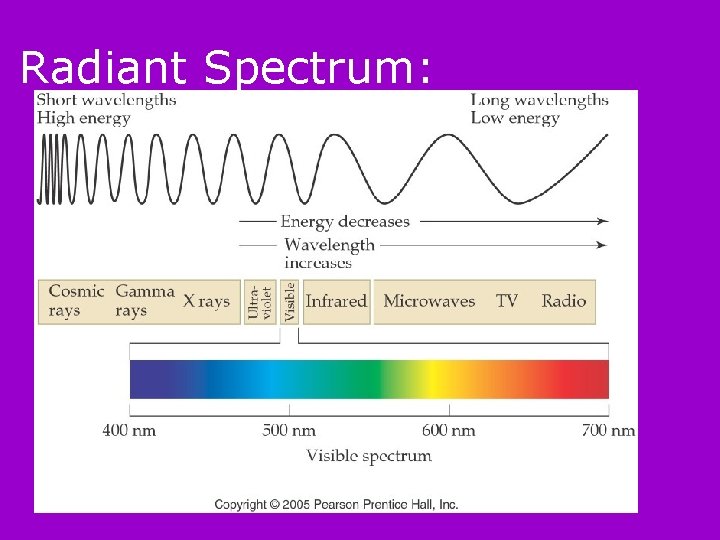
5. 6 Light has two components: Wavelength ( ) is the distance between peaks Frequency ( ) is the number of wave cycles per second. (like a beat)
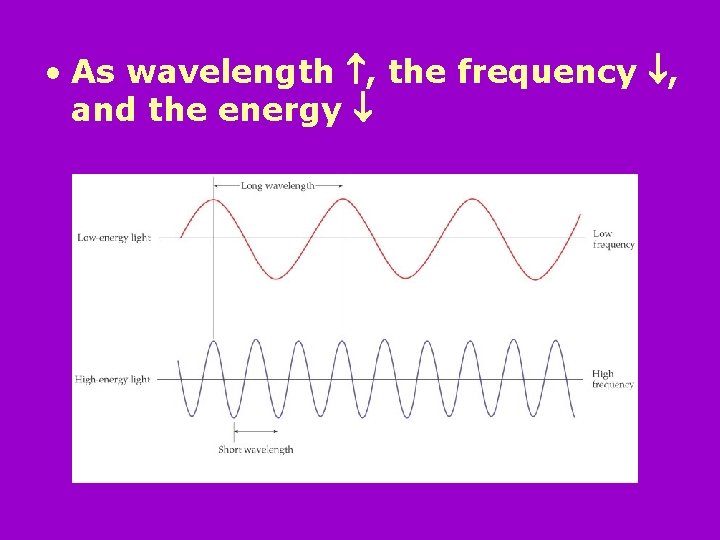
• As wavelength , the frequency , and the energy
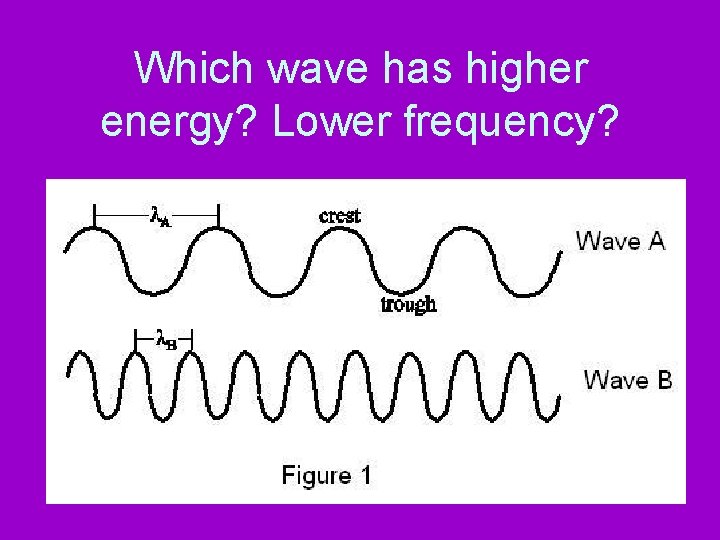
Which wave has higher energy? Lower frequency?
Radiant Spectrum:
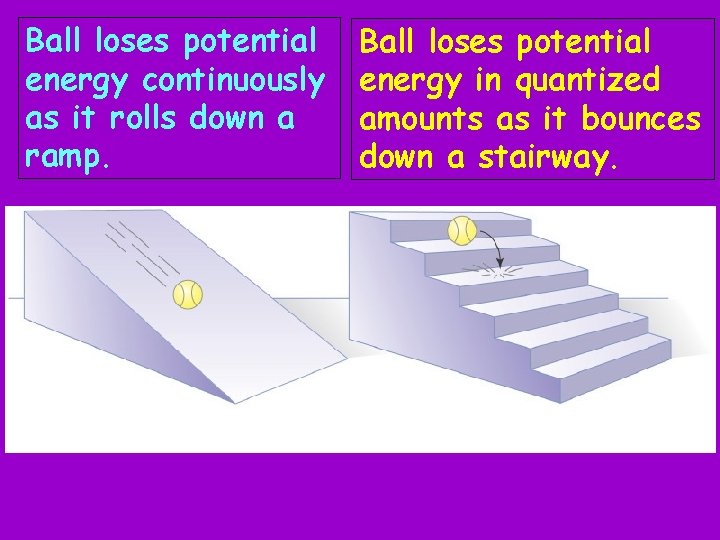
5. 7 In 1900, Max Planck proposed the controversial idea that energy was emitted in small bundles called quanta. • a particle of light energy is called a photon
Ball loses potential energy continuously as it rolls down a ramp. Ball loses potential energy in quantized amounts as it bounces down a stairway.
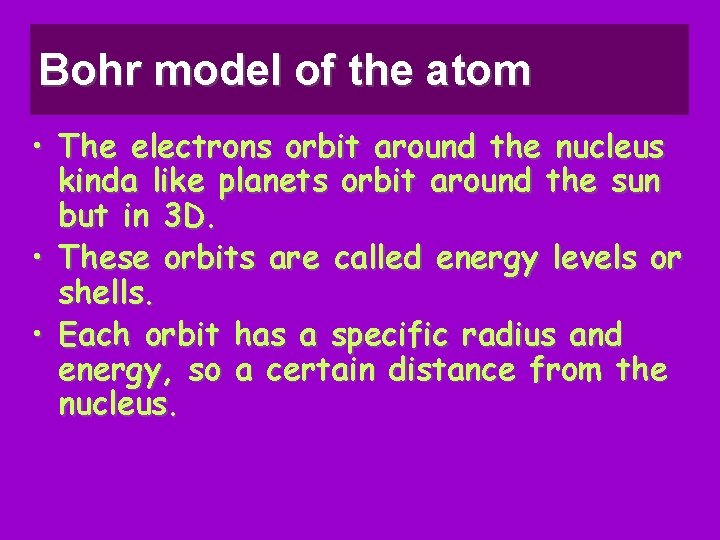
5. 8 Bohr Model ~1913 Neils Bohr proposed that electrons orbit around the nucleus, occupying orbits with distinct energy levels. Electrons are quantized!
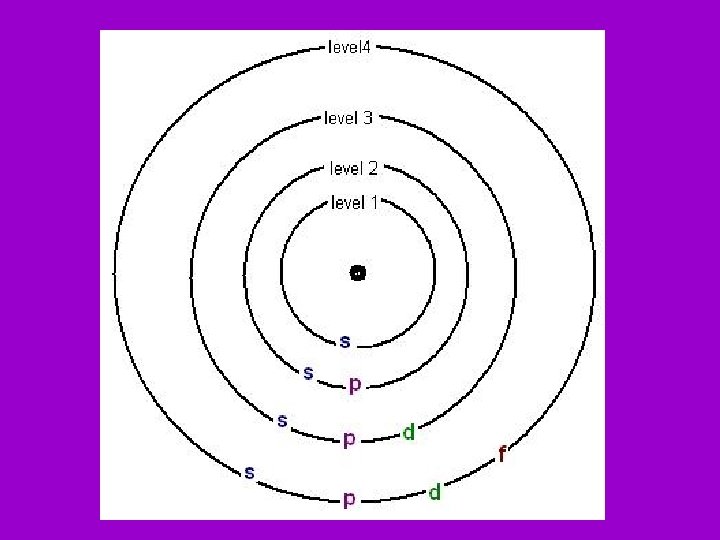
Bohr model of the atom • The electrons orbit around the nucleus kinda like planets orbit around the sun but in 3 D. • These orbits are called energy levels or shells. • Each orbit has a specific radius and energy, so a certain distance from the nucleus.
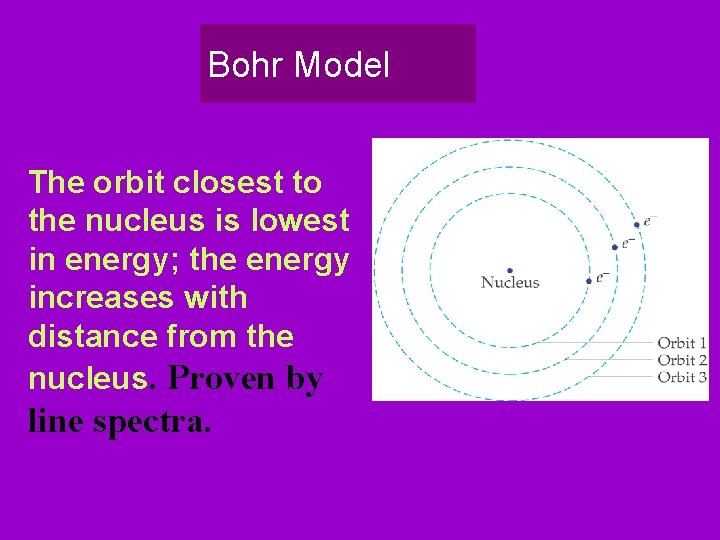
Bohr Model The orbit closest to the nucleus is lowest in energy; the energy increases with distance from the nucleus. Proven by line spectra.
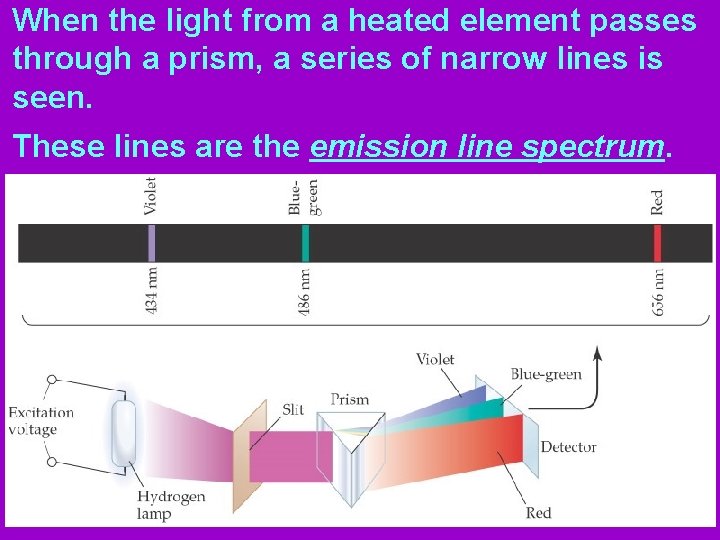
When the light from a heated element passes through a prism, a series of narrow lines is seen. These lines are the emission line spectrum.
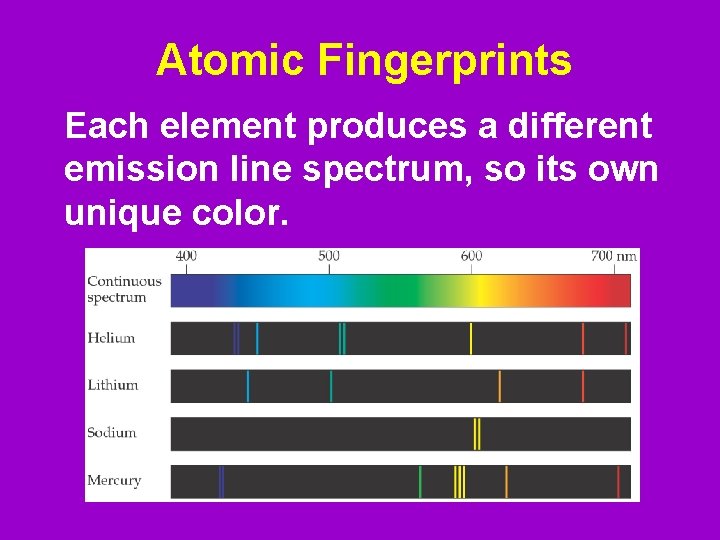
Atomic Fingerprints Each element produces a different emission line spectrum, so its own unique color.
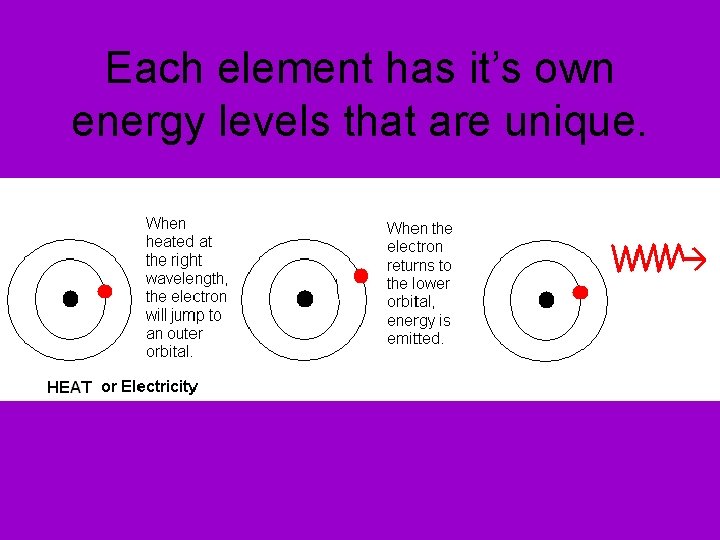
Each element has it’s own energy levels that are unique.
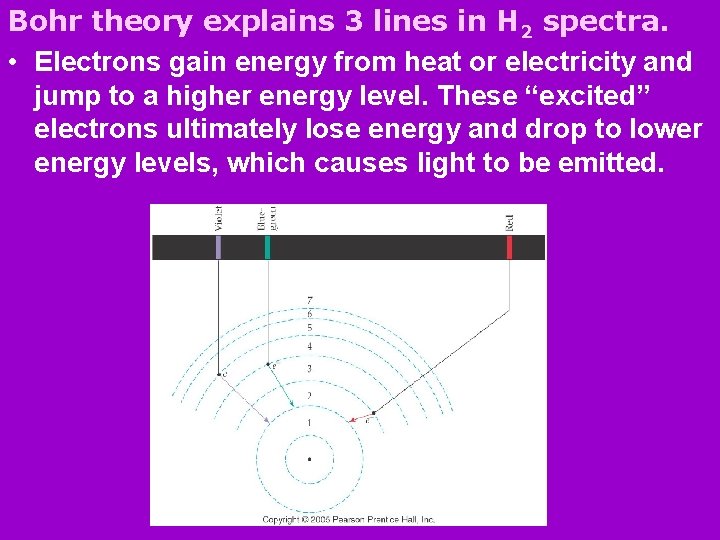
Bohr theory explains 3 lines in H 2 spectra. • Electrons gain energy from heat or electricity and jump to a higher energy level. These “excited” electrons ultimately lose energy and drop to lower energy levels, which causes light to be emitted.
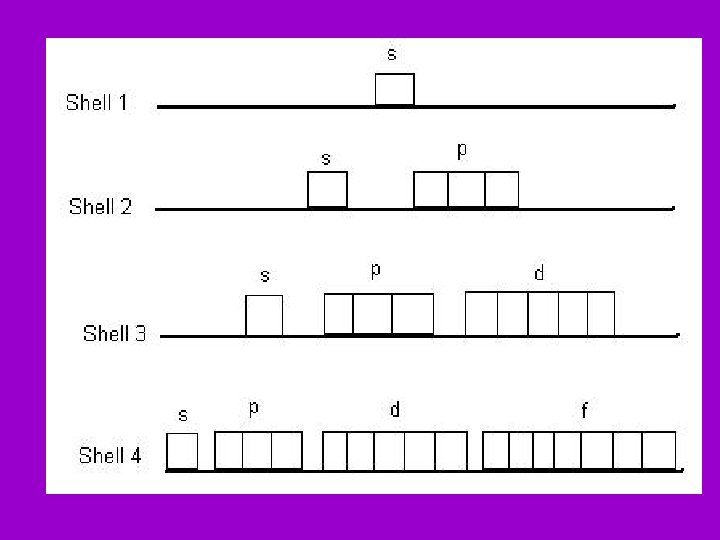
5. 9 Each Energy Level Can Be Subdivided Into Sublevels. Levels: sublevels: 1 -7 s, p, d, and f.
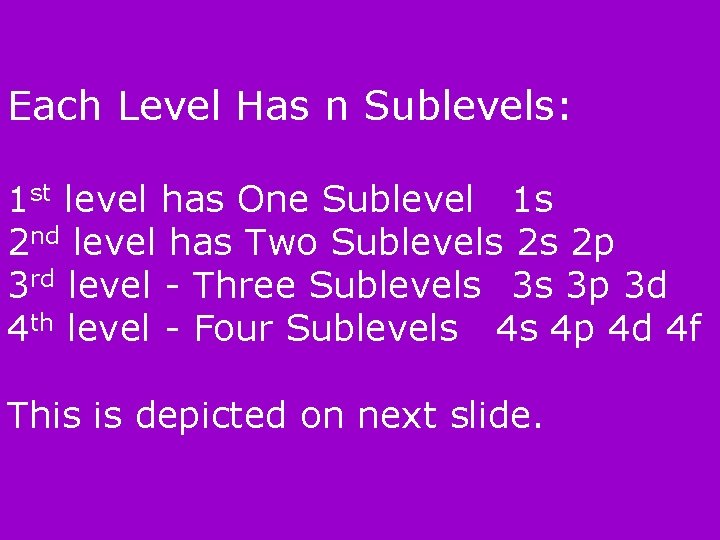
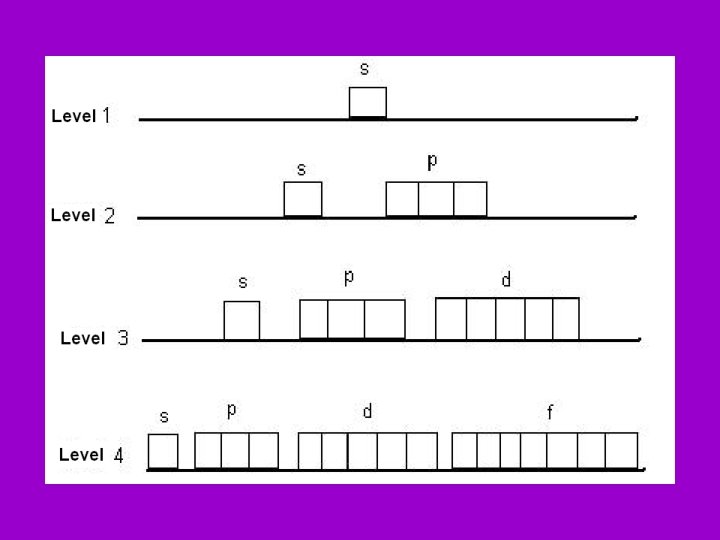
Each Level Has n Sublevels: 1 st level has One Sublevel 1 s 2 nd level has Two Sublevels 2 s 2 p 3 rd level - Three Sublevels 3 s 3 p 3 d 4 th level - Four Sublevels 4 s 4 p 4 d 4 f This is depicted on next slide.
Orbitals are regions in space where there is a high probability of finding an electron. – One orbital can hold a maximum of 2 electrons.
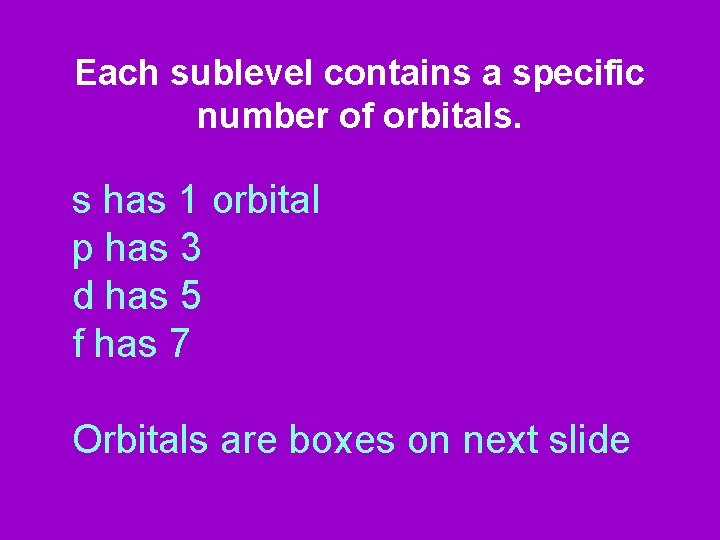
Each sublevel contains a specific number of orbitals. s has 1 orbital p has 3 d has 5 f has 7 Orbitals are boxes on next slide
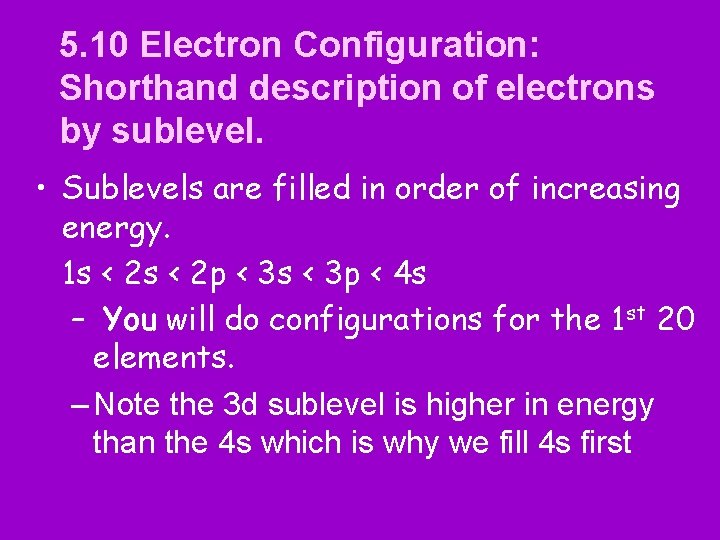
5. 10 Electron Configuration: Shorthand description of electrons by sublevel. • Sublevels are filled in order of increasing energy. 1 s < 2 p < 3 s < 3 p < 4 s – You will do configurations for the 1 st 20 elements. – Note the 3 d sublevel is higher in energy than the 4 s which is why we fill 4 s first
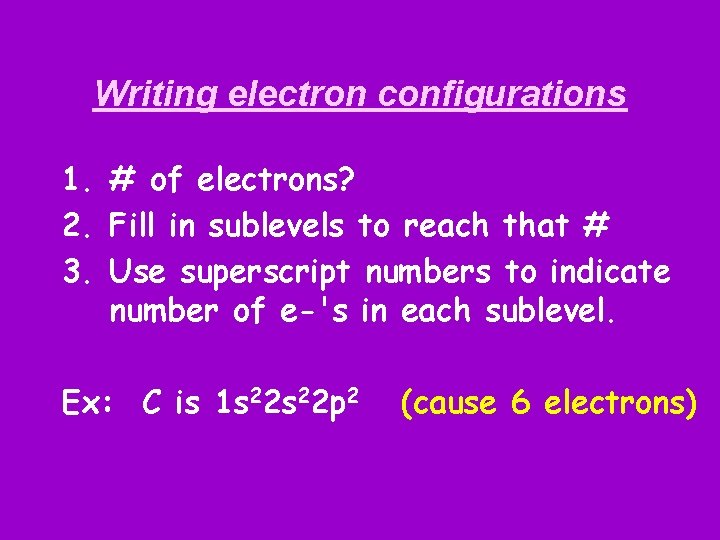
Writing electron configurations 1. # of electrons? 2. Fill in sublevels to reach that # 3. Use superscript numbers to indicate number of e-'s in each sublevel. Ex: C is 1 s 22 p 2 (cause 6 electrons)
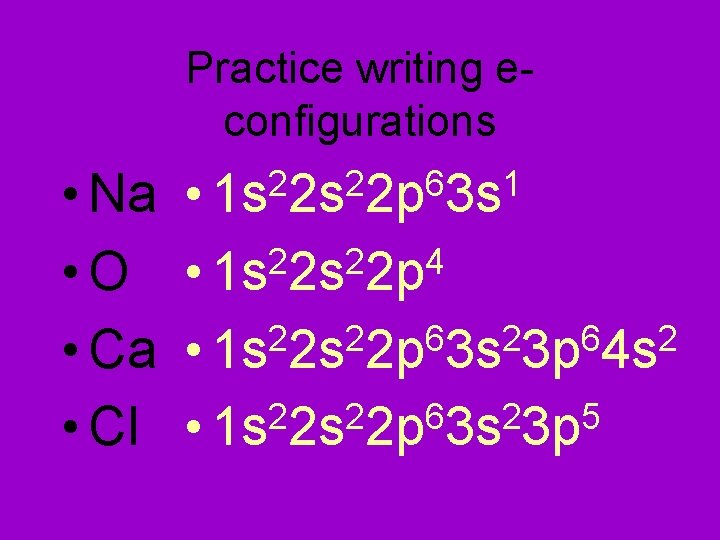
Practice writing econfigurations 2 2 6 1 • 1 s 2 s 2 p 3 s • Na 2 2 4 • O • 1 s 2 s 2 p 2 2 6 2 • Ca • 1 s 2 s 2 p 3 s 3 p 4 s 2 2 6 2 5 • Cl • 1 s 2 s 2 p 3 s 3 p
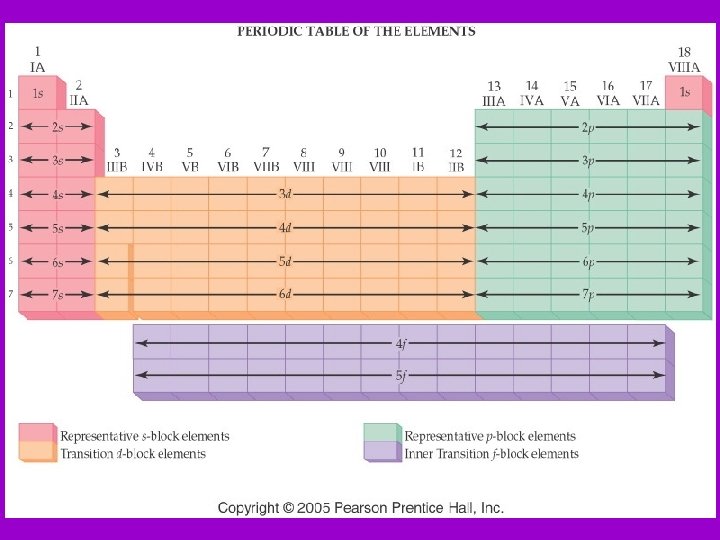
The Periodic Table actually is arranged by s, p, d, and f sublevels.
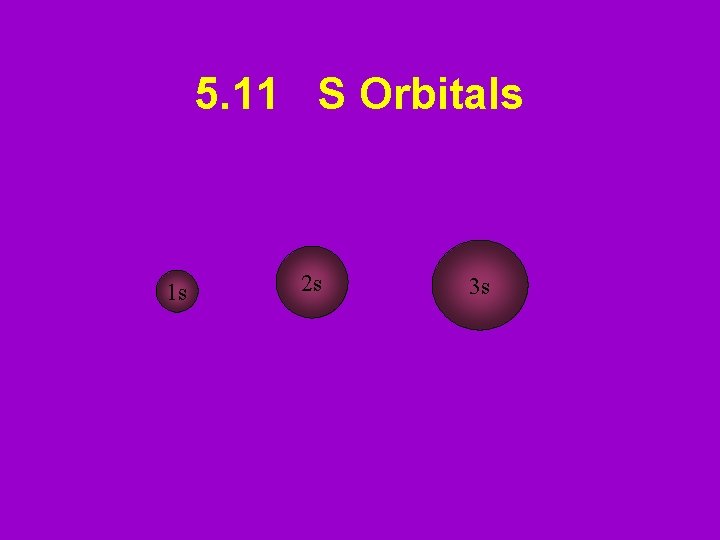
5. 11 S Orbitals 1 s 2 s 3 s
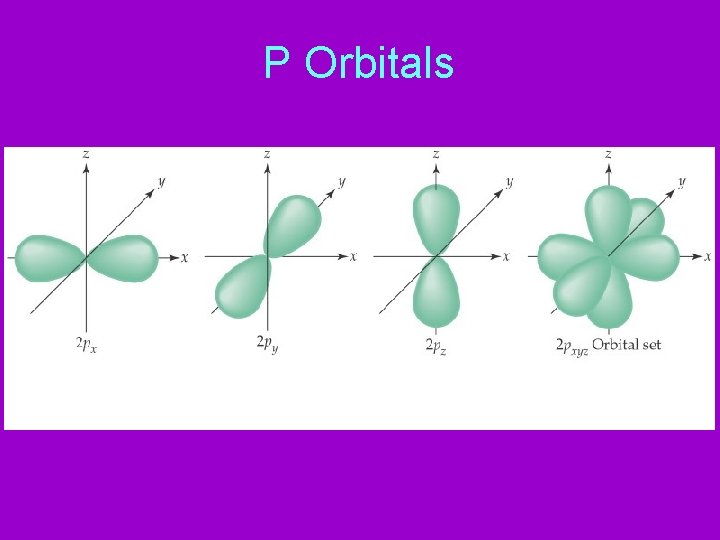
P Orbitals
Cool orbital pictures http: //winter. group. shef. ac. uk/orbitron/
Ch. 5 Self Test p. 140 • Try # 1 -4, 6 -7, 9, 12, 14 -15, 17 -18 • Answers in Appendix J • Try to answer first, then check your answer! • Also work the problems in the online NOTES and worksheets.