
Models of Social Class Updating Karl Marx Two
- Slides: 12
Models of Social Class
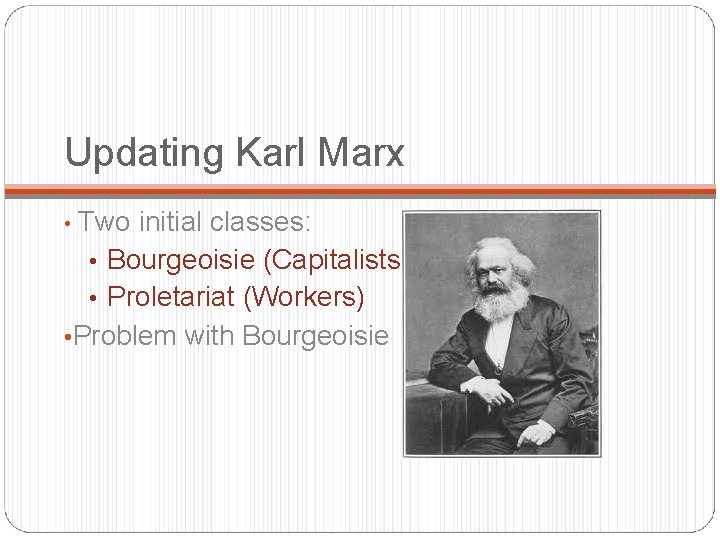
Updating Karl Marx Two initial classes: • Bourgeoisie (Capitalists) • Proletariat (Workers) • Problem with Bourgeoisie •
Marx Updated by Erik Wright • Capitalists: large business owners (i. e. Donald Trump) • Petty bourgeoisie: small business owners (i. e. Willie Robertson) • Managers: sell labor but exercise authority over others • Workers: sell labor
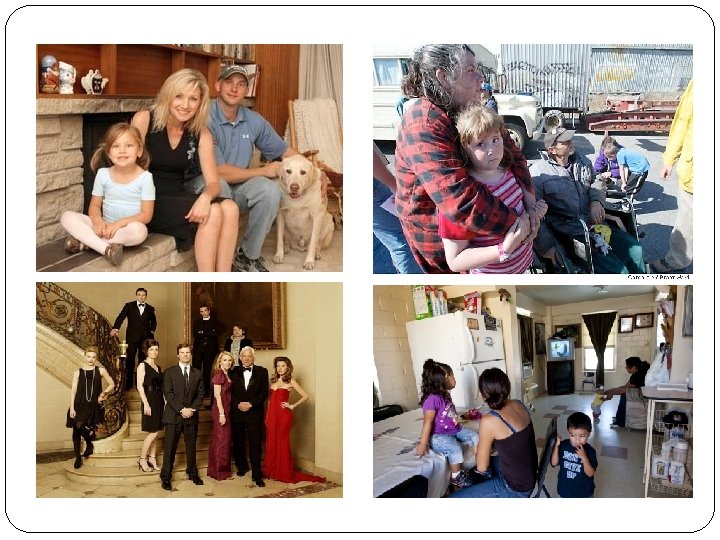
Six Tier system • Capitalists • Upper middle class • Lower middle class • Working poor • Underclass
Capitalist Class 1% of the population • Prestigious university • Investors and heirs • Income of 1 million+ annually • Highest property, power, and prestige • Vast influence on the nation • Old money vs. New money (Gatsby) http: //www. youtube. com/watch? v=y. ZTi. Rff 1 cq. Q •
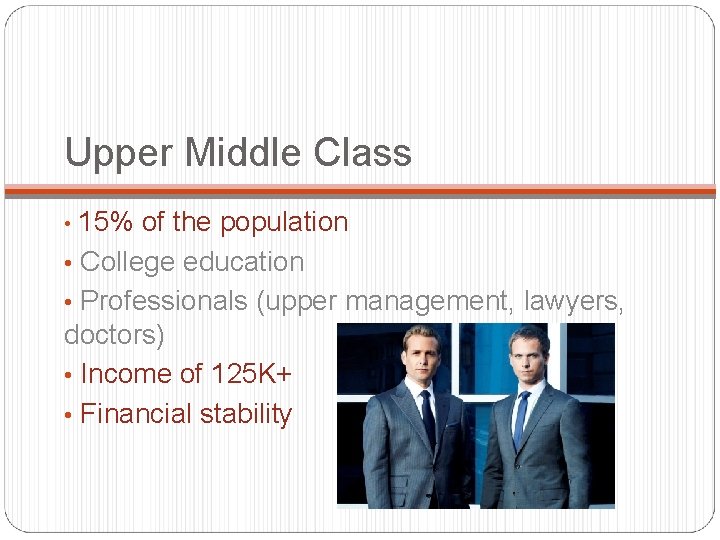
Upper Middle Class 15% of the population • College education • Professionals (upper management, lawyers, doctors) • Income of 125 K+ • Financial stability •
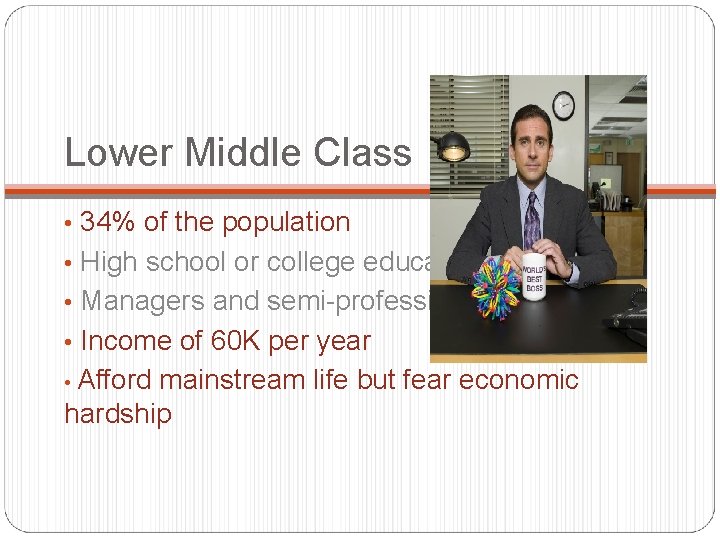
Lower Middle Class • 34% of the population • High school or college education • Managers and semi-professionals • Income of 60 K per year Afford mainstream life but fear economic hardship •
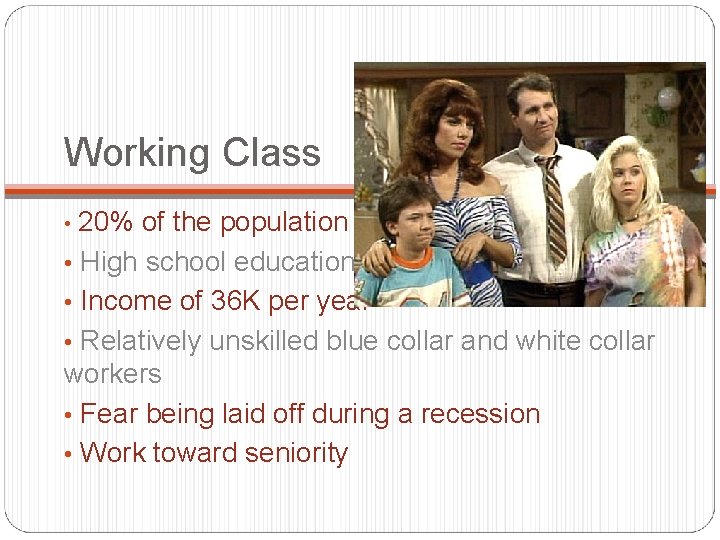
Working Class 20% of the population • High school education • Income of 36 K per year • Relatively unskilled blue collar and white collar workers • Fear being laid off during a recession • Work toward seniority •
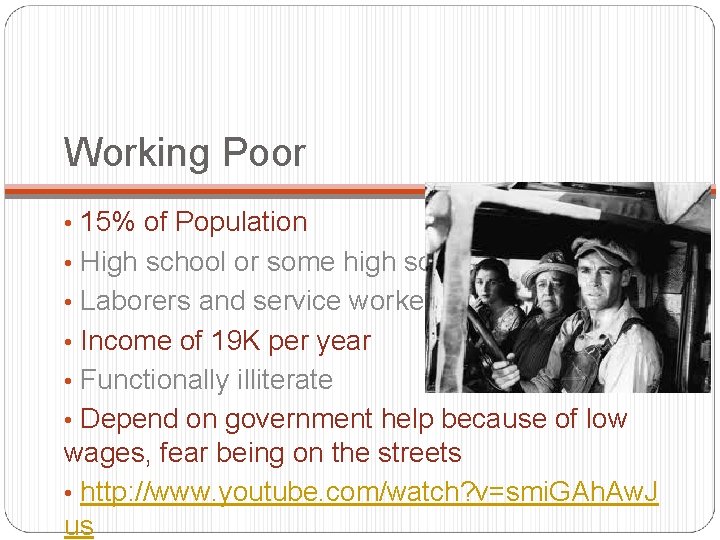
Working Poor • 15% of Population • High school or some high school • Laborers and service workers • Income of 19 K per year • Functionally illiterate • Depend on government help because of low wages, fear being on the streets • http: //www. youtube. com/watch? v=smi. GAh. Aw. J us
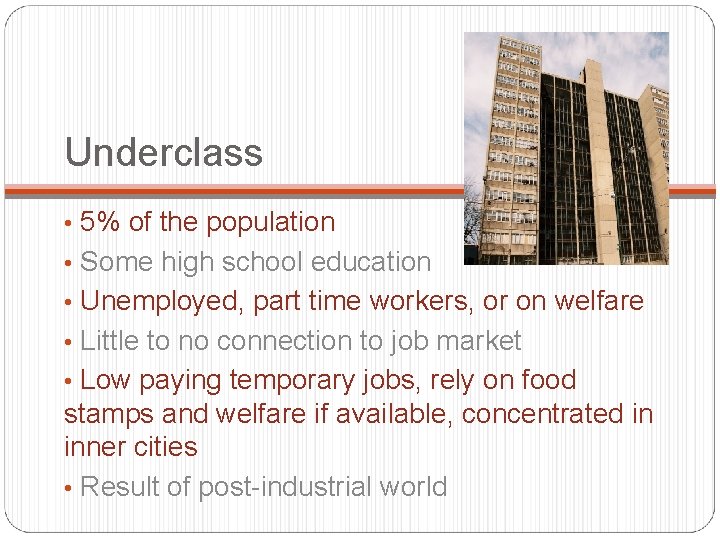
Underclass • 5% of the population • Some high school education • Unemployed, part time workers, or on welfare • Little to no connection to job market • Low paying temporary jobs, rely on food stamps and welfare if available, concentrated in inner cities • Result of post-industrial world
Review