
MODELS OF MATTER The history as we know
- Slides: 14
MODELS OF MATTER The history as we know it
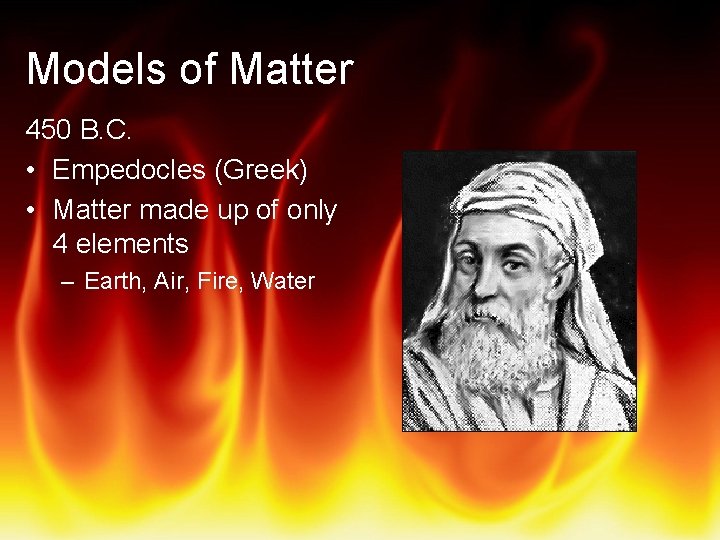
Models of Matter 450 B. C. • Empedocles (Greek) • Matter made up of only 4 elements – Earth, Air, Fire, Water
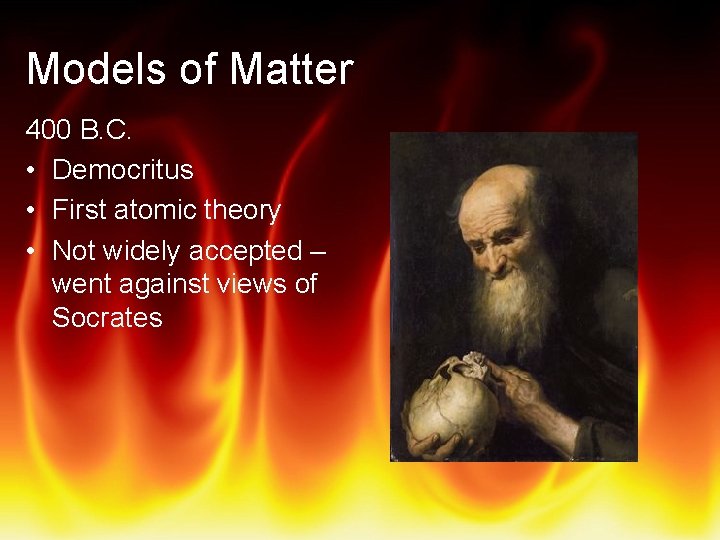
Models of Matter 400 B. C. • Democritus • First atomic theory • Not widely accepted – went against views of Socrates
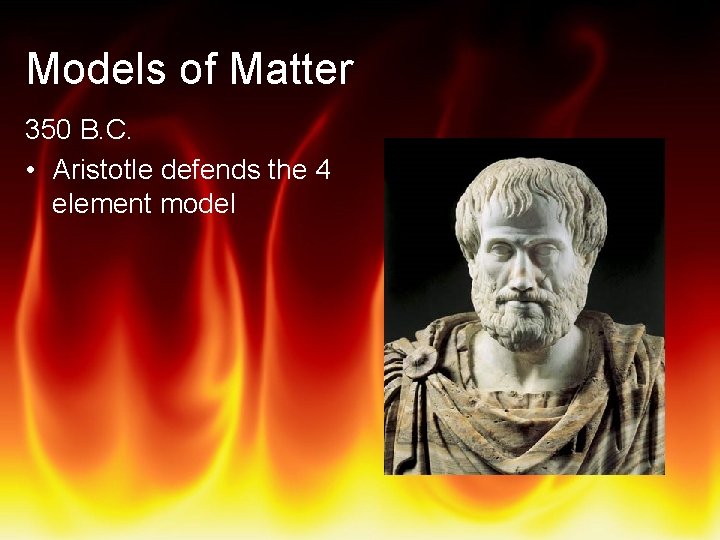
Models of Matter 350 B. C. • Aristotle defends the 4 element model
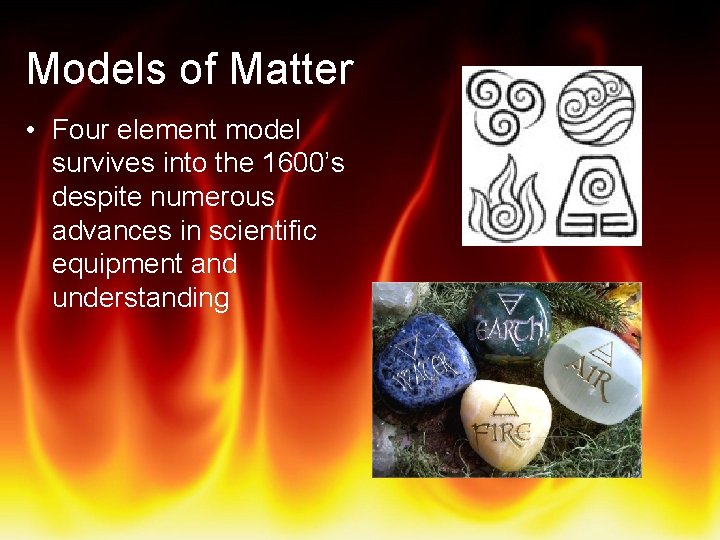
Models of Matter • Four element model survives into the 1600’s despite numerous advances in scientific equipment and understanding
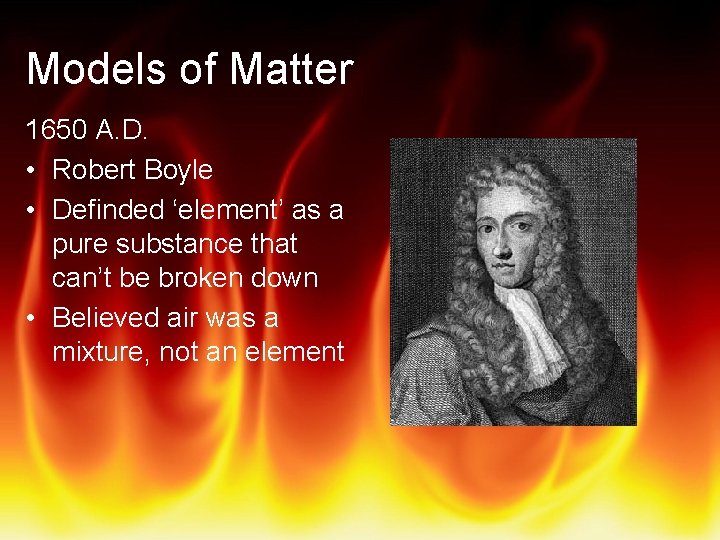
Models of Matter 1650 A. D. • Robert Boyle • Definded ‘element’ as a pure substance that can’t be broken down • Believed air was a mixture, not an element
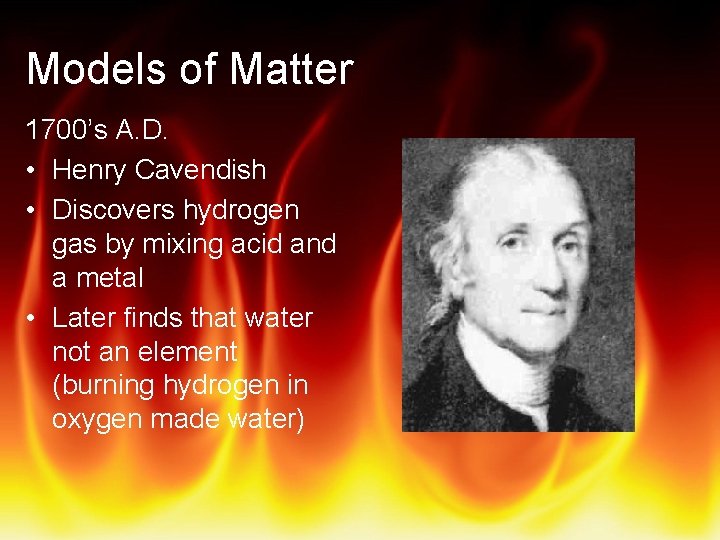
Models of Matter 1700’s A. D. • Henry Cavendish • Discovers hydrogen gas by mixing acid and a metal • Later finds that water not an element (burning hydrogen in oxygen made water)
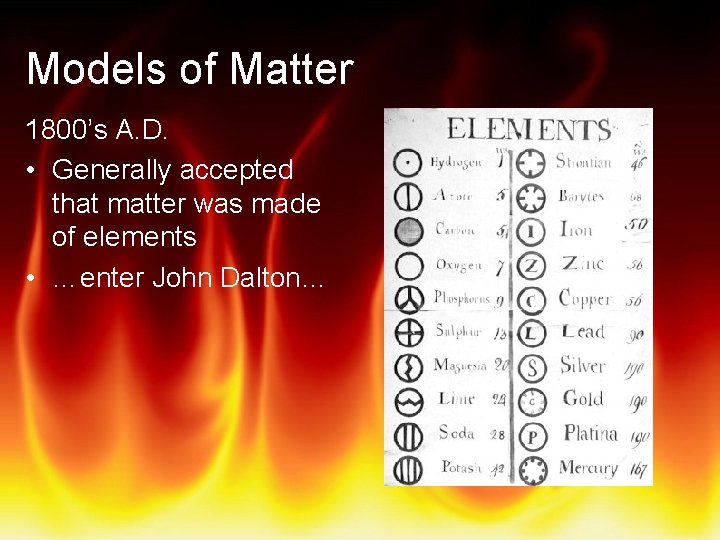
Models of Matter 1800’s A. D. • Generally accepted that matter was made of elements • …enter John Dalton…
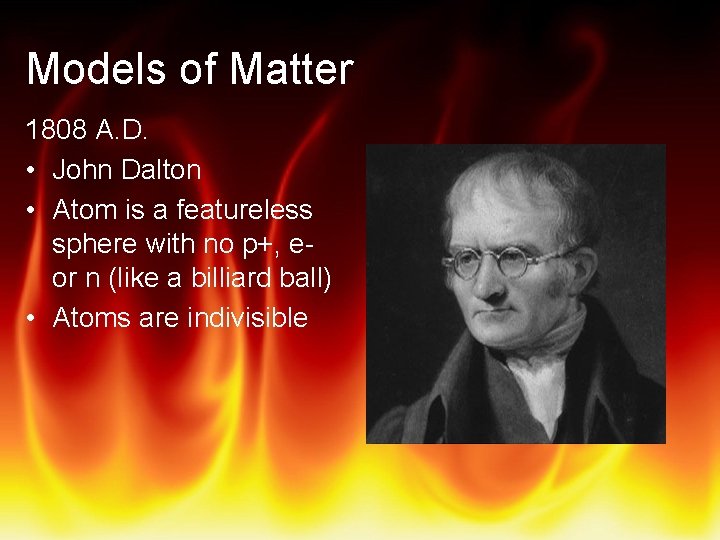
Models of Matter 1808 A. D. • John Dalton • Atom is a featureless sphere with no p+, eor n (like a billiard ball) • Atoms are indivisible
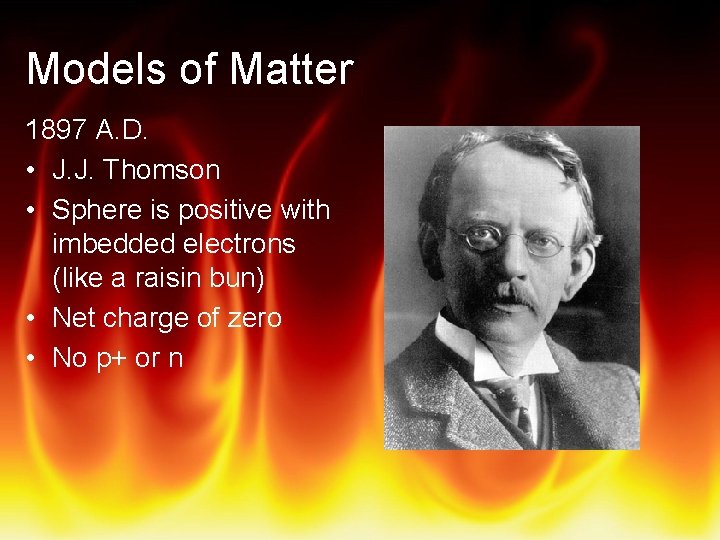
Models of Matter 1897 A. D. • J. J. Thomson • Sphere is positive with imbedded electrons (like a raisin bun) • Net charge of zero • No p+ or n
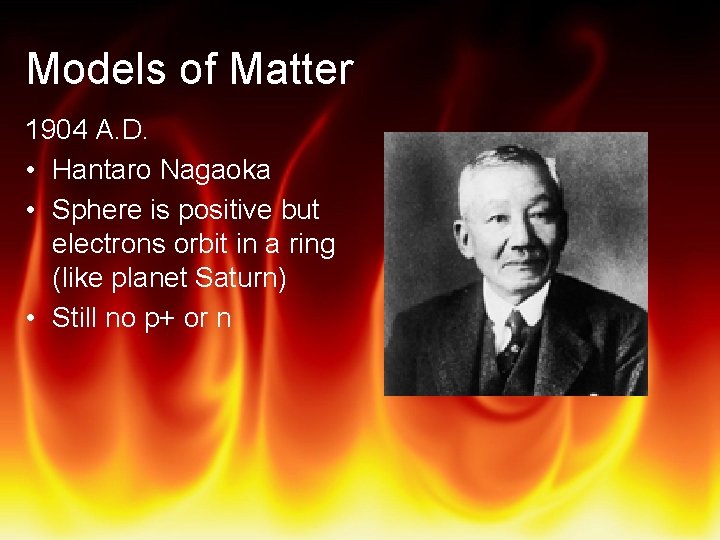
Models of Matter 1904 A. D. • Hantaro Nagaoka • Sphere is positive but electrons orbit in a ring (like planet Saturn) • Still no p+ or n
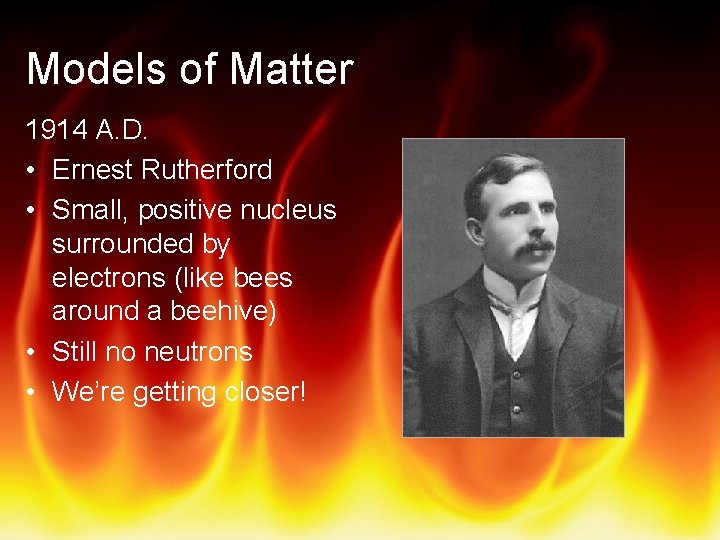
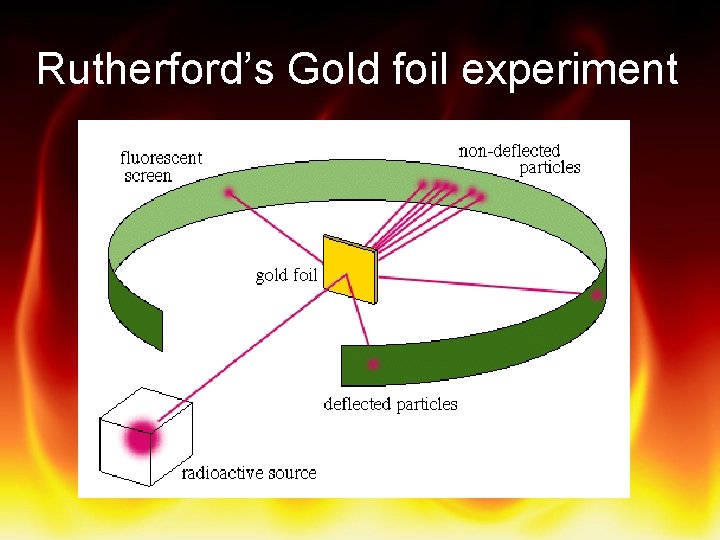
Models of Matter 1914 A. D. • Ernest Rutherford • Small, positive nucleus surrounded by electrons (like bees around a beehive) • Still no neutrons • We’re getting closer!
Rutherford’s Gold foil experiment
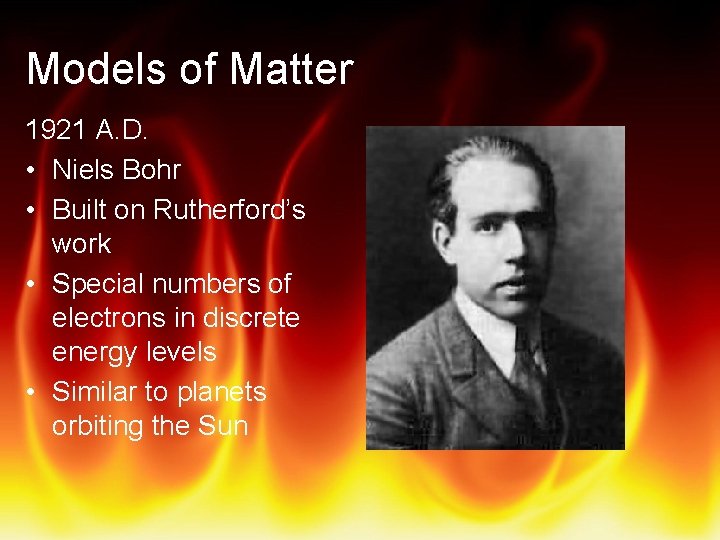
Models of Matter 1921 A. D. • Niels Bohr • Built on Rutherford’s work • Special numbers of electrons in discrete energy levels • Similar to planets orbiting the Sun