
Models of Health care organisation Barriers and solutions

Models of Health care organisation: Barriers and solutions to effective justification Denis D’Almada Remedios Clinical Radiologist, London North West Healthcare Trust, UK
Barriers and solutions Stakeholders • • • Referrers Radiologists Radiographers Regulators Patients and public Models • • UK USA Europe Canada Australia and New Zealand UAE South Korea Malaysia
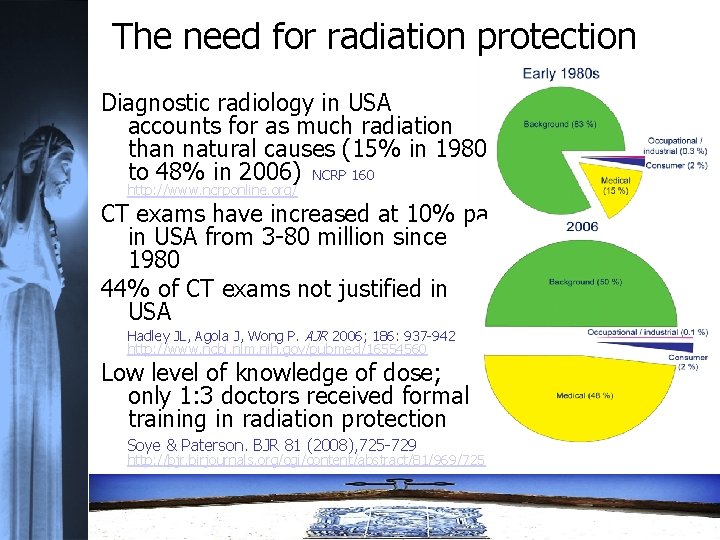
The need for radiation protection Diagnostic radiology in USA accounts for as much radiation than natural causes (15% in 1980 to 48% in 2006) NCRP 160 http: //www. ncrponline. org/ CT exams have increased at 10% pa in USA from 3 -80 million since 1980 44% of CT exams not justified in USA Hadley JL, Agola J, Wong P. AJR 2006; 186: 937 -942 http: //www. ncbi. nlm. nih. gov/pubmed/16554560 Low level of knowledge of dose; only 1: 3 doctors received formal training in radiation protection Soye & Paterson. BJR 81 (2008), 725 -729 http: //bjr. birjournals. org/cgi/content/abstract/81/969/725
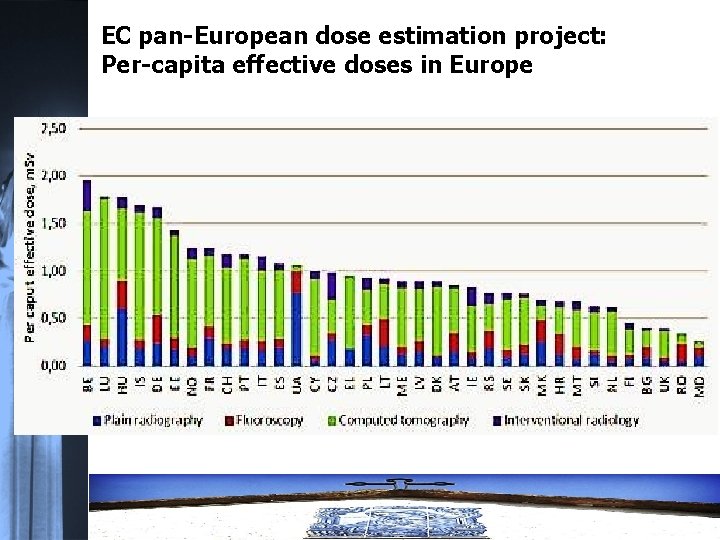
EC pan-European dose estimation project: Per-capita effective doses in Europe
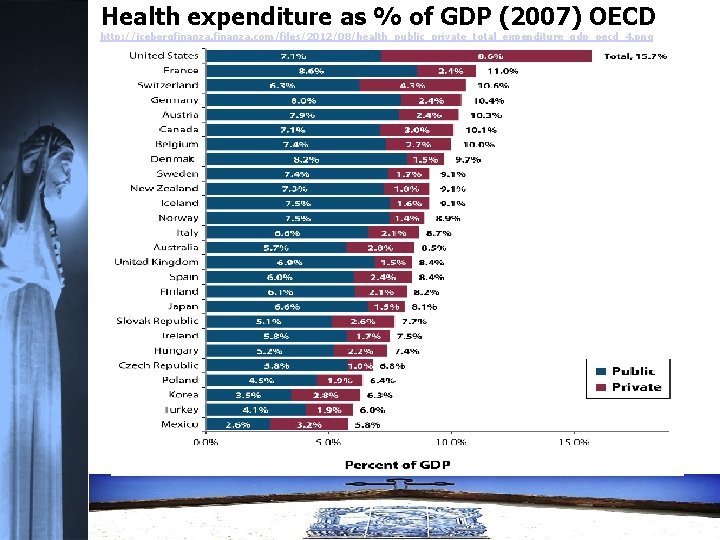
Health expenditure as % of GDP (2007) OECD http: //icebergfinanza. com/files/2012/08/health_public_private_total_expenditure_gdp_oecd_4. png
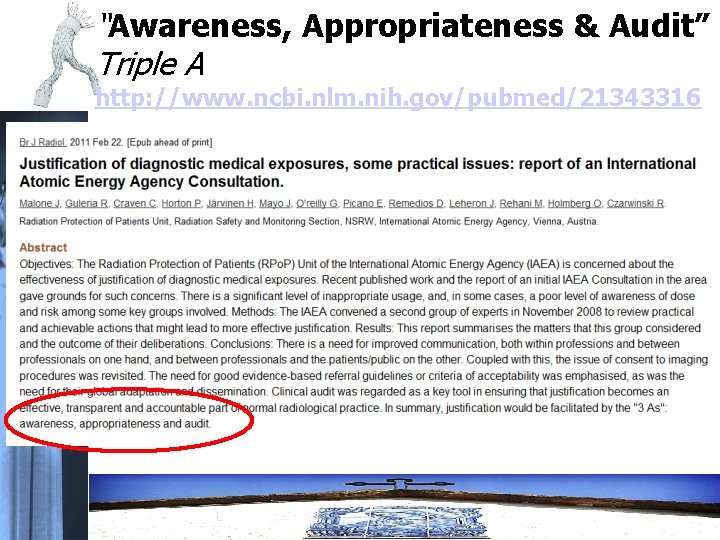
“Awareness, Appropriateness & Audit” Triple A http: //www. ncbi. nlm. nih. gov/pubmed/21343316
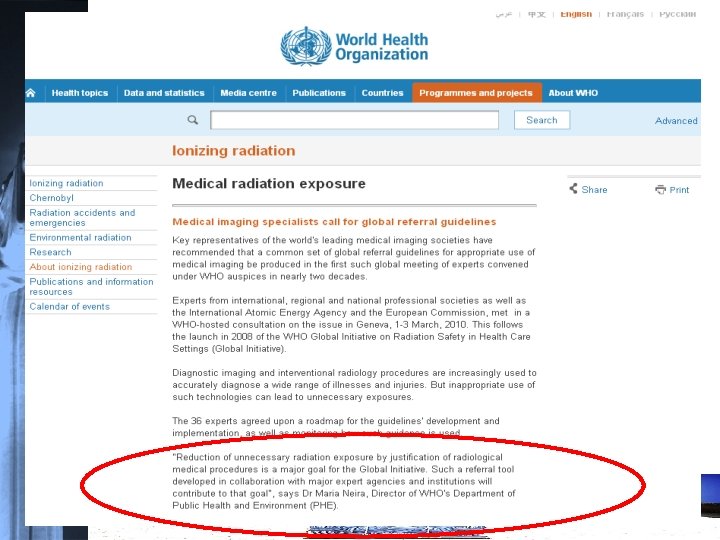
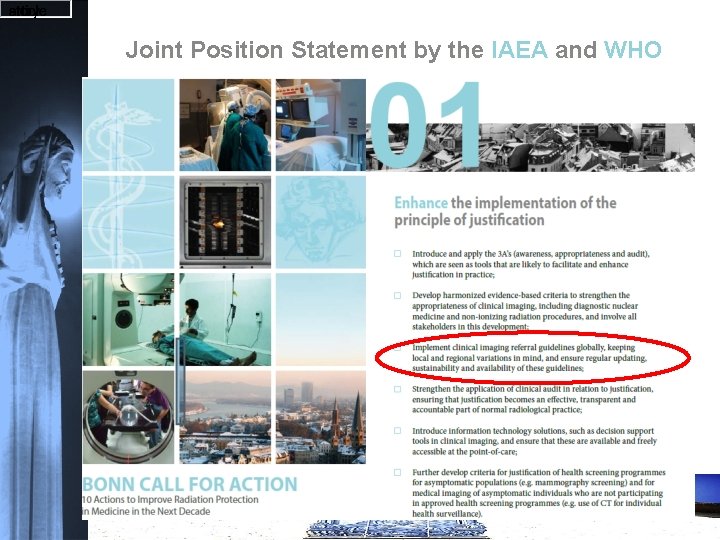
Joint Position Statement by the IAEA and WHO
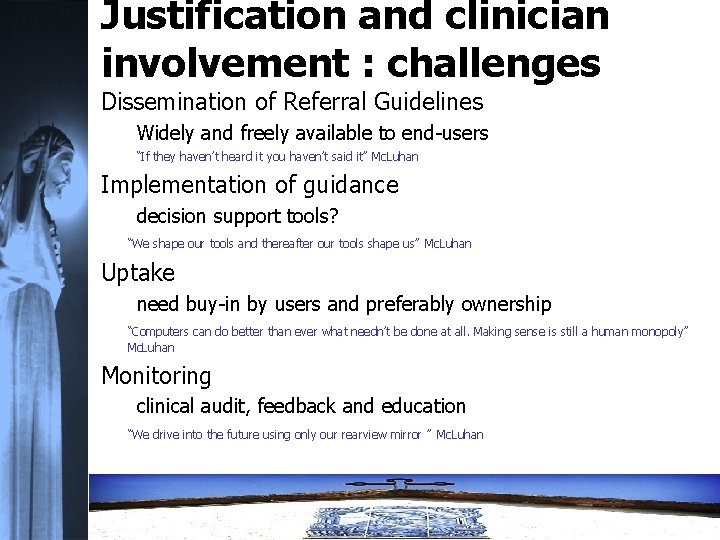
Justification and clinician involvement : challenges Dissemination of Referral Guidelines Widely and freely available to end-users “If they haven’t heard it you haven’t said it” Mc. Luhan Implementation of guidance decision support tools? “We shape our tools and thereafter our tools shape us” Mc. Luhan Uptake need buy-in by users and preferably ownership “Computers can do better than ever what needn’t be done at all. Making sense is still a human monopoly” Mc. Luhan Monitoring clinical audit, feedback and education “We drive into the future using only our rearview mirror ” Mc. Luhan
Justification and clinician involvement: Issues Overloaded knowledge base Medical and technical advances Competition for inclusion in curricula/CPD Time challenged Fastest with shortest wait best? Mixed messages Different guidance from different sources? Patient expectations Historical or geographical bias Unreliable evidence base from the web

Justification and clinician involvement: possible solutions Education Referral Guidelines Monitor with clinical audit External control Undergraduate and Continuing Professional Development. Requests not orders from a trusted source, in line with clinical guidance, +/- clinical decision support Local internal audit (bottom up) External audit (top down) by payers legislation
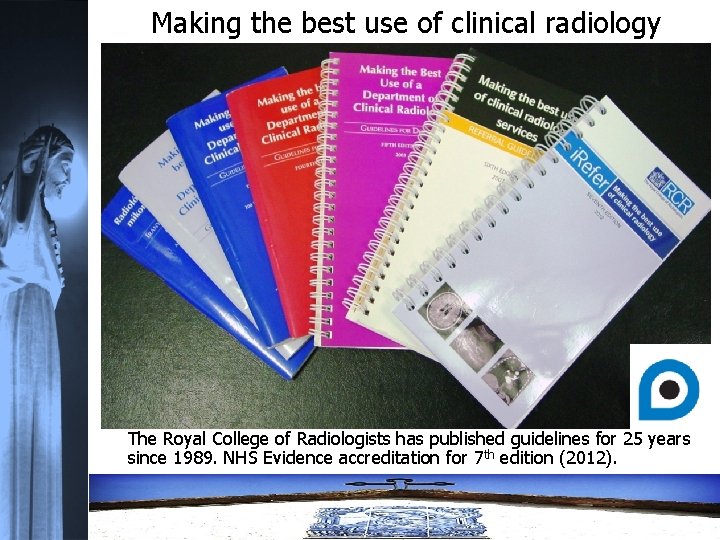
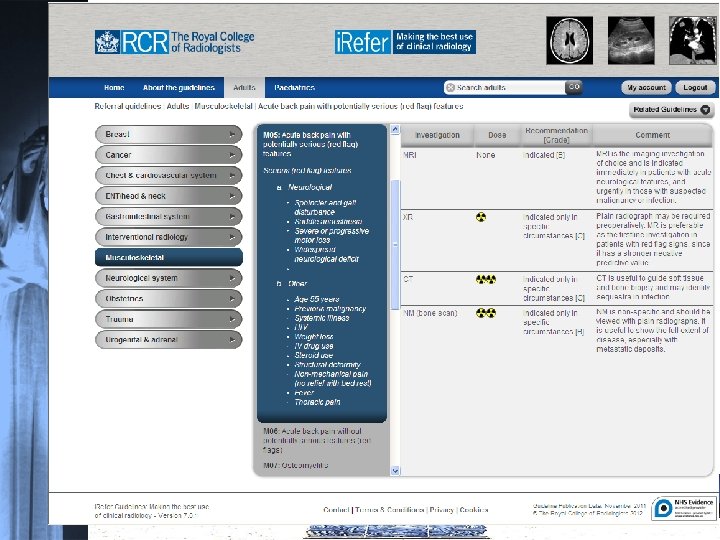
Making the best use of clinical radiology The Royal College of Radiologists has published guidelines for 25 years since 1989. NHS Evidence accreditation for 7 th edition (2012).
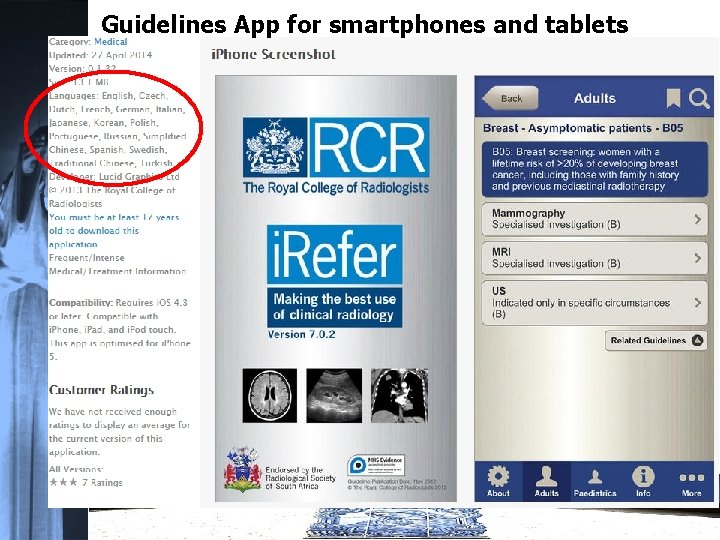
Guidelines App for smartphones and tablets
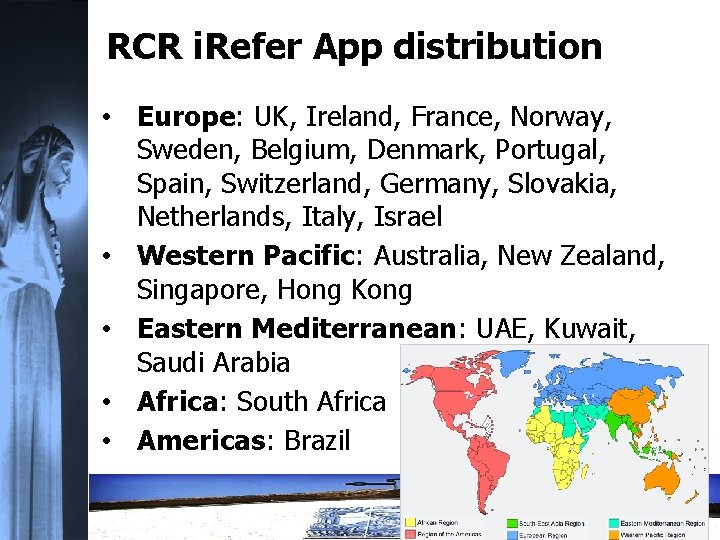
RCR i. Refer App distribution • Europe: UK, Ireland, France, Norway, Sweden, Belgium, Denmark, Portugal, Spain, Switzerland, Germany, Slovakia, Netherlands, Italy, Israel • Western Pacific: Australia, New Zealand, Singapore, Hong Kong • Eastern Mediterranean: UAE, Kuwait, Saudi Arabia • Africa: South Africa • Americas: Brazil

UK: Appropriate imaging through vetting (authorisation) The radiologist as gatekeeper http: //www. ncbi. nlm. nih. gov/pubmed/25037149 >90% Appropriateness through radiologists’ amendment of 12% CT requests and 9% MRI requests
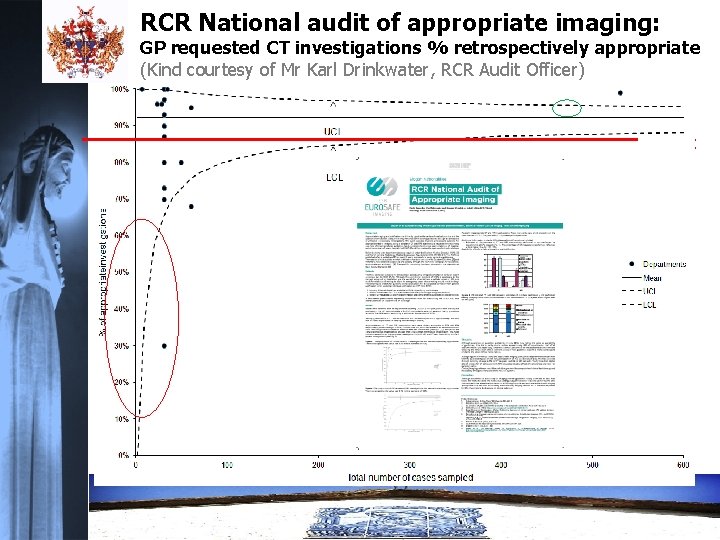
RCR National audit of appropriate imaging: GP requested CT investigations % retrospectively appropriate (Kind courtesy of Mr Karl Drinkwater, RCR Audit Officer) target
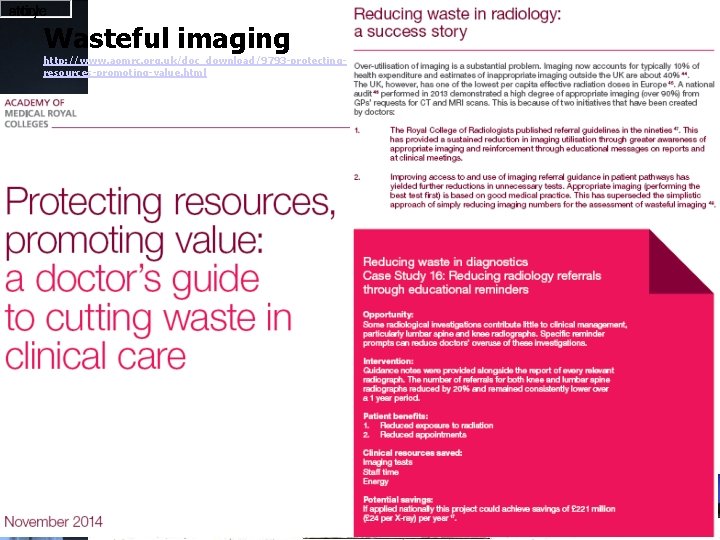
Wasteful imaging http: //www. aomrc. org. uk/doc_download/9793 -protectingresources-promoting-value. html
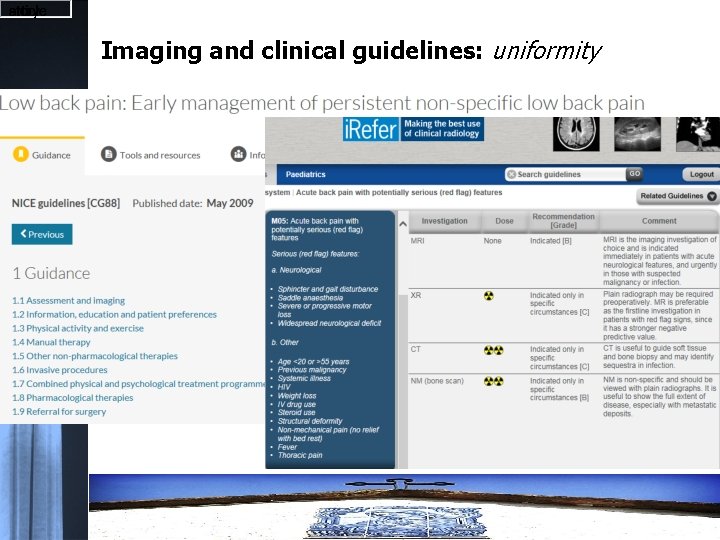
Imaging and clinical guidelines: uniformity
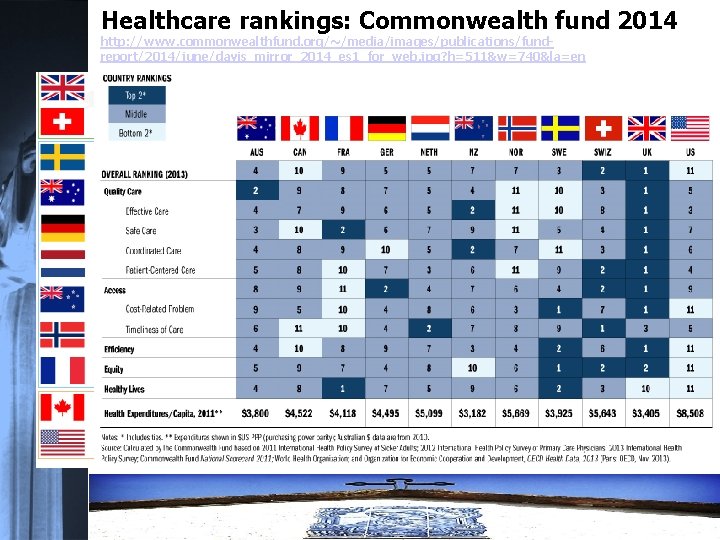
Healthcare rankings: Commonwealth fund 2014 http: //www. commonwealthfund. org/~/media/images/publications/fundreport/2014/june/davis_mirror_2014_es 1_for_web. jpg? h=511&w=740&la=en
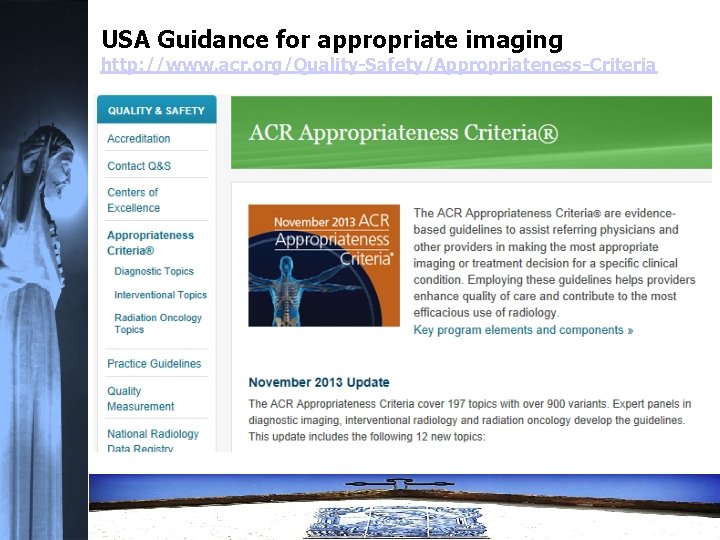
USA Guidance for appropriate imaging http: //www. acr. org/Quality-Safety/Appropriateness-Criteria
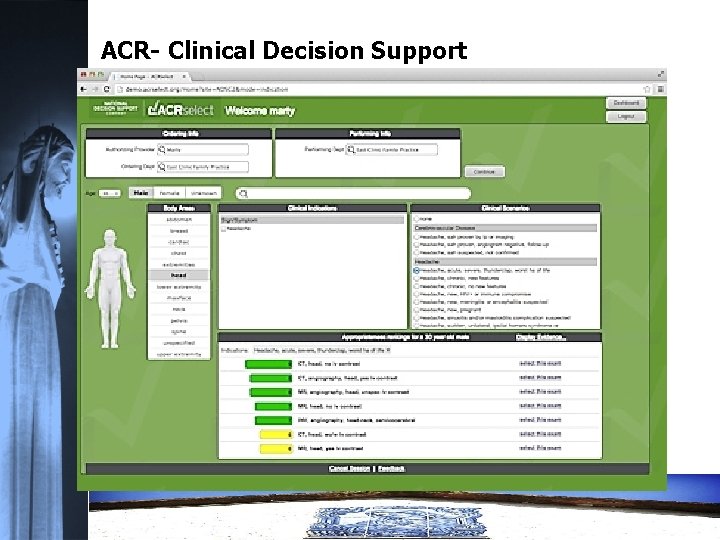
ACR- Clinical Decision Support
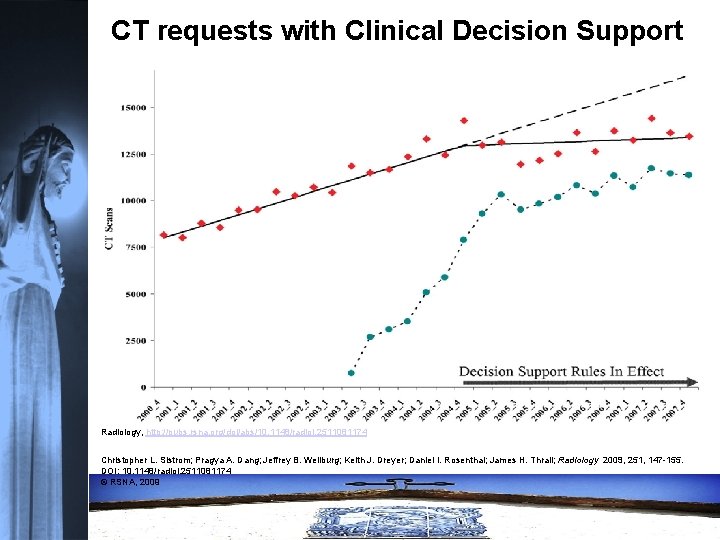
CT requests with Clinical Decision Support Radiology, http: //pubs. rsna. org/doi/abs/10. 1148/radiol. 2511081174 Christopher L. Sistrom; Pragya A. Dang; Jeffrey B. Weilburg; Keith J. Dreyer; Daniel I. Rosenthal; James H. Thrall; Radiology 2009, 251, 147 -155. DOI: 10. 1148/radiol. 2511081174 © RSNA, 2009
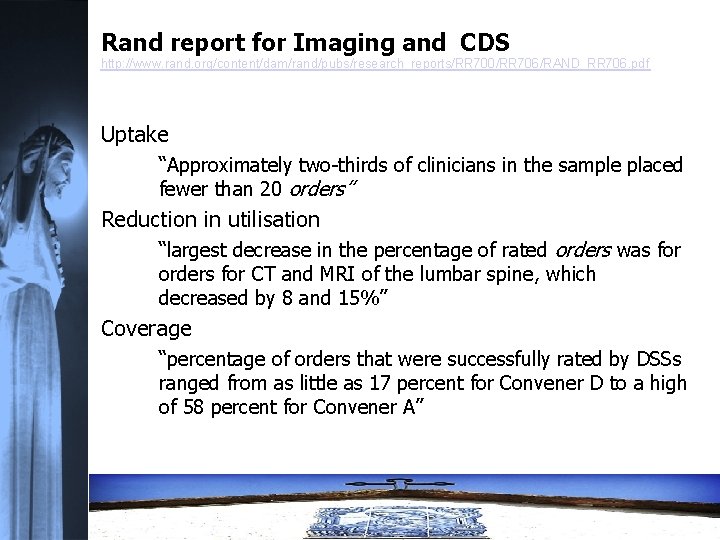
Rand report for Imaging and CDS http: //www. rand. org/content/dam/rand/pubs/research_reports/RR 700/RR 706/RAND_RR 706. pdf Uptake “Approximately two-thirds of clinicians in the sample placed fewer than 20 orders” Reduction in utilisation “largest decrease in the percentage of rated orders was for orders for CT and MRI of the lumbar spine, which decreased by 8 and 15%” Coverage “percentage of orders that were successfully rated by DSSs ranged from as little as 17 percent for Convener D to a high of 58 percent for Convener A”
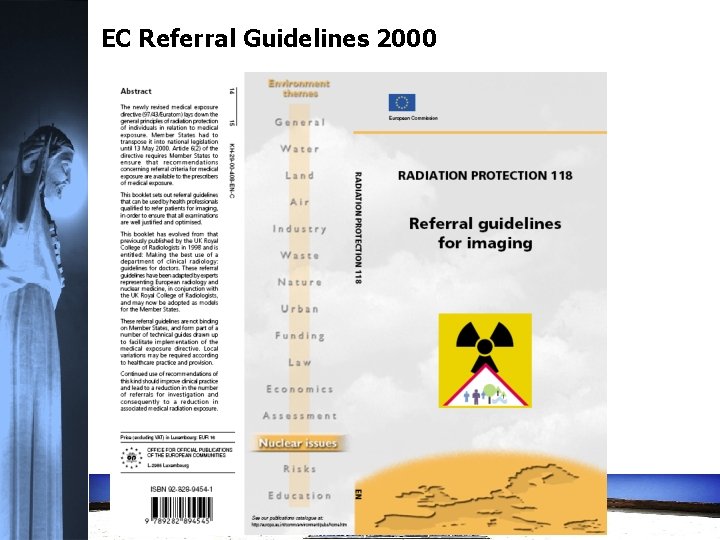
EC Referral Guidelines 2000
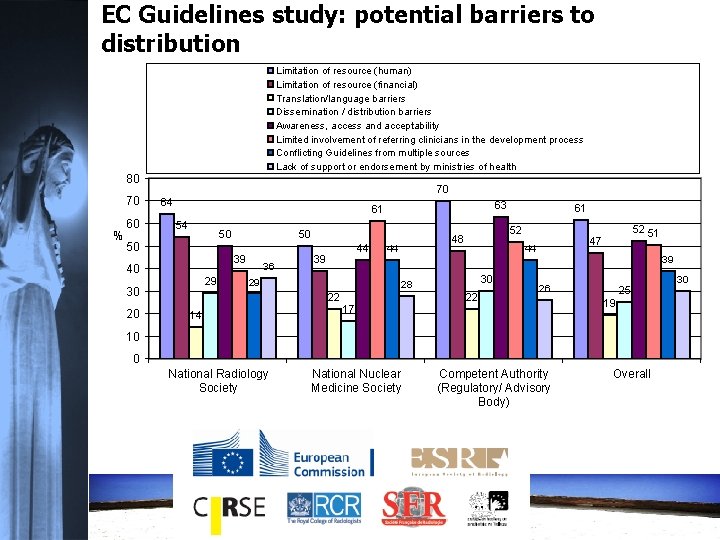
EC Guidelines study: potential barriers to distribution Limitation of resource (human) Limitation of resource (financial) Translation/language barriers Dissemination / distribution barriers Awareness, access and acceptability Limited involvement of referring clinicians in the development process Conflicting Guidelines from multiple sources Lack of support or endorsement by ministries of health 80 70 % 60 70 64 54 50 50 50 39 40 29 30 20 63 61 36 44 39 52 51 47 44 39 29 30 28 22 14 52 48 44 61 17 22 26 25 19 10 0 National Radiology Society National Nuclear Medicine Society Competent Authority (Regulatory/ Advisory Body) Overall 30
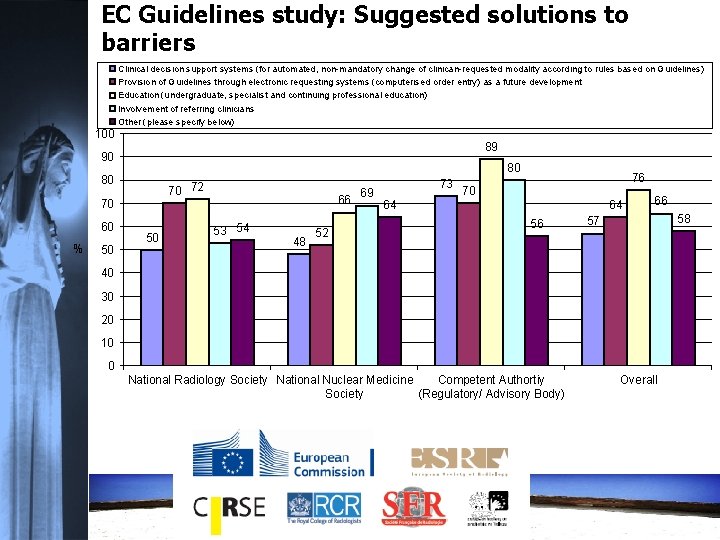
EC Guidelines study: Suggested solutions to barriers Clinical decision support systems (for automated, non-mandatory change of clinican-requested modality according to rules based on Guidelines) Provision of Guidelines through electronic requesting systems (computerised order entry) as a future development Education (undergraduate, specialist and continuing professional education) Involvement of referring clinicians Other (please specify below) 100 89 90 80 80 70 72 70 60 % 50 50 66 53 54 48 52 69 73 76 70 64 64 56 66 58 57 40 30 20 10 0 National Radiology Society National Nuclear Medicine Competent Authortiy Society (Regulatory/ Advisory Body) Overall
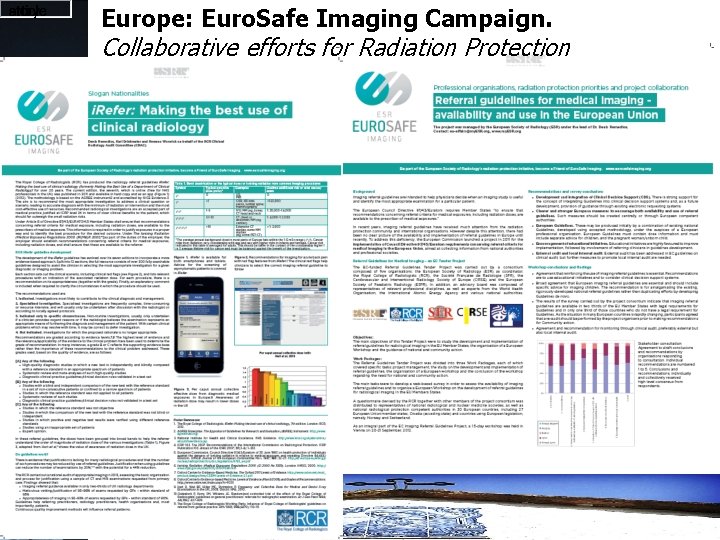
Europe: Euro. Safe Imaging Campaign. Collaborative efforts for Radiation Protection
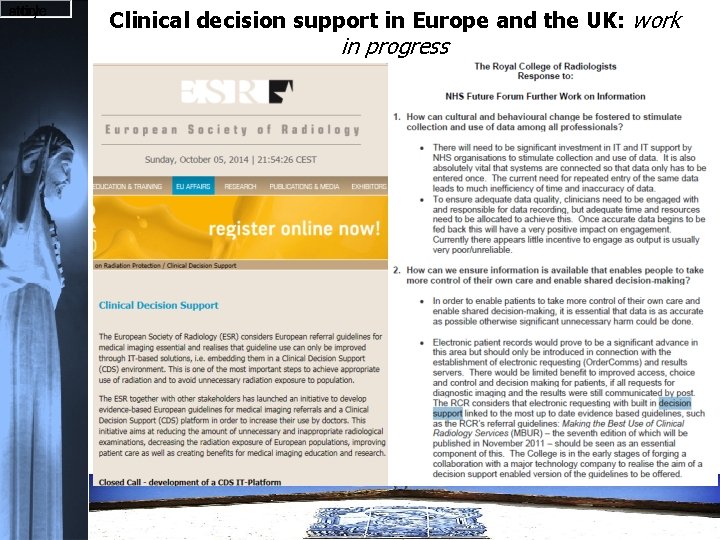
Clinical decision support in Europe and the UK: work in progress
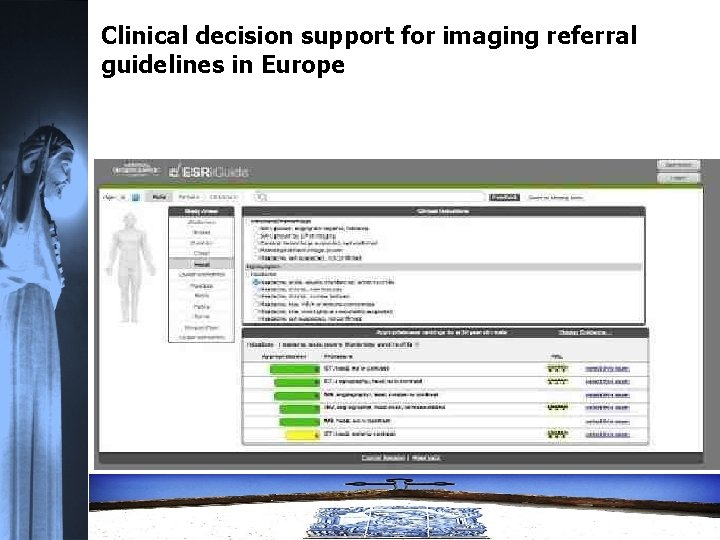
Clinical decision support for imaging referral guidelines in Europe

Australia & New Zealand: Inclusive approach to imaging guidelines and decision support

Justification Barriers (AUS) http: //www. nhmrc. gov. au/_files_nhmrc/file/nics/material_resour ces/Identifying%20 Barriers%20 to%20 Evidence%20 Uptake. pdf Process No system in place for justification No place in system for justification No requirement in department / hospital No delegation to radiographers / technologists No guidance Departmental conflict of interest Human Radiologist- Lack of time Inadequate knowledge Inadequate clinical information Outside specialty interest Conflict of interest Patient- undue pressure Referrer
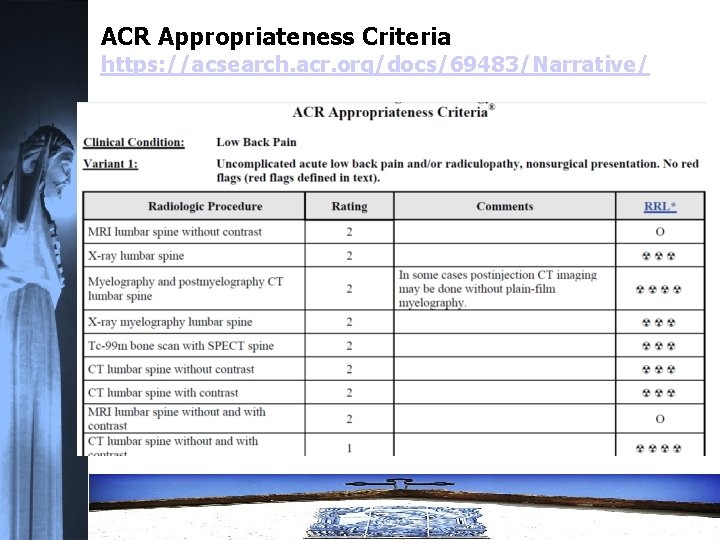
ACR Appropriateness Criteria https: //acsearch. acr. org/docs/69483/Narrative/

Western Australia HA: Diagnostic Imaging Pathways http: //www. imagingpathways. health. wa. gov. au/index. php/imaging-pathways/musculoskeletaltrauma/musculoskeletal/low-back-pain? tab=redflags#pathway
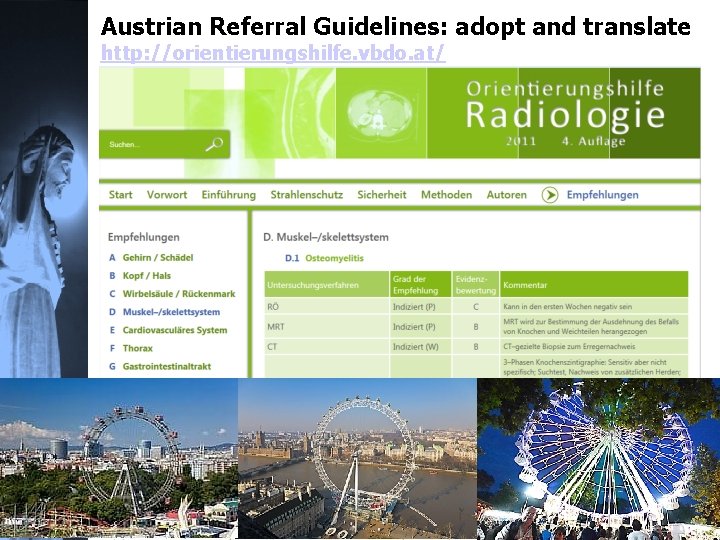
Austrian Referral Guidelines: adopt and translate http: //orientierungshilfe. vbdo. at/
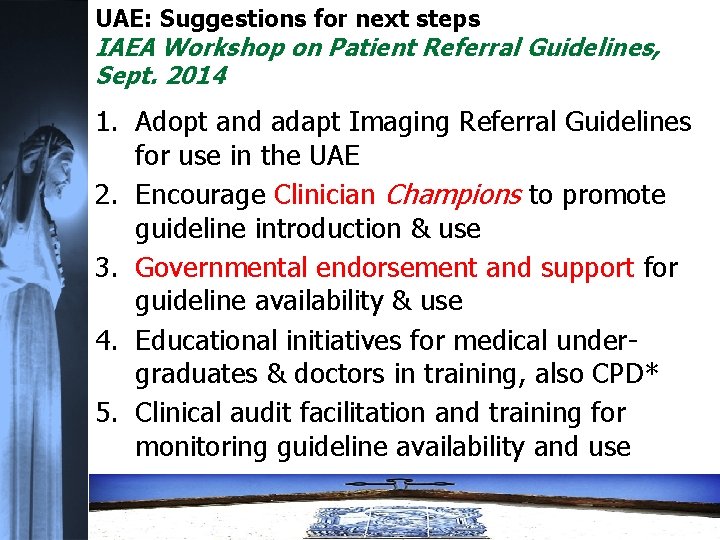
UAE: Suggestions for next steps IAEA Workshop on Patient Referral Guidelines, Sept. 2014 1. Adopt and adapt Imaging Referral Guidelines for use in the UAE 2. Encourage Clinician Champions to promote guideline introduction & use 3. Governmental endorsement and support for guideline availability & use 4. Educational initiatives for medical undergraduates & doctors in training, also CPD* 5. Clinical audit facilitation and training for monitoring guideline availability and use
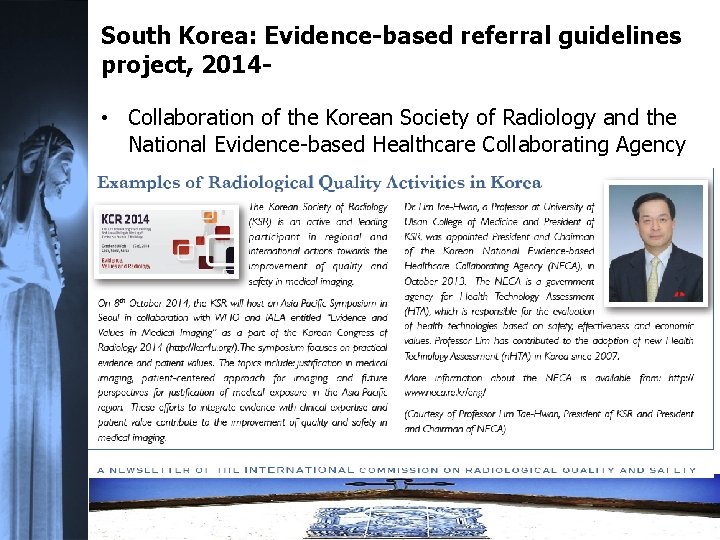
South Korea: Evidence-based referral guidelines project, 2014 • Collaboration of the Korean Society of Radiology and the National Evidence-based Healthcare Collaborating Agency

Malaysia: Referral Guidelines Workshop, 2015 • Collaboration of the College of Radiology Malaysia & the Ministry of Health • Decision to adopt and adapt referral guidelines

Evidence for referral guidelines Following RCR guidelines, overall referrals fell 13% BMJ. 1993 Jan 9; 306(6870): 110 -1 RCGP Randomised controlled trial showed fewer referrals and better conformance Oakeshott, Kerry, Williams. Br J Gen Pract. 1994 Sep; 44: 427 -8. Randomised trial with an educational reminder messages in reports is effective in reduction by up to 20% & does not affect quality of referrals. Eccles , Steen , Grimshaw , Thomas , Mc. Namee , Soutter, Wilsdon , Matowe , Needham , Gilbert. The Lancet, 2001; 357: 1406 – 1409. Over 12 consecutive months no evidence of the effect of the intervention wearing off Ramsay, Eccles, Grimshaw, Steen. Clin Radiol. 2003 Apr; 58(4): 319 -21 Emerging evidence to show 2 -20% improvement in conformance with clinical decision support tools.
Tips for guideline compliance Guidelines that are acceptable to all specialties will improve compliance and reduce unnecessary paediatric skull radiographs Johnson K, Williams SC, Balogun M, Dhillon MS. Clin Radiol. 2005 Aug; 60(8): 936. Psychological research shows that the more precisely behaviours are specified, the more they are likely to be carried out Specifying what, who, when, where, and how will assist implementation Susan Michie, Marie Johnston. BMJ 2004; 328: 343 -345
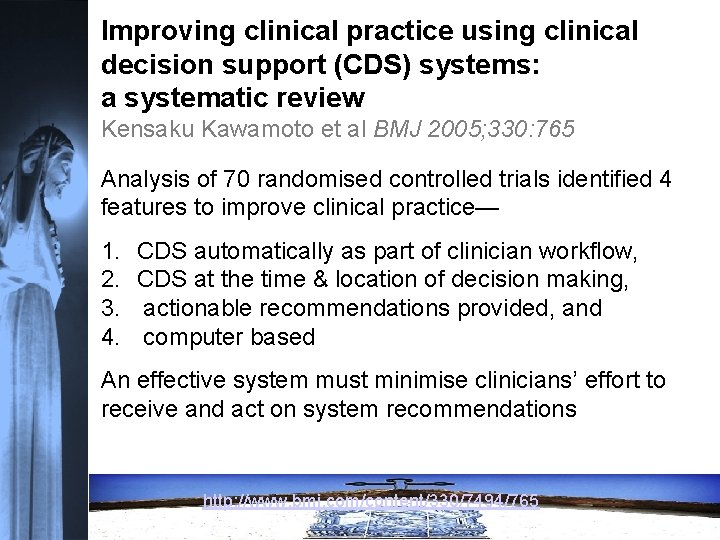
Improving clinical practice using clinical decision support (CDS) systems: a systematic review Kensaku Kawamoto et al BMJ 2005; 330: 765 Analysis of 70 randomised controlled trials identified 4 features to improve clinical practice— 1. 2. 3. 4. CDS automatically as part of clinician workflow, CDS at the time & location of decision making, actionable recommendations provided, and computer based An effective system must minimise clinicians’ effort to receive and act on system recommendations http: //www. bmj. com/content/330/7494/765

Monitoring of guideline use 1. Clinical Audit 2. Clinic-radiological meetings (MDT meetings) • • Future imaging choices in the individual case Imaging referral behaviour. 3. Educational messages in reports esp. to GPs 4. Sustained 20% reduction in referral possible “Lumbar imaging for low back pain without suggestion of serious underlying conditions does not improve clinical outcomes. http: //www. rcr. ac. uk: 2059/adult/#Tpc 151 http: //www. nice. org. uk/guidance/CG 88/chapter/1 -Guidance ” 5. Regulatory inspection 6. Licensing
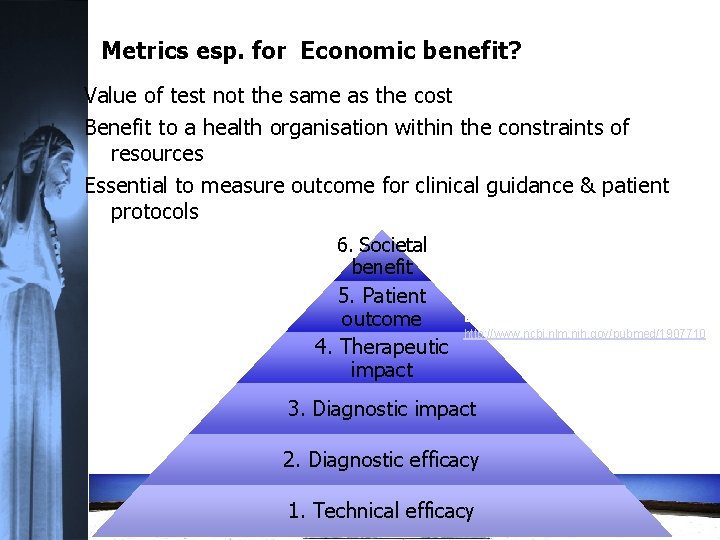
Metrics esp. for Economic benefit? Value of test not the same as the cost Benefit to a health organisation within the constraints of resources Essential to measure outcome for clinical guidance & patient protocols 6. Societal benefit 5. Patient outcome 4. Therapeutic impact The efficacy of diagnostic imaging Fryback and Thornbury Med Decis Making 1991; 11: 88 http: //www. ncbi. nlm. nih. gov/pubmed/1907710 3. Diagnostic impact 2. Diagnostic efficacy 1. Technical efficacy
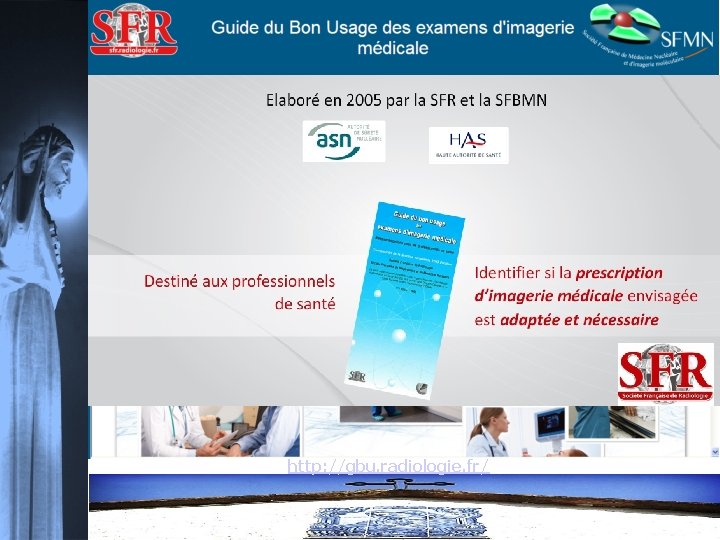
http: //gbu. radiologie. fr/
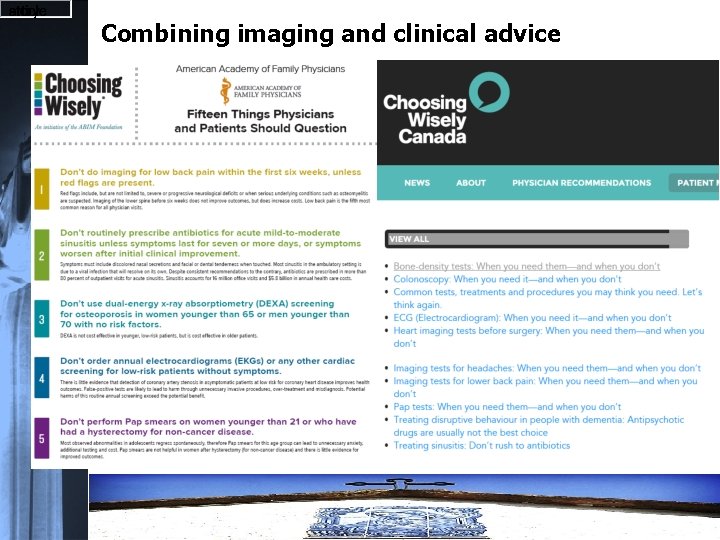
Combining imaging and clinical advice
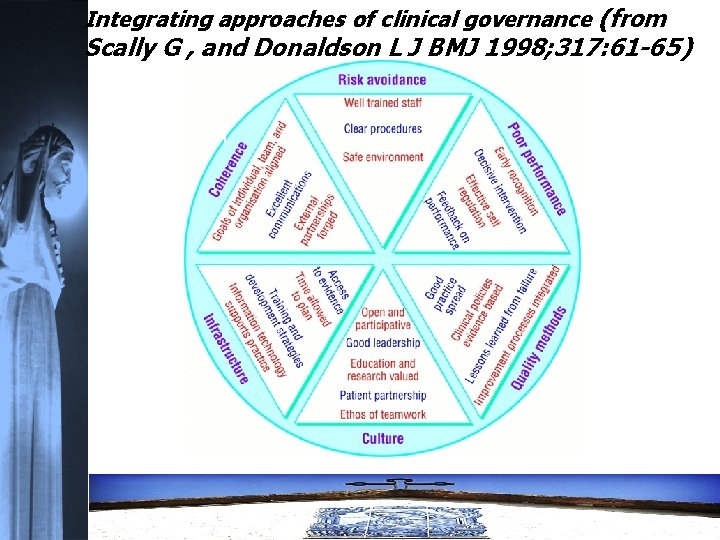
Integrating approaches of clinical governance (from Scally G , and Donaldson L J BMJ 1998; 317: 61 -65) Team working: Radiol-radiog Communication with referrers Regulation Awareness Appropriate Imaging Clinical audit Efficiency Education Evidence-based practice
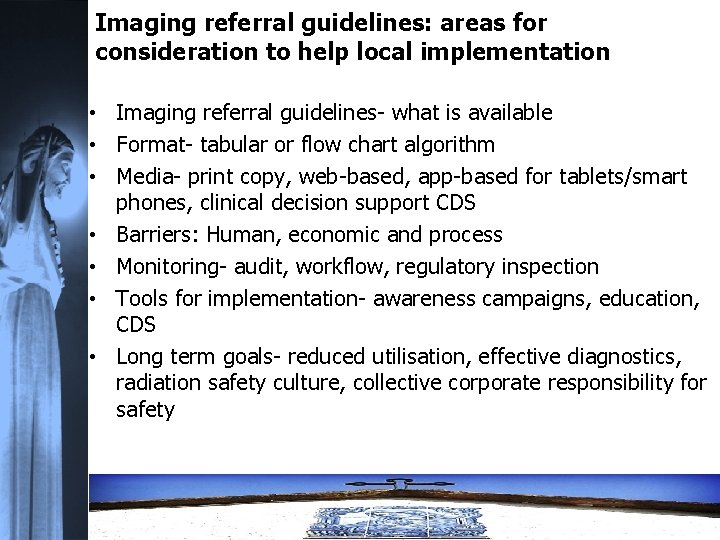
Imaging referral guidelines: areas for consideration to help local implementation • Imaging referral guidelines- what is available • Format- tabular or flow chart algorithm • Media- print copy, web-based, app-based for tablets/smart phones, clinical decision support CDS • Barriers: Human, economic and process • Monitoring- audit, workflow, regulatory inspection • Tools for implementation- awareness campaigns, education, CDS • Long term goals- reduced utilisation, effective diagnostics, radiation safety culture, collective corporate responsibility for safety
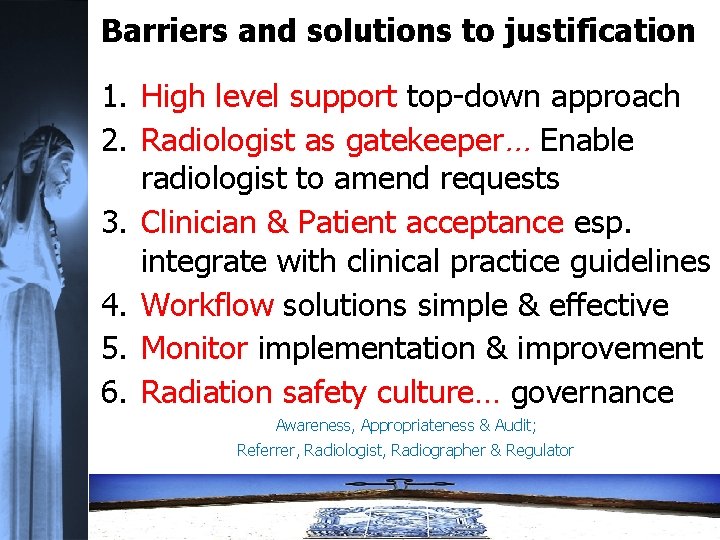
Barriers and solutions to justification 1. High level support top-down approach 2. Radiologist as gatekeeper… Enable radiologist to amend requests 3. Clinician & Patient acceptance esp. integrate with clinical practice guidelines 4. Workflow solutions simple & effective 5. Monitor implementation & improvement 6. Radiation safety culture… governance Awareness, Appropriateness & Audit; Referrer, Radiologist, Radiographer & Regulator
- Slides: 48