
MODELS OF CHANGE MANAGEMENT Prof Kroly Balaton Institute
MODELS OF CHANGE MANAGEMENT Prof. Károly Balaton Institute of Management The presentation is based on the book: Farkas Ferenc: A változásmenedzsment elmélete és gyakorlata (in Hungarian)
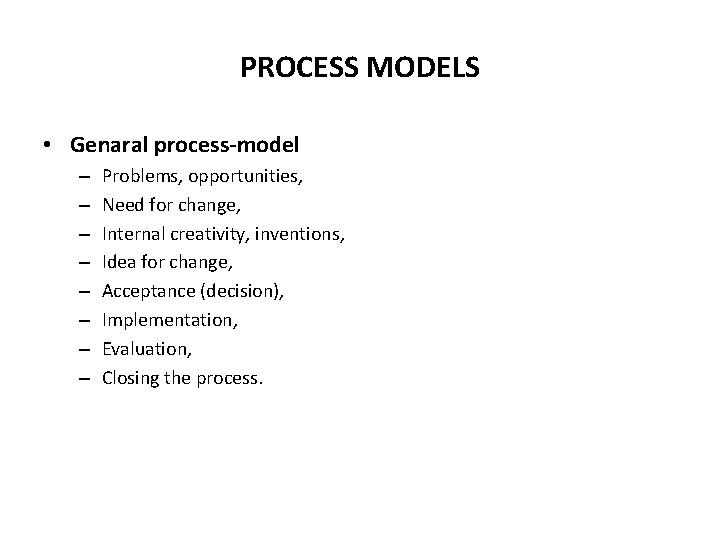
PROCESS MODELS • Genaral process-model – – – – Problems, opportunities, Need for change, Internal creativity, inventions, Idea for change, Acceptance (decision), Implementation, Evaluation, Closing the process.

KANTER’S „MAGIC THREE” MODEL Level of Reason for change Form Role (how? ) change (what? ) ---------------------------------------------------Macro-level Not too dinamic Concent. Changing the strachanges market growth ration on tegy of sales (What is major happening markets outside? ) Stagnating number of small outlets To cover the To change the routs most part of of sales representasmall outlets tives

KANTER’S „MAGIC THREE” MODEL - continued Level of Reason for change Form Role (how? ) change (what? ) ---------------------------------------------------------Unchanged customer Focus on small preferences outlets --------------------------------------------------Micro level Targets expected by the More focus on Változások company food shops (Mi történik Belülről? ) Tours of sales representatives Changing the are not acceptable tours High level of fluctuation within the group Impoving the commitment of of sales representatives Changing the tours of sales representatives Sales representatives visit new outlets in their field Changing the bonus system

KANTER’S „MAGIC THREE” MODEL - continued Level of Reason for change Form Role (how? ) change (what? ) ----------------------------------------------Motivation of sales representatives is They must be Incorporating made interested distribution difficult in the success Communication is not Improving the acceptable communication system standards into the bonus system More frequent meetings
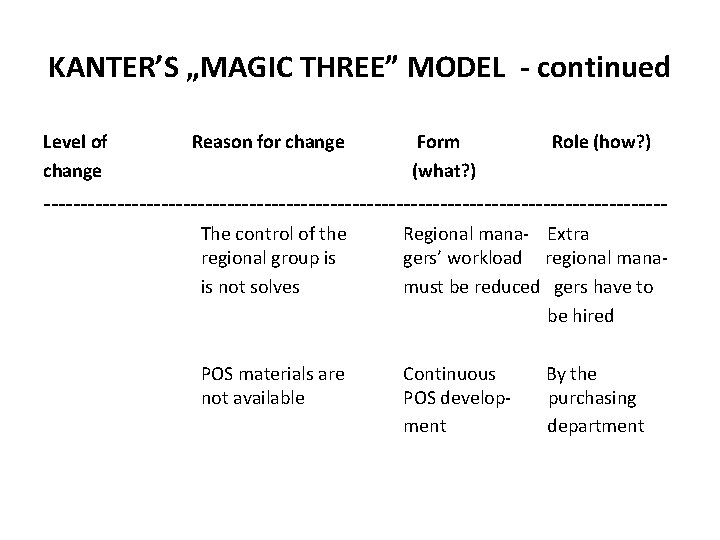
KANTER’S „MAGIC THREE” MODEL - continued Level of change Reason for change Form (what? ) Role (how? ) ------------------------------------------The control of the regional group is is not solves Regional mana- Extra gers’ workload regional manamust be reduced gers have to be hired POS materials are not available Continuous POS development By the purchasing department
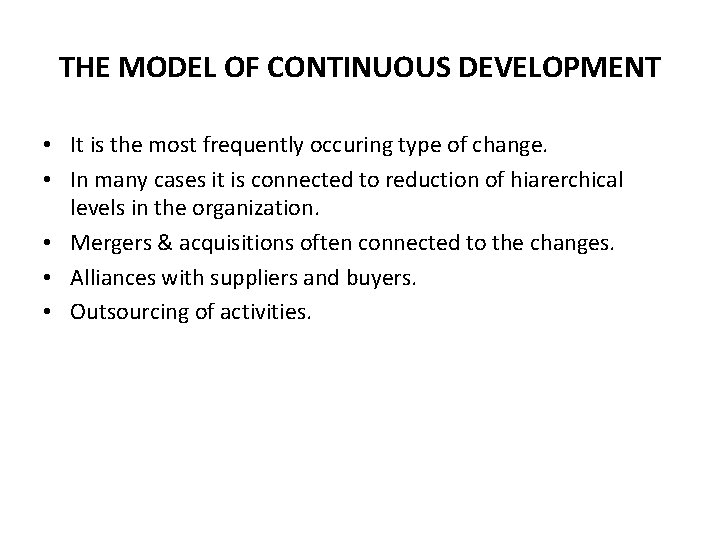
THE MODEL OF CONTINUOUS DEVELOPMENT • It is the most frequently occuring type of change. • In many cases it is connected to reduction of hiarerchical levels in the organization. • Mergers & acquisitions often connected to the changes. • Alliances with suppliers and buyers. • Outsourcing of activities.

THE GREINER-MODEL OF GROWTH MANAGEMENT Phases of growth Phases of crisis ------------------------------------------1. Creativity phase Crisis of management 2. Phase of changing direction Crisis of authonomy 3. Phase of delegation Crisis of controlling capabilities 4. Phase of coordination Bureaucratic crisis 5. Phase of cooperation Uncertainty crisis
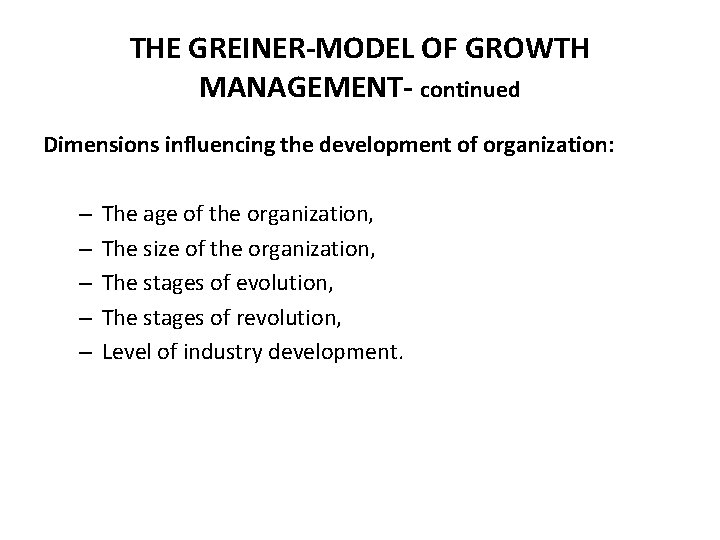
THE GREINER-MODEL OF GROWTH MANAGEMENT- continued Dimensions influencing the development of organization: – – – The age of the organization, The size of the organization, The stages of evolution, The stages of revolution, Level of industry development.
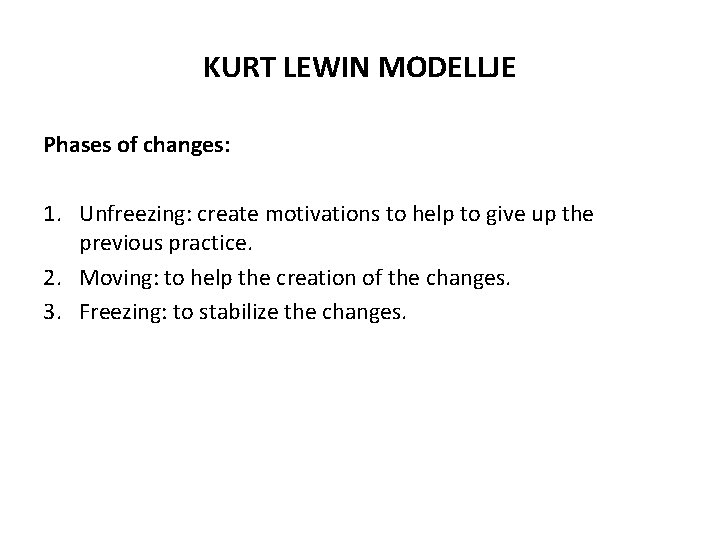
KURT LEWIN MODELLJE Phases of changes: 1. Unfreezing: create motivations to help to give up the previous practice. 2. Moving: to help the creation of the changes. 3. Freezing: to stabilize the changes.
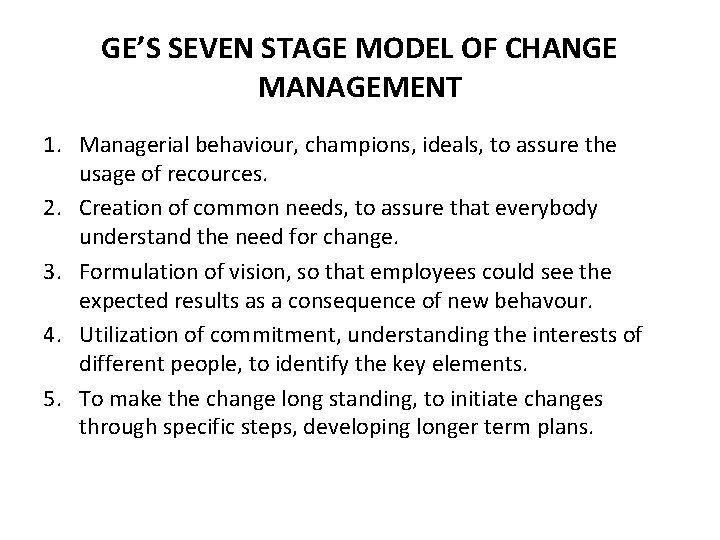
GE’S SEVEN STAGE MODEL OF CHANGE MANAGEMENT 1. Managerial behaviour, champions, ideals, to assure the usage of recources. 2. Creation of common needs, to assure that everybody understand the need for change. 3. Formulation of vision, so that employees could see the expected results as a consequence of new behavour. 4. Utilization of commitment, understanding the interests of different people, to identify the key elements. 5. To make the change long standing, to initiate changes through specific steps, developing longer term plans.
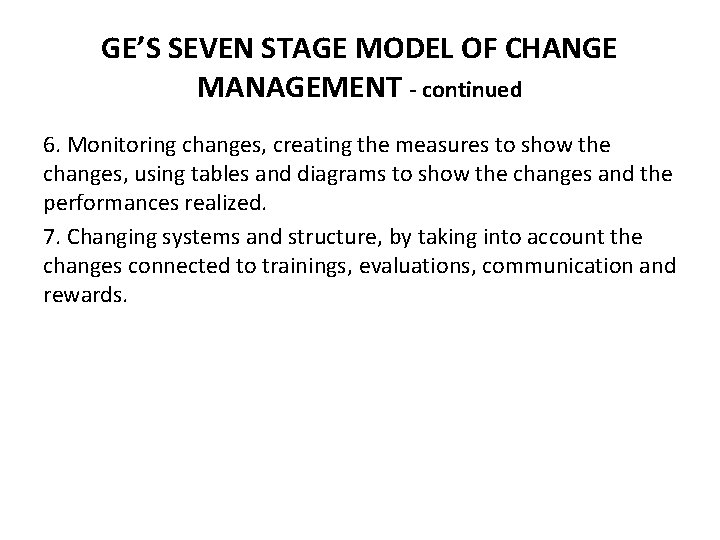
GE’S SEVEN STAGE MODEL OF CHANGE MANAGEMENT - continued 6. Monitoring changes, creating the measures to show the changes, using tables and diagrams to show the changes and the performances realized. 7. Changing systems and structure, by taking into account the changes connected to trainings, evaluations, communication and rewards.
WANT’S CYCLICAL CHANGE MODEL • First step: The phase of different opinions – Delayed change: The rules of the game are determined from outside. The organization can not start the change process beacause they do not have the necessary information. – Change in operation: Frequently occuring type of change. E. g. : continuous quality improvement, extending capacities. – Changing direction: The existing strategies do not lead to future success. Changes in competition are frequently behind of such situations.
WANT’S CYCLICAL CHANGE MODEL - continued • Second step: the phase of alienation – Basic change: it shows the changes in company prformance, e. g. quality of products. It is clarified whether the organization is capable of continuing its operation, or it has to be closed down. – Total change: it requires joint changes in strategy and organizational culture. The changes have to be initiated otherwise the organization will die.
KOTTER’S EIGHT STAGES MODEL OF CHANGE MANAGEMENT 1. To realize the unavoidable need for change. - analysis of market and competitive conditions, - identification of crises and potenctial crises. 2. To formulate the team for directing the change. - to form a team with relevant power position, - preparation of team members. 3. Formulation of vision and strategy. - formulation of vision helping the change process, - development of strategies to realize the vision. 4. Communication of the vision for change. - to help people to understand the vision and the strategy, - to achieve that the directing team’s behaviour will be an expected behavioural pattern.
KOTTER’S EIGHT STAGES MODEL OF CHANGE MANAGEMENT - continued 5. Empowerment of employees change activities - to remove obstacles of changes, - to change systems and structures blocking the vision, - to suport risk taking and new types of thoughts and activities. 6. To realize quick successes - planning relavant performance improvements, - to realize improvement plans, - rewarding people contributing to successes.
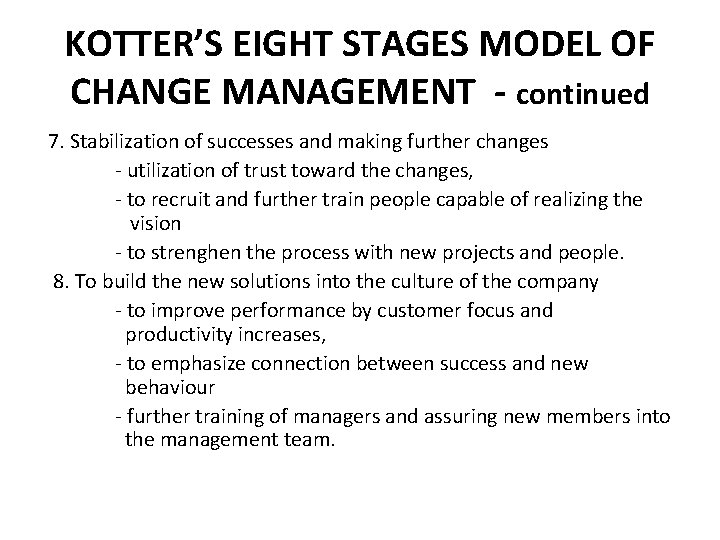
KOTTER’S EIGHT STAGES MODEL OF CHANGE MANAGEMENT - continued 7. Stabilization of successes and making further changes - utilization of trust toward the changes, - to recruit and further train people capable of realizing the vision - to strenghen the process with new projects and people. 8. To build the new solutions into the culture of the company - to improve performance by customer focus and productivity increases, - to emphasize connection between success and new behaviour - further training of managers and assuring new members into the management team.
- Slides: 17