
Modelling the impact of tidal currents on ocean
- Slides: 16
Modelling the impact of tidal currents on ocean circulation beneath Filchner-Ronne Ice Shelf Keith Makinson British Antarctic Survey, Natural Environment Research Council, Cambridge, U. K.
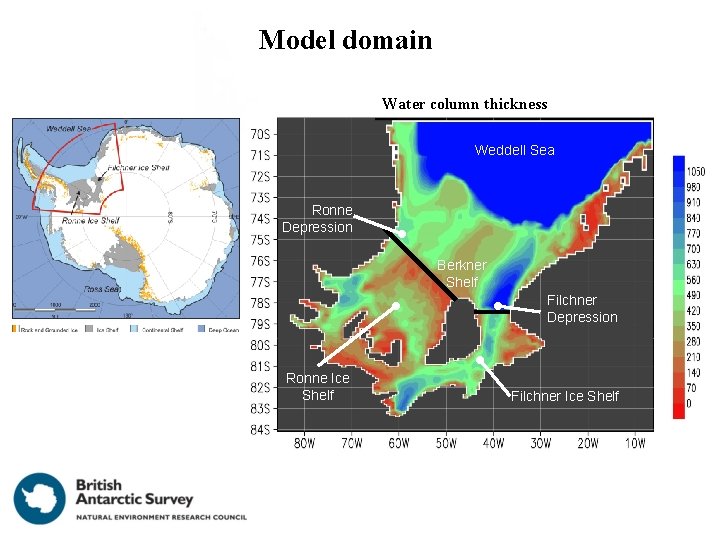
Model domain Water column thickness Weddell Sea Ronne Depression Berkner Shelf Filchner Depression Ronne Ice Shelf Filchner Ice Shelf
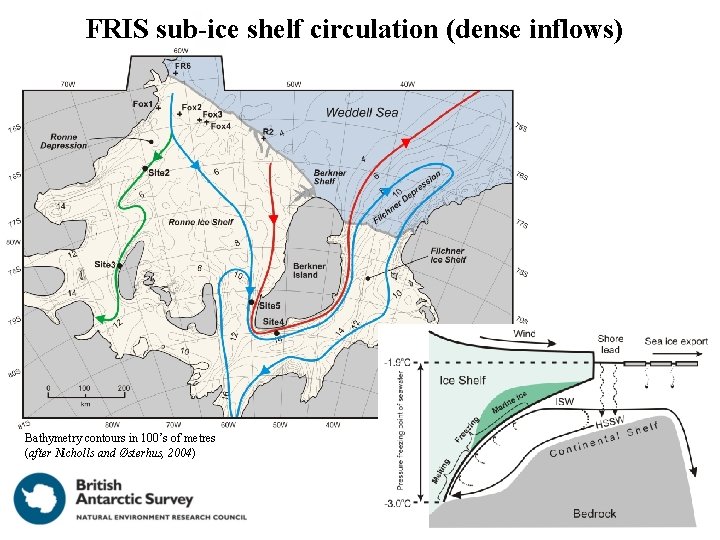
FRIS sub-ice shelf circulation (dense inflows) Bathymetry contours in 100’s of metres (after Nicholls and Østerhus, 2004)
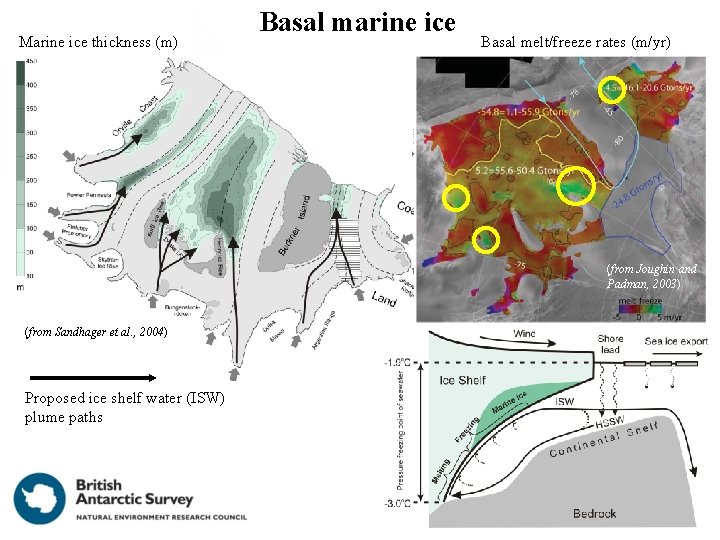
Marine ice thickness (m) Basal marine ice Basal melt/freeze rates (m/yr) (from Joughin and Padman, 2003) (from Sandhager et al. , 2004) Proposed ice shelf water (ISW) plume paths
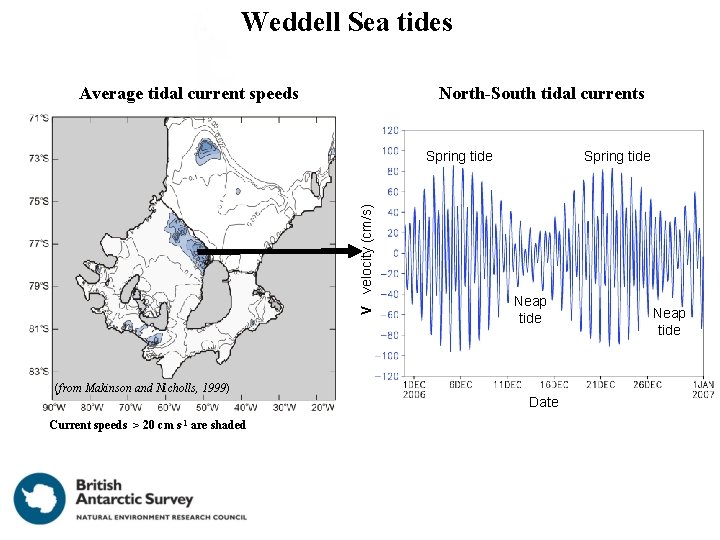
Weddell Sea tides Average tidal current speeds North-South tidal currents V velocity (cm/s) Spring tide Neap tide (from Makinson and Nicholls, 1999) Date Current speeds > 20 cm s-1 are shaded Neap tide
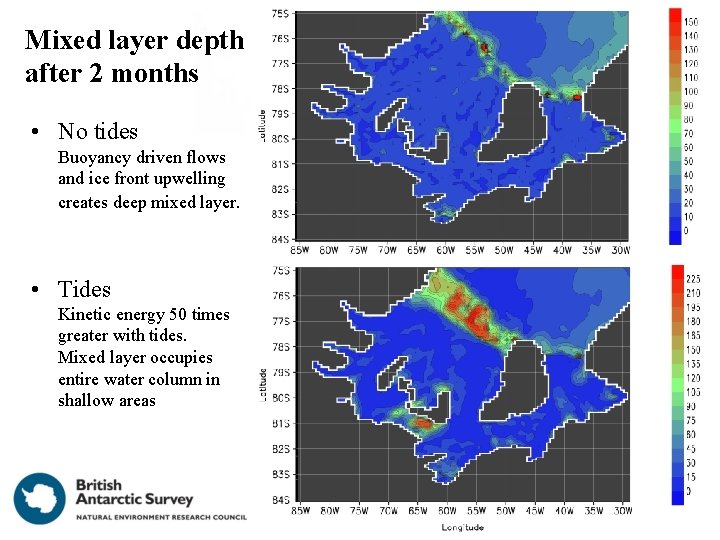
Mixed layer depth after 2 months • No tides Buoyancy driven flows and ice front upwelling creates deep mixed layer. • Tides Kinetic energy 50 times greater with tides. Mixed layer occupies entire water column in shallow areas
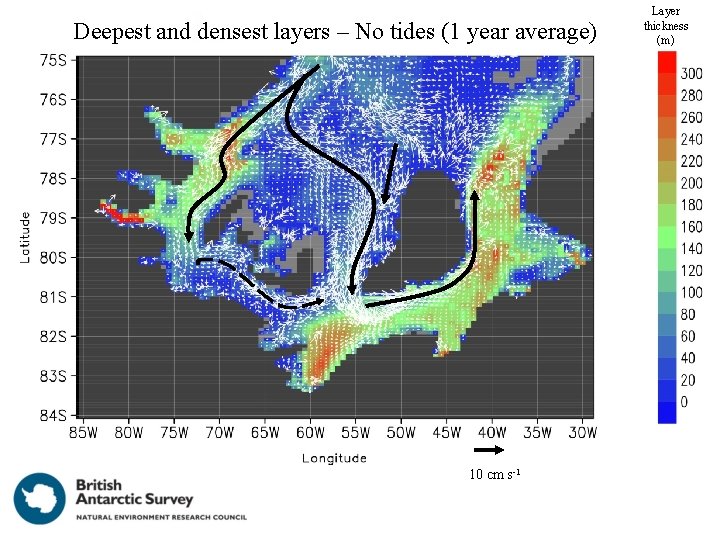
Deepest and densest layers – No tides (1 year average) 10 cm s-1 Layer thickness (m)
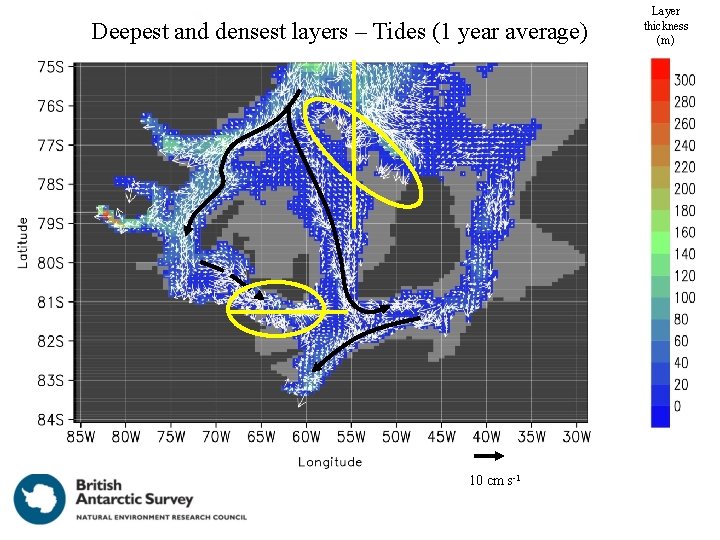
Deepest and densest layers – Tides (1 year average) 10 cm s-1 Layer thickness (m)
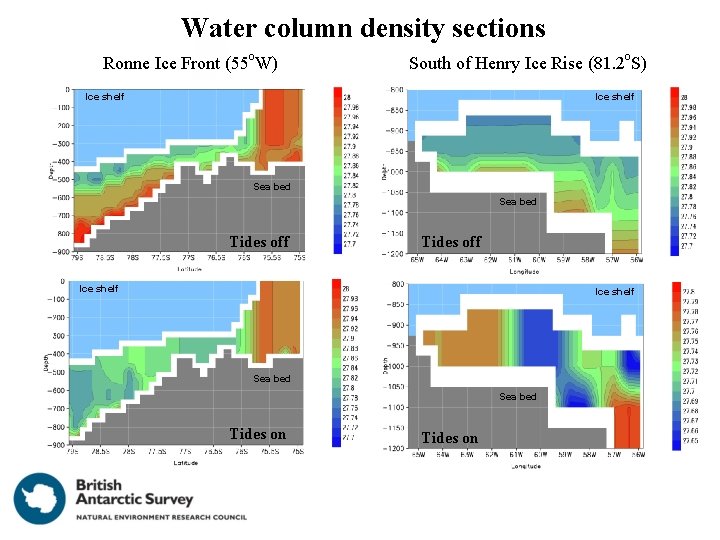
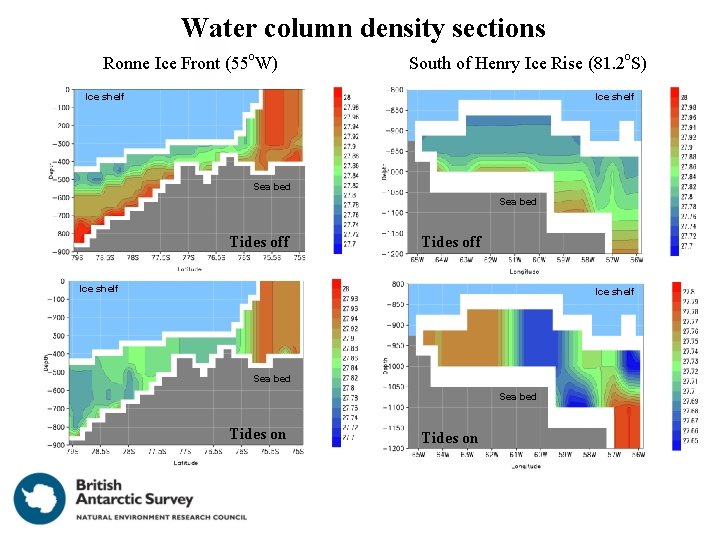
Water column density sections Ronne Ice Front (55 o. W) South of Henry Ice Rise (81. 2 o. S) Ice shelf Sea bed Tides off Ice shelf Sea bed Tides on
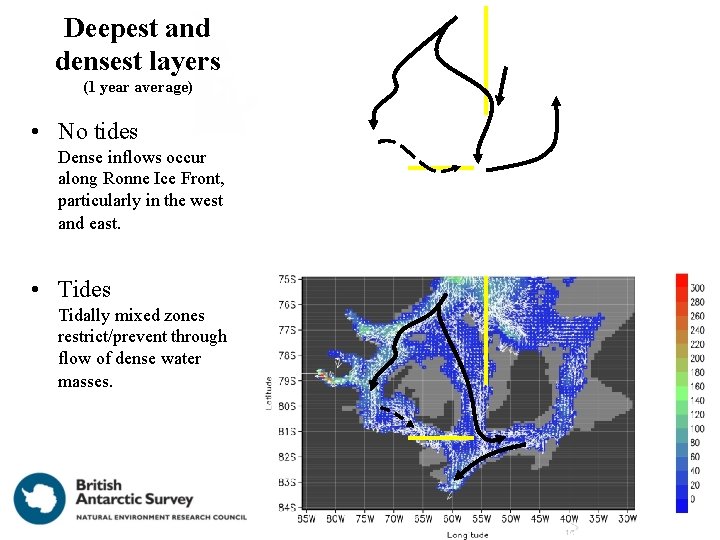
Deepest and densest layers (1 year average) • No tides Dense inflows occur along Ronne Ice Front, particularly in the west and east. • Tides Tidally mixed zones restrict/prevent through flow of dense water masses.
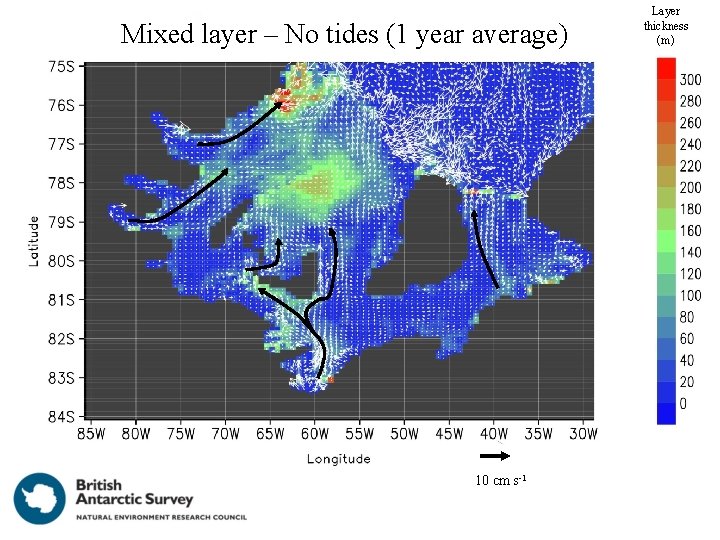
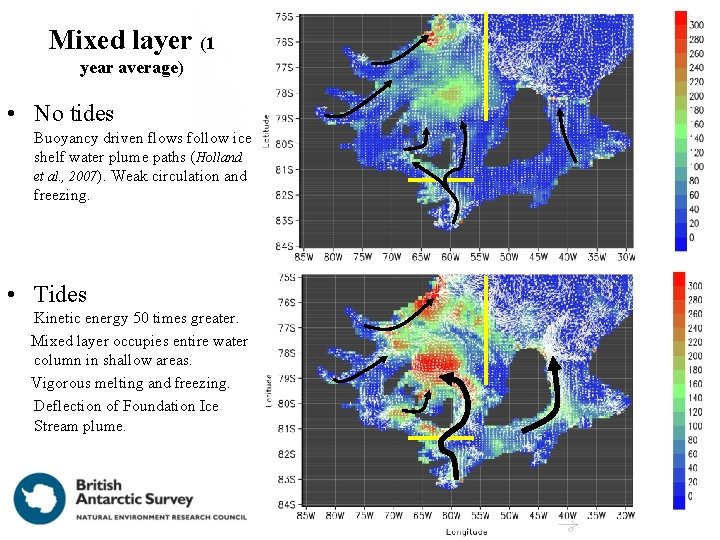
Mixed layer – No tides (1 year average) 10 cm s-1 Layer thickness (m)
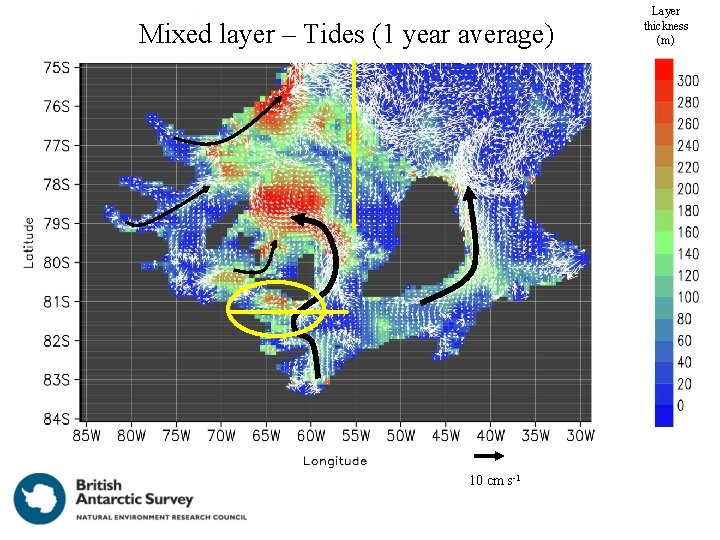
Mixed layer – Tides (1 year average) 10 cm s-1 Layer thickness (m)
Water column density sections Ronne Ice Front (55 o. W) South of Henry Ice Rise (81. 2 o. S) Ice shelf Sea bed Tides off Ice shelf Sea bed Tides on
Mixed layer (1 year average) • No tides Buoyancy driven flows follow ice shelf water plume paths (Holland et al. , 2007). Weak circulation and freezing. • Tides Kinetic energy 50 times greater. Mixed layer occupies entire water column in shallow areas. Vigorous melting and freezing. Deflection of Foundation Ice Stream plume.
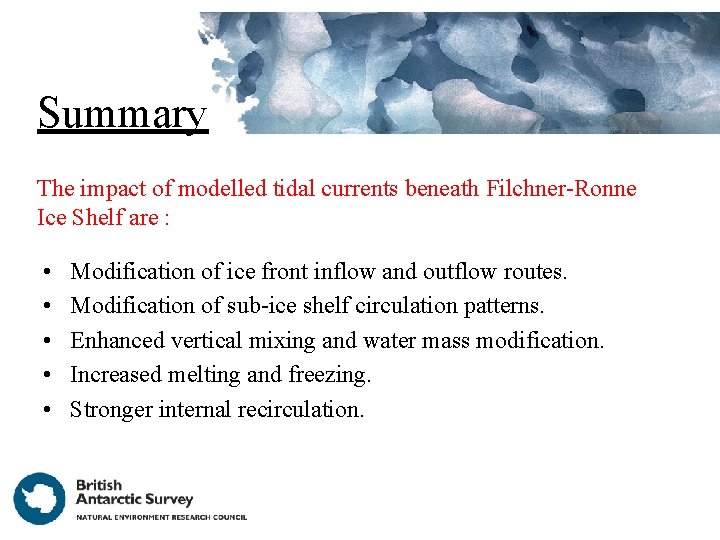
Summary The impact of modelled tidal currents beneath Filchner-Ronne Ice Shelf are : • • • Modification of ice front inflow and outflow routes. Modification of sub-ice shelf circulation patterns. Enhanced vertical mixing and water mass modification. Increased melting and freezing. Stronger internal recirculation.
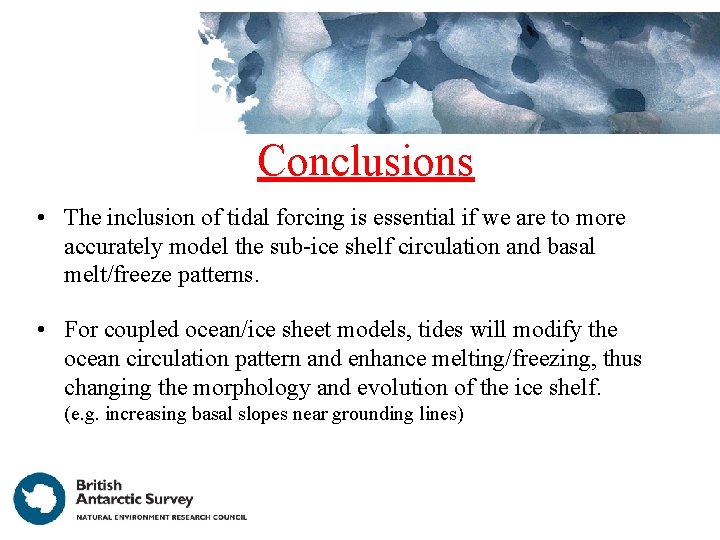
Conclusions • The inclusion of tidal forcing is essential if we are to more accurately model the sub-ice shelf circulation and basal melt/freeze patterns. • For coupled ocean/ice sheet models, tides will modify the ocean circulation pattern and enhance melting/freezing, thus changing the morphology and evolution of the ice shelf. (e. g. increasing basal slopes near grounding lines)