
Modelling of miniature PEM fuel cells Modelling of
![Modelling of miniature PEM fuel cells Heat flux and temperature T [K] anode •](https://slidetodoc.com/presentation_image/5cf1f4d0faede27a0ce1b16490a6240b/image-18.jpg "Modelling of miniature PEM fuel cells Heat flux and temperature T [K] anode •")
- Slides: 32
Modelling of miniature PEM fuel cells Modelling of miniature proton exchange membrane fuel cells for portable applications J. O. Schumacher 1, E. Fontes 3, D. Gerteisen 1, F. Goldsmith 1, R. Klöfkorn 2, A. Hakenjos 1, K. Kühn 1, M. Ohlberger 2, A. Schmitz 1, K. Tüber 1, C. Ziegler 1 1. Fraunhofer Institute for Solar Energy Systems, Heidenhofstr. 2, 79110 Freiburg, schum@ise. fhg. de, Germany 2. Institute of Applied Mathematics, University of Freiburg, Herrmann-Herder-Str. 10, 79104 Freiburg, Germany 3. COMSOL AB, Tegnergatan 23, SE-111 40 Stockholm, Sweden
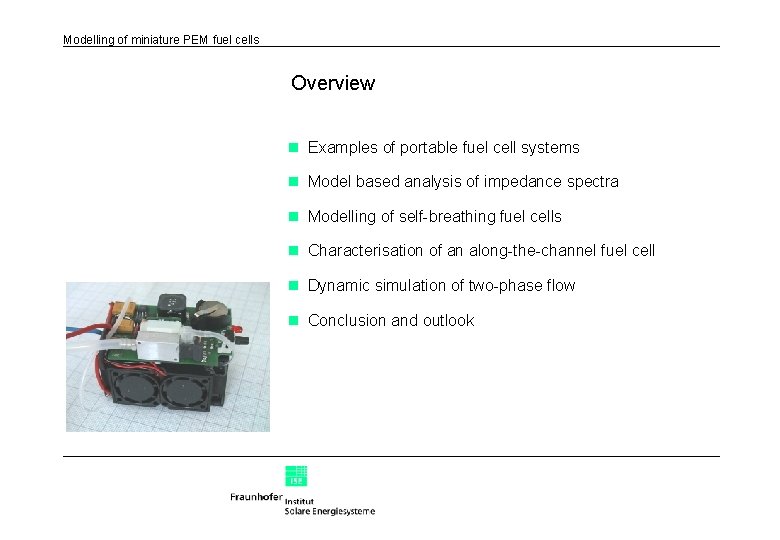
Modelling of miniature PEM fuel cells Overview n Examples of portable fuel cell systems n Model based analysis of impedance spectra n Modelling of self-breathing fuel cells n Characterisation of an along-the-channel fuel cell n Dynamic simulation of two-phase flow n Conclusion and outlook
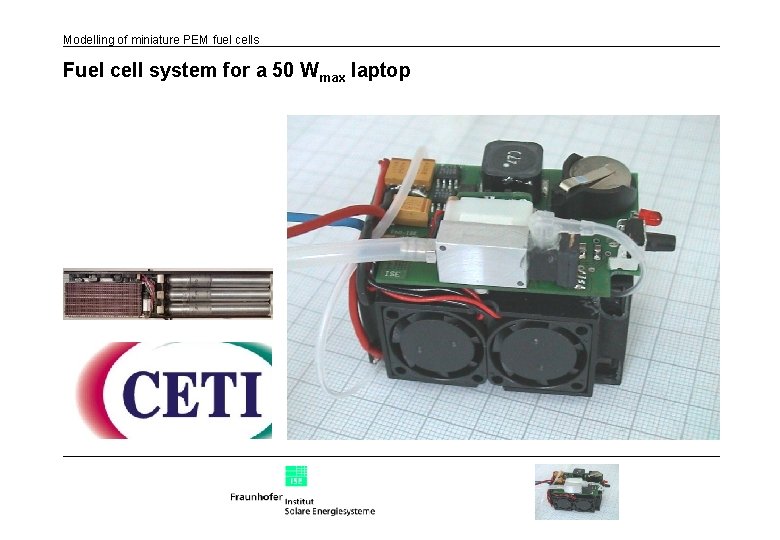
Modelling of miniature PEM fuel cells Fuel cell system for a 50 Wmax laptop
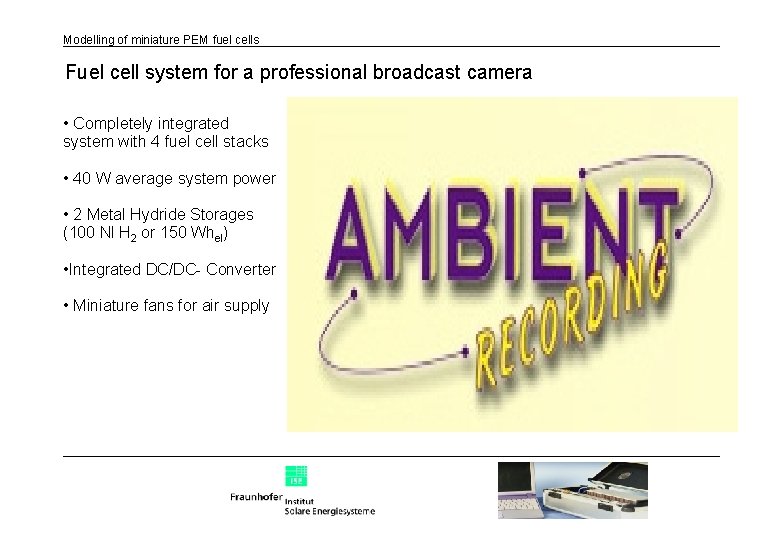
Modelling of miniature PEM fuel cells Fuel cell system for a professional broadcast camera • Completely integrated system with 4 fuel cell stacks • 40 W average system power • 2 Metal Hydride Storages (100 Nl H 2 or 150 Whel) • Integrated DC/DC- Converter • Miniature fans for air supply
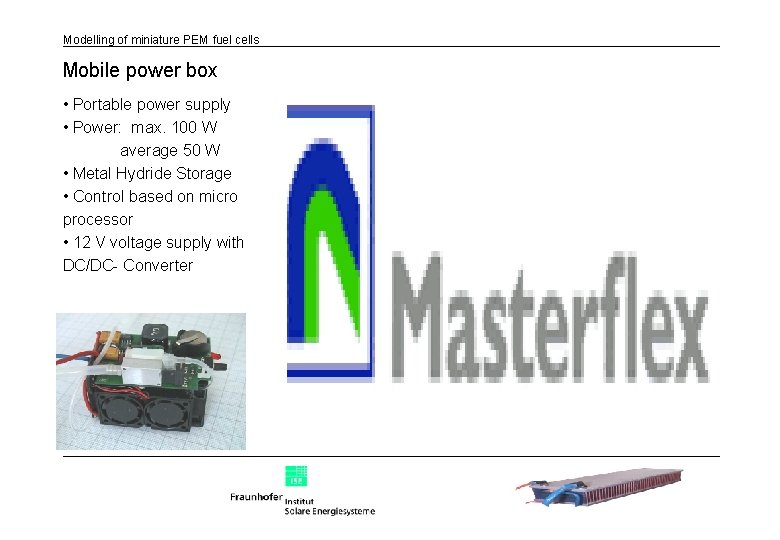
Modelling of miniature PEM fuel cells Mobile power box • Portable power supply • Power: max. 100 W average 50 W • Metal Hydride Storage • Control based on micro processor • 12 V voltage supply with DC/DC- Converter
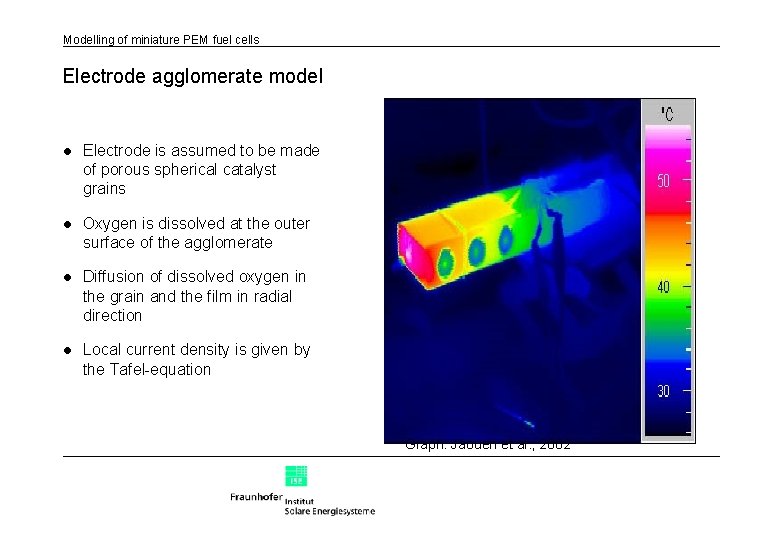
Modelling of miniature PEM fuel cells Electrode agglomerate model l Electrode is assumed to be made of porous spherical catalyst grains l Oxygen is dissolved at the outer surface of the agglomerate l Diffusion of dissolved oxygen in the grain and the film in radial direction l Local current density is given by the Tafel-equation Graph: Jaouen et al. , 2002
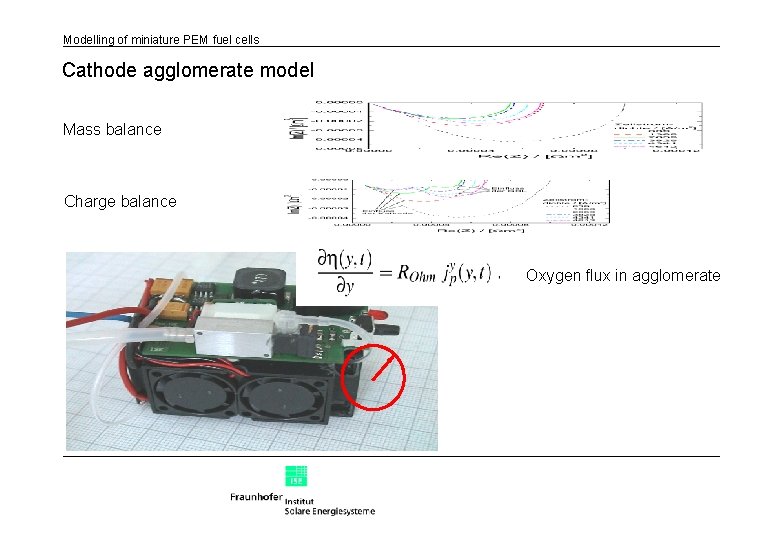
Modelling of miniature PEM fuel cells Cathode agglomerate model Mass balance Charge balance Oxygen flux in agglomerate
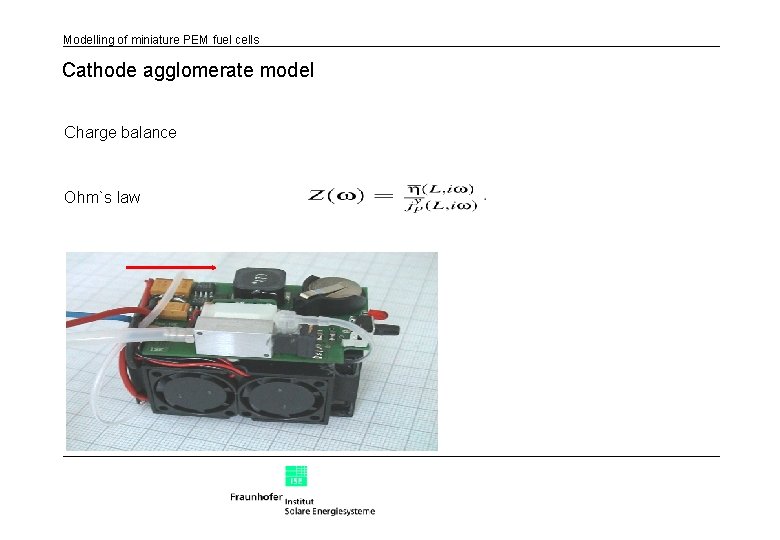
Modelling of miniature PEM fuel cells Cathode agglomerate model Charge balance Ohm`s law
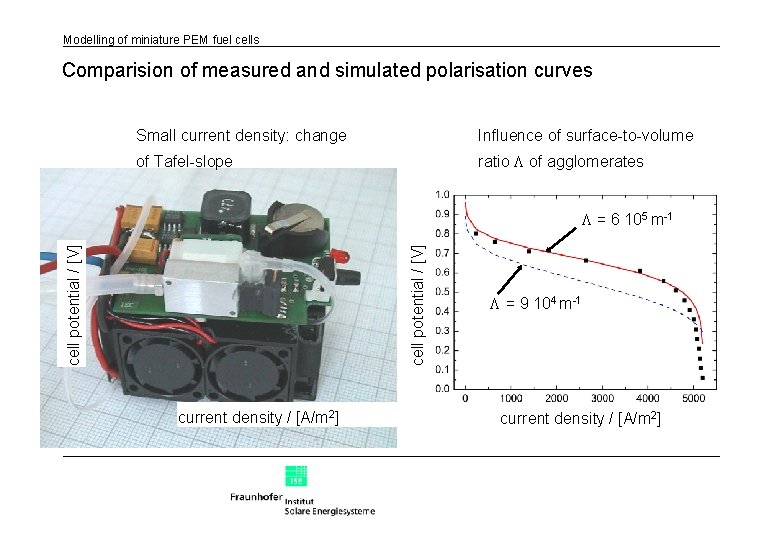
Modelling of miniature PEM fuel cells Comparision of measured and simulated polarisation curves Small current density: change Influence of surface-to-volume of Tafel-slope ratio L of agglomerates cell potential / [V] L = 6 105 m-1 current density / [A/m 2] L = 9 104 m-1 current density / [A/m 2]
Modelling of miniature PEM fuel cells Simulation of impedance spectra l Perturbation of solution variables of PDEs l Small perturbations: linearise and Laplace-transform PDEs l Calculate impedance: Resistance [Wm 2]
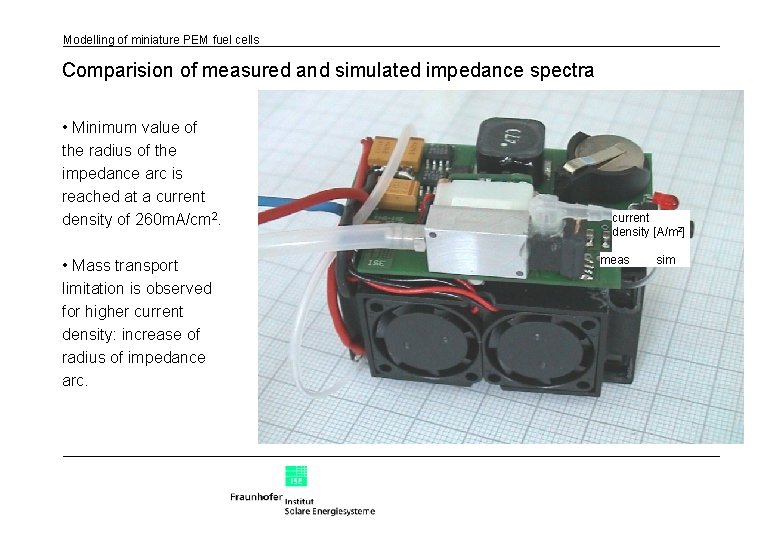
Modelling of miniature PEM fuel cells Comparision of measured and simulated impedance spectra • Minimum value of the radius of the impedance arc is reached at a current density of 260 m. A/cm 2. • Mass transport limitation is observed for higher current density: increase of radius of impedance arc. current density [A/m 2] meas sim
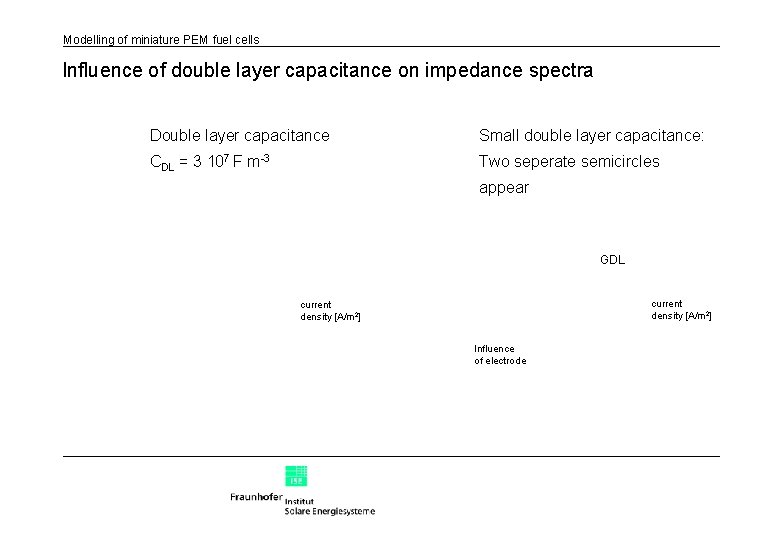
Modelling of miniature PEM fuel cells Influence of double layer capacitance on impedance spectra Double layer capacitance Small double layer capacitance: CDL = 3 107 F m-3 Two seperate semicircles appear GDL current density [A/m 2] Influence of electrode
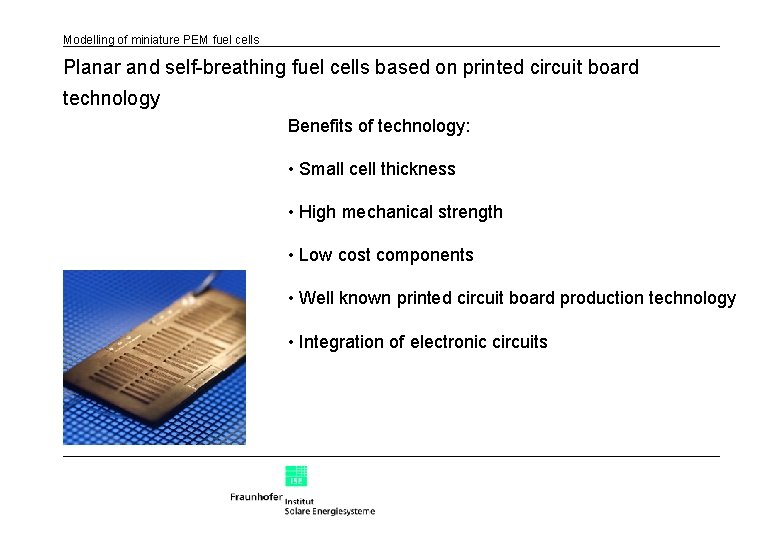
Modelling of miniature PEM fuel cells Planar and self-breathing fuel cells based on printed circuit board technology Benefits of technology: • Small cell thickness • High mechanical strength • Low cost components • Well known printed circuit board production technology • Integration of electronic circuits
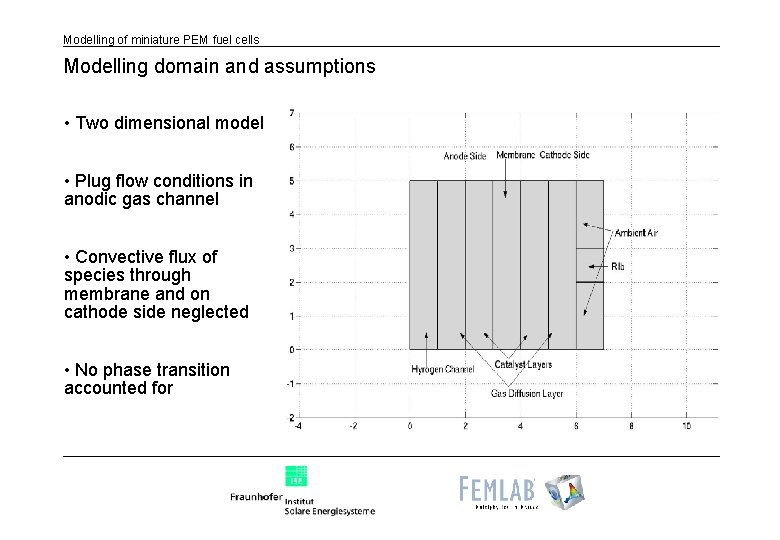
Modelling of miniature PEM fuel cells Modelling domain and assumptions • Two dimensional model • Plug flow conditions in anodic gas channel • Convective flux of species through membrane and on cathode side neglected • No phase transition accounted for
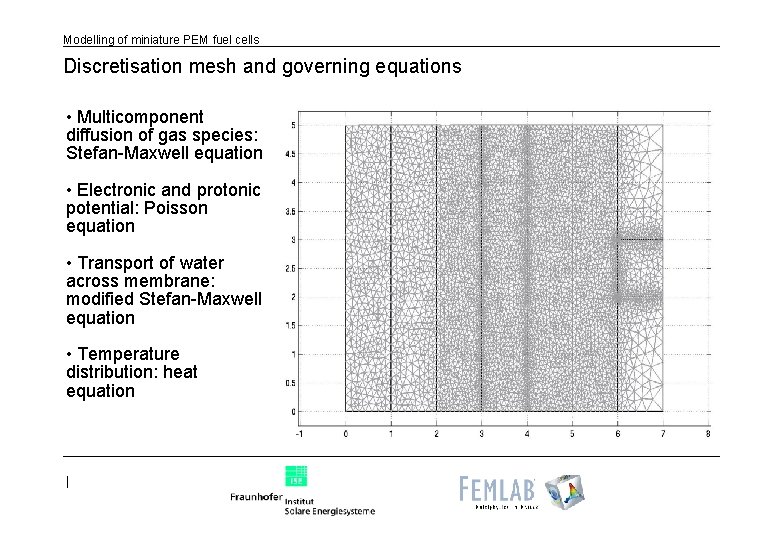
Modelling of miniature PEM fuel cells Discretisation mesh and governing equations • Multicomponent diffusion of gas species: Stefan-Maxwell equation • Electronic and protonic potential: Poisson equation • Transport of water across membrane: modified Stefan-Maxwell equation • Temperature distribution: heat equation l
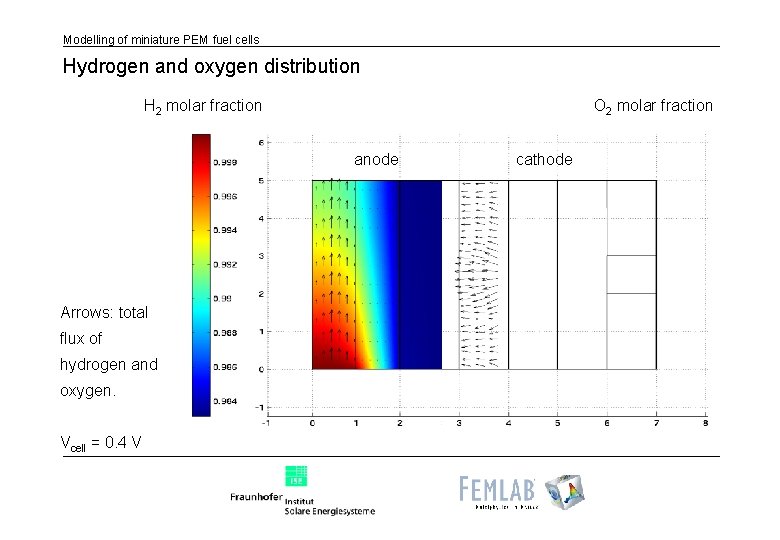
Modelling of miniature PEM fuel cells Hydrogen and oxygen distribution H 2 molar fraction O 2 molar fraction anode Arrows: total flux of hydrogen and oxygen. Vcell = 0. 4 V cathode
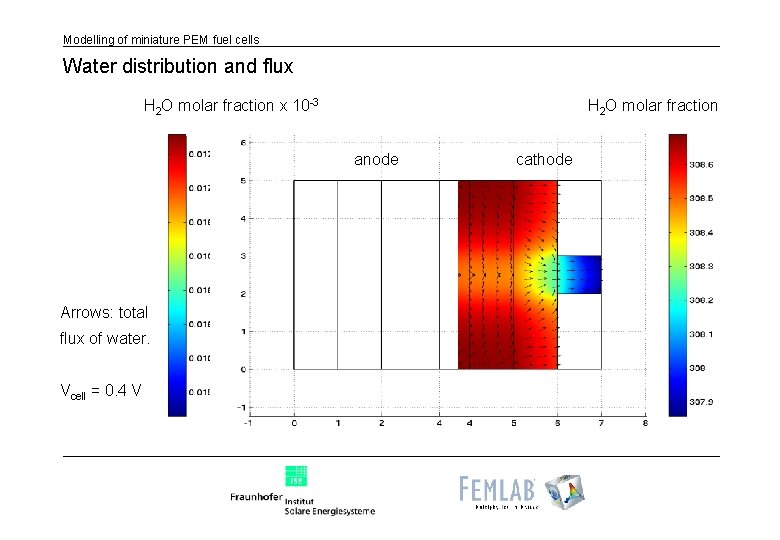
Modelling of miniature PEM fuel cells Water distribution and flux H 2 O molar fraction x 10 -3 H 2 O molar fraction anode Arrows: total flux of water. Vcell = 0. 4 V cathode
Modelling of miniature PEM fuel cells Heat flux and temperature T [K] anode • Arrows: total flux of heat. • Cooling effect of ribs. Vcell = 0. 4 V cathode
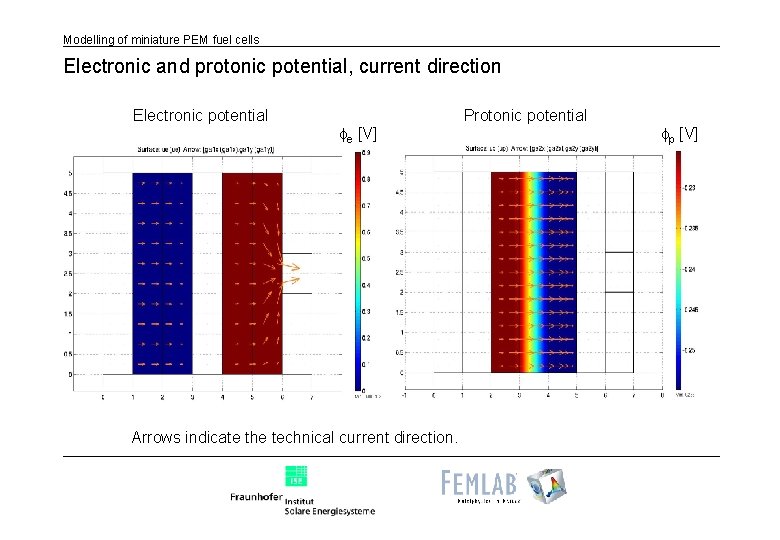
Modelling of miniature PEM fuel cells Electronic and protonic potential, current direction Electronic potential fe [V] Arrows indicate the technical current direction. Protonic potential fp [V]
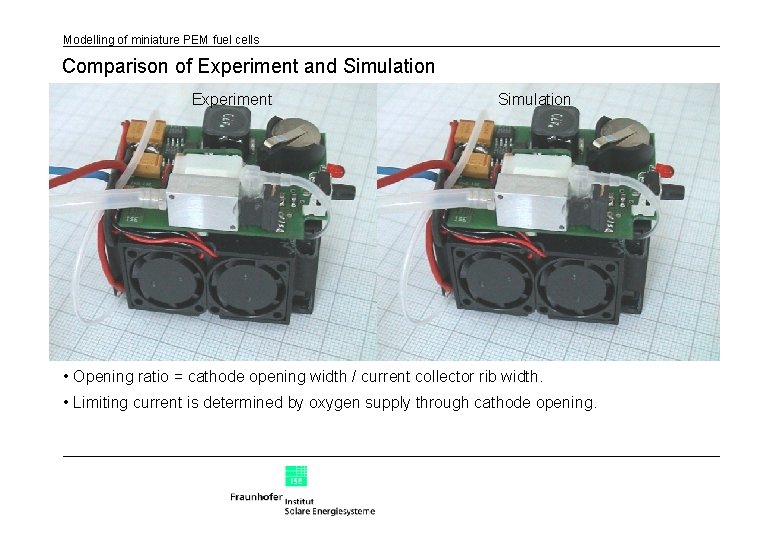
Modelling of miniature PEM fuel cells Comparison of Experiment and Simulation Experiment Simulation • Opening ratio = cathode opening width / current collector rib width. • Limiting current is determined by oxygen supply through cathode opening.
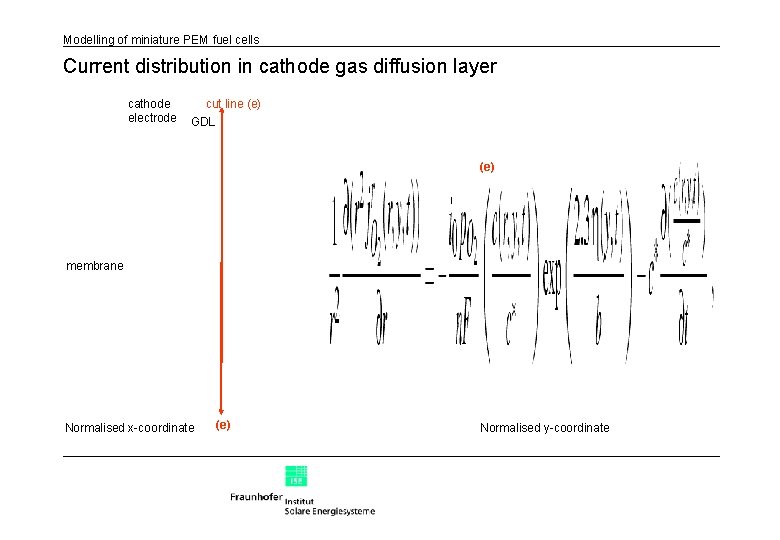
Modelling of miniature PEM fuel cells Current distribution in cathode gas diffusion layer cathode electrode cut line (e) GDL (e) membrane Normalised x-coordinate (e) Normalised y-coordinate
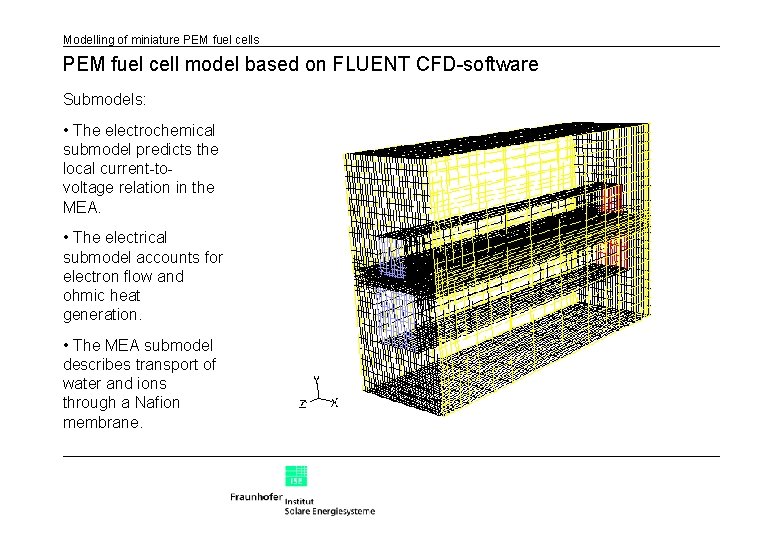
Modelling of miniature PEM fuel cells PEM fuel cell model based on FLUENT CFD-software Submodels: • The electrochemical submodel predicts the local current-tovoltage relation in the MEA. • The electrical submodel accounts for electron flow and ohmic heat generation. • The MEA submodel describes transport of water and ions through a Nafion membrane.
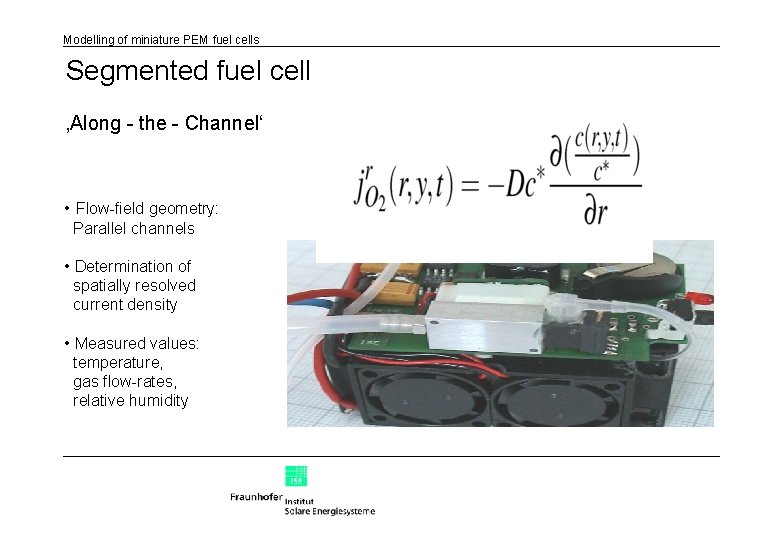
Modelling of miniature PEM fuel cells Segmented fuel cell ‚Along - the - Channel‘ • Flow-field geometry: Parallel channels • Determination of spatially resolved current density • Measured values: temperature, gas flow-rates, relative humidity
Modelling of miniature PEM fuel cells Current distribution along the channel • Comparison of measurement (dots) and simulation (lines) • Variation of air flow rate on the cathode side • All model parameters are kept constant except air flow and average current gas flow direction:
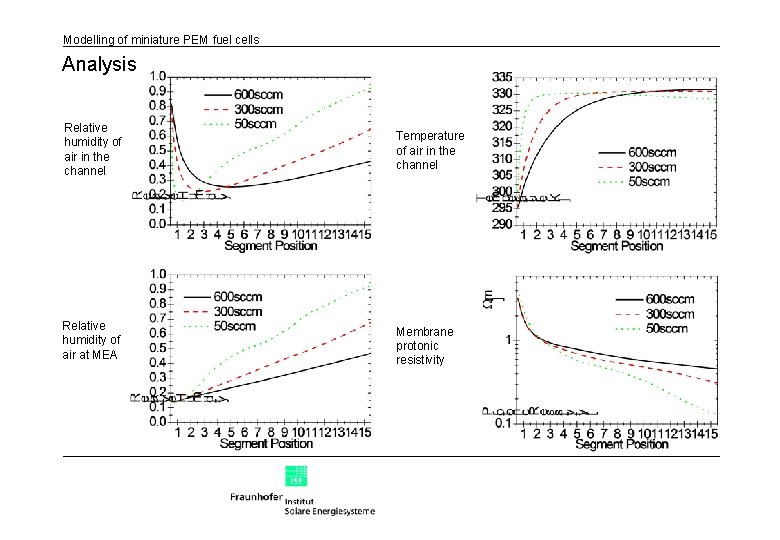
Modelling of miniature PEM fuel cells Analysis Relative humidity of air in the channel Temperature of air in the channel Relative humidity of air at MEA Membrane protonic resistivity
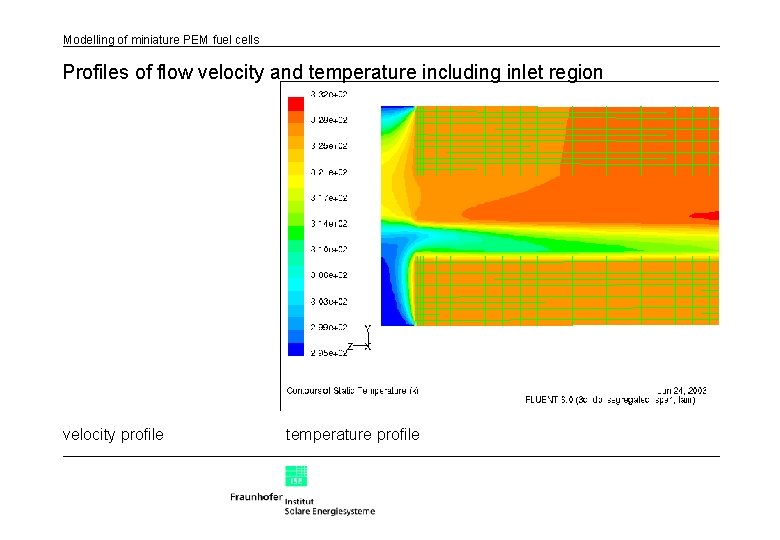
Modelling of miniature PEM fuel cells Profiles of flow velocity and temperature including inlet region velocity profile temperature profile
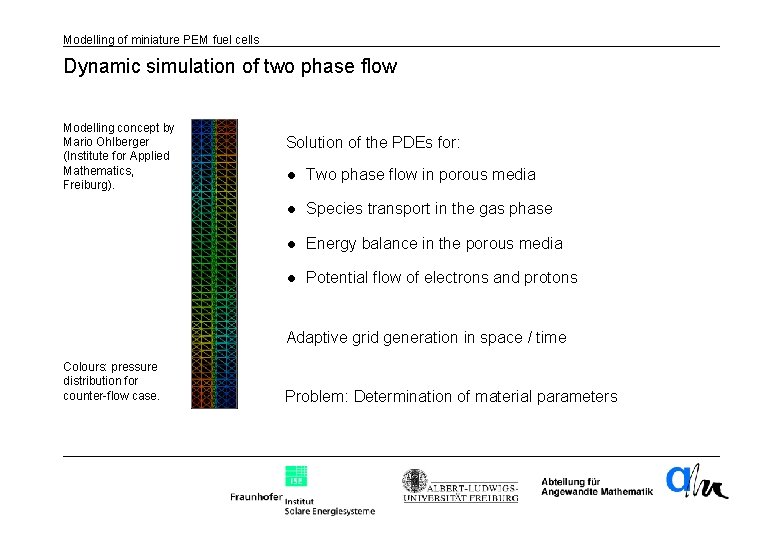
Modelling of miniature PEM fuel cells Dynamic simulation of two phase flow Modelling concept by Mario Ohlberger (Institute for Applied Mathematics, Freiburg). Solution of the PDEs for: l Two phase flow in porous media l Species transport in the gas phase l Energy balance in the porous media l Potential flow of electrons and protons Adaptive grid generation in space / time Colours: pressure distribution for counter-flow case. Problem: Determination of material parameters
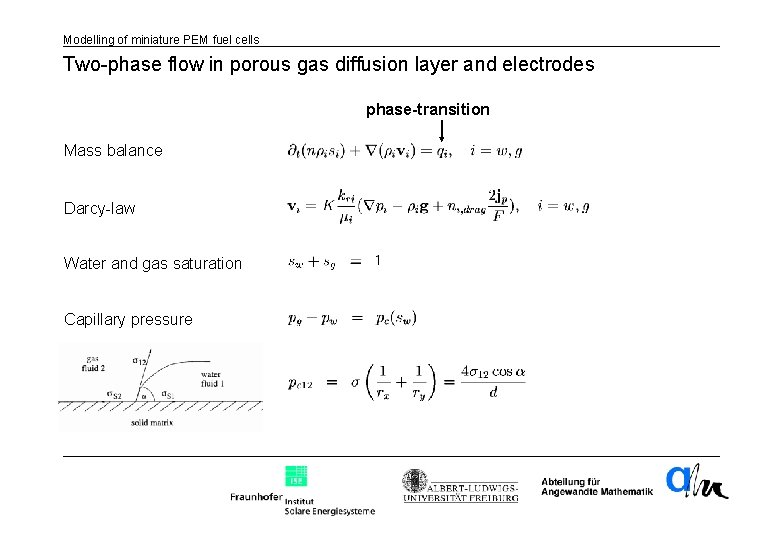
Modelling of miniature PEM fuel cells Two-phase flow in porous gas diffusion layer and electrodes phase-transition Mass balance Darcy-law Water and gas saturation Capillary pressure
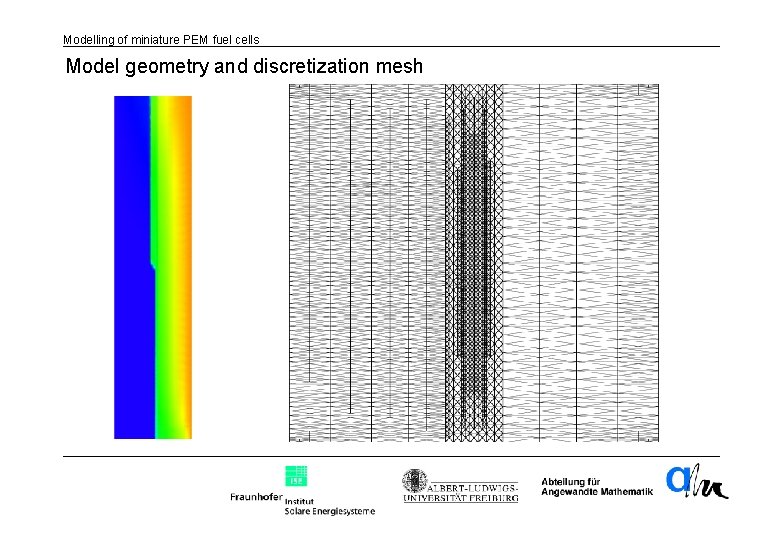
Modelling of miniature PEM fuel cells Model geometry and discretization mesh
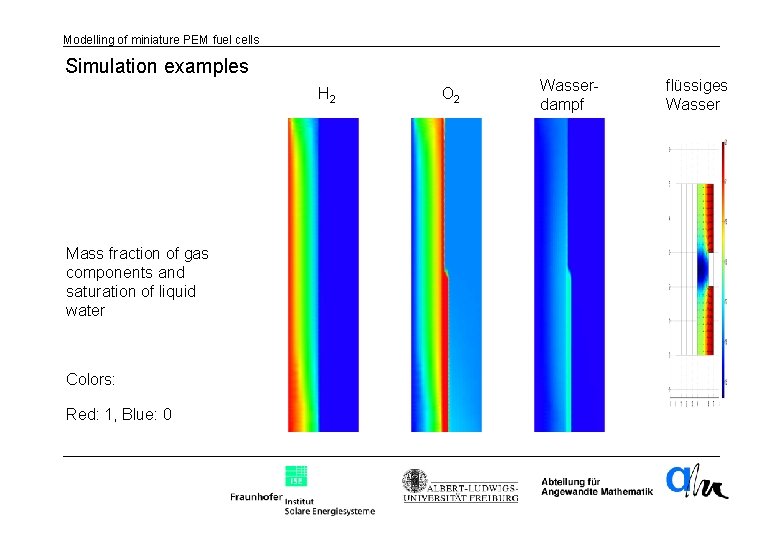
Modelling of miniature PEM fuel cells Simulation examples H 2 Mass fraction of gas components and saturation of liquid water Colors: Red: 1, Blue: 0 O 2 Wasserdampf flüssiges Wasser
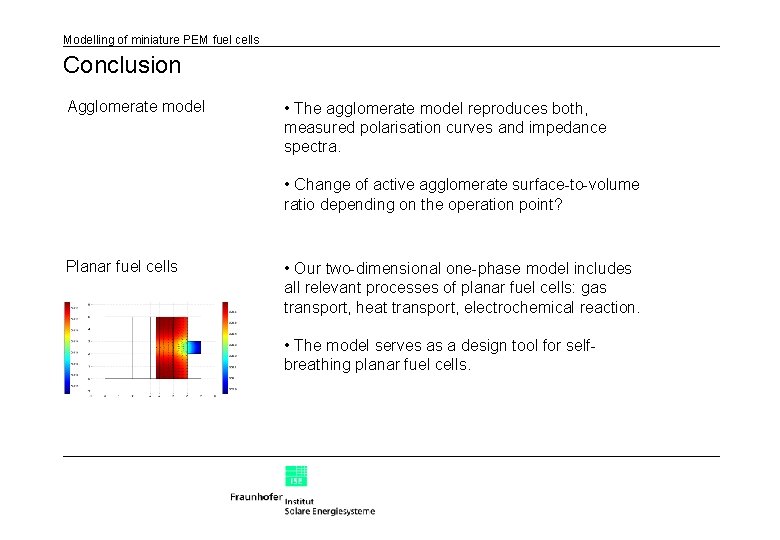
Modelling of miniature PEM fuel cells Conclusion Agglomerate model • The agglomerate model reproduces both, measured polarisation curves and impedance spectra. • Change of active agglomerate surface-to-volume ratio depending on the operation point? Planar fuel cells • Our two-dimensional one-phase model includes all relevant processes of planar fuel cells: gas transport, heat transport, electrochemical reaction. • The model serves as a design tool for selfbreathing planar fuel cells.
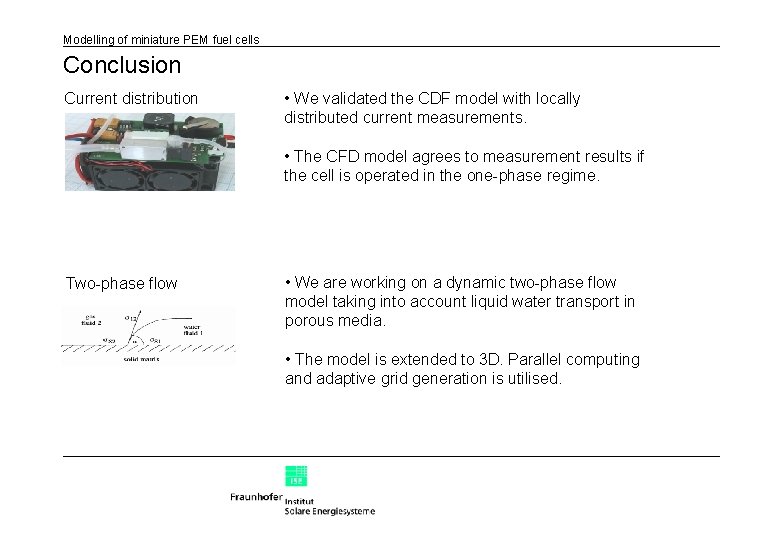
Modelling of miniature PEM fuel cells Conclusion Current distribution • We validated the CDF model with locally distributed current measurements. • The CFD model agrees to measurement results if the cell is operated in the one-phase regime. Two-phase flow • We are working on a dynamic two-phase flow model taking into account liquid water transport in porous media. • The model is extended to 3 D. Parallel computing and adaptive grid generation is utilised.