
Modelling for Problem Solving In The Large David
Modelling for Problem Solving In The Large David Millard dem@soton. ac. uk | @hoosfoos | davidmillard. org

Problem Solving in the Large
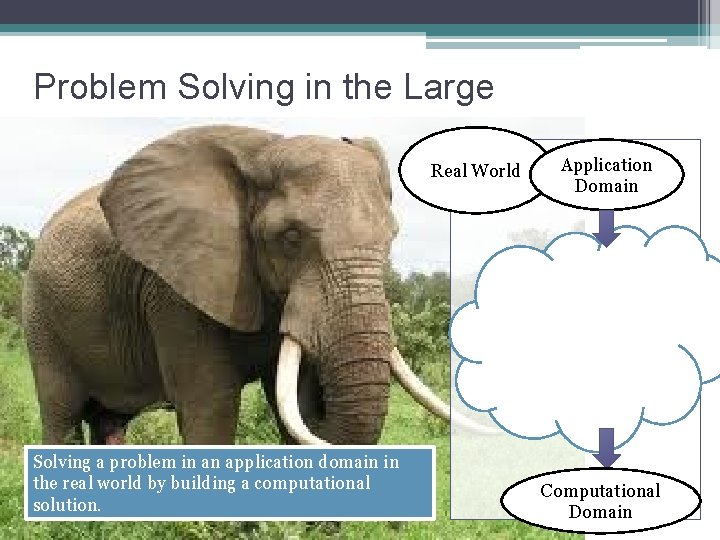
Problem Solving in the Large Real World Solving a problem in an application domain in the real world by building a computational solution. Application Domain Computational Domain
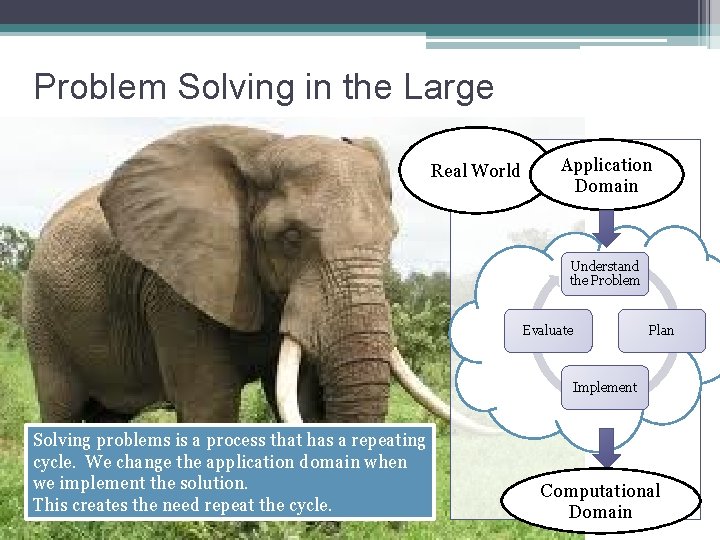
Problem Solving in the Large Real World Application Domain Understand the Problem Evaluate Plan Implement Solving problems is a process that has a repeating cycle. We change the application domain when we implement the solution. This creates the need repeat the cycle. Computational Domain
Systems Theory • Systems theory is an interdisciplinary/multiperspectual field of inquiry that studies theoretical and actual properties of systems as a process by looking at it in terms of relationships from which emerge new properties of wholes. – Wikipedia • Brings together theoretical principles and concepts from ontology, philosophy of science, physics, biology and engineering. • In recent times systems science, systemics and complex systems have been used as synonyms. These have branched out into the complexity sciences
Definition A system is composed of regularly interacting or interrelating groups of activities/parts which, when taken together, form a new whole. In most cases this whole has properties which cannot be found in the constituent elements. (It is greater than the sum of its parts)
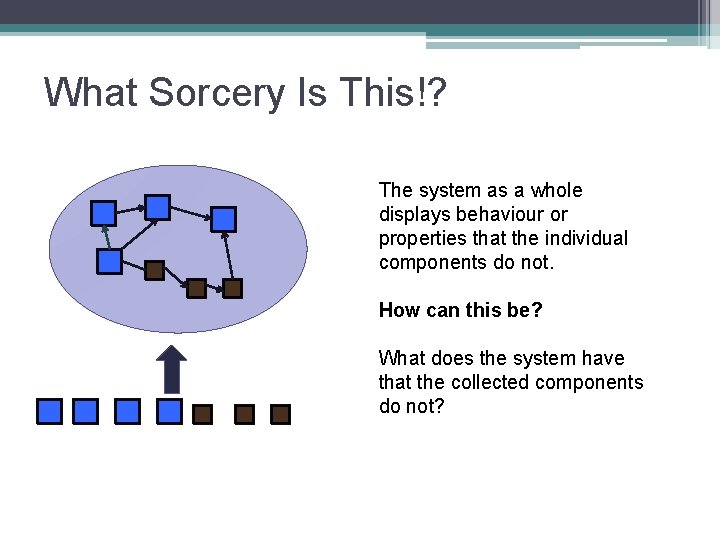
What Sorcery Is This!? The system as a whole displays behaviour or properties that the individual components do not. How can this be? What does the system have that the collected components do not?
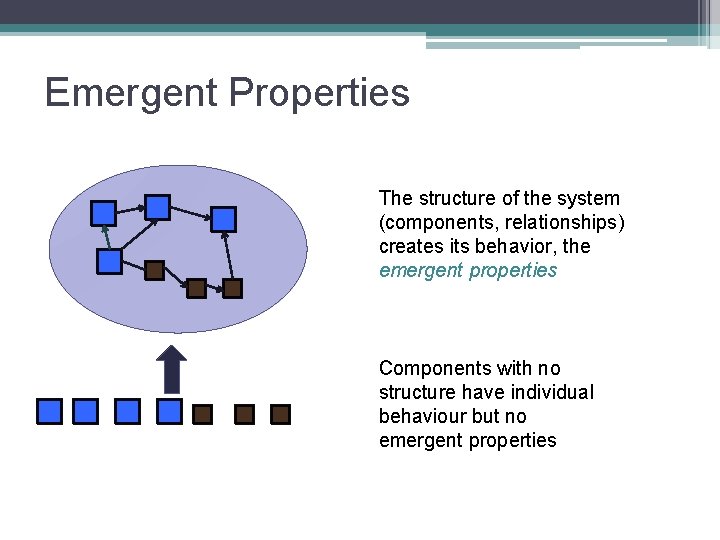
Emergent Properties The structure of the system (components, relationships) creates its behavior, the emergent properties Components with no structure have individual behaviour but no emergent properties
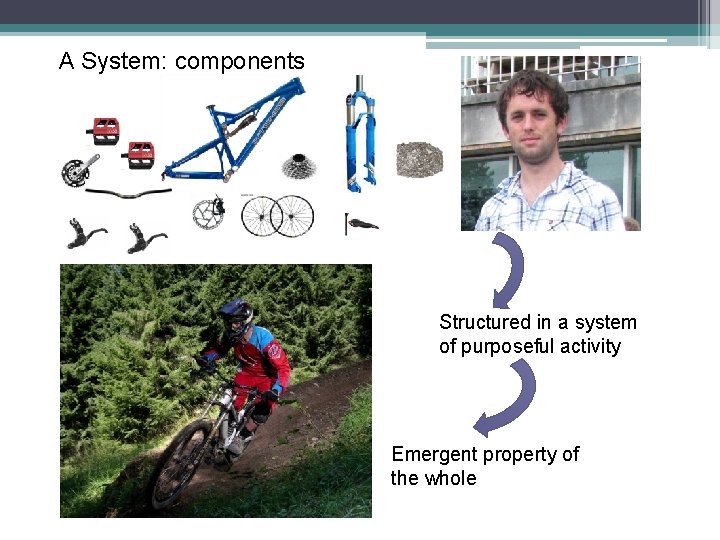
A System: components Structured in a system of purposeful activity Emergent property of the whole
‘The capacity of the human mind formulating and solving complex problems is very small compared with the size of the problem whose solution is required for objectively rational behaviour in the real world or even for a reasonable approximation to such objective reality’ - Herbert A. Simon, Carnegie Mellon. • Behaviour prediction when dynamic systems interact is a non-trivial task • How many concepts can you hold in your head at the same time? • Modelling and simulation are tools that help us to understand predict this behaviour
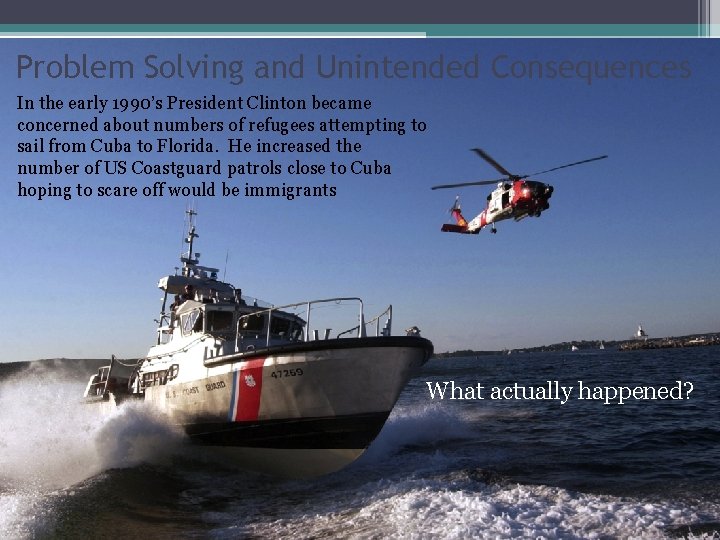
Problem Solving and Unintended Consequences In the early 1990’s President Clinton became concerned about numbers of refugees attempting to sail from Cuba to Florida. He increased the number of US Coastguard patrols close to Cuba hoping to scare off would be immigrants What actually happened?

Problem Solving and Unintended Consequences In the early 1990’s President Clinton became concerned about numbers of refugees attempting to sail from Cuba to Florida. He increased the number of US Coastguard patrols close to Cuba hoping to scare off would be immigrants More people tried to leave Cuba in frail boats in the belief that they would be picked up by the US coastguards and be taken safely to America
What do we model and why?
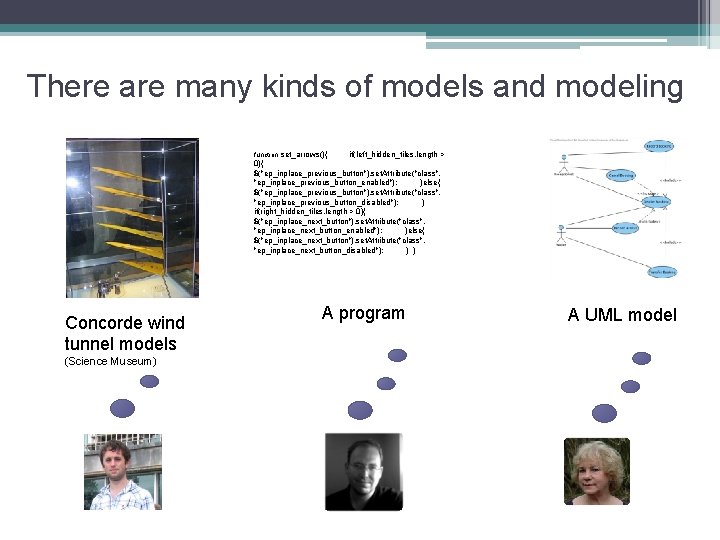
There are many kinds of models and modeling function set_arrows(){ if(left_hidden_tiles. length > 0){ $("ep_inplace_previous_button"). set. Attribute("class", "ep_inplace_previous_button_enabled"); }else{ $("ep_inplace_previous_button"). set. Attribute("class", "ep_inplace_previous_button_disabled"); } if(right_hidden_tiles. length > 0){ $("ep_inplace_next_button"). set. Attribute("class", "ep_inplace_next_button_enabled"); }else{ $("ep_inplace_next_button"). set. Attribute("class", "ep_inplace_next_button_disabled"); } } Concorde wind tunnel models (Science Museum) A program A UML model
All modelling has similar purposes • Insight • Understanding • Communication • Sharing mental models To make sense of the world…
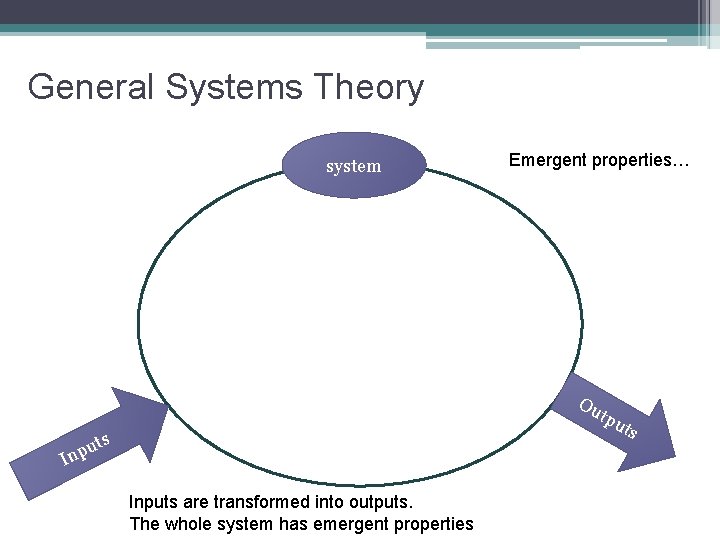
General Systems Theory system Emergent properties… Ou Inp tpu uts Inputs are transformed into outputs. The whole system has emergent properties ts
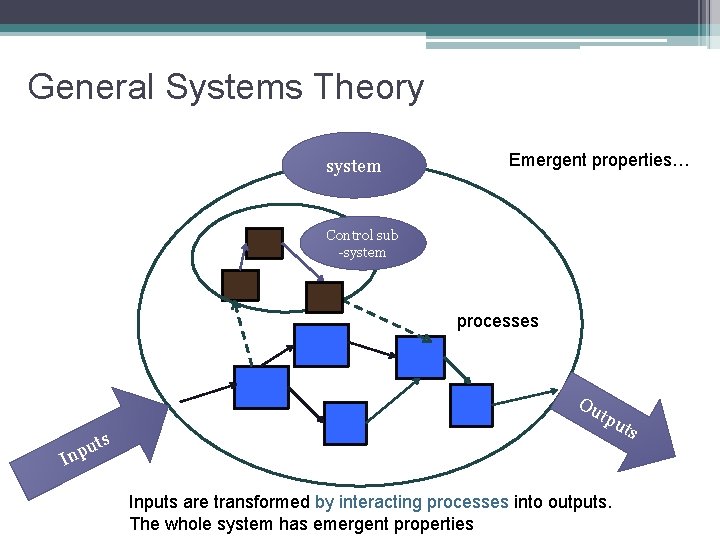
General Systems Theory system Emergent properties… Control sub -system processes Ou Inp uts tpu Inputs are transformed by interacting processes into outputs. The whole system has emergent properties ts
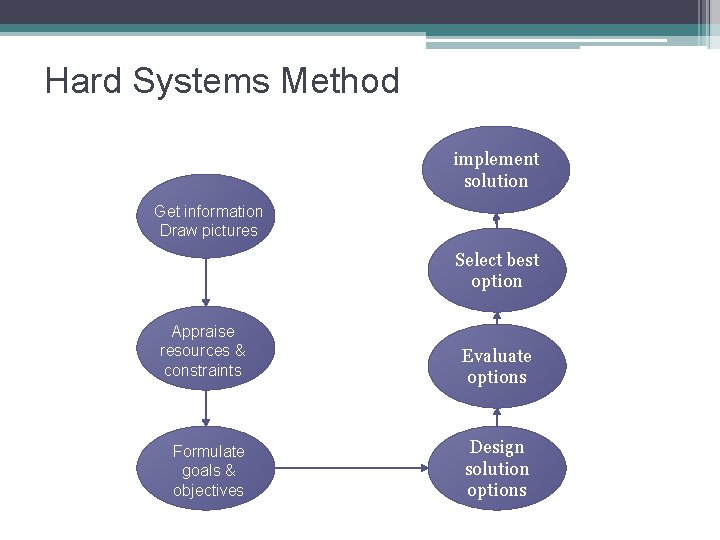
Hard Systems Method implement solution Get information Draw pictures Select best option Appraise resources & constraints Formulate goals & objectives Evaluate options Design solution options
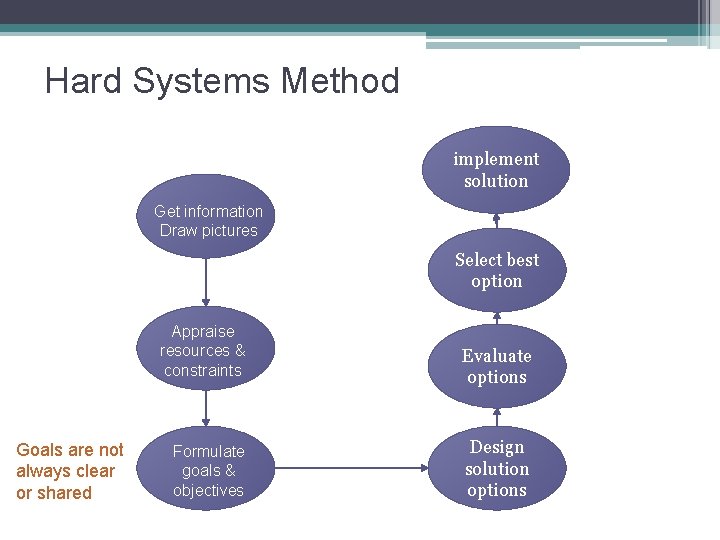
Hard Systems Method implement solution Get information Draw pictures Select best option Appraise resources & constraints Goals are not always clear or shared Formulate goals & objectives Evaluate options Design solution options
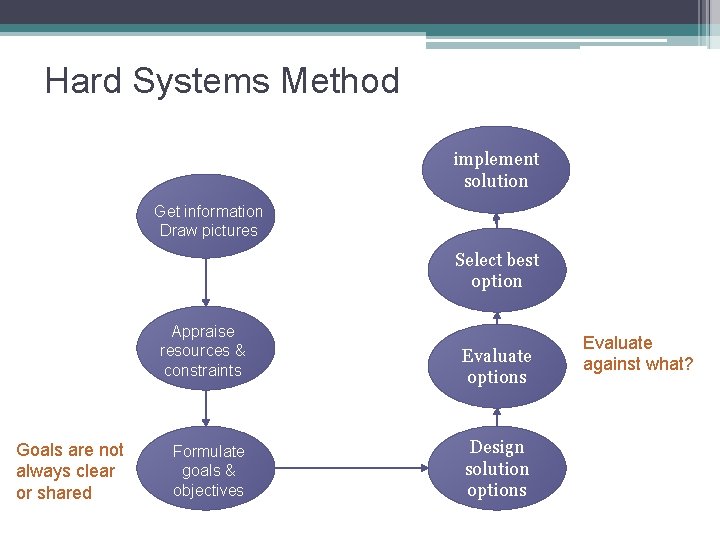
Hard Systems Method implement solution Get information Draw pictures Select best option Appraise resources & constraints Goals are not always clear or shared Formulate goals & objectives Evaluate options Design solution options Evaluate against what?
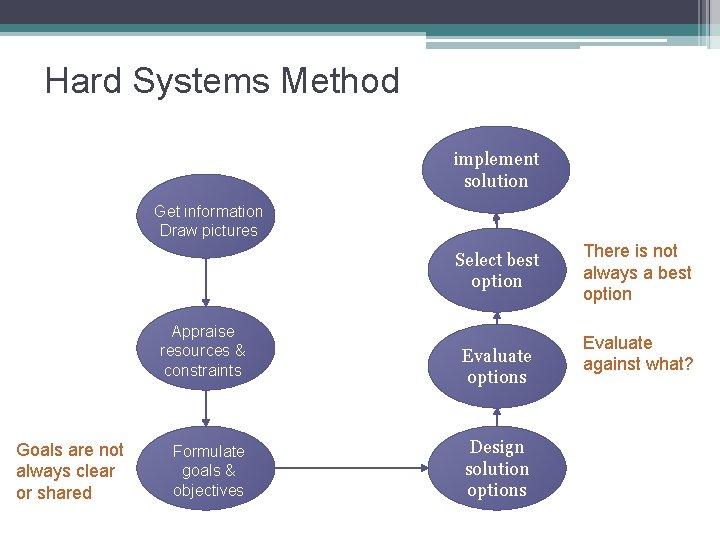
Hard Systems Method implement solution Get information Draw pictures Select best option Appraise resources & constraints Goals are not always clear or shared Formulate goals & objectives Evaluate options Design solution options There is not always a best option Evaluate against what?
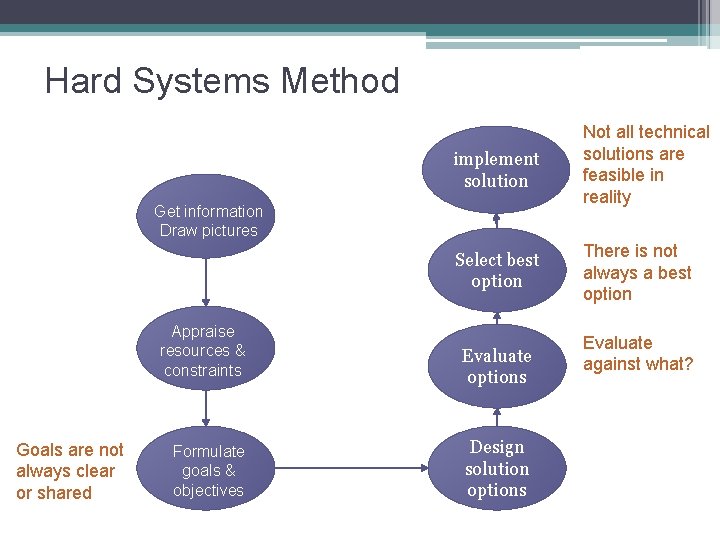
Hard Systems Method implement solution Not all technical solutions are feasible in reality Select best option There is not always a best option Get information Draw pictures Appraise resources & constraints Goals are not always clear or shared Formulate goals & objectives Evaluate options Design solution options Evaluate against what?
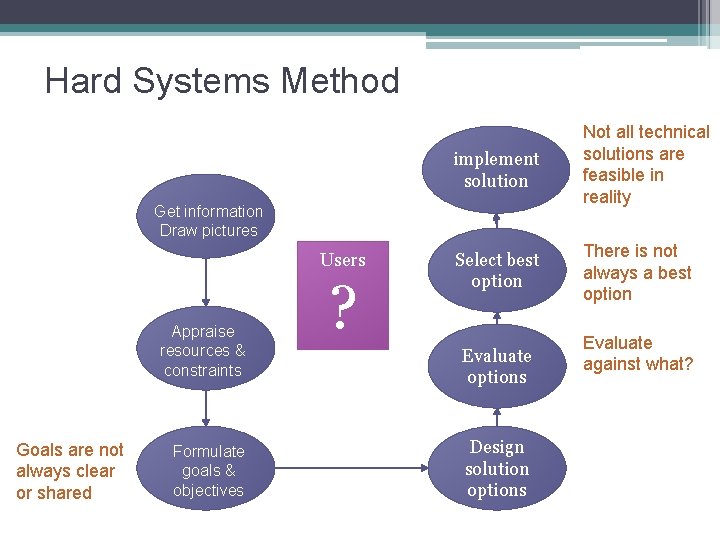
Hard Systems Method implement solution Not all technical solutions are feasible in reality Select best option There is not always a best option Get information Draw pictures Users Appraise resources & constraints Goals are not always clear or shared Formulate goals & objectives ? Evaluate options Design solution options Evaluate against what?
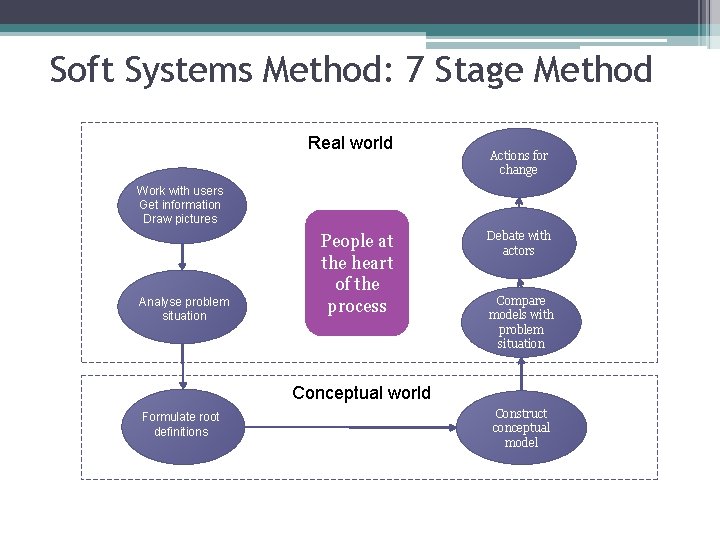
Soft Systems Method: 7 Stage Method Real world Actions for change Work with users Get information Draw pictures Analyse problem situation People at the heart of the process Debate with actors Compare models with problem situation Conceptual world Formulate root definitions Construct conceptual model
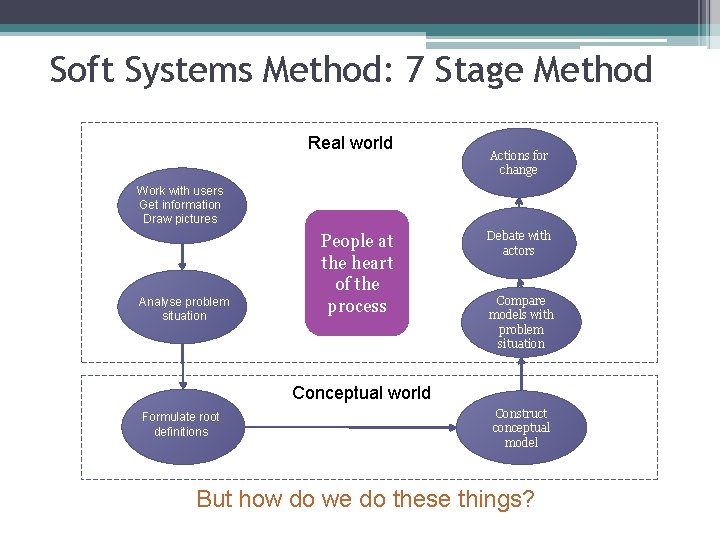
Soft Systems Method: 7 Stage Method Real world Actions for change Work with users Get information Draw pictures Analyse problem situation People at the heart of the process Debate with actors Compare models with problem situation Conceptual world Formulate root definitions Construct conceptual model But how do we do these things?
Next: Soft Systems Analysis and Modeling
- Slides: 26