
Modelling and Simulation of a HydraulicMechanical LoadSensing System
- Slides: 17
Modelling and Simulation of a Hydraulic-Mechanical Load-Sensing System in Co. Vi. La environment Gunnar Grossschmidt Mait Harf Pavel Grigorenko Tallinn University of Technology Institute of Machinery and Institute of Cybernetics TALLINN UNIVERSITY OF TECHNOLOGY G. Grossschmidt, M. Harf, P. Grigorenko Slide 1
Introduction Fluid power systems, in which working pressure (pressure in pump output) is kept proportional to load, are called hydraulic load-sensing systems. Such systems are mainly used with the purpose to save energy. Hydraulic load-sensing systems are automatically regulating systems with a number of components and several feedbacks. Feedbacks make the system very sensitive and unstable for performance and simulation. A very precise parameter setting, especially for resistances of hydraulic valve spools and for spring characteristics, is required to make the system function. Steady state conditions and dynamic behavior of the hydraulic loadsensing system are simulated. TALLINN UNIVERSITY OF TECHNOLOGY G. Grossschmidt, M. Harf, P. Grigorenko Slide 2
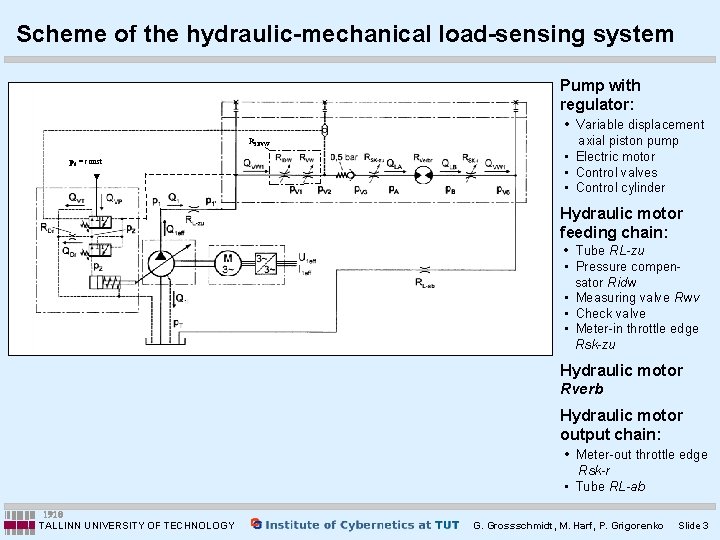
Scheme of the hydraulic-mechanical load-sensing system Pump with regulator: RIDVW p 0 = const • Variable displacement axial piston pump • Electric motor • Control valves • Control cylinder Hydraulic motor feeding chain: • Tube RL-zu • Pressure compensator Ridw • Measuring valve Rwv • Check valve • Meter-in throttle edge Rsk-zu Hydraulic motor Rverb Hydraulic motor output chain: • Meter-out throttle edge Rsk-r • Tube RL-ab TALLINN UNIVERSITY OF TECHNOLOGY G. Grossschmidt, M. Harf, P. Grigorenko Slide 3
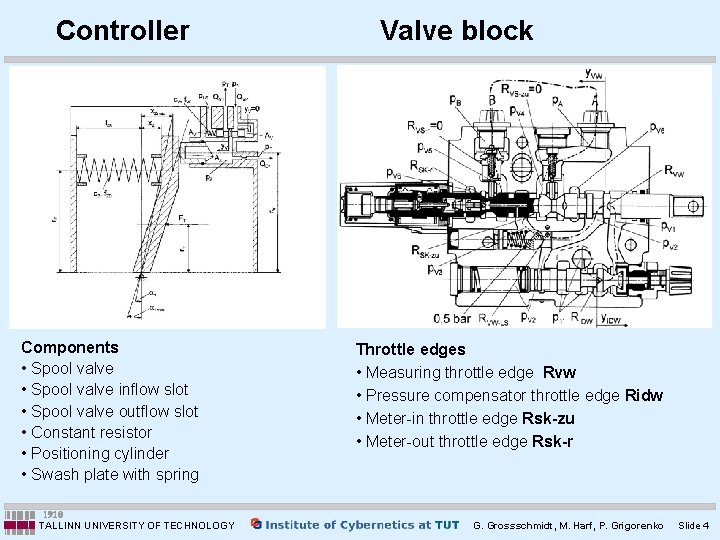
Controller Components • Spool valve inflow slot • Spool valve outflow slot • Constant resistor • Positioning cylinder • Swash plate with spring TALLINN UNIVERSITY OF TECHNOLOGY Valve block Throttle edges • Measuring throttle edge Rvw • Pressure compensator throttle edge Ridw • Meter-in throttle edge Rsk-zu • Meter-out throttle edge Rsk-r G. Grossschmidt, M. Harf, P. Grigorenko Slide 4
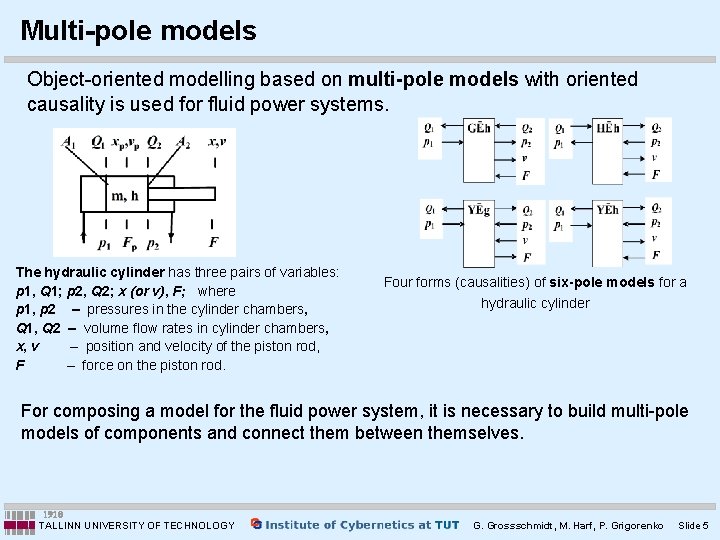
Multi-pole models Object-oriented modelling based on multi-pole models with oriented causality is used for fluid power systems. The hydraulic cylinder has three pairs of variables: p 1, Q 1; p 2, Q 2; x (or v), F; where p 1, p 2 – pressures in the cylinder chambers, Q 1, Q 2 – volume flow rates in cylinder chambers, x, v – position and velocity of the piston rod, F – force on the piston rod. Four forms (causalities) of six-pole models for a hydraulic cylinder For composing a model for the fluid power system, it is necessary to build multi-pole models of components and connect them between themselves. TALLINN UNIVERSITY OF TECHNOLOGY G. Grossschmidt, M. Harf, P. Grigorenko Slide 5
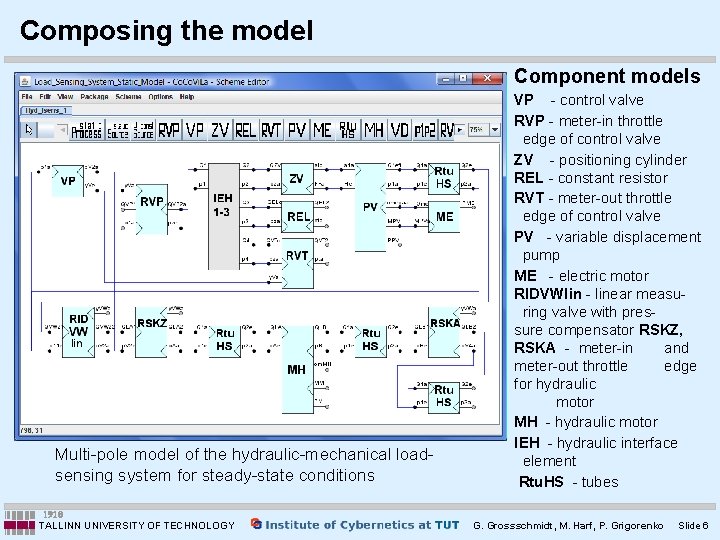
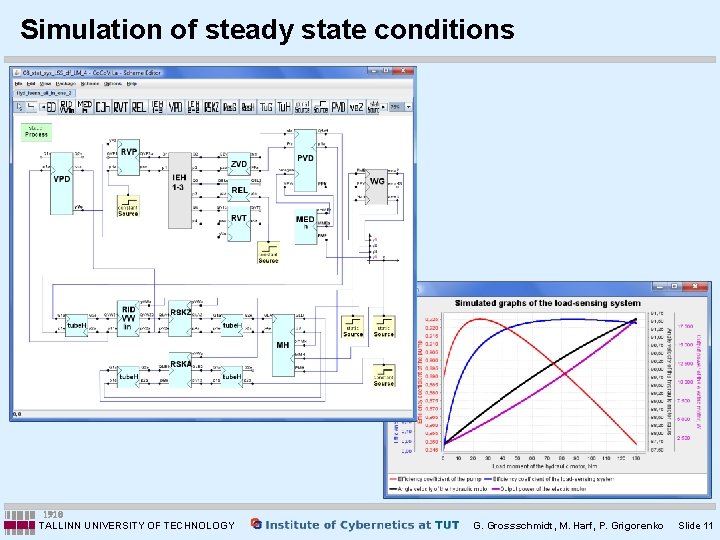
Composing the model Component models Multi-pole model of the hydraulic-mechanical loadsensing system for steady-state conditions TALLINN UNIVERSITY OF TECHNOLOGY VP - control valve RVP - meter-in throttle edge of control valve ZV - positioning cylinder REL - constant resistor RVT - meter-out throttle edge of control valve PV - variable displacement pump ME - electric motor RIDVWlin - linear measuring valve with pressure compensator RSKZ, RSKA - meter-in and meter-out throttle edge for hydraulic motor MH - hydraulic motor IEH - hydraulic interface element Rtu. HS - tubes G. Grossschmidt, M. Harf, P. Grigorenko Slide 6
Simulation steps First, the hydraulic motor, hydraulic pump, electric motor and fluid parameters must be chosen. TALLINN UNIVERSITY OF TECHNOLOGY G. Grossschmidt, M. Harf, P. Grigorenko Slide 7
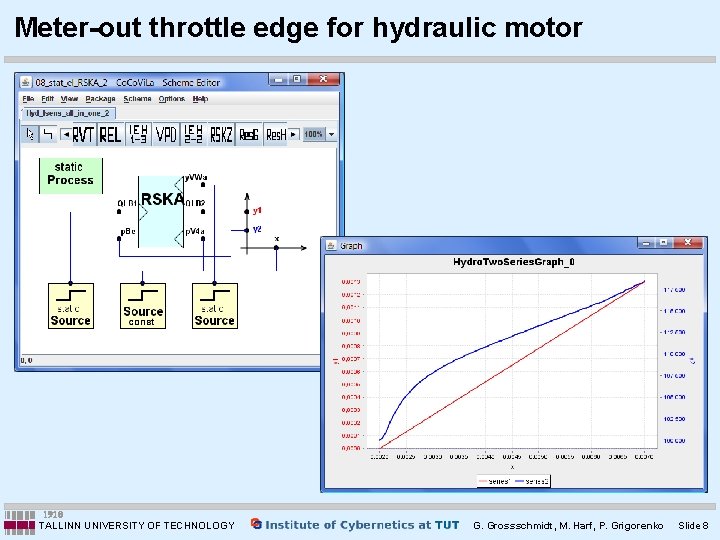
Meter-out throttle edge for hydraulic motor Fig. 9 - Simulated pressure drop in measuring valve with pressure compensator depending on the displacement of the directional valve TALLINN UNIVERSITY OF TECHNOLOGY G. Grossschmidt, M. Harf, P. Grigorenko Slide 8
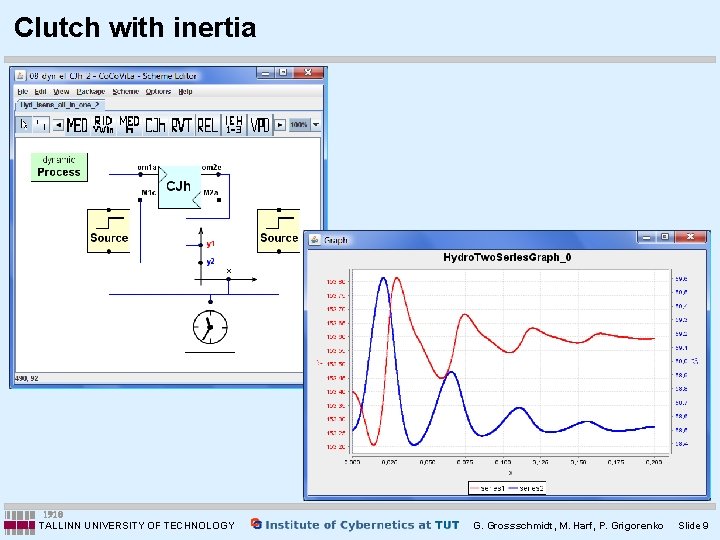
Clutch with inertia Fig. 9 - Simulated pressure drop in measuring valve with pressure compensator depending on the displacement of the directional valve TALLINN UNIVERSITY OF TECHNOLOGY G. Grossschmidt, M. Harf, P. Grigorenko Slide 9
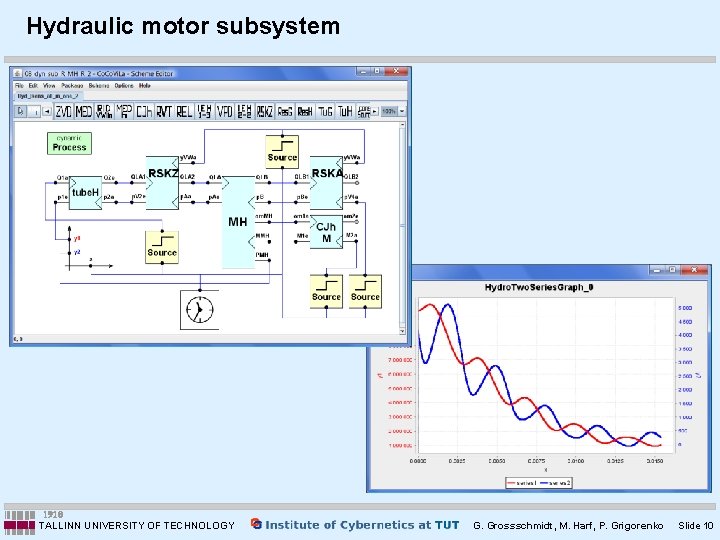
Hydraulic motor subsystem TALLINN UNIVERSITY OF TECHNOLOGY G. Grossschmidt, M. Harf, P. Grigorenko Slide 10
Simulation of steady state conditions TALLINN UNIVERSITY OF TECHNOLOGY G. Grossschmidt, M. Harf, P. Grigorenko Slide 11
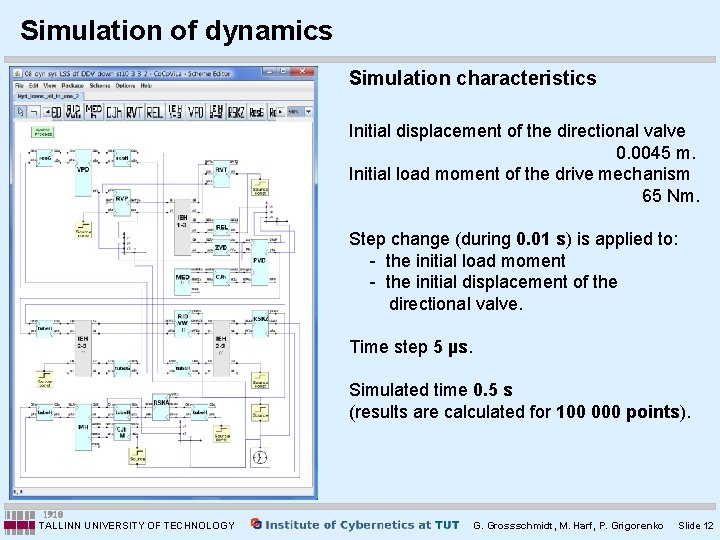
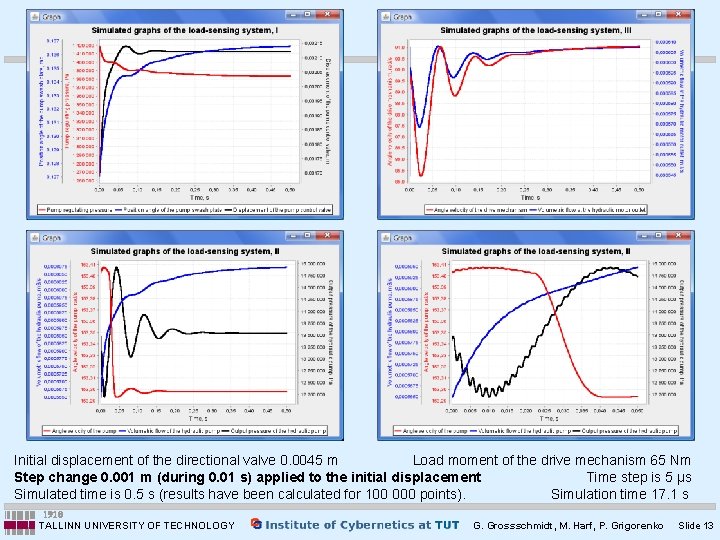
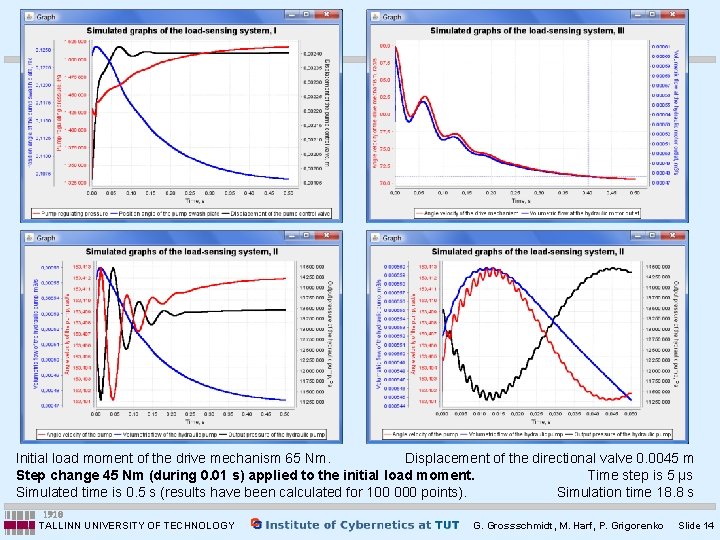
Simulation of dynamics Simulation characteristics Initial displacement of the directional valve 0. 0045 m. Initial load moment of the drive mechanism 65 Nm. Step change (during 0. 01 s) is applied to: - the initial load moment - the initial displacement of the directional valve. Time step 5 µs. Simulated time 0. 5 s (results are calculated for 100 000 points). TALLINN UNIVERSITY OF TECHNOLOGY G. Grossschmidt, M. Harf, P. Grigorenko Slide 12
Initial displacement of the directional valve 0. 0045 m Load moment of the drive mechanism 65 Nm Step change 0. 001 m (during 0. 01 s) applied to the initial displacement Time step is 5 µs Simulated time is 0. 5 s (results have been calculated for 100 000 points). Simulation time 17. 1 s TALLINN UNIVERSITY OF TECHNOLOGY G. Grossschmidt, M. Harf, P. Grigorenko Slide 13
Initial load moment of the drive mechanism 65 Nm. Displacement of the directional valve 0. 0045 m Step change 45 Nm (during 0. 01 s) applied to the initial load moment. Time step is 5 µs Simulated time is 0. 5 s (results have been calculated for 100 000 points). Simulation time 18. 8 s TALLINN UNIVERSITY OF TECHNOLOGY G. Grossschmidt, M. Harf, P. Grigorenko Slide 14
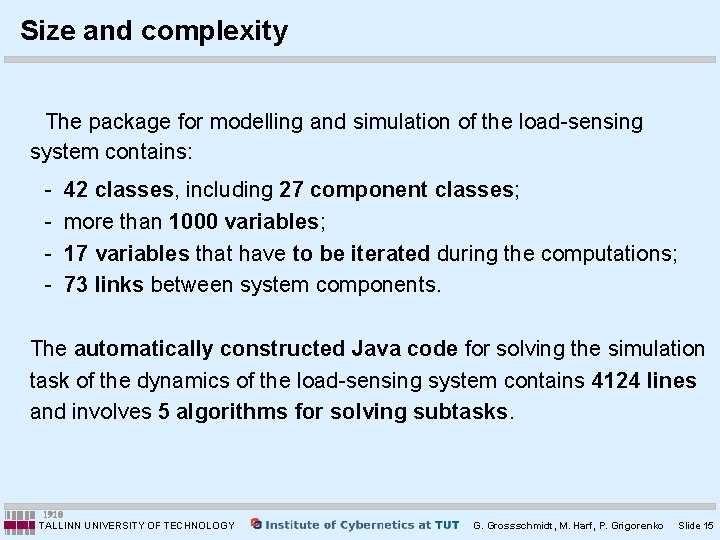
Size and complexity The package for modelling and simulation of the load-sensing system contains: - 42 classes, including 27 component classes; more than 1000 variables; 17 variables that have to be iterated during the computations; 73 links between system components. The automatically constructed Java code for solving the simulation task of the dynamics of the load-sensing system contains 4124 lines and involves 5 algorithms for solving subtasks. TALLINN UNIVERSITY OF TECHNOLOGY G. Grossschmidt, M. Harf, P. Grigorenko Slide 15
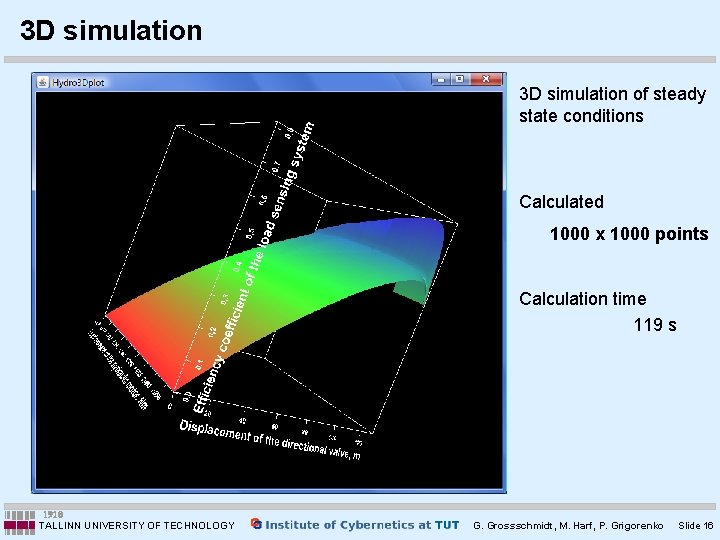
3 D simulation of steady state conditions Calculated 1000 x 1000 points Calculation time 119 s TALLINN UNIVERSITY OF TECHNOLOGY G. Grossschmidt, M. Harf, P. Grigorenko Slide 16
Thank you for attention TALLINN UNIVERSITY OF TECHNOLOGY G. Grossschmidt, M. Harf, P. Grigorenko Slide 17