
Modeling Urban Movement in a MultiAgent System By
Modeling Urban Movement in a Multi-Agent System By: Adrian Lopez-Mobilia, Patricia Perez, Joaquin Rodriguez, Laura Matos, Charlie Mitchell Mentor: Dr. Christine Drennon
Outline • • Introduction Background Research Problem Definition Proposed Solution Experiment Domain Timeline Conclusion
Introduction • Social scientists have identified trends within a city to explain how people move and settle within residential areas. • We want to try to simulate these theories to see if they can be replicated within a virtual city and to see if these same trends will emerge. • Many factors impact where people choose to live such as: race, income, location, distance to work

Background Research • Bid-Rent Theory (Macro) • Schelling Model (Micro) • Filtering/Succession (Micro)

Bid-Rent Theory
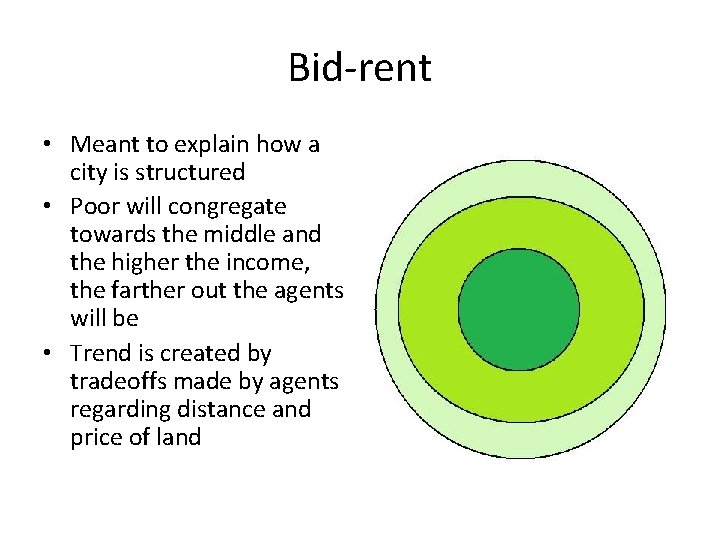
Bid-rent • Meant to explain how a city is structured • Poor will congregate towards the middle and the higher the income, the farther out the agents will be • Trend is created by tradeoffs made by agents regarding distance and price of land
Schelling Model • The environment : square grid. • The grid is randomly filled with pennies and dimes • Each agent = center of a 3 -by-3 neighborhood, • Agent evaluates its current position based on a “happiness rule” by observing its surrounding neighbors. • If an agent is not happy, then switch places with another unhappy agent, or move to an empty house that will fit its happiness demands. • The game will not end until all agents in the environment are happy. A sample model Developed by the Northwestern Institute on Complex Systems at Northwestern University: http: //ccl. northwestern. edu/netlogo/models/run. cgi? Segregation. 734. 460
The Bounded-Neighborhood Model • Also developed by Shelling • Uses fixed neighborhoods • Agents are either in or out of the neighborhood • Each neighborhood has a ratio among types of agents • Happiness based on “tolerance level” • Each Agent has a different tolerance level
Filtering/Succession • Filtering is sometimes called succession because filtering has a bad connotation to it. • What is Filtering? – “Filtering is the term used to describe the process through which existing housing gradually declines in value, thereby making it available to groups of lower socioeconomic rank. ” (Albrandt and Brophy 1975) • This happens when houses start to deteriorate resulting from neglect or other factors.
Filtering/Succession Con’d • Factors to cause filtering: – Changes in real income – Increase/ decrease in number of households – Obsolescence – Neighborhood Deterioration
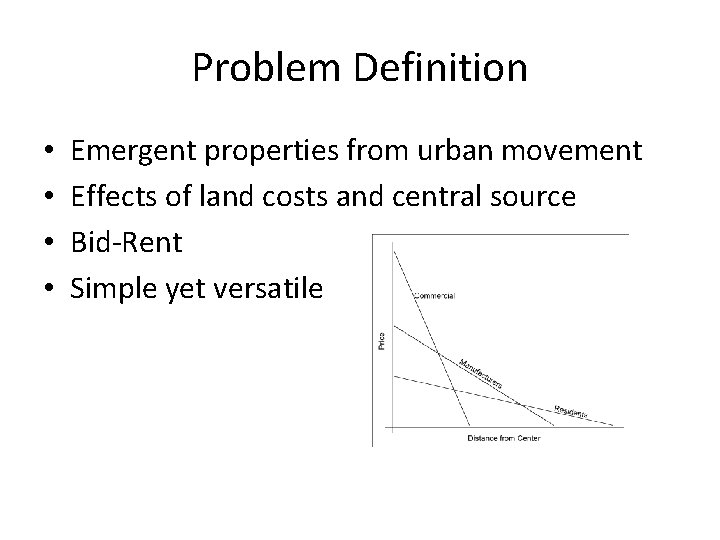
Problem Definition • • Emergent properties from urban movement Effects of land costs and central source Bid-Rent Simple yet versatile

Proposed Solution
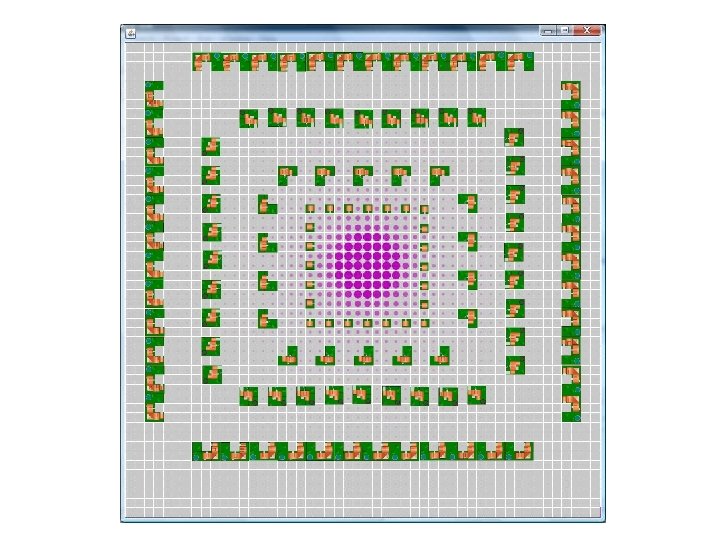
Applying Theories • Schelling Theory • Filtering/Succession • Submarkets
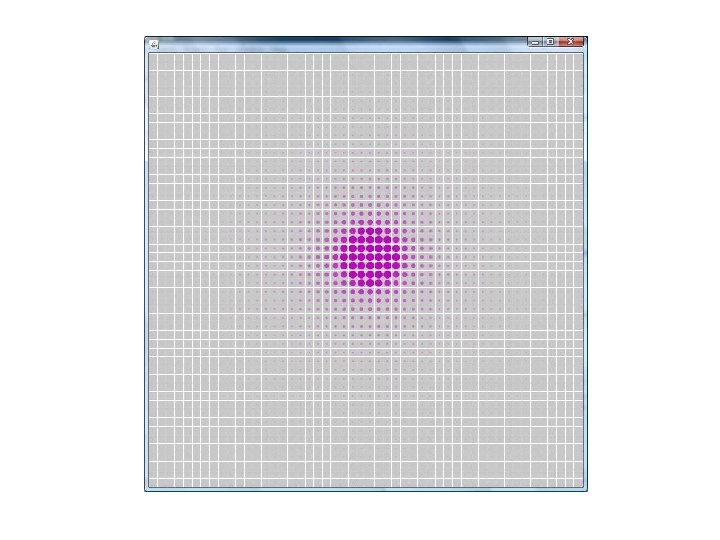
Experiment Domain • The domain we are going to be using is a modified version of Sugar. Scape • Going to be used to examine social clustering and moving patterns of people • Modifications: – Sugar at center of world, instead of opposite ends – Sugar trails – Agents finding a house – Travel costs – Multiple points of accessibility
Timeline Week 3 – Finish functions, start CASE, sugar Week 4 – Add Day/Night Week 5 – Add houses, then making of houses Week 6 – Schelling Week 7 – Bounded Schelling Week 8, 9 – Commercial, Manufaturing, Residents Model • Week 10 – Conclude project • • •
Conclusion • Explore emergent properties • Develop versatile framework for testing movement in urban setting
Questions?

THE END!!!!!!
- Slides: 20